
What Is Team Culture? (And Why Most Companies Get It Wrong)
A no-nonsense guide to what is team culture. Learn how it impacts your bottom line, why frontline teams feel it most, and how to build one that works.
Dan Robin
We talk a lot about culture. Too much, probably. We think it’s about ping-pong tables, free lunches, or a mission statement framed on the wall. But that’s just window dressing.
Real culture is what happens when the boss leaves the room. It’s the silent, unwritten rules that guide how people act, how they treat each other, and whether they give a damn about the work. It’s the gut feeling a new person gets on their first day.
It’s your company’s operating system, always running in the background. And most of us are running on outdated software.
Let's Be Honest About What Team Culture Is
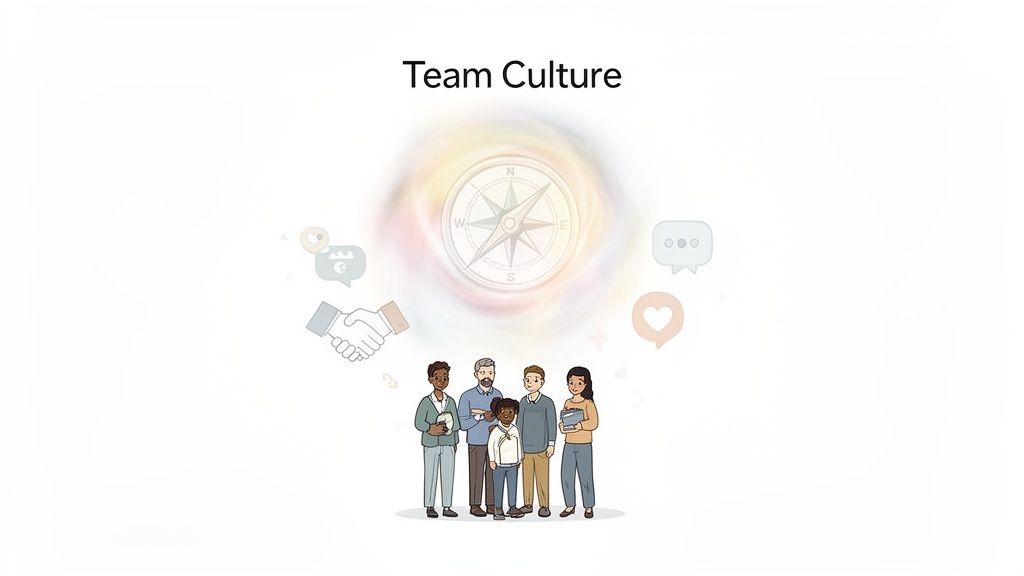
We've all seen the perks. The office dog, the fancy coffee machine. They’re nice, sure. But they aren't culture. They don't help you when a deadline is looming, or when a tough conversation needs to happen.
The real answer to "what is team culture" is simpler and much deeper.
It's why someone stays for years, even when a recruiter offers them more money. It’s the sum of a thousand tiny behaviors that have become the default for your team.
Hype vs. Reality
It’s easy to get lost in the noise. Let’s cut through it.
The Hype | The Reality |
|---|---|
It's about perks. | It's how people treat each other with respect. |
It's our mission statement. | It's what people actually do every day. |
It's a top-down mandate. | It's built by everyone, in every interaction. |
It's a "soft" HR thing. | It drives your retention, performance, and profit. |
Perks are what you buy. Culture is what you build.
The Real Test of Culture
Want to know what your culture is really like? Look at what happens when things get hard.
When someone makes a mistake: Do they hide it, fearing blame? Or do they raise their hand so everyone can learn?
When a tough decision comes down: Is it explained with honesty? Or do rumors fill the silence?
When someone has a new idea: Is it met with curiosity? Or is it shot down with, "That's not how we do things here"?
Those moments tell the truth. Culture isn't a document. It’s what your people do, day in and day out.
Here’s the thing: You have a culture whether you build one or not. The only choice is whether you shape it, or you let it happen to you. And that’s a choice that matters deeply, especially for frontline and distributed teams where connection is the hardest part.
Why a Strong Culture Is a Business Decision, Not a Luxury
For a long time, "culture" felt a little fluffy. Something for the HR slide deck. But the impact on your bottom line is anything but soft. A weak or toxic culture is a quiet, steady drain on your business.
It’s the invisible anchor holding back your best people. It’s the root cause of 'quiet quitting'—that thing where people show up, but they've already checked out. This isn't just a morale problem. It's an expensive one.
The Real Cost of a Bad Vibe
When people don't feel connected, they stop trying. They do the bare minimum. They stop pitching ideas, they stop helping their colleagues, and they stop caring about the customer. They’re just watching the clock.
This quiet erosion of effort has huge financial consequences.
A 2024 McKinsey study found that employees who have positive workplace relationships are more engaged and less likely to quit. When people feel a sense of belonging, they stick around. This isn't rocket science; it's human nature.
That says everything. People would often rather find a place where they feel they belong than chase a bigger paycheck. It tells you exactly where you should focus your energy.
From Vague Idea to Real Asset
A strong culture isn't just about avoiding the bad stuff. It’s about creating real, tangible good. It turns a group of people punching a clock into a cohesive team that solves problems, supports each other, and sticks around.
The real-world benefits are clear:
People Stay: When people feel valued, they don't look for the exit. This slashes your hiring and training costs. A great culture is your best retention tool.
Ideas Flow: In a culture of psychological safety, people aren't afraid to speak up, share a half-baked idea, or admit a mistake. That’s where breakthroughs come from. Silence gets you nowhere.
Customers Feel It: Happy, engaged employees give better service. Period. When your team feels cared for, they pass that feeling right on to your customers.
These aren't fuzzy ideals; they are measurable business results. To see the data for yourself, check out this guide on the impact of organizational culture on employee performance.
Culture as a Strategy
So, what is team culture's real value? It’s a strategic advantage that’s incredibly hard to copy. You can copy a product or a marketing plan. You can’t easily copy a deeply embedded culture of trust and shared purpose.
Investing in your culture isn't something you do when times are good. It’s what you do to make sure you survive when times get tough.
The Unspoken Rules of a Great Team
So, what is a great culture made of? Not the mission statement on the wall. That’s an aspiration. Real culture is built on a few core, tangible things that define how your team works every day.
It's the unspoken rules. The quiet agreements. The gut feeling people have about how things really work.
Think of it like building a bridge. You can't just throw a plank across a canyon and hope for the best. You need solid pillars. In a great culture, those pillars are trust, purpose, and recognition.
Trust Is the Ground Floor
Let’s start with the most important one: psychological safety. It’s a fancy term for a simple idea: the belief that you won’t be punished for speaking up with ideas, questions, or mistakes.
When a team has it, people ask for help. They admit they don't know something. They pitch a wild idea without fear of looking foolish. Without it, you get silence. You get people hiding small mistakes until they become big disasters.
Here’s the thing: you can't have real collaboration without psychological safety. It’s the soil where everything else grows.
Purpose Is the Compass
Next, you need a shared purpose. This isn’t about hitting quarterly targets. It’s the collective answer to why our work matters. Why are we all here, rowing in the same boat?
When people connect to a purpose bigger than their to-do list, their motivation changes. The work becomes less about a paycheck and more about contributing to something that matters. This is especially true for frontline and distributed teams who don’t always see the big picture.
A clear purpose is a compass. It helps people make the right call when a manager isn't around.
Recognition Makes It Stick
Finally, a great culture is one where people feel seen. This is where meaningful recognition comes in. It’s not about a generic gift card once a year. It’s about the daily habit of noticing effort and celebrating wins, big and small.
When someone goes the extra mile, does anyone notice? When a team solves a tough problem, is their work shared? This simple act reinforces the exact behaviors you want to see. It tells people, "What you do here matters, and we see you."
These elements create a positive loop that strengthens the entire company.
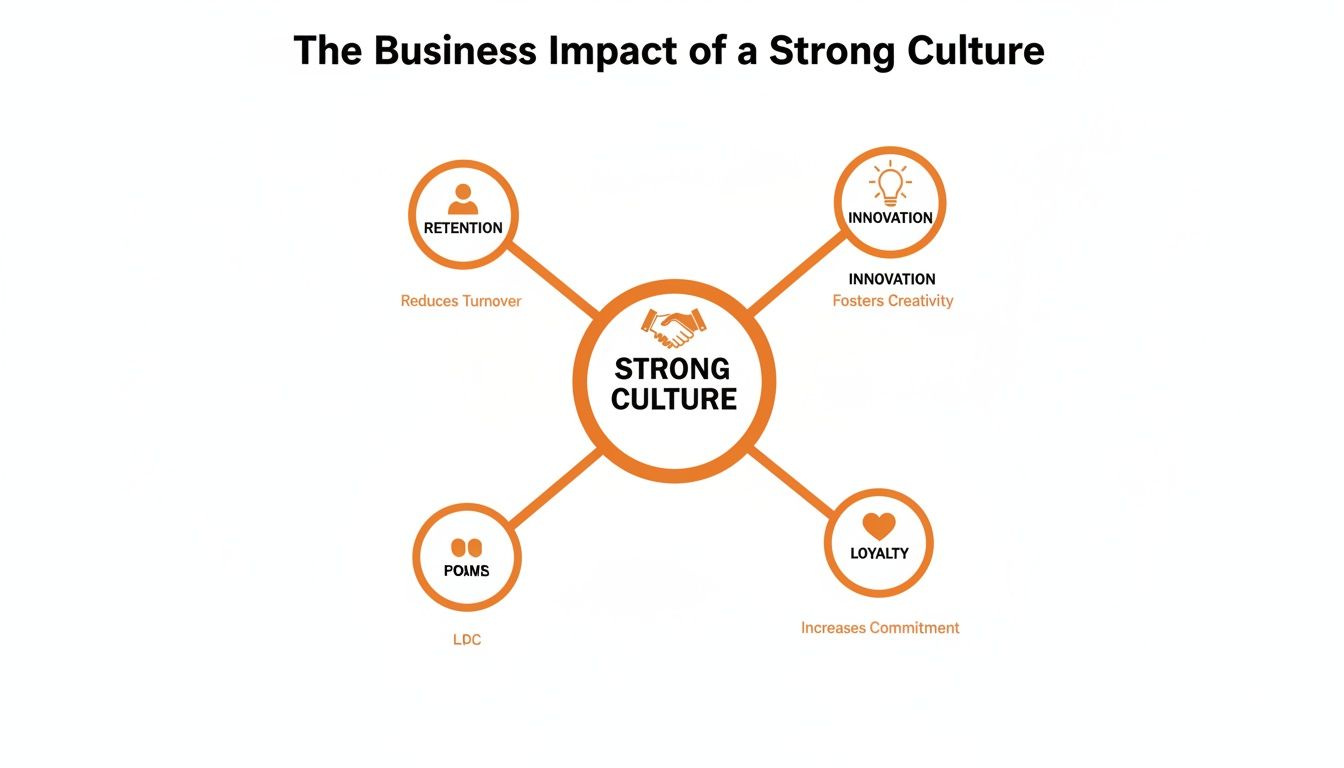
As you can see, a strong culture leads directly to better retention, innovation, and loyalty. These pillars support each other. Recognition builds trust. A shared purpose makes working together feel natural. These values also form the backbone of fostering an ethical workplace culture.
When these pieces are in place, you create an environment where people feel safe to do their best work, motivated by a purpose they believe in, and seen for the effort they put in. That’s not a perk. That’s a competitive advantage.
The Dangerous Gap Between the Office and the Frontline
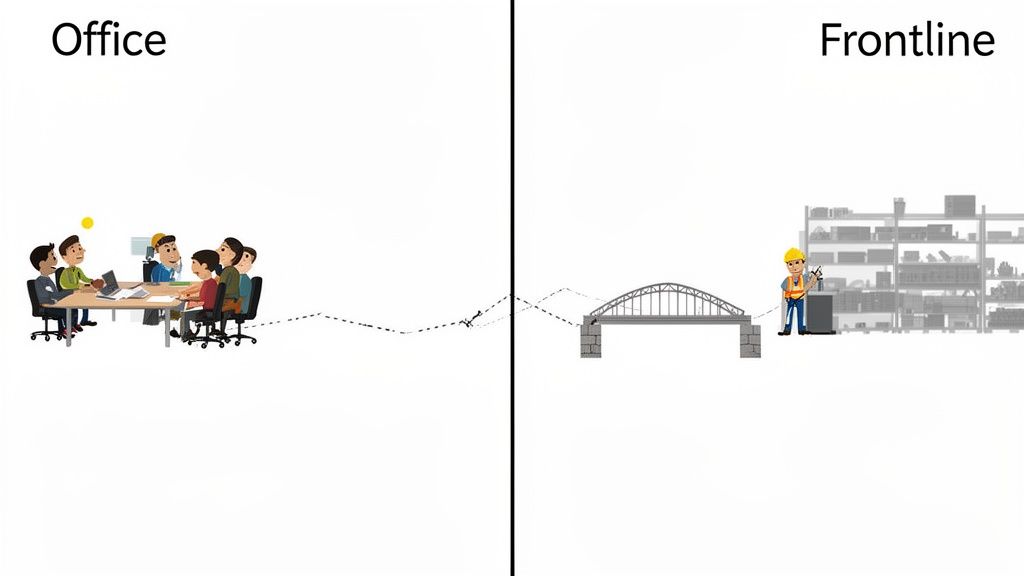
Here's a hard truth: the culture you talk about in the boardroom is almost never the culture your frontline employees actually experience. A quiet, dangerous gap exists between the official company line and the daily reality for the people doing the work.
We like to think our values just trickle down. We print them on posters and talk about them in town halls. But for a cashier, a warehouse worker, or a nurse on the night shift, those values can feel like they’re coming from another planet.
This is where great cultures die. It breeds cynicism, mistrust, and a destructive 'us vs. them' mindset.
Why the Gap Exists
This gap isn't usually born from bad intentions. It’s the natural result of distance and different daily realities. Corporate teams are focused on strategy and long-term goals. Frontline teams are focused on the immediate needs of customers and operations.
Communication breaks down. A new policy that looks great on a spreadsheet feels like a thoughtless burden to the person who has to implement it with a customer watching. When your frontline staff feel like an afterthought, their connection to the company’s purpose starts to fray.
And here’s the kicker: inconsistent management is often the biggest problem. One manager might be a fantastic culture carrier, while another, just one department over, undermines every value the company claims to hold dear. This creates pockets of entirely different cultures within the same company, sending a clear message that the company's values are optional.
The Real-World Impact
This isn't a small problem. For businesses in retail, logistics, or healthcare, this culture gap has serious consequences.
Morale Drops: When employees feel disconnected, they check out. They stop caring about the quality of their work because they don't believe the company cares about them.
Operations Suffer: A fractured culture slows everything down. Without a shared sense of trust and purpose, teamwork falters and problems take longer to solve.
Customers Feel It: Your frontline team is your brand to your customers. If they feel undervalued and unheard, that feeling gets passed on in every single interaction.
Ultimately, the culture on your front lines is the only one your customers ever experience. You can't fake it. For remote teams, this challenge is even tougher, which is why it's so critical to learn how to create a culture of belonging even when your team is spread out.
The only way to close the gap is to first have the humility to admit it exists. Your real culture isn't what's written on the wall—it's what's lived every day by your team.
How to Actually Build Your Team Culture
Let's get one thing straight: great culture doesn't just happen. It’s not the result of a slick poster or one big meeting. It’s a living thing you have to deliberately nurture, every single day. If you leave it to chance, you get the culture you deserve, not the one you want.
So how do you move from talking about what team culture is to actually building it? You have to be intentional. It comes down to small, consistent actions that reinforce the behaviors you want to see.
Start with How You Talk to Each Other
Let's be honest, communication in most companies is broken. Information gets trapped. Frontline teams hear about big changes through the grapevine. This is where you can make the biggest impact, fast.
The tools you use matter more than you think. They aren't just for managing tasks; they're for building connection. When everyone from the C-suite to the warehouse floor shares the same communication space, something powerful happens. Department walls start to come down. A developer can see the customer feedback a support agent is dealing with.
This shared view isn't about watching people; it’s about creating common ground. It builds empathy. If you're serious about your culture, you have to make communication part of your culture, not just something that happens in meetings.
Make Connection Easy
Culture is built on relationships, but you can't force people to be friends. You can create the conditions where it’s easy for them to connect. Think about how your teams interact. Is it all formal meetings and project channels?
A simple, company-wide news feed can change the dynamic entirely. It gives people a space to share wins, ask for help, or post a photo from a team outing. It puts a human face on the names in the directory, helping turn a group of employees into a real team.
Below is an example of how a unified tool can pull news, resources, and people together in one place—crucial for building an inclusive culture.
This isn't just about efficiency; it's about making sure everyone, no matter their role or location, has the same direct line to company news and to each other. That’s how you create a real sense of belonging.
Reinforce the Good Stuff, Daily
You get more of what you celebrate. If you want a culture of collaboration, you have to actively and publicly recognize it when you see it. Waiting for an annual review is way too late.
Try building recognition right into your daily work. A simple tool that lets anyone give a public shout-out to a colleague is incredibly powerful. It makes appreciation visible and contagious. When people see helpfulness being celebrated, they're more likely to offer it themselves.
This is about creating positive loops. The more you recognize good work and supportive behaviors, the more those behaviors become the default. This is how values move from a piece of paper into the daily life of your company.
To really make this work, you should also invest in a solid learning and development strategy. When people see you're invested in their skills, they become more invested in the company's mission.
Shaping your culture is about being intentional in the small moments. It's choosing tools that connect people, not just manage them. It’s creating systems that make transparency, recognition, and support the easiest way to work.
You Can't Fix What You Can't See
You can talk about building a great culture, but how do you know if it's working? A gut feeling is a start, but it's not the whole story. If you're serious about your team culture, you have to measure it.
I know, "measuring culture" sounds a little fuzzy. It's not as simple as tracking sales. But it's just as important. Relying on an annual engagement survey is like checking the weather once a year; by the time you get the report, the climate has already changed.
You need to see what’s happening now.
Looking at the Right Vital Signs
Let’s be clear: this isn’t about watching over people's shoulders. It’s about understanding the health of your company by looking at how energy and information flow. These are your team's vital signs.
With the right tools, you can get a clear picture by looking at a few simple things:
Participation: Who is sharing updates, and who’s actually seeing them? If a critical safety alert is only seen by 20% of your frontline staff, you have a big problem.
Resonance: What kinds of posts get all the likes and comments? This is a goldmine. It shows you what your people genuinely care about, not what you think they care about.
Knowledge Sharing: How hard is it for someone to find information? If you see the same basic questions popping up over and over, that's a sign that important knowledge is getting lost.
These data points tell a story. They show where communication is working and where it's broken.
The goal isn’t surveillance. It's spotting patterns. When you can see what's really going on, you can shift from putting out fires to proactively building a stronger, more connected team.
From Data to Action
Modern employee platforms can give leaders a live view of these trends. Imagine a dashboard showing that one of your retail locations is buzzing with energy, while another is silent. That's not a signal to punish the quiet store—it's a huge opportunity to learn from the one that’s succeeding.
What’s the manager doing differently over there? Maybe they've started a simple morning ritual for recognition. That small pocket of positive culture can become the blueprint for the entire company.
On the other hand, if you see a team that seems disconnected, you can step in with support before it becomes a crisis. Maybe they need more clarity on their goals, or they just need to feel more connected to the bigger picture.
This is what makes measurement powerful. It takes the conversation about culture out of guesswork and turns it into informed, practical action. You can't fix what you can't see. But once you can see it, you can start building something better.
A Few Common Questions
When you dig into team culture, the same questions always come up. It's a fuzzy concept, so let's clear up a few things.
Can a company have more than one culture?
Yes. In fact, it's guaranteed. While your company has an overarching culture, you'll always find unique "micro-cultures" in different teams. The engineering department's vibe will be different from the sales team's.
This isn't a problem. The trick is making sure these subcultures don't clash with the company's core values. Think of your company culture as the main language everyone speaks, and team cultures as local dialects. Different slang, same page.
Does a great culture mean no conflict?
Not at all. A great culture isn't one where everyone agrees. It’s one where people feel safe enough to disagree respectfully. Healthy friction is what turns a good idea into a great one.
A strong culture is where it's safe to challenge the idea, not the person. The goal shifts from winning an argument to finding the best answer, together. If nobody is disagreeing, it usually means people are too afraid to speak up.
How long does it take to change a culture?
Let's be real: this is a marathon, not a sprint. Shifting a team’s culture is a slow, deliberate process. It can take months or years. You're changing habits and rebuilding trust. That doesn't happen overnight.
The good news? You can start seeing small signs of change quickly. Every intentional action is a building block. Recognizing someone’s work, approaching a mistake with curiosity instead of blame—these are the small wins that add up. Lasting change is just a thousand of these moments, stacked on top of each other.
Ready to build a culture where everyone is connected? Pebb unifies communication, operations, and engagement for your entire team in one simple app. See how we bring office and frontline teams together at https://pebb.io.
