
10 Team Celebration Ideas That Actually Work
Tired of pizza parties? Discover 10 practical team celebration ideas for frontline, remote, and hybrid teams that build real culture. No fluff, just what works.
Dan Robin
Most team celebrations are a waste of time.
The forced happy hour. The sheet cake by the copier. The pizza that shows up late after a brutal week and somehow gets framed as appreciation. None of that feels like a celebration. It feels like an obligation with balloons taped to it.
That problem gets worse when your team doesn't sit in one office. A nurse on night shift, a warehouse lead on an early start, a remote designer, and a store manager closing late do not experience work the same way. So they shouldn't all be asked to celebrate the same way either. Office-centric advice misses this constantly.
The better approach is quieter and more consistent. Recognition has to live where work already happens. It has to work across shifts, locations, and time zones. And it has to notice the work, not just the final result. That's why the best team celebration ideas don't start with party planning. They start with visibility.
That shift matters. A summary published by Egym Wellpass highlighted that 73% of employees wish their company would invest more in team building, and the same summary noted that regular team-building can reduce absenteeism by 41%, boost performance by 25%, and raise employee engagement by 30% according to these team-building statistics. If you've managed a stretched team, that tracks. People want to feel connected, and they can tell when a celebration is fake.
Below are ten team celebration ideas that are effective. They're practical. They scale. And they don't assume everyone is sitting around the same conference table.
1. Virtual Recognition and Shout-Out Channels
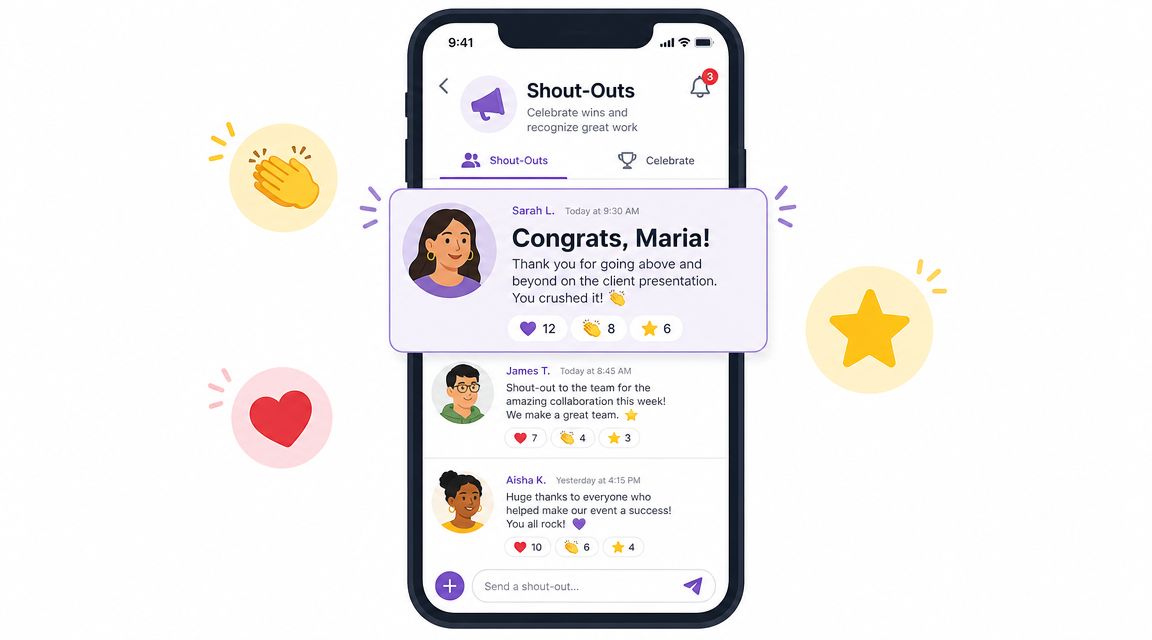
If you only celebrate people in live meetings, you'll miss half the company. Maybe more. Shift workers aren't always on at the same time, remote people miss hallway praise, and quieter employees rarely get noticed in the room.
A dedicated shout-out space fixes that because it makes recognition visible and asynchronous. In Pebb, that can be a company-wide feed, a team Space, or a simple rhythm like #Weekly-Wins or #Safety-Champions. A hospital team can use it to recognize a nurse who stayed steady through a hard shift. A retail district can use it to celebrate a customer service moment from one store without waiting for the monthly call. A warehouse can use it to highlight safe work across locations.
What makes this work
The trick is specificity. “Great job, team” dies on arrival. “Thanks to Marisol for catching the labeling issue before the shipment went out” lands because people understand what happened and why it mattered.
It also helps to make leaders visible early. When managers and executives post real recognition in the first month, everyone else gets the message that this space matters.
Practical rule: Praise the behavior, not the personality. Celebrate what someone did, how they helped, and what others can learn from it.
A few patterns work especially well:
Create a repeatable rhythm: Use a weekly prompt so recognition doesn't depend on one enthusiastic manager.
Name the context: Tie praise to a customer moment, safety choice, solved problem, or team assist.
Watch for quiet achievers: Use platform activity and team input to spot people who keep things running without much fanfare.
What doesn't work is turning shout-outs into cheesy emoji spam. If every post sounds inflated, people stop believing any of it. Keep it plain. Keep it real.
2. Milestone and Anniversary Celebrations in Dedicated Spaces
Work anniversaries, certifications, project completions, return-from-leave moments, and even birthdays can either feel warm or painfully automated. Most companies choose the second option by accident.
The fix is simple. Don't dump milestones into a generic HR message. Give them a dedicated space where people can add context, photos, replies, and stories. In Pebb, that might mean a Space for team milestones, a recurring anniversary post, or a heartbeat-style news update that highlights one person or team each week. A logistics team can celebrate a driver's long safety record. A hospital manager can pair a nurse anniversary with notes from coworkers. A tech team can recognize a certification and explain how it helps customers or coworkers.
Make the milestone mean something
The best anniversary posts don't just say “Congrats on five years.” They remind everyone what those years looked like. What changed. What the person helped build. Why people trust them.
If you need help making those messages less stiff, this guide to work anniversary congratulations is useful because it focuses on writing something a person would want to read.
A few habits make milestone celebrations better:
Pick a ritual: Welcome new hires publicly, celebrate anniversaries on a cadence, and keep the format familiar.
Use threads well: Let coworkers add short memories and thanks instead of forcing everything into one formal announcement.
Time it for participation: If your workforce runs in shifts, post when the majority can see it, then leave space for later replies.
The mistake here is overproducing everything. You don't need a glossy tribute video for every anniversary. A thoughtful paragraph from a manager and a handful of genuine teammate replies will beat a polished but empty post every time.
3. Team Competition and Challenge Leaderboards
Competition can bring energy to a team. It can also turn adults into sulking middle schoolers if you design it badly.
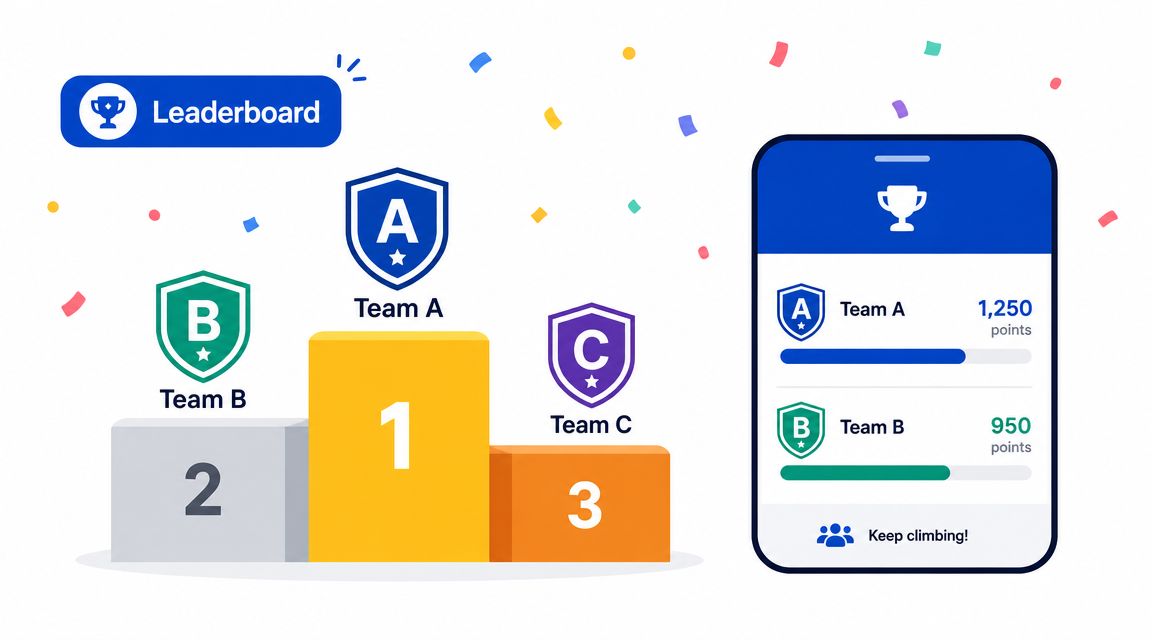
The version that works is short, fair, and team-based. Think store vs. store on customer service habits, warehouse shift vs. warehouse shift on safety routines, or support pod vs. support pod on cleanup goals after a rough product launch. Put the updates in a shared Space, keep the rules visible, and reset often enough that nobody gets buried early.
Where leaderboards go wrong
Most workplace competitions fail because they reward the same top performers again and again. People check out when the winner feels pre-decided. That's especially true across locations with different staffing levels, traffic, or operating conditions.
Better competitions leave room for more than one kind of win.
Celebrate most improved: This gives struggling teams a reason to stay in the game.
Reward sportsmanship: If one team shares a better process with another, that should count for something.
Keep prizes modest: Extra break choice, preferred shift pick, or a simple team lunch works better than turning it into a cash chase.
A leaderboard should create momentum, not humiliation.
I've seen these work best when the contest reflects something the team already cares about. Safety streaks. Order accuracy. Clean handoffs. Customer compliments. The celebration is stronger when the metric feels connected to real work instead of invented fun.
Also, don't run these forever. A stale competition becomes wallpaper. Pick a focus, run it briefly, celebrate, reset.
4. Peer-Nominated Team Awards Program
Formal awards sound corny until they're done well. Then they become one of the few rituals people remember.
The key is peer nomination with real stories attached. Not checkbox voting. Not “pick your favorite coworker.” Ask people to name a colleague and explain what they did. That one change raises the quality immediately. It also helps surface work that managers miss, especially in distributed teams where good support work often happens out of sight.
A healthcare team might run a monthly patient care award. A hospitality group might recognize the person who kept service calm during a chaotic weekend. A logistics operation might spotlight someone who keeps reporting hazards instead of walking past them.
Build categories around behavior
Award categories should reflect the culture you're trying to reinforce. Teamwork. Reliability. Problem solving. Customer care. Thoughtful leadership. If the category is vague, the nominations will be vague too.
The best programs also make room for more than one role. If your award winners are always salespeople, managers, or visible office staff, everyone else gets the message.
One useful test: Could a night-shift employee, field worker, or part-time team member realistically win this?
A few practical choices help:
Ask for a short story: One paragraph beats a dozen reaction votes.
Leave the window open long enough: Shift-based teams need time to participate.
Share the winning examples: Not just the names. The stories teach people what good work looks like.
What doesn't work is making awards too grand. You don't need a fake Oscars ceremony. You need a fair process, clear criteria, and recognition that feels earned.
5. Virtual Team Building Events and Social Hours
Most virtual social events fail for the same reason most in-person ones fail. They're built for the organizer, not the team.
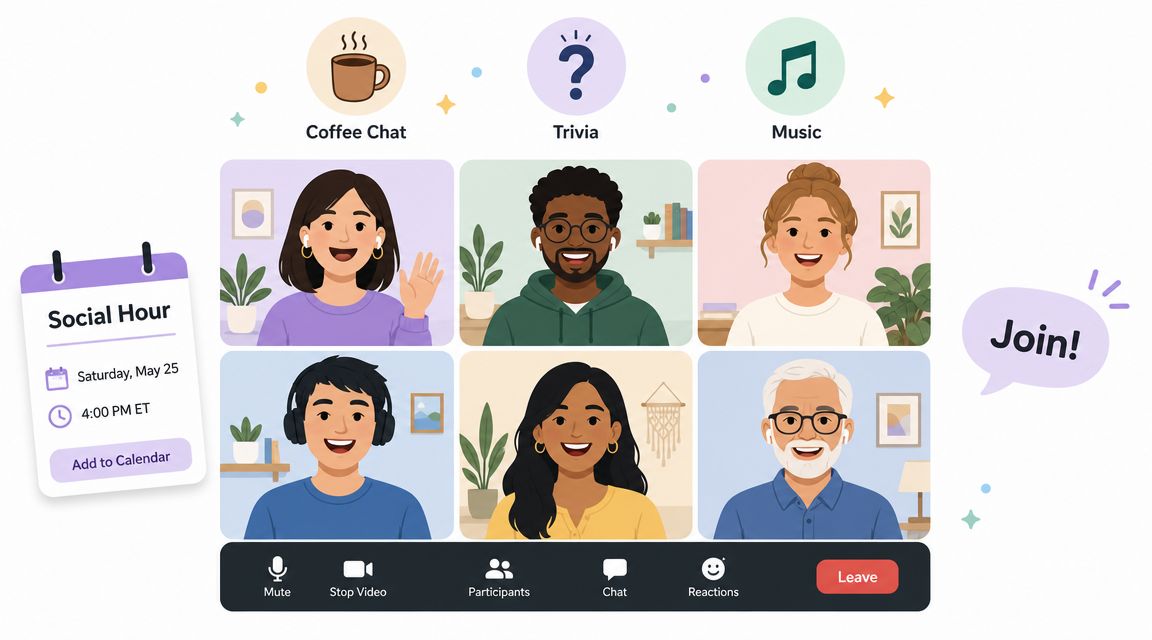
Nobody wants another mandatory hour where half the group stares at a grid of faces while one extrovert carries the whole thing. If you're going to run a virtual celebration, keep it short, optional in spirit even if encouraged, and easy to join without performing.
A better menu looks like this: quick trivia, coffee roulette, recipe swaps, guided wellness sessions, short skill shares, or a low-pressure social hour with prompts ready for anyone who wants them. Teams can schedule these inside Pebb and use its events calendar and Spaces to keep signups, reminders, and follow-up in one place. If you want a broader menu of facilitated formats, PSW Events' team building solutions offer a good sense of what structured virtual and hybrid activities can look like.
Keep the bar low
The most inclusive virtual team celebration ideas don't require everyone to be funny, fast, or on camera. Cameras should be optional. Chat participation should count. Recordings or asynchronous follow-ups should exist for people on later shifts.
Good virtual events usually share a few traits:
They end in under an hour: Most should be closer to half an hour.
They give people context: A short agenda helps people decide whether to join.
They vary month to month: Trivia every time gets old fast.
What doesn't work is calling something “fun” when it feels like unpaid extra work. If people are slammed, acknowledge that and design accordingly. A ten-minute drop-in gratitude round can beat a full-scale virtual mixer.
6. Achievement Progress Tracking and Milestone Sharing
A celebration that appears out of nowhere often feels random. A celebration attached to visible progress feels earned.
That's why shared progress tracking works so well. It lets teams see a goal moving toward something meaningful, then gives them a natural moment to pause and recognize the effort. A retail team can post movement toward a monthly service target. A healthcare unit can share progress on a patient experience initiative. A restaurant group can recognize consistent health and service milestones. The update itself becomes part of the celebration rhythm.
Celebrate the climb, not just the finish
Too many managers wait until the final result shows up. That misses the hard part, which is the middle. The teams doing steady, disciplined work need to know it's visible before the finish line.
Independent guidance on measuring team-building success recommends setting a baseline engagement survey before an activity, then repeating that same survey at 48 to 72 hours, 30 days, 60 days, and 90 days afterward, while also tracking participation, voluntary attendance, collaboration frequency, and productivity indicators through this measurement framework for team-building activities. The point is simple. Don't assume a celebration worked because people smiled in the moment.
That same mindset helps here:
Mark interim wins: A quarter of the way there can still be worth noticing.
Explain the why: People care more when they understand the purpose behind the target.
Avoid blame dashboards: Shared progress should create effort, not public shaming.
If a goal gets missed, celebrate the learning anyway. Teams remember whether leaders only show up when the graph points up.
7. Department or Location Takeover Spotlights
One of the most underrated celebration ideas is letting one team show the rest of the company what their work looks like.
A rotating spotlight builds respect fast. The night shift in a warehouse gets a week to post photos, explain what they handle, and introduce the people behind the work. A facilities team can show the fixes nobody notices unless they fail. A remote support team can walk others through the rhythm of a heavy queue day. Suddenly people stop talking about “that department” like it's a black box.
This is celebration through visibility
You don't need to force fun here. Curiosity does most of the work. When teams get to tell their own story, they usually share a mix of pride, humor, and hard reality. That's far more useful than a generic appreciation post from the top.
A good spotlight usually includes:
A team intro: Names, roles, and a few candid details.
A real work snapshot: Not just polished success stories.
A live Q and A or comment thread: Let other teams ask what they've always wondered.
What doesn't work is making the spotlight feel like a brand campaign. Skip the polished slogans. Show the workbench, the loading dock, the back office, the prep station, the patient handoff, the support queue.
Teams feel respected when other people finally understand what their day actually involves.
That understanding matters more in distributed companies because distance breeds lazy assumptions. A takeover spotlight counters that with faces, context, and evidence of effort.
8. Wellness and Work-Life Balance Celebration Days
A “wellness celebration” without real support behind it is one of the fastest ways to lose trust.
If you praise balance while texting people at all hours, nobody buys it. If you run a mindfulness session but never staff shifts well enough for people to take a break, the event becomes a joke. Wellness has to connect to actual policy, manager behavior, and realistic workloads.
That said, when it's grounded in real support, it can be one of the most human forms of celebration. A team can mark Mental Health Awareness Month with optional sessions and shared resources. A retail group can celebrate managers who protect time off. A logistics team can recognize people who model safe pacing and proper rest habits. A call center can create a low-pressure challenge around sleep, hydration, or movement without turning it into surveillance.
Make support visible
The celebration should point people toward something concrete. Time off reminders. Quiet hours. Manager examples. Benefit access. Peer support options. Clear boundaries around after-hours contact.
Useful wellness celebrations usually follow a few rules:
Keep participation voluntary: No one should feel judged for opting out.
Celebrate effort, not perfection: This isn't a purity contest.
Include asynchronous options: Shift workers and remote staff need equal access.
The bad version is performative. The good version says, “We know work can be heavy. Here are the habits and supports we're willing to protect.”
That difference is everything.
9. Learning, Growth, and Certification Celebration Program
People don't stay motivated by praise alone. They stay motivated when progress in their career becomes visible.
That's why learning milestones deserve real celebration. Certifications, completed training, renewed licenses, internal development wins, and new skill badges all signal movement. They tell people, “You're not standing still here.” In frontline-heavy teams, this matters even more because growth can otherwise feel invisible unless there's a promotion attached.
A healthcare organization can recognize certification renewals. A retail operation can celebrate food safety and leadership training completions. A manufacturing team can spotlight trade qualifications. A tech team can post newly earned credentials and invite the employee to share what they learned.
Tie learning to real paths
Celebrating development works best when people can see where it leads. If training exists in a vacuum, recognition feels thin. If it connects to mentorship, broader responsibility, or a clearer path forward, it feels substantial.
This sample employee development plan is helpful because it turns growth from a vague promise into something managers and employees can discuss.
A few habits make learning celebrations stronger:
Announce completions publicly, with consent: Let the team see progress happening.
Invite the learner to teach back: A short post or Q and A spreads the value.
Connect achievement to opportunity: Even a small new responsibility can make the recognition feel real.
What doesn't work is praising learning while never making time for it during work. People notice that contradiction immediately.
10. Cross-Functional Collaboration and Innovation Hackathon Celebrations
Some celebrations happen after the work. Some should happen through the work itself.
A well-run hackathon, sprint, or problem-solving challenge can be one of the best team celebration ideas because it gives people energy, visibility, and a break from the usual lanes. A hospital team might tackle patient experience friction. A retailer might pull people from stores, operations, and support into one challenge around service or supply issues. A warehouse and customer service team might work together on handoff problems they usually blame on each other.
Celebrate participation, then follow through
The wrong way to do this is to ask people to do extra creative labor on top of an already full week, then ignore the results. The right way is to give time during work hours, define the problem clearly, mix roles on purpose, and take the output seriously.
If your teams struggle to work across silos, this guide on improving cross-team collaboration pairs well with this kind of event because the celebration only lasts if the collaboration habits do.
A few design choices matter:
Use real problems: Nobody wants a fake innovation theme.
Mix seniority and functions: Good ideas rarely come from one layer.
Recognize more than one outcome: Best idea, best teamwork, most practical fix, strongest customer impact.
A useful market signal sits behind all this. The global corporate team-building activities market was estimated at USD 11.8 billion in 2024 and is projected to reach USD 26.2 billion by 2033 at a 9.1% CAGR, according to DataIntelo's corporate team-building activities market report. That doesn't mean you need to spend big. It means organizations are treating this as an ongoing system, not an occasional party.
Top 10 Team Celebration Ideas Comparison
Program | Implementation Complexity 🔄 | Resource Requirements ⚡ | Expected Outcomes ⭐📊 | Ideal Use Cases 📊 | Key Advantages & Tip ⭐💡 |
|---|---|---|---|---|---|
Virtual Recognition and Shout-Out Channels | Low, create channels, moderate governance | Low, platform, mobile access, basic analytics | High morale lift; increased peer visibility and retention artifacts | Distributed/frontline teams, shift work, retail, healthcare | Low effort / high impact, have leaders model use early |
Milestone and Anniversary Celebrations in Dedicated Spaces | Medium, automation + HR integration needed | Medium, HR sync, templates, media assets | Personalized recognition; measurable boost in retention & engagement | Organizations with tenure milestones, certification-heavy roles | Automates celebration, ensure accurate HR data and customization |
Team Competition and Challenge Leaderboards | Medium, scoring logic and fairness controls | Medium, data integrations, prizes, monitoring | Measurable performance gains; increased engagement during cycles | Sales, retail, warehouses, customer-facing teams with KPIs | Motivates results, rotate focuses and reward sportsmanship |
Peer-Nominated Team Awards Program | Medium–High, nomination and voting workflows | Medium, promotion, administration, voting tools | Deep engagement; surfaces informal leaders and culture carriers | Companies seeking authentic peer recognition and storytelling | Highly engaging, define clear criteria and promote widely |
Virtual Team Building Events and Social Hours | Low–Medium, scheduling and facilitation | Low, hosts, video tools, occasional stipends | Stronger informal bonds; improved team cohesion and inclusion | Remote/hybrid teams, multi-location staff, cross-shift socializing | Builds relationships, vary formats and record for asynchronous access |
Achievement Progress Tracking and Milestone Sharing | High, goal integrations and dashboards required | Medium–High, backend integrations, dashboards, upkeep | Transparency, sustained motivation, alignment to business goals | Goal-driven projects, quarterly targets, frontline KPIs | Keeps momentum, celebrate incremental progress and set realistic goals |
Department or Location Takeover Spotlights | Low, content rotation and templates | Low, coordinator, content contributions, simple media | Increased empathy, cross-team awareness, team pride | Multi-location, shift-based orgs with little cross-contact | Highlights overlooked teams, provide templates and a rotation schedule |
Wellness and Work-Life Balance Celebration Days | Low–Medium, event planning and policy alignment | Medium, vendors, HR support, incentives | Signals care; can reduce burnout if backed by policy changes | High-stress roles (healthcare, hospitality, emergency services) | Meaningful only with policy support, pair celebrations with real benefits |
Learning, Growth, and Certification Celebration Program | Medium–High, LMS integration and tracking | Medium, LMS, learning content, mentor resources | Higher training completion, retention, and succession visibility | Organizations prioritizing upskilling, frontline development programs | Reinforces development, announce completions and link to career paths |
Cross-Functional Collaboration & Innovation Hackathon Celebrations | High, planning, time allocation, judging | High, dedicated time, facilitation, implementation budget | New ideas, cross-team bonds, measurable process or product ROI | Innovation, process improvement, cross-functional problem-solving | Drives innovation, commit to evaluating and implementing winners |
The Point Isn't the Party
Look back over these ideas and a pattern shows up fast. None of them depend on a big venue, a huge budget, or one magical annual event. They work because they fit into the actual flow of work. They recognize effort while it's happening, not months later in a speech nobody remembers.
That's the shift a lot of teams still need to make. Celebration isn't entertainment layered on top of culture. It's evidence of culture. If people only hear praise at the holiday party, or only see recognition in polished all-hands meetings, then celebration has already failed. It has become theater.
The stronger approach is smaller and steadier. A shout-out channel that people use. A milestone ritual that feels personal. A rotating spotlight that gives neglected teams visibility. A learning post that shows growth is real. A challenge or hackathon that creates shared momentum instead of another silo. These things don't look flashy, but they travel better across shifts, locations, and job types.
That matters because modern work is uneven by nature. Frontline teams often feel left out of office culture. Remote teams miss hallway moments. Hybrid groups split attention between two worlds. If your celebration model only works for people who are online at the same time and comfortable speaking in meetings, you don't have a team celebration model. You have an office habit.
There's also a practical reason to take this seriously. The organizations getting the most from team-building and recognition aren't guessing anymore. They measure what changed. They look at participation, follow-up engagement, collaboration, and whether the energy lasted beyond the event itself. That mindset is healthier than treating every morale effort like a one-time campaign. It forces you to ask the right question: did this help people feel more connected to each other and the work?
In my experience, the best celebrations have a kind of plainness to them. They don't try too hard. They don't demand a performance. They don't confuse noise with appreciation. They make good work easier to see, and make people feel less alone while doing it.
If you're building this in a distributed company, one shared system helps. Pebb is one option because it brings recognition, Spaces, chat, events, updates, files, and analytics into the same place people already use for work. That matters more than is often realized. Celebration works better when it isn't separated from the day-to-day.
The point isn't the party. It never was.
The point is building a workplace where people feel seen without having to ask, where progress is noticed before burnout sets in, and where belonging doesn't depend on being in the room. If your team celebrations do that, keep going. If they don't, scrap the cake and start over.
If you want a simpler way to run team celebration ideas across frontline, remote, and office teams, take a look at Pebb. It gives you one place for recognition, team Spaces, events, updates, chat, and the everyday communication that makes celebration feel natural instead of forced.
