
Development Plan Sample: A Guide to Real Employee Growth
Tired of templates? Get a real development plan sample and a step-by-step guide to create plans that drive growth for your frontline and office teams.
Dan Robin
Most advice on a development plan sample starts in the wrong place. It starts with the form.
That’s why so many plans die young. Someone downloads a neat template, fills in goals, adds a timeline, gets a signature, saves the PDF, and moves on. Three weeks later nobody has opened it. Three months later the employee assumes the company wasn’t serious. The manager assumes the employee wasn’t motivated. Both are wrong.
The problem usually isn’t intent. It’s design. A static document can’t carry a living conversation, especially when your team works shifts, moves fast, and does most of their work away from a desk.
Let's Be Honest About Development Plans
I’ve seen development plans treated like compliance paperwork. The form gets filled out, signed, saved, and forgotten. On frontline teams, that failure is predictable.
A static plan asks busy managers and hourly employees to remember a document that sits outside the work itself. That rarely holds up in a warehouse, on a hospital floor, across multiple retail locations, or anywhere a supervisor is already juggling staffing, handoffs, and customer issues. The plan may look polished. It still has no place in the day.
Why the usual sample fails
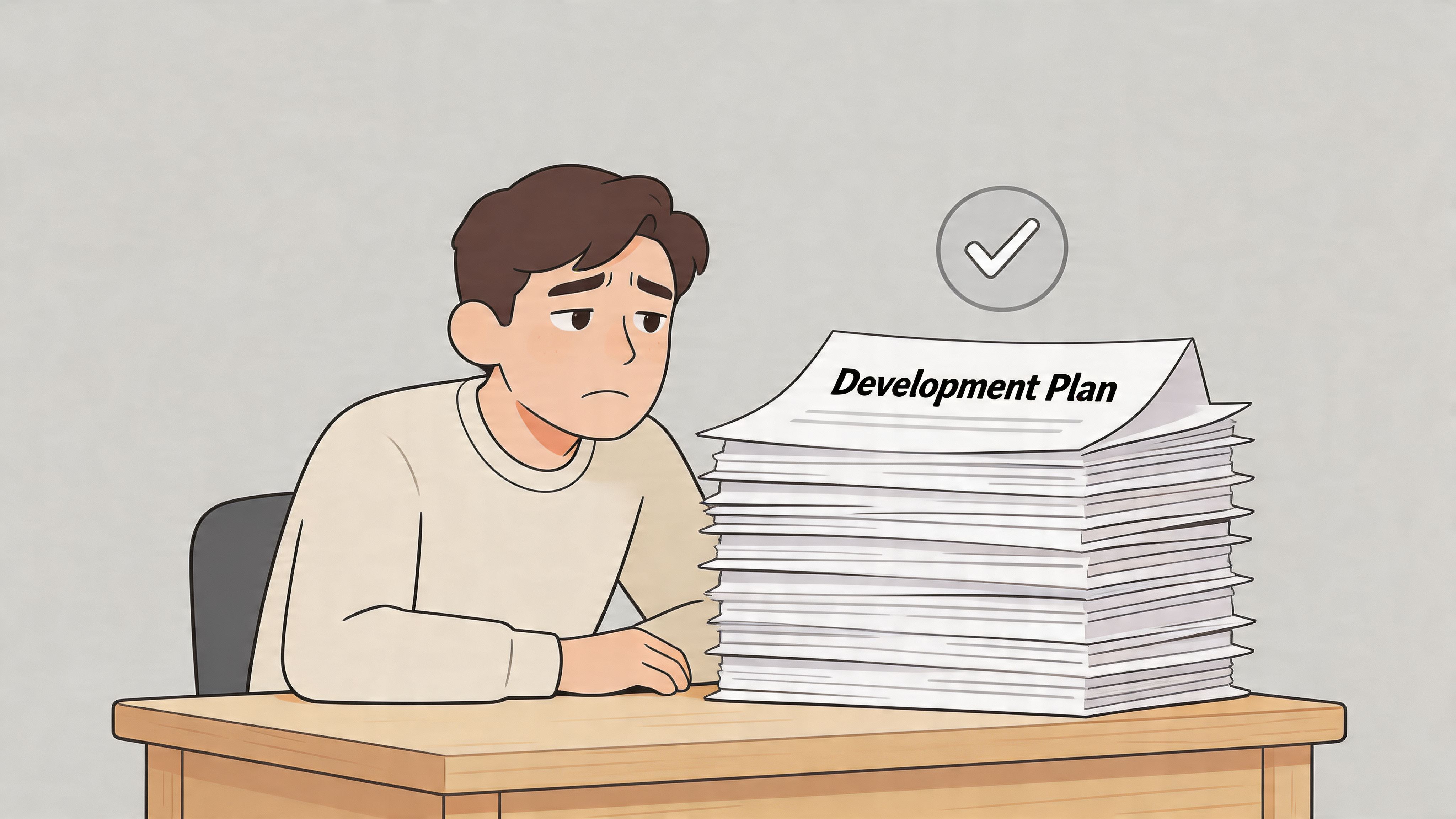
The standard sample fails because it assumes time, access, and follow-through that many frontline teams do not have. It assumes people will reopen a file, schedule a formal check-in, and translate broad goals into actions on their own. That works poorly even in office settings. It breaks fast in shift-based work.
SHRM has reported that frontline managers struggle to retain people when growth paths feel generic or unclear. That lines up with what operators see on the ground. Employees leave when development sounds good in a review but never shows up in the week-to-week job.
Training and growth still matter. They matter a lot. Employees are more likely to stay when they can see ongoing development, but "ongoing" is the part many plans miss. A PDF reviewed once a quarter is not ongoing training. It is recordkeeping.
Practical rule: If a development plan lives in a folder no one checks during the week, it isn’t a plan. It’s an archive.
A living plan looks different
A working plan shows up where managers and employees already communicate. For distributed and frontline teams, that usually means a daily work app, not a document attached to an email. In Pebb, for example, the plan can live beside shift updates, coaching notes, tasks, learning resources, and manager follow-ups. That changes the odds of execution because the plan stays visible.
The trade-off is simplicity. Living plans cannot be bloated. If a supervisor has to scroll through ten fields and three long-term goals during a shift handover, they will skip it. A better setup keeps the target clear, ties it to one or two next actions, and makes updates fast enough to happen in real conditions.
Development also works better when it sits inside the same operating system as feedback and performance conversations. Separate tools create drift. One place to track coaching, expectations, and growth creates better follow-through. This guide on a performance management system is a useful reference point.
The standard worth aiming for
The strongest plans survive busy weeks because they ask a practical question. What should this person get better at next, and what will they do this week to prove progress?
That standard is higher than filling out a template and lower than designing a career path for the next five years. It is also more useful. For frontline leaders, a development plan sample should act like a live agreement that stays visible in the flow of work, gets updated in small moments, and gives both manager and employee something concrete to do before the next shift ends.
The Anatomy of a Plan That Actually Works
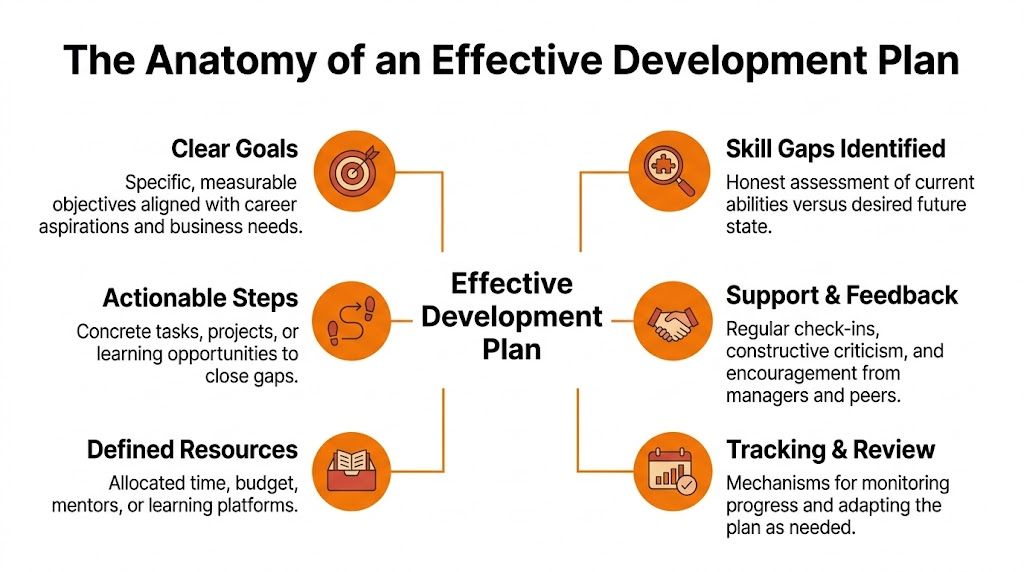
A plan works when a supervisor can glance at it during a real shift and know what the employee is practicing, what progress looks like, and what happens next.
That standard rules out a lot of development plans.
The weak ones read like annual review leftovers. They stack broad goals, generic courses, and polite language that hides the core issue. On a frontline team, that kind of plan dies fast because nobody has time to translate it into action between callouts, handoffs, and customer pressure.
The plans that hold up in busy operations have a simple structure. They answer four questions with enough detail to coach from, but not so much detail that the plan becomes another document people avoid. What role or responsibility is the person growing toward? What skill gap is in the way? What work will help them build that skill? Who will review progress, and how often?
Start with a destination
The destination should be close enough to matter now.
For a warehouse associate, that might mean handling cycle counts without backup. For a shift lead, it could mean running huddles, assigning work cleanly, and addressing minor performance issues before they become manager problems. For a field technician, it may be taking ownership of a job from arrival through reporting.
Specific targets improve coaching because they create an observable standard. “Improve communication” gives a manager nowhere to coach from. “Lead the weekly stockroom handoff and log issues clearly in the app” gives both sides something concrete to practice and review.
Name the real skill gap
At this stage, many plans go soft, and that usually ruins the rest.
If the issue is poor prioritization, say that. If the issue is shaky conflict handling, inconsistent reporting, or low confidence speaking in front of peers, put it on the page clearly. Once teams blur the gap into generic language about growth, the action steps drift toward random training and the employee spends time on work that does not fix the problem.
For distributed teams, accuracy matters even more because managers see less of the day firsthand. A clear gap helps everyone coach the same issue, whether they are in one location or spread across sites.
One practical rule helps. Name one primary gap, then a supporting behavior if needed. More than that and the plan usually gets watered down.
Build actions around the job, not around content
Good plans use work itself as the training ground. Formal learning supports that process. It does not carry the whole plan.
A useful model is the 70-20-10 split described in Docebo’s guide to employee development plan examples, where learning comes mostly from experience, then feedback and coaching, then formal instruction. The same source also notes that this approach is linked to stronger skill acquisition in team settings, and that employees are more likely to stay when companies invest in development: https://www.docebo.com/learning-network/blog/employee-development-plan-examples/.
In practice, that usually looks like this:
On-the-job work: lead one handoff per week, own a small process, handle a new task independently, solve a recurring workflow issue
Support from others: manager feedback after a shift, peer shadowing, coaching from a stronger operator, short weekly check-ins
Formal learning: a short SOP refresher, a targeted course, a quick module before trying the task again
That mix fits frontline reality. People build judgment by doing the work, then improve faster when someone reviews what happened while it is still fresh. If you want a practical framework for workplace skill development across frontline teams, use methods that tie learning directly to the next shift, route, or service window.
A personal development plan can help employees understand the concept, but managers still need to translate that idea into live, role-specific actions.
Keep support and tracking visible
A plan without follow-up becomes a statement of intent. Nothing more.
For frontline and distributed teams, visibility matters as much as plan quality. If the development plan sits in a PDF, managers forget it until the next review cycle. If it lives inside the team’s daily work app, alongside tasks, coaching notes, shift updates, and check-ins, it stays in view and gets used. That is the difference between a document and a working management tool.
Tracking does not need to be heavy. It needs to be usable. Set one or two milestones, decide who reviews them, and pick a cadence that matches the speed of the work. Weekly or biweekly usually works better than quarterly for operational roles because progress shows up in small reps, not big annual leaps.
The best plans are easy to reopen, easy to update, and clear enough that both manager and employee know what success looks like before the next check-in.
A Step-by-Step Guide to Creating the Plan
Most development plans fail before the first follow-up. Not because the intent is bad, but because the plan gets written like a document to finish, not a tool to use.
For frontline and distributed teams, that mistake shows up fast. A manager fills out a template, saves a PDF, mentions it in a review, and nobody opens it again until the next cycle. If you want the plan to change behavior, it has to live where the work already happens. In practice, that means inside the team’s daily app, where coaching notes, tasks, shift updates, and check-ins already sit. That is how a plan stays visible enough to matter.
Start with direction, not correction
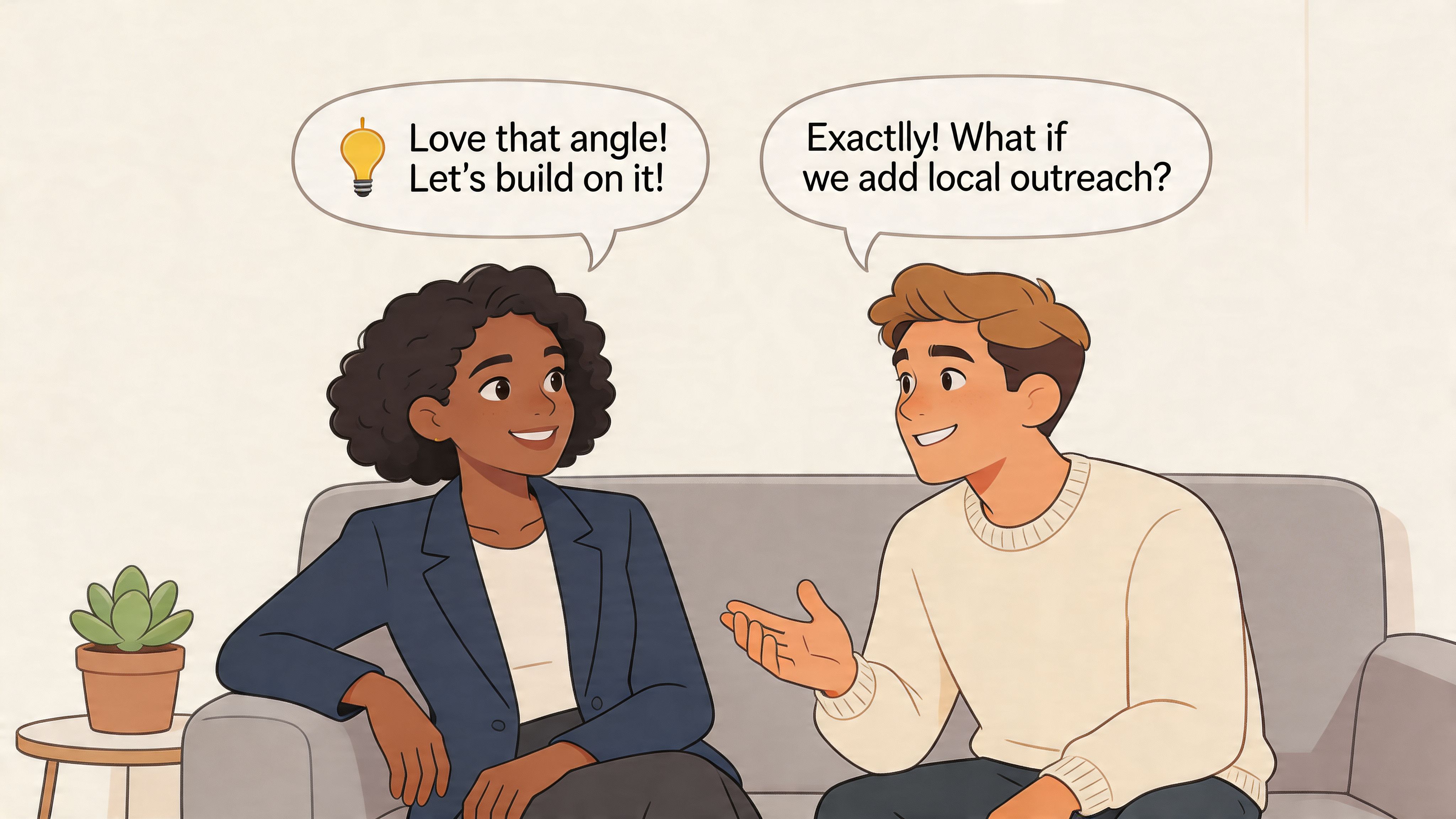
Start by asking where the employee wants to grow. Do not start by listing what is wrong.
That sounds simple, but managers miss it all the time. They walk into the conversation with a fixed answer, usually based on what the team needs this quarter. Sometimes that is necessary. Stores need keyholders. Warehouses need backup leads. Field teams need people who can train others. But if the employee has no interest in that path, the plan turns into compliance work.
Ask direct questions:
What part of the job do you want more of?
What do you want to get better at over the next few months?
What would you like me to trust you with by the end of this plan?
Is your goal promotion, cross-training, more stable hours, or stronger performance in your current role?
Those answers give you something usable. If someone needs a basic overview before the conversation, this explanation of a personal development plan covers the concept clearly.
Use real evidence from the job
Once the direction is clear, test it against observed work.
Use recent examples. Look at shift performance, quality issues, customer feedback, missed handoffs, speed, accuracy, or how the person handles pressure. For distributed teams, check what shows up in message threads, completion data, field notes, and peer feedback. Skip the vague personality labels. Focus on patterns you can coach.
The practical question is straightforward. What is the next skill, habit, or responsibility that will make this person more effective in the role they have now, or more ready for the role they want next?
A good answer sounds like this: “You want to move into lead coverage, and the main gap is running the opening routine without needing help when priorities change.” That gives you a real starting point.
Write goals people can act on during a shift
Bad goals usually sound polished and useless.
“Improve leadership presence.”
“Strengthen communication.”
“Demonstrate stronger ownership.”
Those phrases belong in committee notes, not in a working plan.
Write the goal so a busy manager can observe it in real work:
Retail associate: Complete end-of-day inventory checks for one zone with accurate discrepancy notes.
Warehouse lead: Run the pre-shift huddle, assign work by order priority, and flag capacity risks early.
Field service coordinator: Send a same-day update to stakeholders with the right blockers, next steps, and owner names.
If the employee cannot repeat the goal in one sentence from memory, rewrite it.
One trade-off matters here. Highly detailed goals are easier to measure, but they can become rigid if the operation changes week to week. Keep enough detail to guide action, but leave room to adjust as workloads, routes, or staffing shift.
Keep the action plan small enough to survive real work
Managers often overload the plan at this point.
They add online courses, reading, shadowing, extra projects, mentoring, certifications, and a stretch assignment on top of a full schedule. Then they wonder why progress stalls by week two. Frontline teams do not fail because they dislike development. They fail because the plan ignores time, staffing, and fatigue.
A practical plan usually needs three parts:
One stretch assignment tied to normal work.
One person providing support such as a manager, trainer, or experienced peer.
One light formal resource that gives context without pulling the employee away from the job.
That is enough for most roles. In Pebb, those pieces work better when they are attached to the flow of work itself. The stretch task can sit next to the shift checklist. The support note can sit in the same thread where feedback already happens. The resource link can be pinned where the employee will see it before the next rep.
Set check-ins that fit the pace of the operation
A plan does not need a long formal review every week. It does need a rhythm that holds up during busy periods.
For a cashier, picker, driver, tech, or store lead, quick check-ins usually work better than a monthly sit-down that keeps getting postponed. Five focused minutes after a shift can do more than a polished one-hour meeting that never happens. Ask what they tried, what improved, where they got stuck, and what should change before the next check-in.
Keep the review method light. If your broader process already feels too heavy, this annual performance review template for managers is a useful reference for separating formal evaluation from ongoing development.
The key is consistency. If development lives only in annual review paperwork, it becomes background noise. If it shows up in the same app people use to run the day, it stays active.
Split ownership clearly
Shared ownership sounds nice. Clear ownership works better.
The employee owns the effort. They do the reps, ask questions, and try the new responsibility. The manager owns the conditions around the effort. That means creating chances to practice, watching the work closely enough to give useful feedback, and removing barriers that make the plan unrealistic.
I have seen plans fail even when the goal was right. The problem was simple. Nobody made room for practice. The employee was told to improve, but every high-pressure shift pushed them back into the same narrow tasks because it felt faster in the moment. That is a management choice, and it stifles development plans.
A workable plan reads like an agreement. Here is the skill we are building. Here is where you will practice it. Here is how I will support you. Here is when we will review and adjust it. Put that agreement where both people will see it during the week, not in a folder nobody opens.
Ready-to-Use Development Plan Samples
Templates help, but examples help more. A strong development plan sample shows how the plan changes with the role, the pace of the work, and the kind of growth the employee wants.
Below are three practical versions. None of them are fancy. That’s the point. They’re meant to survive real work.
Sample one for a frontline retail associate
Maria works the sales floor and backroom in a busy retail store. She’s reliable, quick with customers, and trusted during rushes. Her manager wants to prepare her for more responsibility, but not by throwing “leadership training” at her and hoping for the best.
The primary opportunity is inventory discipline. Maria wants to be considered for keyholder responsibilities later, and inventory accuracy is one of the clearest signs she can handle more ownership.
Her plan focuses on this goal: take ownership of cycle count preparation and flag discrepancies clearly before they become end-of-week surprises.
Her actions follow the 70-20-10 shape naturally. Most of the learning happens on the job through weekly cycle count prep, stockroom organization, and leading one part of the closing checklist tied to inventory. The social learning piece comes from shadowing the assistant manager during discrepancy review and getting feedback after each count. The formal learning piece is light. She reviews the store’s stock handling SOPs and completes a short internal training module on shrink and reporting.
The manager tracks progress by watching for fewer corrections, clearer notes, and better handoff quality. The plan works because it lives in the work itself. Maria doesn’t need a separate “development hour.” She needs a slightly bigger lane and regular feedback.
A useful sample plan gives someone a bigger job in small pieces before giving them a bigger title.
Sample two for a newly promoted warehouse supervisor
Darren used to be one of the strongest operators on the floor. Then he got promoted, which is where many companies make a classic mistake. They assume top individual performers will automatically know how to lead.
Now Darren is stuck between doing and directing. He jumps in to solve every issue himself. His team likes him, but the shift depends on him too much. He needs to move from worker with authority to supervisor with judgment.
His primary goal is simple: run a consistent shift with clear priorities, visible delegation, and timely follow-up on problems.
This plan looks different from Maria’s because the gap is different. Darren doesn’t need more process knowledge. He needs management habits. His on-the-job learning centers on leading pre-shift huddles, assigning work based on bottlenecks, and handling one low-stakes performance conversation with coaching from his manager. The social learning piece includes weekly debriefs with an experienced site lead and peer observation during another supervisor’s handoff. Formal learning stays narrow. He reviews the company’s guidance on feedback, documentation, and escalation.
The manager measures progress through handoff quality, task follow-through, and whether Darren starts solving issues through the team instead of around the team. The best sign of progress is behavioral. He gives fewer heroics and more direction.
Sample three for a hybrid marketing specialist
Jenna works in a hybrid role and wants to move toward project leadership. She’s strong at execution but often waits for permission to make cross-functional calls. Her manager doesn’t want to overdesign the plan, because that usually turns capable specialists into chronic overthinkers.
Her goal is to lead one medium-sized campaign project from planning through closeout, with clear updates, owned deadlines, and documented lessons at the end.
The on-the-job learning includes building the project timeline, running check-ins, and owning status updates across stakeholders. The social learning comes from feedback after meetings, support from a mentor in another department, and reviewing how a senior teammate structures project communication. The formal learning piece is limited to a project planning resource and a short internal guide on stakeholder management.
Success isn’t measured by perfection. It’s measured by whether Jenna starts acting like an owner before she has the title.
Development Plan Samples at a Glance
Role | Primary Focus | Example Goal (SMART) | Tracking Method in Pebb |
|---|---|---|---|
Frontline retail associate | Inventory ownership | Lead cycle count prep for assigned section and report discrepancies clearly during weekly review | Tasks for weekly count actions, notes in Space, manager check-ins |
Warehouse supervisor | Delegation and shift leadership | Run shift huddles, assign priorities, and complete follow-up on team issues over the next review cycle | Shared task lists, handoff posts, feedback thread with manager |
Hybrid marketing specialist | Project leadership | Own one campaign from kickoff to closeout with clear updates and deadline follow-through | Project tasks, resource library, milestone updates in dedicated Space |
What these samples have in common
Even though the jobs differ, the plans share the same discipline.
They focus on one meaningful area, not six. They tie growth to actual work, not detached training. They give the manager a visible role. And they create evidence that progress is happening while the work is still underway.
That last point matters most. A development plan sample should show movement in the middle, not just ambition at the start.
Bringing the Plan to Life and Keeping It There
Most plans don’t fail during creation. They fail during the second week of real work.
The meeting happened. The goals were written. Everyone meant well. Then the schedule got messy, a staffing issue popped up, somebody took leave, and the plan slid behind more urgent tasks. That’s normal. The answer isn’t more paperwork. The answer is to make the plan easier to see and easier to use.
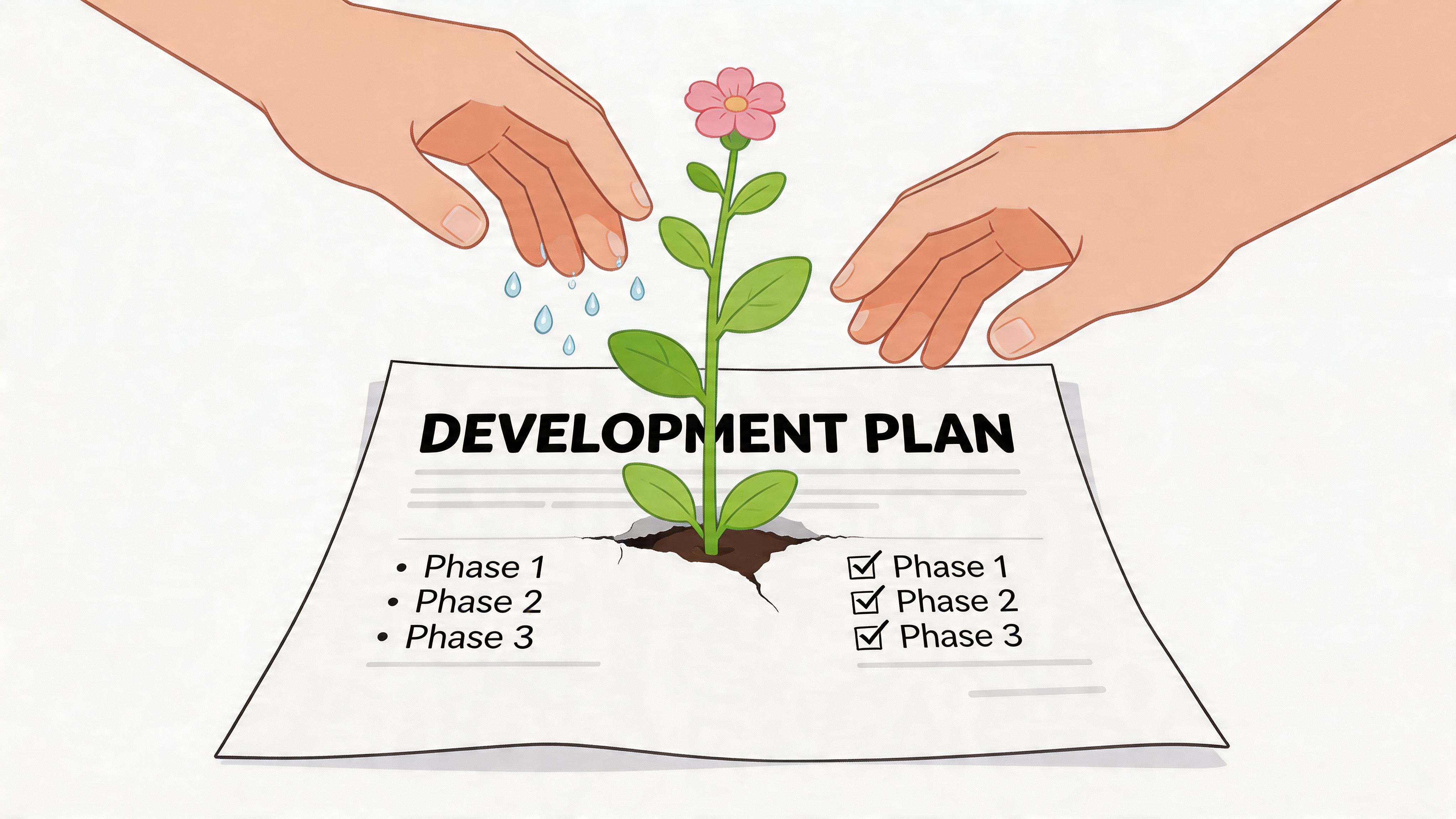
Put the plan where daily work already happens
A plan hidden in HR software gets forgotten because managers and employees don’t live there all day.
The working version of the plan should sit inside the same place people use for updates, tasks, files, messages, and quick follow-up. That way the plan is not a special event. It becomes part of the operating rhythm.
For frontline and distributed teams, this matters even more. People don’t have time to chase separate systems just to remember what they said they’d work on. If the development plan sample can’t survive mobile use, shift changes, and short attention windows, it won’t last.
Keep the cadence light
The plan should move through short check-ins, not heavy review sessions.
Managers often make one of two mistakes. They either never revisit the plan, or they turn every check-in into a mini annual review. Both approaches drain energy. A better rhythm is brief and specific. What did you practice? What feedback came back? What’s the next action?
That rhythm keeps development tied to momentum. It also makes course correction easier. If a goal was too ambitious, you can scale it. If the employee mastered it faster than expected, you can raise the bar without rewriting a giant document.
Short check-ins beat polished reports. Progress grows in small conversations.
Use visible artifacts, not memory
If a plan depends on people remembering what happened, the manager with the best memory wins. That’s not a system.
Use concrete artifacts from the work itself. Assigned tasks. Completed projects. Notes from a handoff. Feedback after leading a meeting. A resource saved for review. Those traces make growth visible without forcing people into long write-ups.
That’s also how leaders stop development from becoming subjective. Instead of saying “you seem more confident,” they can point to what changed. You led the huddle three times in a row. You documented the issue before escalation. You trained someone else on the process. That’s progress people can trust.
Give managers a playbook they can actually follow
A lot of companies tell managers to support development, then give them almost no practical structure. So every manager invents their own method. Some are good at it. Some avoid it. Some talk a lot and document nothing. The employee experience becomes random.
A better operating model includes a few simple expectations:
One current focus: Each employee should have one active development priority, not a crowded wish list.
One visible next action: Every plan needs the next concrete step, not just a final goal.
One support person: Usually the direct manager, sometimes with a mentor added in.
One recurring check-in rhythm: Simple enough that a busy supervisor can maintain it.
That’s enough structure to create consistency without turning managers into administrators.
Watch engagement patterns across the team
There’s also a broader leadership benefit. When development lives in the flow of work, leaders can see whether it’s happening across teams. They can spot who’s participating, where plans are stalling, which resources get used, and which managers follow through.
That matters because development problems rarely show up as “development problems” at first. They show up as uneven readiness, weak internal pipelines, inconsistent team leads, and retention strain in the same pockets again and again.
When leaders can see those patterns early, they can coach managers sooner and fix the system before it turns into turnover.
More Than a Plan a Conversation
A development plan fails the moment it becomes a file instead of a management habit.
The strongest development plan sample is not the template. It is the quality of the follow-up. For frontline and distributed teams, that distinction matters even more because work moves fast, managers are stretched, and nobody opens an old PDF in the middle of a shift. If the plan is going to help, it has to stay visible inside the workday.
That is why static documents break down so often. A manager writes thoughtful goals, saves the file, and means to return to it. Then schedules slip, priorities change, and the plan disappears until review season. The employee reads that as indifference, even when the manager had good intentions.
Structured professions handle this better when development is treated as an ongoing practice. A useful example is continuing professional development for accountants. The lesson is not about accounting. It is about repetition, visible progress, and professional growth tied to the job itself.
What good leaders do differently
Good leaders keep development tied to current work instead of parking it in a separate system. They discuss one skill, one next step, and one check-in point. They notice progress early and adjust before momentum drops.
That approach works especially well in Pebb because the plan can live in the same place as team communication, tasks, resources, and updates. A supervisor can assign the next action, share a quick guide, check progress in a message thread, and keep the goal visible without adding another admin layer.
Poor plans fade. Useful plans show up in the work. A team member takes on a harder customer issue. A shift lead runs handoff better. A newer employee needs less prompting and starts showing judgment.
Development is one of the clearest ways a manager tells an employee, “I can see your future here.”
The most important question is simple. Can your team see development happening this week, or only read about it once a year?
For busy teams, start small. Choose one employee. Choose one skill that will improve performance now. Agree on the next action, put it somewhere visible, and return to it within days, not months.
That is how development starts feeling useful instead of performative.
If you want one place to run those conversations, track follow-through, share resources, and keep frontline and office teams aligned, Pebb is worth a look. It brings chat, Spaces, tasks, knowledge, files, and analytics into one work app, so development plans can live where the work already happens instead of getting buried in another forgotten document.
