
10 Habits of a Successful Project Manager
Become a successful project manager. Learn 10 practical habits and tactics to lead calm, effective projects, from communication to data-driven decisions.
Dan Robin
The calm project is the successful project. I’ve seen two kinds of project managers. The first lives in a constant state of emergency. Their days are a blur of urgent messages, missed handoffs, and people asking the same question in five different places.
The second runs a quieter operation. People know what matters, where to find answers, and when to speak up. The work is still hard, but it doesn’t feel like a fire drill.
That difference isn’t personality. It’s habit.
A successful project manager doesn’t win by sounding busy or looking indispensable. They win by making the work legible to everyone involved, especially when the team is split across offices, stores, hospital floors, warehouses, and shifts that rarely overlap. That’s the true challenge now. Not just managing tasks, but holding together a fragmented team without turning the whole thing into a bureaucracy.
The data backs up what many of us have learned the hard way. PMI’s article on what makes a project manager successful points to the importance of psychological safety and team climate, and the same broader body of project management reporting shows that leadership and power skills matter a lot more than many teams admit.
The habits below are the ones I keep coming back to. They’re practical. They work. And they matter even more when you’re trying to unify frontline and office teams in one place instead of letting communication scatter across email, chat, calls, spreadsheets, and hallway conversations.
1. Emotional Intelligence & Team Empathy
A successful project manager reads the room, even when there isn’t one.
That’s harder now because half the team may be on mobile, the other half on laptops, and some of the most important people might be working nights while the leadership team sleeps. If you can’t sense frustration, fatigue, or confusion early, the project pays for it later.

I’ve seen this matter most in operations-heavy teams. A hospital manager who posts updates only for day shift creates a quiet resentment problem. A retail lead who only praises store managers and ignores the people closing late creates distance. A warehouse supervisor who never checks in after a rough week gets compliance, maybe, but not trust.
Practice human attention
Use direct messages and voice calls for actual one-on-ones, not just reminders. Ask how the work feels, not only whether it’s done. If someone has gone quiet, assume there’s something worth understanding.
A good all-in-one tool helps because it keeps these touchpoints in the same place as the work. You can spot disengagement in activity trends, then follow up before the person mentally checks out.
People raise risks early when they feel safe. They stay silent when they think honesty will cost them.
Public recognition matters too. Thank the night shift in a team update. Call out someone who handled a difficult handoff well. Mention birthdays, milestones, and small wins in shared spaces. It sounds soft until you’ve managed a tired team through a hard rollout. Then you realize it’s infrastructure.
2. Clear Communication & Transparency
The project looked healthy in the weekly meeting. Green status. Confident updates. Then the night shift followed an old process, the field team missed the policy change, and headquarters learned about the mess after customers did.
That’s what bad communication looks like in real life. The problem is rarely silence. It’s scattered information, vague ownership, and updates delivered in places half the team never sees.
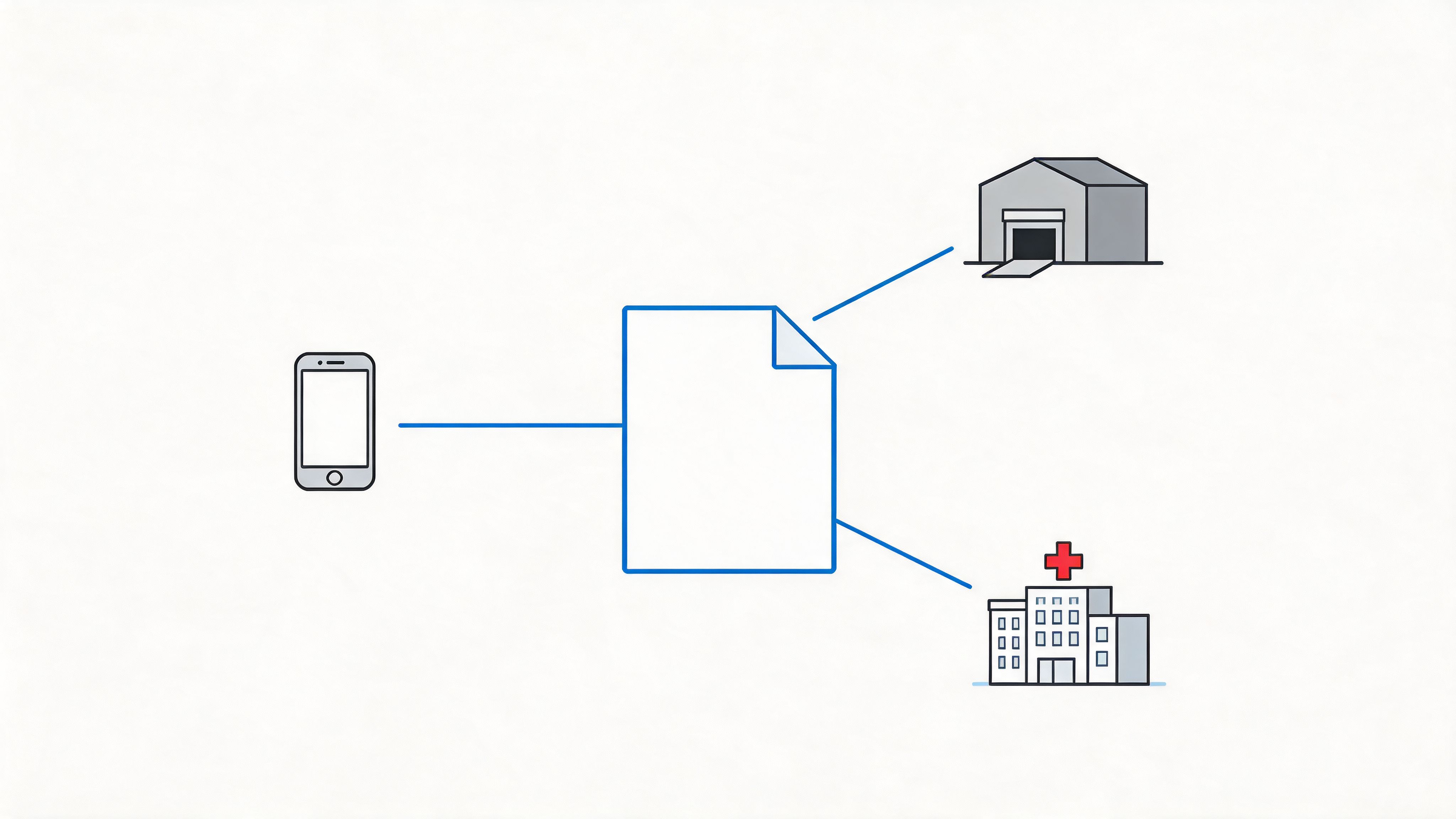
A successful project manager fixes this by building one clear system for how information moves. Frontline staff, mobile managers, and office teams should all know three things without asking around. What changed. Why it changed. What they need to do next.
Mixed teams need different channels for different jobs. Urgent changes belong in announcements. Context belongs in a shared news feed. Policies and repeat answers belong in a searchable knowledge library. Task conversations belong with the task, not buried in chat. Pebb works well here because it keeps updates, documents, and execution in one place instead of forcing people to hunt across five tools.
Explain the decision, then document the action
People do not resist clarity. They resist confusion.
If a retail chain changes staffing rules, explain the reason, the impact by role, and the exact start date. If a logistics team updates shift procedures, publish the new checklist where drivers, dispatch, and supervisors can all reach it from their phones. If the message carries emotional weight, record a short video. If confusion is predictable, run a live Q&A and post the answers afterward.
Good communication is operational design. Set up role-based spaces so store associates see what helps them do today’s work, while leadership gets a separate view for broader coordination. That discipline keeps noise down without hiding context from the people who need it.
If you want a practical model for setting this up, this guide on how to enhance communication in the workplace is useful. So is this piece on strategic leadership in fast-moving teams, because communication breaks down fast when leaders treat alignment as an afterthought.
Transparency is not oversharing. It is making the right information easy to find, easy to trust, and hard to miss. Do that consistently, and you cut rework, lower friction between frontline and office teams, and stop small misunderstandings from turning into project problems.
3. Strategic Planning & Roadmap Development
The projects that go sideways usually do not fail because the team lacked effort. They fail because nobody translated the goal into a plan people could follow.
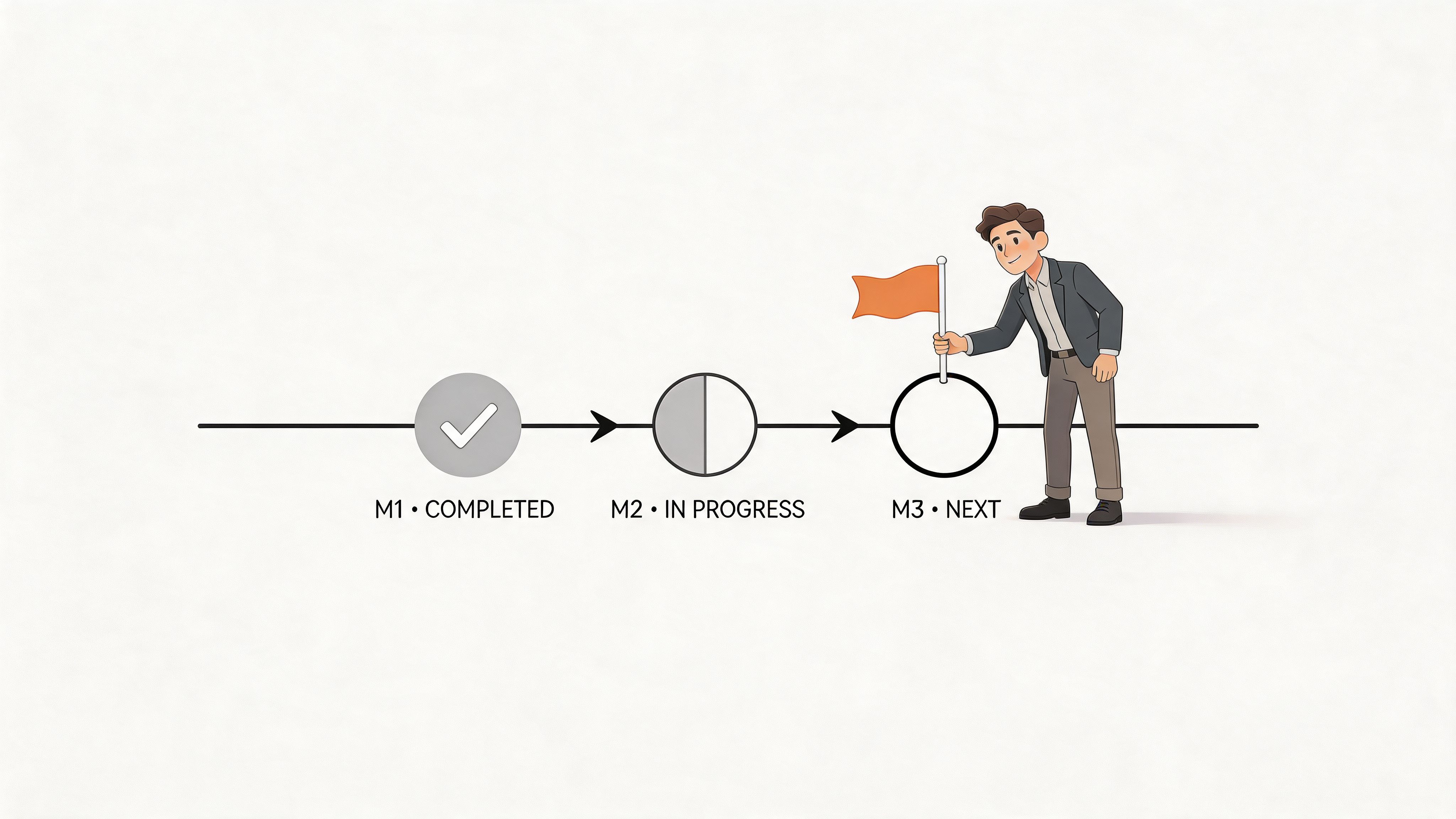
Strategic planning means turning ambition into sequence. A successful project manager sees the full path, then strips it down to milestones, handoffs, and decisions that make sense to people on the ground. That matters even more in mixed teams where frontline staff are on the move and office teams sit in meetings. If the roadmap only works on a slide deck, it is not a roadmap. It is theater.
In practice, good planning looks plain. Good.
A hospital rolling out a new system should know which department starts first, who signs off on training, what happens when a handoff slips, and where unresolved issues are tracked. A retailer opening new locations should manage staffing, inventory, training, and local readiness in one shared plan, not in separate chats, spreadsheets, and inboxes. Fragmented teams do better when the work lives in one place, with one source of truth they can check from a desk or a phone.
Build a roadmap people can use
Start with the outcome. Work backward into phases. Break each phase into tasks with owners, deadlines, dependencies, and a clear definition of done. Then make the plan visible at two levels. Leadership needs the full picture. Individual teams need a simpler view that shows what they own now, what is blocked, and what comes next.
That last part is where many project managers lose the room. They build a roadmap for senior stakeholders, then expect frontline supervisors, coordinators, and specialists to decode it. Do the opposite. Build for the people doing the work first. Tools like Pebb help because they put tasks, updates, documents, and team communication in the same place, which cuts the usual scramble across disconnected systems.
Practical rule: If your roadmap needs a meeting just to be understood, it’s too complicated.
Plans also need judgment. Too rigid, and the team starts serving the plan instead of the outcome. Too loose, and every delay turns into a debate. Strong project managers hold that middle ground. If you want a useful framing for that balance, read this guide on strategic leadership in fast-moving teams.
One more rule. Make progress visible in a way people can read in seconds. Status labels, milestone markers, and simple goal visuals beat dense project documents every time, especially for distributed teams. This guide on how to implement SMART goal visuals is a practical reference if your plans look tidy in a PM tool but still confuse the people expected to execute them.
4. Adaptive Leadership & Change Management
Every project changes something. A process. A system. A habit. Sometimes all three.
That means a successful project manager is also a change leader, whether they like the title or not. You can’t just announce the new way and hope people comply. You have to help them cross the gap between old behavior and new behavior.
I’ve watched teams consolidate multiple tools into one shared platform. The technical move is usually the easy part. The core work is emotional. Some people worry they’ll look slow. Some don’t trust the new tool. Some are tired of “transformations” that create more work than they remove.
Make change feel survivable
Start with a small group that wants the change. Let them test the process, find the rough edges, and show the rest of the organization what good looks like. Then spread from there.
Create department champions. Give people a feedback space that leadership reads. Don’t pretend the switch is trouble-free when it isn’t. Say, “This will be awkward for a couple of weeks, and we’re going to help you through it.”
For teams that need visual planning during change, I like the logic behind how to implement SMART goal visuals. Concrete milestones calm people down because they can see progress instead of just hearing promises.
One more thing. Successful organizations rarely stay loyal to a single rigid method. According to Scoop Market’s project management statistics, 89% of project managers in successful organizations use hybrid practices. That makes sense. Real teams need structure and flexibility at the same time.
5. Data-Driven Decision Making & Analytics Literacy
One project looked healthy in the weekly meeting and broken everywhere else.
The dashboard said tasks were on track. The frontline team was missing updates, one location had started its own workaround, and handoffs between office staff and shift workers were getting slower by the day. Nobody lied. They were just looking at the wrong signals.
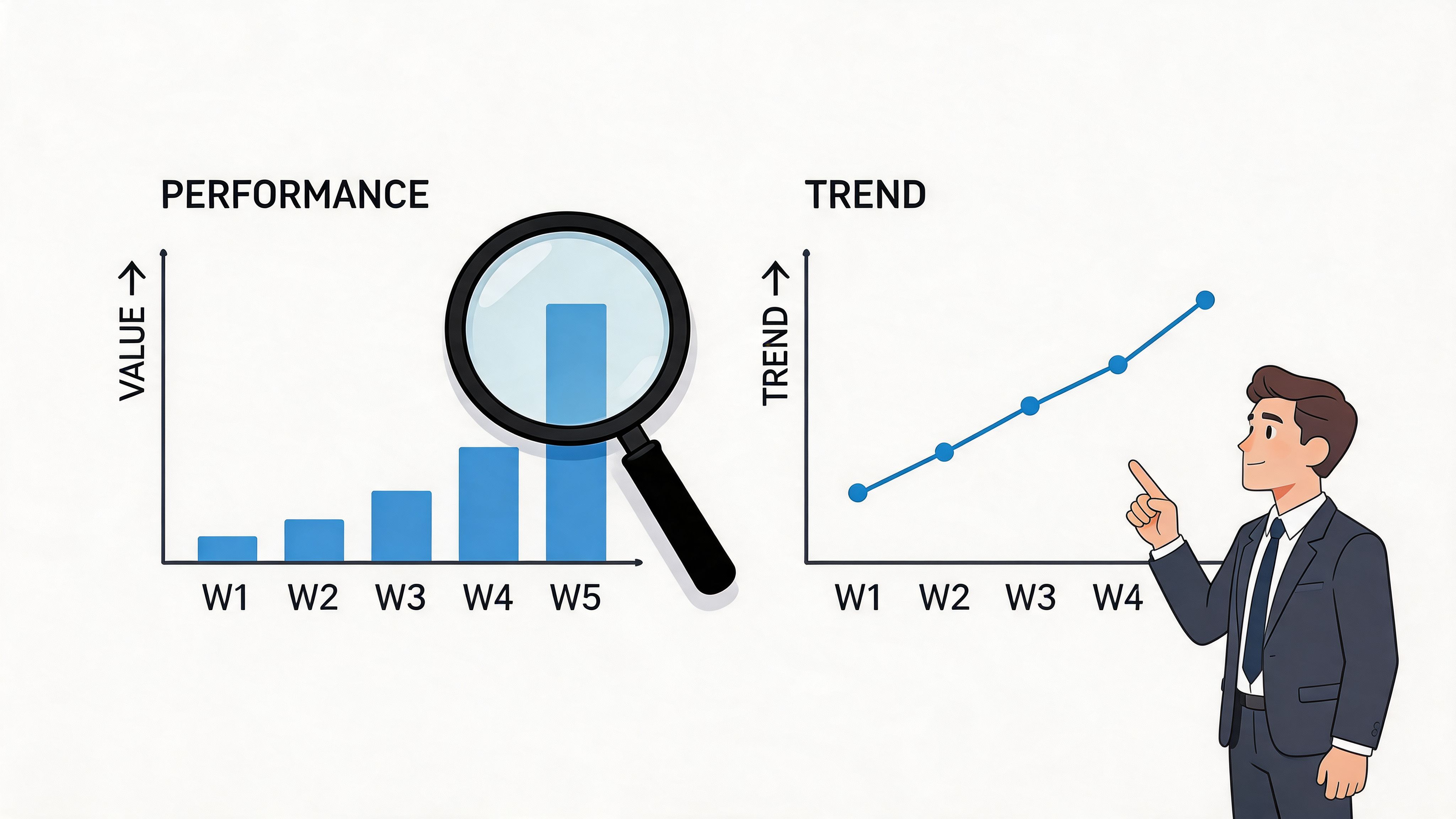
A successful project manager reads data with context. They track progress, but they also watch for friction between teams, shifts, and locations. On mixed frontline and office teams, that matters more than a polished status report. Problems usually start as small patterns. A drop in update views. Slower approvals. One manager carrying every follow-up. Uneven participation across sites.
Track operating signals early
Pick a few indicators that show whether work is moving. Task completion is one. Handoff speed is another. Add update views, overdue approvals, and participation by team or shift. Then review them on a steady cadence that matches the project. Weekly if the rollout is still shaky. Monthly if the process has settled down.
Keep the list short.
The point is not to build a fancy reporting habit. The point is to catch drift early enough to fix it. If one location keeps falling behind, check staffing, training, and local process differences before you start talking about accountability. If people read updates but do not act on them, your message probably made sense to headquarters and not to the people doing the work.
Good managers also share what they see. Plainly. “The overnight crew is getting the update too late, so we’re changing the posting schedule and assigning one owner per shift.” That is how data builds trust. It shows people the numbers are being used to remove friction, not to police them.
This is one reason an all-in-one tool like Pebb helps fragmented teams. Communication, tasks, acknowledgments, and participation live in one place, so you can spot where work is getting stuck without stitching together five different systems. That makes analytics useful. Not theoretical.
6. Risk Management & Scenario Planning
The ugly projects rarely fail out of nowhere. They give warning early. A rollout date starts slipping in small ways. One supervisor becomes the only person who knows how a location works. A fallback process exists only in someone’s head.
Good project managers don’t treat those signals like bad vibes to ignore. They put them on the table, name the risk, assign an owner, and decide what happens if the risk hits.
Build the backup before you need it
Start with the few risks that can break the work. Vendor delay. Staffing gaps. Confusion during a tool change. One site going off process while headquarters assumes everything is fine. Then write down five things for each one: the risk, how likely it is, the impact, the owner, and the trigger that tells you it is no longer theoretical.
Keep the register visible. Review it on a real cadence. Change it when conditions change.
In fragmented teams, scenario planning matters even more because the failure points are different across roles and locations. Office staff may lose time to slow approvals. Frontline teams may miss updates entirely if the message depends on email they never check during a shift. If you don’t plan for both realities, your “standard rollout” is already broken.
A few practical examples:
If you are rolling out a new communication tool in a hospital, keep a documented fallback channel for urgent updates during the transition.
If a retail operation depends too heavily on one district manager, document the playbook and name a backup before that person takes leave or burns out.
If a logistics team expects seasonal volume to stretch staffing, decide in advance which work gets delayed, which tasks get reassigned, and who makes the call.
That is scenario planning. Not a giant workshop. Not a binder nobody opens. A simple habit of asking, “What is likely to go wrong here, and what will we do when it does?”
Pebb helps with this because the work, updates, and ownership live in one place. If a backup manager needs to step in, they can see open tasks, team communication, and unresolved approvals without chasing context across separate systems. That shortens recovery time, which is what good risk management is supposed to do.
A risk discussed early is manageable. The same risk, left vague and ownerless, turns into a delay everyone saw coming and nobody prevented.
7. Stakeholder Management & Coalition Building
Projects don’t fail only because the work is hard. They fail because the people with influence were never fully aligned.
A successful project manager knows who needs what, who can block progress, and who can help a project move. They don’t send the same message to the CFO, the CHRO, the operations lead, and the frontline supervisor and call it stakeholder management.
A finance leader may care about waste and tool sprawl. HR may care about engagement and adoption. Operations may care about speed and fewer workarounds. Frontline managers usually care about one thing first. Will this make my day easier or harder?
Build support one conversation at a time
Map your stakeholders early. Write down their goals, concerns, influence, and current level of support. Then talk to them individually before the broad rollout starts.
In a healthcare project, that might mean getting physician leaders and nurse leaders aligned separately before asking them to back the same schedule change. In retail, it may mean involving store managers and labor representatives before a new mobile workflow goes live. In logistics, warehouse managers often become the bridge between executive intent and dock-level reality.
Transparency pays off. Explain the decision, not just the directive. Let people see tradeoffs. Ask for friction points before they become public resistance.
A successful project manager also creates visible ownership. Steering groups, working sessions, named sponsors, local champions. People support what they helped shape.
8. Team Development & Capability Building
A project shows you what kind of manager you are when someone on the team asks, “How would you handle this?” every single day.
If that keeps happening, the problem is not the team. It is the system you built around them.
A successful project manager builds judgment, confidence, and range. The goal is simple. People should get better while the work gets done. That matters even more on mixed teams where office staff have easier access to coaching, while frontline employees are expected to perform, adapt, and figure things out with far less support.
The best managers treat projects as a place to grow talent in plain sight. A nurse aide shadows a shift lead and starts owning handoff routines. A retail assistant manager rotates across store formats and learns how staffing decisions change by location. A warehouse associate joins a process improvement effort and learns how to spot bottlenecks, test a fix, and report results clearly.
Build capability into the project itself
Use one-on-ones for coaching, not just updates. Give people ownership of a piece of the work, then define what a good outcome looks like before they start. Review decisions with them afterward so they learn how to think, not just what to do.
Keep the path visible.
Hidden development is politics dressed up as merit. If only the well-connected know how to get better roles, your project will always depend on the same small group of people. Write down skill paths, document repeatable workflows, and make examples easy to find so a frontline supervisor and a head-office analyst can learn from the same playbook.
Pebb helps with this because the work and the learning live in one place. Tasks, documents, chat, and team spaces sit together, so mentoring can happen inside daily execution instead of getting pushed into a separate HR process nobody has time to use.
Good team development also changes how the project runs. Decisions move faster because more people can make them well. Coverage improves because knowledge is shared instead of trapped in one person’s head. Promotions become less risky because people have already practiced at the next level.
Train the team while you deliver the project. That is how you leave behind something better than a finished plan.
9. Resilience & Adaptability Under Pressure
Projects get hit. A key person leaves. A system rollout stalls. A vendor misses a date. Adoption lags. If your composure disappears the minute reality pushes back, the team feels it immediately.
A successful project manager doesn’t confuse calm with passivity. They respond quickly, but they don’t spread panic. They tell the truth, adjust the plan, and keep people oriented.
This is especially important in healthcare, hospitality, logistics, and retail, where pressure is part of the environment. People are already carrying enough. They don’t need a project lead who turns every setback into a mood.
Stay visible when things wobble
When there’s a delay, communicate more, not less. Silence creates rumor. A short update saying what happened, what changes now, and when you’ll update again goes a long way.
Run retrospectives after rough patches. Ask what worked, what broke, and what should change next time. Encourage people to raise problems early without fearing blame. Check in privately with the people carrying the heaviest load.
Teams don’t need a flawless manager. They need one who stays useful under stress.
There’s also a human cost to ignoring this. The same PMI coverage on project manager success highlights psychological safety and team climate, and the broader discussion around power skills has grown because burnout and pressure are impossible to ignore. A successful project manager protects momentum by protecting people.
10. Cross-functional Collaboration & Breaking Down Silos
The project looked fine on paper. Marketing had its timeline. Operations had its checklist. Store managers got a short note late in the week. By Monday, half the locations were doing the new process, half were guessing, and frontline staff were stuck cleaning up a decision they were never part of.
That’s how silos break a project. Not through drama. Through missed handoffs, partial context, and teams working from different versions of the truth.
A successful project manager treats siloed work as a system problem. If office teams, frontline teams, and shift-based teams can’t see the same priorities, decisions, and next steps in one place, collaboration will stay fragile.
Build one working hub per cross-team process
Set up shared spaces around real workflows. Keep them specific. A policy rollout space for HR, operations, and site leads. A new location opening space for corporate, district managers, and store teams. A care coordination space for clinicians, administrators, and support staff.
The rule is simple. Discussion, tasks, files, decisions, and deadlines belong together. If updates live in chat, tasks live somewhere else, and the latest process note is buried in email, people fill the gaps with assumptions.
That’s where an all-in-one tool like Pebb helps. It gives mixed teams one place to coordinate work instead of splitting communication between desk workers and frontline staff. If you want a practical model, this guide on how to improve cross-team collaboration lays out the basics clearly.
Standardization matters here, but not in the stiff, corporate sense. Give every cross-functional team the same operating rhythm. One place for updates. One format for handoffs. One owner for decisions. One visible list of open work. That consistency cuts rework and stops the usual, "I thought another team had it" failure before it starts.
Silos don’t break because people attend another meeting. They break when the work becomes shared, visible, and hard to misread.
Top 10 Project Manager Competency Comparison
Item | Implementation Complexity 🔄 | Resource Requirements ⚡ | Expected Outcomes 📊 | Ideal Use Cases | Key Advantages & Tips ⭐ 💡 |
|---|---|---|---|---|---|
Emotional Intelligence & Team Empathy | Medium, ongoing personal development 🔄🔄 | Moderate, coaching time & leader bandwidth ⚡⚡ | High, improved cohesion, engagement, lower turnover 📊⭐⭐⭐ | Distributed/frontline teams, multi-shift environments | Builds trust across locations; tip: use 1:1s, model vulnerability ⭐💡 |
Clear Communication & Transparency | Medium, process and governance required 🔄🔄 | Moderate, documentation, channels, translations ⚡⚡ | High, fewer errors, faster onboarding, compliance gains 📊⭐⭐⭐ | Healthcare, retail, regulated and mobile-first orgs | Reduces miscommunication; tip: role-specific Spaces and document the “why” ⭐💡 |
Strategic Planning & Roadmap Development | High, cross-team planning and dependencies 🔄🔄🔄 | High, time, coordination, tools and analytics ⚡ | High, visibility, reduced scope creep, better forecasting 📊⭐⭐⭐ | Large rollouts, multi-site projects, complex implementations | Aligns priorities; tip: master roadmap + 15–20% contingency ⭐💡 |
Adaptive Leadership & Change Management | High, sustained behavioral & cultural effort 🔄🔄🔄 | Moderate–High, training, champions, support channels ⚡⚡ | High, higher adoption, smoother transitions, lower churn 📊⭐⭐⭐ | Platform rollouts, mergers, behavioral shifts | Increases adoption; tip: start with early adopters and create change champions ⭐💡 |
Data-Driven Decision Making & Analytics Literacy | Medium, tooling plus analytics training 🔄🔄 | High, analytics stack, dashboards, upskilling ⚡ | High, earlier detection, better allocation, accountability 📊⭐⭐⭐ | Adoption tracking, performance optimization, forecasting | Reduces bias; tip: combine leading indicators + qualitative feedback ⭐💡 |
Risk Management & Scenario Planning | Medium, structured identification & monitoring 🔄🔄 | Moderate, risk registers, reviews, contingency buffers ⚡⚡ | High, fewer surprises, faster planned responses 📊⭐⭐ | Rollouts, seasonal peaks, critical operations | Prevents major failures; tip: document triggers and maintain a risk register ⭐💡 |
Stakeholder Management & Coalition Building | High, relational and political complexity 🔄🔄🔄 | Moderate, time for engagement and governance meetings ⚡⚡ | High, faster approvals, resource support, sustained sponsorship 📊⭐⭐⭐ | Enterprise projects, unionized contexts, executive buy-in scenarios | Secures buy-in; tip: map stakeholders and tailor messaging, set governance ⭐💡 |
Team Development & Capability Building | Medium, continuous programs and coaching 🔄🔄 | Moderate, training, mentorship, learning content ⚡⚡ | High (long-term), retention, autonomy, bench strength 📊⭐⭐⭐ | Frontline career paths, succession planning, skill gaps | Builds capacity; tip: assign stretch tasks and celebrate growth ⭐💡 |
Resilience & Adaptability Under Pressure | Medium, cultural practices and crisis protocols 🔄🔄 | Moderate, training, documented protocols, wellbeing support ⚡⚡ | High, maintains productivity and speeds recovery in crises 📊⭐⭐ | Healthcare, logistics, crisis-prone operations | Sustains performance under stress; tip: document crisis protocols and debrief regularly ⭐💡 |
Cross-functional Collaboration & Breaking Down Silos | High, aligning incentives and shared KPIs 🔄🔄🔄 | Moderate, forums, shared Spaces, KPI tracking ⚡⚡ | High, reduced handoff friction, more innovation, faster decisions 📊⭐⭐⭐ | Multi-department projects, process redesign, multi-site coordination | Improves handoffs; tip: create purpose-driven cross-functional Spaces and shared KPIs ⭐💡 |
It's About the People, Not Just the Plan
A project looks stable right up until the moment it doesn’t. The deadline is still on the calendar, the tracker still shows green, and then a frontline supervisor says nobody told the night shift about the change. Ops is waiting on marketing. Finance is using an old file. Two managers think someone else owns the next step. The plan didn’t fail on paper. It failed between people.
That’s the job. A successful project manager closes those gaps before they turn into delays, rework, and blame. You are not only managing scope and dates. You are creating shared understanding across people who work in different places, on different schedules, with different pressures.
That is why the habits in this article matter.
Emotional intelligence keeps friction from turning into disengagement. Clear communication keeps assumptions from spreading. A visible roadmap helps people see how their work connects to the whole. Change management reduces confusion during shifts in priority. Good judgment with data helps you spot drift early. Risk planning keeps surprises from becoming chaos. Stakeholder support keeps the work protected. Team development makes the next project easier than the last. Resilience keeps people steady when things go sideways. Cross-functional collaboration cuts the waste that piles up in handoffs.
None of this is soft. It is how serious projects stay on track, especially when office staff and frontline teams have to operate as one team instead of two separate worlds.
Good project managers also leave the system better than they found it. Meetings get shorter because ownership is clearer. Handoffs improve because the same information lives in one place. Documentation becomes useful instead of performative. People speak up earlier because they trust they will be heard. That kind of progress outlasts any single launch date.
Tools influence whether those habits stick. If updates live in chat, tasks in another app, files in a folder nobody checks, and schedules somewhere else, the manager becomes a full-time translator. That is wasted effort. An all-in-one setup like Pebb makes the work easier to run because communication, tasks, knowledge, scheduling, and analytics sit together. That matters even more when your team is split across sites, roles, and shifts.
Still, the tool is support. The standard comes from the manager.
If you want calmer projects, start with a harder question. Does your team know what matters this week, where to find the latest information, who decides what, and how to raise a problem without getting ignored? Fix those four things and project management gets a lot less dramatic.
If you’re trying to run projects across frontline and office teams without the usual sprawl of chat apps, spreadsheets, file folders, and missed handoffs, take a look at Pebb. It gives teams one place for communication, tasks, knowledge, scheduling, and analytics, which makes these habits much easier to practice day to day.
