
Happy Work Anniversary Sayings: Craft The Perfect Message
Find perfect happy work anniversary sayings for colleagues. Get 7 message templates & tips for chat, email, and group posts.
Dan Robin
A supervisor posts “Happy work anniversary” in the team chat at 6:03 a.m. The employee taps a heart reaction on break, then gets back to unloading a truck, stocking a shelf, or starting med pass. The message was visible, but it did not say anything real about the person or the work.
That gap is why happy work anniversary sayings often fall flat. The date gets recognized, but the contribution does not. Employees notice that distinction fast, especially on frontline teams where recognition already has to compete with pace, staffing pressure, and shifting schedules.
The best anniversary message does one job clearly. It tells people what is being honored. Sometimes that is tenure. Sometimes it is growth. Sometimes it is impact on customers, coworkers, or operations. Those are different messages, and they should sound different.
That is the angle that helps managers write better recognition.
A saying built to celebrate loyalty should not read like a performance award. A message about growth should point to new skills, bigger ownership, or earned trust. A message about impact should name the result, such as steadier handoffs, calmer shifts, cleaner execution, or stronger support for the team. Once the intent is clear, the wording gets easier and the message feels personal instead of automatic.
Delivery matters too. For office staff, a polished note in email may be enough. For distributed teams, it usually is not. Field technicians, warehouse crews, nurses, restaurant staff, and store associates are more likely to see recognition in chat, a team feed, or an employee app, and those channels reward short messages with one concrete detail people can recognize on sight.
The sections that follow are not just sample lines. They sort work anniversary sayings by what they are trying to honor, then show how to use them in the places employees already pay attention. That is how recognition stops feeling like a calendar alert and starts feeling earned.
1. Cheers to [X] Years of Excellence
This one works because it’s simple and generous. It honors tenure, but it doesn’t stop at survival. “Excellence” tells the person you’re recognizing that the years mattered because of how they showed up during them.
I use this saying when I want a message to feel public, upbeat, and clean. It works for a warehouse lead, a finance manager, a nurse supervisor, or an entire team that’s hit a shared milestone. “Cheers to Sarah’s 5 years of excellence in our operations team” sounds complete on its own, but it gets better when you add one specific line about what excellence looked like.
That second line is the whole game. Without it, the saying is fine. With it, the saying becomes real.
Make excellence concrete
If you post “Cheers to 3 years of excellence” in a company feed and leave it there, people will tap the like button and move on. If you add, “You’ve trained new hires on the night shift, kept handoffs clean, and stayed calm on the hardest weekends,” the employee sees themselves in the message. So does the rest of the team.
That kind of specificity matters because anniversary posts often shape culture in public. A Terryberry article on work anniversary messages says retention rises by 37% in organizations that build these messages into recognition programs. The phrasing alone doesn’t do that. Consistent, visible recognition does.
Excellence is too vague unless you name what the person actually does well.
In practice, this saying works best in channels where people already gather. A team Space, a news feed, or a shift chat works better than a formal email nobody opens until later. If the employee works across locations, include a photo, a short note from a colleague in another branch, or a quick recap of the roles they’ve held.
A few strong versions:
For operations: “Cheers to Malik’s 4 years of excellence. You make chaos look organized.”
For healthcare: “Cheers to Priya’s years of excellence caring for patients and backing up the whole unit.”
For retail: “Cheers to Ana’s years of excellence keeping the store steady, especially when the floor gets busy.”
What works and what falls flat
This saying works when the person has a track record people respect. It also works when you want the tone to feel polished without becoming stiff. I wouldn’t use it for someone brand new to the team dynamic if the culture is casual and warm. In that case, it can sound a little too formal.
The trade-off is clear. “Excellence” adds weight, but it can also sound corporate if you don’t ground it in plain language. Keep the headline polished. Keep the body human.
2. Thank You for [X] Years of Dedication and Service
Some people don’t want a flashy message. They want honest appreciation. This saying does that well.
“Dedication and service” fits roles where reliability carries real weight. It lands especially well in hospitals, retail floors, hospitality teams, logistics operations, and support roles where the work is demanding and often underpraised. If someone keeps showing up, helps others through rough shifts, and holds the standard when things get thin, this phrase respects that.
The mistake people make is treating dedication like a personality trait. It isn’t. It shows up in behaviors.
Say what their dedication looked like
“Thank you for 7 years of dedication and service to our hospital team” is a solid start. Then add the line that proves you mean it. Mention the holiday coverage, the calm handoffs, the way they helped new staff settle in, or the fact that they’re still the person people trust when the unit gets hectic.
That’s what turns gratitude into recognition.
For teams trying to formalize this more consistently, it helps to borrow ideas from a broader employee recognition program ideas guide and adapt them to anniversaries. The best anniversary messages don’t sit outside your recognition habits. They reflect them.
Practical rule: If you can swap the employee’s name with someone else’s and the message still works, it’s too generic.
This saying is especially strong in a private-first, public-second rhythm. Start with a direct message from the manager. Then post a public version in the team’s shared space. That order matters. The private note feels personal. The public note gives the person visible credit.
A few examples that feel grounded:
For a nurse: “Thank you for your years of dedication and service. You’ve been a steady hand for patients and a calm presence for the rest of us.”
For retail: “Thank you for your years of dedication and service keeping our stores running smoothly, especially during the busiest periods.”
For hospitality: “Thank you for your years of dedication and service. Guests feel the difference, and so does the team.”
Where this saying shines
This is one of the best happy work anniversary sayings for long-haul employees who value respect over hype. It’s less about achievement theater and more about earned appreciation.
It can feel a little old-fashioned in a very casual culture. That’s not always bad. Sometimes a little formality is exactly what the moment needs. If you soften it with one warm memory or one specific observation, it won’t feel stiff.
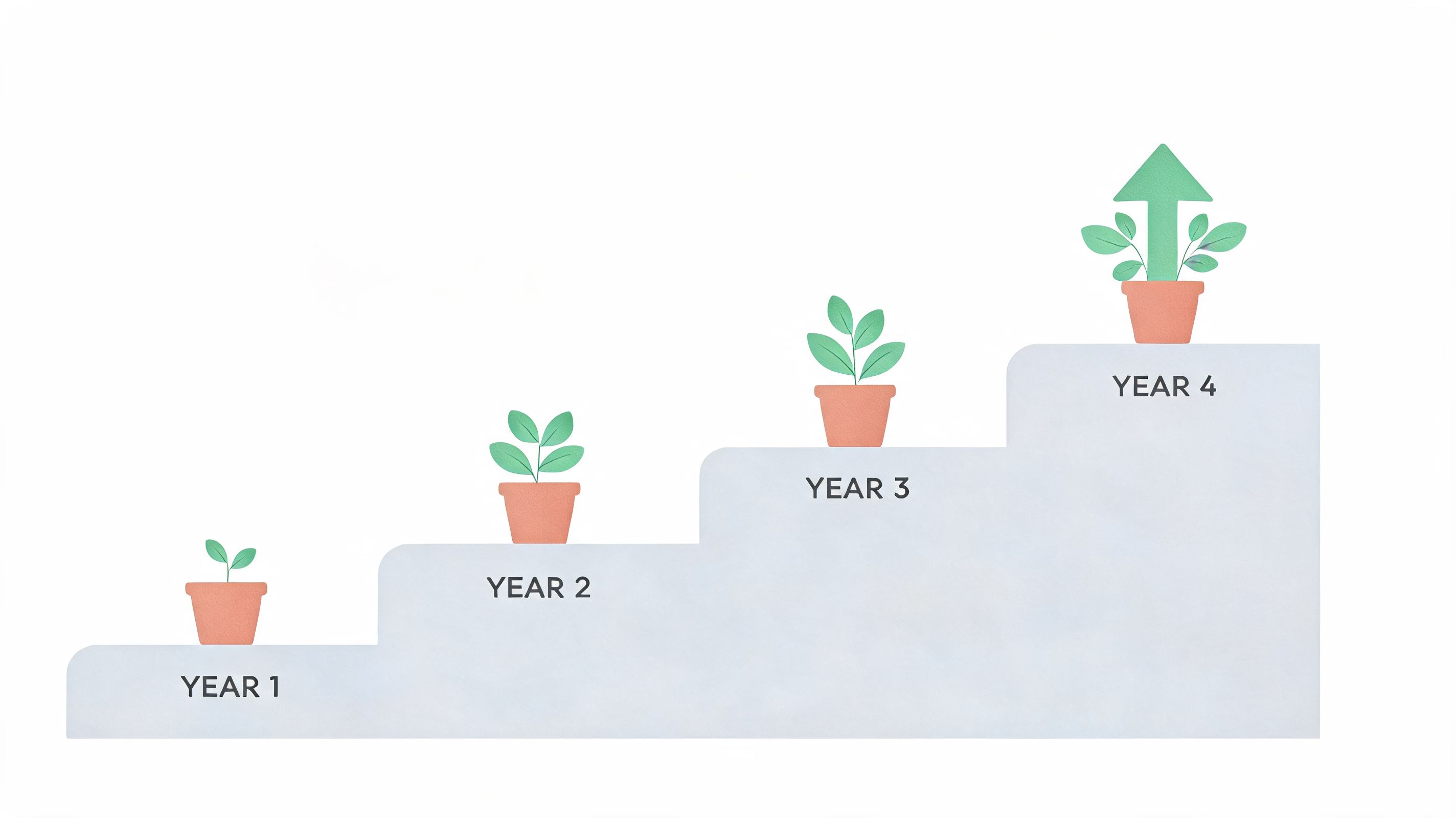
3. Celebrating [X] Years of Growth and Achievement
Not every anniversary should focus on loyalty. Some should focus on trajectory.
This saying works best when the story isn’t just “you’ve been here a while.” It’s “look how far you’ve come.” That makes it especially useful for employees who’ve changed roles, taken on bigger responsibility, earned certifications, or become the person others rely on.
“Celebrating Marcus’s 5 years of growth and achievement” says something different from “thank you for your service.” It points forward as much as back.
Use the timeline
This message gets stronger when you build it around a clear arc. Maybe someone started as a shift supervisor and now runs operations. Maybe they began as a coordinator and now lead key projects. Maybe they used to need support and now they give it.
That movement matters because people want their effort to be seen, not just their attendance.
The history of work anniversary sayings has changed with workplace culture too. A Bored Panda collection of 90 happy work anniversary messages reflects a rise in usage since 2020, which fits the broader shift toward more visible recognition in hybrid and distributed work. More messages alone aren’t the point. Better messages are.
If the employee grew, say how. If the role changed, say what they became better at. Growth needs a storyline.
A practical version might sound like this: “Celebrating 5 years of growth and achievement. You started by learning the floor, then became the person others asked for help, and now you’re leading improvements the whole team feels.” That lands because it maps effort to progress.
Good for ambitious people, risky for static roles
This is one of the most useful happy work anniversary sayings for mid-career employees. It works well in tech, operations, logistics, and larger teams where development is visible. It also works for high performers who are passionate about learning.
The downside is obvious. If someone hasn’t had much room to grow, this saying can expose that. Don’t fake a growth story that isn’t there. If the person’s real value is steadiness, teamwork, or trust, choose a saying that fits that truth better.
When growth is real, though, this one hits hard. It tells the employee, and everyone reading, that time at work should add up to more than endurance.
4. Happy Work Anniversary to a True Team Player
Some people hold a team together without ever making a speech about it. They answer the quick question, smooth over the rough handoff, train the new person, and keep the mood from slipping when the day gets ugly. This saying is for them.
“Happy work anniversary to a true team player” works because it names a kind of contribution that often gets overlooked. Not everyone drives a headline project. Some people make it possible for everyone else to do their jobs.
That matters more on distributed teams than many leaders admit. A Workhuman article on work anniversary messages frames anniversaries as part of support, engagement, and loyalty. Team players are usually the people carrying that culture in daily behavior.
Let peers help write this one
This message should rarely come from one voice alone. If you’re recognizing someone for teamwork, ask the team what they’ve noticed. A few short comments from peers will say more than a polished paragraph from HR.
That’s why internal comms matters here. A team chat thread, comments under a post, or a quick video from coworkers can turn a generic anniversary into a shared recognition moment. Stronger team rituals usually come from habits like the ones in these internal communication best practices, not from one heroic manager trying to do everything manually.
A few phrases that work:
For healthcare: “Happy work anniversary to a true team player. You support every shift, and new nurses always know they can ask you.”
For warehouses: “Happy work anniversary to a true team player who keeps the crew connected and moving.”
For restaurants: “Happy work anniversary to a true team player. You make busy nights feel manageable.”
People trust a teamwork message more when teammates join in.
Be careful with this one
There’s one trap here. “Team player” can sound like code for “always agreeable” if you’re not careful. Don’t use it to reward compliance. Use it to recognize collaboration, steadiness, and generosity with time and knowledge.
This saying works best for employees whose influence is relational. It’s perfect for mentors, culture carriers, and people who make cross-shift work easier. It’s weaker for lone-wolf high performers who’d rather be praised for results than harmony.
When it fits, though, it lands beautifully. It tells someone, in public, that how they treat people counts.
5. Wishing You Continued Success as You Complete [X] Years
This is the steady, balanced option. It honors what’s behind someone and leaves the door open for what’s next. That makes it useful when you want the message to feel encouraging without sounding too emotional or too stiff.
I reach for this one when the employee is solid, growing, and likely to take on more. It’s especially good for year three, four, six, or seven, when the milestone matters but doesn’t need the drama of a decade mark.
“Wishing you continued success as you complete 4 years with us” says, clearly, we see what you’ve done and we expect good things ahead.
A good fit for forward momentum
This saying works when someone is in motion. Maybe they’re preparing for a bigger role. Maybe they’ve taken on more ownership this year. Maybe they’re becoming sharper and more confident in the job.
It also fits formal notes from HR or leadership because it sounds composed without being cold. The phrase gives you room to mention future projects, learning opportunities, or trust in the person’s next chapter.
A message like this gets stronger with one line that points ahead:
For retail leadership: “Wishing you continued success as you complete 4 years with us. Your progress on the floor and with newer team members stands out, and I’m excited to see what you take on next.”
For operations: “Wishing you continued success as you complete 6 years. You’ve built real credibility, and the next step should reflect that.”
For office teams: “Wishing you continued success as you complete another year. You’ve become a dependable voice in the room.”
Don’t let it drift into blandness
This saying has one weakness. It can become wallpaper if you don’t personalize it. “Continued success” is polite, but vague. Success at what? Better leadership? Stronger customer care? Cleaner execution? More ownership?
Spell that part out.
If you’re using a tool like Pebb, this is a good saying to pair with a follow-up action inside the same workflow. Post the anniversary message, then schedule a one-on-one in chat, share a development resource in the Knowledge Library, or mark a next-step goal in the employee’s team space. The message feels stronger when it connects to real growth, not just good wishes.
This saying won’t be the most memorable phrase on the list. That’s fine. Its job is different. It gives you a calm, credible way to say, “You’ve done well, and we’re not done with your story.”
6. It’s Been a Pleasure Working With You for [X] Years
This one is warmer than most. It doesn’t focus first on tenure, impact, or growth. It focuses on the relationship. Used well, that makes it one of the most human happy work anniversary sayings you can send.
“It’s been a pleasure working with you for 2 years” sounds simple, but it carries a lot. It says the person is more than useful. They’re valued company.
That lands especially well in smaller teams, clinics, hospitality groups, and long-running peer relationships where trust matters as much as output.
Best when you actually know the person
This saying falls apart if it comes from someone distant. If a senior leader who barely knows the employee sends it, it can feel fake. If it comes from a direct manager, a close teammate, or a cross-functional partner with real shared history, it works beautifully.
Use a memory. Mention a rough week you got through together. Bring up the launch, the inventory scramble, the reopening, the training class, the first shift, or the joke that still comes up in team chat.
That’s where the phrase gets its power. The pleasure isn’t abstract. It came from actual work and actual moments.
A few versions:
For a clinic: “It’s been a pleasure working with you for 2 years. You make long days lighter, and patients feel your calm immediately.”
For a distribution center: “It’s been a pleasure working with you for 5 years. You’ve made hard weeks easier just by being steady.”
For peers: “It’s been a pleasure working with you for another year. I always know the work will get done, and done well.”
A work anniversary message can be warm without turning sentimental. One honest memory is enough.
Strong for peers, useful for managers
Managers sometimes avoid this kind of language because they want to sound objective. I think that’s a mistake. People spend a huge part of their life at work. Pretending relationships don’t matter makes recognition flatter than it needs to be.
The trade-off is that this saying is less useful in broad company announcements unless the person is widely known. It shines in team spaces, direct notes, voice messages, or comments from people who’ve worked alongside the employee. If you can hear the speaker’s real voice in the sentence, you’re using it correctly.
7. Thank You for Being an Integral Part of Our Success
This saying is direct about business value. It tells the employee, plainly, that the company’s progress includes their work. Not around it. Not near it. Includes it.
That makes it powerful when someone’s contributions are visible and tied to meaningful outcomes. It’s a strong fit for retention conversations, leadership notes, performance-linked recognition, and public moments where you want to connect individual work to company results.
The key is simple. If you use a phrase like “integral part of our success,” you need proof in the next sentence.
Connect the person to the mission
A lot of anniversary messages stop at appreciation. This one should go further. Show how the person’s effort affected customers, patients, operations, compliance, onboarding, team morale, or service quality.
Generic message collections often miss this kind of role-specific detail, especially for frontline teams. An Achievers article on happy work anniversary messages points to a gap between generic examples and the need for more personalized recognition in frontline settings. That gap is real. A warehouse supervisor, a line cook, and a care coordinator should not all get the same message.
If you’re building a more intentional recognition habit, it helps to tie anniversary messages to broader employee engagement best practices instead of treating them like isolated events.
A few stronger examples:
For healthcare: “Thank you for being an integral part of our success. Your care, consistency, and judgment have shaped how patients experience this team.”
For logistics: “Thank you for being an integral part of our success. You’ve made the operation more dependable and easier for others to run.”
For hospitality: “Thank you for being an integral part of our success. Guests may not know your name, but they feel your standards every day.”
Use this one carefully
This phrase can sound inflated if the company culture overstates everything. If every post says someone is “integral,” people stop believing it. Save it for employees whose work really does anchor outcomes, or make the sentence narrower and more precise.
This is also where the mechanics of delivery matter. Public feed for visibility. Team space for comments. A saved note in the employee record if your process supports it. Maybe even a short voice message from a leader if the contribution deserves extra weight. In distributed teams, those layers help recognition travel farther than a single post.
When used with sincerity, this saying does something useful. It closes the gap between “we appreciate you” and “your work changed something important.”
7 Work Anniversary Sayings Compared
Title | 🔄 Implementation Complexity | ⚡ Resource Requirements | 📊 Expected Outcomes | 💡 Ideal Use Cases | ⭐ Key Advantages |
|---|---|---|---|---|---|
Cheers to [X] Years of Excellence | Low, simple, reusable format | Minimal, text ± photo | Broad recognition; steady morale boost | Formal announcements, cross-level tenure posts | Universal appeal; professional yet warm |
Thank You for [X] Years of Dedication and Service | Low–Medium, needs authentic tone | Low–Medium, collect stories/testimonials | Strong emotional connection; improved loyalty | Frontline, retirements, service industries | Builds genuine appreciation and retention |
Celebrating [X] Years of Growth and Achievement | Medium, requires specific accomplishments | Medium, HR data, profiles, metrics | Motivates development; reinforces high performance | Mid-to-senior roles, promotions, succession planning | Highlights career progression and impact |
Happy Work Anniversary to a True Team Player | Low–Medium, needs peer input | Low, teammate quotes or short clips | Strengthened team cohesion and belonging | Distributed teams, shift-based roles, frontline | Encourages peer recognition and mentorship |
Wishing You Continued Success as You Complete [X] Years | Low, versatile and neutral | Minimal, text, optional links to resources | Encourages future engagement; sustained morale | Mid-career announcements, HR communications | Balanced past/future message; widely adaptable |
It's Been a Pleasure Working With You for [X] Years | Low, personal and informal | Minimal, message or short video | Deepens interpersonal trust and engagement | Manager-to-employee, peer acknowledgments, small orgs | Fosters authentic connection and psychological safety |
Thank You for Being an Integral Part of Our Success | Medium, needs business context and metrics | Medium–High, analytics, performance figures | Clear alignment to mission; boosts pride and performance | Performance reviews, strategic announcements, growth phases | Demonstrates measurable impact and mission alignment |
The Real Work of Recognition
A shift supervisor opens the team app at 6:45 a.m. and sees an automated anniversary post already waiting. It has the employee’s name, years of service, and a cheerful line that could apply to anyone on the payroll. If that message goes out untouched, the date gets acknowledged, but the person does not.
A work anniversary saying sets the tone. The rest of the moment decides whether it feels meaningful.
That usually comes down to intent. Use one kind of message to mark tenure. Use another to highlight growth, team contribution, or business impact. A ten-year warehouse lead who keeps operations steady needs a different note than a newer field manager who has grown fast and taken on bigger work. Good recognition matches the story you are trying to tell.
Delivery matters too. In office teams, a manager can often cover weak wording with face time. Frontline and distributed teams do not get that luxury. If the message is buried in email or sent after the shift has ended, many employees will miss it. Chat, team feeds, employee apps, and shared spaces give recognition a visible place to land, especially for teams spread across locations, schedules, and devices.
The tool helps with timing and reach. It does not help with effort.
Managers still need to choose the right setting. Some anniversary notes belong in public because they reinforce shared standards or let peers add their own thanks. Others should start privately, especially if the employee dislikes attention or the message includes a career conversation. In practice, the strongest approach is often both. A short public note, followed by a direct message or quick conversation that gets specific.
Specificity is where recognition either works or falls flat. “Happy work anniversary” covers the date. “Three years of keeping the morning shift running smoothly, training new hires, and catching problems before they grow” shows the employee was seen. That difference is small on the screen and large in effect.
Follow-through separates a thoughtful program from a calendar task. Mention the person in the team huddle. Ask what they want to build next. Invite peers to share a memory or example. If someone has given years of reliable work, one templated post should not carry the full weight of your appreciation.
Retention is part of this, but the day-to-day signal matters first. People stay longer when recognition feels timely, credible, and connected to how they work. They check out when every anniversary sounds identical and arrives with no human follow-up.
Use the anniversary to do more than mark time. Name what the person has contributed. Match the saying to the intent behind it. Put the message where the employee and the team will see it. Then add one personal detail that no template could have written.
If you want one place to handle anniversary posts, team chat, news feed updates, Spaces, profiles, and follow-up conversations, Pebb is worth a look. It gives HR leaders, managers, and frontline teams a shared place to make recognition visible and timely, instead of letting it disappear into scattered tools.
