
10 Employee Recognition Program Ideas That Actually Work
Stop guessing. Here are 10 real employee recognition program ideas that build culture, not just check a box. Simple, human, and effective.
Dan Robin
Let's be honest. Most employee recognition programs are a chore. A generic 'Employee of the Month' plaque gathers dust, gift cards feel transactional, and the yearly bonus is forgotten by February. We’ve been there. The problem isn’t the intention; it’s the execution. Recognition has become a corporate ritual, detached from the real work and the people doing it. It's a box-checking exercise that often feels hollow.
But what if we treated recognition like a conversation instead of a transaction? What if it was less about grand gestures and more about consistent, meaningful acknowledgment? We’ve spent years trying to get this right, celebrating wins, learning from our misses, and figuring out what truly makes people feel seen. This isn't a theoretical guide. It's a collection of employee recognition program ideas born from real work, for real teams who are tired of the old way.
We're going to walk through ten approaches, not as a checklist, but as a menu of possibilities to build something genuine. From simple peer-to-peer shoutouts to experiences that create lasting memories, we’ll give you the practical steps to create a program that connects with your people. This is about more than just boosting morale; it's about building a culture where great work is seen and celebrated.
1. Peer-to-Peer Recognition Programs
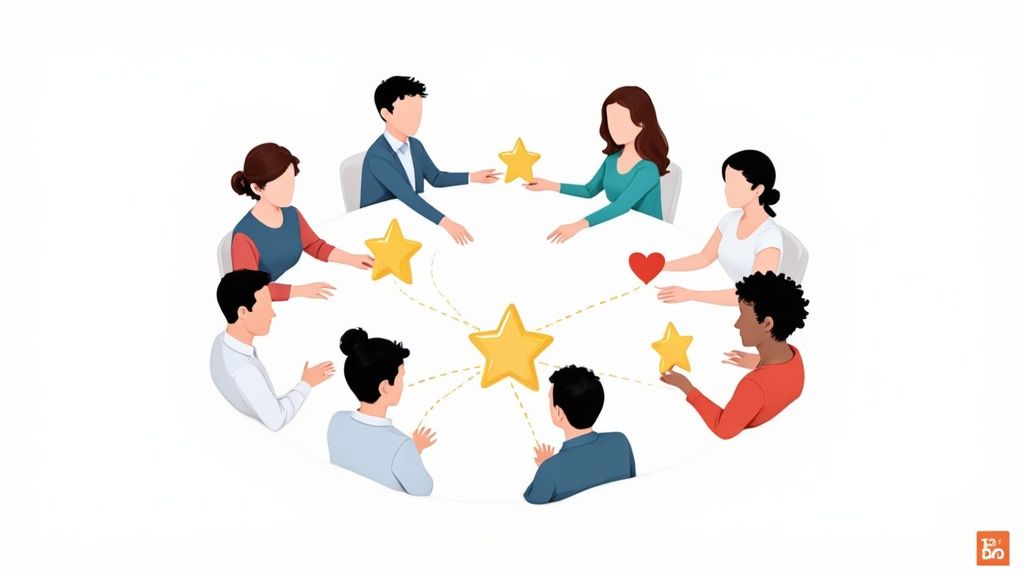
Recognition doesn't always have to come from the top. In fact, some of the most meaningful praise comes from the people working alongside you. A peer-to-peer recognition program gives everyone on your team the power to celebrate their colleagues' wins. It turns recognition from a formal, manager-led event into an ongoing, organic part of your culture.
This is a powerful shift. It builds camaraderie, surfaces quiet contributions that managers might miss, and reinforces a sense of shared purpose. When people are actively looking for great work to celebrate in others, everyone's engagement gets a lift.
How to Get Started
Getting a peer recognition program running doesn't have to be complicated. First, define what's worth recognizing. Tie the criteria directly to your company values, like “Customer Obsession” or “Default to Action.” This ensures the praise reinforces the behaviors you want to see.
Next, make it incredibly easy for people to participate. Use a simple channel in your communication app. The process should take less than a minute. Finally, amplify the recognition. Create a public feed or a dedicated time in team meetings to share the praise, so the entire organization sees what good work looks like.
Best for: Companies of all sizes, especially those with remote or distributed teams. It's one of the most scalable employee recognition program ideas available for building community and reinforcing values.
Example Announcement:
"Team, we're launching a new peer recognition program in the #Kudos channel! If you see a teammate living our values or going above and beyond, give them a shout-out. Let's celebrate the amazing work happening all around us."
2. Spot Bonus or Instant Rewards Programs
Waiting for a quarterly review to acknowledge exceptional work is too slow. Spot bonuses are all about immediacy. They let managers give an instant, tangible reward right when an employee delivers outstanding results. It’s a direct way to say, “We see your hard work, and we appreciate it right now.”
This approach closes the gap between action and acknowledgment, making the reward feel much more connected to the specific achievement. Instead of a formal, scheduled event, recognition becomes a spontaneous gesture. It's a fantastic tool for reinforcing desired behaviors in real-time and showing your team that excellence doesn’t go unnoticed.

How to Get Started
To make a spot bonus program work, you need clear guidelines, not restrictive rules. Start by setting a discretionary budget for each manager and defining the types of achievements that warrant a bonus. Think about specific triggers, like “Resolving a critical customer issue” or “Launching a feature ahead of schedule.” This gives managers autonomy while ensuring fairness.
Next, equip managers with an easy-to-use tool to issue the rewards. The process should be simple. It’s also vital to train managers on how to distribute these rewards equitably to avoid any perception of favoritism. Finally, communicate the program's purpose clearly to the whole company so everyone understands how it works.
Best for: Results-driven organizations where managers need the flexibility to immediately reward exceptional contributions. Especially effective in sales, support, and project-based roles.
Example Announcement:
"Hi Team, we're launching 'Impact Awards'! This allows managers to give on-the-spot bonuses for incredible work that moves our goals forward. Let's make sure great work gets the immediate recognition it deserves."
3. Employee of the Month/Quarter/Year Awards
The Employee of the Month award is a classic. It's a structured, time-tested method for spotlighting consistent high-performers. This program creates a recurring opportunity to formally celebrate an individual's outstanding contributions, turning exceptional work into a visible company honor.
Let's be honest, though. This can easily become stale. If it’s just a plaque on the wall, it loses its meaning. But done right, it can elevate both the winner and the standards of performance across the board by creating a clear role model for the entire team.
How to Get Started
To keep this program fresh and fair, start with transparent criteria. What does "outstanding" actually mean? Define it with specific metrics tied to your company goals, such as “Exceeds Sales Targets” or “Champions Team Collaboration.” Create a rotating selection committee with members from different departments to ensure objectivity.
Next, broaden the nomination process. Allow both managers and peers to submit nominations. Finally, make the reward memorable. Go beyond a certificate. Consider a donation to the winner's favorite charity, an extra day of PTO, or a premium reserved parking spot. The goal is to make the recognition feel personal and valuable.
Best for: Companies that want a formal, high-visibility way to celebrate top performers. It works well in environments where individual contributions are easily measured and you want to foster healthy competition.
Example Announcement:
"Announcing our new 'Star Performer of the Quarter' award! Nominations are now open for team members who have truly excelled in innovation and customer service. The winner gets a $250 bonus and will be featured on our company homepage. Let's celebrate our best."
4. Service Anniversary and Milestone Celebrations
In a world of constant change, loyalty is worth celebrating. Service anniversary celebrations honor the people who have dedicated years of talent to your company. This recognition marks significant tenure milestones—like one, five, or ten years—making employees feel seen for their long-term contributions.
Acknowledging tenure does more than just reward loyalty. It shows newer employees that your company is a place to build a career, not just hold a job. These celebrations reinforce the value of experience and institutional knowledge, creating a culture of stability. It’s one of the most foundational employee recognition program ideas for building a lasting team.
How to Get Started
Begin by creating a clear, tiered structure. Define what each anniversary (e.g., 1, 3, 5, 10+ years) entails. Will it be a bonus, a choice of gift, or extra paid time off? Consistency is key to making the program feel fair.
Next, personalize the delivery. A generic gift card falls flat. Instead, have a direct manager or a senior leader present the award. Include a handwritten note from leadership expressing genuine appreciation for the employee's specific contributions over the years. Finally, make the recognition public. Announce the anniversary in a team meeting or a company-wide email to give the entire organization a chance to celebrate.
Best for: Established companies that want to honor loyalty and reduce turnover, as well as any organization looking to build a culture that values long-term commitment.
Example Announcement:
"Please join us in congratulating Alex Chen on 10 years with us! Alex has been instrumental in building our engineering team from the ground up. Thank you for a decade of dedication, innovation, and leadership."
5. Performance-Based Incentive Programs
Sometimes, the most direct way to show appreciation for great work is to tie it to tangible outcomes. A performance-based incentive program does just that, linking rewards directly to measurable goals and KPIs. This approach removes ambiguity and aligns individual achievements with broader company objectives.
This model provides a clear roadmap for success. When people know exactly what they need to do to earn a reward, it creates powerful motivation. From a sales team hitting quota to a support team improving customer satisfaction scores, these programs make recognition a direct consequence of measurable impact, fostering a culture of high performance.
How to Get Started
To build an effective program, start with clarity. Define realistic and achievable goals that are directly tied to your company’s strategy. A common mistake is setting metrics outside of an employee's control. Ensure every KPI can be influenced by their work.
Next, establish a transparent system for tracking progress. Use dashboards or regular updates to show everyone where they stand. It’s crucial to celebrate incremental progress, not just the final outcome, to keep motivation high. Finally, balance the rewards. While financial incentives are effective, combining them with things like extra time off or public recognition can make the achievement feel more meaningful.
Best for: Sales teams, operational groups with clear KPIs, and companies looking to foster a high-performance culture where results are directly and transparently rewarded. This is one of the most effective employee recognition program ideas for driving specific business outcomes.
Example Announcement:
"Hi Team, to align our efforts with our Q3 goals, we're launching a new performance incentive. The support team that achieves a 95% CSAT score for the quarter will receive a $500 bonus per person and an extra day of PTO. Let's work together to deliver an amazing customer experience!"
6. Team Recognition and Group Celebrations
While individual superstars deserve their moment, most great work is a team effort. A team recognition program shifts the focus from solo achievements to collective wins. It acknowledges the simple truth that successful projects are almost always a group effort.
This approach is fantastic for morale. It reinforces that everyone's contribution matters, from the project lead to the person running the numbers behind the scenes. Celebrating as a group creates shared memories and strengthens the bonds that make a team resilient and ready for the next challenge.

How to Get Started
Begin by defining what a "team win" looks like. Tie these milestones to specific project completions, sales targets, or successful product launches. The key is to have clear, measurable goals so the team knows exactly what they are working toward.
Next, decide how you’ll celebrate. The reward should match the scale of the achievement. A small milestone might call for a team lunch, while finishing a year-long project could warrant an off-site retreat. For effective team recognition, some of the best corporate team building activities can enhance collaboration. Finally, make the celebration public. Announce the team's success in a company-wide meeting, ensuring every contributing member gets the credit they deserve.
Best for: Project-based organizations, sales teams, and any company where collaboration is critical. It's one of the most effective employee recognition program ideas for fostering a "we're in this together" mentality.
Example Announcement:
"A huge congratulations to the Project Phoenix team for a flawless launch this week! Your collaboration over the past six months paid off. To celebrate, we're treating the entire team to an off-site day of fun next Friday. Thank you for your amazing work!"
7. Professional Development and Learning Opportunities
Sometimes the most impactful way to say “we value you” is to invest in someone’s future. Offering professional development opportunities is a tangible commitment to an employee's long-term growth. This form of recognition shows you see their potential and are willing to help them achieve it.
It's a powerful, mutually beneficial approach. Employees gain new skills and see a clear path for advancement. In return, the company benefits from a more skilled, engaged workforce. It’s a recognition idea that pays dividends for years to come, turning high-performers into future leaders.
How to Get Started
Begin by creating a clear process for accessing these opportunities. Define the criteria for eligibility, whether it's based on performance, tenure, or project contributions. The goal is to make it feel like an earned reward.
Next, offer a variety of learning options. This could range from sending an engineer to a key industry conference, reimbursing tuition for a certification, or providing access to online learning platforms. Crucially, ask participants to present what they learned to their team. This ensures the investment benefits the entire organization.
Best for: Companies committed to building talent from within. This is especially effective for knowledge-based industries where upskilling is critical to staying competitive.
Example Announcement:
"Hi team, to recognize your hard work, we're launching our 'Growth Fund'! Each quarter, high-performing employees can apply for a stipend to use on approved courses, certifications, or conferences. We believe in investing in you."
8. Flexible Benefits and Customizable Perks Programs
Not all rewards are created equal, because not all employees are the same. A one-size-fits-all approach to benefits can feel impersonal. A flexible benefits program recognizes individuality, treating rewards as a personalized acknowledgment of each person's unique life and needs. It’s a powerful way to say, "We see you, and we value what matters to you."
This approach shifts recognition from a simple transaction to a meaningful gesture of support. Whether it's a wellness stipend for a fitness enthusiast, a learning credit for an ambitious professional, or extra family leave for a new parent, customization shows deep respect for your team members as whole people. It shows you trust them to choose what will genuinely enhance their well-being.
How to Get Started
Implementing a flexible benefits program starts with listening. Use surveys to discover what your employees truly want. The goal isn't to guess, but to gather direct feedback on preferences, from wellness stipends to professional development funds.
Next, build a “cafeteria-style” model where people can allocate points or a set budget toward the perks that resonate most. Partner with benefits providers to offer a diverse mix of options. Finally, make the process simple. Use an intuitive platform to communicate the value of each perk and allow employees to easily select their choices.
Best for: Companies with diverse teams who want to offer high-impact, personalized rewards. It's an excellent way to stand out in a competitive talent market by investing directly in employee well-being.
Example Announcement:
"Hi Team, we're thrilled to introduce our new 'MyPerks' program! Starting next month, you'll receive a flexible benefits allowance to spend on what matters most to you—from gym memberships to childcare support. We trust you to know what you need to thrive."
9. Public Recognition and Social Sharing Programs
Sometimes, the best recognition happens in the spotlight. A public recognition program takes praise beyond internal channels, celebrating achievements on company social media or in newsletters. This high-visibility approach amplifies the impact of recognition, turning individual wins into powerful stories that build your employer brand.
This is about more than just a shout-out; it's about authentic storytelling. When you share the real stories of your team members, you showcase your culture and values in a way that corporate-speak never could. It shows prospective talent what it’s actually like to work at your company and reminds current employees of the great work happening around them.
How to Get Started
The key to public recognition is authenticity and consent. First, always get permission from the employee before sharing their story or photo publicly. Once you have their green light, focus on telling the "why" behind their achievement, connecting it back to a company value or project impact.
Create a simple process for gathering these stories, perhaps by sourcing them from your peer recognition program. Use high-quality photos or short videos to make the posts engaging. Create a branded hashtag, like #LifeAt[YourCompany], to build a library of stories across platforms like LinkedIn or your company blog.
Best for: Companies focused on building a strong employer brand and attracting top talent. It's particularly effective for organizations that want to publicly celebrate their culture and the people who make it special. This is one of the top employee recognition program ideas for boosting both internal and external morale.
Example Announcement:
"Hi Team! We want to shine a bigger spotlight on the incredible work you do. We're launching our 'Team Spotlight' series on our LinkedIn page. If you or a teammate have a story to share, let us know. Let’s show the world what makes our team so amazing!"
10. Experiential Rewards and Memorable Experiences Programs
Bonuses are nice, but memories last. An experiential rewards program moves beyond monetary gifts to offer employees something far more valuable: a memorable experience. This approach recognizes exceptional work by giving people the chance to do something they've always wanted, whether it's a weekend getaway, a cooking class, or tickets to a sold-out concert.
Here’s the thing. Research consistently shows that experiences create more lasting happiness than things. By gifting an experience, you’re not just giving a reward; you’re helping create a positive memory that employees will associate with your company. This is a powerful way to show deep appreciation and strengthen the employee-employer bond far more effectively than a cash bonus.
How to Get Started
Begin by understanding what your employees actually want. A simple survey can reveal if they prefer adventure, relaxation, learning, or entertainment. This ensures your program feels personal. From there, create tiered options based on achievement levels, so the scale of the experience matches the accomplishment.
Offer choice within those tiers. Instead of a single trip, provide a selection of destinations or activities. Exploring unique experiential gift ideas for milestones can provide great inspiration. Finally, handle the logistics. The reward should feel like a gift, not a project, so provide support for booking and planning to make it a seamless, stress-free experience.
Best for: Companies looking to create a high-impact, emotionally resonant rewards system for major achievements or top-performer recognition. It's an excellent way to stand out and offer truly unique employee recognition program ideas.
Example Announcement:
"To celebrate our top performers this year, we're launching the 'Summit Experience' program! Winners will get to choose from a curated list of unforgettable experiences, from a Napa Valley wine tour to a weekend ski trip. This is our way of saying thank you for reaching new heights."
10-Point Comparison: Employee Recognition Programs
Program | 🔄 Implementation Complexity | ⚡ Resource Requirements | 📊 Expected Outcomes | 💡 Ideal Use Cases | ⭐ Key Advantages |
|---|---|---|---|---|---|
Peer-to-Peer Recognition Programs | Low–Moderate (platform + culture change) | Low (software, light admin) | High ⭐ — boosts engagement & morale | Teams wanting frequent, authentic recognition | Authentic, frequent, cost-effective |
Spot Bonus or Instant Rewards Programs | Moderate (policy + payroll integration) | Medium–High (ongoing budget per reward) | High ⭐ — immediate motivation & retention | Frontline or fast-paced roles needing instant reinforcement | Immediate impact, customizable |
Employee of the Month/Quarter/Year Awards | Low (formal cycles & nominations) | Low–Medium (ceremony, small rewards) | Medium ⭐ — visible role models, limited reach | Large orgs needing predictable recognition cadence | Clear, visible, easy to communicate |
Service Anniversary and Milestone Celebrations | Low (automated tracking + personalization) | Low–Medium (gifts/events by milestone) | Medium ⭐ — reinforces loyalty & tenure | Organizations focused on retention and tenure | Recognizes loyalty; meaningful long-term |
Performance-Based Incentive Programs | High (KPIs, dashboards, governance) | High (compensation budgets + analytics) | High ⭐⭐ — aligns effort to measurable business results | Sales, productivity-driven teams, strategic goals | Directly ties reward to results; measurable |
Team Recognition and Group Celebrations | Low–Moderate (coordination + planning) | Medium (events, shared rewards) | High ⭐ — strengthens cohesion & collaboration | Project teams, cross-functional initiatives | Promotes collaboration; shared morale boost |
Professional Development and Learning Opportunities | Moderate (policy + vendor setup) | Medium–High (tuition, time investment) | High ⭐ — builds capability and retention long-term | Growth-focused employees; succession planning | Lasting value; career investment |
Flexible Benefits and Customizable Perks Programs | Moderate–High (admin, legal, personalization) | High (benefit costs + platform management) | High ⭐ — personalized satisfaction & retention | Diverse workforce with varied needs | Personalization; improves work–life balance |
Public Recognition and Social Sharing Programs | Low–Moderate (content process & approvals) | Low (communications resources) | Medium ⭐ — amplifies visibility and employer brand | Employer branding, recruitment, storytelling | High visibility; cost-effective |
Experiential Rewards and Memorable Experiences Programs | Moderate (logistics + customization) | High (travel/events budget) | High ⭐⭐ — strong emotional, lasting impact | Top-performer rewards; major milestones | Memorable, high perceived value |
The Only Thing That Matters Is That You Start
We’ve just walked through a whole menu of employee recognition program ideas. If you’re feeling a bit overwhelmed, that’s normal. It’s easy to look at this list and see a mountain of work: new policies to write, software to evaluate, and budgets to approve.
But here’s the thing. The goal isn’t to build a perfect, ten-pronged recognition machine overnight. Trying to do that is the fastest way to fail. The most authentic programs don’t arrive fully formed; they grow from a single, simple seed.
Ditch Perfection, Embrace the Practice
The real secret is this: the tool you use is far less important than the habit you build. Whether you start with a dedicated Slack channel, a team meeting shout-out, or a simple sticky note, the initial goal isn’t to launch a “program.” It’s to foster a practice of noticing. A culture where appreciation isn’t a scheduled event but a natural, everyday reflex.
Think of it like starting an exercise routine. You don’t train for a marathon on day one. You start by putting on your shoes and going around the block. That’s it. Consistency builds strength, not intensity.
So, here’s your next step. Don’t try to implement everything. Don’t even try to implement three things.
Pick one.
Just one idea from this list that feels right for your team right now. Maybe it’s a manager committing to sending one thoughtful thank-you message every Friday. Maybe it's creating a simple “Props” channel. Choose the path of least resistance and commit to it for 30 days.
The Real Return
At the end of that month, ask yourself and your team a few questions:
Did it feel genuine?
Did it make people feel seen?
Did it spark good conversations?
If the answer is yes, you’ve found your starting point. You can build from there. If not, no big deal. You scrap it and try another small experiment. This is how you discover what truly resonates with your people, not what a corporate playbook tells you should work.
The value of good recognition isn’t just about retention metrics or engagement scores, though those will improve. It’s about building a workplace where people feel their contributions matter on a human level. It’s about creating an environment where great work is not only produced but is also seen, named, and celebrated. That’s the kind of company people believe in. And it starts not with a grand plan, but with a single, genuine "thank you."
Ready to turn these ideas into a consistent practice? Pebb brings communication, recognition, and rewards into one simple, mobile-first platform, helping you build a culture of appreciation without the complexity. See how you can start small and grow your program with Pebb.
