
Your New Employee Form Is a Promise. Don't Break It.
Stop drowning new hires in paperwork. We scrapped our old form for new employees and built a better onboarding experience. Here’s our guide.
Dan Robin

That form you send new employees? It's probably the first real conversation they have with your company. And let’s be honest, it’s usually a terrible one. A cold, bureaucratic mess of signatures and checkboxes that screams, "We care more about process than we do about you."
Your Onboarding Form Is Probably Terrible
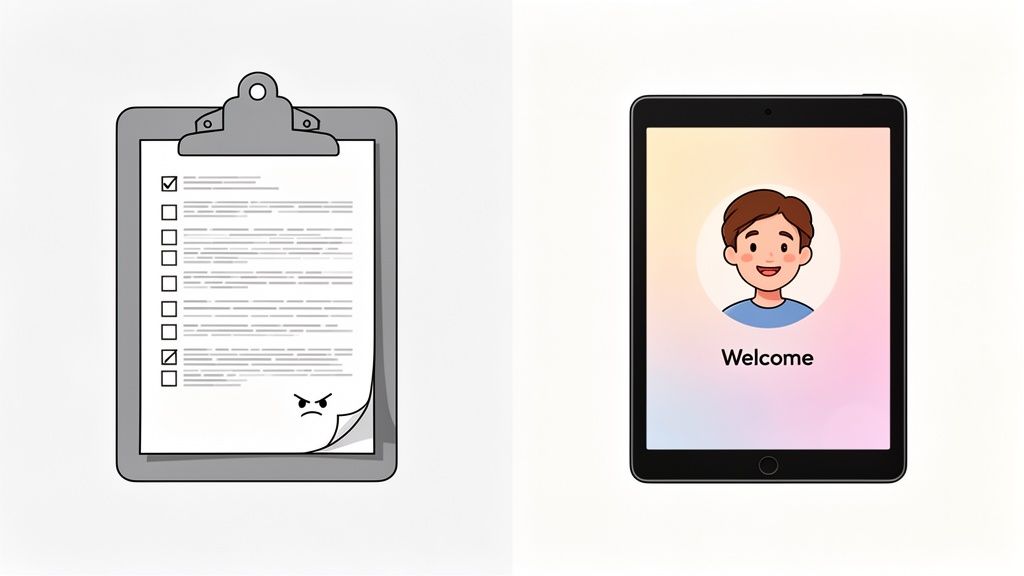
We've all been there. Squinting at tiny print, wondering which box to tick, and trying to figure out why payroll needs to know your high school mascot on day one. It feels less like a welcome and more like a bad first date.
This isn’t just an administrative chore; it's a culture problem. It starts long before their first day.
We had our own wake-up call when we took a hard look at our onboarding. Our clunky PDFs and endless email attachments were creating instant friction, especially for our teams on the front line. The whole thing felt transactional, not personal. We were losing the hearts of great people before they even clocked in.
Here’s the thing: good onboarding can improve new hire retention by a staggering 82%. When you consider that nearly a third of new hires decide if they'll stay within their first week, that first impression is everything. Our forms were actively working against us.
The form for new employees isn’t just a form. It's the first promise you make to your new team member. Make it a good one.
That realization forced us to rebuild that first touchpoint. We didn't want to just put a digital cover on a broken process. The mission was to turn a tedious chore into a moment of genuine welcome.
From Chore to Connection
The problem with most new hire forms is they’re built for the company. What information do we need for payroll? What documents do we need for compliance? The entire flow is a one-way street designed for data extraction.
So we flipped the script. We asked a different question: What does a new employee need to feel prepared, welcomed, and excited to start?
This simple shift changes everything. It turns the form from a data-collection tool into a bridge that connects a person to their role, their team, and your company culture.
Clarity Over Complexity: Is every single field absolutely essential right now? Or can some of it wait?
Welcome Over Paperwork: Does this feel like joining a team, or like being processed by a bureaucracy?
Connection Over Collection: Does the form just ask for bank details, or does it help them meet people and learn about the company?
Fixing your form isn't about downloading a better template. It’s about deciding what kind of company you want to be from that very first click. For more on this, check out our guide on building a new employee onboarding checklist that actually makes a difference.
Thinking Beyond the Fields
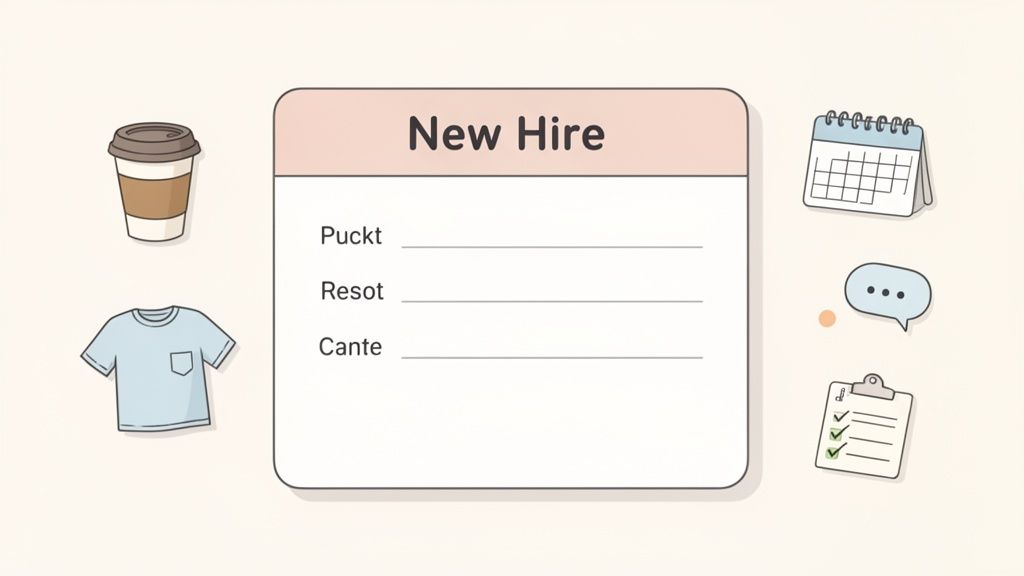
Let's be real. A new hire form is rarely a highlight. But it's also the first, tangible piece of your company they interact with. Before we ever designed a single field, we stepped back and asked: What should this experience feel like?
The answer was clear. Welcoming. Straightforward. And respectful of their time. A great form should answer more questions than it asks.
Here's a thought: a modern new employee form has three jobs, and only one of them is about collecting data.
First, it grabs only what is legally and operationally essential right now.
Second, it introduces the new hire to their team and the company's pulse.
Third, it gives them a quick, easy win. Finishing it should feel simple and satisfying, not draining.
This isn't a small tweak. It's a completely different way of thinking. Instead of burying someone in paperwork—demanding everything from emergency contacts to 401(k) elections on day one—we adopted a "just-in-time" approach to gathering information.
Shifting from Need to Welcome
The old-school way is to demand everything at once. It's an administrative blitz that screams bureaucracy. The new way? Prioritize connection.
This is why we believe asking for a t-shirt size, a favorite coffee order, or a fun fact for a team intro can be more important on day one than asking for an emergency contact they can add later. One is about logistics. The other is about belonging.
This human-centered approach is especially critical now. Research from TalentLMS and BambooHR found that while hybrid onboarding delivers high satisfaction, there's a huge catch: 52% of new hires felt their experience was completely dominated by administrative tasks. They were buried in paperwork instead of being welcomed into their new role.
The goal is to move from "What do we need from you?" to "Here’s what you need to feel like you’re part of the team."
This doesn't mean we ignore the necessary paperwork. It just means we're smarter about sequencing it. A great new employee form separates the urgent from the important. It gets the critical legal and payroll details handled cleanly and then immediately pivots to making the new person feel seen.
It’s the difference between being processed and being welcomed. One creates an employee file. The other creates a teammate.
Designing a Human-Centered Onboarding Flow
This is where the theory stops and the work begins. We scrapped our old, overwhelming new-hire packet and replaced it with something better: a series of small, manageable steps inside a dedicated Onboarding Space in Pebb. Our guiding principle was simple: make onboarding feel less like applying for a loan and more like setting up a social profile.
Of course, the essentials are still there. You have to collect personal details, tax forms, and direct deposit information. But the magic isn’t in what you collect—it’s in how you do it. By using a simple invite link, we turned a clunky, paper-based headache into a clean, secure, digital experience. That first impression is no longer a stack of papers, but a clear, guided path forward.
Build a Connection, Not Just a Database
Instead of hitting new hires with every bureaucratic demand at once, we decided to lead with the things that build a human connection. What does that look like?
Create a Profile: The first step is easy. Ask them to upload a photo and write a quick bio. This simple action instantly makes them a person, not just a name on a payroll list.
Join the Conversation: Add them to relevant team chats. This gives them a chance to observe the natural flow of conversation before they even step through the door.
A Simple First Checklist: Give them a short, clear list of initial tasks. This provides immediate direction and lets them start with a feeling of accomplishment.
This screenshot from Pebb shows exactly how we structure this. It isn't just a form; it's a welcome mat.
The layout is intentional. It visually tracks progress, introduces team members, and mixes essential administrative tasks with social steps. This design sends a powerful message: we value you as a person, not just another cog in the machine.
The Old Way vs. The Pebb Way
The difference in the new hire's experience is night and day. Traditional onboarding is a data dump; a human-centered flow is a guided introduction. The contrast is stark.
Onboarding Task | The Old Way (Paper & Email) | The Pebb Way (Integrated App) |
|---|---|---|
First Impression | An overwhelming email with a dozen PDFs to print, sign, and scan. | A personalized welcome and a single link to their onboarding space. |
Completing Forms | Juggling W-4s, I-9s, and direct deposit forms, trying to figure out where to send them. | A guided, step-by-step process. Each form is a small, easy-to-complete task. |
Getting to Know the Team | Reading a static org chart or waiting until the first day to meet people. | Instantly seeing team member profiles and joining relevant team chats to observe the culture. |
Understanding the First Day | A generic "Welcome!" email with a time and address, leaving the new hire feeling anxious. | A clear checklist for the first day, including who they'll meet and what to expect. |
Security & Privacy | Sending sensitive info like SSNs and bank details over unsecure email. | All documents collected and stored in a secure, encrypted, access-controlled environment. |
Seeing it laid out like this, it's clear the "old way" creates needless friction and anxiety. A modern, integrated approach makes the administrative side nearly invisible, allowing the human side to shine.
No one gets excited about filling out a W-4, but doing it as one small step in a friendly process makes all the difference.
A great form for new employees isn't a single document. It’s a series of small, welcoming steps that guide someone from candidate to colleague.
For example, our flow breaks the journey down like this:
The Welcome: A personalized video or message from their direct manager.
Profile Setup: Add a photo, bio, and maybe a fun fact.
Essential Docs: A secure, digital space for uploading their I-9 and signing tax forms. This is only visible to HR.
First Day Plan: A simple checklist detailing what to expect and who they’ll meet.
This sequence intentionally prioritizes the human element. It also respects their time by making the administrative work as painless as possible. If you're looking for more ideas, you can learn about crafting insightful onboarding survey questions for new hires in our other guide.
Ultimately, the goal is to make someone feel like they belong before they even start.
Making Your New Process a Reality
A perfect process on paper is useless if it's a headache to run. We've all seen great ideas fall apart in practice. So, I want to walk you through how we put our people-first onboarding to work using our own tool, Pebb. This isn't theory—it's the exact, battle-tested workflow we use every time we welcome someone to the team.
It all starts with a simple template. We built a standard ‘New Hire Onboarding’ Space that we copy for a new employee in about ten seconds. This isn't just about moving faster; it’s about giving every new person the same thoughtful, consistent welcome.
The Single Invite Link
Before their first day, we send them one thing: a single invite link. That’s it. No mountain of PDFs, no confusing email chains. Just a simple, clean doorway to their onboarding experience.
When they click that link, they find a clear checklist waiting for them. It immediately shows them what needs to be done.
This flow is deliberate. We guide them from setting up their personal profile to connecting with the team before diving into the paperwork.
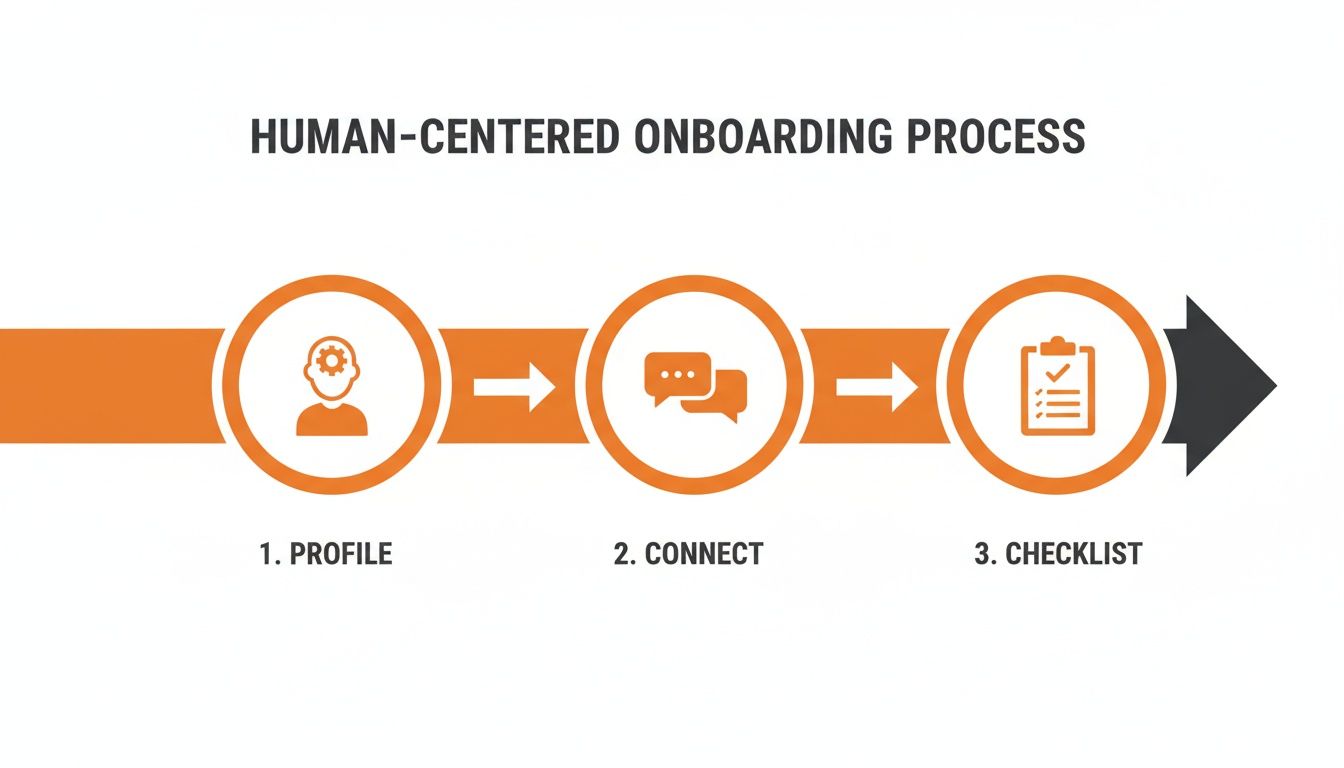
This approach feels human, not like a bureaucratic checklist. It turns the fuzzy idea of "getting started" into a series of small, achievable wins, building momentum from the start. The tasks are a mix of practical and personal, like setting up their profile, joining key conversations, and, yes, tackling the necessary paperwork in a structured way.
Control and Clarity for Everyone
A big question with any digital process is security. How do you safely handle an I-9 or direct deposit info? This is where simple roles and permissions are essential.
Here’s our setup:
We create a secure folder within the onboarding space called ‘HR Documents.’
We lock it down so only members of the HR team can see what’s inside.
The new hire can upload their forms with confidence, knowing their private information stays private. Their manager sees that the "Upload I-9" task is done, but they can't see the document itself. Simple, secure, and clear for everyone.
This gives new hires a clear sense of direction and frees up managers from the soul-crushing administrative hand-holding that bogs down onboarding.
The result is a consistent, scalable, and dignified process. It works just as well for someone on the factory floor using their phone as it does for a developer in the office. It’s calm, it’s clear, and it puts people first.
We didn't just build a better form; we built a better welcome.
What Really Happens After They Click "Submit"?
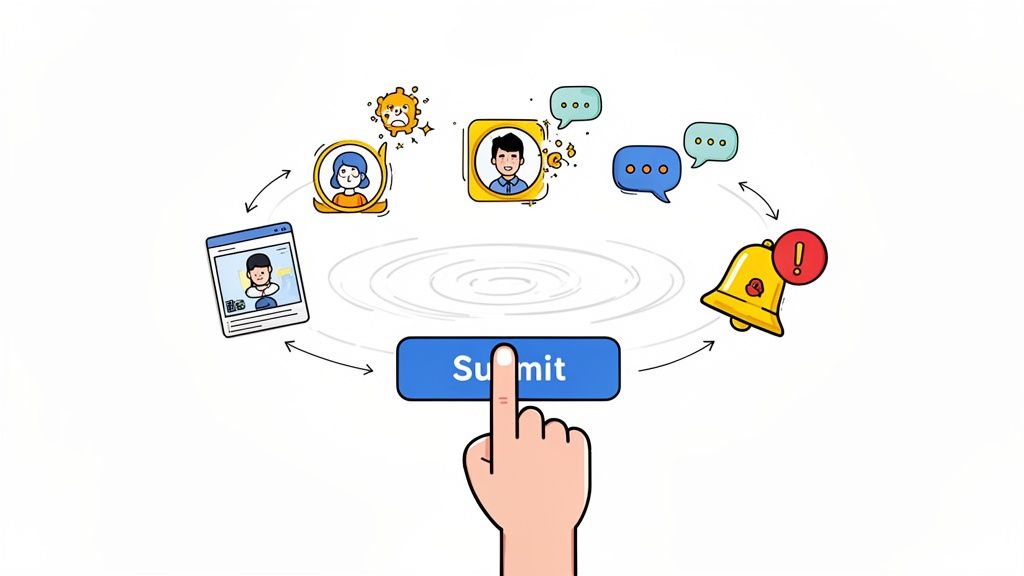
I've seen it a hundred times: a company spends weeks designing the perfect form, only to treat the “submit” button as the finish line. But that click isn’t the end. It's the beginning.
When that form is completed, it shouldn't just vanish into an HR inbox. It should kick off a series of thoughtful, automated actions that make your new hire feel expected and welcomed. This is the difference between feeling like a transaction and feeling like part of the team.
Turning Data Into a Warm Welcome
Think about what could happen the moment a new hire finishes their form. With a tool like Pebb, that data immediately gets put to work. Their profile, complete with photo and bio, pops up in the company’s People Directory. Just like that, they’re not a name on a spreadsheet—they’re a real person the team can start to meet.
At the same time, an introduction post can go live in your main team chat, sparking a wave of welcome messages. Their manager gets a simple notification that the paperwork is done. It's a quiet signal that their new team member is officially on board.
This isn't about flashy tech. It’s about using simple automation to create deliberate moments of human connection. You want their first interactions to feel personal and warm, not cold and administrative.
The new-employee form isn’t the destination. A confident, connected new team member is. The form is just the first step on that journey.
When you automate the welcome, you turn a simple task into a powerful cultural signal. You’re telling them, "We're organized, we're ready for you, and we're glad you're here." This is absolutely critical in the days leading up to their start date. If you want to explore this idea further, our guide on what pre-boarding is is a great place to start.
The True Purpose of Your Form
Let’s be honest. No one joins a company because they’re excited to fill out paperwork. They join for the job, the people, and the mission. Your entire onboarding process needs to honor that.
Every field you include and every notification you set up should serve one goal: helping your new hire feel like they belong. That first click is your chance to show them you care. Don’t waste it. A thoughtful follow-through shows your welcome wasn't just a formality—it was a promise.
Frequently Asked Questions
Whenever we talk about redesigning the new hire experience, a few questions always pop up. Here are the most common ones, with our straightforward take.
What are the absolute must-have legal forms for a new employee in the US?
Let's get the non-negotiables out of the way. While state laws can add a few wrinkles, every new hire in the US must complete two federal forms: Form I-9 to verify employment eligibility and Form W-4 for federal tax withholding.
The Form I-9 is time-sensitive and has strict deadlines, so getting it right from the start is crucial. Beyond those two, you'll likely need state tax forms and your own documents, like an NDA or handbook acknowledgment.
But here’s the thing: the goal isn't just to collect these forms. It's to do it securely and without making your new hire jump through hoops. A good tool ensures these sensitive files are only seen by HR, keeping everything clean and safe.
How do we make this easy for employees who aren’t tech-savvy?
This is a great question, and one we’ve spent a lot of time on, especially for frontline teams. The answer is radical simplicity. Design for the one device everyone has in their pocket: their phone.
A good digital form for new employees shouldn't feel like navigating a clunky corporate website. It should be as simple as setting up a new app, walking them through one clear step at a time. The language must be direct and friendly, not corporate jargon.
The technology should never be a test. It should feel helpful, like someone is there guiding them through the process.
For anyone who's still hesitant, a team lead can be on hand to help, or you could have a tablet available on-site. But honestly, when the experience is this intuitive, most people find it far easier than printing, signing, and scanning a mountain of paper.
Should we handle forms before or on their first day?
We have a strong opinion on this: get all the paperwork done before day one.
Think about it. You can send a single link a few days in advance that lets your new hire set up their profile, enter payroll details, and sign documents from their couch, on their own time. It shows you respect them and removes all the first-day pressure.
This completely changes the vibe of their first day. Instead of being herded into a room to fill out forms, they can walk in, grab a coffee, and meet the team. Their first impression is one of connection and excitement, not bureaucracy. It sets a people-first tone from the absolute start.
Ready to turn your onboarding from a chore into a genuine welcome? With Pebb, you can create a simple, human-centered experience that gets new hires excited from day one. See how it works at https://pebb.io.
