
7 Employee Write Up Example Templates for 2026
Get 7 real-world employee write up example templates for performance, attendance, and conduct. Learn to write fair, compliant, and constructive documentation.
Dan Robin
Writing people up is awkward because everybody in the room knows what the document means. It says a line has been crossed. It says the informal conversations didn’t work. It says we need a record now.
No one gets into management because they love disciplinary paperwork. You’re dealing with someone’s work, reputation, and sometimes their income. If you handle it badly, you don’t just create risk for the company. You damage trust for the whole team. If you handle it well, a write-up becomes something more useful. It becomes a clear record of what happened, what needs to change, and what support is available.
That’s the part too many managers miss. The form is not the point. The conversation is the point. The document just makes the conversation real.
A good employee write up example doesn’t read like a legal threat dressed up in HR language. It reads like a sober account of facts. It names the behavior, explains the impact, and gives the employee a fair chance to respond and improve. That’s why I always tell managers to think of documentation as communication first, protection second.
If you’re in that uncomfortable spot right now, trying to figure out how to write up a problem employee, keep it simple. Be specific. Be fair. Be consistent. And don’t write what you can’t defend in a meeting six months from now.
Here are seven practical templates for the situations managers face.
1. Performance Improvement Plan PIP Write-Up Template
Some write-ups should slow things down, not speed them up. A PIP is one of them.
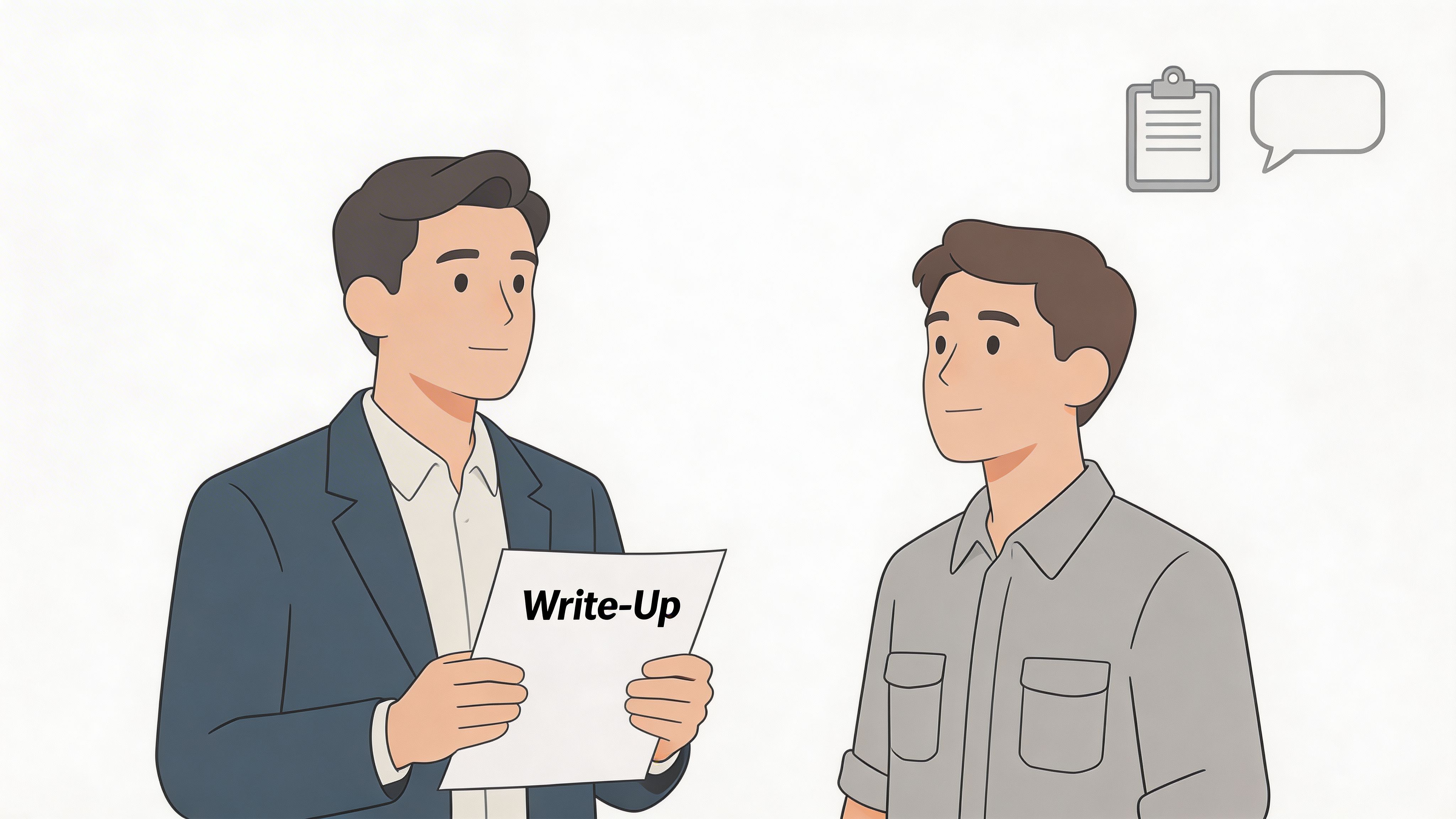
When someone’s missing the mark but the problem still looks fixable, a PIP gives structure to the next few weeks. It’s not punishment with better formatting. It’s a written agreement about what must improve, by when, and how you’ll know whether it happened.
What to include
Start with the gap, not the personality. If a retail shift lead keeps leaving end-of-day tasks unfinished, write that. If a warehouse employee skips required checks, write that. Don’t write “lacks ownership” or “doesn’t care enough.” Those phrases make managers feel decisive, but they’re useless on paper.
A solid PIP write-up usually includes:
Specific performance issue: List the missed standard with dates or examples.
Prior coaching: Note earlier conversations, verbal warnings, or retraining.
Required improvement: Spell out what acceptable work now looks like.
Support provided: Training, shadowing, check-ins, job aids, or schedule changes.
Review window: State when progress will be reviewed.
Consequence if improvement doesn’t happen: Be direct, not theatrical.
If you need a clean reference for structure, this guide on how to write up an employee is useful because it keeps the focus on facts and next steps.
Sample language
“On [date], we discussed repeated failure to complete required closing duties for your shift, including cash drawer reconciliation and restocking of assigned areas. You were previously coached on these expectations on [date] and [date]. Effective immediately, you’re expected to complete all assigned closing tasks before clocking out, using the posted checklist. We will review your performance on [date]. Failure to meet these expectations may lead to further disciplinary action, up to and including termination.”
Practical rule: If the employee can’t explain back to you what success looks like after reading the write-up, the document is too vague.
In practice, PIPs work best when managers track them somewhere visible and boring. Tasks, calendar reminders, meeting notes, and follow-up messages shouldn’t live in five different places. If you use Pebb, a dedicated Space, recurring check-ins, and task tracking provide assistance. Not because software fixes the issue, but because managers forget things when the process lives in scattered notes.
2. Behavioral Misconduct Write-Up Template
Behavior write-ups fail when managers try to soften them so much that nobody can tell what happened.
If an employee was disrespectful to a customer, refused to follow a basic conduct rule, or undermined a supervisor in front of the team, say that plainly. The write-up doesn’t need drama. It needs facts.
What works and what doesn’t
What works is describing the act, the setting, and the policy or standard involved.
What doesn’t work is amateur mind-reading.
Bad version: “You had a bad attitude and created negativity.”
Better version: “On [date] during the team handoff, you interrupted your supervisor twice, refused to stop after being instructed to let others speak, and told a coworker, ‘I’m not listening to this.’”
That second version gives everyone something concrete to discuss. The first one turns the whole conversation into an argument about tone.
A basic template might read like this:
Incident description: State what happened, where, and who was present.
Standard violated: Tie the conduct to a handbook rule, code of conduct, or instruction.
Business impact: Explain how the behavior affected service, teamwork, safety, or trust.
Employee response: Leave room for their explanation.
Expected correction: State the behavior that must stop, and what must happen instead.
A real managerial line to hold
A behavioral write-up isn’t a personality verdict. It’s a record of conduct.
That distinction matters. Especially if you have more than one manager involved, or if you’re running a distributed team where much of the conduct happened in chat, messages, or recorded calls. If you want a cleaner baseline for terminology, this overview of what is a write-up at work is worth keeping around for managers who confuse correction with punishment.
One practical example: a healthcare worker shares patient details in the wrong group chat. Another: a warehouse employee refuses a required safety step during loading. In both cases, managers should meet privately first, gather what happened, and document witness accounts or message records before handing over the write-up.
State observable behavior. Leave motive out unless you can prove it.
That one habit fixes half the bad write-ups I see.
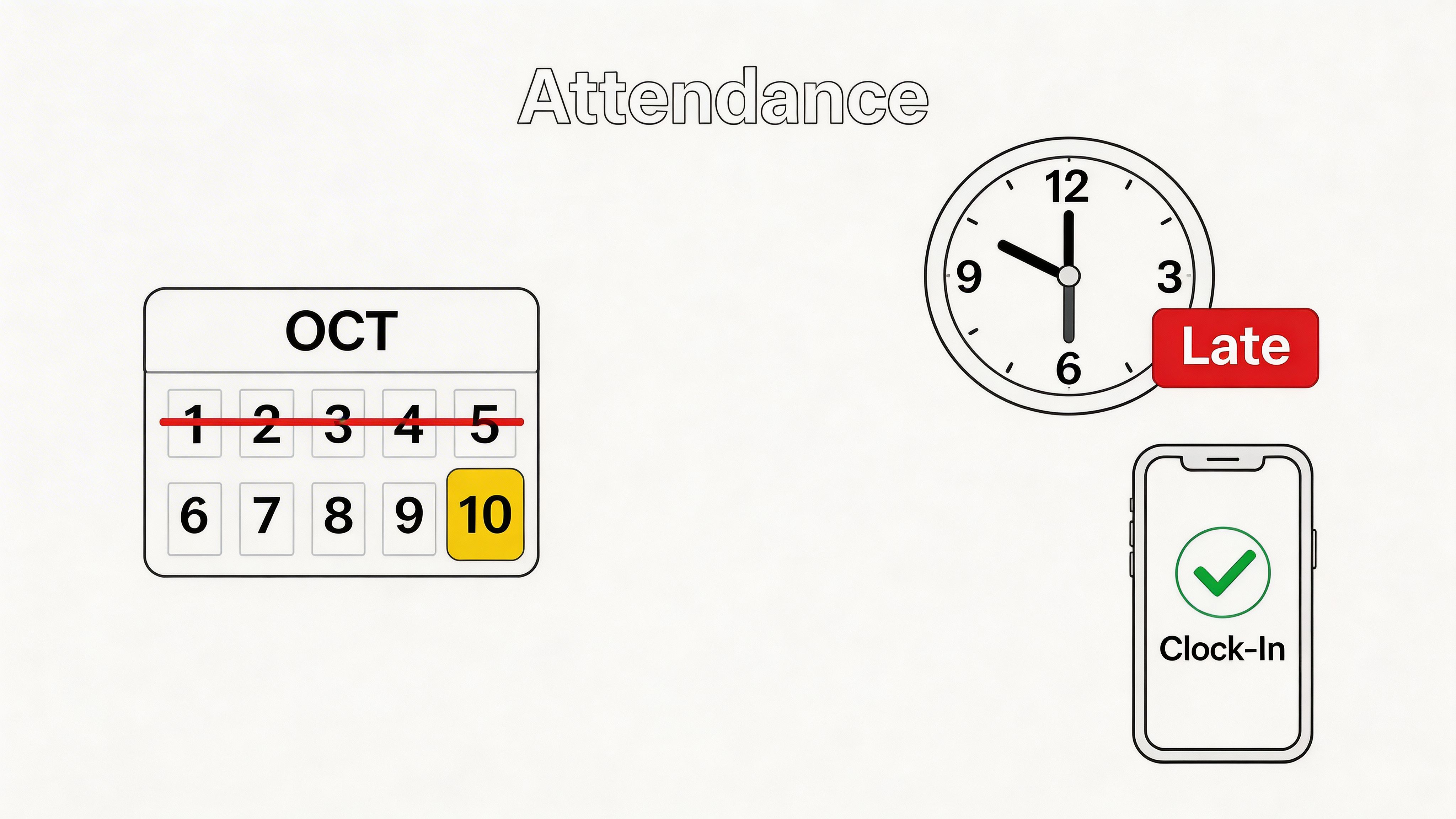
3. Attendance and Punctuality Write-Up Template
Attendance write-ups are where sloppy managers get exposed.
Everybody says someone is “always late.” Very few can prove it. You need the log.
The pattern matters more than the excuse
One of the clearest employee write up example cases comes from attendance tracking. Managers are often advised to document patterns such as three unexcused absences within 90 days before moving to a formal write-up, and the strongest write-ups rely on time records rather than impressions, as demonstrated in an attendance-focused example here.
That same example gets even more practical. It describes an employee, “Sally,” clocking in about an hour late across a full workweek: Monday at 9:00 am, Tuesday at 9:03 am, Wednesday at 8:57 am, Thursday at 9:01 am, and Friday at 9:30 am. The point isn’t the name. The point is the pattern. Timecard records turn a fuzzy complaint into a documented attendance problem.
If you manage shifts, this matters even more. Late arrivals don’t just affect the employee. They hit the person covering the register, the nurse waiting for handoff, the kitchen line trying to open, or the warehouse lead rebuilding the day’s assignments.
Sample language
“Between [date] and [date], you reported late to your scheduled shift on multiple occasions, as reflected in company time records. These incidents affected shift coverage and required reassignment of duties during operating hours. You’re expected to report on time for all scheduled shifts and follow the call-out procedure if an emergency prevents timely arrival. Any further attendance violations may result in additional disciplinary action.”
Use this kind of write-up when the record is clean. Not before.
If your team needs a reference point for policy wording, these attendance policy samples can help managers line up the write-up with the actual rule employees were supposed to follow.
The fastest way to weaken an attendance write-up is to skip the records and argue from memory.
One more caution. Attendance issues can overlap with protected leave, accommodations, or temporary life problems that need a different response. So before you formalize anything, separate “unreliable” from “needs support.” Good managers know the difference.
4. Safety Violation Write-Up Template
Safety write-ups should feel different because the stakes are different.
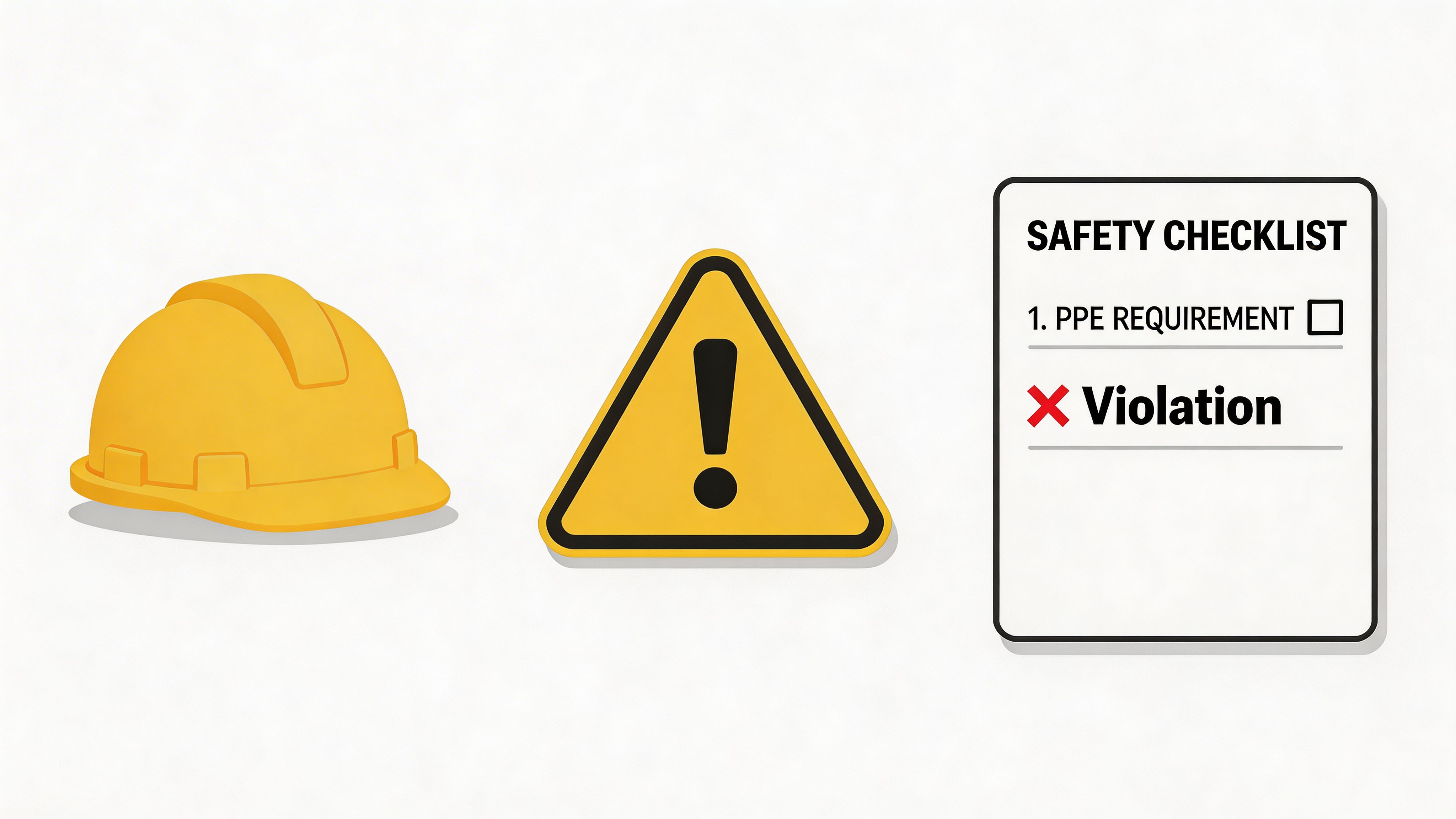
If someone ignored PPE rules, skipped infection-control steps, or bypassed a required procedure, don’t write it like a minor coaching note. Document it fast, document it clearly, and involve the people who own safety or compliance.
What a strong safety write-up sounds like
It should answer four questions:
What rule was broken: Name the exact procedure or requirement.
What happened: Describe the incident plainly.
Why it matters: Note the risk created for people, equipment, patients, or customers.
What happens next: State retraining, removal from duty, final warning, or other action.
Here’s a simple example:
“On [date], during the loading process at Dock 2, you entered the designated area without required protective equipment. This violated the posted safety requirement for that zone. You previously completed training on this procedure. Because this created avoidable risk to yourself and others, you’re required to complete retraining before returning to that assignment. Further safety violations may result in additional disciplinary action.”
Where managers go wrong
They overtalk. They moralize. They turn a safety event into a lecture about responsibility and culture.
That can happen in the meeting. It shouldn’t happen in the document.
A manufacturing case from QPS shows why disciplined follow-through matters more than speeches. In a warehouse producing metal connection plates, turnover hit 56% in the third quarter and the site relied on 35 untrained temporary workers. After inclusive hiring and a more supportive culture, turnover fell to 3% within two months, and temp staffing dropped from 35 to 7, according to this manufacturing turnover case study. Different issue, same lesson. Chaos around people practices shows up in operations fast.
If safety problems keep repeating in one area, the answer may not be “write people up harder.” It may be poor training, poor staffing, or supervisors tolerating shortcuts.
5. Insubordination and Policy Violation Write-Up Template
Not every disagreement is insubordination. Managers who confuse the two usually create bigger problems than the employee did.
An employee asking questions is not insubordinate. Pushing back respectfully is not insubordinate. Saying “I’m concerned this violates the process” is not insubordinate.
Refusing a clear, reasonable instruction can be.
Use this when refusal is real
The document should show three things clearly:
A lawful instruction was given
The employee understood it
The employee refused or deliberately ignored it
That middle step matters. I’ve seen managers escalate too quickly because they mistook confusion for defiance.
A workable template sounds like this:
“On [date], you were instructed by [manager name] to [specific directive], which is part of your assigned job duties. You were asked to confirm whether you intended to complete the task, and you stated that you would not. This refusal disrupted operations and violated company policy regarding compliance with reasonable supervisory instructions. Effective immediately, you’re expected to follow all lawful job-related directives and raise concerns through the appropriate channel.”
Keep the temperature low
Policy violation write-ups are strongest when they read almost flat. No loaded adjectives. No “unacceptable in every way” language. No miniature courtroom speech.
One practical example is an employee who refuses to use the required scheduling system after repeated instructions. Another is a supervisor who ignores a compliance directive and keeps using an off-process workaround. In both cases, the write-up should cite the instruction, the refusal, and the operational impact.
Good systems also help in this context. If directives are posted in official channels, logged, and visible to the right people, there’s less room for “I never saw it” arguments. Informal hallway instructions create messy write-ups because the record is thin.
Calm writing carries more weight than angry writing.
If you can’t write the event in neutral language, wait an hour and come back.
6. Quality of Work and Standards Write-Up Template
This one gets mishandled all the time because managers mix up quality problems with capability problems.
If someone doesn’t know how to do the work yet, the answer is training. If they know the standard and keep missing it carelessly, then a write-up may be appropriate.
Start with the work product
Quality write-ups need evidence attached to actual output.
A restaurant manager can point to food prepared below required handling standards. A healthcare lead can point to charting errors. A warehouse supervisor can point to repeated picking mistakes. A retail manager can point to incomplete merchandising work that had already been demonstrated and reviewed.
The write-up should name the standard and show the gap.
Example:
“On [date] and [date], your completed order picks included repeated item mismatches against the assigned pick list. These errors required rework by another team member and delayed outbound processing. You were previously coached on the required verification process. Going forward, you’re expected to complete all picks using the full scan-and-check process and maintain accuracy consistent with department standards.”
Don’t skip support
Many managers overlook this aspect. They document the mistake, but they don’t document the help.
If the employee received retraining, peer shadowing, updated instructions, or a review of past errors, include it. That matters because quality issues often sit right on the line between discipline and development.
There’s also a useful contrast in a skills-based workforce planning case from a global technology company. The company had 85,000 employees and critical technical vacancies averaging 127 days against a 60-day target. After using a skills-based planning tool, time-to-fill dropped to 47 days, internal mobility rose 45%, external hiring costs fell by $14.3 million annually, engagement scores rose 12 percentage points, and 2,847 employees were redeployed within three weeks while maintaining 97% workforce continuity, according to this skills-based workforce planning case study. The lesson for write-ups is simple. Sometimes the issue is standards. Sometimes it’s fit, placement, or underused skill.
A quality write-up should leave room for that possibility instead of assuming the employee is the whole problem.
7. Harassment, Discrimination, and Conduct Write-Up Template
Managers should feel a little uncomfortable with this category. They should understand the serious implications. If harassment, discrimination, bullying, retaliation, or other serious conduct is alleged, don’t freelance it. Involve HR and legal support early. Preserve records. Slow down enough to investigate properly.
The write-up comes after the facts are gathered
A lot of managers make the mistake of treating this like a standard conduct issue. It isn’t.
The sequence matters:
Secure records: Save messages, chat logs, screenshots, schedules, and witness accounts.
Protect people: Separate shifts or reporting lines if needed.
Use trained investigators: Don’t run a casual side inquiry by yourself.
Document findings carefully: Write what was established, not what was rumored.
A final document in this area might read:
“Following an internal investigation into reported conduct on [date range], the company determined that your communications toward a coworker violated company policy prohibiting harassment and inappropriate workplace conduct. The findings were based on reviewed message records and witness interviews. Effective immediately, this conduct must cease. Further violations will result in additional disciplinary action, up to and including termination.”
Global teams need extra care
Most write-up advice is still very US-centered. That leaves gaps for multinational teams.
The People Alliance guidance on writing up an employee points toward an undercovered issue: global teams need consistency, but they also need to respect legal and cultural differences in how records are handled and how discipline is communicated. In practice, that means being especially careful with privacy, access to records, and how managers document sensitive conduct across countries and team cultures.
That doesn’t mean standards become softer. It means your process has to be tighter.
When the issue involves harassment or discrimination, a weak write-up doesn’t just fail administratively. It can signal to the affected employee that the company doesn’t take the matter seriously. People remember that for a long time.
7-Point Employee Write-Up Template Comparison
Template | Implementation Complexity 🔄 | Resource Requirements ⚡ | Expected Outcomes ⭐📊 | Ideal Use Cases | Key Advantages 💡 |
|---|---|---|---|---|---|
Performance Improvement Plan (PIP) Write-Up Template | Moderate, structured steps, scheduled follow-ups | Manager time, HR oversight, tracking tools (Pebb Tasks/Calendar) | ⭐ Improvement when capability exists; 📊 clear audit trail and reduced litigation risk | Performance gaps where remediation is possible (retail, hospitality, logistics) | Fair remediation path; measurable goals; legal documentation |
Behavioral Misconduct Write-Up Template | High, requires investigation and witness documentation | Trained managers, witnesses, HR involvement, secure records | ⭐ Restores standards; 📊 documents progression of discipline | Insubordination, policy breaches, safety/culture incidents | Addresses safety/culture risks; supports compliance and legal defense |
Attendance and Punctuality Write-Up Template | Low–Moderate, relies on objective attendance data | Clock‑in records, scheduling tools, consistent policy enforcement | ⭐ Objective correction of patterns; 📊 fewer scheduling disruptions | Chronic absenteeism/tardiness across shifts and locations | Data‑driven evidence; integrates with scheduling; fair across teams |
Safety Violation Write-Up Template | High, needs thorough investigation and compliance checks | Safety officers, compliance documentation, retraining resources | ⭐ Mitigates risk; 📊 supports regulatory compliance and incident reduction | OSHA/HIPAA/safety breaches in healthcare, warehouses, manufacturing | Legally essential; enforces safety culture; protects organization |
Insubordination and Policy Violation Write-Up Template | Moderate–High, requires clear evidence and context | Documentation of directives, communication records, HR review | ⭐ Restores authority; 📊 clarifies expectations and precedent | Refusal to follow directives or deliberate policy breaches | Maintains chain of command; documents management directives |
Quality of Work and Standards Write-Up Template | Moderate, needs examples and root‑cause analysis | Work samples, performance metrics, training/coaching resources | ⭐ Improves standards; 📊 identifies training or process gaps | Repeated errors, substandard output, service quality issues | Differentiates skill vs. motivation; supports development plans |
Harassment, Discrimination, and Conduct Write-Up Template | Very High, urgent, confidential, legally sensitive process | HR/legal counsel, investigators, evidence preservation, support resources | ⭐ Protects employees; 📊 enables EEO compliance and legal defense | Harassment, discrimination, bullying, retaliation incidents | Critical for legal compliance; preserves safety and inclusion |
From Paper Trails to People Tools
These forms aren’t just forms. They’re artifacts of conversations that shape careers, teams, and culture.
That’s why clarity matters so much. A write-up should tell the truth in plain language. It should show what happened, what standard applies, what support has been offered, and what needs to change next. If it can’t do those things, it’s just paperwork.
For years, companies treated documentation like storage. Fill out the form, save the PDF, move on. The problem is that employee issues don’t live neatly inside static documents. Attendance patterns build over time. PIP check-ins happen across multiple weeks. Conduct issues show up in messages, meeting notes, and witness conversations. Safety concerns involve retraining, follow-up, and repeated reminders. A filing cabinet (even a digital one) is a clumsy place to manage all that.
Connected tools help. Not because software makes hard conversations easy; it does not. But it can make the process cleaner and more consistent. You can store templates in one place, track PIP tasks, hold notes in secure Spaces, keep policy documents in a Knowledge Library, and pull attendance records from the same system people use to clock in and manage shifts. That gives managers a clearer record, and it gives employees a fairer process.
I like systems that reduce improvisation. Not because managers should act like robots, but because people deserve consistency. When one supervisor documents everything and another relies on memory, you get uneven discipline. When one employee receives support and another gets only warnings, you get resentment. Tools don’t solve judgment; they make judgment easier to apply consistently.
That is the fundamental shift. Documentation stops being a reactive paper trail and becomes part of daily management. It becomes a way to spot patterns early, coach before problems harden, and keep important conversations tied to real records instead of half-remembered stories.
If you already use templates for other business documents, the same instinct applies here. Order helps. Clear records help. Even something as simple as using structured general contract templates, for example, shows the value of having a reliable starting point when stakes are high.
Good write-ups don’t exist to corner people; they exist to make reality visible. Sometimes that leads to improvement; sometimes it leads to separation. Either way, everyone involved deserves a process that is clear, fair, and grounded in facts.
If you want one place to handle those conversations, records, tasks, schedules, policies, and follow-ups, Pebb is built for it. It gives managers and HR teams a practical way to document issues clearly, support improvement, and keep the whole process connected where work already happens.
