
What Is a Write-Up at Work?
Wondering what is a write up at work? Learn what it really means, what your rights are, and how to respond constructively to turn it into a positive step.
Dan Robin
No one likes getting called into a quiet room. The door closes, a manager slides a piece of paper across the table, and your stomach sinks. The phrase “write-up” lands with a thud. Your mind probably jumps to the worst: Am I getting fired? Is this going on some permanent record?
Let’s be honest. It’s an intimidating process, built on awkward conversations and formal-looking documents. But a write-up isn't just a scolding on paper. At its best, it's a tool for clarity. It’s meant to move a problem from a vague hallway chat into a documented conversation where everyone knows exactly where they stand.
That Dreaded Moment: What a Write-Up Really Is
We’ve all been there, or at least we’ve worried about it. That formal meeting can feel like a verdict. But if we pull back the curtain, it’s often less about punishment and more about communication—uncomfortable, but critical.
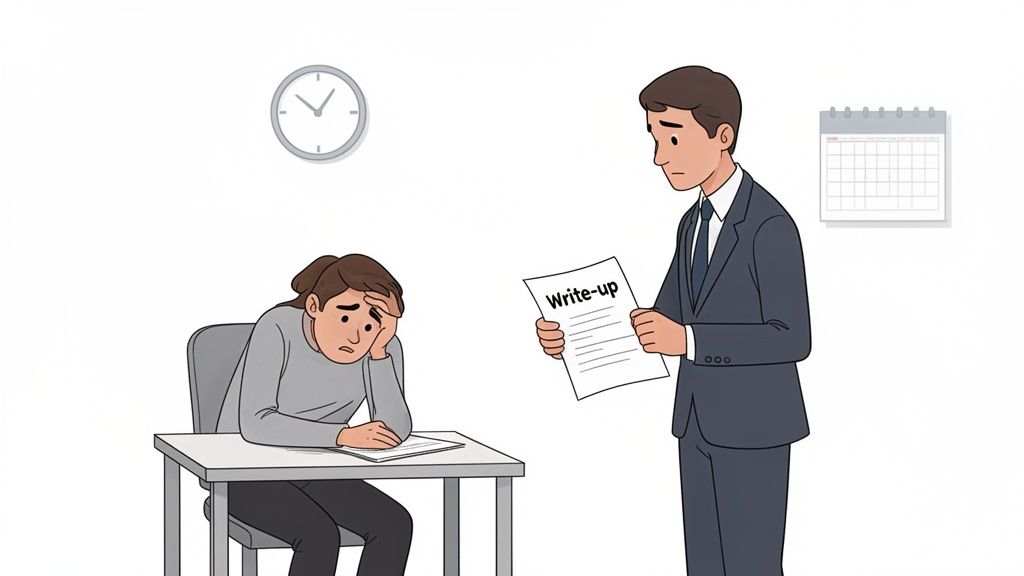
The main goal is simply to get everyone on the same page. It officially records that a conversation happened, lays out what was discussed, and outlines what needs to happen next. It’s a formal acknowledgment that something isn’t working.
It's a Course Correction, Not Just Paperwork
I like to think of it like steering a ship. If you’re just one degree off course, you won’t notice it at first. But over hundreds of miles, you’ll end up in a completely different place. A write-up is the captain—your manager—making a formal adjustment to get the ship back on track.
It’s meant to bring absolute clarity. Here’s what it really is:
A Formal Record: Unlike a verbal warning, this creates a paper trail. Both you and the company can refer back to it. No more “he said, she said.”
A Clarification of Expectations: The document should clearly state the problem, what a good outcome looks like, and the timeline for getting there.
A Legal Safeguard: This protects the company by showing they followed a process, but it also protects you by making sure the issue is clearly defined.
Here's the thing: a write-up should never be a surprise attack. If it’s the first time you’re hearing about an issue, something is wrong with the process. It should follow verbal warnings or informal feedback.
A well-handled write-up isn't the end of a career. It's a structured moment to get real, clarify what’s expected, and show you can grow. It forces a conversation that might otherwise be avoided.
This process isn’t about building a case against you. It's about removing ambiguity and replacing it with a documented, actionable plan. The trick isn’t to get defensive; it’s to understand what’s happening so you can navigate it with your head held high.
The Different Kinds of Write-Ups
"Write-up" isn’t a single thing. It’s a catch-all term for a few different kinds of documents, and a good manager knows which one to use for which job.
Let’s face it, getting any formal note from your boss is nerve-wracking. But knowing exactly what kind of paper you're holding is the first step toward handling it well.
The Roadmap: The Performance Improvement Plan (PIP)
First up is the Performance Improvement Plan, or PIP. This isn't about something you did wrong in the past. It’s a forward-looking guide designed to help you get your performance back to where it needs to be. Think of it as a serious, but hopefully collaborative, game plan.
A solid PIP is specific. It should spell out where you’re falling short, define what “good” looks like, and give you concrete goals with a set timeline—usually 30, 60, or 90 days. It’s less a slap on the wrist and more a structured support system.
The Rulebook: The Disciplinary Action Form
This is the one most people think of when they hear "write-up." The Disciplinary Action Form is much more serious. It’s for a direct violation of company policy, a major behavioral problem, or a significant mistake.
This document isn’t a roadmap; it’s a record of something that already happened. It will detail the incident, point to the specific company rule that was broken, and explain the consequences. This form is a clear signal: the behavior needs to stop, now.
A write-up should have one goal: to clarify expectations so you have a real chance to improve. If it’s being used to bully or punish, it’s the wrong tool for the job.
The Nudge: The Counseling Memo
Finally, there's the Counseling Memo or a simple written warning. This is the mildest form of a write-up. It often just acts as a formal "receipt" that a conversation took place.
Maybe you’ve had a few casual chats about being late. A counseling memo puts that conversation into the official record. It confirms you were told about the issue and understand what’s expected. Think of it as a gentle but official nudge to get back on track before things get more serious.
Each of these tells a different story. One lays out a path for improvement, another draws a hard line, and the last is a firm reminder. Knowing which one is in your hands is everything.
The Anatomy of a Formal Write-Up Meeting
A formal write-up meeting should never feel like an ambush. If your manager is doing their job right, you’ve probably had a few informal chats about the issue already. This meeting is just where things get put on paper. The process itself should feel professional and structured, not personal.
Walking into that room is tough. But knowing what to expect can help you stay calm and focus on the conversation, not the anxiety.
What to Expect During the Conversation
Your manager will usually lead the meeting, often with someone from HR present to ensure fairness. They'll have a document ready that serves as the agenda. This isn’t just a list of complaints; it’s a specific record.
Typically, it will lay out three things:
The Specific Issue: A clear, factual description of the performance problem or behavior, with dates and examples. Vague feedback has no place here.
The Company Expectation: It should connect the issue back to a company policy or a performance standard. This shows it’s not just a manager's personal preference.
The Path Forward: This part outlines clear, achievable steps you need to take, along with a timeline and how improvement will be measured.
Your job isn't just to sit there and take it. You have every right to ask questions. And, most importantly, you have a right to add your own comments.
This visual guide shows how things can progress from a simple memo to more serious disciplinary action.
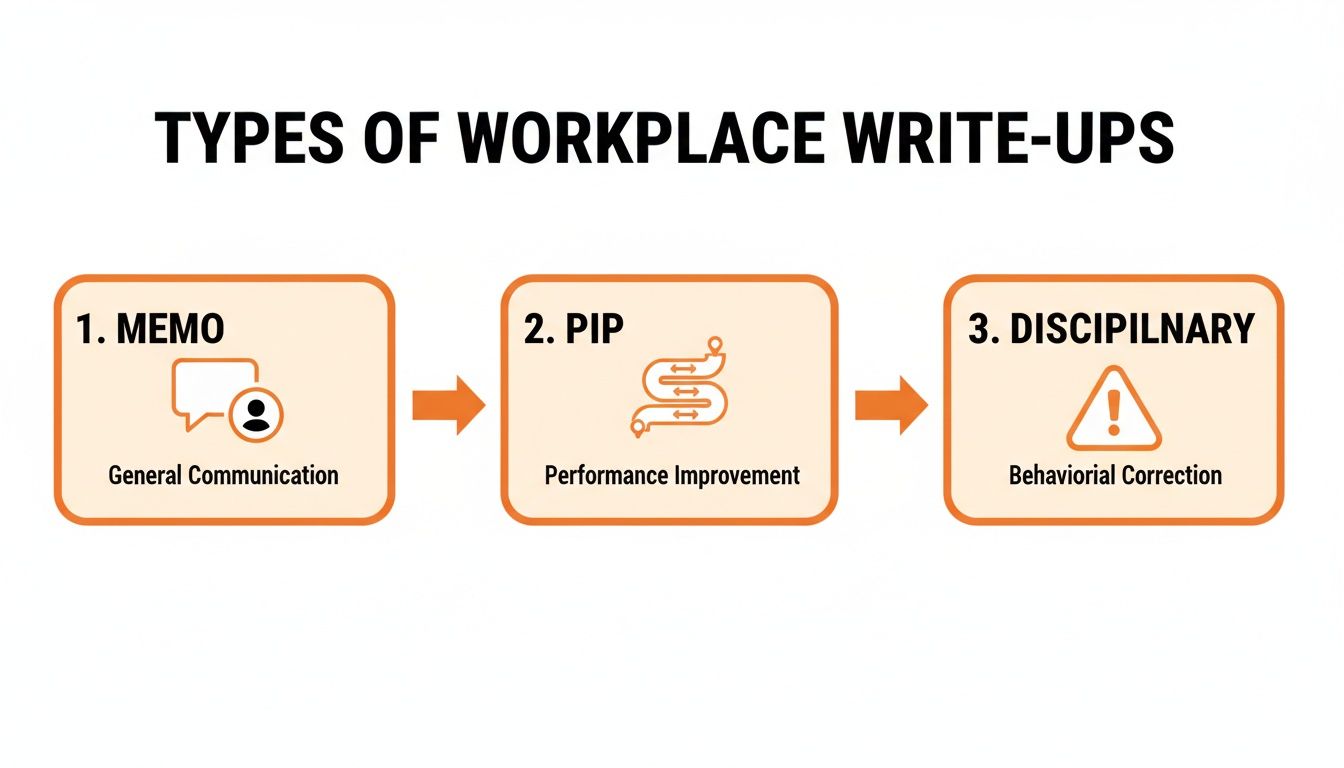
Understanding this progression makes it clear that not all write-ups are the same; they're different tools for different situations.
The Signature Is Not a Confession
This is the part that trips people up: being asked to sign the form. Let’s get one thing straight. In almost every case, your signature is just an acknowledgment that you received the document and the meeting happened. It is not an admission of guilt.
Signing a write-up is like signing for a package. You're just confirming you got it, not that you love what's inside.
If you feel uneasy, it's completely reasonable to ask, "Just to clarify, is my signature confirming I agree with this, or just that I've received it?" It's a fair and professional question. A good manager will respect you for asking. For a deeper look into handling these delicate workplace conversations, our guide for employee relations managers has some great insights.
The whole point of the meeting is to get rid of ambiguity. It’s a tough conversation, no doubt. But it’s one that forces everyone onto the same page with a documented plan for what happens next.
Knowing Your Rights and Responsibilities
When you’re handed a formal document in a quiet room, it’s natural to feel like you’re on the defensive. The whole conversation can feel one-sided—like something happening to you, not with you. But that’s only half the story.
You have rights in this process. This isn't about looking for a fight; it’s about making sure the process is fair and transparent. You have a right to understand exactly why you're being written up, explained in clear, specific terms.
You also have the right to be treated with respect and to get a copy of the document for your own records. But let's be crystal clear on this next point, because it's the most important one.
You have the right to add your own written perspective to the file. This is your voice in the official record. It’s a right you should always exercise if you have more to say.
Your Role in the Process
Of course, it’s not just about what you're owed; it’s also about your own responsibilities. Your part is to listen with an open mind, even if the feedback is tough to hear. You have a responsibility to engage constructively and ask questions to clarify anything you don't understand—not to argue every point.
The goal is to show you’re taking this seriously. It means making a genuine effort to meet the expectations laid out in the document. It’s about handling a difficult situation with maturity, showing you’re a partner in finding a solution, not an adversary.
To get a better handle on your legal standing, it helps to understand a bit about general employment law. Knowing the bigger picture helps you navigate your company's specific procedures. It also shows why a well-defined policy and procedure manual is so important for guiding these interactions fairly.
Ultimately, this moment is about knowing where you stand, what’s expected of you, and what your role is in moving forward. That knowledge is the difference between feeling like a passive recipient and being an active participant in your own career.
How to Move Forward After a Write-Up
The meeting’s over. The paper is signed. You walk back to your desk with your mind buzzing. Now what?
This is the part that really matters. Getting a write-up doesn’t have to be a career-ender. Think of it as a serious wake-up call and a chance to turn things around.
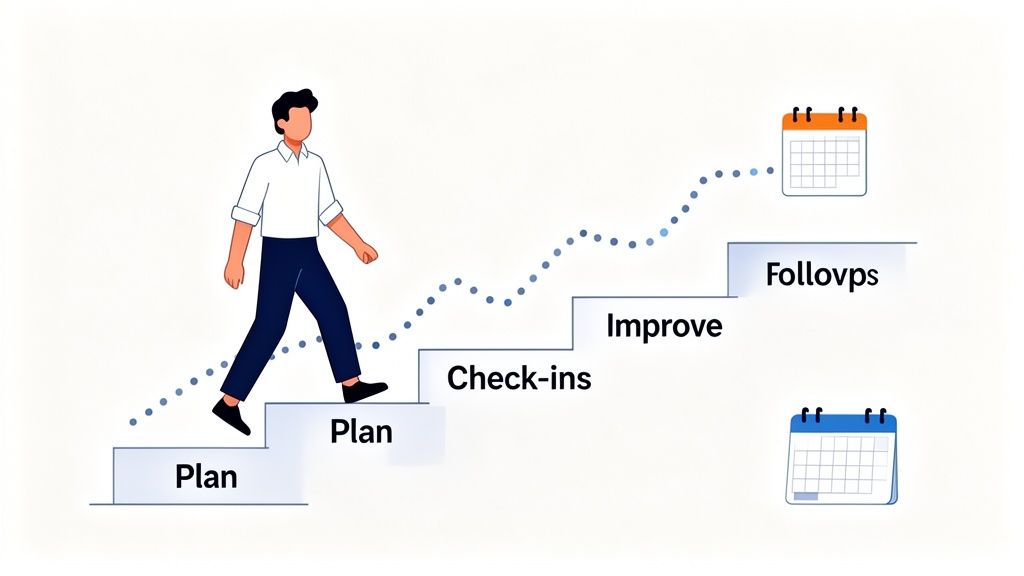
The first step is to own your response. This isn’t about admitting you were wrong if you genuinely disagree, but about owning the path forward. Responding with professionalism is the fastest way to rebuild trust and prove this was just a speed bump, not a dead end.
Create Your Personal Action Plan
Don't just wait for your manager to tell you what to do next. Be proactive. Take the feedback from the write-up and sketch out your own simple plan. This becomes your personal roadmap for making things right. More importantly, it shows you're taking the initiative.
Your plan can be simple:
Identify the Core Issues: What were the one or two main problems? Get specific.
Define Clear Actions: For each problem, write down one concrete thing you will do to fix it. If timeliness was the issue, your action might be, "Set a calendar reminder 15 minutes before every deadline."
Set Your Own Checkpoints: Decide how you'll track your own progress before your manager has to ask.
This isn’t for show; it's for you. It helps shift your mindset from reacting to a problem to proactively designing the solution.
Open the Lines of Communication
Silence is not your friend after a write-up. Don't just retreat and hope everything blows over. Instead, be the one to start the follow-up conversations.
Ask your manager for a brief, regular check-in—maybe 15 minutes every Friday to go over your progress and get feedback. Frame it simply: "I'd like to schedule a quick weekly check-in just to make sure I'm moving in the right direction."
A good leader partners with you to succeed, not just documents a problem. When you take the first step, you invite them to be a better coach.
This proactive communication does two things. First, it keeps expectations clear and lets you make adjustments on the fly. Second, it shows maturity and goes a long way toward rebuilding any trust that was shaken. For managers trying to navigate this, learning how to manage underperforming employees is key to turning these moments into wins for everyone.
The goal isn't to pretend the write-up never happened. The goal is to make it irrelevant by proving it was the catalyst for real, positive change. Your actions in the weeks that follow will define this moment.
Common Questions About Workplace Write-Ups
Even after you understand the basics, a write-up can leave your head spinning. That's normal. The whole process feels formal, and it's easy to wonder what it really means for your job and your future.
Let's cut through the noise and tackle some of the most common worries. No HR jargon, just straight answers.
Can I be fired for a single write-up?
This is the big one, isn't it? The short answer: it’s not common, but it can happen.
For most day-to-day performance issues, a single write-up is just the first formal step in a longer conversation. It’s a serious warning, not an immediate pink slip.
However, for really serious stuff—harassment, theft, a major safety violation—one incident is often enough for immediate termination. It all comes down to the severity of the action and your company's policies. The bottom line? Always take any write-up seriously.
What should I do if I disagree with the write-up?
You have the right to disagree. The trick is to handle it professionally, not emotionally.
In the meeting, your first job is to listen calmly. Once they’ve explained their side, it's your turn. State your perspective, stick to the facts, and avoid letting your feelings take over the conversation.
Most write-up forms have a section for "employee comments." This is your space. Use it. Write a brief, professional response explaining your side of the story. This statement becomes a permanent part of the official record. And remember, signing the form usually just acknowledges that you received it, not that you agree with it.
How long does a write-up stay on my record?
This really depends on your company. There’s no universal answer.
Some companies have a "sunset clause," where a write-up essentially expires for disciplinary purposes after a set time, like one year, as long as there are no new issues. In other places, it might stay in your personnel file indefinitely.
It is perfectly okay to ask your manager or HR for clarification on this. A major concern is how it might affect your employment history, which often leads to the question of when you get terminated from a job does it go on your record. Getting a clear answer on your company’s policy helps you understand the long-term picture.
Handling these tough conversations and documenting them correctly is a real challenge for any manager. Pebb brings your team's communication and operational tasks into one place, creating a secure hub for sensitive documentation, performance tracking, and clear communication. It keeps everyone on the same page, all inside a single, easy-to-use app. Discover how Pebb can bring more clarity to your workplace at https://pebb.io.
