
How to Write Up an Employee Without Losing Your Humanity
Learn how to write up an employee with a clear, humane, and legally sound process. Our guide covers when to act, what to say, and how to follow up effectively.
Dan Robin
Writing up an employee is a job no one wants. We’ve all been there—that sinking feeling when you know a tough conversation is coming. You put it off. You hope it fixes itself.
But it never does.
I’ve learned this the hard way. When you let things slide, the problem doesn’t just go away. It grows. It quietly poisons your team’s morale, frustrates your best people, and undoes all the hard work you’ve put into building a good culture.
A Write-Up Is a Reset, Not a Punishment
It’s easy to think of a write-up as just a step toward firing someone. A tool of punishment. But that’s a small, unhelpful way to see it. A formal write-up is actually an act of clarity. It’s a way to hit pause on a downward spiral and get everyone facing the same direction again.
A well-handled write-up isn't an attack. It's an act of clarity. It tells an employee, "This isn't working, and here is exactly what needs to happen next." It respects them enough to be direct.
When you do it right, this process protects everyone:
For the employee: It gives them clear, factual feedback and a documented path to get back on track. The guessing games stop.
For the team: It shows that standards are real and apply to everyone. This builds trust.
For the business: It creates a necessary record. If things don’t work out, you have a clear, documented history of the support you offered.
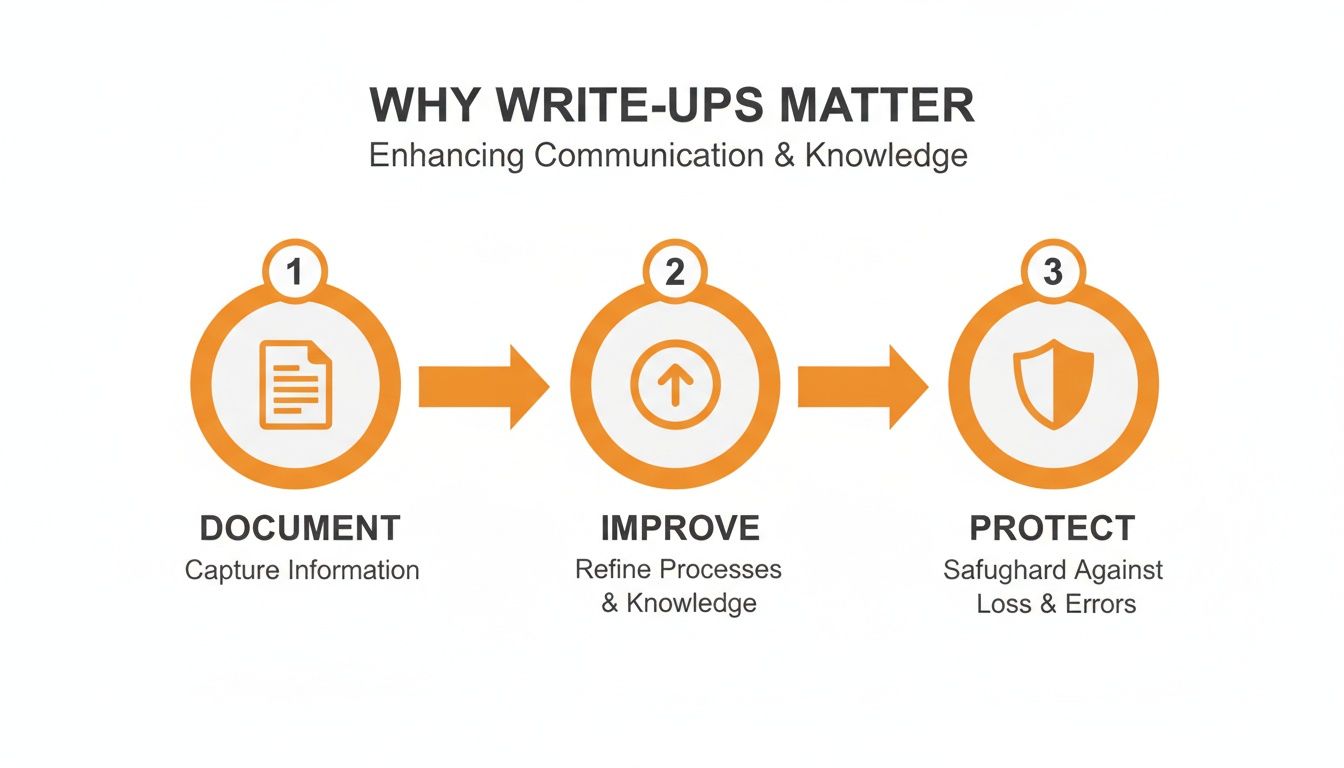
These three pillars—Document, Improve, and Protect—turn a painful moment into a structured chance for real change.
When to Make the Call
Not every screw-up needs a formal document. So, how do you know when to go from a quiet chat to a written record? You learn to spot the patterns.
Here's a simple mental model for deciding what to do.
When a Formal Write-Up Is the Right Call
Situation | What to Do | Why |
|---|---|---|
First-time minor offense | Verbal warning or coaching | A simple conversation is usually enough. It’s less intimidating and builds trust. |
Repeated minor offenses | Formal write-up | If you’ve already had a chat and nothing has changed, it’s time to document the pattern. This shows the seriousness of the issue. |
Significant policy violation | Immediate formal write-up | Serious issues like safety violations or harassment demand an instant, documented response. It protects everyone. |
Poor performance | Performance Improvement Plan (PIP) with a write-up | The write-up documents the specific gaps. The PIP creates a structured plan for how to fix them. |
Attitude or behavioral issues | Formal write-up | "Bad attitude" is vague. Document specific, observable behaviors to make the feedback concrete and actionable. |
At the end of the day, a write-up is for when you can no longer afford ambiguity. It’s your tool for making sure everyone understands the problem and the path forward.
A Tool for Clarity, Not Conflict
Letting performance problems fester has a real cost. It’s a massive driver of disengagement. Gallup’s State of the Global Workplace report found that global engagement fell to just 21% in 2024, costing the world economy a staggering $438 billion in lost productivity.
Good employees notice when underperformance is tolerated. They start to wonder why they bother.
A write-up is your chance to reset things with respect. It shifts the conversation from emotion to facts. If you're new to this, it helps to understand exactly what is a write-up at work and what it’s for. This guide will show you how to do it right—turning a dreaded task into a productive conversation.
Crafting a Write-Up That Is Fair and Effective
I’ve seen managers treat write-ups like a personal burn book. A laundry list of every little grievance. This is a huge mistake. A good write-up isn't a weapon; it’s a map.
It needs to show exactly where things went off course and lay out the precise route back. No room for interpretation.
The most important rule is this: stick to what you can see and prove. Vague complaints like "John has a bad attitude" are subjective, impossible to measure, and just asking for a fight. They make things personal and immediately put people on the defensive.
Instead, you need to be a reporter.
Focus on Facts, Not Feelings
Your feelings don’t belong in this document. Neither do your assumptions about someone’s intentions. Just state what happened. When did it happen? Where?
Don't say: “Maria is always late and doesn’t seem to care.”
Instead, write: “On Monday, October 26, Maria clocked in at 9:18 AM for her 9:00 AM shift. On Wednesday, October 28, she clocked in at 9:23 AM.”
See the difference? The first is an opinion. The second is an undeniable fact. This moves the conversation from being about the person to being about the behavior. It gives them something concrete to address, not a vague attack on their character.
Connect the Behavior to Clear Expectations
After you lay out the facts, you have to connect them to the rules of the game. Show how the specific behavior violates a known company policy or performance standard. This isn't about you making up rules on the fly; it’s about holding everyone to the same standards.
The write-up should explicitly state which policy was violated. For example, "This attendance pattern violates our company's Punctuality Policy, section 3.1, which you reviewed during onboarding on May 12."
That one sentence does a lot of work. It grounds the entire conversation in fairness. It removes the feeling that someone is being singled out.
It’s also smart to mention any previous informal chats you’ve had. Referencing a verbal warning shows you’ve already tried to fix this quietly. It builds a clear record of progressive support, proving you aren’t just ambushing them. It tells the story of a manager who is trying to manage underperforming employees and get them back on solid ground.
Outline a Clear Path Forward
A write-up that only looks backward feels like a dead end. To be effective, it has to be forward-looking. Listing past mistakes is punitive. Outlining a path for improvement is constructive.
Your document must define concrete, measurable steps for the employee to take. Set a realistic timeline.
For instance, you might write, “For the next 30 days, we will check in weekly to review your progress toward meeting the 9:00 AM start time.” This simple plan turns a warning into a structured recovery plan. It shows them you're invested in their success and gives them a clear shot to turn things around.
Leading the Meeting Without the Drama
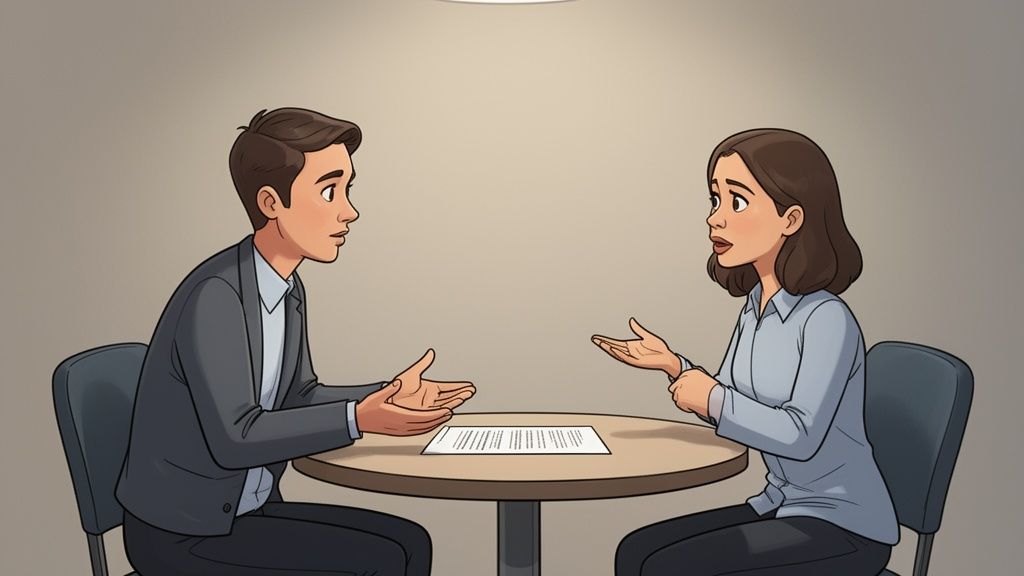
The document is just the script. The conversation is the real performance. This is where you can build a bridge toward improvement or burn it to the ground.
My first few of these conversations were a mess. I was so nervous I’d either come in too hot or waffle so much the point got lost. It took time and a few painful mistakes to learn that the goal isn't to win an argument. It’s to create a shared understanding.
Set the Stage for a Real Conversation
First, location matters. Find a private, neutral space. Your office is not the right place—sitting behind your desk creates a power dynamic that puts people on edge. And it should go without saying, but never do this in public.
Start the meeting directly but calmly. Skip the awkward small talk. Get right to it: “Thanks for meeting with me. I wanted to talk about some specific concerns regarding your performance on the X project.”
Walk them through the document. Don’t just read it like a robot. Summarize the key points, sticking to the objective facts. You're not there to shame them; you're there to establish a factual baseline for the discussion.
Then comes the most important part: stop talking and listen.
Your job in this meeting is to listen more than you speak. Ask, "What's your perspective on this?" Then give them the space to answer without cutting them off. Sometimes there’s a story you know nothing about.
Giving someone a genuine chance to be heard can defuse an incredible amount of tension. I’ve been completely surprised by what I’ve learned just by shutting up and letting the other person talk.
Navigate the Inevitable Reactions
People react to feedback in different ways. You might get defensiveness, denial, tears, or anger. Your job is to stay calm and anchored to the facts.
Here’s a simple game plan for those reactions:
If they get defensive: Don’t get pulled into a fight. Gently bring it back to the documented examples. "I understand this is tough to hear, but let’s look at the specific examples we’ve noted."
If they get upset: Show empathy, but don't abandon the meeting. Offer a moment. "I can see this is upsetting. Let’s take a minute if you need one.” The conversation still needs to happen.
If they deny everything: Acknowledge their view. "I hear you saying you don't agree with this." Then, pivot back to the expectations and the path forward.
Be firm but kind. The absolute priority is that the meeting ends with 100% clarity on what’s next. Reiterate the improvement plan and the timeline. Both of you need to walk out knowing exactly what the next steps are.
The Follow-Up Is Where the Real Work Happens
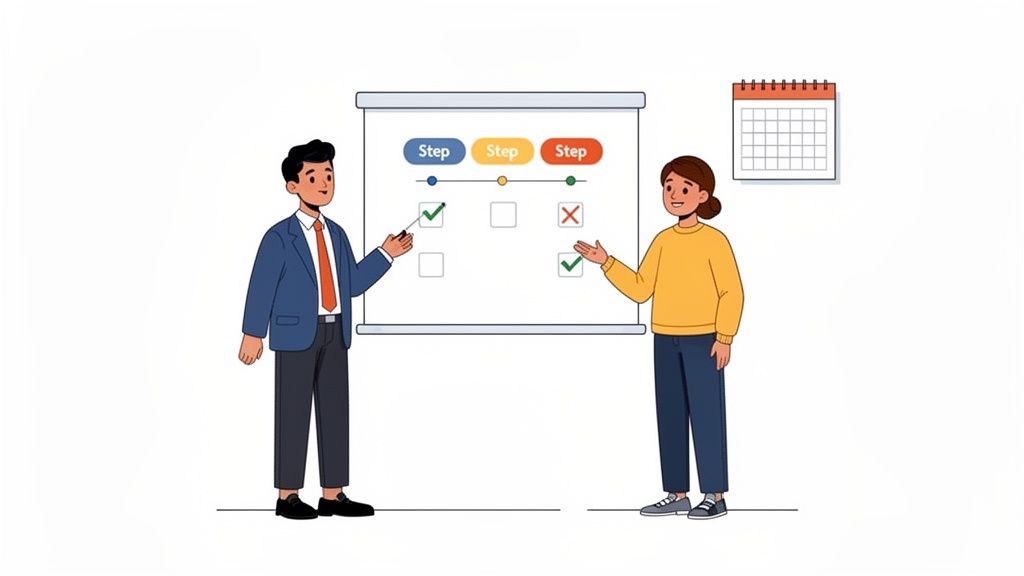
Handing over the write-up isn't the end of the process. It's the beginning. The real work—the part that actually helps someone get better—starts now.
A write-up with no follow-up is just a piece of paper. It documents a problem without offering a way forward. That feels less like you’re helping someone succeed and more like you’re just building a case to fire them. And that’s a great way to kill trust.
Build a Simple Improvement Plan
Your follow-up needs a structure. This is often called a Performance Improvement Plan, or PIP. But let’s be honest, the term "PIP" has a grim reputation. We find it’s better to just call it a simple action plan.
Don't try to fix everything at once. Focus on the one or two key things that will make the biggest difference. The goal is to make it achievable.
Define a clear, measurable goal. Not "improve communication," but "respond to all client emails within 24 hours."
Set a realistic timeline. A 30- or 60-day period with weekly check-ins is a good starting point.
State what support you will provide. This shows you’re invested. It could be extra training, pairing them with a mentor, or just more frequent one-on-ones with you.
A structured plan proves you're serious about their recovery, not just documenting their failure. Making sure these talks lead to clear actions is critical, so it's worth mastering the meeting follow-up to keep things on track.
Check-Ins Are About Support, Not Surveillance
Formal weekly meetings are important, but don't underestimate small, informal touchpoints. A quick, "Hey, how’s it going with that new process?" shows you’re paying attention. It keeps the conversation going and quietly reinforces that you're on their side.
These brief check-ins are also your chance to see what’s really going on. Sometimes, performance slips because someone is silently struggling with burnout. It’s a real crisis, with 83% of workers admitting they experience it. That exhaustion can easily look like missed details or a bad attitude.
DHR Global’s Workforce Trends Report shows this crisis is especially bad in retail (62%) and healthcare (61%), driven by crushing workloads. You can read the full research on these workforce trends to understand the pressures your team might be facing.
A write-up should be the start of a conversation, not the end of one. Consistent, supportive follow-up is what rebuilds trust and gives people a genuine chance to turn things around.
This consistent engagement helps the employee get back on track and begins to mend the working relationship. From the company’s side, it also creates a clear history of the support you provided. If things still don’t work out, you’ll know you gave them a fair chance. That's how you handle this with integrity.
Handling Write-Ups: The Legal and Privacy Playbook
Let's be clear: an employee write-up isn't just HR paperwork. It's a sensitive, legal document. If you mess this part up, you can create a problem much bigger than the one you were trying to solve. This is about being careful and protecting your company.
I’ve learned that two things are non-negotiable here: consistency and privacy. Get these right, and you're building a solid process.
Be Consistent, Or Be in Trouble
Applying company policies selectively is the fastest way to face a discrimination claim. It's simple. If you write up one person for being late but let their coworker do the same thing, you’ve just created a huge liability.
This is why your process for writing up an employee must be the same for everyone, every time.
A clear, documented process is your best defense. When everyone is held to the same standards, it removes any hint of favoritism and grounds the action firmly in company policy. For a deeper look at this, check out our guide on building a solid policy and procedure manual.
Keep It Confidential. Seriously.
A write-up contains sensitive information. Performance critiques, disciplinary actions, personal details. This is not casual paperwork. Leaving a copy on a shared printer or saving it in a public folder is a massive breach of privacy and trust.
Access must be on a strict, need-to-know basis. Usually, that means the employee, their direct manager, and HR. That’s it.
Storing these documents securely is non-negotiable. A locked filing cabinet works, but a secure digital system with access controls is far better. This protects the employee’s dignity and the company’s integrity.
A government report on misconduct found that case backlogs, some over 3 years long, made it nearly impossible to hold people accountable. When you delay, you weaken your legal standing and signal to your team that you don't take these issues seriously. Proper, secure documentation is the first step in a process that needs to be swift and fair.
When in Doubt, Ask for Help
Even with a good process, you’ll run into situations that feel tricky. Maybe the issue involves an employee in a protected class, touches on a medical condition, or feels like a whistleblowing complaint. These are the moments you should not try to wing it.
This is why your HR team and legal counsel exist. Bringing them in early isn't a sign of weakness; it’s a sign of good judgment. They can help you navigate the tricky parts and ensure every step you take is not just fair, but legally sound.
Remember, the goal is to fix a problem, not start a legal fight. Treating these documents with the gravity they deserve protects the employee, your team, and the whole company. It’s simply about doing the right thing, the right way.
Common Questions About Employee Write-Ups
Even for seasoned managers, this stuff is nuanced. Here are some of the most common questions that come up.
Can an Employee Refuse to Sign a Write-Up?
Yes, they can. And you can’t force them. It happens more than you’d think. The first thing to remember is that a signature isn't an admission of guilt—it’s just proof they received the document.
If they won’t sign, stay calm. Don’t get into an argument. Just make a note on the form itself. Something like, “Employee received a copy but declined to sign” is all you need. Add the date and your signature.
For extra protection, have another manager or an HR rep witness the refusal and sign as well. Their refusal doesn't make the write-up invalid. What matters is that you had the conversation and can prove they got the document.
What if Burnout Seems to Be the Real Issue?
This is a big one. If your gut tells you a good employee is struggling because they're burned out, a formal write-up is like pouring salt in the wound. It will almost certainly backfire.
Instead of jumping to discipline, start with a supportive, one-on-one chat. Ask open-ended questions. Is their workload crushing them? Are they dealing with something outside of work?
The solution might be to adjust their workload, remind them about mental health resources, or push them to take their vacation time. If a policy was still violated, you might need to document it, but frame the conversation around support and solutions, not punishment.
How Many Write-Ups Before Firing Someone?
There’s no magic number. While many companies use a "three-strikes" model (verbal, written, final warning), that’s a guideline, not a legal requirement in most at-will employment states.
The severity of the issue dictates the response.
A single, major violation—like theft, harassment, or a serious safety breach—can be grounds for immediate termination. For performance issues, the goal is to show a clear pattern of behavior and document the reasonable steps you took to help. Progressive discipline is about giving someone a fair chance, not hitting a quota.
To be sure your documentation is sound, it helps to understand the legal standards for employee write-ups.
Where Should I Store These Documents?
These are highly confidential files. They should never be in a desk drawer, a shared network drive, or an open filing cabinet.
The only right way to store them is in a secure, central location with strict access controls. Think of a digital system where only HR, direct managers, and specific leaders can see the files. This protects the employee's privacy and creates a clean audit trail, proving you handle sensitive data responsibly. It’s a simple step that protects everyone.
Ready to bring all your team’s work into one secure, unified space? With Pebb, you can manage company policies in a central Knowledge Library, assign and track follow-up tasks, and store sensitive documents with role-based permissions, all in one app. See how Pebb can simplify your operations at https://pebb.io.
