
7 Great Attendance Policy Samples You Can Actually Use in 2025
Stop guessing. Here are 7 clear attendance policy samples to adapt for your team. Find the right template and build a policy that works.
Dan Robin
Let’s be honest. Writing an attendance policy is a drag. You're stuck trying to be fair to your people while also running a business. You need to be clear without sounding like a robot, firm without being a tyrant. I’ve been there—staring at a blank screen, trying to create something that sets expectations without killing morale. We’ve all seen the policies that are either so vague they’re useless or so strict they feel like a trap.
Here's the thing: a policy isn't about catching people out. It's about creating a shared understanding of what it means to show up. It’s about building a system on trust, not suspicion. A good policy doesn’t just punish absence; it clarifies expectations so everyone knows how to handle the inevitable moments when life gets in the way. While the core of this task is about setting expectations, the principles are similar to other formal documents. If you're looking for general guidance on structuring persuasive documents, understanding how to write a policy brief can provide a solid foundation for clarity and impact.
Instead of starting from zero, the smart move is to see what works for others and adapt it. So, I’ve pulled together a handful of attendance policy samples from sources I actually respect. They aren't perfect solutions, but they're excellent starting points. We’ll look at each one, talk about what makes it useful, and figure out how you can borrow its best ideas for your own team. Let’s get it done.
1. SHRM (Society for Human Resource Management)
When you’re navigating the maze of HR rules, you need a North Star. For most HR pros, that’s SHRM. It's less a website and more the definitive library for everything HR, built by people who live this stuff daily. If you're looking for attendance policy samples that are solid, legally sound, and based on decades of real-world experience, this is where you start.
What makes SHRM different is its credibility. These templates aren't just slapped together; they're built by HR and legal experts who get the subtleties of U.S. labor law. This isn't some quick blog post. It's a resource meant to be the bedrock of a policy that actually holds up.
Why It’s a Go-To Resource
SHRM’s value is its depth. You don’t just get a generic template; you find policies that cover different situations, along with guides to help you put them into practice. They give you the "why" behind the rules, which is what matters when you're trying to build something that lasts.
Let's be real: making a comprehensive policy from scratch is a massive job. For anyone putting together a full employee manual, these resources are gold. If you're building out your first one, you can find in-depth guidance on how to create an employee handbook to get started on the right foot.
The Trade-Off: Access and Customization
Nothing this good is free. Full access to SHRM’s library requires a membership, which runs around $244 a year. For an HR department, it’s a no-brainer. For a small business owner, that might sting a little.
The templates are also, by design, pretty general. They’re a starting point, not a finished product. You’ll have to customize them to fit your company culture, your industry, and your state laws. And you should always have a lawyer look over the final draft.
Best For: HR leaders and anyone who needs a legally sound foundation.
Key Feature: A huge library of expert-vetted HR forms and policy templates.
Pro Tip: Use their templates as a first draft. Pull out the core ideas, then sit down with your leadership and legal team to tailor the language and consequences to your workplace. Don’t just copy and paste.
2. Workable Resources
If SHRM is the giant HR library, Workable Resources is the practical field guide. It’s for the manager who needs something solid right now, without dealing with a paywall or a complicated portal. Workable cuts to the chase, offering a clean, clear, and downloadable attendance policy sample you can use in minutes.
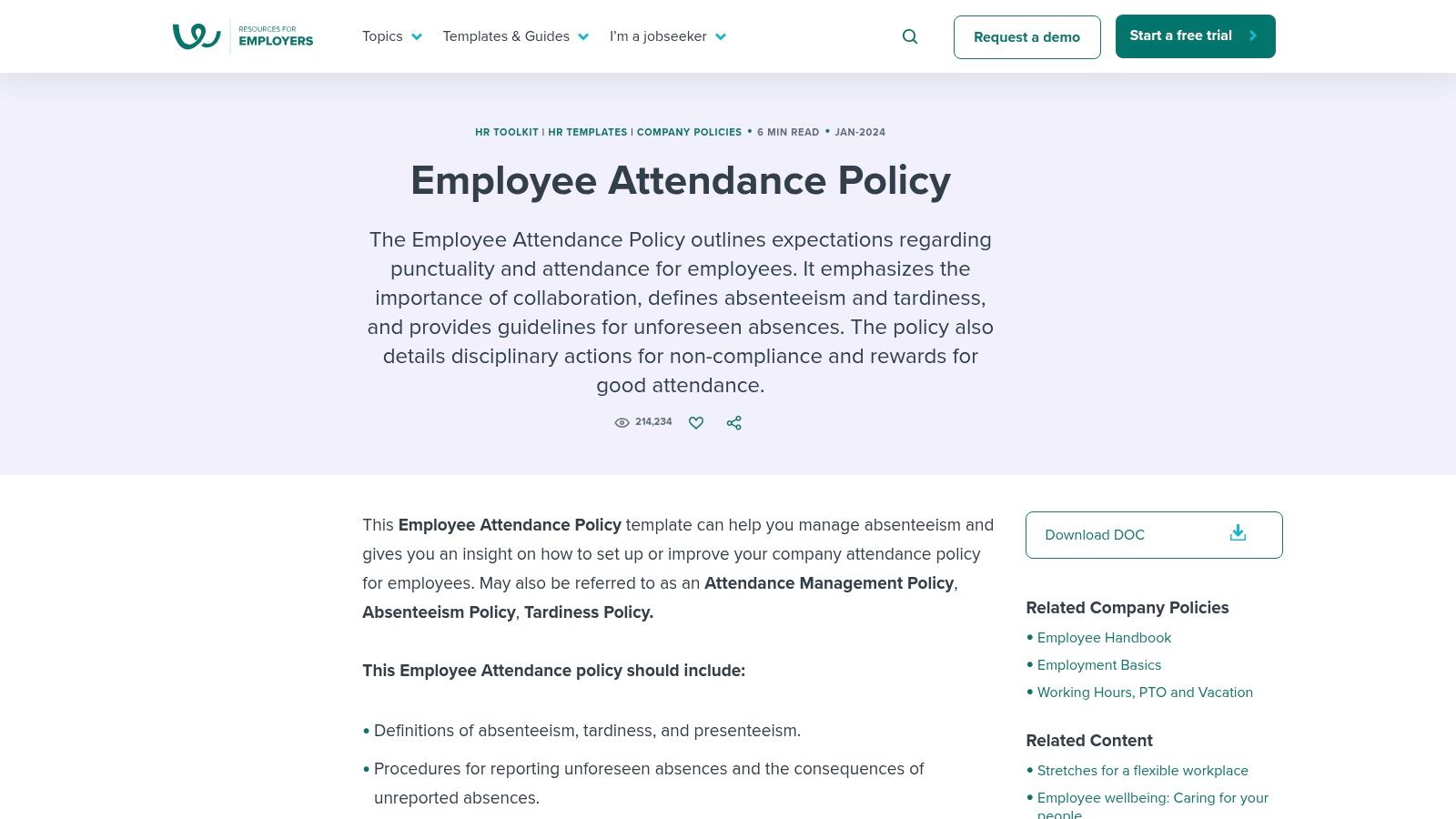
Workable is appealing because it’s so direct. The policy is written in plain English, not dense legalese. It covers the essentials like reporting absences, tardiness, and a no-fault point system. It’s a great starting point for companies that need structure but aren't ready for a super-complex system. It feels less like a corporate mandate and more like a simple agreement between adults.
Why It’s a Go-To Resource
Workable’s main advantage is that it’s simple and accessible. You find their template, hit download, and have a DOC file ready to edit in seconds. They give you the basic framework so you can spend your time tailoring it, not building it from scratch.
This is a lifesaver for teams without a dedicated HR person. The language is clear enough for any manager to understand and use. And since it's a simple Word doc, you can easily slot it into your employee handbook without fighting with weird formatting.
The Trade-Off: Simplicity vs. Specificity
Let’s be honest: free and simple means you have more homework to do. The template is great, but it’s a generic starting line. It doesn't have the detailed legal notes or state-specific clauses you’d find in a paid resource. You'll need to do your own research to make sure it complies with local laws, from California’s paid sick leave to New York’s scheduling rules.
You might also have to give them your email to get the download, which is a small price for a good template, but worth knowing. The template is a tool, not a complete legal solution.
Best For: Small to mid-sized businesses and managers who need a practical, no-cost policy fast.
Key Feature: A free, easily editable employee attendance policy template in a standard DOC format.
Pro Tip: Download the template and use it as a discussion guide with your team leads. Walk through each section and decide together what feels fair for your work environment before you finalize it.
Visit Workable Resources Website
3. Betterteam
Sometimes you don’t need a legal library. You just need a solid starting point, right now. This is where Betterteam shines. It cuts through the noise and gives you a straightforward employee attendance policy template that you can download and start editing immediately. It’s the practical, get-it-done option for busy managers who value speed and simplicity.
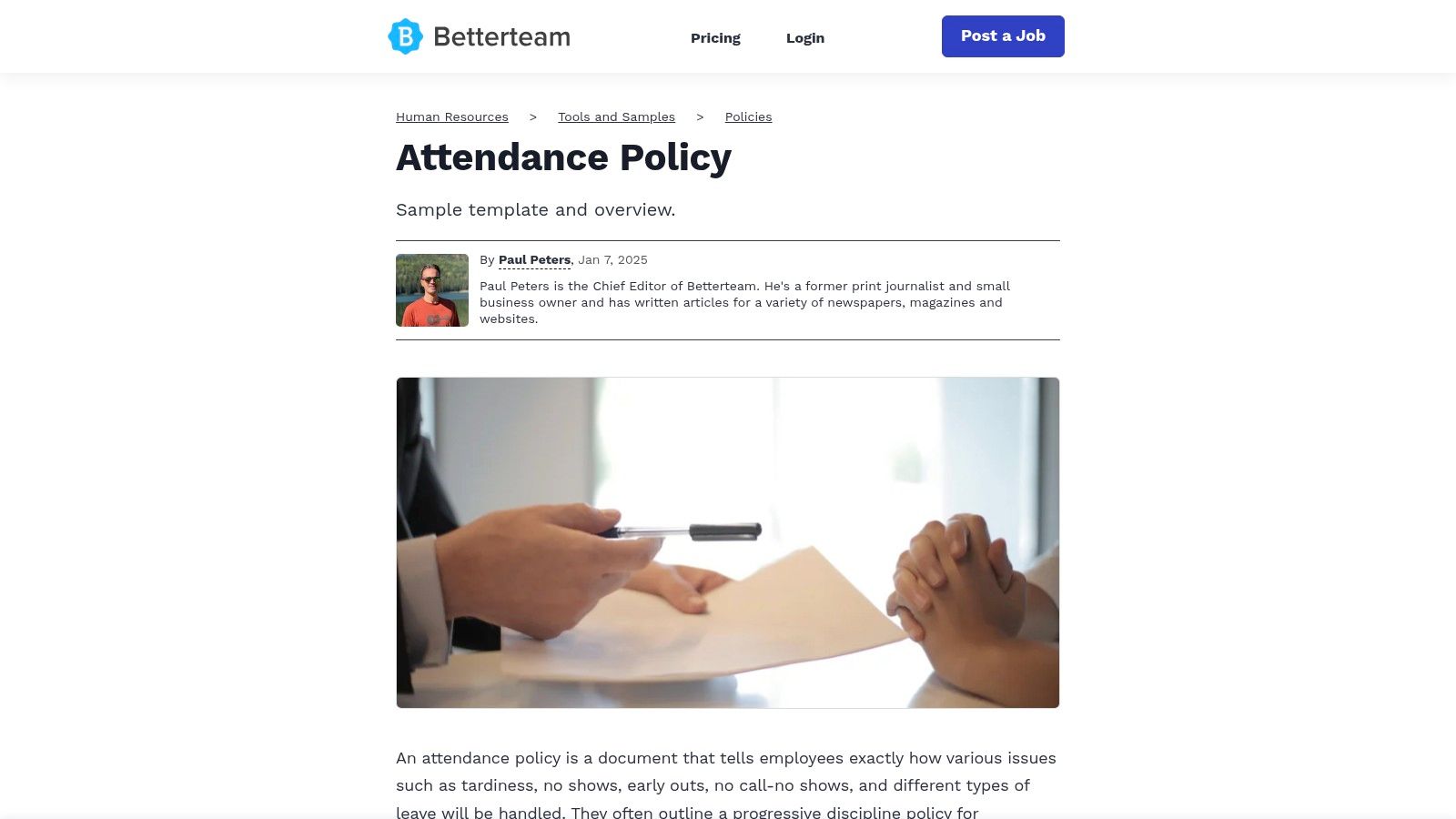
Betterteam is so useful because it's so accessible. There’s no paywall, no email signup, no hoops. You just get a clean, editable Word document that lays out a clear, point-based attendance system. It’s designed for the real world of hourly work, where tardiness and no-shows are problems that need a consistent response.
Why It’s a Go-To Resource
Betterteam’s strength is its immediate utility. The template gives you a well-defined disciplinary ladder tied to a points system, which is one of the easiest frameworks to understand. It includes specific point values for things like being late or an unexcused absence, giving you a ready-made structure to adapt.
The page also includes a helpful FAQ that explains the core components of a good policy. It offers context without drowning you in jargon. For a small business owner without a dedicated HR team, this simple guidance is incredibly valuable.
The Trade-Off: Access and Customization
Let's be clear: this is a template, not a legal document tailored to you. Betterteam offers a great foundation, but it lacks the deep legal analysis you’d find on a platform like SHRM. The template is a generic starting block, not specific to any state or local jurisdiction.
You will need to spend time customizing it. This means adjusting the point values, defining disciplinary actions that fit your company’s culture, and, most importantly, making sure it complies with labor laws in your area. You’ll also probably need to reformat it to fit into your employee handbook.
Best For: Small business owners and managers who need a simple, point-based policy quickly.
Key Feature: A free, instantly downloadable Word template with a clear points system.
Pro Tip: Use this template to start a conversation with your team leads. Talk about whether the points and consequences feel fair for your work environment before finalizing anything. Getting their buy-in is key.
4. PandaDoc
Sometimes, the policy itself is only half the battle. The other half is getting it signed, tracked, and filed without creating a mountain of paperwork. This is where PandaDoc comes in. It’s not just a place to find an attendance policy sample; it's a platform built to streamline the entire process, from creation to electronic signature.
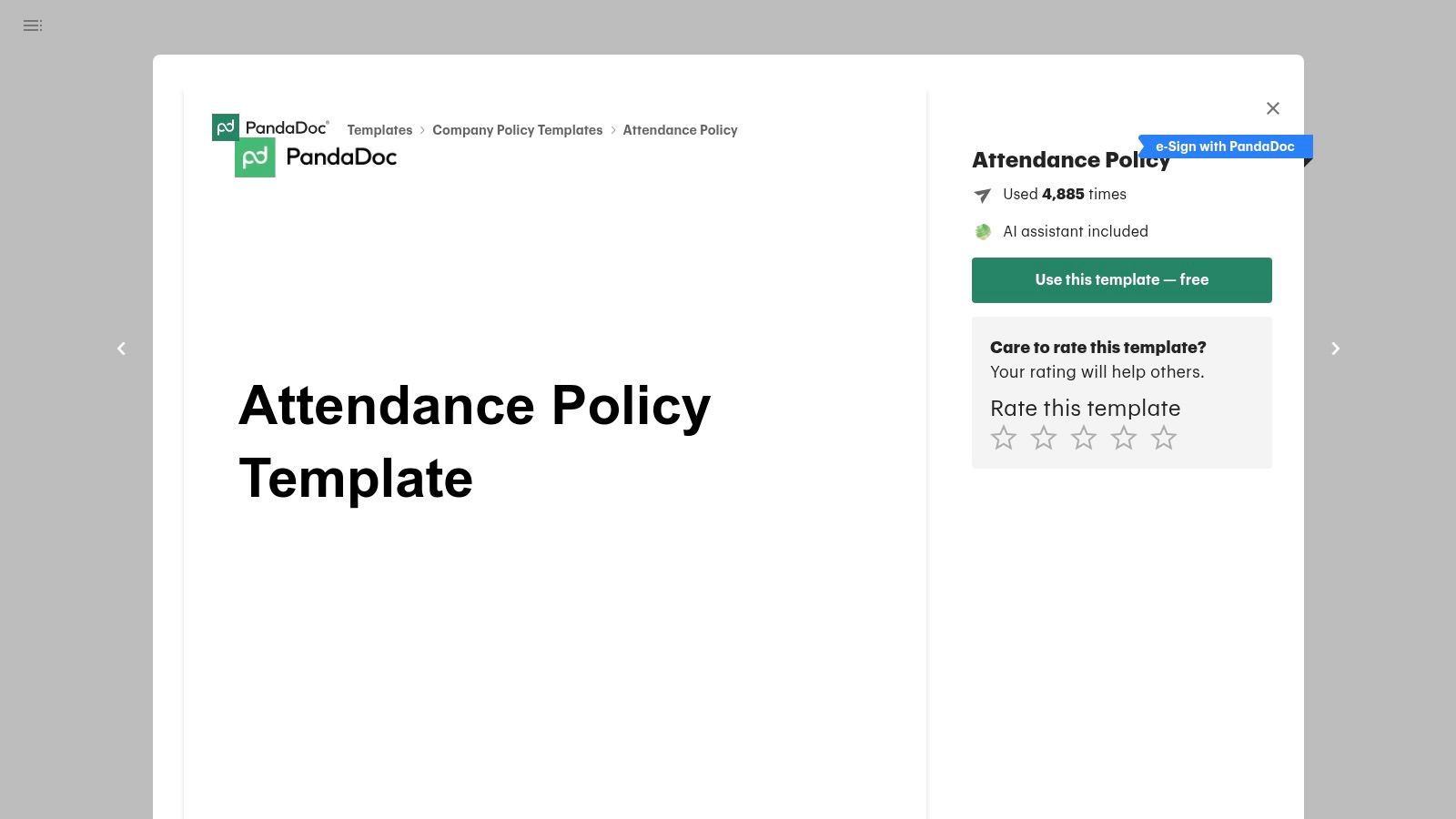
What makes PandaDoc compelling is its focus on action. The template is clean and well-structured, covering the essentials. But its real power comes from the platform's features: you can send the document out, track who has opened it, and collect legally-binding e-signatures. It turns a static policy into an interactive, trackable task.
Why It’s a Go-To Resource
PandaDoc’s strength is efficiency. For managers who need to roll out a policy and confirm everyone has seen it, the integrated e-signature and tracking is a huge time-saver. You get a professional-looking document without spending hours on formatting, and you get a clear audit trail of who has signed off and when.
This is a game-changer for remote or hybrid teams. Instead of chasing paper signatures, you can manage the whole process online. For teams looking to move away from manual paperwork, tools like PandaDoc show just how powerful digital forms can be for modern workplaces, simplifying everything.
The Trade-Off: Platform Dependency and Focus
Let’s be real, PandaDoc is designed to keep you inside its system. While you can download the template, the best features—like e-signatures and tracking—require a paid subscription. Plans start around $19 per month, per user, which can add up.
The template is a solid start, but like the others, it needs significant tailoring to your specific business and local laws. Also, since it's part of PandaDoc's marketing, you might find links prompting you to explore other templates, which can be a minor distraction.
Best For: Managers who need an end-to-end solution for creating, distributing, and tracking policy acknowledgment.
Key Feature: A customizable template integrated with e-signature and document tracking.
Pro Tip: Use their free plan to test the workflow with a small group first. Customize the template in their editor, adding your company branding and state-specific leave policies before sending it out to the whole team.
5. Template.net
Sometimes you don’t need a fortress of legal compliance; you just need a well-designed document you can open in Google Docs and start editing right now. That’s the sweet spot for Template.net. Think of it as a huge grab-and-go library for business documents, offering a massive catalog of attendance policy samples that prioritize professional formatting and ease of use.
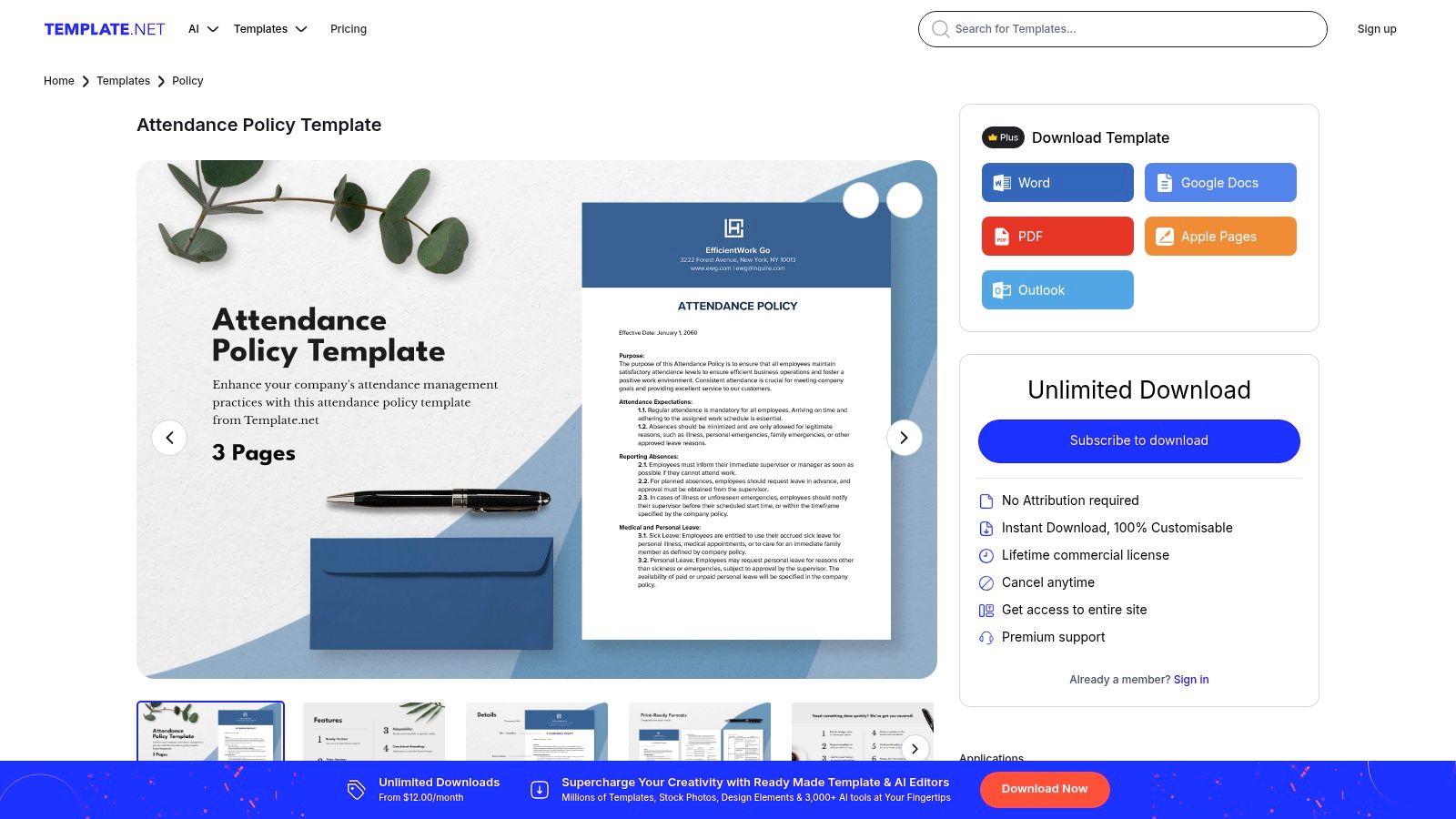
Template.net is appealing because it focuses on the end-user. The policies are available in formats you actually use: Word, Google Docs, Apple Pages, and PDF. This cuts out the annoying step of converting a weird file or reformatting a messy copy-paste job. They get that you need something that looks good and works with your existing tools.
Why It’s a Go-To Resource
The biggest win with Template.net is speed and consistency. If you're building a new hire packet, you can find an attendance policy, an NDA, and a welcome letter that all share a similar design. This saves a surprising amount of time and helps you look polished and professional from day one.
For those just starting to formalize their processes, this can be a lifesaver. You can find in-depth guidance on how to create an employee handbook and use Template.net to pull the various pieces into a cohesive manual.
The Trade-Off: Depth and Subscription
Here's the catch: while some basic templates are free, the best-looking and most complete ones are behind a subscription. The quality can also be a mixed bag. Some templates are thorough, while others are just basic outlines. You’ll have to sift through them to find the good ones.
Think of these templates as a great-looking container. You're still responsible for filling it with content that is legally compliant and right for your business. They give you the "what it should look like," but the "what it should say" is still on you and your legal advisor.
Best For: Small business owners who value professional design and format options.
Key Feature: Templates available in multiple formats (Word, Google Docs, Pages) for easy editing.
Pro Tip: Download a free template first to get a feel for the structure. If you like the style, a subscription could be worth it to access their full suite of HR documents and create a consistent, branded set of materials.
6. eForms
Sometimes you don't need a legal library; you just need a solid start, and you need it now. That's where eForms comes in. Think of it as the no-frills, get-it-done resource for small businesses that need to formalize things without getting bogged down. If you're looking for free and accessible attendance policy samples that you can download and edit in minutes, eForms is a practical first stop.
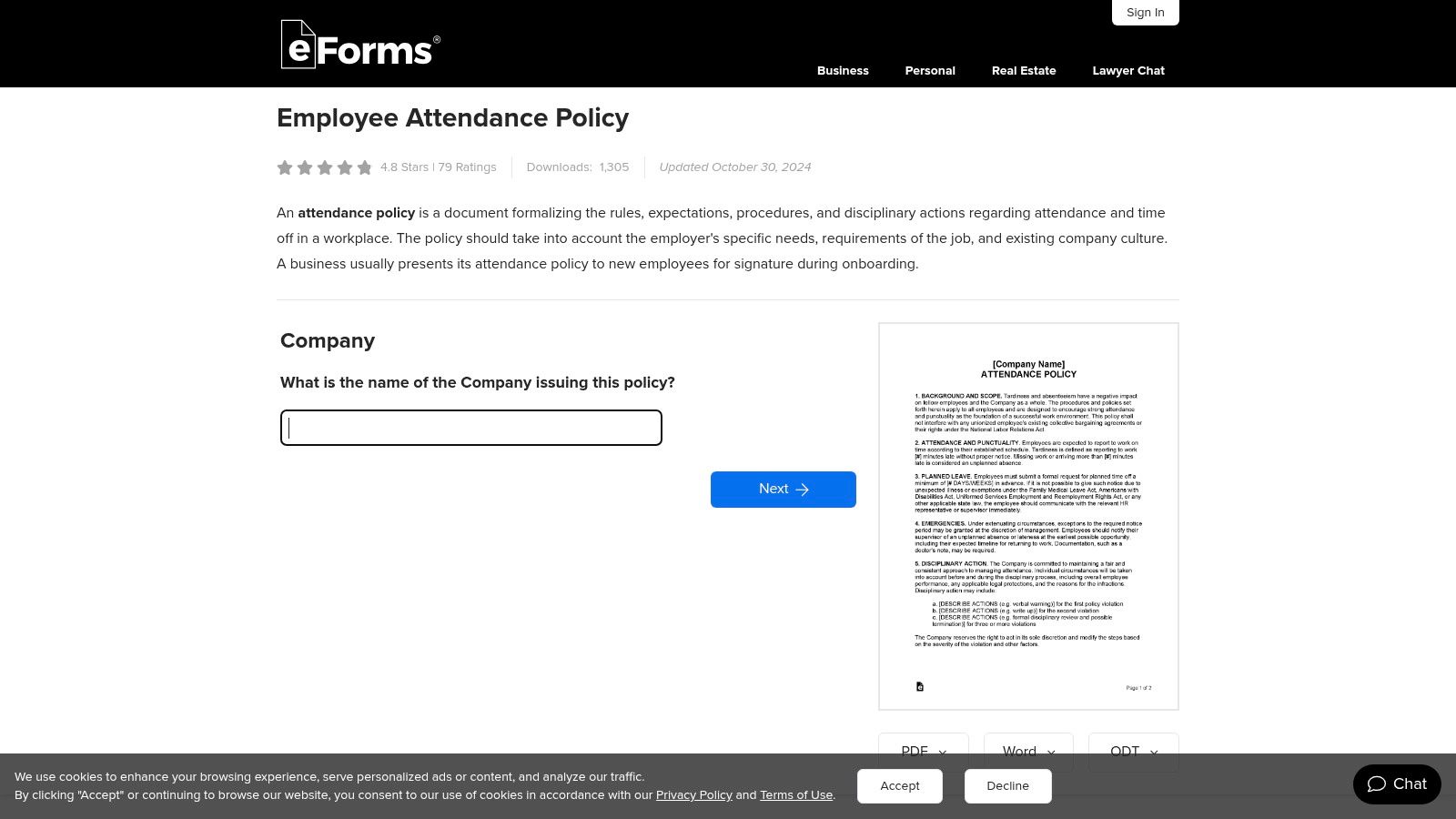
What makes eForms stand out is its directness. The site isn't trying to sell you anything. It offers a straightforward Employee Attendance Policy template that clearly outlines key sections like "Excused Absences," "Unexcused Absences," and "Tardiness." The inclusion of an "Last Updated" date and user ratings adds a nice layer of transparency.
Why It’s a Go-To Resource
The biggest advantage of eForms is its barrier-free access. You can download the template in Word, PDF, or ODT format immediately. For a startup founder wearing multiple hats, this kind of instant utility is invaluable. It’s a fantastic tool for creating a "version 1.0" policy that brings some structure to your workplace.
Here's the thing: an attendance policy is often just one piece of a larger puzzle. Consistent absenteeism can be a symptom of deeper issues. When you move past simple policy enforcement, you'll find that having other HR documents ready is crucial. Many managers find that resources offering sample work improvement plan templates can be a lifesaver for addressing performance-related attendance problems.
The Trade-Off: Simplicity vs. Specificity
Let’s be honest: "free" comes with strings attached. The eForms template is generic by nature. It briefly mentions major U.S. laws like FMLA and ADA but doesn't dive into the complex web of state and local rules that could impact your business. You won't find detailed guidance for a business in California versus one in Texas.
This means the real work is on you. You'll need to brand it, adjust the language to match your company culture, and most importantly, get it reviewed by a lawyer to ensure compliance. It's a fantastic foundation, but it is not a finished product.
Best For: Small business owners and startups needing a quick and free policy foundation.
Key Feature: Immediate, no-cost downloads in multiple editable formats (Word, PDF, ODT).
Pro Tip: Download the Word version and treat it as a rough draft. Go through it line by line and ask, "How does this apply to my team?" Add specifics related to your industry, shift schedules, and communication channels before showing it to anyone.
7. Homebase
If you manage an hourly team, you know that attendance isn't just about rules; it's about survival. A single no-show can derail an entire shift. Homebase gets this. It’s built for the realities of retail, restaurants, and other frontline businesses where time clocks are the heart of the operation. Their resources are less about corporate theory and more about what actually works on the floor.
What makes Homebase different is how it connects policy and practice. They don't just give you a document; they show you how to enforce it using tools they offer, like time clocks and scheduling software. This approach turns the policy from a piece of paper into a living part of your daily workflow.
Why It’s a Go-To Resource
Homebase speaks the language of small businesses. Their free template avoids confusing jargon and focuses on clear, direct communication that a frontline employee can actually understand. It covers the essentials: tardiness, no-shows, and call-out procedures in a way that feels fair and manageable.
The real value, though, is the connection to operations. The advice alongside their attendance policy samples is about enforcement through technology. It’s about setting up geofencing for clock-ins or using scheduling notes to track absences. For managers needing to connect their rules with their tools, especially for things like PTO, exploring a modern employee time off app can bridge that gap effectively.
The Trade-Off: Access and Customization
Let's be clear: Homebase’s content is designed to lead you to their product. The template is usually inside a blog post, so you might need to hunt for the download link or copy and paste the text. It's a classic content marketing play, but the value is there if you don't mind navigating it.
Because it’s geared toward simplicity, the template may not be nuanced enough for more complex workplaces with salaried employees or union rules. It’s a great starting point for a coffee shop or a retail store, but a larger company will need to build on it significantly.
Best For: Managers of hourly, shift-based teams in retail, food service, and hospitality.
Key Feature: A practical, free template paired with advice on enforcement via time-tracking tools.
Pro Tip: Use their template to set your core rules for hourly staff. Then, immediately map each rule to a function in your scheduling or time-tracking software. For example, define your tardiness grace period and set your digital time clock to match it.
Attendance Policy Samples: 7-Source Comparison
Provider / Template | Implementation complexity 🔄 | Resource requirements ⚡ | Expected outcomes 📊 | Ideal use cases 💡 | Key advantages ⭐ |
|---|---|---|---|---|---|
SHRM (Society for Human Resource Management) | Medium — membership access and usual legal review | High — paid membership + HR/legal time | High — vetted, US-compliant templates for enterprise use | Enterprise HR teams and compliance-focused organizations | High credibility; broad, frequently updated library |
Workable Resources | Low — download and edit a Word template | Low — free download; localize for law as needed | Moderate — practical, plain-language starting policy | Small to mid-market teams needing a quick starting point | Free and immediately usable; plain-language structure |
Betterteam | Very low — instant Word template, ready to edit | Low — no signup required; minimal editing effort | Moderate — fast implementation for hourly teams | Hourly/frontline teams needing quick rollout | Fast access; clear point-system examples |
PandaDoc | Medium — web editor plus e-signature/workflow setup | Medium — best with PandaDoc subscription for full features | High — polished document with signing and tracking | Teams that need integrated e-signature and document workflows | Polished layout; e-signature, tracking, version control |
Template.net | Low–Medium — choose format and adapt; subscription may be required | Medium — multiple formats available; subscription for premium templates | Moderate — consistent, professional documents across formats | Teams needing matching document sets in Word/Docs/PDF/Pages | Multiple formats and matching templates save time |
eForms | Low — downloadable PDF/Word/ODT with simple notes | Low — free downloads; minimal customization | Low–Moderate — basic starter policy with US legal pointers | Small businesses seeking a free, transparent starter | Free, multiple file formats and update transparency |
Homebase | Low — blog-based template; may require locating download | Low — free; ties to Homebase time-tracking tools | Moderate — operationally focused policy with enforcement tips | Retail, restaurants, and shift-based hourly businesses | SMB-friendly language with practical time-clock and scheduling guidance |
From Template to Trust: Making Your Policy Real
We’ve looked at a bunch of attendance policy samples. We've seen templates for healthcare, for retail, from big names like SHRM and nimble ones like Workable. But the template is just the starting point. It’s raw material. The real work—the part that matters—is turning that document into a living part of your company's culture.
A policy is just words until people understand it. It's just a rule until it's applied fairly. We've all seen beautiful policies fail because they were emailed out once and then buried in a forgotten folder. That's not a policy; that's a liability waiting to happen. The goal isn’t to create a perfect document. The goal is to create a shared understanding.
The Bridge Between Policy and Practice
The biggest takeaway isn't a specific clause or a particular phrase. It’s this: clarity builds trust. When your team knows exactly what’s expected and why, you eliminate anxiety and confusion. They can focus on their work, not on decoding vague rules.
This is where the right tool becomes more than just a convenience. It becomes the bridge between your policy and your people. A good policy needs three things to actually work:
Accessibility: It has to be easy for every single employee to find, whether they’re at a desk or on the go.
Communication: You can’t just post it and forget it. A policy rollout needs a plan. You have to announce it, explain the “why,” and give people a chance to ask questions.
Consistency: This is the most important part. The policy has to apply to everyone, every time. Managers need to be trained on it, and enforcement has to be documented fairly.
Choosing Your Path Forward
As you think about which of these attendance policy samples is right for you, think less about the template and more about the system that will support it. Ask yourself:
How will we make sure every employee sees and acknowledges this?
Where will managers go to get clarification on how to apply it?
How will we track attendance and document conversations fairly?
When the policy needs an update next year, how will we manage that change?
If your answer involves a mix of email, printed papers, and hoping managers remember their training, it’s time to rethink the approach. Tools like Homebase are popular for a reason—they integrate the policy with the daily work of scheduling and timekeeping.
But the magic happens when your policy lives in the same place as the rest of your company’s communication. A tool that houses your policy alongside your company announcements and training materials transforms it from a static document into a resource. It becomes part of the daily flow of work, not a forgotten PDF.
Ultimately, a strong attendance policy isn’t about policing your team. It’s about creating a framework of reliability that everyone can depend on. It’s about respecting everyone’s time. When you get it right, it’s not a source of friction. It’s a quiet, foundational element of a culture built on trust.
Ready to move your policies from a dusty folder to a dynamic app your team actually uses? Pebb brings your communication, knowledge, and people operations into one simple place. See how our Knowledge Library and communication tools can help you roll out and manage your attendance policy with clarity and confidence.
