
What Is Workforce Analytics and Why Should You Care?
Curious about what is workforce analytics? It’s about turning your people data into clear insights. Let's explore how it actually works, minus the jargon.
Dan Robin
Let’s be honest. For years, we’ve run our teams on a mix of intuition, experience, and whatever fire was burning brightest that day. We've made big calls based on who was loudest in the morning huddle or what happened last quarter. It’s always felt more like an art than a science.
And we all see the symptoms. A star employee quits out of the blue. One store location consistently misses its targets while another crushes it. A wave of burnout quietly washes over the entire team. We’re left standing there, just guessing at the why.
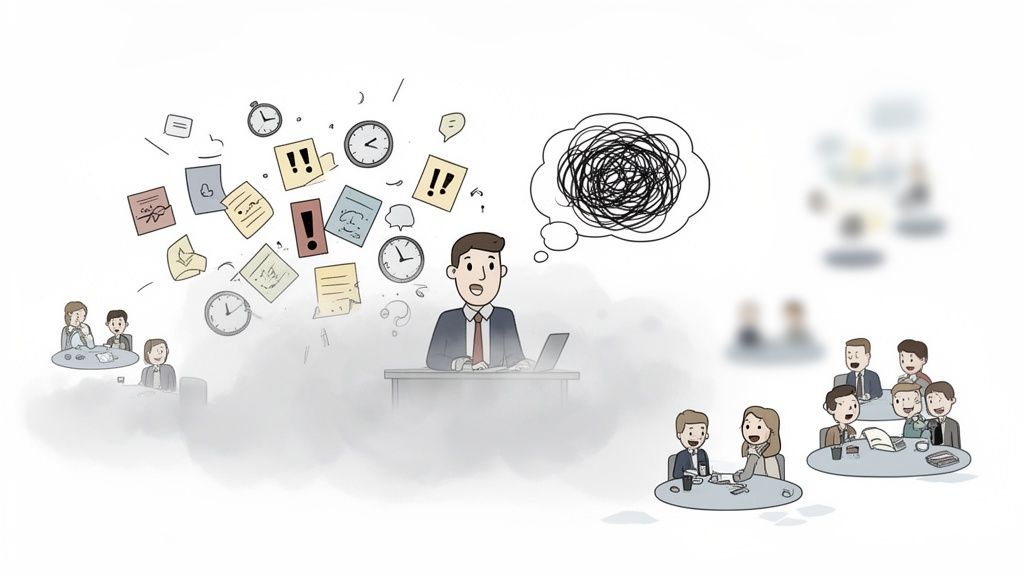
This isn't about blaming leaders—it's about admitting the limits of running on instinct alone. When the stakes are this high, guesswork is a risky game. It keeps us stuck in a reactive loop, always playing catch-up with problems instead of getting ahead of them.
The thing is, the signals are all there. They’re just scattered. Information about schedules, communication, and performance lives in different systems that don’t talk to each other. It creates a fog.
So, how do we cut through that fog? It comes down to a fundamental shift in how we see our work.
From Guesswork to Knowing
Let’s see how this shift plays out in the real world. The old way of managing is based on assumptions. The new, data-informed way is grounded in evidence.
Challenge | The Old Way (Gut Feeling) | The New Way (Workforce Analytics) |
|---|---|---|
High Turnover | "I guess people are leaving for more pay." | "Data shows our top performers who quit worked 30% more weekend shifts." |
Low Engagement | "The team seems quiet and unmotivated lately." | "Communication in our team channels dropped 45% after the last schedule change." |
Missed Targets | "Maybe we need to retrain everyone." | "Teams that complete onboarding tasks 2x faster consistently hit their performance goals." |
This is the whole point. Workforce analytics gives you the clarity to see the real story unfolding within your teams. It gives you a chance to build a workplace that actually works.
So, What Is Workforce Analytics, Really?
Let’s cut through the jargon. At its core, workforce analytics is just using the data you already have to understand your people better and make smarter decisions. That's it. It's not a mysterious black box.
Think of it like a diagnostic tool. A good mechanic doesn’t guess what’s wrong with an engine based on the sound it’s making. They plug in a computer, pull the data, and find the real issue. We’re just doing that for our teams.
Workforce analytics helps you connect the dots between all the pieces of information you're already tracking but probably aren't looking at together.
Seeing the Whole System
Instead of just staring at a turnover number, this approach helps you see the patterns behind the number. Suddenly, you can ask much better questions.
Are people who skip pre-shift huddles more likely to have on-site accidents?
Do our teams with the most active communication also hit their targets most consistently?
Did that recent change in our scheduling policy cause a drop in task completion rates?
Here’s the thing: this isn't about surveillance. Tracking every little move is a waste of time and a fantastic way to destroy trust. The real goal is to see the big picture—the trends that help you build a healthier, more productive workplace. It’s about understanding the system, not micromanaging the people in it.
The purpose of workforce analytics is to shift from reacting to problems to proactively building a better environment. It's about finding the friction points and smoothing them out before they cause real issues.
For example, you might discover that your top-performing teams aren't the ones putting in the most hours. Maybe they're the ones who communicate most often in their team channels. That’s a powerful insight. It tells you to focus on better communication, not just pushing people to work longer. You can explore this concept further in our complete guide to workforce analytics.
Ultimately, this approach helps everyone, from frontline staff to the leadership team, by making work more predictable and fair. It’s about creating a company that actually learns from its own experience.
Where the Real Insights Come From
The magic of workforce analytics isn’t in some secret, expensive dataset you have to go buy. The real power comes from connecting the dots between the data you already have—information that's probably scattered across a half-dozen different tools.
It’s like trying to solve a puzzle with pieces from five different boxes. Frustrating and nearly impossible. Now imagine having all the right pieces laid out in front of you. Suddenly, the picture is clear. Most of the time, the answers we’re looking for are hiding in plain sight.
This is the whole idea in a nutshell: raw data gets analyzed, leading to insights that fuel better decisions.
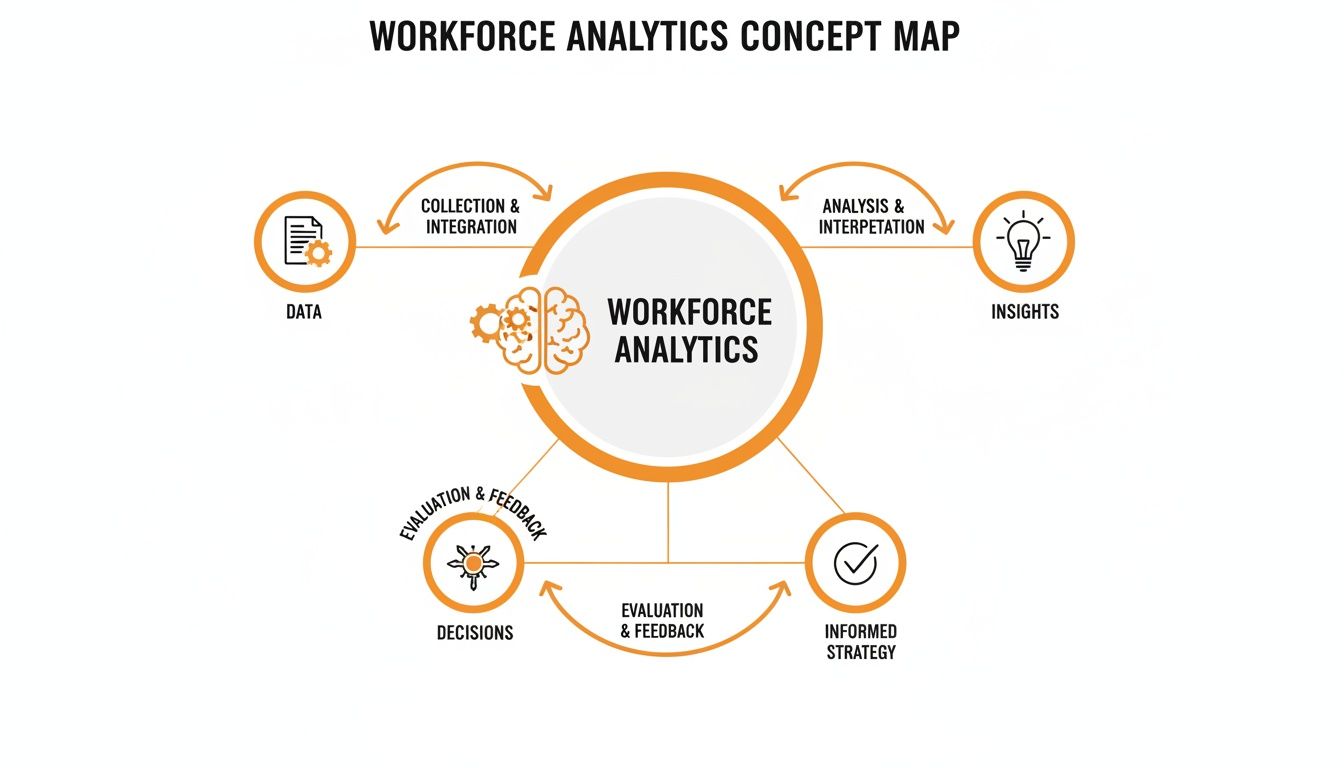
The cycle is simple but powerful: good data creates clear insights, and those insights give you the confidence to take smart action. So, where does this data actually live?
The Three Core Data Streams
Most businesses have three main streams of people data. The problem? They almost never meet. True workforce analytics brings them together to tell one story about how work actually gets done.
Operational Data: This is the what, where, and when. Shift schedules, clock-in/out times, task completion rates, and PTO requests. It’s the raw material of productivity.
Communication Data: This is the heartbeat of your culture. The chatter in your team channels, engagement on company announcements, and who's showing up for pre-shift huddles. It shows you how connected—or disconnected—your teams are.
HR Data: This is the traditional stuff. Turnover rates, absenteeism, new hire progress, and performance reviews. This is where you see the long-term results of your day-to-day operations.
Each stream tells you a small part of the story. Operational data might show that a team is missing its targets. Communication data might show that the team has gone silent. And HR data will eventually show that people are quitting.
But when you bring them all together, you finally see the why. You can trace how a new schedule led to a drop in communication, which then caused a slump in performance and ultimately drove good people to leave.
This is why having a single, unified tool is such a game-changer. When your scheduling, tasks, and communication all live in one place, the data is already connected. You don’t have to duct-tape reports together anymore. You just get a clear, honest view of your business, helping you focus on the 3 metrics that actually predict employee engagement.
How Analytics Solves Real Problems
Theory doesn't solve problems. The true test of any tool is simple: does it make a difference in the day-to-day? This is where workforce analytics leaves the spreadsheet behind and becomes a practical partner for leaders on the ground.
You're not trying to become a data scientist. You're trying to figure out why your best people are leaving, why one location struggles, or how to make daily operations a little less chaotic. Analytics is just the clearest path to those answers.
It’s about shifting from reacting to fires to preventing them. It’s about making small, smart adjustments that have a huge impact.
Keeping Your Best People
High turnover is a slow, expensive bleed. A friend of ours in HR was tired of conducting exit interviews that all felt the same. After digging into the data, a clear pattern emerged: employees who consistently worked more than 10% overtime also showed a 40% drop in their team communication over the next month.
They were burning out in silence. Armed with this insight, she stopped guessing. She set up simple alerts for managers when a team member’s overtime hit that threshold, prompting a quick, "Hey, how are you doing?" check-in. A tiny change that helped them get ahead of burnout before it led to another two-weeks notice.
Making Work Safer
For any operations leader, a safe shift is a good shift. A warehouse manager was wrestling with inconsistent safety records. The procedures were the same for everyone, so what was going on?
The data showed a surprising link: teams whose pre-shift briefings were short—under seven minutes—and included a specific safety focus had 25% fewer minor incidents. Longer, rambling briefings had the opposite effect.
This insight was a game-changer because it was so easy to act on. The company rolled out a standard template for pre-shift huddles, emphasizing brevity and clarity. Even in highly regulated fields, using data to improve things like a building an effective safety program can uncover what really moves the needle.
Onboarding That Actually Works
A retail supervisor was fed up with new hire churn. Too many people were quitting within their first 90 days, saying they felt lost. The onboarding program looked good on paper, so what was wrong?
By looking at task completion data in their employee app, she found something fascinating. New hires who finished a specific set of "first-week" tasks—like shadowing a top performer and completing a product quiz—were three times more likely to stick around past six months.
It wasn't about the amount of training; it was about the right training at the right time. They tweaked their onboarding to front-load these key activities, turning a confusing first week into a confident launchpad.
These aren't stories about complicated algorithms. They're about curious leaders using simple, connected information to make work better. That’s the real promise here.
Why This Is Happening Now
Not long ago, this kind of data analysis felt like something only big tech players did. That world is gone. Today, businesses of all sizes are tired of flying blind. They're fed up with losing great people for reasons they can't pin down and frustrated by problems they just can't seem to solve.
This isn't just a hunch; it’s a shift in how companies operate. Leaders are moving away from guesswork and toward an evidence-based approach to managing their people. They're realizing the answers to their biggest challenges are already in their own data, waiting to be unlocked.
It's the New Standard
The demand for clear insights is exploding. The global workforce analytics market shot up from $1.64 billion in 2018 and is projected to hit $5.97 billion by 2026. This isn't slow growth; it’s a signal that data-driven people management has moved from a "nice-to-have" to a must-have. You can dig into the drivers behind this trend in the full workforce analytics market research.
So, what’s behind this? A perfect storm of modern business pressures.
The Skills Gap is Real: Companies are in a battle to find and keep people with the right skills. Analytics helps pinpoint who your top performers are and what makes them thrive.
Work is More Complicated: With a mix of remote, hybrid, and frontline employees, getting a true read on the employee experience is tougher than ever. Data cuts through the noise.
Turnover is a Killer: Losing an employee is incredibly expensive—lost knowledge, a dip in morale, and the time it takes to ramp someone new up. Analytics is an early warning system.
Using workforce analytics isn't about being on the bleeding edge anymore. It’s about catching up to the new standard for smart leadership.
While North America jumped on this early, we’re now seeing a massive wave of adoption in regions like Asia-Pacific. This just shows that the need to understand and support your workforce is universal. It's fundamental to running a healthy business today. The question is no longer if you should use data, but how fast you can start.
Let’s Talk About Trust
Let's address the elephant in the room. When you start talking about "analytics," people get nervous. The word "data" can sound a lot like "surveillance," and nobody wants to work in a 'Big Brother' environment. We get it.
But the goal here isn't to create a culture of distrust. It's the opposite. Done right, analytics makes the workplace more transparent, fair, and responsive.
The simple truth is, trust is everything. If your employees feel like you're tracking their every move to find fault, you’ve already failed. The real power of this data is in understanding how the system of work operates, not in policing the people within it.
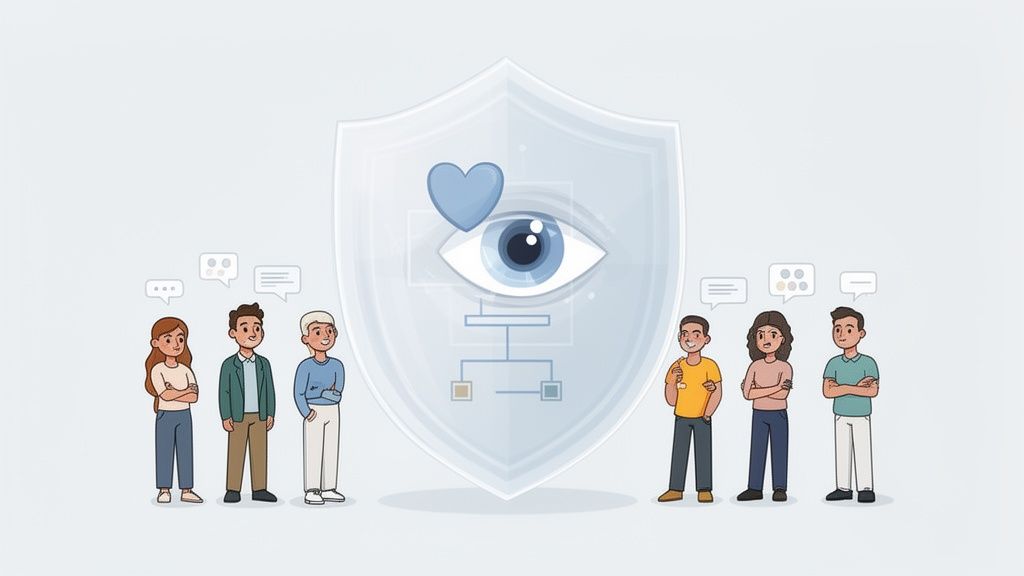
This is why being open about what you’re measuring and—most importantly—why you're measuring it is non-negotiable. When people see that the insights are used to make their jobs better, that fear melts away. Data stops being a threat and becomes a tool.
Focus on Teams, Not Individuals
A respectful and effective analytics strategy always looks at the big picture—at the team, department, and process levels. It’s about spotting patterns and solving systemic problems, not pointing fingers.
Here’s what that shift in perspective looks like:
Instead of asking: "Why was Jane 5 minutes late three times last month?"
You should be asking: "Is our shift start time creating a commuting nightmare for the entire morning crew?"
Instead of asking: "Why hasn't Mark completed all his tasks today?"
You should be asking: "Does Mark’s team have the right tools? Is their workload sustainable compared to other teams?"
This small change, from individual scrutiny to collective problem-solving, makes all the difference. It reframes the conversation from blame to support. If you're looking to explore this further, we've put together a helpful guide on navigating data privacy in internal communication that digs deeper into these principles.
When your team sees that analytics are used to fix frustrating schedules, cut down on busywork, and open up clearer communication, they don't just tolerate it—they embrace it.
They start to see the data for what it is: a resource for building a better place to work. When you use data to serve your people, trust doesn't just survive; it grows stronger. It's the only way this works.
Your Questions, Answered
We get asked about this a lot. The field can feel complicated, but the core ideas are straightforward. Here are the most common questions we hear, answered without the fluff.
Isn't This Just Another Name for HR Reports?
Not quite, and the difference is a big one. Think of HR reports as looking in the rearview mirror. They’re great at telling you what happened—for instance, "turnover was 15% last quarter." It’s a historical fact.
Workforce analytics is like your GPS. It connects different data sets to explain why something happened and helps you see what's coming. It might show that the 15% turnover was mostly on teams with terrible schedule predictability.
HR reports give you a snapshot of the past. Workforce analytics gives you a roadmap for the future.
Do I Need a Team of Data Scientists?
You used to. Not anymore. A decade ago, you needed a specialist to wrestle with spreadsheets. That’s why only huge corporations did this stuff.
Thankfully, modern tools have changed the game. They’re built for business leaders and managers, not data analysts. The tool does all the heavy lifting of collecting and crunching the numbers.
You just see simple, clear dashboards. If you can read a bar chart, you have everything you need to start making better decisions.
How Do We Start if Our Data Is a Mess?
That’s where almost everyone starts. It's rare for any company to have perfectly clean, centralized data. Don't let that stop you.
The best first step is to bring your core team activities onto a single platform. When things like team communication, scheduling, and tasks all live in one place, the data is naturally clean and connected from day one.
You don't have to boil the ocean. Start with one key area—maybe it's internal communication—and build from there. The clarity you gain is immediate, and it creates a solid foundation to expand on over time.
Ready to stop guessing and start seeing the full picture? Pebb unifies your communication, operations, and analytics in one simple app, giving you the insights you need to build a better workplace. See how it works at Pebb.io.
