
Team Building What Is IT
Team building what is it - What is team building? Move beyond trust falls. Discover daily habits to build a high-performing, connected team in 2026
Dan Robin
Most advice about team building starts in the wrong place. It starts with activities.
That's why so much of it feels hollow. You get a list of games, a few icebreakers, maybe a happy hour idea, and almost none of it answers the core question behind “team building what is it.” People aren't usually asking for entertainment ideas. They're asking how to make work feel less fragmented, less political, and less exhausting.
I've watched teams sit through polished workshops and go right back to bad handoffs, unclear ownership, and silent resentment by Monday. The problem wasn't that people didn't have enough fun. The problem was that the work itself wasn't set up to help them trust each other.
Forget the Trust Falls Team Building Is About Work
The popular version of team building is easy to recognize. It's the offsite with forced laughter, the game no one asked for, the lunch that gets called “culture.” Sometimes that stuff is harmless. Sometimes it's even enjoyable. But it's not the core of the job.
Real team building lives inside daily work.
A useful way to think about it is this. Team bonding can help people like each other more. Team building should help people work together better. If you want a clean explanation of that difference, this breakdown of team bonding vs team building is worth reading because it separates social connection from performance support.
What people actually want to know
When someone searches for team building what is it, they usually mean something more practical. They want to know what changes behavior. They want fewer dropped balls, clearer communication, and less friction between people who depend on each other.
Independent guidance makes that point directly. It argues the core gap is how to make team building change day-to-day collaboration, not how to run a one-off event. It also suggests that short, recurring rituals can work better than large events, including 5 to 15 minute connection moments several times a week and tracking signals like chat responsiveness to see whether the effort is helping, as noted in Sherlocked's practical guide to team building.
Practical rule: If an activity doesn't improve how people communicate during actual work, it probably isn't team building. It's just a break in the calendar.
That sounds blunt, but it saves time.
The shift that matters
The teams that feel connected usually aren't the ones with the most events. They're the ones with better habits. They know where updates go. They know how to ask for help. They know who owns what. They don't make people guess.
Trust grows in that kind of environment. Not because someone fell backward and got caught, but because people repeatedly see that others follow through. That's why the more useful conversation is about routines, not stunts. If trust is shaky, fix the work patterns first. This guide on how to build trust in teams gets at that well.
Team building isn't a side project. It's operating discipline with a human face.
More Than a Group A Team Has a Pulse
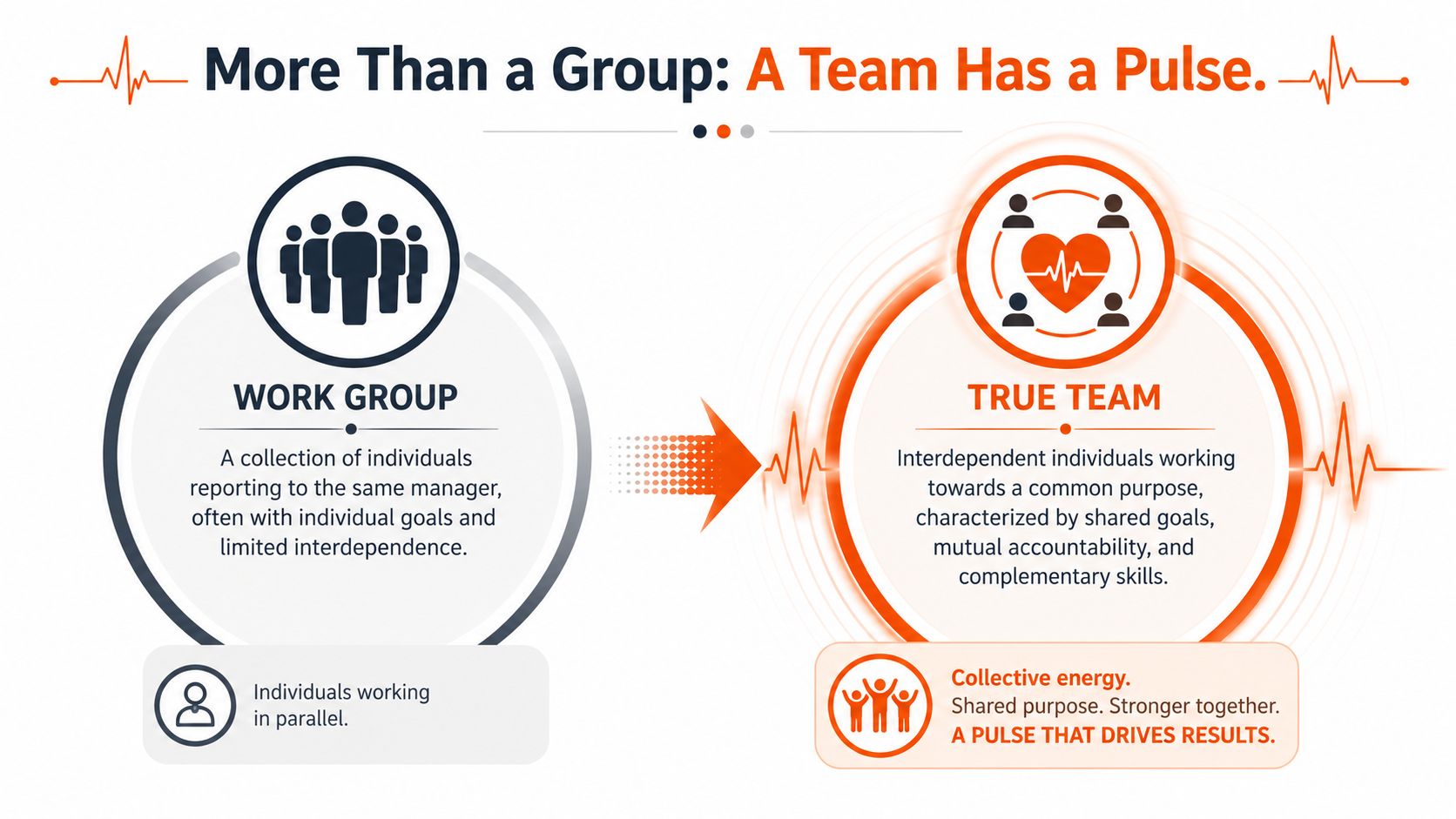
A lot of workplaces use the word “team” loosely. If eight people report to the same manager, they get called a team. Sometimes that's true. Sometimes it's just an org chart.
A real team has interdependence. People rely on each other to finish the work well. Their roles connect. Their decisions affect one another. That changes everything.
A band is a better model than a roster
Think about the difference between solo musicians and a band. You can put talented people in the same room and still get noise. A band works because each person plays a different part, listens to the others, and adjusts in real time.
That's what strong teams do. They don't just coexist. They create positive synergy, where coordinated effort produces more than the individual pieces could on their own. Loyola's business research summary puts it plainly. That only happens when teams have complementary skills, individual and mutual accountability, and a mix of technical, problem-solving, and interpersonal skills. When one of those is missing, performance slips, even if the individuals are capable, according to Loyola University's discussion of team basics.
What separates a team from a work group
Here's the practical test I use:
Shared purpose: People can explain what they're trying to accomplish together, not just what sits on their own task list.
Mutual accountability: They don't say, “My part is done” when the overall result is still failing.
Complementary skills: Different strengths fit together instead of competing for space.
Real dependence: Handoffs, decisions, and timing matter because nobody can succeed alone.
A work group can be efficient. A true team can adapt under pressure.
When a team has a pulse, you can feel it in the handoffs. Less repetition. Less defensiveness. Faster recovery when something goes wrong.
Why this matters for team building
If you misdiagnose a work group as a team, your team-building efforts will miss. You'll plan social activities when the underlying issue is role confusion. You'll push morale when the underlying issue is weak decision-making. You'll ask people to “connect” when they still don't understand how their work fits together.
That's why team building has to start with structure. Who depends on whom. What good collaboration looks like. Where conflict shows up. Which skills are missing. Once you see that clearly, the right kind of team building becomes obvious.
Three Flavors of Team Building Not All Are Equal
Not all team building does the same job. That's where a lot of leaders go wrong. They pick one activity and expect it to solve every problem at once.
It won't.
Some teams need practice solving problems together. Some need sharper communication habits. Some need warmer human connection because the work has gone cold. Those are different needs, and they call for different moves.
A simple way to choose
Workplace surveys help explain why leaders keep investing here. 79% of employees believe team-building activities strengthen relationships at work, 84% say cultivating a sense of community is important to employers, and only 32% of U.S. employees were actively engaged in 2022, according to this summary of team-building statistics. The need is real. The method still has to fit the problem.
Flavor | Primary Goal | Best For | Example Activity |
|---|---|---|---|
Problem-solving | Build collaborative muscle under pressure | Teams with siloed thinking or messy handoffs | A cross-functional working session to fix a recurring workflow issue |
Skill-based | Improve a specific way of working | Teams with weak feedback, meetings, or decision habits | A short manager-led practice session on handoff quality or meeting clarity |
Connection-based | Build familiarity and trust | New teams, remote teams, or groups with low social glue | A rotating coffee chat, quick check-in round, or peer recognition ritual |
What each flavor actually does
Problem-solving team building is my favorite because it respects people's time. Give a team a real issue they care about, then make them solve it together. They learn more from untangling an actual bottleneck than from a fake challenge in a conference room.
Skill-based team building is less glamorous and often more useful. If your team interrupts each other, avoids conflict, or runs vague meetings, don't send them to trivia night and hope for the best. Teach the skill that's missing. Practice it in context.
Connection-based rituals matter too. People work better with people they know. That doesn't mean every team needs a party. It might mean a recurring check-in, a short story from the week, or a simple thank-you ritual that makes invisible work visible.
Good team building starts with one question. What's broken in the way we work together?
If your team is distributed, a curated list of virtual team building activities can help, but the same rule applies. Pick the format for the job, not the other way around.
Team Building for the Real World Frontline and Hybrid Teams
Most team-building advice implicitly assumes everyone has a desk, a shared calendar, and enough overlap to join the same session. That leaves out a huge part of the workforce.
Frontline and hybrid teams live in a different reality. One shift walks in as another walks out. Managers communicate in scraps between tasks. People miss context because they were off yesterday, on the floor all morning, or nowhere near a laptop. In that setting, a monthly event won't hold the culture together.
The more practical trend is a shift away from big social moments and toward lightweight rituals built into the workday, especially for remote, hybrid, and shift-based teams that can't gather at once, as described in Native Teams' guide to quick team-building activities.
What embedded rituals look like
This is less exciting than an offsite. It's also more effective.
Shift handoff notes: A consistent place to leave what changed, what's blocked, and what needs attention next.
Recognition in public: A weekly post that highlights someone who helped another team, solved a customer issue, or fixed a recurring snag.
Mobile knowledge access: Policies, how-to guides, and updates where people can find them during work.
Small recurring prompts: A question in the team channel, a five-minute check-in at the start of a huddle, a quick follow-up after a rough week.
None of this is flashy. That's the point. It fits the pace of real operations.
Tools matter when people don't share the same room
For distributed teams, the challenge isn't only culture. It's coordination. If updates live in email, schedules live somewhere else, files live somewhere else, and recognition happens nowhere, people stop feeling like part of one company.
That's where an employee app can help if it combines communication with the day-to-day mechanics of work. For example, Pebb brings chat, Spaces, tasks, file sharing, a knowledge library, scheduling, clock-in, PTO tracking, and analytics into one place, which makes it easier for office and frontline teams to keep rituals close to the work instead of bolting them on as a separate program.
Small rituals beat big intentions when your team works across shifts, locations, and time windows.
What usually fails
Three things tend to flop with frontline and hybrid teams.
First, anything that depends on everyone being present at once. Second, activities that feel detached from the pressure of the job. Third, culture efforts that create more admin for managers who already have too much to carry.
The better pattern is simple. Put connection where the work already happens. Keep it short. Make it repeatable. Let people join asynchronously when needed. That's how a team starts to feel real, even when the people on it rarely stand in the same room.
How You Know If Team Building Is Working
If you only ask whether people had fun, you'll get polite answers and bad information.
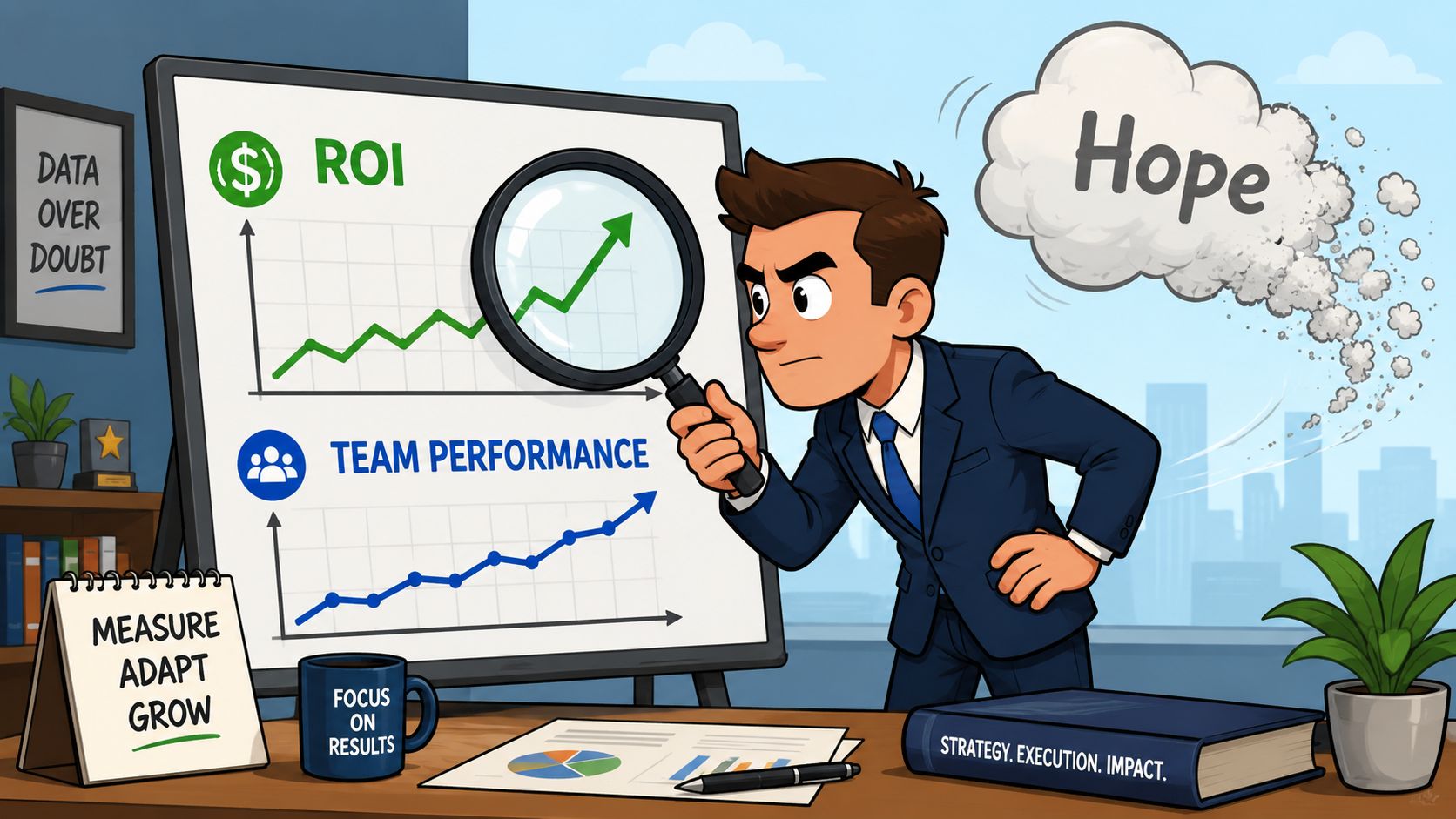
Team building should be measured the same way you'd measure any other operating habit. Not with perfect precision, but with enough discipline to tell whether the team is getting stronger or whether you're just running pleasant events. PMI's guidance is especially useful here because it treats team building as a team-development system, not a morale exercise. It recommends brief, clear assessments with quantitative data and points to four dimensions worth tracking: feeling valued, belonging, a hopeful future, and clear expectations with the resources to meet them, as outlined in PMI's framework for effective team building.
Better signals to watch
I'd rather track work signals than applause.
Participation patterns: Are more people speaking up in meetings, channels, or team discussions?
Responsiveness: Are questions getting answered faster and with less confusion?
Cross-team help: Do people step in across roles or departments without drama?
Sentiment: Do quick pulse checks show stronger belonging or clearer expectations?
Execution quality: Are handoffs cleaner, repeat mistakes fewer, and updates easier to follow?
That's not overengineering. It's basic management.
Keep the measurement light
You don't need a giant survey program. In fact, heavy measurement can kill the effort. Short check-ins done consistently tell you more than a bloated annual questionnaire no one trusts.
If you're comparing options, this roundup of compare team building surveys is a useful starting point because it shows different ways to assess team health without turning it into a research project. For a broader engagement view, this guide on how to measure employee engagement is also practical.
Measure what shows up in behavior. If the work feels smoother, safer, and less brittle, your team building is probably doing its job.
The important part is consistency. Ask the same few questions. Watch the same few signals. Don't change the yardstick every month. Teams need enough time to build a rhythm, and leaders need enough discipline to notice whether that rhythm is helping.
The Goal Is Connection Not Perfection
Teams often don't need a grand reset. They need one better habit.
That's the calm answer to team building what is it. It's not a special event that fixes everything. It's an ongoing process of using daily interactions, small practices, and a few formal strategies to help people work as a cohesive unit. That matters because engaged employees are 21% more profitable, and a survey found 62% of respondents said team building improves communication, according to Indeed's overview of team building in the workplace.
Start smaller than you think
Try one ritual for a month.
A sharper handoff: End every shift or project block with the same short update format.
A recurring check-in: Give people a predictable place to raise friction before it turns into blame.
A recognition habit: Thank people for useful behavior, not just heroic effort.
That's enough to learn something real.
What to keep in mind
You're not trying to build a perfect culture. You're trying to make work feel less transactional and more coordinated. Some ideas will flop. Some rituals will feel forced at first. That's normal.
The teams that get better aren't the ones that find the magic activity. They're the ones that keep adjusting the small things that shape everyday collaboration.
Team building is slower than a workshop and more useful than one. That's why it lasts.
If you're trying to make team building part of daily work instead of another isolated event, Pebb is one option worth looking at. It gives teams a shared place for chat, updates, tasks, knowledge, scheduling, and engagement signals, which is especially useful when people work across shifts, sites, and devices.
