
10 Virtual Team Building Activities That Don't Feel Like a Chore
Discover 10 practical virtual team building activities that foster real connection, boost morale, and work for teams of any size.
Dan Robin
Another mandatory fun session. Another awkward silence on Zoom. We’ve all been there.
When our teams went remote, we tried everything. Clumsy online games. Happy hours where nobody seemed happy. Most of it felt like a cheap substitute for the real connections that happen when you share a space. It was hollow. But giving up wasn't an option. Connection isn't a "nice-to-have"; it's the glue. It’s what turns a group of individuals into a team.
So we stopped looking for quick fixes and asked a better question: What if virtual connection isn't about recreating the office online, but creating something new? Something intentional and respectful of people's time. This shift was everything. We realized effective remote connection needed a solid framework, much like the one outlined in these 10 virtual training best practices, to ensure our efforts weren't just noise.
This isn't just another list of games. It's a collection of principles we've learned, disguised as 10 practical ideas. These are the virtual team building activities that actually worked for us, helping our people feel seen and heard, no matter where they log in from.
1. Icebreakers and Trivia That Aren’t Awkward
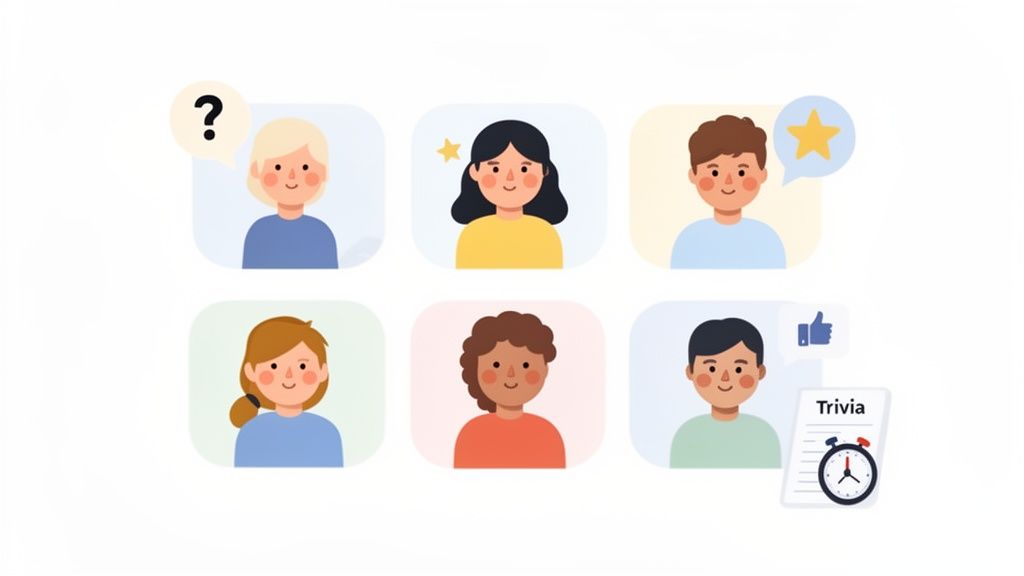
Let's be honest. The word "icebreaker" can make you cringe. But a quick, lighthearted game is one of the simplest ways to cut through the digital distance. It helps you see your coworkers as people, not just names on a screen.
The goal isn't forced fun; it's about creating small, consistent moments of human interaction. A simple round of two-truths-and-a-lie, rapid-fire trivia, or a "would you rather" poll can lower the barrier to conversation. It’s perfect for distributed teams, especially frontline workers who don't get much downtime.
Why it works
These games are low-stakes and easy to access. A retail team can run a quick trivia question during a shift handoff. A hospital department can start a huddle with a fun poll. It’s about weaving connection into the workflow, not adding another meeting to the calendar. Regular, small interactions build a foundation of trust that pays off in daily collaboration. It’s a key step to build strong social bonds with remote team members.
How to do it
Keep it simple. Stick to light topics. "What's the best pizza topping?" works. Avoid anything sensitive about personal life, politics, or money.
Mix it up. Not everyone can join a live game. Post a weekly question in a team channel where people can answer on their own time. This includes everyone, regardless of their shift or time zone.
Rotate who leads. Don't let the effort fall on one person. When everyone takes a turn, it keeps things fresh and gives people a sense of ownership.
Look for ideas. If you're running low on inspiration, check out some innovative corporate team building activities you can adapt for a virtual setting.
2. Virtual Coffee Chats
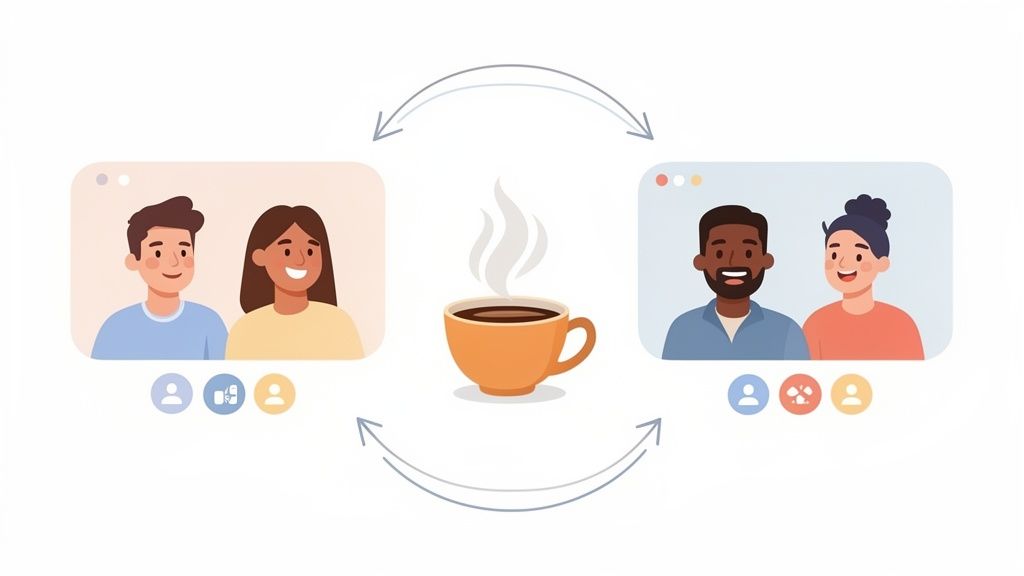
In an office, the best conversations happen by chance—in the breakroom or waiting for the elevator. These moments are impossible to replicate remotely without a little intention. Virtual coffee chats are our way of bringing that spontaneity back.
The idea is simple: create a dedicated, low-pressure time for one-on-one or small group chats that aren't about work. Schedule a 15-minute chat with a randomly assigned colleague. For a hospital, this might connect a nurse with an administrator, breaking down departmental silos and building a little empathy.
Why it works
These chats put a face to a name. They turn an org chart into a network of people. When a logistics dispatcher has a personal connection with a warehouse team member, problem-solving gets a lot easier. It’s these informal ties that make a company resilient.
How to do it
Offer conversation starters. To ease the initial awkwardness, provide a simple list of get-to-know-you questions. It gives people a starting point if the chat doesn't flow naturally.
Make it optional. Frame these as an opportunity, not a mandate. You can offer a small incentive, like a coffee gift card, to get things started.
Use a tool to automate pairings. Take the manual work out of it. Use an app that can randomly pair people from different departments and help them find a time that works.
Offer multiple time slots. Be mindful of different shifts. A company connecting corporate staff with store managers should offer times that work for both a desk job and a retail floor schedule.
3. Skill-Sharing Workshops
Team building isn't always about games. Sometimes the best way to connect is to learn something together. Collaborative workshops turn your team’s own expertise into an engagement tool. Instead of hiring outside help, you let employees teach each other.
This is about more than just upskilling. When a senior developer teaches a crash course on a new coding language, or a frontline manager shares customer service techniques that work, it builds mutual respect. Everyone has something valuable to contribute.
Why it works
Skill-sharing sessions are built on purpose. They help with employee development while fostering connection naturally. For a healthcare system with staff across multiple clinics, a virtual wellness workshop led by a nurse provides real benefits and a shared experience. It’s practical, and it validates your people's skills.
How to do it
Ask your team for ideas. Before planning anything, find out what your team wants to learn and what skills they’re willing to teach. A simple poll can uncover hidden talents.
Keep it short. Respect people's time, especially frontline workers. Aim for 45-60 minute sessions. Always record them for those who can't attend live.
Create a knowledge hub. Use a dedicated space to store recordings, presentations, and other resources. This makes the content accessible anytime.
Acknowledge the contributors. Publicly thank employees who lead workshops. A shout-out in a team channel goes a long way. This kind of real-time communication is crucial for improving teamwork.
4. Team Challenges and Competitions
Nothing brings people together like a common goal, especially with a little friendly competition. Gamified challenges turn wellness goals or daily tasks into engaging team activities that build camaraderie over weeks or months.
The idea is to create a shared mission. A retail chain could host a store-level sales competition. A logistics company could run a driver safety challenge. A healthcare network could organize a step-tracking contest. These are sustained efforts that create an ongoing conversation and a collective sense of purpose.
Why it works
Long-term challenges build momentum. Unlike a one-hour game, a month-long fitness challenge gives team members a consistent reason to check in, encourage each other, and celebrate milestones. This sustained interaction is fantastic for distributed teams, as it creates a unifying thread that connects everyone, regardless of location or shift.
How to do it
Keep it fair. Design challenges where everyone can contribute, regardless of their role. Offer different types of contests throughout the year, from photo competitions to charity drives.
Focus on the team. While individual recognition is fine, the main prize should be for the team. This reinforces the idea that you succeed together.
Use a central hub to communicate. Announce the challenge, post updates, and share leaderboards in a dedicated team channel. This keeps the competition top-of-mind.
Set a clear timeline. A defined start and end date creates a sense of urgency and keeps the energy up from beginning to end.
5. Asynchronous Show-and-Tell
Some of the best connections happen when we see the whole person, not just the professional. In a remote setting, these moments are rare unless we create space for them. Asynchronous show-and-tell is one of the simplest ways to reveal the human side of our colleagues.
The concept is straightforward: team members share photos or short stories about their lives outside of work. It’s about celebrating hobbies, pets, or family milestones in a low-pressure space. It’s a powerful reminder that we are a team of unique, interesting people.
Why it works
This activity humanizes coworkers. Seeing a manager’s goofy dog or a colleague’s impressive garden helps break down formal hierarchies. Because it's asynchronous, it respects the demanding schedules of frontline workers and different time zones, allowing everyone to participate when they have a moment. It’s an authentic way to engage remote employees) without another meeting.
How to do it
Use themed prompts. To get things started, introduce fun themes like "Pet of the Week," "Weekend Adventures," or "Hidden Talents." This gives people an easy starting point.
Make it truly optional. The key is zero pressure. Emphasize that participation is welcome but never mandatory. This keeps it fun, not a task.
Set clear boundaries. Establish simple guidelines for appropriate content to ensure the space remains respectful and professional. Keep the focus on positive, lighthearted topics.
Celebrate the posts. Don’t just let them sit there. Encourage leaders and peers to react with emojis or leave positive comments.
6. Virtual Volunteer Days
Working toward a shared goal is powerful, but working toward a shared purpose is transformative. Organizing virtual volunteer days moves team building beyond internal games and into the real world. It unites teams under a common mission that benefits a cause greater than the company.
This isn't about a one-off photo op. It’s about embedding social good into your culture. A hospitality brand could organize a virtual fundraiser for local food banks. A healthcare system could coordinate a digital mental health awareness campaign. These activities connect employees to their communities and to each other through a shared sense of purpose.
Why it works
Contributing to a meaningful cause creates a unique bond. It reveals a different side of coworkers, one driven by altruism. For distributed teams who feel disconnected from a central office, these initiatives reinforce that they are part of a larger organization that cares.
How to do it
Partner with established nonprofits. Don't reinvent the wheel. Partnering with organizations like VolunteerMatch provides structured opportunities and ensures your team's efforts make a genuine impact.
Offer diverse options. Provide a few different activities to accommodate various interests and time commitments, from virtual mentoring to a digital charity run.
Make it voluntary. Volunteering should never feel mandatory. Frame it as an opportunity and celebrate all levels of participation.
Share your impact. Be transparent about the results. Share metrics like funds raised or hours volunteered. This shows employees that their collective effort made a real difference.
7. Virtual Fitness and Wellness Classes
Investing in your team's well-being is about supporting them as whole people. Virtual fitness and wellness classes are a way to shift the focus from tasks to health, creating a space for employees to de-stress and recharge together. It shows you care about their health, not just their output.
This isn't about forcing everyone to run a marathon. It's about offering accessible sessions like meditation, yoga, or stretching over video. For frontline teams who are always on their feet or desk-based employees sitting for hours, these shared experiences provide tangible benefits.
Why it works
These sessions directly combat burnout. For a hospital, a guided meditation for night-shift nurses provides a crucial moment of calm. For a logistics company, a quick stretching routine can help drivers prevent injuries. It’s a practical form of team building that shows the company is invested in their long-term health.
How to do it
Offer variety. Provide a mix of activities like yoga, cardio, and meditation. Schedule them at different times to accommodate various shifts.
Make it camera-optional. Many people feel self-conscious working out on camera. Announce that participation can be camera-off to create a judgment-free zone.
Provide recorded sessions. Not everyone can make a live class. Record the sessions and make them available on demand so people can participate on their own time.
Partner with professionals. Consider working with wellness apps or local gyms to bring in certified instructors. This ensures high-quality sessions.
8. Lunch-and-Learn Sessions
Learning together is one of the most powerful ways to connect. Themed lunch-and-learns combine a casual meal break with an insightful session from an expert, creating an engaging, low-pressure environment for growth. It’s a way to invest in your team’s skills while giving them a reason to gather.
This approach transforms a simple lunch break into a valuable, shared experience. Whether it’s an internal expert sharing their knowledge or an external speaker bringing fresh perspectives, these sessions show employees you’re committed to their development. For a healthcare system, inviting a researcher to discuss new treatments provides direct access to knowledge that enhances their work.
Why it works
Lunch-and-learns blend personal time with professional growth, making development feel less like a task. They respect employees' schedules by fitting into an existing break, which is crucial for busy frontline workers. By focusing on interesting topics, you foster a culture of curiosity that strengthens the whole team.
How to do it
Crowdsource your topics. Survey your team to find out what they want to learn about. This ensures the content is relevant and boosts attendance.
Mix up your speakers. Rotate between internal experts, industry leaders, and speakers on broader topics like wellness or financial literacy.
Keep it concise. Aim for a 30-minute presentation followed by 15 minutes of Q&A. This keeps energy high and doesn't encroach on work time.
Make it accessible. Record every session and store it in a central library. This allows employees across different time zones and shifts to benefit.
9. Collaborative Online Games
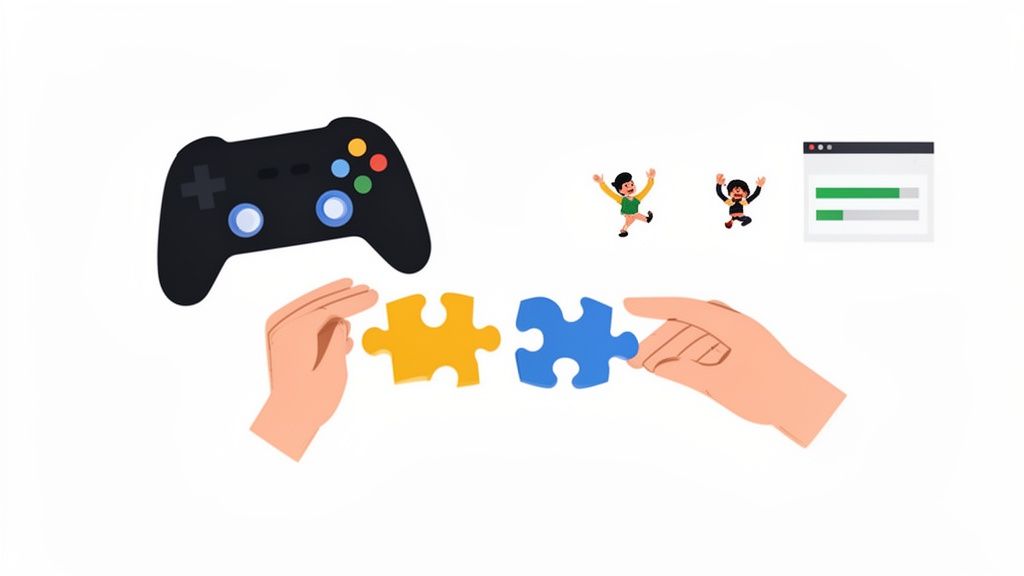
Sometimes, the best way to sync up is to just play. Stepping away from work to engage in a playful challenge can break down hierarchies and reveal new sides of our colleagues. Online collaborative games create a space for this kind of interaction, turning a video call into a shared adventure.
These aren't just for tech companies. Imagine retail teams from different stores teaming up for a virtual escape room, or a logistics crew blowing off steam with a quick round of Pictionary. The goal is to generate positive energy and create common ground. It’s about building relationships by sharing a laugh.
Why it works
Collaborative games require teamwork toward a common, non-work goal. Whether it's cracking a code in an escape room or strategizing in a board game, these activities naturally foster communication and problem-solving. For distributed teams, these shared moments of fun are powerful tools for building morale.
How to do it
Start with accessible games. Choose games that don't require special skills. Pictionary-style games or simple trivia platforms are great starting points.
Keep it short. Respect busy schedules by keeping sessions to 30-45 minutes. This makes it easier for frontline teams to join in during a break.
Focus on participation, not winning. The real prize is the interaction. Offer shout-outs for things like "most creative idea" or "best team player" to encourage engagement.
Vary the games. Keep things fresh by rotating the types of games you play. Mix in strategy, creative challenges, and trivia. This keeps the activity from becoming stale.
10. Mentorship and Peer Coaching
Team building isn't just about fun; it's also about growth. A structured mentorship program is one of the most profound virtual team building activities because it forges deep connections rooted in professional development. By pairing experienced employees with those looking to grow, you create a powerful framework for knowledge sharing.
This isn't just a casual chat. It's an intentional relationship designed to accelerate career growth. Think of a healthcare system pairing a senior nurse with a new graduate, or a logistics company connecting a seasoned driver with a recent hire. These partnerships create a strong sense of belonging.
Why it works
Mentorship programs build genuine trust. A mentee gains a trusted advisor, while a mentor gains leadership experience. For distributed teams, these programs break down silos, connecting people who might never otherwise interact and strengthening the entire organization.
How to do it
Be intentional with matching. Look beyond availability. Use criteria like skill gaps, career aspirations, and communication styles to create pairings that are likely to succeed.
Provide training. Don't assume everyone knows how to be a great mentor. Offer mentors training on active listening and giving feedback.
Establish a clear structure. Recommend a consistent meeting cadence (e.g., bi-weekly for 30 minutes) and suggest a simple agenda to keep conversations focused.
Measure success. Check in with participants at the three and six-month marks to gather feedback. Publicly recognize successful pairs to highlight the program's value.
Top 10 Virtual Team-Building Activities Comparison
Activity | 🔄 Implementation Complexity | ⚡ Resource Requirements | 📊 Expected Outcomes | 💡 Ideal Use Cases | ⭐ Key Advantages |
|---|---|---|---|---|---|
Virtual Icebreaker Games and Trivia Challenges | Low — simple setup, quick scripts or prompts | Low — chat channels, occasional facilitator | Quick engagement; small morale boost; light connections | Distributed & shift teams, onboarding, daily standups | Easy to run; mobile-friendly; customizable |
Virtual Coffee Chats and Speed Networking | Medium — scheduling and pairing logistics | Medium — video tools, scheduling system, time slots | Deeper peer relationships; cross‑team knowledge sharing | Remote/hybrid teams, cross‑dept introductions, new hires | Builds authentic trust; breaks silos |
Collaborative Online Workshops & Skill‑Sharing | Medium–High — content prep and facilitation | High — facilitators, recording tools, admin support | Skill growth; knowledge sharing; leadership exposure | Training, upskilling, wellness, recorded access for shifts | Sustains learning; positions employees as experts |
Virtual Team Challenges and Competitions | Medium — rules, tracking, fairness design | Medium — leaderboards, tracking, prizes, admin | Sustained engagement; measurable results; team pride | Sales, fitness, sustainability drives, multi‑week events | Drives ongoing participation; outcome‑oriented |
Asynchronous Show‑and‑Tell & Life Beyond Work | Low — posting + moderation workflow | Low — mobile posting, Spaces, basic moderation | Deeper personal bonds; increased belonging; low pressure | Distributed shifts, introverts, ongoing culture building | Flexible participation; creates cultural archive |
Virtual Team Volunteer & Community Service Days | Medium–High — external coordination & planning | High — nonprofit partners, budget, impact tracking | Purpose alignment; community impact; enhanced employer brand | CSR campaigns, company‑wide impact days, mentoring | Builds purpose; strengthens external reputation |
Live Virtual Fitness & Wellness Classes | Medium — scheduling instructors and session types | Medium — instructors, video infra, optionally subscription | Improved well‑being; reduced stress; team support | Night shifts, sedentary roles, wellness programs | Direct health benefits; supportive community |
Themed Lunch‑and‑Learn & Guest Speakers | Medium — speaker coordination and timing | Medium — speakers, event hosting, recordings | Bite‑sized learning; fresh perspectives; skill uplift | Professional development, industry updates, lunch breaks | Efficient learning inside workday; external insight |
Online Collaborative Games & Multiplayer Experiences | Low–Medium — game choice and facilitation | Low — browser tools, stable internet access | Shared fun; team bonding; natural icebreaker | Weekly socials, team‑building sessions, informal events | High engagement; immediate shared experience |
Structured Mentorship & Peer Coaching Programs | High — matching, training, ongoing governance | High — time commitment, admin, mentor resources | Lasting development; retention; leadership pipeline | Onboarding, career growth, succession planning | Deep relationships; accelerates professional growth |
It's Not About the Activity
We’ve walked through ten different ideas. It’s a solid list. But here’s the thing we learned after trying countless virtual team building activities: the specific activity barely matters.
You can spend a fortune on a professionally hosted escape room. But if it feels like another mandatory meeting squeezed into a packed week, it will fall flat. Worse, it can breed resentment. Connection isn't a task to be checked off a to-do list; it’s the natural outcome of creating an environment of psychological safety and genuine care.
The real goal isn't just to get people talking. It’s to create a space where they feel seen and valued as humans, not just as job titles. It’s about building a culture where a shared laugh over a ridiculous trivia answer can forge a stronger bond than a formal performance review.
The Shift from "What" to "Why"
Instead of searching for the perfect activity, start by asking, "What would actually feel good for our team right now?" The answer might surprise you. It might not be a game at all. It might be:
Protected time: A "no-meetings" afternoon so everyone can catch up without pressure.
Genuine recognition: A dedicated channel where peer-to-peer shoutouts are encouraged and celebrated.
Simple check-ins: Starting a meeting by asking, “What’s one small win you’ve had this week?” and actually listening to the answers.
Flexibility: Trusting your team enough to let them build connection on their own terms.
These aren't flashy virtual team building activities, but they are the bedrock of a connected team. They communicate trust, respect, and empathy more effectively than any forced fun ever could. The most successful things we've seen are the ones that fit seamlessly into the rhythm of work. They are often asynchronous, always optional, and designed with a deep understanding of the team's needs.
Your Next Step: Start Small, Stay Consistent
So, what should you do next? Don't just take this list and start scheduling events. Instead, take a step back. Talk to your people. Use a simple poll or start a conversation in a team channel. Ask them what they need.
Maybe you start a "Life Beyond Work" channel where people can share photos of their pets. Maybe you introduce a simple prompt like "What's the best thing you ate this week?" in your team chat every Friday. It doesn't need to be big. It just needs to be consistent and authentic.
Building real connections in a distributed world is a long game. It’s a practice, not a project. The activities are just tools. The real work is in fostering an environment where people feel safe enough to show up as themselves, day after day. Start there. Start small. The strongest teams are built one small, genuine interaction at a time.
Tired of juggling different tools for communication, recognition, and engagement? We built Pebb to bring everything together in one simple, unified employee app that your whole team will actually love to use. See how you can build a more connected culture, from the frontline to the front office, by visiting Pebb.
