
10 Staff Engagement Initiatives That Actually Work
Ditch the pizza parties. Here are 10 real staff engagement initiatives for modern teams, with step-by-step guides for HR, ops, and frontline supervisors.
Dan Robin
I remember an “engagement initiative” that involved a mandatory after-hours bowling night. The top scorer won a branded water bottle. Nobody wanted to be there.
That’s the problem with a lot of staff engagement initiatives. They treat engagement like frosting you spread on top of a broken cake. A party, a perk, a slogan, a committee. Then leaders act surprised when people smile politely and keep checking out.
Engagement isn’t a program. It’s an output.
It’s what you get when people know what matters, have what they need, can do good work without needless friction, and feel like somebody notices. It’s what happens when work is clear, fair, and humane. Not perfect. Just sane.
Gallup’s global picture makes the stakes hard to ignore. Only 23% of employees worldwide are actively engaged, while 59% are quitting by doing the bare minimum, according to Gallup engagement findings summarized by Eletive. That should end the fantasy that a pizza party fixes anything.
The useful staff engagement initiatives are rarely flashy. They’re operational. Better communication. Better scheduling. Better manager habits. Better onboarding. Better ways to hear what people are saying before they leave.
That’s why I don’t think engagement belongs in a side folder marked “culture.” It belongs in the daily system of work. Especially if you run frontline or distributed teams, where most frustration comes from basic breakdowns: missed updates, messy shift swaps, buried policies, uneven managers, and tools built for people who sit at laptops all day.
So this list isn’t about forced fun. It’s about practical changes that make work less confusing and less irritating. If you do that well, engagement follows. If you don’t, no amount of branded swag will save you.
1. Real-Time Internal Communication & Unified Messaging
At one multi-site operation I worked with, the informal handover process had nothing to do with the official one. Managers posted updates in email, supervisors texted their own versions, and frontline staff filled the gaps through WhatsApp and word of mouth. By the time an issue reached the night shift, nobody was sure which instruction was current.
That kind of confusion wears people down fast. People do better work when updates are consistent, easy to find, and clearly owned. As noted earlier, regular communication is strongly tied to motivation. The practical lesson is simple. If staff have to search three or four places to figure out what changed today, engagement drops because the work itself gets harder.
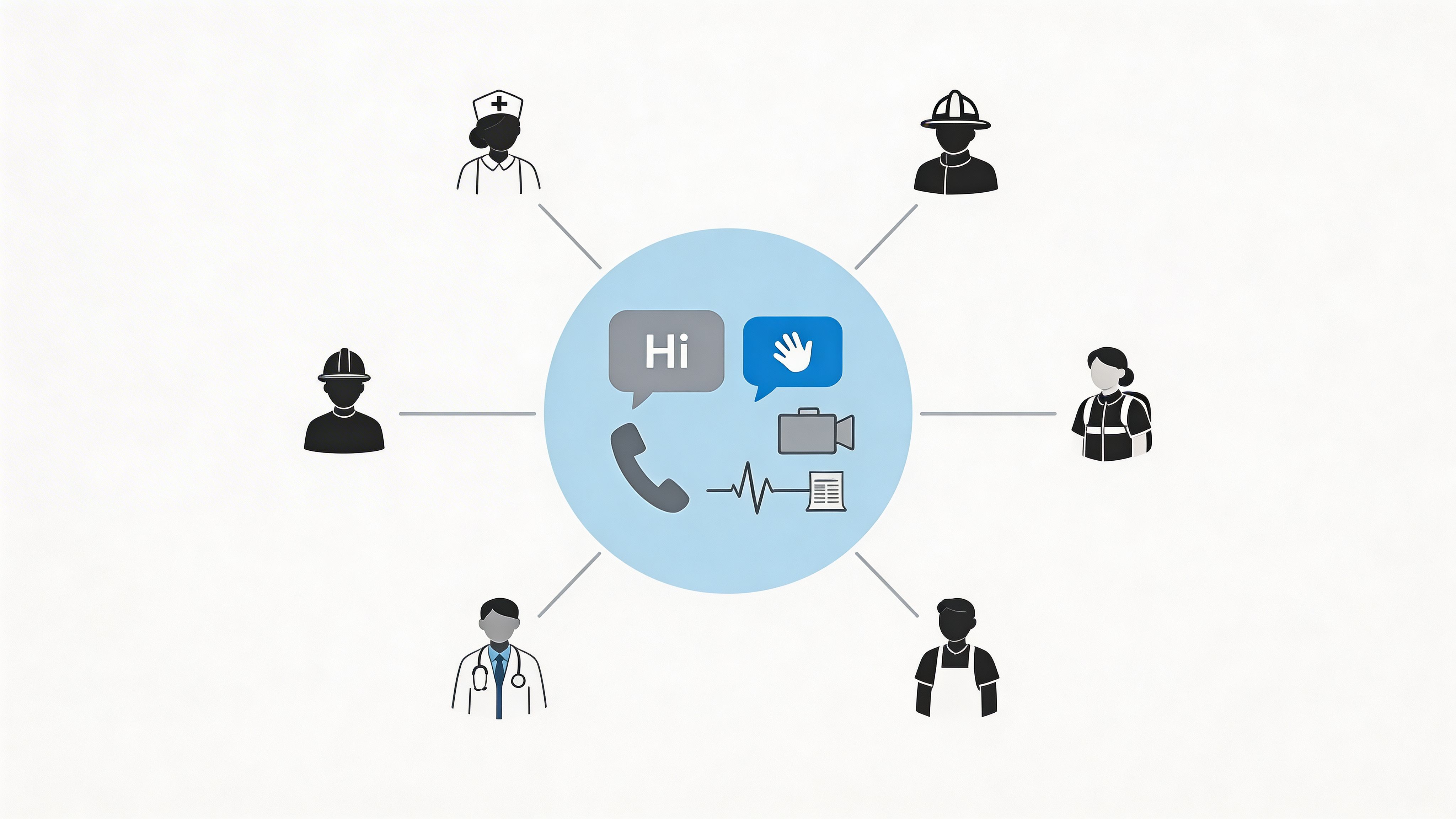
For frontline and distributed teams, communication is infrastructure. It affects shift coverage, safety, customer experience, and whether managers spend the day clarifying old messages instead of running the business. A unified system for chat, voice, video, and announcements helps because it gives everyone one place to check first. In Pebb, for example, that means company-wide announcements and day-to-day team messaging can live inside the same operating environment instead of being split across separate apps.
The gain is not just speed. It is consistency.
A hospital team can keep handoff notes visible to the next shift. A retail group can push one promotion update to every location at the same time. A hospitality operation can stop relying on desk staff to verbally pass service issues between housekeeping, maintenance, and food service. In each case, the engagement benefit comes from removing avoidable friction from the workday.
Build one source of truth, then enforce it
Most communication systems fail for a predictable reason. Leadership adds a new tool but keeps the old habits alive. Email still gets used for urgent changes. Supervisors still text their favorites. Printed notices still go up in break rooms after the digital update was already changed.
That creates two problems. Staff miss information, and they stop trusting that any channel is complete.
A few rules make unified messaging work:
Name channels by operational purpose: “Store 214 Ops” or “East Region Shift Leads” is clearer than “General Chat.”
Separate announcements from discussion: Important updates need a stable home, not a fast-moving thread.
Define response times by message type: Routine questions, urgent incidents, and schedule issues should not all carry the same expectation.
Require acknowledgment for high-stakes updates: Safety notices, compliance changes, and shift changes should be confirmed, not assumed.
Turn off duplicate channels: If the new system is the source of truth, act like it.
If you are evaluating platforms, review internal communication tools built for frontline teams and distributed operations rather than choosing based on office-only features.
Good communication should feel ordinary. People should know where updates live, who owns them, and what needs a response. Once that becomes routine, engagement stops being a side project from HR and starts showing up where it matters most, in fewer mistakes, faster handoffs, and less daily frustration.
2. Dedicated Team Spaces for Collaborative Operations
One giant company chat usually starts with good intentions and ends in noise.
People need smaller places that match how work happens. A warehouse shift. A hospital unit. A restaurant location. A regional retail team. When teams have a dedicated digital space for their own work, engagement stops being a side activity and becomes part of the day.
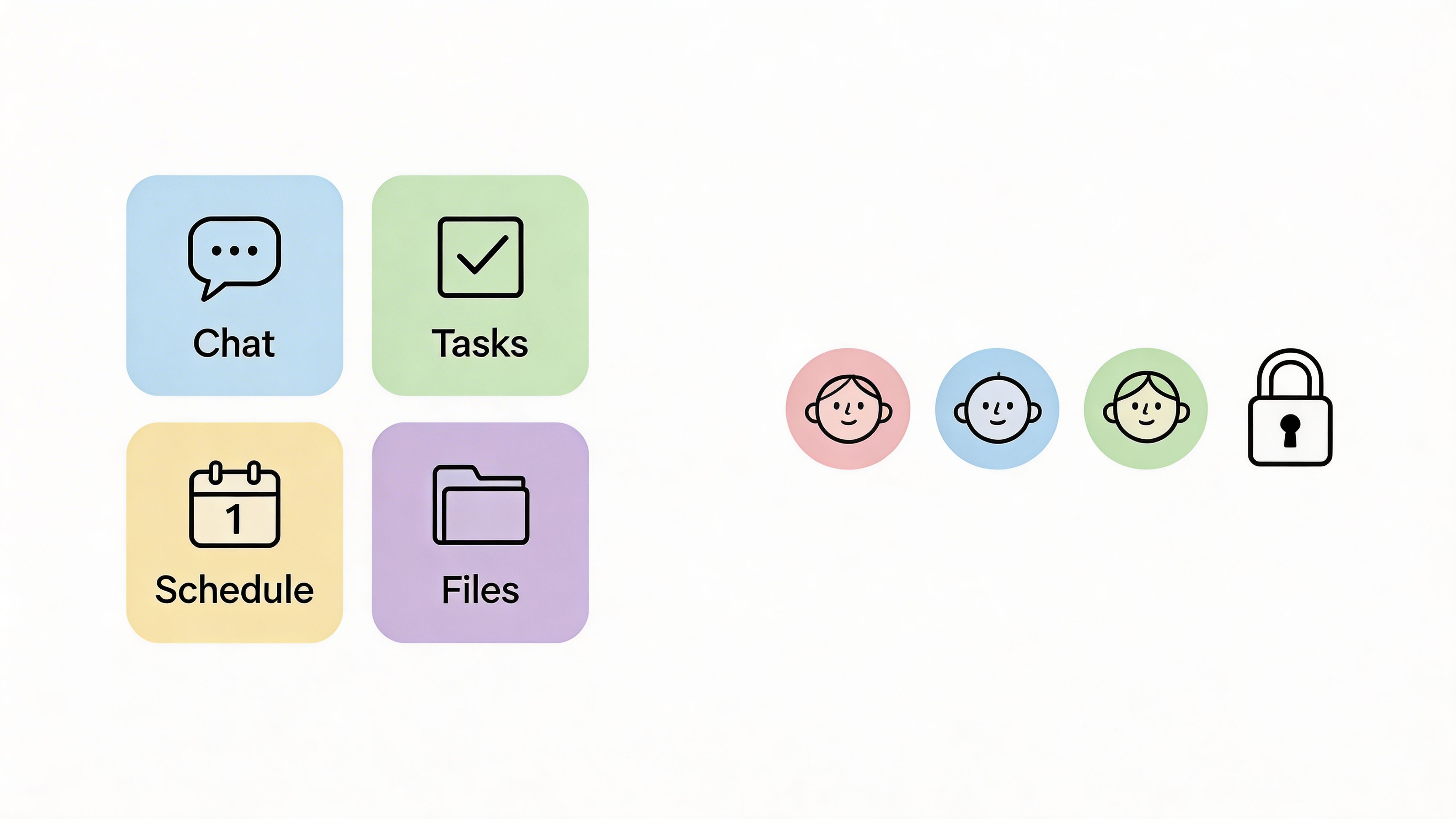
I’ve seen this work best when the space isn’t just for chat. It needs the practical stuff too: files, task lists, schedules, pinned policies, and quick updates. Then the team doesn’t have to switch tools to get work done.
A hospital unit can keep shift notes, urgent updates, and task assignments together. A restaurant can keep daily specials, staffing changes, and opening checklists in one place. A warehouse can organize by shift and use the same space for inventory issues, handoffs, and process notes.
Build spaces around real work, not org charts
Many staff engagement initiatives falter because leadership sets up tidy spaces that mirror the reporting structure, while the work happens across shifts, sites, and shared responsibilities.
Do it the other way around.
Ask frontline staff how they group work: They know where confusion happens.
Pin the basics: Key contacts, schedules, SOPs, escalation paths.
Write a short description for each space: Tell people what belongs there.
Review the setup regularly: A good space in January can become a junk drawer by June.
The trade-off is governance. More spaces can mean more clutter if nobody owns them. So every space needs an adult in the room, usually a manager or supervisor, who keeps it useful.
Teams don’t bond because you gave them a “community area.” They bond because the place where they work together helps them work together.
That’s the standard. If a team space doesn’t reduce confusion, it won’t improve engagement either.
3. Task Management & Work Prioritization Systems
A surprising amount of disengagement is uncertainty with better branding.
People don’t know what matters first. They don’t know what “done” looks like. They don’t know who owns what. Then managers call the team unmotivated.
Gallup has tied unclear expectations to disengagement, which tracks with what most operators know from experience. When the work itself is fuzzy, morale drops fast. The fix isn’t a motivational speech. It’s a visible task system.
Fast-food franchises often do this well with recurring opening and closing checklists. Healthcare teams use assigned patient care tasks and handoffs. Warehouses track shift-based fulfillment and restocking. Retail stores use task lists for merchandising, stocktake, and promo changes.
Visibility beats memory
The best task systems are simple enough that people use them. That usually means:
Start with recurring work: Open, close, restock, inspect, hand off.
Use templates: Don’t rebuild the same process every week.
Show progress publicly where appropriate: Completion creates momentum.
Connect tasks to the bigger reason: Safety, customer experience, speed, compliance.
Managers need to be careful here. A task system can help engagement, but it can also become a surveillance machine if every tiny action turns into a scoreboard. Nobody wants to feel tracked like inventory.
Use tasks to create clarity, not pressure.
A warehouse supervisor assigning the shift’s must-do work before the rush is helping. A manager dumping twenty tasks into an app at 4:30 p.m. and calling it accountability is not.
Done right, task management gives people something significantly underrated at work: confidence. They know what matters. They know what’s finished. They know their contribution counts.
That’s a much better foundation for engagement than asking everyone to wear matching T-shirts on Friday.
4. Knowledge Library & Centralized Policy Documentation
Nothing drains goodwill faster than forcing adults to ask the same basic question three times.
Where’s the PTO policy? What’s the return process? Which version of the safety checklist is current? If answers live in old PDFs, email threads, and someone’s memory, people stop feeling supported and start feeling stranded.
A searchable knowledge library solves that. Not in a glamorous way. In a useful way.
For multi-location retailers, that means store teams can pull up the same policy from the same place. In healthcare, staff can find updated protocols and safety guidance without chasing a manager. In logistics, equipment procedures and incident steps are available on a phone when someone needs them.
The library has to be written for humans
Most policy collections fail because they are technically complete and practically unreadable.
A useful knowledge library has a few traits:
Clear titles: “Requesting PTO” is better than “Leave Administration Framework.”
Short summaries: Let people scan before they open the full policy.
Role-based organization: Sort by what people do, not by internal bureaucracy.
Visible owners: Every document should have someone responsible for updates.
A quick-reference guide matters as much as the full document. The full policy protects the company. The quick guide helps the employee.
This is especially important for frontline teams. Standard engagement advice often assumes desktop access and plenty of time. But a lot of shift-based workers need mobile access and simple answers in the flow of work. That gap is one reason frontline adaptation remains underserved in mainstream guidance, as noted in Zendesk’s discussion of employee engagement ideas for modern teams.
What doesn’t work is uploading every old file into a folder and calling it a knowledge base. That’s archiving, not access.
If people can’t find what they need in under a minute, the library isn’t helping engagement. It’s hiding the mess in a cleaner interface.
5. Employee Recognition & Peer-to-Peer Appreciation Programs
Recognition gets talked about so often that it’s easy to stop taking it seriously. That would be a mistake.
People want to know their work was seen. Not in a vague annual review. In real time, close to the moment, in a way that feels specific and sincere. Findings suggest that recognition can significantly boost employee motivation. That’s not fluff. It’s feedback with emotional weight.
Peer-to-peer recognition works especially well because it doesn’t depend on one manager noticing everything. A nurse can recognize a colleague for covering a difficult shift. A retail associate can thank a teammate for salvaging a customer issue. A warehouse lead can call out a safety-conscious handoff that prevented a bigger problem.
Specific praise beats generic praise
A good recognition program is not “Employee of the Month” pasted onto a feed. It’s a simple system that makes appreciation visible and normal.
Use a few rules:
Be specific: Say what the person did and why it mattered.
Tie recognition to values or standards: This keeps it grounded.
Make it public when appropriate: Shared appreciation shapes culture.
Don’t let managers dominate it: Peer recognition matters because it’s distributed.
If you need ideas, these peer-to-peer recognition examples show the difference between empty praise and useful praise.
“Thanks for jumping in” is nice. “Thanks for staying late to help close the incident report correctly so the next shift didn’t inherit a mess” is better.
The trade-off is that recognition can get performative fast. If every message sounds copy-pasted or every shoutout goes to the same extroverts, people stop trusting it.
Also, don’t confuse recognition with compensation. A thank-you is not a substitute for fair pay, fair schedules, or sane staffing. It works best when the basics are already being handled reasonably well.
Done right, recognition tells people what good looks like and reminds them that their effort didn’t disappear into the floorboards.
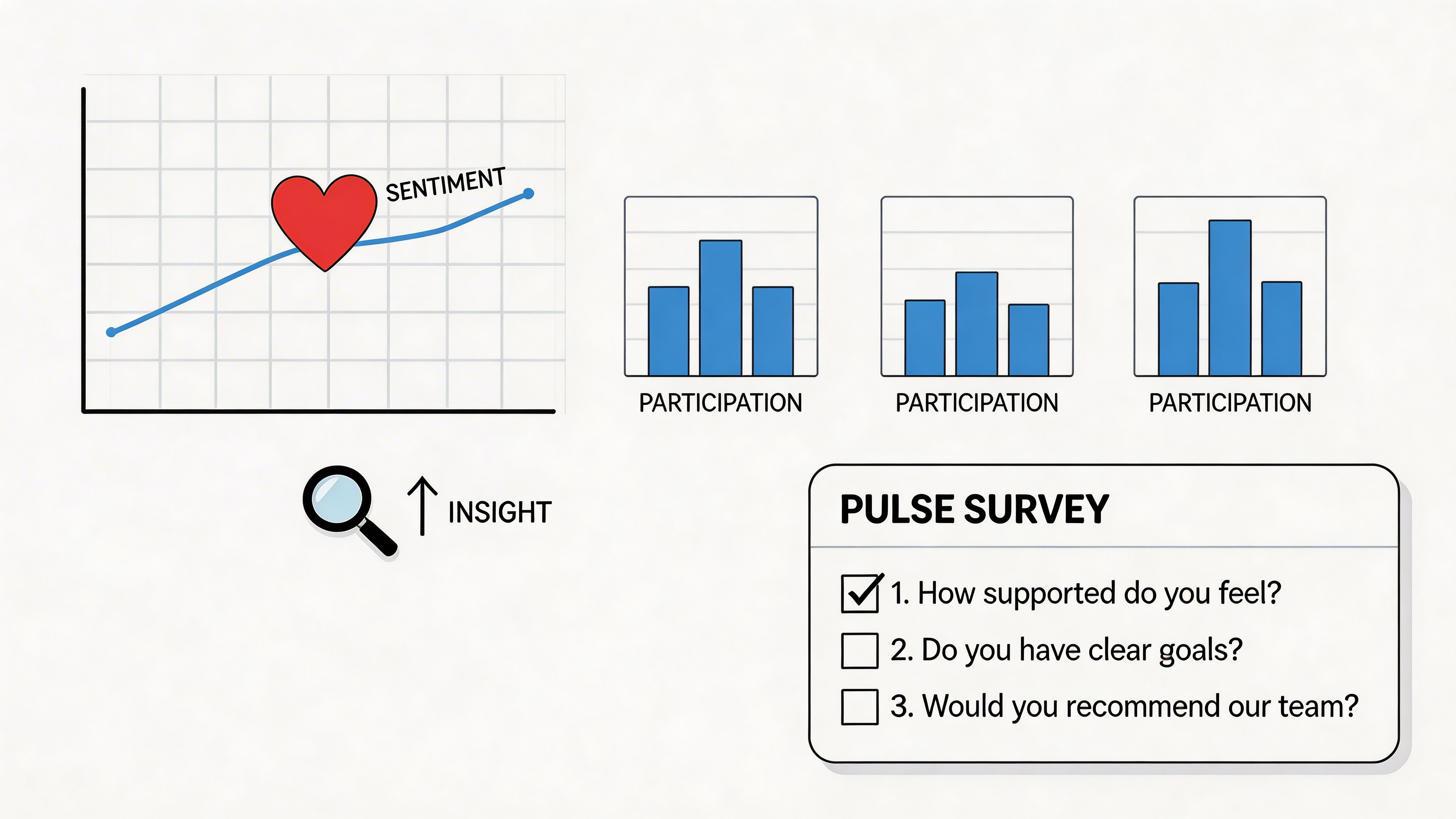
6. Engagement Analytics & Pulse Surveys
A lot of companies ask for feedback as if the asking itself deserves credit.
It doesn’t.
Pulse surveys and engagement analytics are useful only when they help you see something early and act on it while it still matters. Otherwise they become a ritual people resent.
That said, I’m a big believer in light, regular measurement. Not endless surveys. Not “how are we feeling?” every Tuesday. Just enough signal to spot trouble before it turns into turnover, absenteeism, or a manager everyone avoids.
Measure patterns, not moods
A retailer with multiple locations can compare participation and sentiment across stores. A healthcare system can watch for pressure points around certain shifts. A restaurant group can see where communication drops off between sites.
A significant advantage comes when analytics move beyond rearview reporting. Organizations using AI in engagement suites report measurable returns, including cuts in turnover expense and profit improvement, according to Mordor Intelligence’s employee engagement market analysis. That same source notes that Culture Amp’s AI Comment Summaries eliminated 6,600 staff hours of manual review work. That’s a practical signal that machine learning can reduce the grunt work around feedback, not just dress up a dashboard.
A few rules keep pulse surveys useful:
Ask fewer questions: Three to five focused questions is enough.
Run them on a cadence you can support: If you won’t act, don’t ask.
Segment the results carefully: Team, location, role, shift.
Share what you learned: People shouldn’t wonder where their feedback went.
If you ask for feedback and do nothing, employees learn something. Just not what you hoped.
The common failure is overcollection and underresponse. Leaders chase perfect data, then stall. Staff don’t need perfect analysis. They need visible follow-through.
If one location says schedules are chaotic and another says policies are buried, don’t launch a company-wide morale campaign. Fix the local problems. Analytics should sharpen judgment, not replace it.
7. Onboarding & New Hire Integration Programs
You can tell a lot about a company by its first week.
If a new hire spends day one filling out forms, waiting for logins, and trying to guess who’s in charge, you’ve already taught them something. Usually that chaos is normal and they’re on their own.
That’s why onboarding is one of the most impactful staff engagement initiatives you can run. It shapes how quickly people become productive, but it also shapes whether they feel welcome and capable. Gamification can help here, with new hires often responding positively to onboarding when rewards and challenge mechanics are used.
Don’t front-load everything
Most onboarding programs try to cram thirty days into eight hours. It doesn’t work.
A better approach is staged and role-specific. A hospital should onboard clinical staff differently from admin staff. A retailer should onboard seasonal hires differently from store managers. A hospitality business should separate what people need on day one from what they can learn over the next few weeks.
A strong onboarding flow usually includes:
A simple first-day plan: People should know where to go and what to expect.
Role-specific materials: Generic onboarding wastes attention.
A buddy or peer contact: New hires need a safe place for small questions.
Short manager check-ins: Not just paperwork completion.
Video intros from the team help. So does putting policies, schedules, and training in one mobile-friendly place. For distributed teams, asynchronous content matters because not everyone starts in the same room with the same support.
What doesn’t work is treating onboarding as an HR handoff. Engagement starts before culture does. It starts when the company proves it can organize a basic welcome.
A good onboarding system tells people, without saying it out loud, “We expected you. We’re ready for you. You won’t have to figure this place out alone.”
That message does more for engagement than a branded welcome mug ever will.
8. Shift Scheduling & Transparent Workforce Planning
Ask enough frontline workers what frustrates them and scheduling will show up fast.
Not because people expect perfect shifts. They don’t. They expect fairness, visibility, and enough notice to have a life. When schedules feel arbitrary or constantly unstable, engagement suffers no matter how cheerful your internal newsletter is.
Many office-centric staff engagement initiatives falter because they assume employees work roughly the same hours, see the same updates, and can join the same events. Frontline teams don’t live in that world.
The practical fix is transparent workforce planning. Publish schedules as early as the business realistically can. Make shift swaps visible and structured. Let people request time off in the same place they check shifts. Keep the approval process clear.
Fairness matters more than cleverness
Retail stores often do better when employees can manage swap requests through one clear channel instead of side-texting five coworkers. Healthcare teams need better forward visibility because staffing gaps don’t just annoy people, they increase stress. Warehouses need schedule clarity across multiple shifts so handoffs and staffing expectations don’t become guesswork.
A few rules keep scheduling from becoming a daily source of resentment:
Set swap and PTO rules clearly: People should know the timeline and criteria.
Reduce last-minute changes when possible: Don’t normalize disruption.
Keep one place for shift updates: Scattered messages create conflict.
Use patterns to improve planning: Repeated understaffing is not a surprise. It’s a planning issue.
The broader point is simple. You can’t preach wellbeing while posting schedules late and changing them casually. If you care about retention, start with whether people can plan their week.
For teams trying to streamline the first weeks of employment alongside scheduling and setup, employee onboarding automation is closely related operational work.
Good scheduling won’t make people love the job. But bad scheduling will make them leave it.
9. Manager Training & Leadership Development Programs
A regional ops lead once told me her engagement problem turned out to be a management problem in disguise. The company had invested in better communication, cleaner scheduling, and stronger onboarding. On paper, the system was solid. In practice, each location manager used it differently, so employees got a different experience depending on who was running the shift.
That is often the primary issue.
Managers decide whether communication stays clear under pressure, whether feedback helps or embarrasses people, and whether a tool like Pebb becomes part of daily operations or just another app people ignore. Engagement drops fast when supervisors are inconsistent, hard to reach, or unclear about priorities. You do not fix that with slogans or a one-off workshop.
Train managers first, especially in frontline and distributed teams.
A supervisor does not need a theory-heavy leadership course before launch. They need to know how to run a short shift update, document a handoff, recognize good work in a way that feels credible, and address a problem before it turns into resentment. They also need to know what good judgment looks like when staffing is tight, customer pressure is high, and half the team is working across different locations or shifts.
The strongest manager programs stay close to the job:
Train inside real workflows: Use scenarios from stores, sites, clinics, or warehouses.
Teach communication standards: Show managers how to post updates, close loops, and avoid mixed messages.
Build feedback habits: Short, specific coaching beats saving everything for a formal review.
Give managers a peer channel: Supervisors solve a lot faster when they can compare notes across locations.
Provide simple guides: One-page prompts and examples get used. Long decks usually do not.
Good leadership development also means being honest about promotion risk. Strong individual performers often get promoted because they are dependable, fast, or technically skilled. None of that guarantees they can lead people. If you skip manager training, the team pays for that gap through turnover, avoidable conflict, and uneven standards.
For companies building that capability deliberately, frontline leadership skills should be treated as part of operating discipline, not an optional people initiative.
One more point matters here. Managers carry stress downhill if they are not trained to handle it well. That shows up fast on distributed teams, where employees have fewer informal chances to clarify tone or intent. For leaders working through that issue, these workplace stress management strategies for neurodivergent employees are a useful reminder that support needs to be specific to how people experience work.
Strong managers create engagement through consistency. People know what matters, how to get help, and what good work looks like. That is what employees trust.
10. Culture Initiatives & Company Values Activation
Values printed on walls don’t do much. Values used in decisions do.
That’s the difference.
A lot of culture work stays abstract because leaders try to “promote values” without tying them to daily behavior. So employees hear words like respect, ownership, service, and excellence, then watch the system reward speed, silence, and politics.
Culture initiatives only matter when people can see the values in action. A healthcare team might share stories of patient-centered care in shift updates. A retail business might recognize customer service moments that reflect how the brand wants people treated. A logistics team might use safety and reliability as decision filters, not slogans.
Turn values into visible behavior
Keep the list short. Three to five values is enough. Then make them show up in concrete places:
Onboarding: Explain what each value looks like in the role.
Recognition: Praise work that reflects the value clearly.
Manager feedback: Use values to discuss decisions and trade-offs.
Leadership accountability: Call out breaches, especially at the top.
There’s also an inclusion angle here. People engage more when culture doesn’t ask them to flatten themselves into one narrow model of a “good employee.” Different people can live the same value in different ways. That’s healthier, and usually more honest.
For leaders considering stress, inclusion, and how culture lands differently across employees, workplace stress management strategies for neurodivergent employees adds useful perspective.
The trap is turning culture into content. Monthly value posters. Branded slides. Nice words with no consequences. People see through that quickly.
Culture becomes real when the company can point to a normal Tuesday and say, “That decision right there. That’s what we mean.”
10-Point Staff Engagement Initiatives Comparison
Item | Implementation Complexity 🔄 | Resource Requirements 💡 | Expected Outcomes 📊⭐ | Ideal Use Cases | Key Advantages ⚡ |
|---|---|---|---|---|---|
Real-Time Internal Communication & Unified Messaging | Medium: integrates chat/voice/video, needs change management | Moderate: app rollout, integrations, admin time | High ⭐⭐⭐: faster responses, reduced silos | Distributed/frontline teams (retail, healthcare, hospitality) | Instant collaboration; consolidates tools, reduces app fatigue ⚡ |
Dedicated Team Spaces for Collaborative Operations | Medium to High: requires space architecture and governance | Moderate: templates, permissions, storage, training | High ⭐⭐: efficient workflows, clearer team visibility | Department hubs, shift teams, ops-centric units | Reduces context-switching; centralizes scheduling and docs ⚡ |
Task Management & Work Prioritization Systems | Low to Medium: straightforward tech; discipline required | Low to Moderate: templates, mobile UI, manager oversight | High ⭐⭐: clearer responsibilities and accountability | Daily checklists, recurring ops (restaurants, warehouses) | Improves clarity and on-time execution; supports recognition ⚡ |
Knowledge Library & Centralized Policy Documentation | Medium: taxonomy, version control and governance | Moderate to High: content digitization, owners, search tooling | High ⭐⭐: faster onboarding, consistent policy adherence | Multi-site retailers, healthcare, logistics | Self-service access; supports compliance and training ⚡ |
Employee Recognition & Peer-to-Peer Appreciation Programs | Low to Medium: feature setup simple; cultural work needed | Low: badges, feeds, light moderation and rewards | Medium ⭐⭐: increased morale and peer engagement | Customer-service teams, cross-team collaboration | Boosts morale and retention; visible positive reinforcement ⚡ |
Engagement Analytics & Pulse Surveys | Medium to High: data design and interpretation needed | Moderate to High: analytics tools, survey design, privacy guardrails | High ⭐⭐: actionable insights, early issue detection 📊 | Large distributed orgs, HR strategy programs | Data-driven prioritization and measurement; ROI visibility ⚡ |
Onboarding & New Hire Integration Programs | Medium: sequence design, mentor workflows required | Moderate: content, task flows, mentor time, invites | High ⭐⭐: faster time-to-productivity and retention | Seasonal hires, multi-location onboarding (retail, healthcare) | Consistent, scalable onboarding; reduces manual admin ⚡ |
Shift Scheduling & Transparent Workforce Planning | Medium: rules, compliance and approval flows | Moderate: calendars, PTO workflows, manager time | High ⭐⭐: fewer conflicts, better coverage and morale | Retail, hospitality, healthcare, warehouses | Transparency and employee autonomy in scheduling ⚡ |
Manager Training & Leadership Development Programs | High: ongoing curriculum and coaching required | High: facilitators, time, learning resources | High ⭐⭐⭐: stronger leadership, higher adoption and retention | Decentralized orgs with frontline managers | Amplifies other initiatives; improves manager effectiveness ⚡ |
Culture Initiatives & Company Values Activation | Medium to High: sustained leadership and consistency | Moderate to High: storytelling, events, measurement | Medium to High ⭐⭐: stronger belonging and aligned behaviors | Organizations building employer brand and retention | Makes values actionable; aligns behavior and recognition ⚡ |
The Common Thread
A few years ago, I watched a leadership team spend months planning an engagement campaign while store managers were still chasing schedule changes across text threads, paper notices, and missed calls. The campaign looked polished. The day-to-day work still felt messy, slow, and harder than it needed to be.
That gap matters.
Across all ten initiatives, the pattern is practical. Staff engagement improves when the basics of work are clear, consistent, and easy to access. People need updates that reach them on time, team spaces that match how work gets done, tasks that set priorities clearly, and policies they can find without asking around. They notice when recognition is specific, when surveys lead to action, when onboarding is organized, when schedules are visible, and when managers follow through.
For frontline and distributed teams, those basics carry more weight because small breakdowns hit harder. A missed update can mean a missed shift change. A buried document can create a compliance problem. A weak handoff between managers can turn into rework, customer frustration, or avoidable turnover. Office teams feel friction too, but frontline teams usually absorb it first.
That is why I avoid treating engagement like a standalone HR program. In practice, engagement is built inside operations. HR, internal comms, and people leaders shape it, but the daily experience comes from how work is assigned, explained, supported, and recognized.
The trade-off is real. You can launch a visible culture initiative quickly, or you can fix the operating issues that frustrate people every week. One gets attention faster. The other usually earns trust.
Gallup's findings mentioned earlier point in the same direction. Stronger engagement is tied to better business outcomes, and acting on employee feedback matters more than collecting it. That is the part many companies miss. A pulse survey without follow-through teaches employees to stay quiet next time.
The better question is not, "Which initiative sounds strongest?" It is, "Where does work break down most often?" Start there. If teams struggle with scattered communication, fix communication. If manager inconsistency is the problem, train managers and give them clearer operating rhythms. If scheduling causes the most tension, make schedule changes, approvals, and coverage visible in one place.
Fix one source of friction thoroughly, then build from there.
That is also where a unified system earns its keep. If communication lives in one tool, tasks in another, policies in a shared drive, recognition in a separate app, and scheduling somewhere else, engagement stays fragmented because work stays fragmented. Pebb is one option that puts communication, spaces, tasks, knowledge, scheduling, and analytics in the same system. For distributed teams, that makes it easier to build engagement into the shift, the handoff, the check-in, and the manager workflow instead of treating it as a side project.
The strongest staff engagement initiatives share one trait. They make work run better for the people doing it. That standard is harder to fake, easier to measure, and far more useful than another campaign.
If you want to turn staff engagement initiatives into part of daily operations instead of another disconnected HR project, take a look at Pebb. It brings communication, tasks, knowledge, scheduling, and engagement into one mobile-friendly app, which makes it easier to support frontline and office teams in the same place.
