
Your Best People Don't Quit Their Jobs. They Quit Their Managers.
Elevate frontline leadership skills to reduce turnover and build engaged teams. Practical guidance for managers who want to lead, not just manage.
Dan Robin
Let's start with a hard truth. People don't leave for a few bucks more an hour. They leave because of their boss.
They're leaving you. This isn't just corporate-speak; it's the simple, human reality at the heart of your business. The difference between a team that thrives and a team that just survives comes down to a handful of basic frontline leadership skills.
Why We Promote Our Best People into Bad Managers
We’ve all seen it. A star employee—someone who knows the job cold—gets promoted to team lead. We celebrate. Then, a few months later, morale tanks and the best people on that team quietly start looking for the door.
Here’s the problem: The skills that made someone a great individual contributor have almost nothing to do with leading other humans. We promote for technical skill and then act surprised when the people part of the job falls apart.
This isn't about grand strategies from HQ. It’s about the daily grind on the shop floor, in the call center, or behind the counter.
The Story of a New Manager
I remember a new manager I worked with years ago—let’s call her Sarah. She was a brilliant barista, the fastest on the line, a favorite with regulars. So, of course, she was promoted to shift supervisor. Almost immediately, she started trying to "fix" everyone by showing them her way, the "right" way. She thought she was helping.
But her team didn't feel helped. They felt micromanaged. They felt like they weren't trusted. Sarah focused so much on the what—the perfect foam, the exact timing—that she completely forgot about the who. She never asked her team for ideas. She never just checked in to see how they were doing.
Within six months, her two most experienced people had quit. Sarah was devastated, confused, and on the verge of quitting herself.
We treat leadership as a reward for good work, not as a distinct and difficult skill. It’s a completely different job.
This story is painfully common. A Gallup study found that managers account for at least 73% of the variance in employee engagement. That number is staggering. It means the single biggest factor in your team's happiness and output is their direct boss. Being a good frontline leader means knowing what matters, like boosting workplace morale.
Developing real frontline leadership skills is the most critical, yet overlooked, job in any business. If you're struggling to figure out why your best people leave, our guide on how to reduce employee turnover is a good place to start. It all begins here.
The Six Skills That Actually Matter
Forget the endless lists of competencies in dusty HR manuals. After years of watching frontline managers either sink or swim, I've seen that real leadership boils down to a handful of core skills. These aren't abstract theories. They are the daily actions that decide whether a team feels connected or just compliant.
The good news? These skills can be learned. They just take practice and a genuine desire to see other people succeed. True leadership is a practice, not a destination, and a commitment to continuous professional development is what separates the good from the great.
Communication and Coaching
I put these two together because one without the other is useless. Management is often about talking at people—giving directions, correcting mistakes. Leadership is about listening, asking good questions, and helping people find their own answers.
This is where the real work happens. A manager says, "You did this wrong. Do it this way." A leader asks, "What was your thinking here? What could we try differently next time?" The first approach creates dependence. The second builds capability. It’s a subtle shift from directing to developing, but it changes everything.
The gap is huge. A PwC report found that while 77% of employees say clear communication is extremely important, only 29% think their leaders are any good at it. This disconnect is a massive source of frustration on the front lines.
Situational Decision-Making
Great frontline leaders are masters of context. They have a feel for when to step in with clear direction, when to huddle the team to solve a problem together, and—most importantly—when to get out of the way. There is no single "right" leadership style.
Think of it like teaching a kid to ride a bike. At first, you're holding the seat, giving constant instructions. Then you're running alongside, offering encouragement. Finally, you have to let go. A manager who holds on too long creates a team that can't function without them. A leader knows exactly when to release their grip.
The art of frontline leadership isn’t having all the answers. It’s about knowing which questions to ask and when to just let people work.
This diagram shows the direct line from leadership skills to morale to business success.
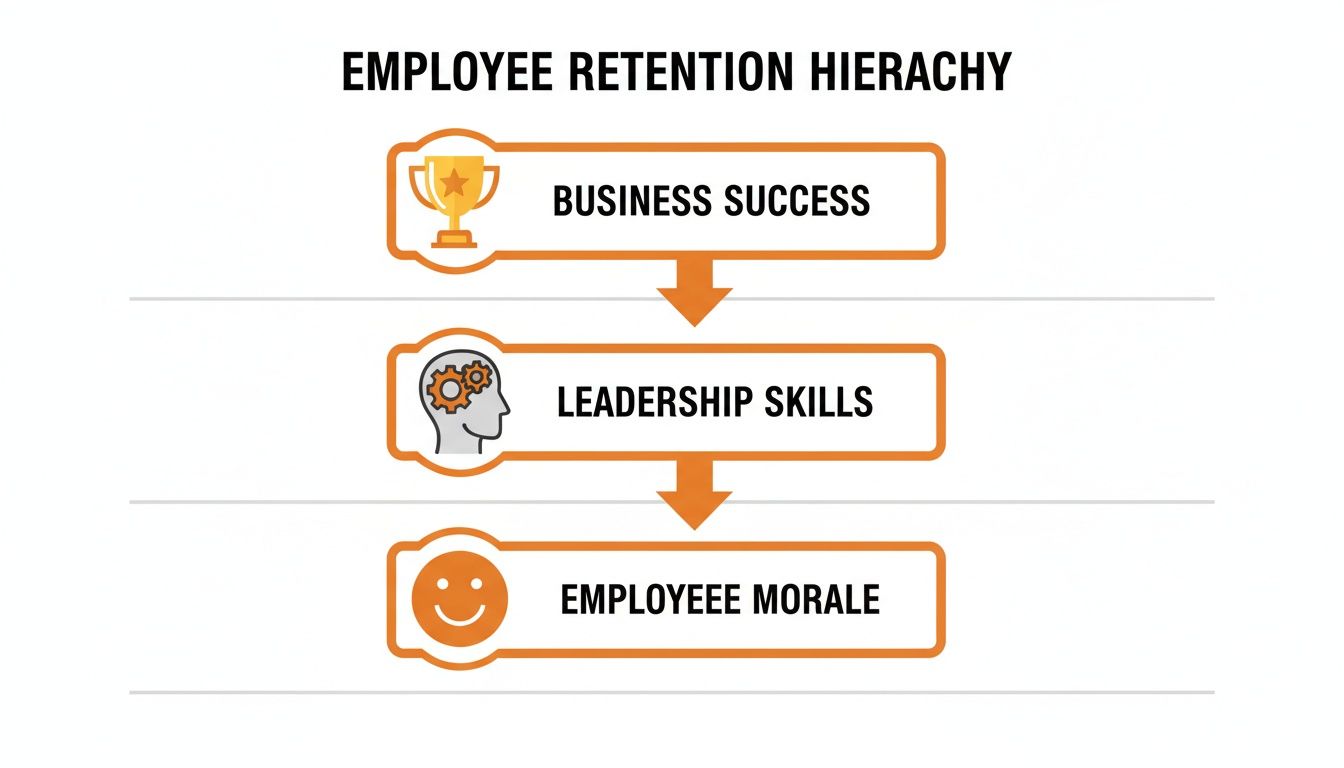
As you can see, employee morale is the foundation. It's either built up or torn down by the daily actions of frontline leaders.
Scheduling & Operations Oversight
A leader has to balance getting the work done with caring for the people doing it. Scheduling & operations oversight is about managing the process without micromanaging the people. It’s making sure the shift runs smoothly while trusting your team to get the job done. This means setting clear goals and then giving people the autonomy to reach them.
Engagement and Culture Building
But the work is only half the story. Engagement and culture building is about creating a genuine sense of belonging. It’s recognizing individual contributions, celebrating team wins, and making sure every person feels seen. This is the glue that holds a team together when things get tough.
Psychological Safety
When you bring all these skills together, you get psychological safety. This is the secret ingredient—an environment where people feel safe enough to speak up, ask for help, or admit a mistake without fear of blame. When you have that, you don't just have a team. You have a resilient, creative group of people who are willing to go the extra mile because they want to, not because they have to.
Let's be clear about the difference between managing tasks and leading people.
Manager Actions vs Leader Actions
Core Skill | What a Manager Does (Tells) | What a Leader Does (Asks & Coaches) |
|---|---|---|
Communication | "Here’s the update. Any questions?" | "What are you hearing from customers? What do you need to know?" |
Coaching | "You missed a step. Do it this way next time." | "Walk me through your process. Where do you think it went off track?" |
Decision-Making | "Do what I told you to do." | "What are our options here? What do you recommend?" |
Operations | "I need you to complete these 5 tasks by end of shift." | "Our goal is to serve 50 customers today. How can we best do that?" |
Culture Building | "Good job." | "Sarah, the way you handled that difficult customer was fantastic. Thank you." |
Psychological Safety | "Who made this mistake?" | "We had a miss here. What can we learn from it as a team?" |
This shift from "telling" to "asking and coaching" is the difference between a manager who gets compliance and a leader who inspires commitment.
Putting These Skills Into Practice. Today.
So, we know what the skills are. How do you start building them?
Let's be real. "Leadership development" sounds awful. It conjures images of stuffy seminars and binders you’ll never open. That’s not where good leaders are made.
The most effective frontline leadership skills aren’t built in a classroom. They’re forged in the small, consistent actions you take every day. The goal isn’t some massive transformation. It’s about turning good intentions into simple, repeatable habits.
It all starts with changing how you talk to your team.
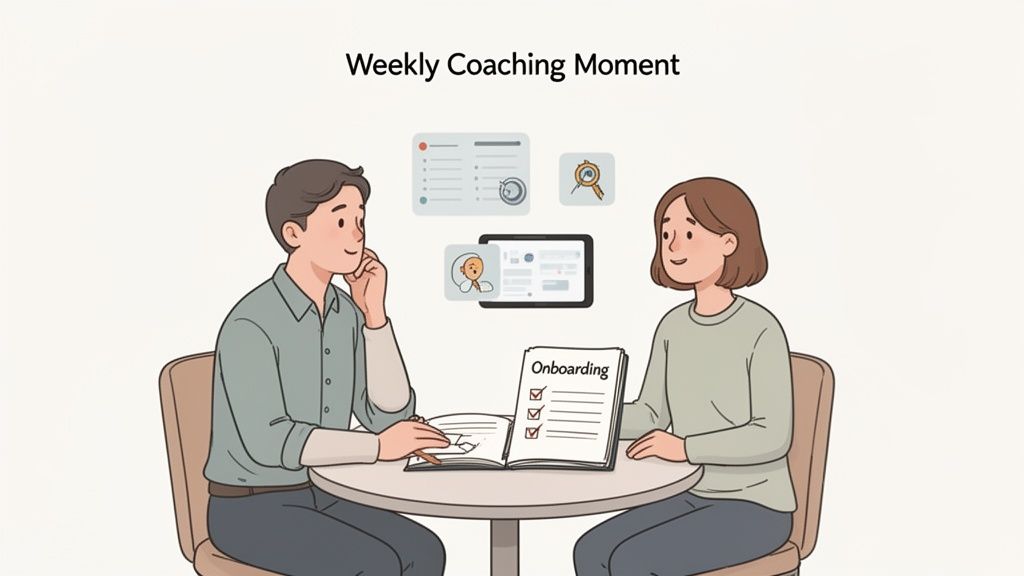
A Simple Coaching Cadence
Most weekly check-ins are just status updates. They’re about what got done. A real coaching conversation is about how your team member is doing and where they want to go next.
Here’s a simple framework for a 15-minute weekly check-in that actually helps people grow:
One Win: Start by asking, "What was a win for you this week?" This prompts them to reflect on their own successes. It’s a powerful way to start on a positive note.
One Challenge: Next, ask, "What was the trickiest part of your week?" This opens the door to discuss roadblocks without making them feel like they failed.
One Priority: Finally, look ahead. "What’s the most important thing for you to nail next week, and how can I help?" This simple question shifts the focus forward and positions you as a supporter, not just a boss.
You're not there to solve their problems. You’re there to create a safe space where they can think out loud and know you’ve got their back. This consistent rhythm builds trust faster than any team-building event ever could.
The most powerful tool a leader has is their calendar. If coaching isn't scheduled, it doesn't happen.
A tool like Pebb can make this routine automatic. You can set up a shared Space for your one-on-ones to keep notes and action items in one spot. A quick task can remind you both of the talking points, turning a good intention into an unbreakable habit.
Onboarding for Humans
Let's talk about day one. Too often, onboarding is a soul-crushing blur of HR paperwork and compliance videos. It feels designed to protect the company, not welcome a person.
A great leader flips that script. They focus on connection first, compliance second.
A human-centric onboarding checklist prioritizes belonging from the start:
A Personal Welcome: Before their first day, send a quick message. Introduce yourself and say you're excited to have them on the team. It’s a small touch that makes a huge difference.
Their First-Day Buddy: Assign a peer—not you—to show them the ropes. This gives them a safe person to ask all the "stupid" questions they'd never ask their boss.
A Clear 30-Day Mission: Give them a small, achievable project they can own in their first month. This provides an early win and an immediate sense of purpose.
Scheduled Check-ins: Get those weekly coaching sessions on the calendar from day one. Show them their development is a priority from the moment they start.
You can manage this whole flow with a simple task list in Pebb. Assign the buddy, schedule the check-ins, and link to key documents in a Knowledge Library. This turns onboarding from a chaotic scramble into a calm, intentional experience that makes your new hire feel certain they made the right choice.
How Technology Can Help (Without Being Creepy)
Let’s be honest. Most "people management" software feels like big brother is watching. It’s all about tracking productivity and boiling human work down into cold metrics. It’s creepy, and it’s the fastest way to kill trust.
But here’s the thing: the right tools, used the right way, can be a leader’s best friend. They can help you connect, communicate, and coach more effectively—without getting in the way of the human relationships you’re trying to build.
The goal of technology isn't to replace the leader. It's to get the administrative nonsense out of the way so the leader can focus on their people.
Creating a Home for Your Team
One of the biggest headaches for frontline teams is the chaos of communication. Messages get lost in group texts, important updates are scribbled on a whiteboard, and people on different shifts feel like they're in another world. This is where a dedicated digital space is a game-changer.
A tool like Pebb lets you create a shared Space that acts as a digital home base for your team. It’s a single place for conversations, announcements, schedules, and key documents. This isn't about surveillance; it's about clarity. When everyone knows where to find information, it builds the psychological safety we talked about earlier.
No one has to worry about missing a critical text. It creates a calm, organized environment where people can focus on the work itself.
Technology That Builds Culture, Not Walls
Culture isn't built at the annual holiday party. It's forged in the small, daily interactions that make people feel seen and connected. News feeds and employee profiles can help you build this culture across shifts and locations.
When a team member shares a quick photo of a customer win or you post a public shout-out recognizing great work, it reinforces that you’re all in this together. It helps people connect on a human level.
This is especially critical when you consider the disconnect many frontline workers feel. Frontline workers make up 80% of the global workforce but often have 29% lower engagement than their remote peers. A stunningly low 23% have the digital tools they need to connect with their teams. You can learn more about closing this frontline skills gap and see how deep the problem runs.
Technology should be a bridge, not a barrier. It should bring people closer, not just monitor them from a distance.
Analytics, when used correctly, support this goal. Instead of spying on individuals, good analytics help you spot engagement trends across the team. You can see which groups are communicating well and which might feel isolated. It’s about understanding the health of your team, not policing their every move. If you're looking for ways to track team sentiment, check out our guide on employee engagement software.
Ultimately, the best technology amplifies your humanity. It automates the tedious parts of your job so you have more time and energy for the conversations and connections that truly define great leadership.
Measuring What Actually Matters
"You can't improve what you don't measure." It’s a classic for a reason. But it’s so easy to get caught measuring the wrong things—output per hour, adherence to schedule.
Let’s be honest, those are table stakes. They tell you if the basic work is getting done, but they reveal nothing about the health of your team. Real frontline leadership skills don’t show up on a productivity dashboard. They show up in your people.
Moving Beyond Vanity Metrics
If you want a real look at your impact, you have to look deeper. Set aside the easy numbers and focus on the KPIs that signal a strong, engaged team.
These are the metrics that tell the real story:
First 90-Day Turnover: This one is a gut punch. When new hires leave within three months, that’s not a hiring problem—it’s a leadership and onboarding problem. It’s a direct reflection of whether people feel supported from day one.
Team Absenteeism: Are people calling out sick often? High absenteeism is often a quiet protest, a sign of a stressful environment where people are burning out.
Simple Engagement Scores: You don’t need a massive annual survey. Quick, regular pulse checks give you a real-time read on team morale and catch issues before they fester. You can learn more about measuring employee engagement and find a method that works for your team.
The point isn't to create more reports. It's to give yourself an honest look at your own leadership so you can see where you need to grow.
The impact here is massive. Well-trained frontline leaders can boost their team's productivity by 20-30%. Organizations with strong leadership see 27% lower absenteeism and are 40% more likely to adapt to change—because their people are genuinely engaged. You can dig into more insights on the real cost of poor leadership at careertrainer.ai.
The Metrics of a Healthy Culture
Beyond those core numbers, a few other things can tell you a lot. Think about the ratio of positive to constructive feedback you’re giving. Is it balanced? Or do your people only hear from you when something goes wrong?
Another powerful indicator is the number of proactive ideas your team brings to the table. When people feel safe and valued, they don't just clock in and do the minimum. They think, they innovate, and they care enough to suggest a better way.
That’s what you’re really aiming for. Not just a team that hits its numbers, but a team that wants to.
Leadership Starts With Your Next Conversation
We’ve covered a lot—from core skills to practical frameworks. But here’s the thing: you don’t become a great leader by reading an article. Real leadership is forged in the small, everyday moments that are so easy to miss.

It all boils down to your very next conversation with a team member. That’s your starting line.
It’s in the choice to actually listen, not just wait for your turn to speak. It's about asking a curious, open-ended question instead of issuing another directive. It’s about showing you care about the person, not just the tasks they complete.
Leadership isn't a title. It’s a choice you make, over and over, every single day.
Developing these frontline leadership skills is a quiet, steady, human effort. It's the work that won't always fit on a spreadsheet, but it’s the most important work you'll ever do.
Your Questions About Frontline Leadership, Answered
Look, moving from player to coach is a huge leap. It’s natural to have questions. We hear these all the time.
What’s the single most important skill for a new frontline leader?
If I had to pick one, it’s active listening.
Think about it. Every other crucial leadership skill—coaching, building trust, solving problems—starts with truly hearing what your team is saying. And just as importantly, what they aren't saying.
New managers feel this pressure to have all the answers. The best leaders I’ve seen start by asking better questions, and then they get quiet and listen. It’s the fastest way to build trust.
We’re on a tight budget. How can we afford good training?
You don’t need expensive retreats. In fact, the most effective development isn’t an event; it’s woven into the daily work.
Start simple. Pair seasoned leaders with newer ones for peer mentoring. Create a simple resource library with one-page guides or checklists. The goal is to make learning a small, consistent part of the job.
The most powerful training doesn't feel like training. It feels like a better way to work.
A great start is to roll out a standard template for one-on-one meetings. This gives new managers a framework to practice on, turning a weekly meeting into a mini-training session. Small, consistent reps will always beat a big, one-off workshop.
My frontline managers are already swamped. They say they’re too busy for training.
I hear this all the time, and it’s valid. They are busy. The key is to stop calling it "training" and start showing them how it makes their job easier.
Help them connect the dots. Show them how five minutes spent coaching an employee today saves them thirty minutes fixing a mistake tomorrow. Demonstrate how clear communication stops drama before it starts, freeing up their time and energy.
My advice? Don't try to boil the ocean. Start with a small group of your most open-minded managers. Once they start seeing real changes—like fewer emergencies and people who stick around longer—their colleagues will start asking what their secret is.
Great frontline leaders aren't born; they're built. They are the bedrock of a healthy business. Pebb gives your managers the tools they need to communicate clearly, coach effectively, and connect with their teams—all in one place.
See how our all-in-one work app can help you build your next generation of leaders at https://pebb.io.
