
10 Real Ways to Have Fun at Work in 2026
Forget ping-pong. Discover 10 practical ways to make fun at work a reality for any team. Real ideas for frontline, office, and hybrid workplaces.
Dan Robin
Fun at work gets terrible advice.
Most companies still treat it like a side dish. Bring in pizza. Rent a photo booth. Make people show up to a happy hour after a ten-hour shift, then act surprised when nobody wants to be there. The problem isn’t that people dislike fun. The problem is that forced fun feels like work wearing a party hat.
That’s why so many “culture” efforts fall flat. The ping-pong table turns into furniture. The office trivia game excludes half the company. The free lunch is nice for a day, then people go right back to clunky schedules, poor communication, and managers who only speak up when something goes wrong.
Genuine fun at work doesn’t come from random perks. It comes from how the place runs.
When people know what’s going on, when they feel included, when they can talk to each other easily, when good work gets noticed, and when the work itself has a little energy and variety, fun shows up on its own. That kind of fun lasts longer than an event. It becomes part of the rhythm.
The research backs that up. A Quirks analysis on the benefits of fun in the workplace found a 68% correlation between fun and employee engagement. That’s not a case for more balloons. It’s a case for better systems.
I’ve seen the same thing on frontline and distributed teams. The teams with the strongest culture usually aren’t the ones spending the most on perks. They’re the ones making connection easy, appreciation visible, and participation possible for people on every shift.
That’s the part most lists miss. It’s easy to suggest “host a team lunch” when everyone works the same hours in the same building. It’s much harder, and much more useful, to design fun at work for nurses, warehouse crews, retail associates, restaurant staff, and hybrid teams spread across locations.
So let’s skip the fluff. These are ten practical ways to make work more enjoyable without making it fake.
1. Virtual Team Challenges
A good challenge gives people something to do together, that isn’t just more work.
Distributed teams particularly benefit from this approach, more than people realize. If your staff is split across stores, clinics, warehouses, or shifts, they need shared moments. Not just announcements from management. Shared participation.
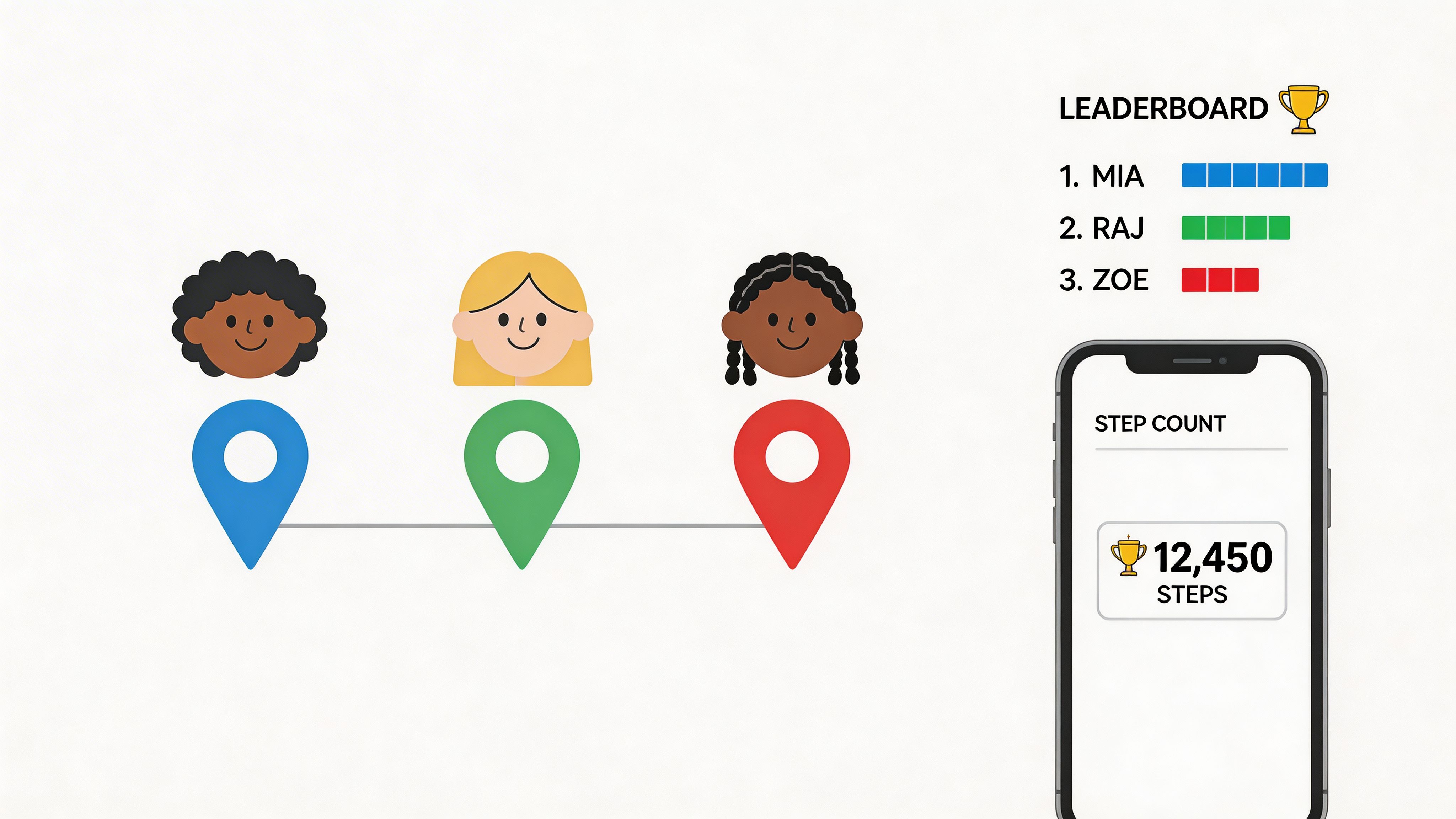
A step challenge is the obvious example, but it’s hardly the only one. Hospital teams can run walking challenges across departments. A retail group can do a product knowledge contest. A warehouse can run a forklift safety streak challenge. A logistics support team can do a friendly response-time contest, as long as quality stays in the picture too.
Keep the stakes low and the participation wide
The mistake is making challenges too serious. If the same three competitive people always win, everyone else checks out.
Use a few simple rules:
Make room for different strengths: Mix wellness, knowledge, creativity, and teamwork challenges so one kind of person doesn’t dominate every round.
Reward participation too: Celebrate consistency, improvement, or team spirit, not just first place.
Rotate the groups: Cross-location teams help people meet coworkers they’d never otherwise talk to.
If you need ideas, these virtual team building activities are a solid starting point, especially when you need something that works across locations.
A tool like Pebb makes this much easier to run. Give the challenge its own Space. Post updates in the company feed. Let team leads share photos, standings, or quick check-ins. The point isn’t to build a perfect leaderboard. The point is to give people a reason to root for each other.
Practical rule: If a challenge needs a long rules document, it’s too complicated.
You can also borrow simple formats from classic games for team building and adapt them for mobile, shift-based teams. The best ones are easy to join, easy to understand, and don’t punish people for missing a day.
2. Peer Recognition Programs
Fun at work usually breaks down when appreciation only comes from the top.
A monthly award from leadership has its place, but it misses the moments that shape a shift. Coworkers see the work in action. They see who calms down an angry customer, who stays an extra ten minutes so the next crew is not walking into a mess, and who helps a new hire without being asked.
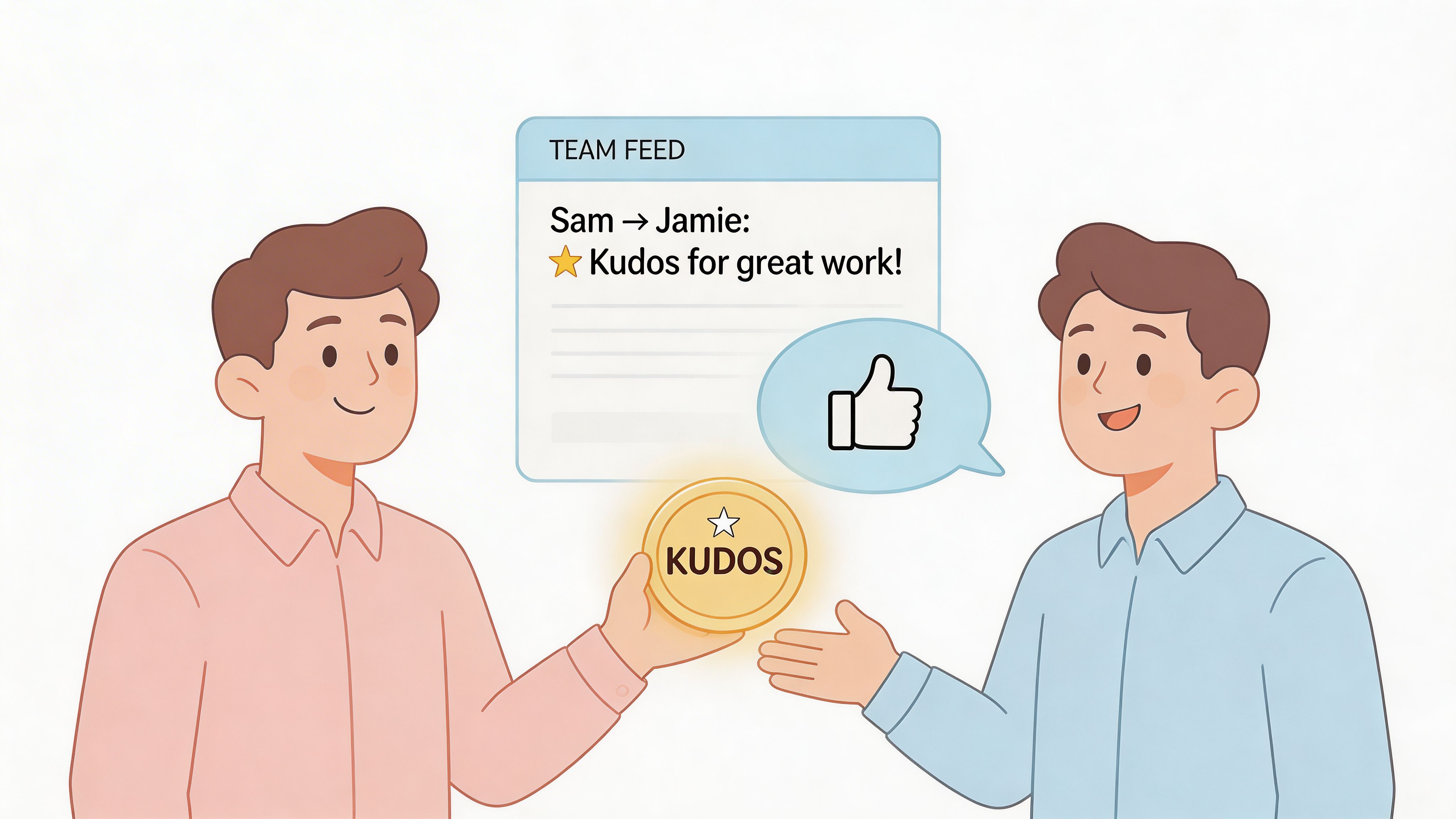
That is why peer recognition tends to feel more honest. It is closer to the work, closer to the pressure, and usually closer to the values you want the team to repeat.
The key is specificity. Generic praise fades fast. Useful recognition names the action and the impact.
“Great job today” is fine. “Thanks for catching the labeling error before the pallets went out. You saved the team a rework headache” is better. It teaches people what good looks like while making the person feel seen.
For frontline, shift-based, and distributed teams, the system has to be easy to use in the middle of a day. If it depends on forms, approvals, or a desktop login, participation drops. A quick post in a shared feed, team chat, or dedicated recognition Space works better because people can do it right after the moment happens.
If you are designing the program from scratch, these employee recognition program ideas give you a practical starting point.
A few ground rules make the difference:
Praise the behavior, not just the personality: “Handled a difficult handoff calmly” is more useful than “rockstar.”
Keep rewards small and fair: A coffee card, meal voucher, or first pick of shifts can work. Overdo prizes and people start playing for points instead of appreciation.
Build for every role: Housekeeping, drivers, line cooks, techs, and field staff should show up in the stream as often as office teams.
Set a simple cadence: Team leads should model it every week until the habit sticks.
Aim for recognition to be a daily habit, not an annual ceremony.
In Pebb, that can live in the company feed, team chats, or a recognition Space that each location can use without extra admin work. The useful part is not the feature itself. It is the visibility. People start seeing examples of help, initiative, safety, patience, and follow-through across teams that rarely share the same room.
Recognition also helps reduce a common source of workplace strain. People burn out faster when good work disappears into silence. Stronger appreciation habits work well alongside broader workplace stress management strategies, especially in environments where the pace is high and the wins are easy to miss.
3. Practical Wellness Support
Bad wellness programs create more cynicism than no program at all.
Frontline and shift-based teams spot the difference fast. A mindfulness poster in the break room does nothing for the nurse coming off a rough shift, the warehouse crew covering weekends, or the field tech eating lunch in a van. If people are drained, isolated, or constantly rushing, “fun at work” will feel fake because they do not have the capacity to enjoy it.
Practical wellness support helps in a more direct way. It lowers friction in hard weeks, gives people useful options in the moments they need them, and shows that leadership understands how work really feels on the ground.
For these teams, the strongest wellness support is usually simple:
On-demand resources: Short audio sessions, stress guides, sleep tips, and recovery advice people can use before a shift, after a shift, or on a break.
Private support spaces: A place to ask for help, share coping habits, or find resources without turning it into a public performance.
Shift-aware access: If every workshop, Q&A, or check-in happens during office hours, large parts of the workforce are excluded by design.
Low-pressure social options: Walking challenges, quiet reset rooms, hydration reminders, or light humor channels often work better than another forced happy hour.
I have seen this go wrong in a predictable way. HR builds a polished program. Office staff can attend. Everyone else gets an email they cannot act on. That is not a wellness strategy. It is a visibility problem dressed up as support.
In Pebb, this can live in a private Space, a knowledge library, and an events calendar set up around actual shift patterns. Teams can pin local resources, share manager-approved support guides, and keep useful materials accessible without making people hunt for them. If you are also trying to build habits of peer learning around stress, recovery, and better day-to-day practices, this guide on creating a knowledge-sharing culture at work is a useful complement.
Design wellness programs to be accessible to all shifts, not just office staff.
That also means training managers. If supervisors cannot spot burnout, dismiss fatigue as attitude, or make people feel punished for using support, the program fails no matter how good the resources look on paper. Good wellness support is partly content, but it is also permission, timing, and trust.
For a practical outside read, these workplace stress management strategies point in the right direction.
4. Internal Skill-Sharing Sessions
Fun at work gets more real when people leave a shift knowing something useful they did not know before.
That matters even more in frontline and distributed teams, where good ideas often stay trapped inside one location, one shift, or one experienced employee’s head. A line cook finds a faster setup for the dinner rush. A charge nurse has a phrasing trick that settles tense family conversations. A warehouse lead has a cleaner handoff process that cuts avoidable mistakes. If nobody shares those lessons, the team keeps relearning the same things the hard way.
The best sessions are practical, short, and led by people who do the work. That is what makes them enjoyable. They respect people’s time, improve performance, and signal that expertise does not only sit with managers or trainers.
Keep the format simple.
A 15 to 20 minute session once a month is enough to start. Ask each team to share one tactic, one shortcut, or one lesson from a recent problem. Focus on material people can use on their next shift, not broad career advice or polished slide decks.
A few rules help:
Keep it useful: Start with skills that save time, reduce errors, or make the day smoother.
Make it accessible: Live sessions alone exclude shift workers. Save notes, recordings, or quick summaries in one searchable place.
Rotate the teachers: Let peer leaders, experienced operators, and newer employees with fresh ideas all contribute.
Give managers a filter: Not every workaround should become shared practice. Supervisors should confirm what is safe, accurate, and worth repeating.
This habit strengthens culture in a way perks never do. People start recognizing each other for judgment, experience, and problem-solving. That creates connection without forcing it. If you want a practical framework for making that routine, this guide on building a knowledge-sharing culture at work is worth using.
Pebb helps with the execution. Teams can schedule sessions, post prompts in Spaces, save recordings and quick-reference notes in the Knowledge Library, and keep location-specific tips available for the people who miss the live discussion. That matters in shift-based workplaces, where the biggest failure point is rarely enthusiasm. It is access.
One caution. Do not let these sessions turn into unpaid extra work for the same reliable people every month. Give contributors time, recognition, and a clear format. Otherwise the program starts as fun and ends as another burden.
5. Hybrid and Virtual Social Events
Social events help. They just rank lower than managers assume.
For frontline, shift-based, and distributed teams, the failure is rarely the idea itself. The failure is the setup. The event starts too late for one shift, requires cameras for people joining from a break room or a bus ride home, and lives across too many tools. What should feel light starts to feel like work.
Good hybrid social events respect real constraints. Keep them short. Make joining simple. Let people participate without performing for the group. A 20-minute trivia round between locations, a themed photo challenge, a holiday drop-in chat, or a quick end-of-month celebration can work well when people can enter easily and leave without awkwardness.
Optional matters.
Ensure social events feel optional and enjoyable, not like mandatory attendance.
That standard is even more important outside office-heavy teams. Night crews, field staff, part-time workers, and remote employees already miss enough informal contact. If every social activity is built around one time slot and one format, the same people keep getting included and the same people keep getting left out.
A few operating rules improve the odds:
Rotate times: Spread events across shifts and time zones instead of always favoring daytime staff.
Offer low-pressure formats: Not everyone wants live video. Use chat-based games, photo prompts, async contests, or short voice notes too.
Keep one home base: Put the invite, schedule, reminders, and follow-up in one place so people do not have to chase links.
Design for exit: People should be able to join late, leave early, or just watch without being singled out.
Pebb helps with the mechanics. Teams can create a Space for the event, post updates, share the join link, collect photos or reactions afterward, and keep the conversation available for people who were working during the live version. That follow-through often does more for connection than the event itself, especially in distributed teams where shared moments disappear fast.
What usually falls flat is predictable. Long sessions. Forced icebreakers. Inside jokes from headquarters. Activities that depend on fast talkers or strong Wi-Fi. Fun at work gets more believable when the format respects how people work.
6. Simple Gamification Systems
Gamification gets abused.
The bad version is childish, manipulative, and exhausting. Too many points. Too many badges. Too much noise around metrics people barely control. Nobody wants their job turned into a mobile game designed by committee.
The good version is much simpler: Clear progress, visible wins, small moments of momentum.
Use game mechanics where work is repetitive or invisible
Fun at work can become useful here instead of gimmicky.
In repetitive environments, people often lack feedback. They don’t know if they’re improving. They don’t see progress. A simple badge for training completion, a visible streak for safety checks, or a team challenge tied to service quality can add energy without becoming silly.
There’s also some support for using play directly in the work itself. Cerkl’s write-up on employee engagement activities highlights a study on playful work design, which found that adding fun and competition into routine tasks can lift engagement and performance, with cited gains in the 15% to 20% range. I wouldn’t treat that as permission to gamify everything. I’d treat it as a reminder that work can be designed with more energy than most companies bother to create.
A few rules keep this healthy:
Keep the rules obvious: If people can’t explain the system in one minute, simplify it.
Balance team and individual wins: Purely individual leaderboards can turn ugly fast.
Tie rewards to things that matter: Safety, learning, reliability, helpfulness. Not just speed.
Pebb can support this with profile badges, team Spaces, public celebration in the feed, and analytics to see whether people are engaging with the format.
Gamification should add clarity. Once it starts adding pressure or pettiness, cut it back.
7. Employee Resource Groups
Not all fun looks like games or events.
Sometimes it looks like finally finding your people at work.
That’s what strong employee resource groups do. They create spaces where people can connect around identity, experience, or shared challenges. Parents. Women in leadership. LGBTQ+ staff. New managers. Cultural communities. Frontline safety champions. Any group that helps people feel less alone in a big organization.
Belonging is part of enjoyment
This is especially important in large, multi-location businesses where people can feel interchangeable. If your staff never sees anyone like them in leadership, or has no place to talk about what work feels like for them, “fun at work” will sound hollow.
Good ERGs do more than host occasional events. They build continuity. Members can share advice, mentor each other, flag problems early, and create social connection that doesn’t depend on a formal org chart.
The biggest mistake is treating ERGs like unpaid side labor. If leadership wants them to matter, leadership needs to back them. Give them budget. Give them visible support. Give them safe spaces to talk.
For distributed teams, private Spaces inside a tool like Pebb make this much easier. People across sites and shifts can connect without waiting for a quarterly meeting. ERG leaders can organize events, share files, welcome new members, and keep conversations going in a secure place.
This isn’t a side issue. It connects directly to whether people enjoy showing up. Work is more fun when people don’t have to hide half of who they are to get through the day.
8. Quick Pulse Surveys That Lead to Action
Most employee surveys fail in the follow-up.
People answer candidly. Then nothing happens. Or leadership shares a vague summary and no next step. After that, every future survey feels pointless.
A quick pulse survey can help culture, but only if it leads to action people can see.
Ask less, respond faster
Short beats exhaustive here. A few smart questions asked regularly will tell you more than a giant annual survey that arrives after the damage is done. Engagement is still weak in many workplaces.
The best pulse surveys do a few things well:
They stay brief: People will answer five useful questions. They will dread fifty.
They protect honesty: If staff think responses can be traced back casually, they’ll sanitize everything.
They close the loop quickly: Share what you heard and what you’re changing.
For a hospital unit, that might mean asking about staffing friction, handoff quality, and manager support. For retail, maybe scheduling fairness and customer pressure. For logistics, safety communication and tool reliability. For restaurants, shift swaps and training.
In Pebb, quick polls and feed updates can make this loop visible. Ask the question, share the pattern, name the next step. That transparency does more for trust than the survey itself.
“We heard you, and here’s what changes next” is the sentence people wait for.
Don’t ask about everything. Ask about what you’re willing to improve.
9. Shift-Aware Social Initiatives
Office-hour culture leaves a lot of people out.
For frontline, shift-based, and distributed teams, the problem usually is not interest. It is timing. If the only social activity happens at lunch, during a daytime town hall, or right after a standard workday, overnight crews, weekend staff, and split-shift teams are excluded by design.
Good social planning starts with the schedule people work.
The strongest ideas here are asynchronous and lightweight. They let people join during a break, between handoffs, or at the end of a shift without needing everyone online at once. That matters on the front line, where coverage comes first and nobody wants "fun" that creates more operational pressure.
A digital watercooler Space can work well if it is built for real shift patterns. Day shift posts a photo from a customer win. Night shift adds their version six hours later. Weekend staff answers a prompt on Monday morning. The conversation still holds together because participation does not depend on perfect overlap.
A few approaches tend to work in practice:
Asynchronous challenges: Photo scavenger hunts, kindness chains, safety streaks, and weekly trivia rounds.
Shift-based spaces: Separate places for overnight, weekend, or regional teams to build identity without competing with the main office conversation.
Time-aware recognition: Post wins when those teams are working, not only during daytime meetings or headquarters updates.
Cross-shift rituals: A weekly handoff thread, a "what helped this shift" post, or a shared scoreboard that connects crews instead of isolating them.
There is a trade-off here. Shift-specific spaces can build pride fast, but they can also create silos if every group only talks to itself. The fix is simple. Keep a few spaces local to the shift, and a few shared across the whole organization so people see the bigger team too.
Pebb is useful for this because it fits mobile, deskless work. Team Spaces, feed posts, and schedule-aware communication make it easier to include people who rarely sit at a computer. That is the difference between a social initiative that sounds good in a planning meeting and one people on late shifts will use.
Respect is the fundamental standard. If every culture activity assumes office hours, employees on the edge of the schedule get a clear message about who the company had in mind.
10. Purpose-Driven and Volunteer Programs
Fun at work gets stronger when people can point to something that mattered.
That is why service projects often outperform polished culture perks. A team that packs meals, mentors students, cleans up a neighborhood park, or collects supplies for a local shelter usually leaves with something more durable than a few good photos. People remember that they did useful work together.
This matters even more in frontline, shift-based, and distributed teams. They do not all share the same office, schedule, or day-to-day routine. Shared purpose can connect them anyway, if the program is built for real operating conditions instead of corporate convenience.
A hospital unit might support a community clinic. A restaurant group might organize donations for a food bank. A logistics team might help move supplies for a local nonprofit. A retail chain might let each store back a cause in its own community while still tying the effort to a company-wide theme.
The trade-off is simple. Purpose programs build pride fast, but only if they are easy to join. If volunteering requires a weekday block, a long sign-up process, or manager approval that never comes, participation drops and the program starts to feel performative.
A few rules make these efforts work:
Let employees choose the cause: Interest rises when teams help shape the effort instead of getting handed a charity from headquarters.
Offer more than one way to participate: In-person events, donation drives, micro-volunteering, and skill-based support give shift workers and remote staff a fair shot at joining.
Make the result visible: Share photos, short reflections, impact updates, and thank-you notes so the experience feels real, not buried in an HR calendar.
Keep it local when possible: Local causes are easier to trust and easier for teams to care about.
Pebb can support this with a dedicated Space for sign-ups, schedules, location-specific updates, and post-event stories. That setup matters for distributed and deskless teams because people need one clear place to find details, confirm participation, and see what other sites are doing without chasing email threads.
The goal is not to bolt volunteering onto culture. The goal is to give people a way to contribute together that fits how they work. When that happens, fun stops feeling forced and starts feeling earned.
Comparing 10 Workplace Fun Initiatives
Initiative | 🔄 Implementation Complexity | ⚡ Resource Requirements | 📊 Expected Outcomes | ⭐ Key Advantages | 💡 Quick Tip / Ideal Use Cases |
|---|---|---|---|---|---|
Virtual Team Challenges | 🔄 Medium, 1–2 weeks setup | ⚡ Medium, Pebb Space, leaderboards, comms | 📊 Higher engagement, wellness behaviors; trackable participation | ⭐ Builds camaraderie; mobile-first; measurable | 💡 Keep low-stakes, rotate teams; best for distributed/frontline teams |
Peer Recognition Programs | 🔄 Low, ~1 week launch | ⚡ Low, platform features, minimal budget | 📊 Improves morale & retention; visible culture boost | ⭐ Low-cost, high-impact on belonging | 💡 Encourage specific, value-aligned kudos; monitor bias; for all teams |
Practical Wellness Support | 🔄 High, 4–8 weeks (partners) | ⚡ Medium–High, EAPs, professional content, confidentiality | 📊 Reduces burnout & sick days; improves productivity | ⭐ Prevents burnout; demonstrates company care | 💡 Offer on-demand content & private Spaces; ideal for high-stress frontlines |
Internal Skill-Sharing Sessions | 🔄 Medium, 2–3 weeks setup | ⚡ Low–Medium, staff time, basic video/recording tools | 📊 Builds skills, reduces silos, lowers training costs | ⭐ Scales internal expertise; strengthens peer learning | 💡 Record sessions, schedule multiple times; best for growing/multi-location orgs |
Hybrid & Virtual Social Events | 🔄 Low–Medium, 1–2 weeks per event | ⚡ Low, event coordination, video hosting | 📊 Strengthens culture & belonging; boosts satisfaction | ⭐ Inclusive socialization across locations; cost-effective | 💡 Keep 45–60 min, offer multiple slots; great for distributed teams |
Simple Gamification Systems | 🔄 Medium–High, 3–4 weeks initial | ⚡ Medium, badge design, leaderboards, analytics, rewards | 📊 Increases motivation & engagement; measurable behavior change | ⭐ Provides clear goals & immediate feedback | 💡 Align badges to values, keep rules simple; effective for sales/service teams |
Employee Resource Groups (ERGs) | 🔄 Medium, 4–8 weeks governance | ⚡ Medium, exec sponsor, budget, leader training | 📊 Improves belonging, retention, leadership development | ⭐ Fosters inclusion, mentorship, business insights | 💡 Fund ERGs, assign sponsors; suited for large/diverse orgs |
Quick Pulse Surveys That Lead to Action | 🔄 Low, 1–2 weeks setup | ⚡ Low, survey tool + leader time to act | 📊 Real-time sentiment data; detects issues early if acted upon | ⭐ Rapid, actionable insights that build trust | 💡 Keep 5–7 Qs, ensure anonymity, share results & actions quickly; for all orgs |
Shift-Aware Social Initiatives | 🔄 Medium, 2–3 weeks setup | ⚡ Medium, scheduling integration & async content | 📊 Increases engagement for shift workers; reduces isolation | ⭐ Inclusive asynchronous model for 24/7 teams | 💡 Integrate with schedules, design primarily async activities; ideal for 24/7 ops |
Purpose-Driven & Volunteer Programs | 🔄 Medium, 4–6 weeks (partners) | ⚡ Medium, nonprofit partnerships, coordination, tracking | 📊 Boosts purpose, engagement, employer brand | ⭐ Connects work to community impact; improves recruitment | 💡 Offer paid volunteer hours, partner with vetted nonprofits; best for purpose-driven firms |
Fun Is What Happens When You Get the Fundamentals Right
Fun at work gets misread all the time. Leaders treat it like an extra. They add a party, a contest, or a themed day, then wonder why the culture still feels flat a week later.
The better approach is operational. Fun shows up when work feels human, participation feels easy, and people can connect without jumping through hoops.
That matters even more in teams that do not share the same desk, shift, or schedule. Frontline staff, field teams, and distributed employees get left out first when culture depends on being in the room at the right time. If the plan only works for office hours, it is not a culture plan. It is a perk for one group.
The patterns are clear.
Recognition works when it is specific and timely. Social events work when they are optional and simple to join. Wellness support works when it fits real schedules. Skill-sharing works when the person teaching knows the job. Surveys work when leaders respond fast. ERGs work when they have support, not just a launch message. Gamification works when it reinforces useful behavior instead of turning work into noise.
The opposite is also predictable. Forced fun creates resistance. Alcohol-led bonding excludes people. Big annual events cannot fix a weak day-to-day experience. Scripted praise feels hollow. Surveys without follow-through train employees to stay quiet. Any culture effort that ignores shift workers sends a message, whether leaders mean to or not.
What holds all ten ideas together is consistency. Small actions, repeated in the right places, do more than occasional big gestures. A thank-you in the company feed. A challenge every shift can join. A quick poll with a visible response. A space where people in different locations can still learn from each other and feel included.
Tools help when they remove friction. Pebb is useful in that role because it puts communication, recognition, events, scheduling, knowledge sharing, tasks, and community spaces in one system. For a distributed or shift-based team, that matters. Culture gets harder to maintain when updates, praise, schedules, and participation live in five different apps.
Still, software does not create trust. Leaders do.
Set clear norms. Respect people’s time. Keep participation easy. Include every shift. Notice real work. Fund the groups and programs you say matter. Measure what people use, then adjust when something feels forced or gets ignored.
Do that well, and fun at work stops feeling like a campaign. It becomes part of how the team operates.
If you’re trying to make fun at work real for frontline and distributed teams, Pebb is worth a look. It gives you one place for communication, recognition, events, scheduling, knowledge sharing, and community across shifts and locations, without stitching together a pile of separate tools.
