
10 Questions to Ask Leadership That Actually Matter
Tired of surface-level meetings? Here are 10 strategic questions to ask leadership that drive real conversations about culture, tech, and growth.
Dan Robin
I've been in those meetings. The ones where leadership asks, “Any questions?” and the room goes dead silent. It’s not that people are clueless; it’s that we’re taught to focus on deadlines, tasks, and the small stuff. The real conversations, the ones that change how a company works, start with different kinds of questions.
These are questions about how we work, how we connect, and whether we’re building something that lasts. Over the years, I've seen that a few honest questions can unlock discussions most companies desperately need but don’t know how to start. This isn’t about challenging authority. It’s about being curious enough to build a better, smarter company.
Let’s be honest. Many of the biggest problems businesses face—from disengaged teams to operational chaos—aren't solved by another dashboard. They're solved by clarity. By alignment. By giving people the right tools to connect. A good conversation can uncover the root of a problem that a hundred status reports will only hide.
It all starts by asking better questions. The kind that lead to real answers.
Here are the questions we've found make the biggest difference. They aren't just for town halls. Use them in one-on-ones, team meetings, or planning sessions to point your company in a better direction.
1. How do we make sure everyone is on the same page when we're not in the same place?
This is where it all starts. When your teams are spread out, communication breaks. Information gets trapped in silos, messages get twisted, and people feel disconnected from the main office. This isn’t just a remote work problem. It’s a daily struggle for retail chains, hospitals, and any business with people who aren’t stuck to a desk.
Real alignment means everyone gets the right information at the right time. A policy change should hit every retail store at once. A critical update should reach every nurse on the floor instantly. Asking this question pushes leadership to think beyond scattered emails and chaotic group chats. It forces a conversation about building a single, reliable source of truth that works for everyone.
What to suggest
Create a central hub: A dedicated place for company-wide news and another for location-specific updates. This keeps vital information organized.
Use clear channels: Simple names like
#announcements-globalor#store14-updatescut through the noise.Set a rhythm: A regular, predictable update—a weekly win, a monthly note from the CEO—keeps the company culture alive across distances.
2. Are we measuring the right things?
This question pushes leadership to move beyond guesswork. Without clear metrics, "employee engagement" is just a buzzword. "Productivity" is a feeling. Leaders need to know what’s actually happening on the ground—whether it's a hospital tracking how staff use new safety gear or a retail chain seeing how fast new promotions are read.
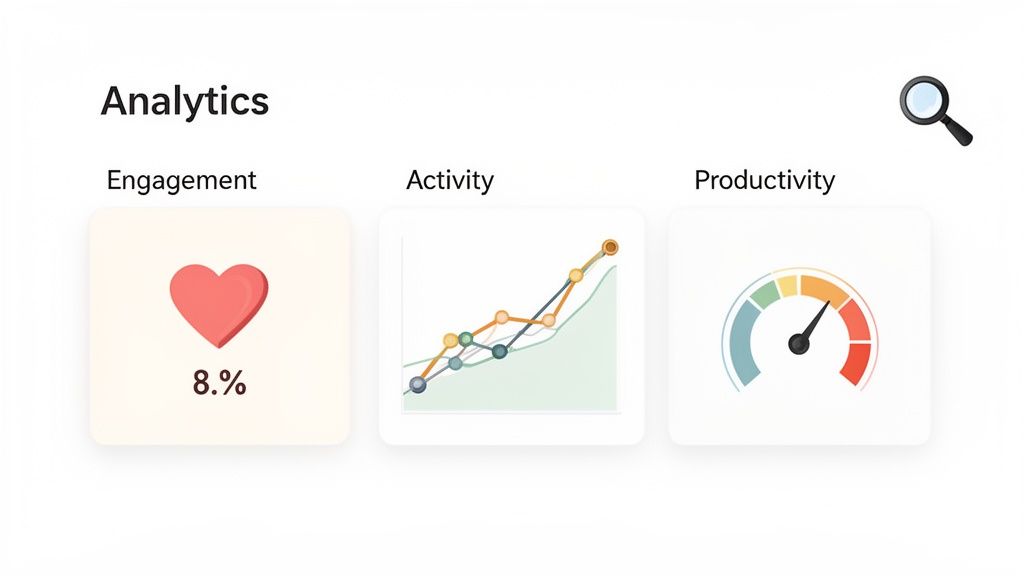
It’s about defining what success really looks like. Not just who clocks in, but what drives a healthy team. Are people talking to each other? Are they getting feedback? These are the leading indicators. High turnover is a lagging indicator; by then, it’s too late. This question forces a conversation about what actually drives performance and where to invest time and money to help your teams. For a solid approach, here's how to measure employee engagement without the fluff.
What to suggest
Look at leading indicators: Don't just track sales. Track how often people engage with company news or recognize a teammate. These behaviors often predict future success.
Give managers the data: Share anonymized dashboards so managers can see how their team is doing. This helps them spot problems before they fester.
Review it monthly: Metrics aren't set in stone. Look at them every month. Do they still make sense? Are you still tracking what matters?
3. How do we make sure day one is the same for everyone?
This is a huge operational question, especially in industries like retail, healthcare, and logistics where people come and go. When onboarding is a mess, you end up with a team that has different ideas about company rules, safety, and even your brand. New hires feel lost, and valuable knowledge walks out the door every time someone quits.
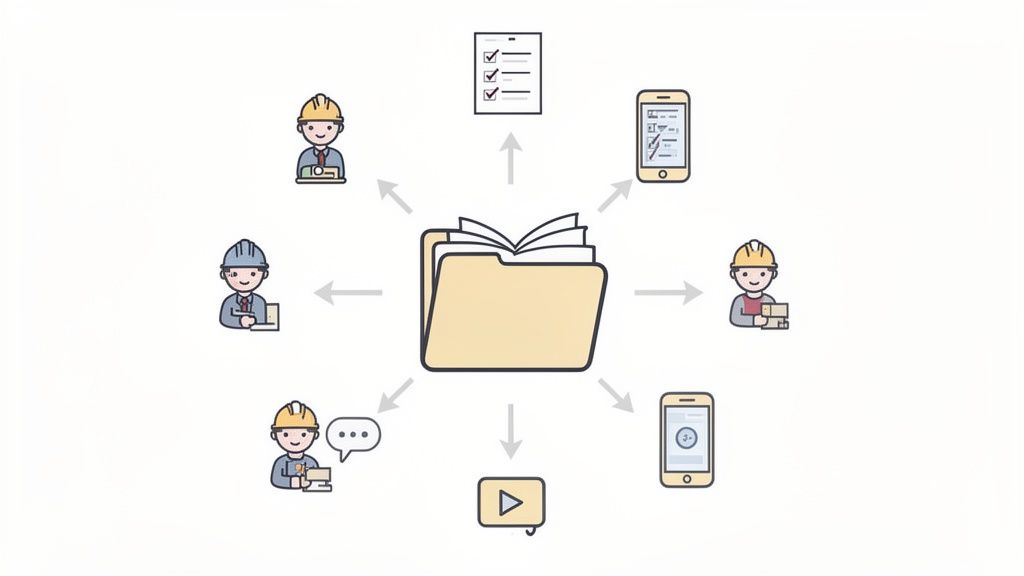
A good system means a new cashier in one store gets the exact same training as a cashier hired a thousand miles away. It means a nurse can pull up the latest protocol on their phone. It means a warehouse worker can watch a quick video on how to use new equipment safely. Posing this question pushes leadership to ditch the scattered PDFs and outdated binders for a living library of essential information that’s easy to find and update.
What to suggest
Build a knowledge hub: One place for all training materials, SOPs, and onboarding docs. Everyone works from the same playbook.
Use more than just text: Short videos, images, and simple quizzes make training stick, especially for people in a hurry.
Assign owners: Make someone responsible for keeping each document up-to-date. Set a recurring reminder for them to review it quarterly.
4. How does our culture reach the night shift?
Company culture is easy to feel when you're in the office from 9-to-5. But what about the overnight crew at a hospital? The early morning team at a retail store? When people are separated by walls and clocks, culture feels like an abstract idea that only a few people get to experience.
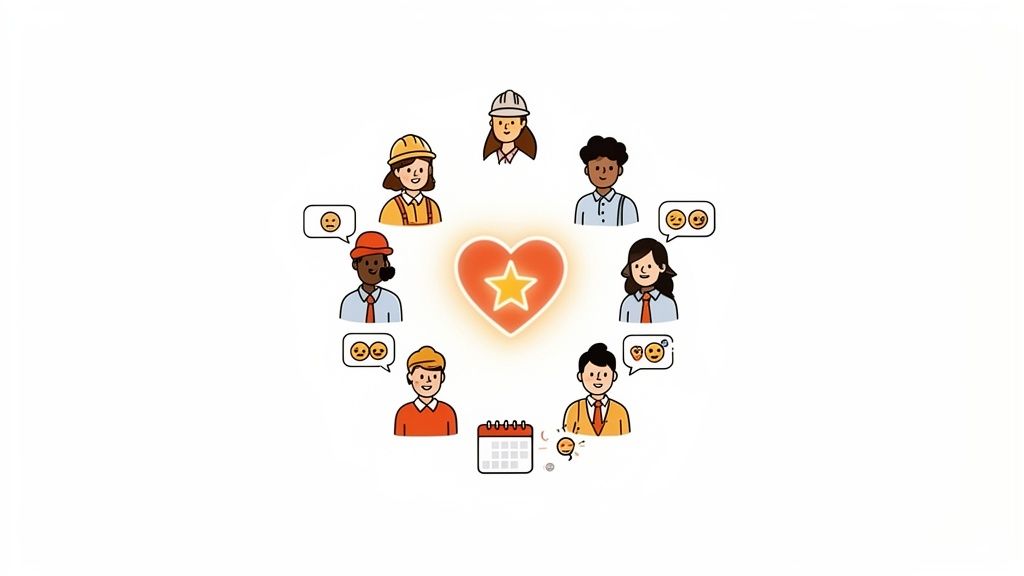
This question challenges leadership to see culture not as a perk, but as an intentional way to connect people. It’s about making every single employee feel seen and valued, no matter their schedule or role. Real culture isn't about free snacks. It's about shared experiences and celebrating the people who do the work.
What to suggest
Tell stories, don't just state values: Share real examples of employees living the company values. A story about a frontline worker who went the extra mile is more powerful than a poster on the wall.
Let people praise each other: A simple "shout-out" channel allows for immediate, authentic appreciation that builds morale from the ground up.
Create regular rituals: Start with a "Weekly Wins" post or a "Monthly Milestone" spotlight. Consistency is what turns an action into a habit.
5. Who owns the schedule?
For any business with a frontline workforce, this is about survival. Messy schedules, confusing time-off rules, and bad attendance tracking lead to chaos. It causes understaffed shifts, burned-out employees, and payroll errors. This isn't a back-office problem. It hits your customers when they're waiting in long lines or getting slow service.
Asking this forces leadership to see scheduling as a core part of the business, not just a chore. It’s about moving away from spreadsheets and text threads toward a single system that gives everyone clarity and control. It's about building an operational backbone that is fair, transparent, and efficient. If you want to dig deeper, here's a good resource on creating shift work schedules that work.
What to suggest
Put scheduling in one place: Use a single, mobile-friendly tool where people can see schedules, clock in, and ask for time off.
Make policies easy to find: Digitize your PTO and sick leave rules. Put them where anyone can find them without having to ask a manager.
Use data to staff smarter: Teach managers to look at attendance patterns. This helps them spot staffing gaps and plan for busy periods instead of just reacting.
6. How do we stay open without being insecure?
This is a big one. The dream is a single platform where everyone can communicate. That dream turns into a nightmare if sensitive data gets out. Finding the right balance between easy communication and tight security is a huge challenge, especially in fields like healthcare (HIPAA) or finance.
The conversation is about trust. Employees need to know their data is safe. Customers need to know their information is secure. This question pushes leadership to build a proactive security plan, not just react to problems. It’s about creating a system that’s both user-friendly and strong, so that access doesn’t come at the cost of security. Framing this in the context of cybersecurity priorities for boards shows you’re thinking about the big picture.
What to suggest
Use Single Sign-On (SSO): It simplifies life for everyone and makes it easier for IT to manage who has access to what.
Define who sees what: Create clear rules about access. Use roles to make sure people only see the data they need for their job.
Train your admins: Don’t just hand over the keys. Make sure administrators know how to manage permissions and spot weird activity.
7. How many apps are too many?
This question forces leadership to face the hidden cost of "death by a thousand apps." Many companies are drowning in a sea of disconnected tools. People waste time switching between Slack, Teams, email, and a half-dozen other things just to get their work done. This digital friction isn't just annoying; it creates confusion and burns people out.
Talking about tool consolidation is a strategic move. It shifts the conversation from adding another shiny app to building a simpler, more focused digital workplace. The goal is to reduce complexity, cut costs, and give people one place to do their most important work.
What to suggest
Audit your current tools: First, figure out what you have. Map out every tool, what it costs, and who uses it. Understanding 10 IT Asset Management Best Practices is a good place to start.
Map your most important work: Identify the core processes, like scheduling or company announcements. A unified tool has to do these things better than the mess it replaces.
Pilot with one team: Instead of a company-wide shock, test a consolidated platform with one department. You can work out the kinks and build a success story.
8. How do we help our managers lead?
Managers are the bridge between leadership’s vision and the team’s reality. A great manager makes a tough job feel rewarding. A bad one can ruin a great job. This question pushes leadership to treat management as a skill that needs development, not just a promotion you get. It’s a challenge to the "sink or swim" approach that burns out new leaders.
Good management isn't about hitting numbers. It's about coaching, communicating, and clearing roadblocks. Asking this question forces a conversation about building a support system for the people who are supposed to be supporting everyone else. It’s about giving them the tools, training, and data they need to lead well.
What to suggest
Give managers their own space: A private, dedicated place where managers can share challenges and learn from each other is invaluable.
Provide useful data: Give managers dashboards showing team engagement and communication patterns. Teach them how to use this data to have better one-on-ones.
Offer simple templates: Don't make managers reinvent the wheel. Give them templates for common tasks like setting goals or giving feedback.
9. How do we reach the people who aren't at a desk?
This is one of the most practical questions you can ask today. For retail associates, warehouse staff, and nurses, the "digital workplace" is a myth. Their office is the sales floor or the patient's room. Old-school tools like email and intranets are useless for reaching them, leaving them disconnected and in the dark.
This question forces a shift from a desktop-first to a mobile-first mindset. It's about meeting people where they are. It’s not about shrinking a desktop app to fit a phone. It's about building an experience designed for a quick glance and immediate action. The goal is to give every employee equal access to information. Here's more on why the frontline employee experience needs a mobile-first approach.
What to suggest
Design for the real world: Your mobile tool should work on older phones and slow connections. Test it in a place with bad Wi-Fi.
Use notifications sparingly: Use them for truly urgent messages, like a last-minute schedule change or a safety alert. Not for a new blog post.
Have a clear device policy: Will you provide phones? Offer a subsidy for personal devices? Clarity here is key.
10. How will we know if this is working?
Here’s a hard truth: a new tool is worthless if nobody uses it. Launching new tech and hoping for the best is a recipe for wasted money and frustrated people. Success isn't about the launch; it’s about what happens in the weeks and months after. This question pushes leadership to be engineers of change, not just buyers of software.
Good change management means having a clear plan to guide people from the old way to the new one. It means having a support system, not just sending login invites. It means measuring what's happening so you can help the teams that are struggling.
What to suggest
Find your champions: Identify enthusiastic early adopters in each location and help them help their peers. Their support is more powerful than any memo.
Offer different kinds of training: Short videos, live Q&As, and clear guides. Not everyone learns the same way.
Monitor and step in: Watch adoption rates. If a store is lagging, you can provide targeted support before it becomes a big problem.
Comparison of 10 Key Leadership Questions
Item | 🔄 Implementation complexity | ⚡ Resource requirements | 📊 Expected outcomes | 💡 Ideal use cases | ⭐ Key advantages |
|---|---|---|---|---|---|
Improve communication & alignment across distributed teams | Medium–High: org-wide adoption, permissions, legacy integration | Moderate: platform, mobile rollout, training | Consistent messaging; faster critical info cascade; better engagement metrics | Retail, healthcare, logistics with dispersed frontline staff | Reduces miscommunication; real‑time sync; unified culture |
Metrics to track employee engagement & productivity | Medium: analytics setup, privacy controls | Moderate: dashboards, data pipelines, legal/privacy support | Data‑driven decisions; early detection of disengagement; ROI measurement | Leaders needing cross‑location performance insights | Actionable insights; compare teams/locations; measure impact |
Consistent onboarding & knowledge sharing | Medium: large documentation effort and governance | Moderate–High: content creation, owners, HR integration | Shorter onboarding; improved compliance; self‑service learning | High‑turnover & multi‑site organizations (restaurants, hospitals) | Single source of truth; lower training costs; consistent procedures |
Build & maintain company culture across shifts/locations | Medium: ongoing leadership commitment & rituals | Low–Moderate: content, events, recognition tools | Increased retention and satisfaction; higher discretionary effort | Shift‑based workplaces needing belonging (retail, healthcare) | Boosts retention; fosters belonging; scalable recognition |
Manage shift scheduling, time‑off & attendance | Medium: workflow design, legal/union compliance | Moderate: scheduling system, mobile clocking, payroll integrations | Reduced admin time; better coverage; fewer payroll errors | 24/7 operations: hospitals, warehouses, restaurants, retail | Improves staffing accuracy; enables shift swaps; PTO control |
Ensure information security & compliance | High: permissions architecture, SSO, audits | High: security tooling, IT/legal resources, monitoring | Reduced breach risk; regulatory compliance; audit trails | Regulated industries (healthcare, finance, multinational) | Protects sensitive data; accountability via logs; compliant access |
Reduce tool proliferation & consolidate tech stack | High: migration, change management, integration mapping | High: migration effort, IT support, pilot programs | Lower software spend; less context switching; unified data view | Enterprises using many disconnected tools (Slack/Asana/etc.) | Simplifies IT; improves UX; centralizes admin/security |
Improve manager effectiveness & leadership capabilities | Medium: training programs + analytics enablement | Moderate: dashboards, templates, training resources | Better manager decisions; proactive support; accountability | Organizations focused on people leadership and retention | Enhances coaching; reduces admin load; ties metrics to outcomes |
Leverage mobile tech for frontline workers | Medium: mobile‑first design, offline & push support | Moderate: native apps, testing on low bandwidth devices | Greater reach to frontline staff; faster alerts; improved ops | Frontline workers without desktops (stores, floors, warehouses) | Reaches phones; offline functionality; quick actions (QR/clock‑in) |
Measure & improve adoption, training effectiveness, change mgmt | Medium–High: sustained change management effort | Moderate–High: adoption analytics, training, local champions | Higher adoption rates; demonstrated ROI; reduced support costs | Platform rollouts across multiple locations/roles | Identifies barriers; targets support; accelerates value realization |
It Starts With a Question
This isn't really an article about a list of questions.
It's about a commitment to curiosity. It's about a company that refuses to accept "that's just how we do it" as an answer. Each one of the questions to ask leadership we've walked through is a tool to open a specific door. Behind one, you might find a disconnect between your stated values and your team's daily experience. Behind another, you might discover your managers are burning out because they're juggling six different apps to communicate a single shift change.
The real value isn't in asking every question. It's in picking the one that speaks to the biggest problem you feel right now, and having the courage to start a real conversation about it. The answers will be your roadmap. They will point you toward the gaps, the inefficiencies, and the untapped potential in your company.
From Asking to Acting
Here’s the thing: asking is just the first step. Follow-through is what separates great companies from the ones that just talk a good game. When someone asks how to improve communication and a real change follows, you build trust. When a manager questions the mess of tools they have to use and leadership responds by simplifying things, you build loyalty.
This is where ideas become action.
Ask a good question. Uncover a problem.
Listen to the answer. Really listen.
Act on what you learned. Make a tangible change.
Tell people what you did. Show them they were heard.
When people see that their questions lead to progress, they start asking better ones. They get more invested. A culture of curiosity becomes a culture of continuous improvement. This is how you build a company that doesn't just survive change, but gets better because of it.
The most successful companies we work with aren't the ones with all the answers. They are the ones who have built a safe way to keep asking the right questions to ask leadership. They've made curiosity a part of how they operate.
What will you ask next?
The questions in this article are the ones that led us to create Pebb. We saw how disconnected tools for communication, scheduling, and training were making work harder for everyone. If you’re ready to move from asking questions to building the answers, see how a single, calm platform can bring your entire operation together. Find out more at Pebb.
