
Why Your Digital Transformation Roadmaps Keep Failing
Tired of digital transformation roadmaps that collect dust? Learn how to build a simple, human-centered plan that your team will actually want to follow.
Dan Robin
Let's be honest. The phrase ‘digital transformation’ is tired. It feels like a corporate buzzword that should have retired a decade ago. But a good digital transformation roadmap isn’t about buying new tech; it’s about rethinking how work gets done. The trouble is, most of them are designed to fail from the start.
Your Roadmap Is Pointing The Wrong Way
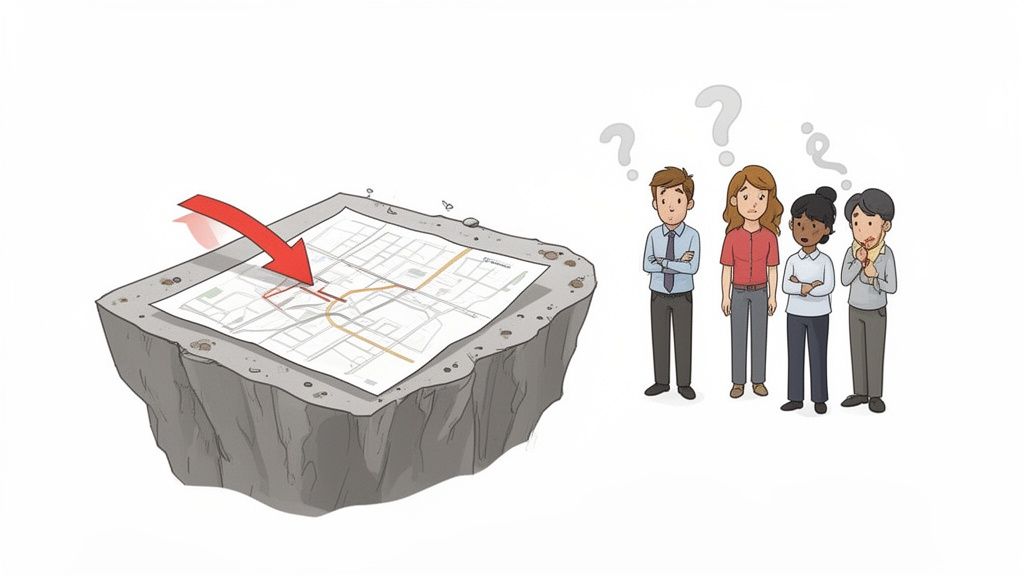
We’ve all seen it. A company sinks a fortune into some shiny new platform, complete with a complex roadmap full of jargon and endless Gantt charts. It gets presented in a big meeting, everyone nods, and then… nothing. The software sits there, collecting digital dust.
So what gives? These roadmaps are almost always built in the wrong place, by the wrong people, and for the wrong reasons. They’re dreamed up in a boardroom, detached from the daily reality of the teams who are supposed to use the new tools. They get obsessed with features, not feelings. With systems, not solutions to real, human problems.
The Disconnect Between the Plan and the People
The numbers tell a story that’s hard to ignore. Globally, 70% of companies either have a digital transformation strategy or are working on one. And yet, a stunning 70% of those initiatives fall flat because of poor execution. The plan forgets the most critical piece of the puzzle: your people. You can discover more insights about these digital transformation statistics here.
A roadmap that works is less a technical blueprint and more a human story—a clear, compelling narrative about where you’re going and why anyone should care enough to come along.
This was never about just installing new software. It’s about making work better, simpler, and more connected for every single person. Think about your frontline employees. Are they drowning in clunky, outdated processes? Do they have to juggle five different apps just to check their schedule or send a message to their manager?
Those are the problems a good roadmap is meant to solve.
Let's Reframe the Whole Conversation
Instead of starting by talking about technology, we need to start with people. A successful digital transformation roadmap isn't a top-down order. It's a shared vision built from the ground up. It begins by asking honest questions like:
What are the biggest daily frustrations our teams face?
How can we make communication less of a headache?
What would a genuinely better workday feel like for our people?
The goal is to improve the digital employee experience, creating a work environment that’s more intuitive and supportive.
When your roadmap puts solving these human challenges first, the technology becomes the obvious answer, not just another problem. It’s a subtle shift, but it makes all the difference.
What A Real Roadmap Actually Looks Like
Let’s get one thing straight. A real digital transformation roadmap isn’t a 40-page PowerPoint deck that puts everyone to sleep. It’s certainly not a project plan that gets filed away after the kickoff meeting.
A roadmap that works is a shared story. It’s a vision that everyone in the company, from the front desk to the C-suite, can understand and get behind.
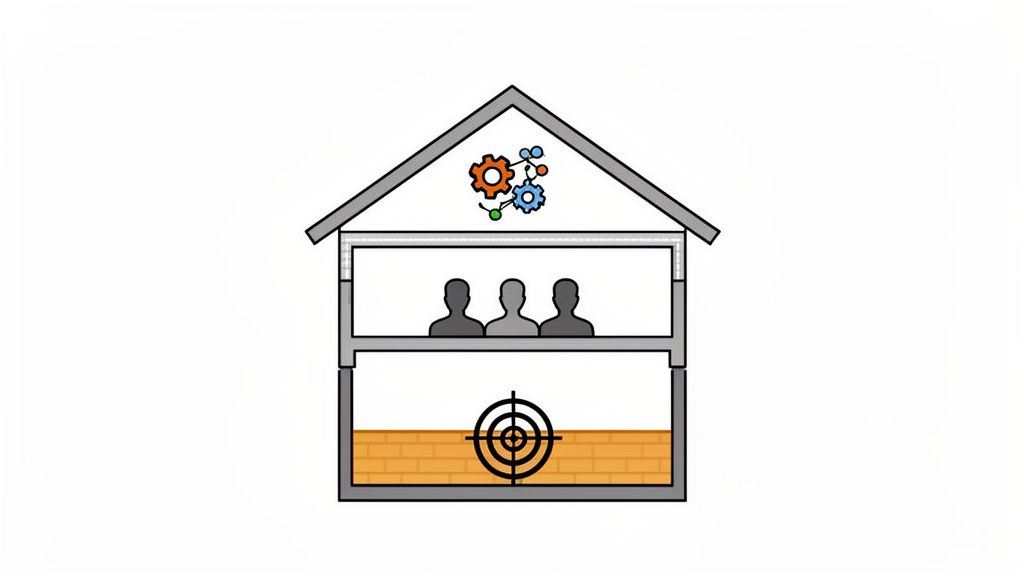
Think of it like building a house. You wouldn't start by arguing over the brand of the kitchen faucet. That's madness. You'd start with a solid foundation—the core problem you’re solving for the family who will live there. Then you'd frame the house—the major initiatives that give it shape. Only then do you worry about the wiring and plumbing—the technology that makes it all work.
Too many roadmaps start with the faucet.
The Foundation: Why It Matters
The first, most crucial part of any good roadmap is answering a simple question: Why are we doing this? If you can't answer that in one clear, jargon-free sentence, stop. The answer is never "to implement a new CRM." That’s a task, not a purpose.
A real "why" sounds human. It sounds like: "We’re doing this so our sales team can spend less time on paperwork and more time with customers." Or, "This will help our overnight shift communicate with the morning crew, so critical handoffs never get missed again."
A roadmap without a clear, human-centered 'why' is just a to-do list for technology. It has no soul, and people can sense that from a mile away.
Every single decision—every tool you consider, every dollar you spend—has to point back to that simple, foundational purpose. This isn't just fluffy talk; it’s the anchor that keeps your project from drifting into a sea of confusion.
The Structure: What We Will Do
Once you've poured the foundation, you can frame the structure. These are the big, visible changes you plan to make. Think of them as outcomes, not technical specs. A good roadmap groups these changes into logical phases that build on each other.
For instance, your structure might look something like this:
Phase 1: Fix Communication. We’re replacing our five chat apps and endless emails with one central hub for team updates. The goal: get the right information to the right people, every time.
Phase 2: Simplify Daily Work. We’ll roll out a mobile tool for schedules, time off requests, and clocking in. The goal: kill the paper forms and give everyone their time back.
Phase 3: Connect Our Knowledge. We’re building a single, searchable library for all our training docs and company policies. The goal: help new hires get up to speed faster and let veterans find answers without asking around.
See the pattern? Each phase is tied to a clear, human benefit. It tells a story of progress, not just a list of features.
The Systems: How We Will Do It
Finally, we can talk about technology. The systems—the software, the apps, the tools—are the how, not the what. They are enablers, not the destination. Once you've clearly defined your "why" and your "what," picking the right tools becomes ten times easier.
You’re no longer just shopping for software with the longest feature list. You’re looking for a specific tool that helps your people communicate better or genuinely simplifies their daily work.
With this approach, technology serves the roadmap, not the other way around. It turns a complex, tech-first project into a simple, people-first story. And a good story is something everyone can get behind.
The Four Pillars Of A Roadmap That Delivers
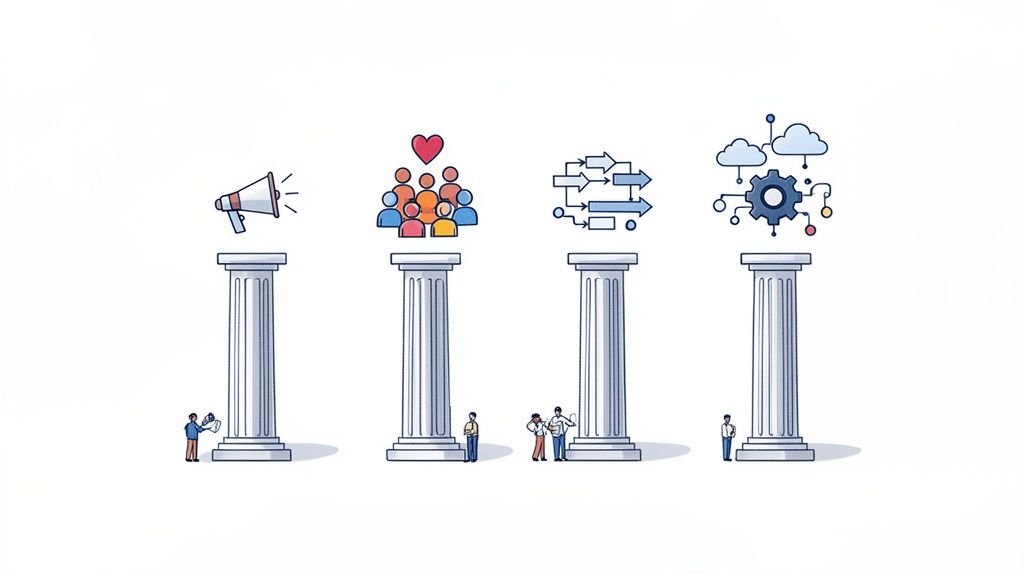
Let's get practical. A roadmap on paper is one thing. A plan people actually follow is another. We’ve found that the roadmaps that succeed aren't just about technology—they’re built on four sturdy, human-centered pillars.
Think of these as your guiding principles. They keep you grounded when the pull of shiny new tech gets strong. Get these right, and you're not just creating a plan; you're building a movement.
A roadmap built on this foundation stops being about software and starts being about improving how people work together. It’s a shift from a top-down mandate to a shared journey. Here's how these pillars work.
Pillar 1: Clarity And Communication
This is the bedrock. If your team doesn't get the "why" in simple, honest terms, your roadmap is dead on arrival. Forget jargon like "optimizing synergies."
The goal is to translate your vision into a language that resonates. It should sound like, "We’re doing this so you can check your schedule from your phone instead of a printed sheet in the breakroom." Simple. Direct. Meaningful.
Clarity means everyone knows where you’re going. Communication means you never stop talking about it.
Pillar 2: People And Culture
Here’s the thing about change: it’s personal. A new system isn't just a new system; it's a disruption to someone's daily routine. Roadmaps fail when they ignore this human reality.
You have to address the "what's in it for me?" question head-on. This pillar is about empathy—understanding the fears, frustrations, and hopes of your team. It involves listening more than talking.
A new tool that saves the company money but makes an employee's job harder isn't a win. It's a failure disguised as progress. The best technology should feel like a helping hand, not another burden.
Building buy-in means focusing on the human side of the equation. This is where you can dive deeper into the principles of change management to build genuine support.
Pillar 3: Process And Operations
Technology doesn't fix a broken process. It just makes the broken process run faster. Before you even think about software, look at your actual workflows. Where are the bottlenecks? What steps are redundant?
This pillar forces you to redesign how work gets done to be smarter, not just digitized. It's about questioning the old "this is how we've always done it" mentality.
Digitizing a clunky, paper-based approval form is a tiny improvement. A real transformation is asking why that approval requires five signatures in the first place and redesigning it so it only needs one.
Pillar 4: Technology And Tools
Notice this is the last pillar. That’s deliberate. Technology should always be the final piece of the puzzle, chosen to serve the people and the process, not the other way around.
The world is full of powerful tools, but power isn't the point—simplicity and usefulness are. The right tool is one that your team will actually want to use.
This people-first approach is more important than ever. A staggering 90% of organizations worldwide are deep in digital transformation, a trend driven by a digital economy set to claim over 20% of global GDP. With that kind of momentum, a human-centered strategy isn't just a good idea; it's essential.
How To Build Your Roadmap Step By Step
Alright, let's get practical. Moving from big ideas to actually doing something doesn't need to be a complex, consultant-led ordeal. You can build a roadmap that works with a bit of curiosity and a willingness to listen.
We're going to walk through a straightforward, five-step process. Think of it less like a rigid project plan and more like finding a rhythm for continuous improvement.
Step 1: Start By Listening
Before you write a single line of your roadmap, you have to talk to your people. Not just managers in conference rooms. I mean the folks on the front lines—the ones in the warehouse, behind the counter, or on the factory floor. They know where the real friction is.
Ask them simple, direct questions:
What’s the most frustrating part of your day?
Where do you feel like you’re wasting time?
If you could fix one thing about how we work, what would it be?
Listen for patterns. Are people constantly juggling too many apps? Is communication between shifts a headache? Are they drowning in paperwork? These aren't just complaints—they're your starting point. This is the raw material for a meaningful roadmap.
Step 2: Define The Destination
Once you’ve listened, you’ll have a clearer picture of the problems that matter. Now, you can shape that into a simple, compelling vision of what "better" looks like.
This isn't the time for buzzwords. Make it human. Your vision might be, "Our goal is a workday where every team member can find what they need on their phone in 30 seconds or less." Or, "We want to build a system where shift handoffs are so seamless that nothing ever falls through the cracks again."
This vision becomes your North Star. It’s the simple, powerful idea that will guide every decision and get everyone on board.
Step 3: Pick Your First Win
Big, ambitious plans can be paralyzing. Don't try to boil the ocean. The key to building momentum is to start small and prove this is more than just talk.
Look at the issues you uncovered and pinpoint one high-impact, low-effort change you can make quickly. This is your first win. It's tangible proof that this "transformation" thing is real.
Maybe it's consolidating three chat apps into one. Perhaps it's digitizing a single, annoying paper form. This first, small victory is incredibly important because it builds trust and shows your team you're serious about making their work life better.
A small, tangible improvement that people can feel is worth more than a hundred pages of strategic planning. It makes the future real.
Step 4: Choose The Right Tools
Notice that finding technology is step four, not step one. This is intentional. Only after you’ve listened, defined your destination, and picked your first win should you start looking at software.
When you do it this way, your search becomes focused. You're not just shopping for features; you're looking for a specific tool to solve a specific problem. You can ignore the flashy add-ons and zero in on what truly matters: simplicity and adoption.
Ask yourself: Will our team actually want to use this? Does it make their job genuinely easier, or just add another login to remember? Always choose tools that serve your people, not the other way around.
Step 5: Communicate, Train, And Iterate
You've identified your first initiative and chosen your tool. Now it's time to roll it out. As you get into the details, remember the importance of implementing robust project management practices to keep everything on track.
But a successful rollout isn't a one-and-done launch. It's a continuous cycle.
Communicate Clearly: Explain what’s changing, why it’s changing, and how it will help your team.
Train Patiently: Show people how to use the new tool. Make it easy and safe to ask questions.
Gather Feedback: Actively ask your team what they think. What’s working? What isn’t?
Iterate: Use that real-world feedback to make adjustments.
Then, you start the cycle all over again. You go back to listening, find the next problem, and pick your next win. This isn't a project with an end date; it's a rhythm of improvement. That's how real, lasting change happens.
Common Mistakes That Wreck Most Roadmaps
It’s one thing to draw up a roadmap. It’s another to make it a reality. I’ve seen countless well-intentioned plans fall apart, and it’s rarely because of a lack of budget. They usually stumble into the same predictable traps.
The good news? Once you can spot these pitfalls, you can steer clear of them. Success isn't about a more complex plan; it's about avoiding the simple mistakes that derail everyone else.
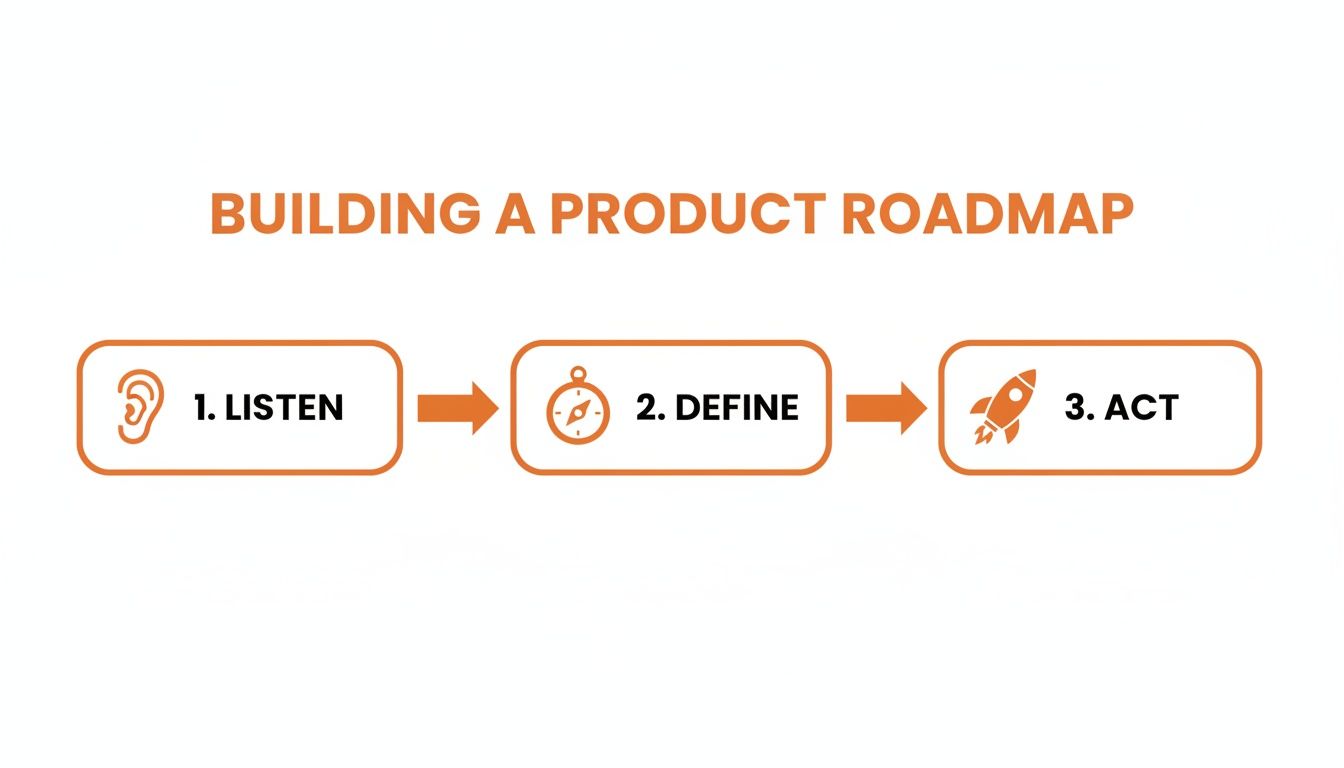
This illustrates that effective roadmaps are built on a continuous loop, starting with human feedback, not a tech wish list.
1. Chasing Shiny Objects
The first mistake is the most common: shiny object syndrome. It’s the magnetic pull of the latest technology—the new AI tool everyone’s talking about, or the platform a competitor just adopted. Leaders see a cool new piece of tech and immediately look for a problem it can solve. This is completely backward.
This approach puts technology before people. The result is almost always expensive software that nobody uses because it doesn’t make their job any easier.
The counter-strategy is simple but requires discipline: fall in love with the problem, not the solution. Start by understanding your team’s frustrations, then—and only then—look for the simplest tool that can help.
2. Imposing Top-Down Mandates
The second mistake is the top-down mandate. A small group of executives decides on a new direction, buys a system, and then announces it to the company as a finished decision.
This approach ignores the human side of change. It treats employees like cogs who will simply comply. But people don’t work that way. When change is forced on them without context or input, their natural reaction is resistance. They’ll see the new tool not as a helping hand, but as another burden.
The fix? Involve your teams from the very beginning. Ask for their input. Make them part of the selection process. When people feel heard, they become champions of the change, not obstacles.
3. Getting Lost in Measurement Paralysis
The third major pitfall is measurement paralysis. This happens when a roadmap gets bogged down in a swamp of complex KPIs and dashboards. Leaders become so obsessed with tracking every data point that they lose sight of the one thing that matters: are we making progress?
You don’t need a dozen charts to know if you’re succeeding. Over-complicating measurement can be a form of hiding. It creates the illusion of control while avoiding the simple truth of whether the new initiative is actually helping people.
Instead of drowning in data, focus on a few simple, meaningful indicators:
Adoption: Are people using the new tool?
Feedback: What are they saying about it? Is it making their work better?
Time Saved: Can you point to a process that is now faster or easier?
The secret to a roadmap that succeeds isn't a bigger budget or a more sophisticated plan. It’s a relentless focus on solving real problems for your people and celebrating the small, consistent wins along the way. That’s how you make change stick.
Your Roadmap Is A Guide, Not A Destination
So, you’ve drafted your roadmap, launched the first initiative, and celebrated a win. Fantastic. Now what?
Here's the truth: a roadmap is never "done." The second you treat it like a static document to be filed away, you've already fallen behind. It was never meant to be a rigid project plan with a fixed end.
Think of it as a living guide. It's more a compass pointing in the right direction than a detailed map with a single, unchangeable route.
It's All About a Culture of Continuous Adaptation
The real goal isn't to arrive at some mythical destination called "transformed." That place doesn't exist. The real work is building a culture where continuous improvement becomes the default setting. It’s about creating an environment where people feel empowered to ask, "Could we do this better?"
That mindset shift is the transformation. The roadmap is simply the tool that gets the conversation started and keeps it alive. It's about giving your teams a voice and the right tools to improve their own work, long after the big launch is over.
The ultimate goal of your roadmap isn't just to implement a new system. It's to create a more resilient, connected, and fundamentally human organization.
When a company commits to this, it stops managing change and starts building change into its DNA. The focus shifts from top-down mandates to bottom-up innovation, driven by the people who do the work every day. A strong internal communication strategy is the lifeblood that keeps this culture going.
This journey never really ends. And that’s the point. It’s a commitment to getting a little better, every single day, for the people who make your organization what it is. And that’s a far more valuable destination than any piece of technology could ever promise.
Frequently Asked Questions
We get it. Kicking off your first digital transformation roadmap can feel like a huge undertaking. Here are a few questions we hear all the time, with some honest, straightforward answers.
How Do I Get Leadership To Actually Buy Into This?
Let’s be real—most leaders have been burned by expensive tech projects that delivered very little. The secret is to stop talking about technology and start talking about their problems. Don't pitch a "digital transformation"; pitch a solution to a real, painful issue.
Frame your proposal around business outcomes. For example, instead of talking about a new app, say: "Our employee turnover on the night shift is costing us $250,000 a year. We think we can cut that by a third by fixing our broken communication."
When you tie your roadmap directly to a metric that keeps executives up at night—like cost, retention, or efficiency—you’re no longer asking for a budget. You’re presenting an investment with a clear return.
What’s The Best Way To Measure Success?
Forget vanity metrics and complicated dashboards. The best way to know if you're succeeding is to focus on two simple things: adoption and sentiment.
First, are people actually using the new tools? If they aren't, nothing else matters. High adoption is the first and most crucial sign you're on the right track.
Second, what are they saying? Just ask them. A simple, regular survey asking, "On a scale of 1-10, how much easier is your job now than it was three months ago?" will tell you more than a dozen performance charts. Success isn't just a number; it's a feeling.
How Do We Keep The Momentum Going After The First Big Win?
The biggest mistake is treating the first successful launch as the finish line. It’s just the starting gun. The best way to keep momentum is to immediately communicate what’s next.
Use the trust from that first win to fuel the next small step. Publicly celebrate the team that made it happen, share the positive feedback, and then announce, "That was fantastic. Now, based on what you've told us, we're going to tackle this next."
This turns a one-off project into a continuous cycle of improvement. It shows everyone this isn’t just another temporary corporate initiative, but a new way of working.
A great roadmap needs a great tool to bring it to life. Pebb unifies communication, operations, and engagement into one simple app, helping you execute your plan and build a more connected culture from day one. See how Pebb works.
