
How to Request Time Off Without the Guilt
Learn how to request time off professionally. Our guide covers when to ask, what to say, and how to handle denials, so you can take a break with confidence.
Dan Robin

Most time off requests are not denied because the employee asked for something outrageous. They get messy because the request was vague, late, or careless.
I’ve seen the whole range. The one-line message sent at 10:47 p.m. asking for next Friday off. The perfect request that made approval easy in under a minute. The employee who treated time off like a guilty confession, and the one who handled it like normal planning. The second person usually got a better result.
That’s the shift worth making. If you want to know how to request time off without the guilt, stop treating it like a personal favor. Treat it like work that needs coordinating. That mindset changes the tone, the timing, and the outcome.
That Feeling Before You Click Send
You know the moment.
Your dates are picked. Your cursor is hovering. You’re about to send the request, and your brain starts spinning. Is this a bad week? Will my manager think I’m slacking? Is everyone else already out? Should I wait?

That anxiety is common. A 2025 FlexJobs survey found that nearly a quarter of U.S. workers took zero vacation days in the past year, and the biggest reasons were heavy workloads (43%), fear of falling behind (30%), and guilt or pressure to appear committed (29%) according to HR Dive’s coverage of the FlexJobs survey.
That tells you something important. A lot of people are not avoiding time off because they don’t want rest. They’re avoiding the social friction around asking for it.
Time off is not a favor
If you have paid time off, sick time, or a company process for unpaid leave, the request itself is not inappropriate. It is a normal part of working life.
What matters is how you ask.
A bad request says, “I didn’t think about the impact. Please deal with it.” A good request says, “I respect the team, I checked the situation, and I’m giving you what you need to make a decision.”
Managers notice that difference fast.
A strong request does two things at once. It respects your own need for time away, and it respects the team’s need to plan.
Guilt makes people ask badly
This is the ugly little irony. People who feel guilty often make weaker requests. They ramble. They apologize too much. They hide the dates in a long paragraph. They wait too long because they feel awkward. Then the request becomes harder to approve.
Confidence works better.
Not fake confidence. Just clean, adult communication.
“Hi, I’d like to request PTO for these dates. I’ve checked the schedule, and I can hand off X before I’m out.”
That’s it. Calm beats dramatic every time.
The Ground Rules Before You Ask
Most approval problems start before the request is written.
Employees love to focus on wording. Managers care about context first. If the request lands during a staffing crunch, breaks a policy rule, or collides with a deadline, beautiful phrasing won’t save it.
Read the actual policy
I know. Nobody wakes up excited to read a PTO policy.
Read it anyway.
You need to know the rules about notice, blackout periods, accrual, partial-day requests, and who approves what. If your company uses a form or app, use that instead of improvising in email or chat. If you’re unsure what details matter, this guide to an employee time off request is a useful reference.
This is not bureaucracy for its own sake. It prevents stupid misunderstandings.
If your company expects vacation requests two weeks ahead and you ask three days before, the problem is not your manager’s attitude. The problem is your timing.
Know your workplace, not just the handbook
Workplaces have different pressure points.
That matters because approval patterns are not the same everywhere. BambooHR data analyzed by WorldatWork showed wide variation by industry. Travel and hospitality had some of the lowest request rates, and healthcare had one of the lowest approval rates at 36%, as reported in WorldatWork’s analysis of PTO requests and approvals.
If you work in a hospital, restaurant, warehouse, or store, time off is tied tightly to coverage. In those environments, asking well means understanding the flow of the operation.
Timing is half the request
You do not need permission to be thoughtful. Give notice.
A decent rule of thumb is simple:
For a single day off: Ask as soon as you know.
For a short break: Give enough lead time that the schedule can be adjusted.
For a longer vacation: Ask early enough that nobody is forced into last-minute coverage games.
The point is not to win a prize for being early. The point is to give your manager room to say yes without scrambling.
Check the calendar before you ask
This sounds obvious, but many people skip it.
Before you submit anything, look at:
Major deadlines: Product launches, audits, events, inventory counts, end-of-month-close.
Team absences: Other people already out, training days, recurring busy periods.
Operational strain: Weekend peaks, holiday rushes, shift shortages.
If your dates clash with something important, you have choices. Ask anyway and accept the risk. Adjust your dates. Or explain why these dates matter and make the coverage plan stronger.
Signal managers read
Managers are not just reading your dates. They are reading your judgment.
When you ask with good notice, inside policy, and with awareness of team needs, you tell your manager something useful. You tell them you can think beyond yourself.
That builds trust. And trust helps the next request too.
If you want an easy yes, do the planning work before your manager has to do it for you.
Crafting the Perfect Time Off Request
A good request is short, specific, and easy to approve.
That’s the whole game.
Most bad requests fail because they create work. The manager has to figure out the dates, check the balance, ask what you mean, wonder who covers your shift, and chase you for details you should have included the first time.
What your request must include
At minimum, your request should answer five questions:
What the manager needs | What you should provide |
|---|---|
When are you out | Exact start and end dates, or exact hours for a partial day |
What type of leave is it | PTO, unpaid time off, sick time, or whatever your system uses |
Does it affect coverage | A brief note on handoff, swap, or schedule impact |
Is there anything unusual | Optional context if it helps, not a dramatic life story |
Can this be processed fast | Put it in the correct system, not scattered across messages |
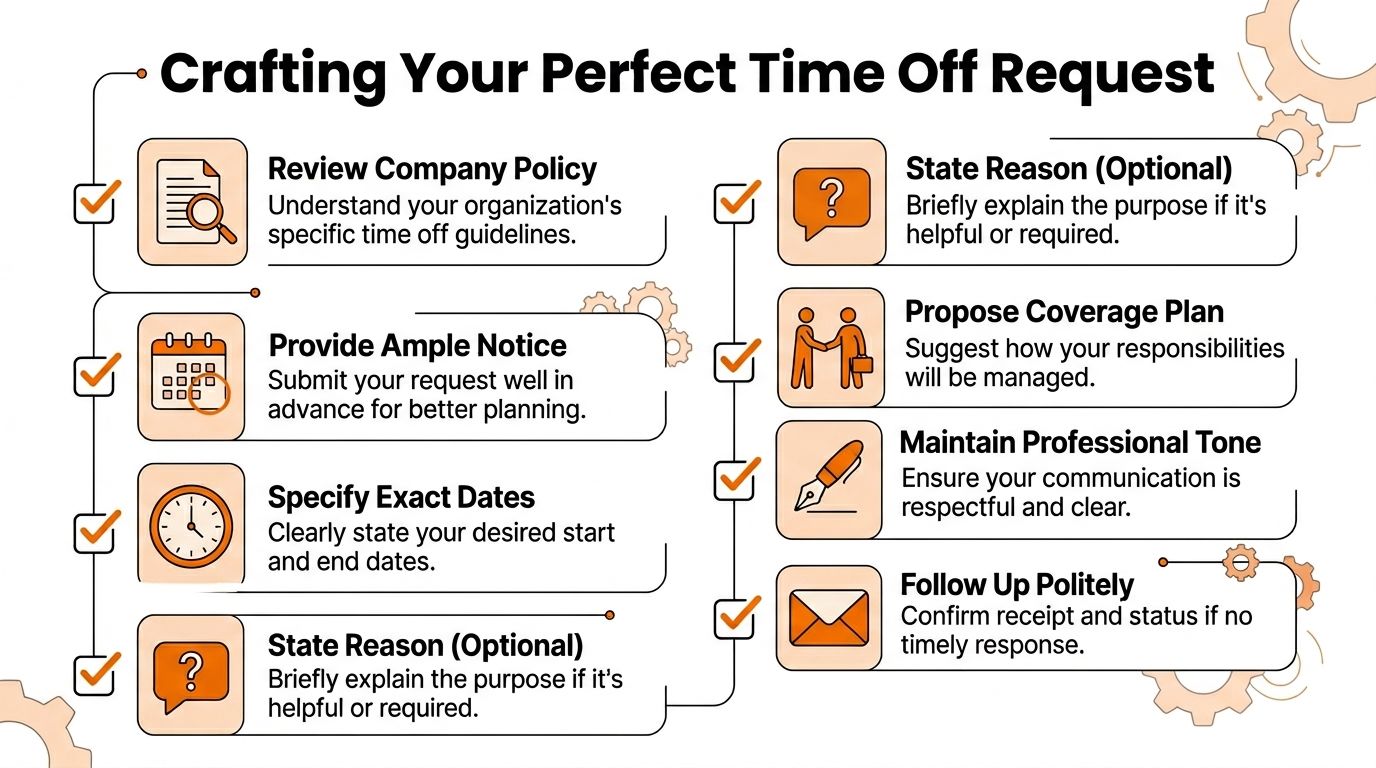
If your company uses a digital form, use it properly. A dedicated employee time off request form is better than a loose message because it standardizes the details.
Bad request versus good request
Here’s the kind of request that creates friction:
Hey, I might need some time off next month for personal stuff. Not 100% sure yet. Let me know if that’s okay.
This is weak for three reasons. No dates. No scope. No planning.
Now compare it to this:
Hi Sam, I’d like to request PTO for June 12 and June 13. I’ve checked the team calendar, and I’ll finish the inventory report before I’m out. If needed, I can also hand off the Friday vendor call notes to Alex. Please let me know if you need anything else from me.
That request works because it gives the manager something concrete to approve.
Say less, but say the right things
You do not need a courtroom argument.
If the reason is private, keep it private unless policy requires more detail. “Personal time,” “family event,” or no reason at all is often enough. The strongest requests are usually matter-of-fact.
Use a clear subject line if you’re in email. Use exact dates if you’re in an app. If you need only part of a day, say the hours plainly.
Why digital requests work better
When teams use a proper system, fewer things get lost. The request goes to the right person. The dates are visible. Accrual balances can be checked. Approval or denial is documented.
According to BrainyHR’s guide to employee time off requests, digital systems can reduce manual errors by 40 to 60%. The same source says compliant requests in digital systems see approval rates of 85 to 95%, compared with 65% for email or paper methods.
That makes sense. Clean inputs produce cleaner decisions.
One option is Pebb, which includes a Time Off flow inside the app so employees can choose dates, add a note, and send the request to a manager without bouncing between chat, schedules, and separate forms.
The best request is not the most emotional one. It is the one that gives the manager the least guesswork.
The Manager's View and Handling Shift Work
Managers are not sitting around judging whether you deserve a break.
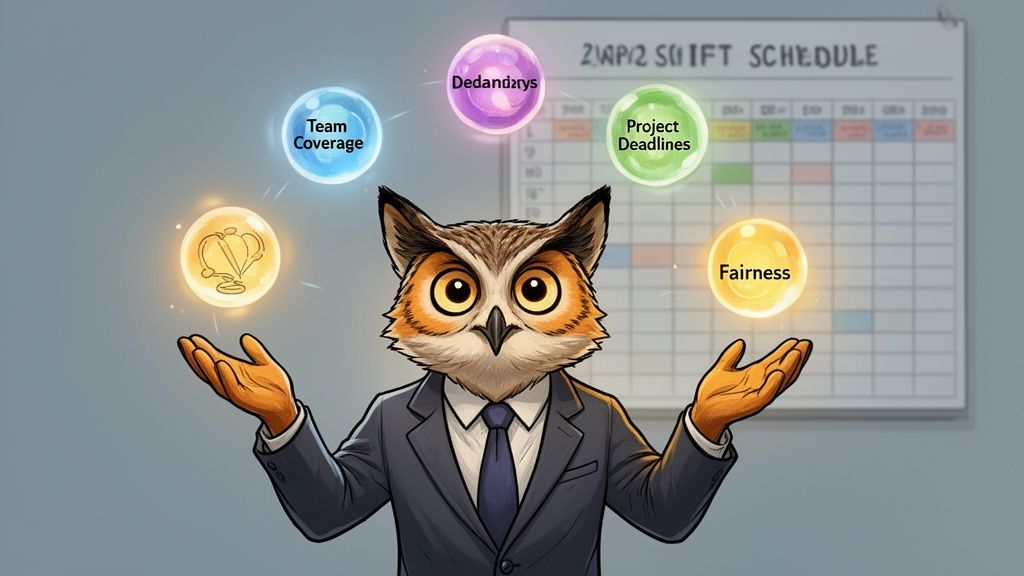
They are usually juggling coverage, deadlines, fairness, and whatever went wrong that morning. If you understand that, your request gets sharper.
What your manager is balancing
A manager usually has three questions in mind:
Can the work still get done
Is this fair compared with other requests
Will approving this create a bigger problem later
That’s why the same request can feel easy one week and impossible the next.
This is also why vague language hurts you. If the manager cannot tell whether your absence creates a coverage gap, they have to assume risk. And risk pushes people toward no.
Shift work changes the math
Most advice on this topic is built for a standard office schedule. It assumes full days, neat calendars, and stable workloads.
That misses reality for a lot of workers. As noted in Factorial’s discussion of time off request types, most guidance ignores partial-day requests, dynamic scheduling, and coverage-dependent approvals that are common in retail, logistics, healthcare, and similar environments.
If you work shifts, your request is not just “I won’t be available.” It’s often “This Tuesday evening shift needs coverage” or “I need three hours off for an appointment” or “I can work the morning but not the close.”
That needs a different approach.
Bring a coverage idea, not just an absence
In shift-based work, the strongest requests show you’ve thought about the operational impact.
That does not mean it is your job to solve management. It means you make approval easier by offering useful information.
Try something like this:
For a single shift: Mention if you’ve checked whether someone may be available to swap.
For a partial day: State the exact hours and whether you can work the rest of the shift.
For a busy period: Acknowledge the pressure and ask early.
If your workplace handles swaps through a schedule app, use it. If your team tracks staffing and handoffs in a shared system, check it before you request time off. If you manage rotating schedules, this practical guide to shift work schedules helps frame the issue.
Fairness matters more than people admit
Employees usually care about the answer. Managers also care about the precedent.
If one person gets prime holiday time every year because they ask loudly, everyone else notices. If another employee keeps asking at the last minute and still gets approved, the team notices that too.
That’s why good managers love requests that are early, specific, and easy to compare against policy. It keeps things fair.
In shift-based teams, a good time off request is part communication and part scheduling math.
When you show that you understand both sides, you stop sounding like a burden and start sounding like a professional.
What to Do When Your Request Is Denied
A denial feels personal even when it isn’t.
You followed the process. You asked politely. You were ready for a yes. Then the answer comes back no, or not for those dates. That stings.
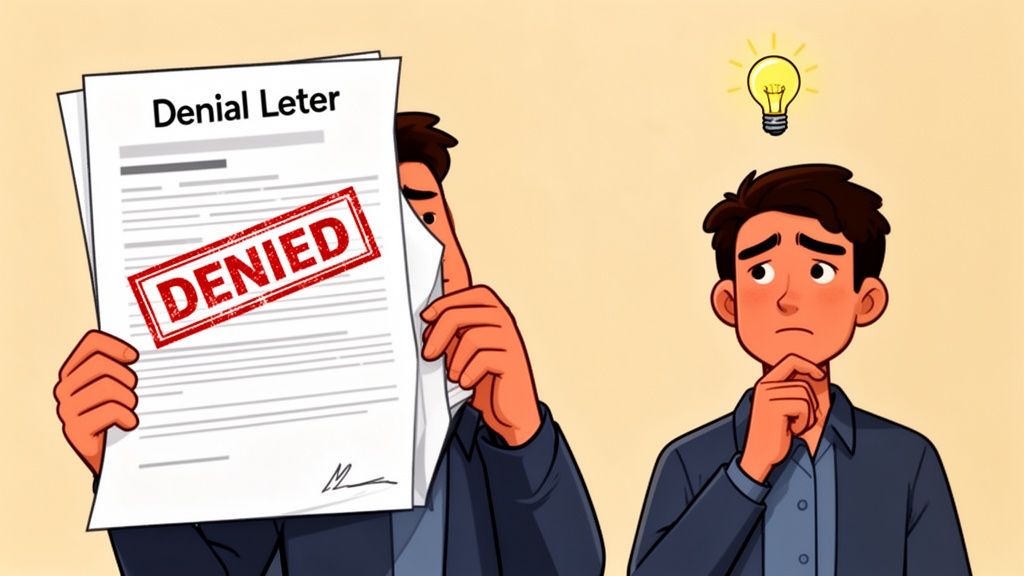
Your first job is simple. Do not get reactive.
Treat the denial like information
Most guidance stops at the request itself. It gives people almost no help once the answer is no. That gap leaves employees unsure how to respond, how to ask for reconsideration, or how to understand the approval criteria, as described in Breakroom’s overview of unpaid time off.
A denial is usually a logistical answer, not a moral judgment.
Maybe too many people are already out. Maybe the dates hit a busy stretch. Maybe your manager needed more notice. You need the underlying reason before you decide what to do next.
Ask for clarity without making it weird
Keep the tone calm and practical.
You can say:
Thanks for letting me know. Can you share what made these dates difficult to approve?
Or this:
Understood. If the issue is coverage or timing, I’m happy to look at alternate dates. What would make a future request easier to approve?
That kind of response does two things. It protects the relationship, and it gives you useful information.
Your next move depends on the reason
Once you know why it was denied, pick the right response.
If the issue was timing: Submit earlier next time.
If the dates were the problem: Offer alternatives.
If coverage was thin: Strengthen your handoff or swap plan.
If the explanation is vague: Ask what criteria are being used so you can follow them.
Do not argue your manager into a corner unless the denial clearly breaks policy or ignores a protected leave process. In ordinary PTO situations, calm follow-up works better than a fight.
The professional response to a denied request is not silence or anger. It is a clear question, a better plan, and a memory for next time.
Handled well, a denial can build trust. You show that you can hear no without turning it into drama. Managers remember that.
Time Off Is Part of the Work
A healthy team does not treat rest like a guilty secret.
Time off is part of the job. Planning for it is part of the job too. The request, the notice, the coverage plan, the handoff. None of that sits outside your work. It is work.
That’s why this matters.
When people ask well, managers can approve fairly. When managers handle requests clearly, employees stop feeling like they need to beg. And when teams get good at both sides, time off stops being a source of tension and becomes what it should be. Normal.
The bigger point is simple. You are not doing something selfish when you request time away. You are participating in a basic professional agreement. You do your work. You communicate clearly. You plan responsibly. Then you step away and come back better for it.
That is not slacking. That is sustainable work.
The next time you open the form or draft the message, skip the apology. Bring clarity instead. That usually gets you further.
If your team wants a cleaner way to handle requests, schedules, updates, and day-to-day coordination in one place, take a look at Pebb. It gives employees a simple way to request time off and gives managers the visibility to respond without digging through chat threads, spreadsheets, and scattered calendars.
