
Feedforward vs Feedback: Let's talk about the future for a change
Explore feedforward vs feedback. Learn why future-focused conversations create better results than past-focused critiques and how to implement them.
Dan Robin
The whole debate over feedforward vs feedback comes down to one simple thing: are you looking in the rearview mirror or through the windshield?
Feedback is the rearview mirror. It's about what’s already happened. It’s done. You can’t change it. Feedforward is the windshield. It’s about the road ahead, a future you can actually shape. For years, we’ve been taught to stare into the mirror, and frankly, it’s a terrible way to drive.
We’ve been doing feedback all wrong
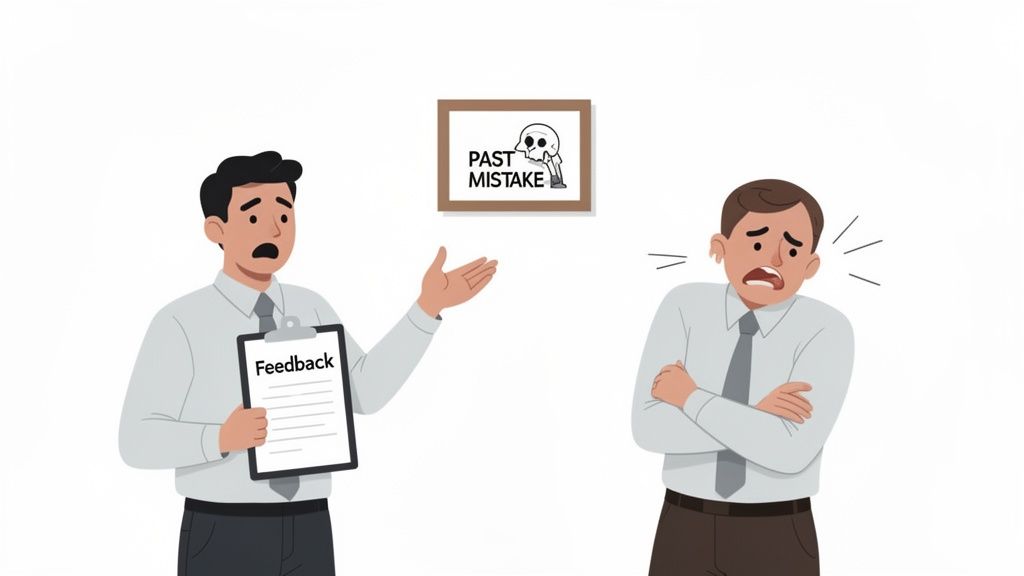
Let’s be honest. When your boss says, “Can I give you some feedback?” your stomach sinks. It’s a Pavlovian response. We’ve all been trained to brace for a conversation about a past we’re powerless to change.
The intention is good, but the execution is broken. We pull people into meeting rooms to dissect past mistakes, forcing them into a defensive crouch. It feels less like coaching and more like a post-mortem. We’re trying to coach the player after the game is over. It makes no sense.
A quick comparison
To build better conversations, it helps to see these two ideas side-by-side. Each serves a different purpose, and each one feels completely different to the person on the other side of the table.
Attribute | Feedback (The Past) | Feedforward (The Future) |
|---|---|---|
Timing | After something happened | Before something happens |
Focus | Correcting what was wrong | Creating what could be right |
Feeling | Defensive, judged | Collaborative, hopeful |
Goal | Fix a past mistake | Build future success |
Challenging the old way
Our obsession with critiquing the past is a relic. When we receive criticism, our brain’s threat response kicks in. The creative, learning-focused parts of our minds just shut down. It's not just the person receiving it who feels the dread; managers hate these conversations, too. That’s a big reason they often don't happen at all.
This isn't just about internal chats. Companies are realizing the old ways don’t work with customers, either, and are rethinking how to collect customer feedback that actually drives growth. It all points to the same truth: there has to be a better way.
“Feedback has become an instrument of fear, and not joy. Performance reviews take a look back at a past that employees can no longer change. And because it's looking back and not looking ahead, people are powerless to do anything about it.” - Joe Hirsch, Author of “The Feedback Fix”
That simple shift—from what went wrong to what could go right—is the whole game. It reframes the conversation from judgment to possibility. Instead of just reacting, we can start creating. If you want to dig deeper into getting these discussions right, our complete guide to employee feedback has more on the nuts and bolts.
From past tense to future possibility
Think of feedback as your rearview mirror. It's essential. You need it to see what happened, to understand context, and to make sure you don't repeat a critical mistake. But you don't drive a car by staring into it.
Feedforward, on the other hand, is the windshield. It’s the big picture. It’s where you’re going. The term was coined by executive coach Marshall Goldsmith, and its genius is that it sidesteps criticism entirely. Instead of picking apart a past failure, it focuses on generating ideas for future success.
The psychology behind the shift
The psychology here is dead simple. When someone critiques something you’ve already done, your defenses go up. Your brain sees it as a threat. The conversation becomes about justifying your past actions. You stop listening and start defending.
But when someone offers ideas for your future self, they feel like an ally. It’s an invitation to create something new, not a judgment on something old. The whole dynamic changes from corrective to creative.
This isn't just a "nice" idea; it addresses a huge disconnect at work. While over 75% of employees say they want frequent feedback, less than 30% actually get it. Why the gap? Because the old model makes everyone—managers and employees alike—uncomfortable. You can read more about this employee feedback gap on attotime.com.
Feedback vs Feedforward: A quick comparison
To really get why one inspires ownership and the other triggers resistance, let's put them side-by-side again. One is about holding people accountable for the past. The other is about creating possibilities for the future.
Attribute | Feedback (The Rearview Mirror) | Feedforward (The Windshield) |
|---|---|---|
Focus | Analyzes what went wrong. | Explores what could go right. |
Tone | Often corrective and judgmental. | Always constructive and collaborative. |
Reaction | Can trigger defensiveness. | Inspires openness and creativity. |
Goal | Fix a problem that already happened. | Unlock potential and prevent future problems. |
This quick breakdown shows how feedforward is built from the ground up to be a more positive and productive tool for everyone.
From judgment to collaboration
Consider the energy of the question. Feedback often sounds like, “Why did you miss that deadline?” This forces the person to relive a failure. It’s an interrogation about something they can’t change.
Now, let’s reframe that with feedforward: “For the next project, what’s one thing we can do to make sure we hit our deadline early?”
See? The same issue, but now it’s a shared, forward-looking challenge. The manager is a partner in solving the problem, not a judge. This isn’t about ignoring mistakes. It’s about taking the lessons from the past to build a better future, without getting stuck on the event itself. It's a small but powerful shift.
“Feedforward is all about looking at not just who we are, but who we are becoming.” - Joe Hirsch, Author of “The Feedback Fix”
That simple change is the key to real growth. Instead of making people feel small by focusing on their weaknesses, feedforward expands their view by focusing on their potential. It’s about building momentum, not just documenting history.
Choosing the right tool for the job
I’ve learned the hard way that the whole feedforward vs. feedback debate isn’t an “either/or” choice. It’s about knowing when you need a scalpel and when you need a whiteboard. These two approaches solve different problems, and mixing them up just leads to conversations where everyone leaves frustrated.
Let’s be real. Feedback isn't going anywhere. It’s essential for accountability.
When feedback is the only choice
If a team member ignores a critical safety rule, feedback isn't an option; it's a necessity. You can't "feedforward" your way out of a compliance issue. Same goes for when a hard client deadline is blown. You have to have a direct, backward-looking talk to understand what happened and ensure it doesn't happen again.
In these moments, the goal is correction and accountability. Feedback is the tool for that job. It’s about drawing a firm line.
Feedback is for addressing the non-negotiable past. Feedforward is for building a negotiable future. One is for correction; the other is for creation.
But here’s the thing: most of our work isn’t about clear-cut failures. It’s about growth, improvement, and tapping into potential—areas where there’s no single “right” answer.
Where feedforward shines
This is where feedforward earns its keep. For any kind of developmental goal, it’s just a better tool. Think about goals like becoming a better writer, a more strategic thinker, or a more empathetic leader. These aren't problems you "fix"; they're skills you build.
Feedback on a past presentation might sound like, "You seemed nervous and you rushed your slides." That’s a judgment on a moment that’s over. It just makes the person feel bad.
Now, flip it to feedforward: "For your next presentation, what’s one idea we could try to make the Q&A section more engaging?"
That simple shift changes everything. It turns a critique into a creative partnership. It focuses energy on what can actually be controlled: the future.
This decision tree can help you see when to use each approach.
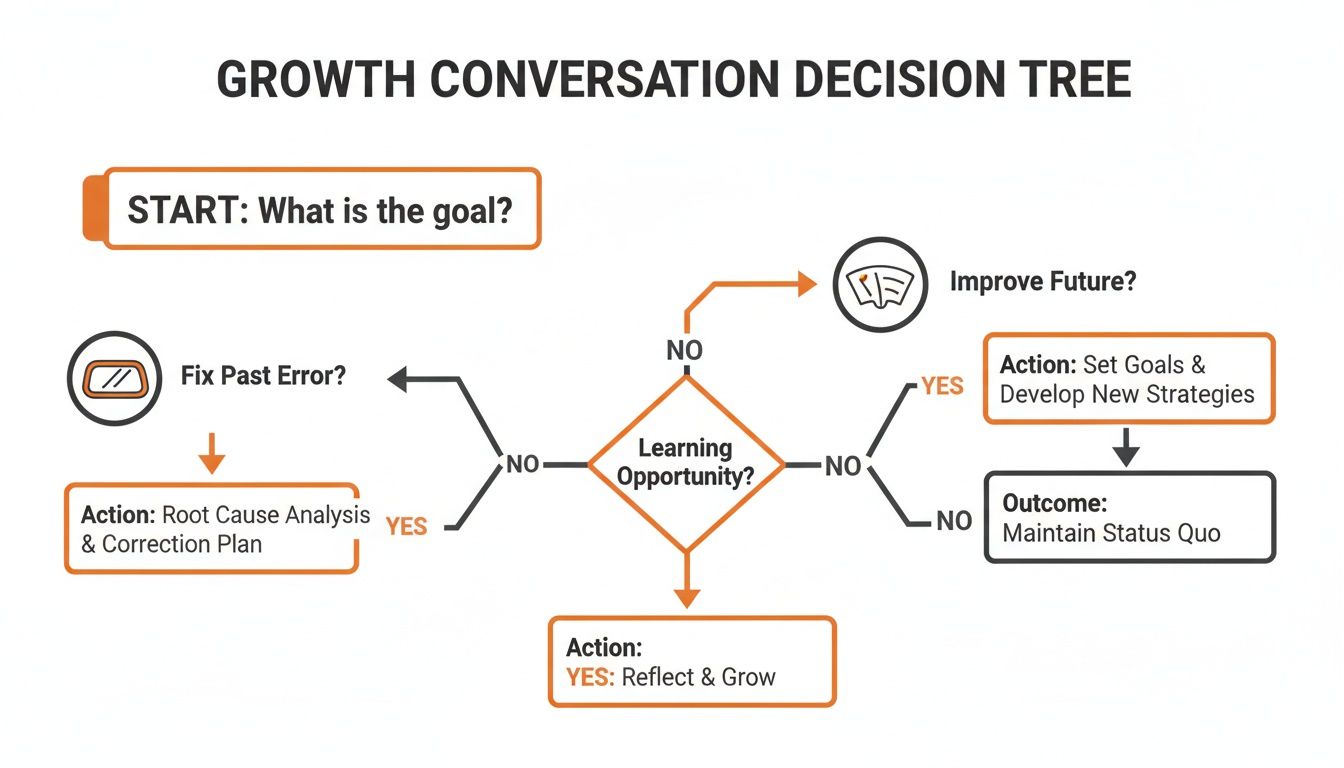
The takeaway is simple: let the goal—fixing an error versus inspiring growth—dictate the tool you use.
Let’s walk through a quick scenario.
The Scenario: Improving Project Management
Imagine a teammate, Alex. He’s smart, but his projects tend to drift past their deadlines.
The Feedback Approach: A manager might say, "Alex, on the last project, you didn't track dependencies correctly, and that's why we were late. You need to be more organized." This is all about a past failure. Alex gets defensive. He probably leaves feeling micromanaged, not motivated.
The Feedforward Approach: The manager could try this instead: "Alex, looking ahead to the Q4 launch, what's one thing you'd like to do differently to feel more in control of the timeline?" This question invites Alex to own the solution. It becomes a collaborative chat that builds confidence and skill.
The difference in the outcome is huge. One shuts down the conversation; the other opens up possibilities. And by the way, whether you’re giving feedback or feedforward, knowing how to frame your words is key. Some of the principles for writing effective survey questions apply here, too.
Ultimately, it comes down to asking yourself: Am I trying to close a case file on the past, or open a blueprint for the future? Your answer tells you which conversation to have.
How to have a feedforward conversation
So how do you actually do this without it feeling like a stiff, corporate exercise? The good news is, a feedforward conversation is much simpler than it sounds. It’s not about adding another meeting. It’s about changing the question in the conversations you’re already having.
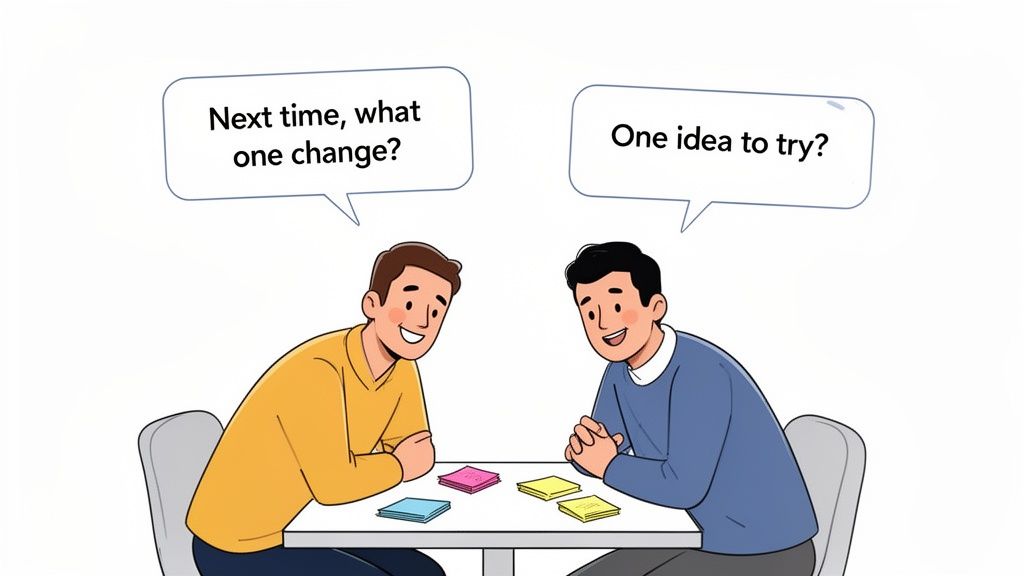
The entire shift comes down to moving from "Why did that happen?" to "What could we do next time?" Instead of picking apart a late report, you might ask, "For the next project, what's one thing we could try to get our deadline locked in ahead of schedule?" One feels like an accusation. The other is an invitation to solve a problem together.
A simple framework for managers
In your next one-on-one, instead of just running through a checklist of past tasks, try framing the talk around these two prompts.
"Looking ahead to [a specific goal], what's an idea you have for how we could knock it out of the park?" This opens the door for ambitious thinking, not just meeting a minimum standard.
"What’s one thing I can do to help you with that?" This one is critical. It shifts the dynamic from a top-down review to a supportive partnership. It shows you’re invested in their success, not just their output.
This isn’t about ignoring problems. It’s about framing them as future challenges to solve together. The conversation becomes about building something new, not just fixing something broken.
How anyone can ask for feedforward
This isn't just for managers. Anyone can start these conversations. Waiting for your annual review to get guidance is like waiting until the end of a road trip to check the map.
Instead of asking a backward-looking question like, “How did I do on that project?” try being more specific and future-focused.
"Next time I lead a client call, what's one thing you think I could do to build stronger rapport?"
"As we plan the next campaign, do you have any ideas for how I could present my data in a more compelling way?"
"I want to get better at managing my time on big projects. What’s one strategy that has worked well for you?"
Notice how these questions are specific, actionable, and tied to the future. You’re not asking for a grade; you’re asking for good ideas. This shows confidence and a real desire to grow, which makes it much easier for people to give you truly helpful advice.
The best conversations aren't about evaluating a past you can't change. They're about co-designing a future you can. It's a switch from judging to building.
This future-first approach is backed by research. People are far more motivated when conversations focus on future actions rather than dwelling on past mistakes. Our brains are just better at solving for what’s next than regretting what’s done.
The goal isn't to get rid of feedback. But by tilting the balance of your conversations toward the future, you make growth the default setting. This forward momentum is a core part of learning how to improve communication skills in the workplace and building a culture where everyone is always thinking about what’s next.
Measuring what matters
So, how do you know if this shift from feedback to feedforward is actually working? The truth is, the results won't show up on a standard performance dashboard. The real indicators are quieter, more human, and far more important.
We’ve learned that the most powerful changes don't live in spreadsheets. They live in conversations.
Looking for the right signals
Pay attention to your team's daily interactions. Are people more willing to ask for help, or do they hide struggles? Are they trying new things without a paralyzing fear of failure? Do you see more spontaneous problem-solving in team chats?
These are the leading indicators of a healthy, forward-looking culture. They’re signs that psychological safety is taking hold. When people feel safe, they stop pouring energy into self-preservation and start investing it in their work.
Think less about grading past performance and more about gauging future potential. The real win isn't a perfect review; it's a team that feels safe enough to try, fail, and try again.
This isn't just a feel-good idea. It directly impacts your business. Gallup found that employees who receive meaningful feedback and feel heard are 4.6 times more likely to excel. That same research shows this approach to communication can cut turnover by almost 15%. You can discover more insights on performance at Gallup.com.
Shifting the question
Instead of clunky annual surveys, we’ve found that simple, frequent pulse checks give you much better insight. The trick is asking the right kind of question. Forget asking people to rate their satisfaction on a scale of one to ten.
Try asking this instead:
"Do you have the support and clarity you need to do your best work next month?"
The answer to that single, forward-looking question tells you more about your team’s health than any performance review ever could. It’s not about judging what they did; it’s about understanding what they need to succeed. It turns measurement from an audit into an act of support.
This subtle shift is crucial. It aligns your metrics with your philosophy, focusing on creating the conditions for success rather than just documenting past outcomes. If you want to go deeper, we have a guide on effective employee engagement measurement that explores this.
Ultimately, tracking progress in a feedforward culture is less about numbers and more about listening. It’s about noticing the small shifts that signal a bigger, healthier change happening just beneath the surface.
A quieter, more confident way to work
Bringing feedforward to your team isn't about rolling out another management tactic. It's a quiet, deliberate choice about the kind of culture you want—one that trusts people to own their growth and is more interested in future potential than past mistakes.
It's about creating an environment where asking for help is a sign of strength. This shift is what builds real psychological safety, which is the bedrock of any team that does great work.
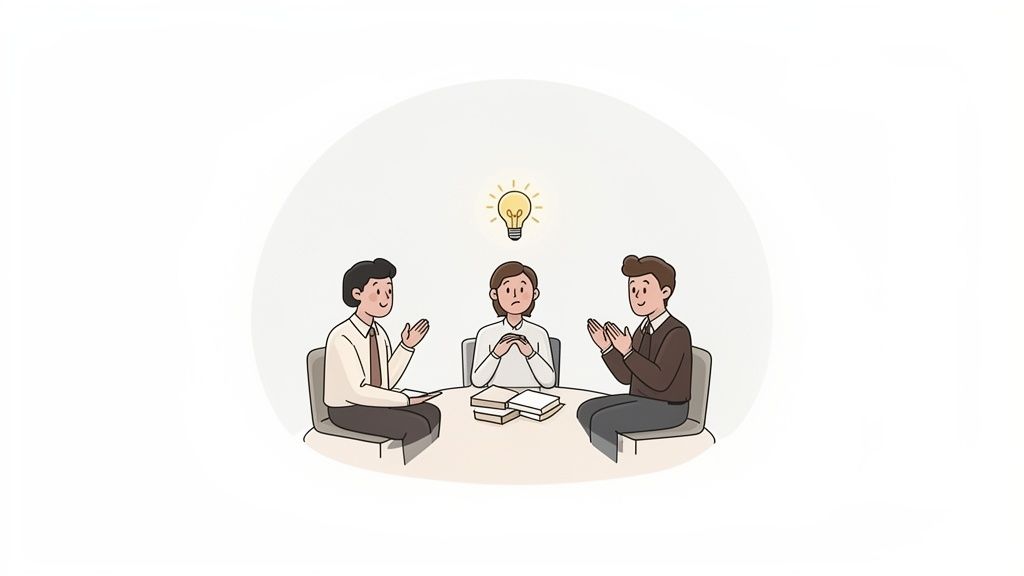
Building what comes next
When your team’s energy is spent building what’s next instead of dissecting what already happened, something powerful occurs. The conversations get more creative. The work gets more collaborative. People stop defending past decisions and start investing their energy into creating a better future.
This is the heart of the feedforward vs feedback debate. One is a post-mortem; the other is a blueprint.
A culture of feedforward creates cooperation, not competition. It reinforces positive relationships by focusing on a shared goal.
In my experience, this approach leads to a calmer, more confident way of working. It dials down the defensiveness that poisons so many conversations and replaces it with a shared sense of possibility. Your team starts to see you and their colleagues as allies in their growth, not judges of their past.
A small experiment to try
You don't need a huge initiative to get started. The best way to feel the difference is to run a small, quiet experiment.
Next time you're in a one-on-one, fight the urge to run through a checklist of past tasks. Instead, just ask one simple, forward-looking question.
"For the project kicking off next week, what’s one idea you have that could make it our best work yet?"
"Looking ahead, what’s one skill you'd like to build, and what's one way I can support you?"
Then listen. See what happens. The point isn't to eliminate feedback—it's still essential for accountability. The goal is to consciously tilt the conversation toward what's possible. You might be surprised by the ideas that emerge when you finally give them space to grow.
Frequently Asked Questions
Making a switch like this is going to bring up some questions. That's normal. Here are a few we hear all the time.
Is feedforward just a nice way to avoid hard conversations?
Not at all. It’s about making those conversations more productive.
To be clear, critical feedback has its place. It’s necessary for correcting serious mistakes, factual errors, or misconduct. You can't "feedforward" your way out of a safety violation.
But for developmental conversations, where the goal is growth, feedforward is a better tool. It reframes the discussion from a critique of the past to a brainstorm about the future. It turns a potential conflict into a problem-solving session.
Can I use feedforward with my whole team?
You bet. Group feedforward can be a game-changer for building momentum. Frame it as a creative session focused on an upcoming project.
For instance, you could kick off a meeting by asking, "Alright team, our Q3 launch is coming up. What are two or three things we can do this time to make it our smoothest one yet?"
This does more than generate good ideas. It taps into the team's collective brainpower, creates shared ownership, and gets everyone pulling in the same direction from the start.
The real power of feedforward isn’t just in one-on-ones; it’s in making forward-looking problem-solving the default language of the whole team.
What if someone gives me vague feedforward?
This is a perfect coaching moment. When you get a suggestion that's too general, like "just be more confident," gently guide them toward specifics.
Try asking, “I appreciate that. Can you think of one specific action I could take in my next presentation that would help me project more confidence?”
This little trick does two things. First, you get the actionable advice you actually need. Second, you're subtly teaching your team how to give better, more concrete suggestions next time. The whole point of the feedforward vs feedback discussion is to generate ideas you can actually use. Clarity is everything.
Ready to build a culture of collaboration and forward momentum? Pebb unifies communication and operations for your entire team, creating one simple space where conversations about the future can happen every day. Learn more at pebb.io.
