
A Better Employee Onboarding Feedback Form
Stop using broken checklists. Learn to create an employee onboarding feedback form that gathers honest insights to improve your new hire experience.
Dan Robin
An employee onboarding feedback form is supposed to be a tool for collecting honest opinions from new hires. But let’s be honest for a minute. Most are a polite fiction—a series of generic questions that get checked-off answers, creating the illusion of insight while the new employee is quietly drowning.
The Polite Fiction Of Onboarding Feedback
The way we’ve traditionally asked for feedback on onboarding is broken.
We wait a few weeks, send a generic survey, and the new hire—eager to impress—ticks 'satisfied' on every box. We then file it away, pretending we've learned something. We haven’t.
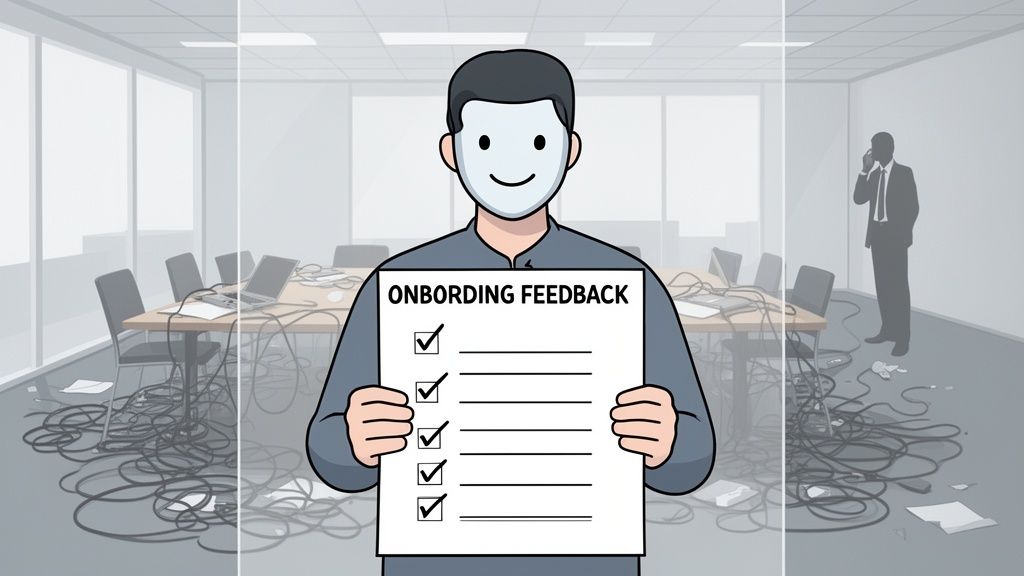
Think about it from their perspective. They’re focused on making a good impression, not telling you the orientation was a disorganized mess or their manager was too slammed to meet. They'll say 'it was great' even when it absolutely wasn't.
This isn't their fault. It's ours. We’re asking the wrong questions at the wrong time and getting useless data in return.
The Real Story Behind Perfect Scores
I've seen this play out time and again: companies with 'perfect' onboarding scores that are hemorrhaging new hires within 90 days. The data said everything was fine, but the reality for those employees was a confusing, isolating experience. The employee onboarding feedback form had become a tool for hiding problems, not revealing them.
The polite fiction of "good" onboarding feedback creates a dangerous blind spot. You think you're succeeding, but all you've done is build a system that encourages people to tell you what you want to hear.
The real problem is that we forget what it’s like to be new. A new employee’s primary goal isn’t to critique your process; it’s to prove they were the right person for the job. They’re busy navigating a new social landscape, trying to build relationships, and, most importantly, not rocking the boat.
When we send that survey, we put them in an impossible position. Do they:
Be honest? And risk being labeled as negative or difficult before they've even found the coffee machine.
Be polite? And give you the feel-good answers that keep a broken system running.
Most, for very understandable reasons, choose politeness. This creates a vicious cycle where sloppy processes are reinforced by positive-yet-meaningless data. HR sees a spreadsheet full of high scores and pats itself on the back, while managers have no idea their new team members are struggling.
Admitting The Process Is Broken
The first step to fixing this is to just admit that our old methods are broken. We have to get past the checkbox mentality and build a system that invites a real conversation. That means rethinking not just the questions we ask, but when and how we ask them.
A truly effective feedback process doesn't feel like a test. It feels like a dialogue.
It recognizes that a new hire’s experience isn’t a single event but a journey. The feedback you need on Day 3 (Did the laptop actually show up?) is completely different from what you need on Day 30 (Do you feel connected to the team's goals?).
This guide is about tearing down that polite fiction. We're going to design an employee onboarding feedback form—or more accurately, a feedback system—that gets to the truth. It's time to stop collecting data for the sake of it and start gathering insights that actually help people, and our companies, succeed.
Deciding What You Actually Need To Know
Before you write a single survey question, pause. It’s tempting to jump right into drafting questions, fiddling with 1-to-5 scales, and comparing tools. But I've seen it time and again: without a clear goal, your feedback form becomes a messy junk drawer of random questions. You end up with a lot of noise, but no real signal.
So, ask yourself this one simple question: what problem are we actually trying to solve?
Are you wrestling with logistical hiccups, like a new hire’s laptop not being ready on their first day? Or are you trying to understand something deeper, like whether they feel a true sense of belonging? These are fundamentally different goals. They require completely different questions.
The Four Pillars of Onboarding Insight
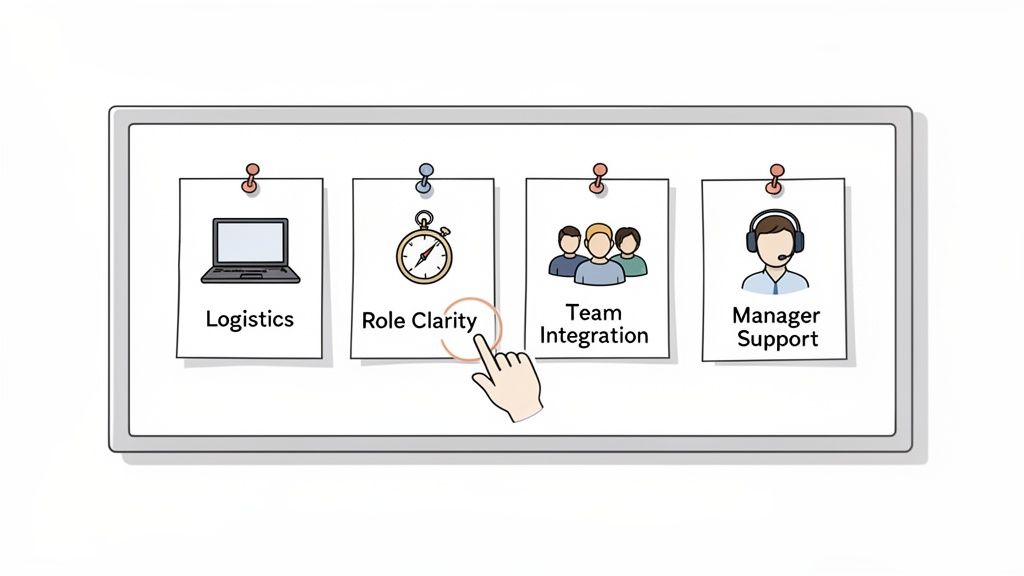
From my experience, most onboarding feedback falls into four key areas. The trick is, you can't fix everything at once. You have to decide what matters most to your company right now. Everything else is a distraction.
Here are the pillars we see most often:
Logistical Readiness: This is all the nuts and bolts. Was their equipment set up and working? Could they log into the core systems? A failure here on Day 1 sends a terrible message: we’re disorganized, and you weren’t a priority.
Role Clarity: This is about setting clear expectations. Does the new person really get what success looks like in their first 30, 60, and 90 days? A shocking number of employees—88% according to some studies—say their company’s onboarding is ineffective, and a huge part of that comes down to a lack of role clarity.
Team Integration: This covers the human side of things—that feeling of belonging. Have they had meaningful chats with their colleagues beyond a quick "hello"? This isn't about free snacks; it's about fostering genuine human connection.
Manager Support: This one is arguably the most critical. Does the new hire feel like their manager is truly invested in their success? Are they getting regular, helpful feedback? A new hire's relationship with their manager is the single biggest predictor of their long-term success.
You have to prioritize. A chaotic, fast-growing startup might need to laser-focus on Role Clarity just to give new folks a fighting chance. On the other hand, an established company with a turnover problem should probably be digging into Manager Support.
Don’t try to measure everything. Pick one or two pillars that represent your biggest challenges today. A focused onboarding form is a useful tool; a sprawling one is a chore for everyone.
From Chore to Strategic Tool
Let’s be honest. For a lot of companies, the onboarding survey is just another box to check. We send it because we feel like we should. But when you get intentional about your objective, that form transforms from a routine task into a powerful strategic instrument.
It becomes a real-time pulse on your new hire experience.
For example, if you decide your priority is Team Integration, your questions won't be about IT tickets. Instead of asking, "Rate your IT setup on a scale of 1-5," you’ll ask something like, "Describe one conversation this week that helped you better understand our team's culture." The answers you get are infinitely more valuable for making real improvements.
The whole point is to be intentional. Before you build another survey, get your team in a room and have an honest conversation. What are the recurring pain points we keep hearing about? Where is the friction? What one thing, if we fixed it, would make the biggest difference for our next new hire?
Your answer to that last question? That’s your objective. Start there. Everything else can wait. If you need some inspiration for what to ask, you can explore our detailed guide on onboarding survey questions for new hires.
How To Write Questions That Get Real Answers
Let’s be honest—the questions you ask make or break your onboarding feedback. A useless survey and one that uncovers gold often come down to a few simple changes in phrasing.
Think about the classic, polite-but-lazy question: “How was your first week?” It practically begs for an equally polite and lazy answer: “It was great, thanks!” You learn nothing.
Now, what if you asked this instead? “What was one thing that surprised you this week, for better or for worse?” That question makes someone pause and think. It opens the door for a real story and gives them permission to be candid. That's the shift we’re aiming for.
From Vague To Valuable Question Examples
So many feedback forms are filled with questions that are too broad, leading, or just plain boring. They feel like a pop quiz, so new hires give safe, generic answers. An effective question, on the other hand, is specific, open-ended, and shows genuine curiosity. It makes it clear you want their real perspective, not just a check in a box.
You're trying to move from questions that can be answered with a thumbs-up emoji to prompts that require a moment of actual reflection. The goal is to get your new hire thinking about what they really experienced.
The secret to a good question is that it makes the other person feel interesting. It shows you value their specific point of view, not just a check in a box.
Let's walk through how to rephrase some of those common but ineffective questions. This isn't about being clever; it’s about getting to the truth of what a new hire is experiencing day-to-day.
Vague Question (Avoid This) | Specific Question (Use This Instead) | Why It Works |
|---|---|---|
Do you feel supported by your manager? | Describe one time this week you felt well-supported, and one time you could have used more guidance. | It moves from a vague feeling to specific moments. It also normalizes the idea that support isn’t always perfect. |
Was your training helpful? | What’s one thing from your training that you’ve already used in your work this week? | This tests for application, not just satisfaction. A “no” answer is as insightful as a “yes.” |
Are you clear on your role and responsibilities? | On a scale of 1-10, how clear are your top 3 priorities for the next month? What would make it a 10? | It combines a quick quantitative measure with a powerful qualitative follow-up that asks for a solution. |
Do you have any questions? | What’s one question about the way our team works that’s still on your mind? | This assumes they do have questions and makes it safer to ask. It’s an invitation, not a final check. |
See the difference? This small shift in phrasing signals that you’re ready to hear the good, the bad, and the messy reality of starting a new job.
Balancing Numbers and Narratives
A great onboarding survey needs both numbers and stories. Think of it like a car's dashboard—you need the speedometer (the numbers) and the GPS (the stories). One tells you how fast you're going; the other tells you if you're actually headed in the right direction.
Quantitative questions are your scales and scores. These typically use a Likert scale ("Strongly Disagree" to "Strongly Agree") or a simple 1-5 rating.
These are fantastic for a couple of reasons:
They’re fast: New hires can breeze through them.
They’re trackable: You can easily spot trends. If the average score for "I feel welcomed by my team" suddenly drops from a 4.5 to a 3.2 in one department, you know exactly where to start digging.
But numbers only tell you what is happening, not why. That's where the stories come in.
Qualitative questions are your open-ended prompts that ask for examples, descriptions, and feelings. This is where you uncover the rich context that gives the numbers meaning. A low score on manager support is a data point; a story about a manager canceling three one-on-ones in a row is the human reality behind it.
A good rule of thumb is to pair a key quantitative question with an open-ended follow-up. For instance:
“On a scale of 1 to 5, how manageable has your workload been this week?”
“What’s one thing we could do to make your first month feel more focused?”
The first question gives you a metric. The second gives you a potential solution. You need both. For more ideas on structuring these pairs, a guide on a strong employee survey format can give you a solid foundation.
Ultimately, writing good questions is an act of empathy. You have to put yourself in the shoes of someone navigating a world of new faces, new systems, and new expectations. Stop asking questions that seek validation and start asking questions that seek understanding. The answers you get will be a thousand times more valuable.
Why Timing And Delivery Matter Most
You can craft the most brilliant questions in the world, but they’re useless if you ask them at the wrong time. We’ve all seen it: a new hire gets a massive, 50-question survey three months into the job. By that point, any memory of their first-week struggles—like a finicky laptop or a confusing login—is long gone. The feedback you get is stale, vague, and not very helpful.
It’s about meeting new hires where they are, right in the moment. Asking for feedback should feel like a quick, natural check-in, not a pop quiz.
The secret is to swap that one-and-done survey for a series of small, frequent pulses throughout their first 90 days. This approach turns your employee onboarding feedback form from a chore into a genuine, ongoing conversation.
A Timeline for Real Insight
A new hire’s experience on Day 3 is a world away from their experience on Day 30. Your questions have to reflect that. A one-size-fits-all survey won't cut it.
Here’s a simple timeline we’ve found works wonders:
Day 3 - The Logistics Check: The goal here is simple: are the basics working? Does their tech work? Can they access the tools they need? This isn't about their feelings yet; it’s about quickly fixing any frustrating roadblocks that could sour their first week.
Week 1 - The First Impression: Now you can dig into the human side. Did they feel welcomed? Was their manager available and supportive? This check-in is all about capturing their initial impressions of the team and company culture while it's still fresh.
Day 30 - The Role Clarity Check: A month in, your new employee is shifting from orientation to real contribution. This is the perfect time to ask about their role. Is the job what they expected? Do they have a clear idea of what success looks like? This is your chance to catch misaligned expectations before they become bigger problems.
Day 90 - The Integration Check: After three months, they should be feeling more settled. This survey can focus on bigger themes like belonging, growth opportunities, and their connection to the company’s mission. It’s a gut check to see if they're building a future with you.
This cadence creates a clear arc, moving from immediate tactical needs to long-term cultural integration.
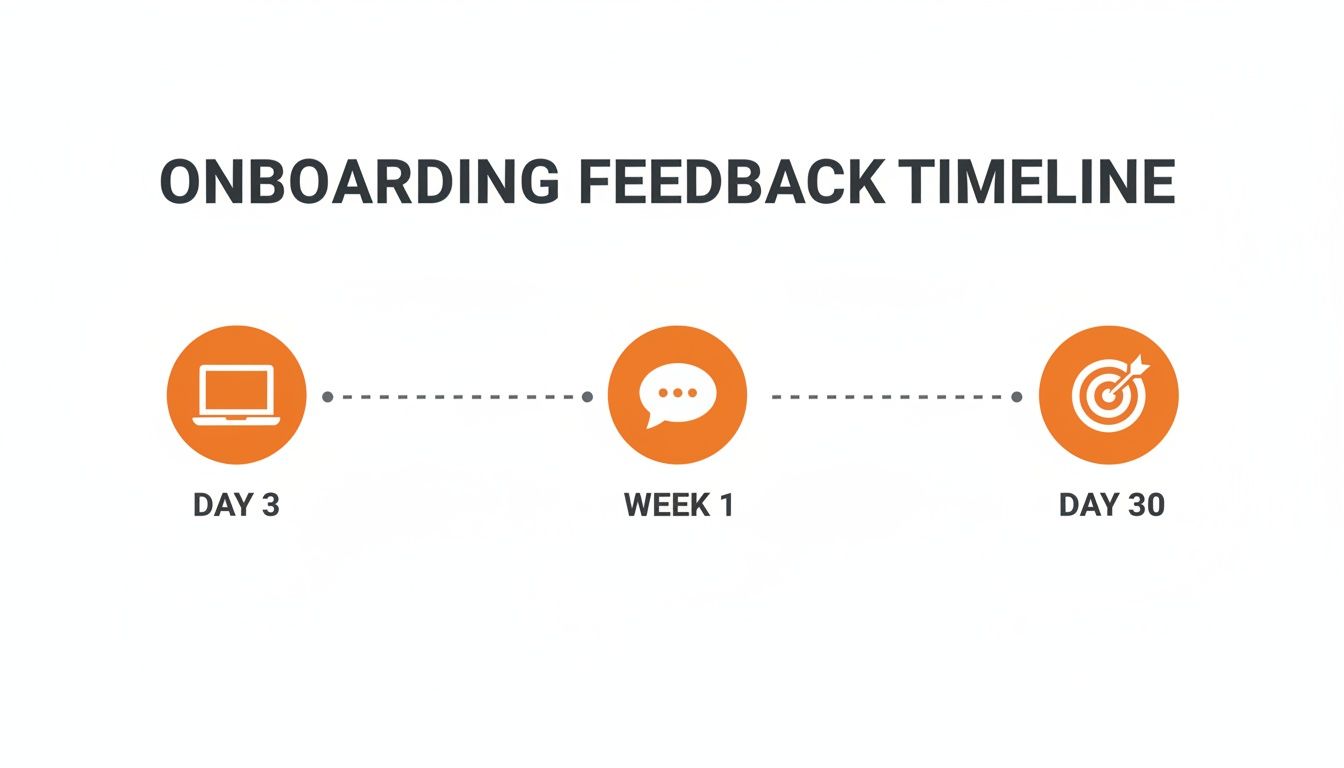
Each stage asks about a different piece of their journey, ensuring your questions are always relevant.
How You Ask Is As Important As What You Ask
Let’s be real—email surveys have notoriously bad open rates. For frontline teams who aren't at a desk all day, they’re practically invisible. If giving feedback means logging into a clunky HR portal or sifting through a crowded inbox, most people just won't do it.
The medium is the message. A clunky, hard-to-access survey says, "We need this for our records." A quick poll inside an app they already use says, "We genuinely want to hear from you, right now."
This is where your delivery method becomes a game-changer. You have to meet people where they already work.
For office-based teams, a quick ping in Slack or Teams can do the trick. Using auto email reminders can also give your completion rates a much-needed boost. But for your distributed or frontline employees, you have to think mobile-first.
Imagine sending a short, two-question poll via a push notification directly to their phone. It makes giving feedback as easy as replying to a text from a friend. This simple shift in delivery can be the difference between a dismal 20% response rate and an incredible 80% or more. Feedback becomes a natural part of their day, not another task to ignore.
Getting the timing and delivery right isn't a "nice to have." It's what makes a feedback process actually work. It shows you respect your new hire’s time and proves their voice isn’t just being collected, but truly heard.
Turning Feedback Into Meaningful Action
I've seen it happen a hundred times. A company rolls out a shiny new employee onboarding feedback form, collects a ton of data, and then... crickets. The feedback gets dumped into a spreadsheet and disappears into a digital black hole.
This is more than just a missed opportunity; it’s a quiet betrayal. When a new hire tells you they’re struggling and you do nothing, you've taught them a painful lesson: their voice doesn't matter here. You've wasted their time and eroded trust before it had a chance to grow.
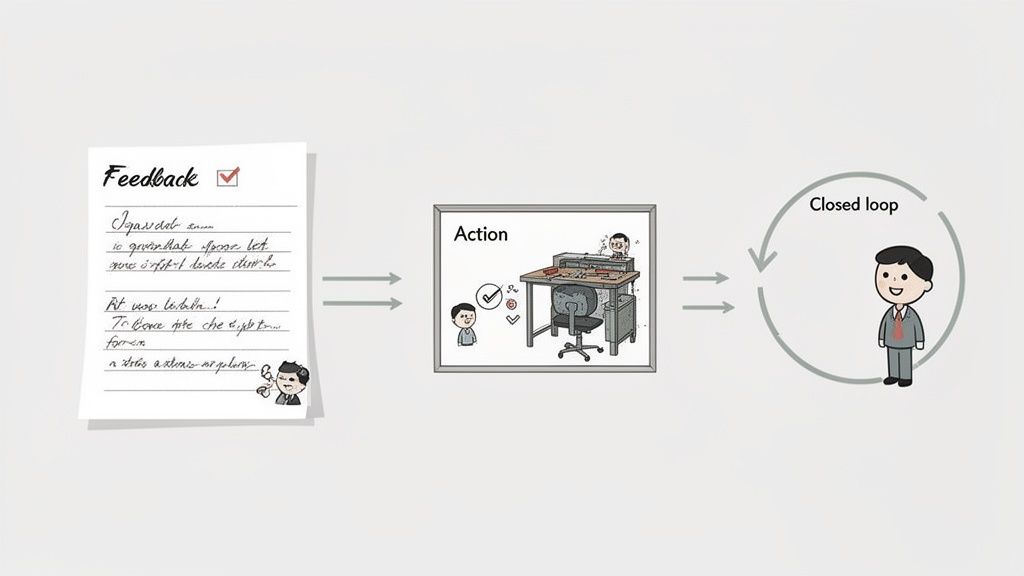
Let’s be real. Collecting feedback is the easy part. The real work, the part that actually builds a better company, is turning those raw comments into visible, meaningful change.
From Data Points to Actionable Patterns
Your first job is to find the signal in the noise. Not all feedback carries the same weight. One person disliking the coffee brand is noise. But if 70% of new engineers say their Day 30 training on the code repository was confusing, that’s a signal. That's a systemic problem begging for a solution.
Don't get bogged down trying to analyze every single word. Look for themes.
Quantitative Trends: Your scaled questions (the 1-to-5 ratings) are perfect for quickly spotting hotspots. If "manager support" averages a 4.5 in Sales but a dismal 2.1 in Marketing, you know exactly where to start digging.
Qualitative Clusters: Quickly scan the open-ended answers. If you see words like “isolated,” “lonely,” or “disconnected” popping up over and over in feedback from your remote hires, you have a clear mandate to improve their social integration.
You're not writing an academic paper. You're simply looking for patterns that point to a problem you can solve. Once you spot a clear theme, you can dig in and find out what’s really going on, which is the first step to turn engagement data into action that truly makes a difference.
Two Levels of Action: Individual and Systemic
Taking action on feedback isn’t a one-size-fits-all approach. It happens on two distinct tracks: addressing the individual’s experience and fixing the larger system that created it. If you neglect either one, the job is only half-done.
1. Individual Follow-Up (The Quick Wins)
This is about closing the loop directly with the employee. It's personal, it's immediate, and it proves you were listening.
For example, if a new hire says they feel isolated, don't just log it. Take two minutes to connect them with a mentor or an onboarding buddy from another team. If they mention being confused about a specific software tool, have a power user hop on a quick 15-minute screen-share to walk them through it.
These small, personal interventions are incredibly powerful. They solve an immediate problem and build a massive amount of goodwill.
2. Systemic Change (The Long-Term Fixes)
This is where you tackle the root cause. If multiple people are running into the same wall, a one-off fix won’t cut it. You have to fix the broken process itself.
If lots of new hires say their training feels rushed, it's time to redesign that module. If several people mention their manager was too busy for a one-on-one in their first week, you need to work with your managers on how to better prioritize that crucial time.
The goal isn’t just to solve one person’s problem. It’s to ensure the next 50 people who come through the door don’t have that same problem. That’s how real, lasting improvement happens.
Once you’ve analyzed the feedback, it's crucial to create an action plan that delivers results. A plan forces you to move from just talking about problems to actually assigning ownership and setting deadlines for fixing them.
Closing the feedback loop isn't some mysterious art form. It's a simple, repeatable discipline. You listen, spot a pattern, act on it, and then tell people what you did. When new hires see their feedback leads to visible change—even small ones—it creates a powerful culture of trust. They see their voice has an impact, and that’s a feeling worth more than any welcome basket.
Frequently Asked Questions
When you start digging into creating a better employee onboarding feedback form, the same questions always seem to come up. It’s one thing to talk strategy, but it’s the nitty-gritty details that often trip people up. Let's walk through some of the most common hurdles we see leaders face when they’re trying to get this right.
How Do We Get New Hires To Give Truly Honest Feedback?
Ah, the million-dollar question. Getting candid feedback boils down to trust, and you have to build that from day one.
First, explain the why. Tell them this isn't a pop quiz or a test of their loyalty. You're asking for their perspective because you genuinely want to improve the onboarding experience for them and for every new person who walks through the door. Frame it as their first chance to help shape the company's culture.
For more sensitive topics, like their relationship with their manager, anonymity can be a game-changer. Sometimes, that extra layer of psychological safety is all it takes for someone to open up.
But here’s the most critical piece of the puzzle: you have to act on what you hear. When people see that their feedback actually leads to visible changes, they learn that speaking up is not only safe but also incredibly valuable. A quick mention in a company-wide update—"Thanks to some great feedback from our newest team members, we've simplified the Day 1 IT checklist"—is unbelievably powerful.
What's The Ideal Frequency For Sending Feedback Forms?
My advice? Ditch the idea of one massive, end-of-onboarding survey. It's overwhelming for the new hire and the feedback is often stale by the time you get it.
A much better approach is to send a series of quick, targeted check-ins that align with their journey. This feels less like an exam and more like an ongoing conversation.
Over the years, I've found a cadence that just works:
Day 3: A quick check on the basics. "Is your laptop working? Can you access all the systems you need?"
Week 1: A pulse check on their first impressions. "How welcomed have you felt? Was your manager available to answer your questions?"
Day 30: Time to check in on role clarity and support. "Is the job what you expected? Do you have a clear idea of what success looks like in your role?"
Day 90: A broader look at integration and belonging. "Do you feel connected to your team? Can you see yourself growing with us?"
The trick is to keep each touchpoint short and hyper-relevant. You’re asking questions about what’s happening right now, which leads to more accurate feedback and feels like less of a chore.
What If We Don't Have The Resources To Analyze All This Feedback?
This is a common fear, but you don't need a data science degree to find the gold in your feedback. The key is to start small and look for patterns, not perfection.
Use simple scaled questions (e.g., rate from 1 to 5) to quickly spot the big red flags. If "manager support" is consistently pulling a 2 out of 5 across the board, you know exactly where to direct your limited energy.
You don’t need to read every single word to understand the story. Just scan the open-ended comments for recurring themes. If three new hires mention "the confusing payroll setup," you’ve found a high-impact, low-effort problem to solve.
Focus your attention where it'll make the biggest splash. It's far better to fix one major issue that impacts everyone than to get lost in the weeds trying to solve every minor complaint.
How Can We Manage This For Frontline Or Non-Desk Employees?
For teams who aren't glued to a computer all day, sending a feedback survey via email is a non-starter. You’ll get radio silence. The entire process has to be mobile-first, no exceptions.
The solution is to meet them where they are: on their phones. Use an employee app or a messaging platform to send out a quick poll or a couple of questions via push notification. The entire thing should take less than 60 seconds to complete, right from their device, maybe during a quiet moment on their shift.
When giving feedback is as easy as replying to a text message, you'll see participation skyrocket. Making it that simple and accessible is the only way to get real, meaningful engagement from your frontline teams.
Collecting and acting on feedback shouldn't feel like another complex task on your plate. With Pebb, you can bring communication, operations, and engagement together in one simple app. Send quick polls, gather feedback, and keep a pulse on your entire team—whether they're at a desk or on the front line. See how Pebb works and simplify your feedback loop.
