
The Only Employee Self Evaluation Form Guide You Need
Ditch the painful templates. Discover a better employee self evaluation form with our guide to questions, examples, and tools that actually work.
Dan Robin
I still remember the first self-evaluation I ever had to fill out. It was a stapled, five-page Word document, full of tiny checkboxes and corporate-speak that felt completely disconnected from my actual job. "Rate your synergy on a scale of 1 to 5." I stared at it for an hour, paralyzed by the absurdity.
I knew what was expected: be positive but not arrogant, highlight wins without bragging, and admit to a "safe" weakness like, “I’m too passionate about my work!” It felt like a game we all had to play, a bureaucratic ritual that produced anxiety but very little insight. The manager gets a file for their drawer, the employee gets a sigh of relief, and nothing really changes.
We’ve been running this play for decades. The problem isn’t the idea of self-reflection; it’s the tool. The traditional employee self evaluation form is broken. It’s a relic from a time of top-down management and rigid hierarchies.
But here’s the thing: when done right, a self-evaluation isn't a chore. It's a conversation starter. It’s a moment for an employee to pause, reflect on their growth, and articulate what they need to do their best work. For a manager, it’s an invaluable glimpse into what’s really happening on their team—the hidden wins, the quiet struggles, the budding ambitions.
We just need a better way to have that conversation. This guide will help you find it. We’ve gathered the best templates and tools to help you build a self-evaluation process people don't dread. You’ll find direct links and screenshots for tools like Smartsheet, Jotform, and Lattice, along with practical tips for making them work for your team.
Let's make the self-evaluation a tool for growth, not just a box to check.
1. Smartsheet
If your team lives and breathes spreadsheets, Smartsheet is the most natural place to start building your employee self-evaluation form. It provides a gallery of downloadable templates that feel instantly familiar, sidestepping the learning curve of a brand-new tool. You can grab their pre-built layouts in Excel, Word, or PDF, making it perfect for a quick, no-fuss implementation.
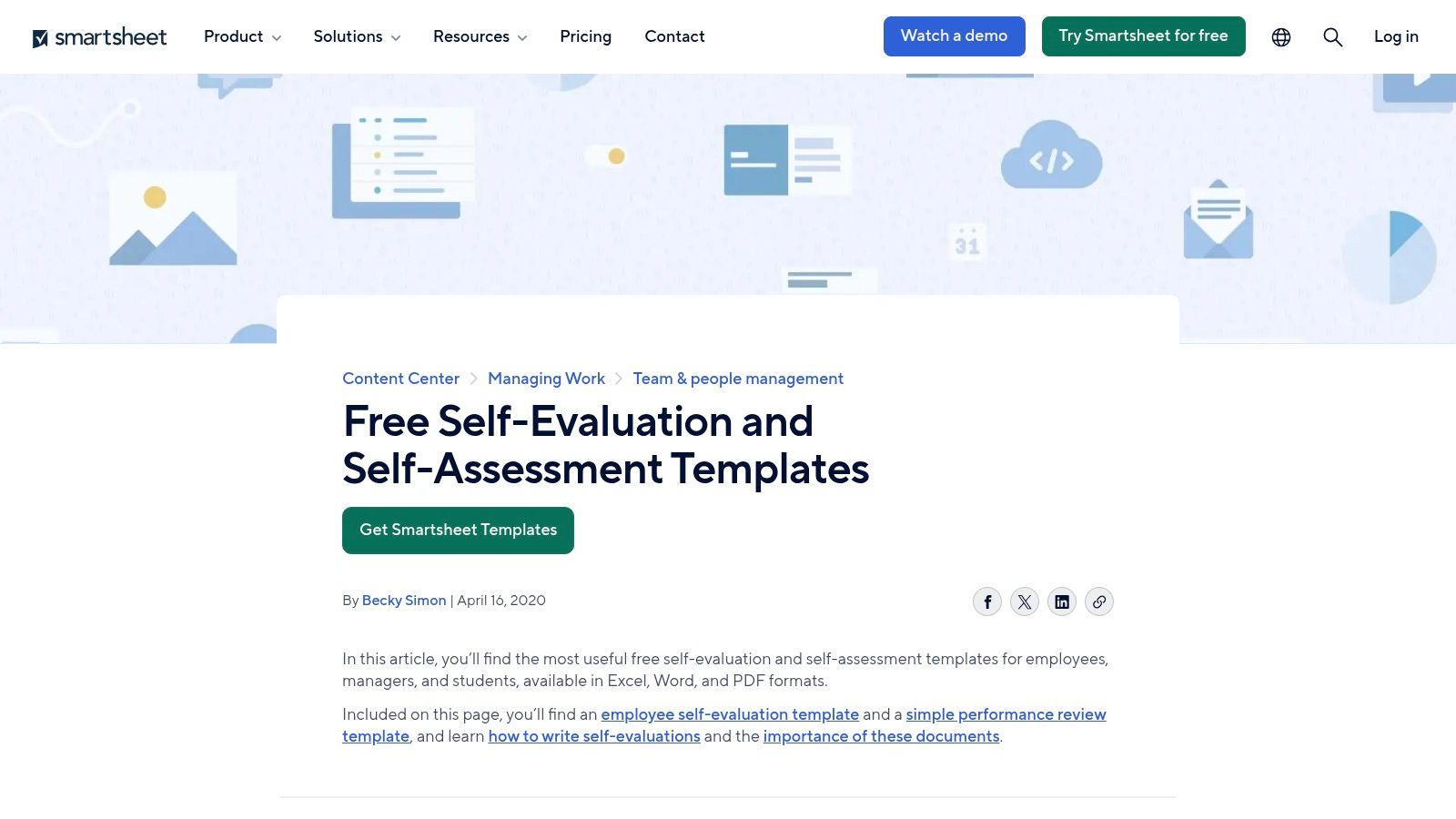
We found their templates to be well-structured, with clear sections for accomplishments, goals, and core competencies. The real power, however, comes when you pair these static files with Smartsheet’s own platform. You can mirror their example layouts in a new sheet and use their workflow automation to handle distribution, send reminders, and even compile results into a dashboard. This creates a hybrid approach: the simplicity of a spreadsheet with the intelligence of a project management tool.
Here’s the honest assessment: using the downloadable files alone means you’re on the hook for manual collection and tracking. But if you’re already a Smartsheet user or willing to become one, it’s a great way to keep your entire performance review process within a single system. The templates are free to download, but using the automation features requires a Smartsheet subscription.
Link: Smartsheet Self-Evaluation Templates
2. Jotform
If speed and mobile access are your top priorities, Jotform is where you should look to build your employee self-evaluation form. It’s a drag-and-drop form builder that excels at creating web-based forms that work beautifully on any device. This is a huge plus for teams with frontline or field workers who need to complete evaluations on their phones.
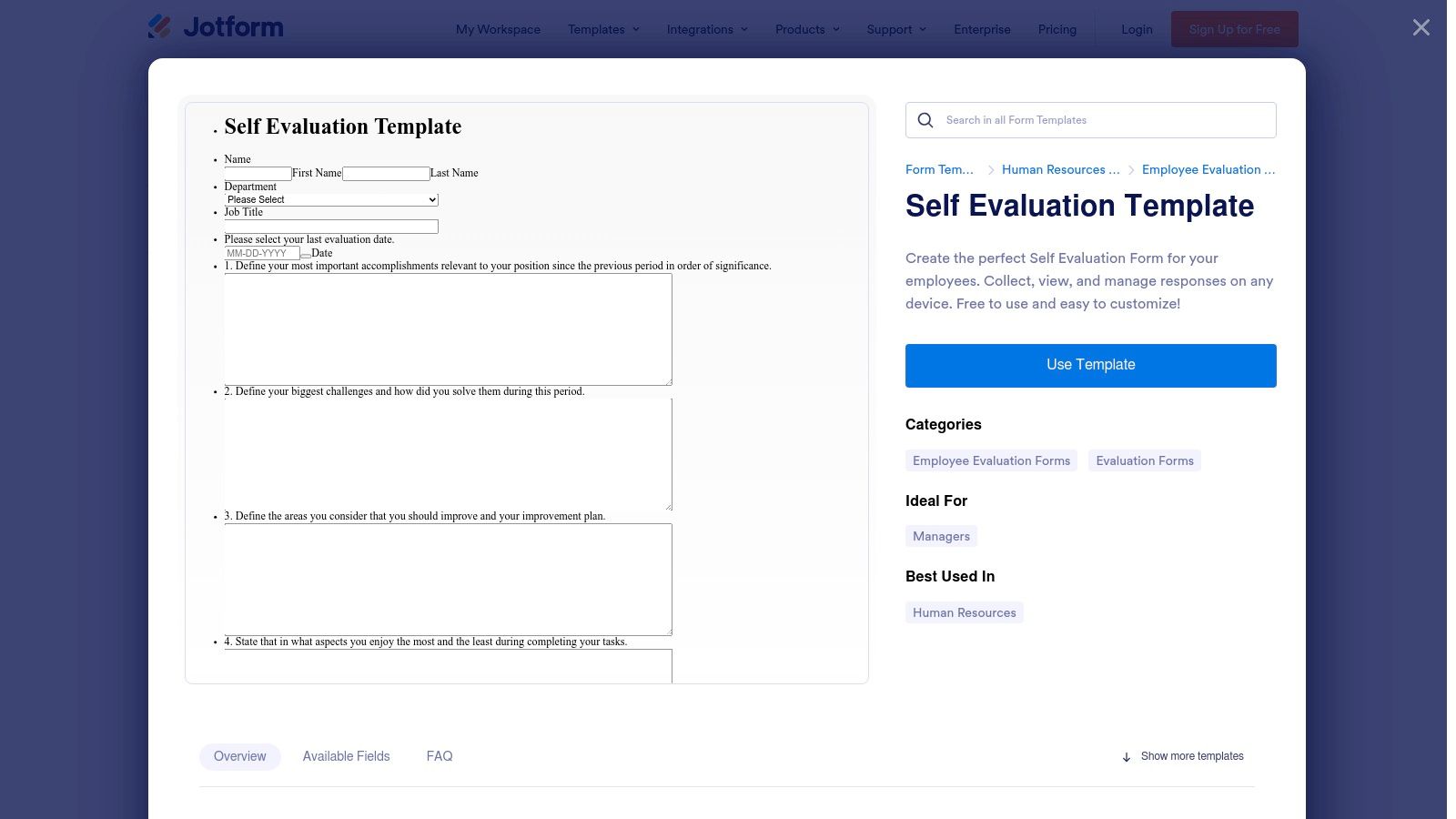
We were impressed by how quickly you can go from template to a live, shareable link. The editor allows for deep customization, letting you add conditional logic (e.g., show extra questions based on a rating), collect e-signatures, and allow file uploads for work samples. The real magic happens with its workflow capabilities. You can set up approval flows where a completed self-evaluation is automatically routed to a manager’s inbox for review, with everything tracked in one place. Integrations with tools like Google Drive, Sheets, and Slack mean the data flows right into the systems you already use.
Here's the practical truth: Jotform is fantastic for a fully digital, paperless process. The free plan is generous but does have monthly limits on submissions and storage, so high-volume organizations will need to subscribe. If your goal is a fast, easy-to-use, and mobile-friendly form that connects to your existing tools without any fuss, Jotform is a standout choice.
Link: Jotform Self-Evaluation Template
3. SurveyMonkey
If you want to move beyond static documents and turn your employee self-evaluation form into a data-gathering machine, SurveyMonkey is an excellent choice. It offers a ready-made template that transforms the review process into an interactive survey. This approach is ideal for HR leaders who want to analyze responses in aggregate, spot trends, and report on company-wide sentiment.
We found their template is intelligently designed with pre-written questions covering key performance areas like communication, problem-solving, and goal achievement. The real magic happens once responses start rolling in. You can use SurveyMonkey’s analytics to filter results by department or role, create dashboards, and even benchmark your team’s feedback against industry averages. This is where it clearly stands apart from a simple Word or PDF form.
Let's be honest: this method feels more like a "survey" and less like a traditional performance document, which might not suit every company's culture. While the template is free to use, accessing the most powerful analytics and reporting features, like skip logic and advanced data exports, requires a paid SurveyMonkey plan. But if your goal is to gather structured, quantifiable feedback at scale, it’s a smart and efficient way to do it.
Link: SurveyMonkey Employee Self-Evaluation Template
4. Typeform
If you believe the traditional, multi-page form is a barrier to honest feedback, Typeform offers a completely different approach. It turns your employee self-evaluation form into a friendly, one-question-at-a-time conversation. This format is far less intimidating than a wall of text fields and can significantly improve completion rates, especially for busy, non-desk, or mobile-first employees.
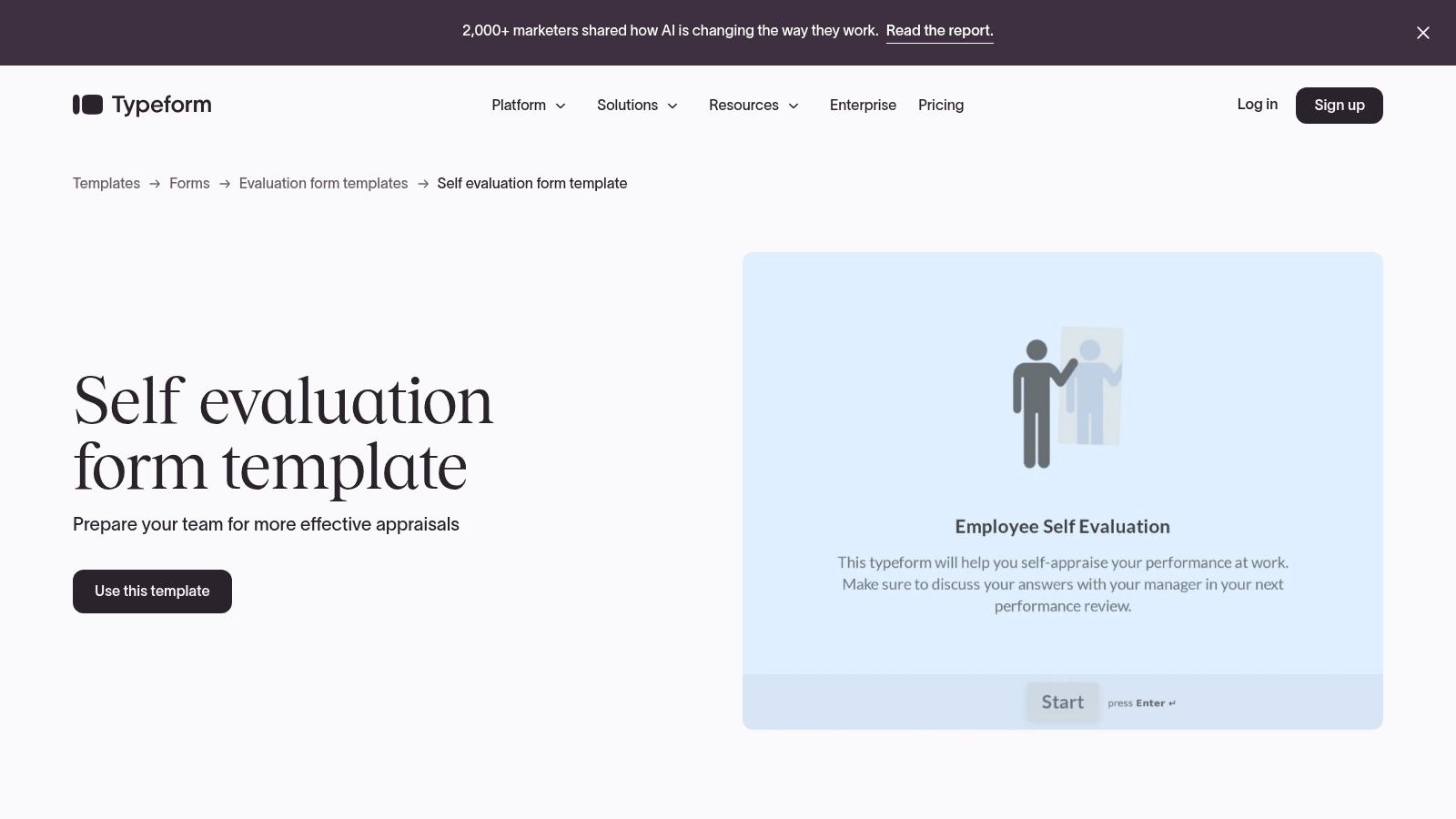
The real magic is in its conditional logic. You can build a dynamic evaluation that asks follow-up questions based on an employee’s previous answers, making the experience feel personal and relevant. For instance, if an employee rates their performance on a project as "needs improvement," the form can automatically ask for specifics on what challenges they faced. This makes the entire format feel more like a guided reflection than a static document. The forms are also beautifully designed and easy to share via a direct link.
Here’s the honest assessment: Typeform is exceptional for engagement and user experience, but it’s not built for creating a formal, printable document. The focus is on capturing data through a smooth, interactive flow. The free plan is quite limited in response numbers, so you’ll likely need a paid subscription for a full performance cycle. If your priority is making self-evaluations less of a chore and more of a conversation, Typeform is a fantastic choice.
Link: Typeform Self-Evaluation Template
5. Formstack
If your employee self-evaluation form is just one step in a much larger, multi-stage HR process, Formstack is where you should be looking. It’s less of a simple form builder and more of a workflow engine. This makes it a great fit for organizations where self-evaluations need to trigger approvals, generate official documents, and be routed securely through different departments.
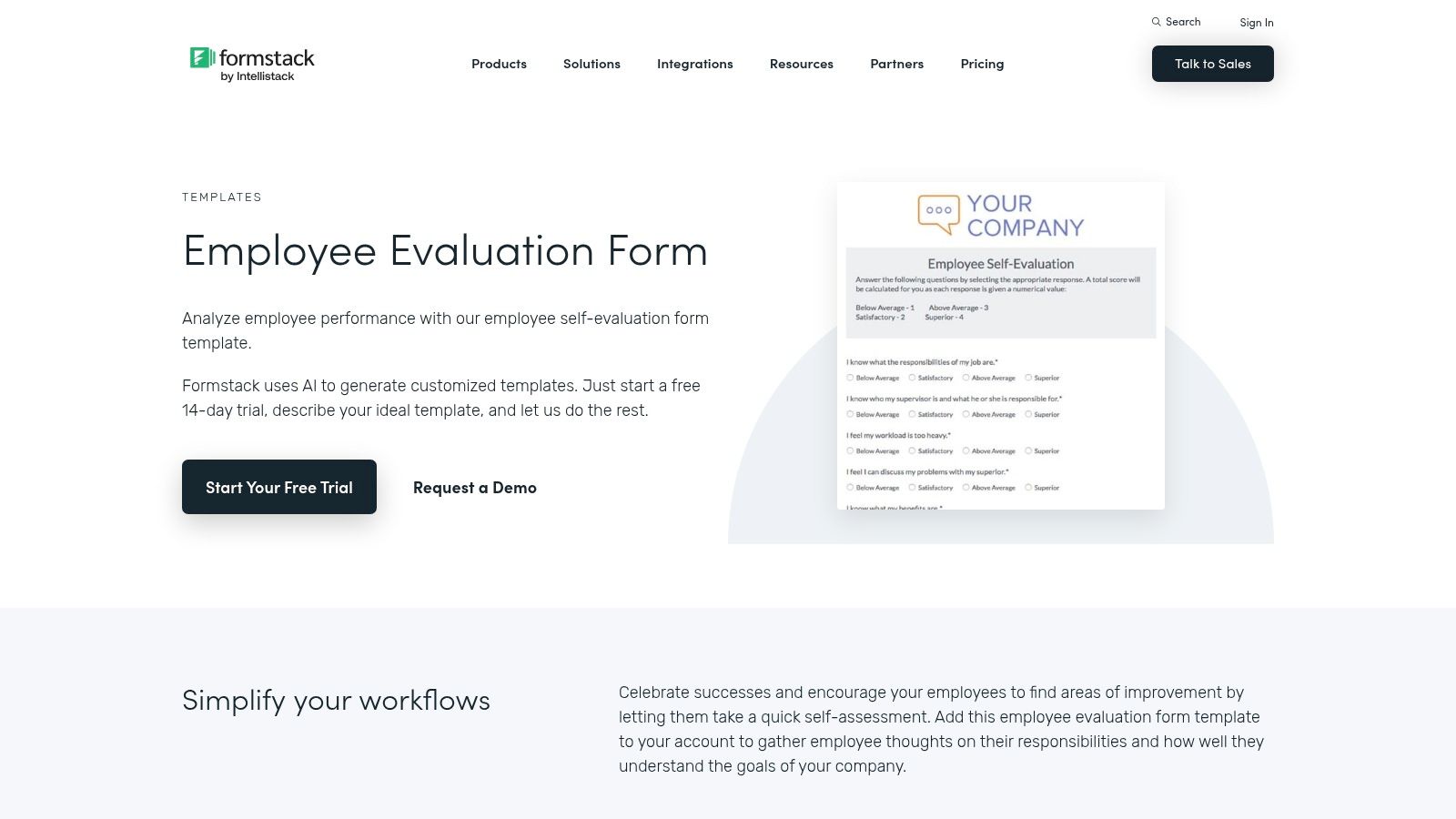
We were impressed by how Formstack connects the dots. You can build a form where an employee's submission automatically goes to their manager for approval, then to HR for review. If approved, it can even auto-generate a PDF summary with an e-signature field for the final record. Its drag-and-drop builder is straightforward, and the ability to add conditional logic makes the form feel intelligent and personalized. This is all backed by strong compliance features, which is critical for handling sensitive employee data.
Here’s the honest assessment: Formstack is more than you need for a quick, one-off form. Its pricing is geared toward businesses that need to automate multiple processes, not just a single evaluation. The learning curve is a bit steeper than basic form tools, but if you have complex HR workflows that require tight controls and audit trails, it’s an incredibly capable tool for building a robust employee self evaluation form system.
Link: Formstack Employee Evaluation Template
6. Formsite
For teams that need a reliable, no-frills digital form builder, Formsite is a solid choice. It's a mature platform that focuses on doing one thing well: creating stable, secure online forms. While it may not have the slick, modern interface of newer tools, its strength is its straightforwardness. You get a dedicated self-assessment template that you can brand, modify with conditional logic, and distribute to your team quickly.
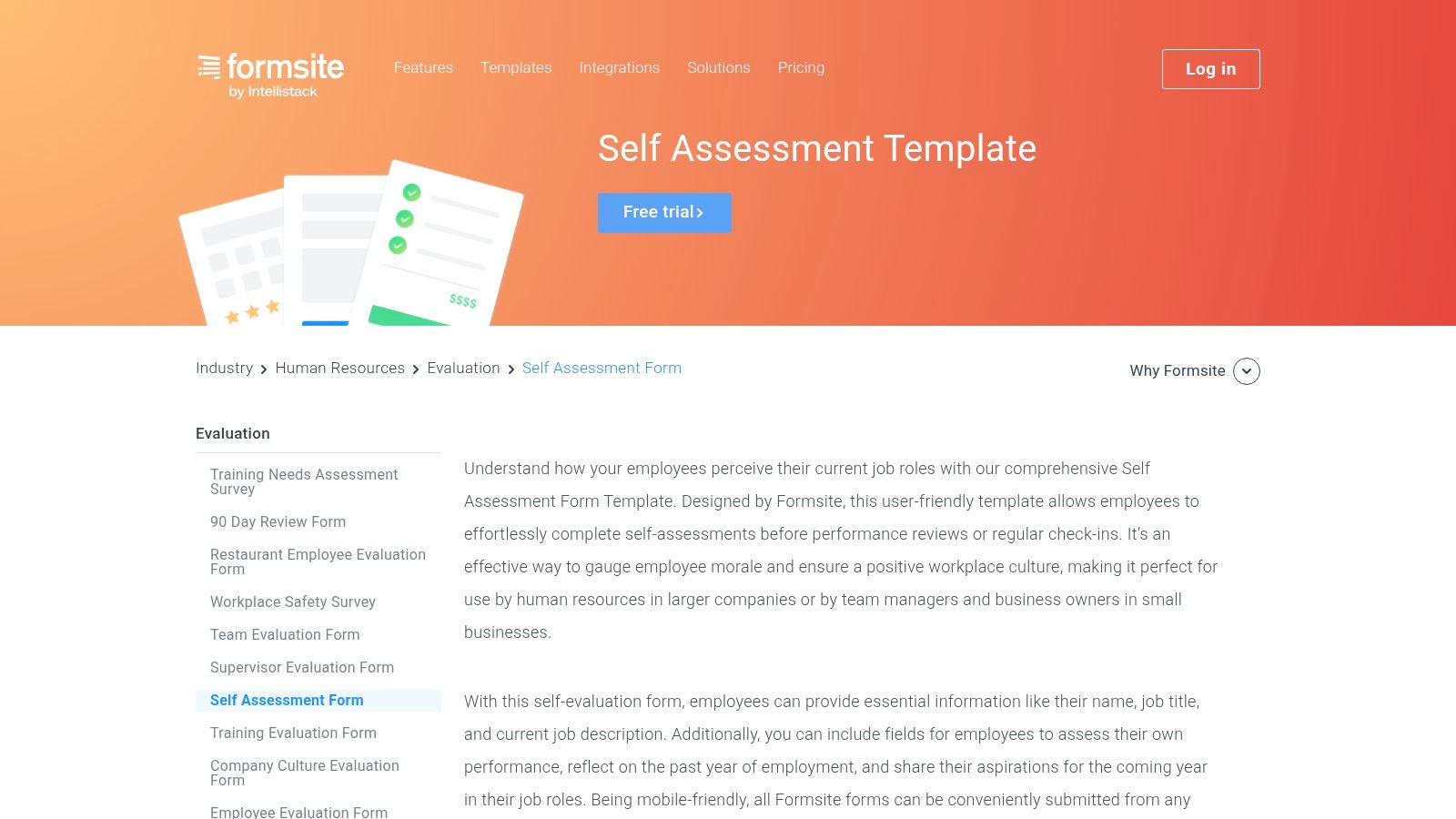
We found its setup process to be incredibly simple. You can take their template and have a functional employee self evaluation form ready in minutes. Features like file uploads are built-in, allowing staff to attach supporting documents or examples of their work directly to their submission. The platform also handles email notifications and can route completed forms to the right manager automatically, which removes a common administrative headache. Results are easily exported to a spreadsheet or PDF for analysis and record-keeping.
Here’s the honest take: Formsite is utilitarian. It prioritizes function over flash, and its integration options aren't as extensive as some other platforms. However, for a small or mid-sized business that just needs a dependable way to collect self-evaluations without a steep learning curve or high cost, it gets the job done. The templates are available with a paid subscription, which is required to build and share forms.
Link: Formsite Self-Assessment Form Template
7. Cognito Forms
For teams that need more than a static template but aren't ready for a full-blown HRIS, Cognito Forms strikes an interesting balance. It’s an advanced form builder that offers a specific employee self-evaluation template complete with connected workflows, making it a powerful tool for routing information between employees and managers. This is less about a simple download and more about building a small, focused application for your review process.
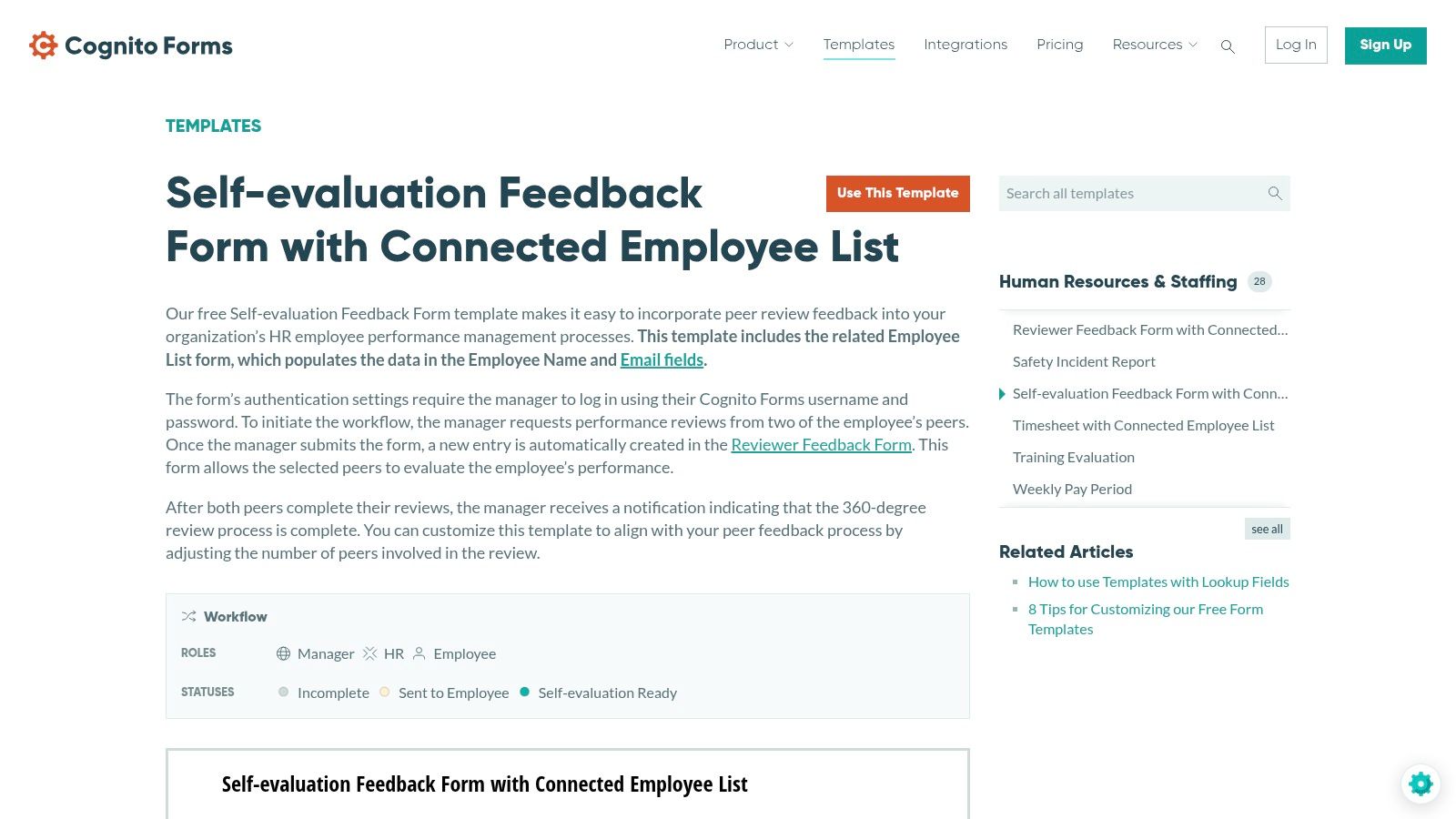
What we appreciated most was the built-in logic. You can create a form that, once submitted by an employee, automatically generates a task for their manager to review and add comments. Features like role-based views, save-and-resume for longer forms, and digital signatures bring a level of professionalism that simple documents can’t match. It’s particularly useful for ensuring a manager follow-up actually happens after the self-review is complete.
Here’s the practical take: setting up a truly customized employee self evaluation form requires some initial configuration. It’s not plug-and-play like a Word doc. However, considering its rich feature set at a very reasonable price point, it’s an excellent option for small to mid-sized businesses that want to add automation and accountability to their performance reviews without a major investment. The templates are a great starting point, but the real value is in the workflow features that power them.
Link: Cognito Forms Self-Evaluation Template
8. Visme
If brand consistency and visual polish are non-negotiable for you, Visme is where you should look. It takes the concept of a form and treats it like a piece of branded communication. Instead of a bland document, you get a tool to build a visually engaging, web-based employee self-evaluation form that looks like it came straight from your marketing department. The platform is built for designers and marketers but is simple enough for HR teams to pick up.
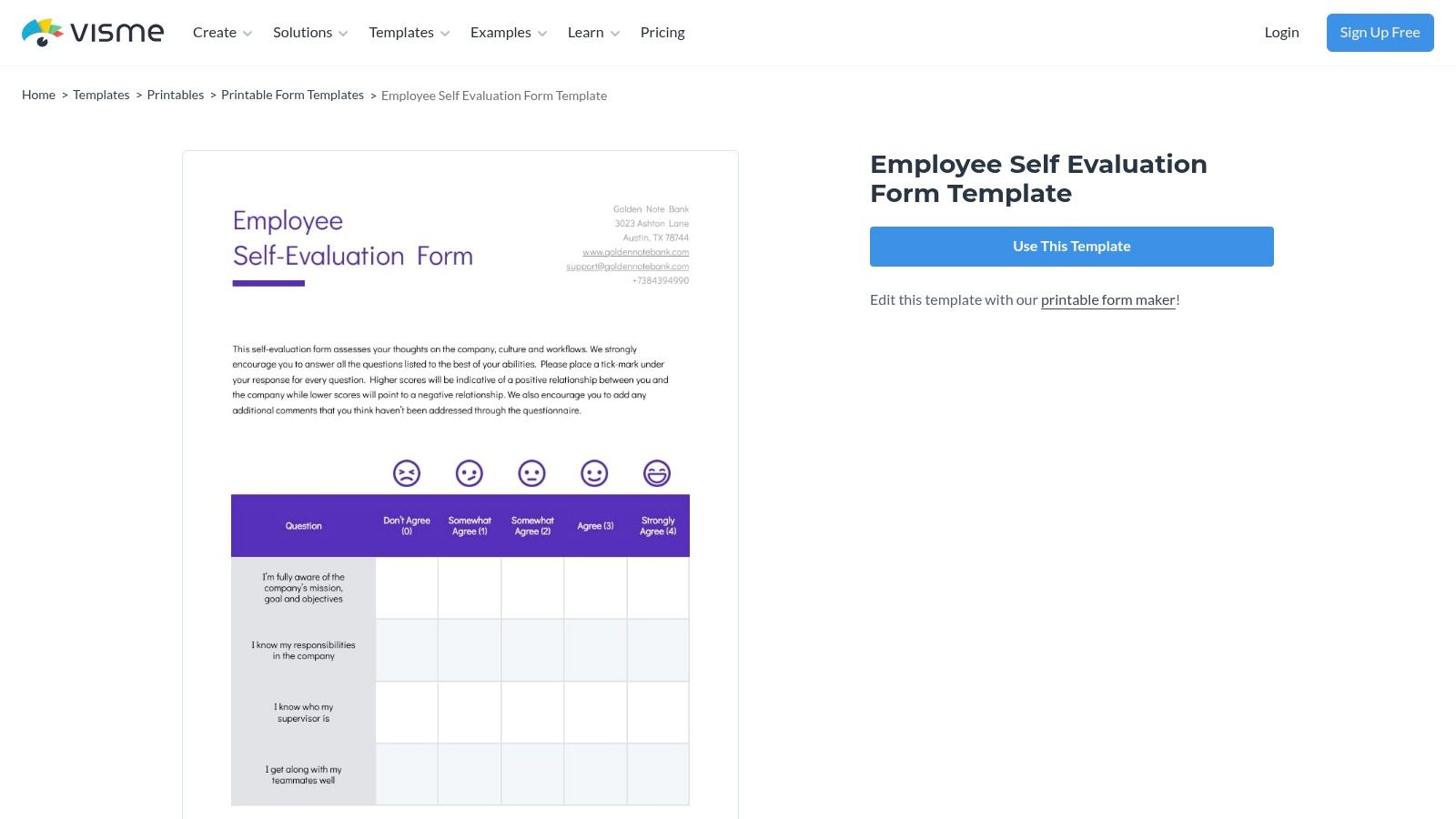
We found its no-code design tools, complete with themes, fonts, and icon libraries, make it incredibly easy to align a form with your company’s style guide. You can publish the form as a live webpage and share it with a link, which makes it instantly mobile-friendly. It even provides basic analytics to track views and submissions, a nice touch that most document-based templates lack. This is perfect for organizations that want every employee touchpoint to feel professional and cohesive.
Here’s the honest assessment: Visme is a design tool first and an HR workflow tool second. It shines for creating and distributing beautiful forms, but it doesn't offer the deep approval chains or reporting capabilities of dedicated HR software. If your priority is a stunning, easy-to-distribute self-evaluation that reinforces your employer brand, Visme is an excellent choice. Basic features are free, but accessing premium templates and features requires a paid plan.
Link: Visme Self-Evaluation Form Templates
9. SafetyCulture (iAuditor)
For teams on their feet all day, SafetyCulture (formerly iAuditor) offers a different spin on the self-evaluation. It’s built for frequent, repeatable check-ins in environments like retail, logistics, and healthcare. The platform treats a self-evaluation like a structured inspection or audit, which is perfect for roles where compliance and operational consistency are key. Employees can complete their forms directly on a mobile device, even adding photos as evidence.
We noticed its strengths lie in its mobile-first design and rigorous tracking. You can schedule recurring self-assessments, and every submission creates a clear audit trail. This is great for frontline managers who need to ensure their teams are consistently hitting specific performance and safety standards. The ability to export reports to PDF or Word makes it easy to archive or share with HR for formal reviews.
Here’s the honest take: the interface feels more like an operational checklist tool than a native HR platform. While you can customize the employee self evaluation form template, its DNA is in audits and inspections, not nuanced performance conversations. It’s an excellent fit if your goal is operational excellence and compliance tracking for field-based teams, but it may feel rigid for office-based roles focused on creative or strategic goals. The templates are free, but advanced features like scheduling and analytics require a paid plan.
Link: SafetyCulture Self-Assessment Template
10. Paperform
If you want your employee self-evaluation form to look less like a corporate document and more like a part of your brand, Paperform is an excellent choice. It’s a form builder at heart, but one that emphasizes beautiful design and a smooth user experience. This makes it ideal for teams who want to create a modern, branded self-assessment without needing heavy-duty survey software or complex coding.
We were impressed with how easy it was to customize their performance evaluation template. You can add your company logo, change colors, and embed the form directly into your intranet. The real standout feature is conditional logic. You can build a dynamic form where questions change based on an employee’s role or previous answers, creating a more personalized and relevant experience. It also handles basic calculations, which is useful for any scored sections.
Here’s the honest take: Paperform isn’t a dedicated HR performance management platform. You won’t find built-in modules for managing review cycles or compiling deep analytics like you would in a specialized tool. You have to build those workflows yourself using integrations with Google Sheets, Slack, or Zapier. However, if your main goal is to create a polished, user-friendly, and highly customizable self-evaluation form that employees won't dread filling out, Paperform strikes a great balance.
Link: Paperform Performance Evaluation Form Template
11. Asana
For teams that aren’t ready to commit to a full performance management system but want to move past a blank document, Asana offers a thoughtful starting point. They provide a clean, one-page PDF worksheet that feels more like a guided reflection than a corporate form. It’s perfect for organizations wanting a simple, printable structure for employee self-evaluations without the immediate overhead of new software.
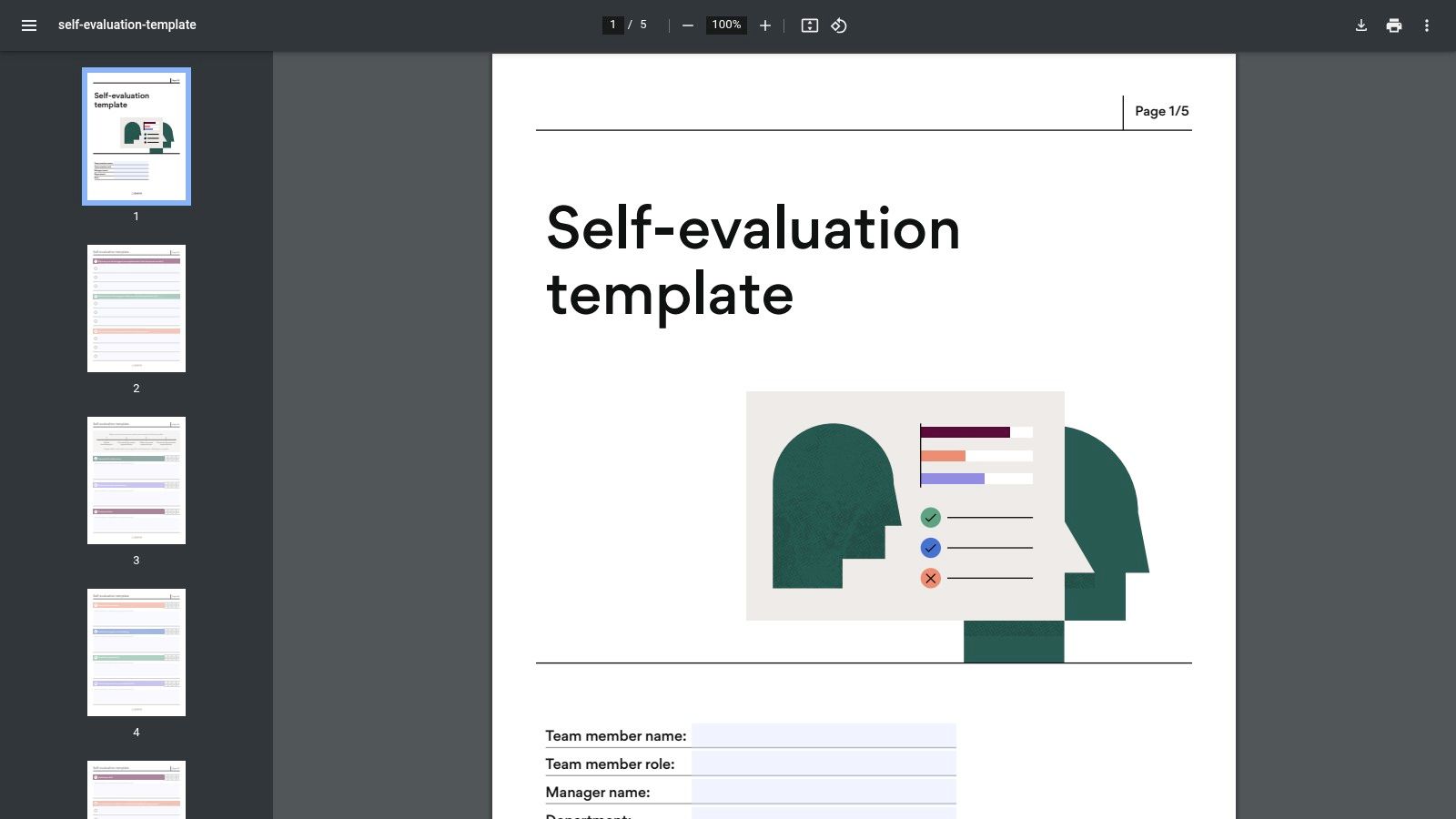
We appreciate its simplicity. The worksheet is divided into clear prompts covering accomplishments, challenges, and future goals. This structure encourages employees to think deeply about their contributions and development needs. Because it’s a simple PDF, there’s zero setup. You can download it and email it to your team within minutes. The layout is also easy to replicate in a Google Doc or Word file if you want to make small tweaks.
Let’s be honest, though: its greatest strength is also its main weakness. This is a purely manual tool. You’re responsible for distributing the files, chasing down responses, and compiling any insights yourself. There are no automations, analytics, or integrations. If you’re already an Asana user, you could build a project to track submissions, but the worksheet itself lives outside the platform. It’s a great, free resource for getting a structured conversation started, especially in smaller teams.
Link: Asana Self-Evaluation Worksheet
12. Lattice
Lattice is a well-known name in performance management, so it’s no surprise they offer a solid self-evaluation worksheet. This one is a simple, printable PDF, but its structure is modern and thoughtful. It’s a great starting point if you want to build an employee self-evaluation form that reflects contemporary HR practices, even if you’re not a Lattice customer.
We appreciate how the template is organized into three clean sections: Impact, Competencies, and Development. The prompts are open-ended and encourage employees to think critically about their contributions and future growth, moving beyond a simple checklist of tasks. It guides them to connect their work to broader company values and goals, which is key for a meaningful performance review. This makes it an excellent, manager-friendly resource for framing productive conversations.
Here’s the honest assessment: this is a static document. You're getting a well-designed PDF, but you’ll have to handle all the logistics of distribution, collection, and tracking yourself. There's no automation or a way to fill it out online. However, if you need a free, expertly crafted template to use as a foundation for your own internal process, this is one of the better ones out there. You can easily adapt its questions into your own survey tool or document.
Link: Lattice Self-Evaluation Template
Top 12 Employee Self-Evaluation Form Tools Comparison
Product | Core format & workflow | UX & Quality (★) | Value & Price (💰) | Best for (👥) | Unique selling point (✨🏆) |
|---|---|---|---|---|---|
Smartsheet | Downloadable Excel/Word/PDF templates + optional Smartsheet workflows | ★★★★ | 💰 Free templates; pay for Smartsheet automations | 👥 HR teams liking spreadsheets | ✨ Familiar spreadsheet format; 🏆 no vendor lock‑in |
Jotform | Mobile-first drag‑and‑drop forms with conditional logic & e‑sign | ★★★★ | 💰💰 Freemium (limits on free tier) | 👥 Frontline & mobile teams | ✨ Fast publish + 100+ integrations; 🏆 strong mobile UX |
SurveyMonkey | Survey-style templates with analytics, skip logic & benchmarking | ★★★★ | 💰💰 Paid tiers for advanced analytics | 👥 HR leaders needing reporting & benchmarks | ✨ Robust analytics & benchmarking; 🏆 survey insights |
Typeform | Conversational one‑question‑at‑a‑time flows with personalization | ★★★★★ | 💰💰 Response limits on lower tiers | 👥 Non-desk workers & engagement-focused teams | ✨ High completion UX; 🏆 modern conversational design |
Formstack | Low-code forms with approvals, doc generation & compliance features | ★★★★ | 💰💰💰 Business/enterprise pricing | 👥 Regulated industries & enterprise HR | ✨ Governance & workflow controls; 🏆 compliance-ready |
Formsite | Stable, utilitarian form builder with exports & basic logic | ★★★ | 💰💰 SMB-priced, reliable | 👥 SMBs wanting simple, dependable forms | ✨ Easy setup & exports; 🏆 stability |
Cognito Forms | Role-based views, save/resume, approvals and calculations | ★★★★ | 💰 Good value at lower tiers | 👥 Teams routing manager follow-ups | ✨ Rich features for price; 🏆 value-for-money |
Visme | No-code design-forward forms with branding and visual themes | ★★★★ | 💰💰 Mid-tier for visual teams | 👥 Brand/marketing-led teams | ✨ Polished visual customization; 🏆 enterprise styling |
SafetyCulture (iAuditor) | Mobile audits/checklists with photos, signatures & audit trails | ★★★★ | 💰💰 Field-focused enterprise pricing | 👥 Frontline: retail, logistics, healthcare | ✨ Audit trails & scheduling; 🏆 field compliance |
Paperform | Branded, conditional forms with automations & embeds | ★★★★ | 💰💰 Mid (good automation features) | 👥 Teams wanting modern branded forms | ✨ Easy theming + automations; 🏆 modern UX |
Asana | Printable PDF self-evaluation worksheet (manual collection) | ★★ | 💰 Free/low-cost document | 👥 Teams preferring manual/print workflows | ✨ Zero setup; 🏆 simple reflective structure |
Lattice | Concise self-eval PDF aligned to performance frameworks | ★★★ | 💰 Free template (platform paid) | 👥 Managers aligning to competencies | ✨ Manager-friendly prompts; 🏆 HR-aligned structure |
A Form Is Just a Form. The Conversation Is What Matters.
We’ve just looked at a dozen different ways to build an employee self evaluation form. We've seen everything from Smartsheet's powerful grids to Typeform's conversational flair. It’s easy to get lost in the features, the conditional logic, and the slick designs. I’ve done it myself.
But here’s the truth I’ve learned after years of managing teams: a good tool can make a painful process easier, but it can’t fix a broken culture.
A beautifully designed employee self evaluation form in a low-trust environment will get you guarded, unhelpful answers. People will write what they think you want to hear. On the flip side, a clunky spreadsheet shared between a manager and an employee who have high psychological safety can spark a profound, career-changing conversation.
The Form Is the Starting Line, Not the Finish Line
At the end of the day, these forms are just vessels. Their only real job is to create a structured moment for a person to reflect honestly and for a manager to listen intently. Everything else is secondary. The goal isn't to find the perfect form-building software. The goal is to commit to the conversation that follows. That’s where the real work happens.
Think of it this way:
The questions you ask are about prompting reflection, not just collecting data.
The employee's answers are an invitation to a deeper discussion, not a final verdict.
The manager's role is to listen with curiosity, not just to score performance.
When we started building Pebb, this was the central idea. We wanted to create a digital space where these kinds of conversations could happen naturally, not just once a year during a formal review cycle. Context is built daily. It’s built in the small, consistent acts of communication and feedback that happen long before anyone opens an employee self evaluation form.
So, Where Do You Go from Here?
Choosing a tool is the easy part. If your needs are simple, a basic tool like Jotform or a well-designed Google Form might be all you need. If you require deep analytics and integrations with your HRIS, something like Lattice or Formstack might be a better fit. But don't let the tool selection paralyze you. Pick one that feels right for your team’s current size and technical comfort.
The hard part is creating the right environment. Before you send out a single link, ask yourself:
Do my employees feel safe enough to be honest about their struggles?
Do my managers have the training to turn feedback into a constructive coaching session?
Does our company culture reward vulnerability and growth, or does it punish mistakes?
A form is a tool for assessment. A conversation is a tool for development. One looks backward; the other looks forward. By all means, find a great tool and craft questions that make people think. But please, don't expect the form to do the heavy lifting for you. The real magic happens when a self-evaluation stops being an HR process and starts being a human one.
We built Pebb to be the place where work conversations happen, making formal reviews a natural extension of your team’s daily rhythm. Instead of a once-a-year event, feedback becomes a continuous part of your culture, all in one simple app. See how it works at Pebb.
