
8 Employee Development Plan Examples You Can Actually Use
Skip the theory. Here are 8 real employee development plan examples and templates for frontline teams. Ready to copy, adapt, and track in your work app.
Dan Robin
We've all seen it. The employee development plan gets written during review season, signed with good intentions, then disappears into a folder nobody opens again.
That's a shame, because the idea is right. We do want people to grow. The problem is that most plans are built like paperwork instead of work. If you're creating a professional development plan, the main job isn't filling out a template. It's building something your team can effectively use between shifts, across locations, and inside the pace of a normal week.
The plans that work aren't grand. They're clear, visible, and easy to revisit. They show what someone is trying to improve, how they'll practice, who will help, and when you'll talk about it again. That's it.
A widely cited benchmark says 76% of employees are more likely to stay when an organization offers continuous training. That matters because retention usually doesn't improve from one big workshop or one annual conversation. It improves when development becomes a steady rhythm of goals, learning, and follow-up.
Below are eight employee development plan examples I'd use. They're practical, adapted for frontline and distributed teams, and easy to run inside a modern work app like Pebb where tasks, coaching notes, resources, and check-ins can live in one place.
1. SMART Goals Development Plan Template
Some plans fail for a simple reason. They ask people to “improve communication” or “grow leadership skills” and leave it there. Nobody knows what success looks like, so nobody can tell if progress happened.
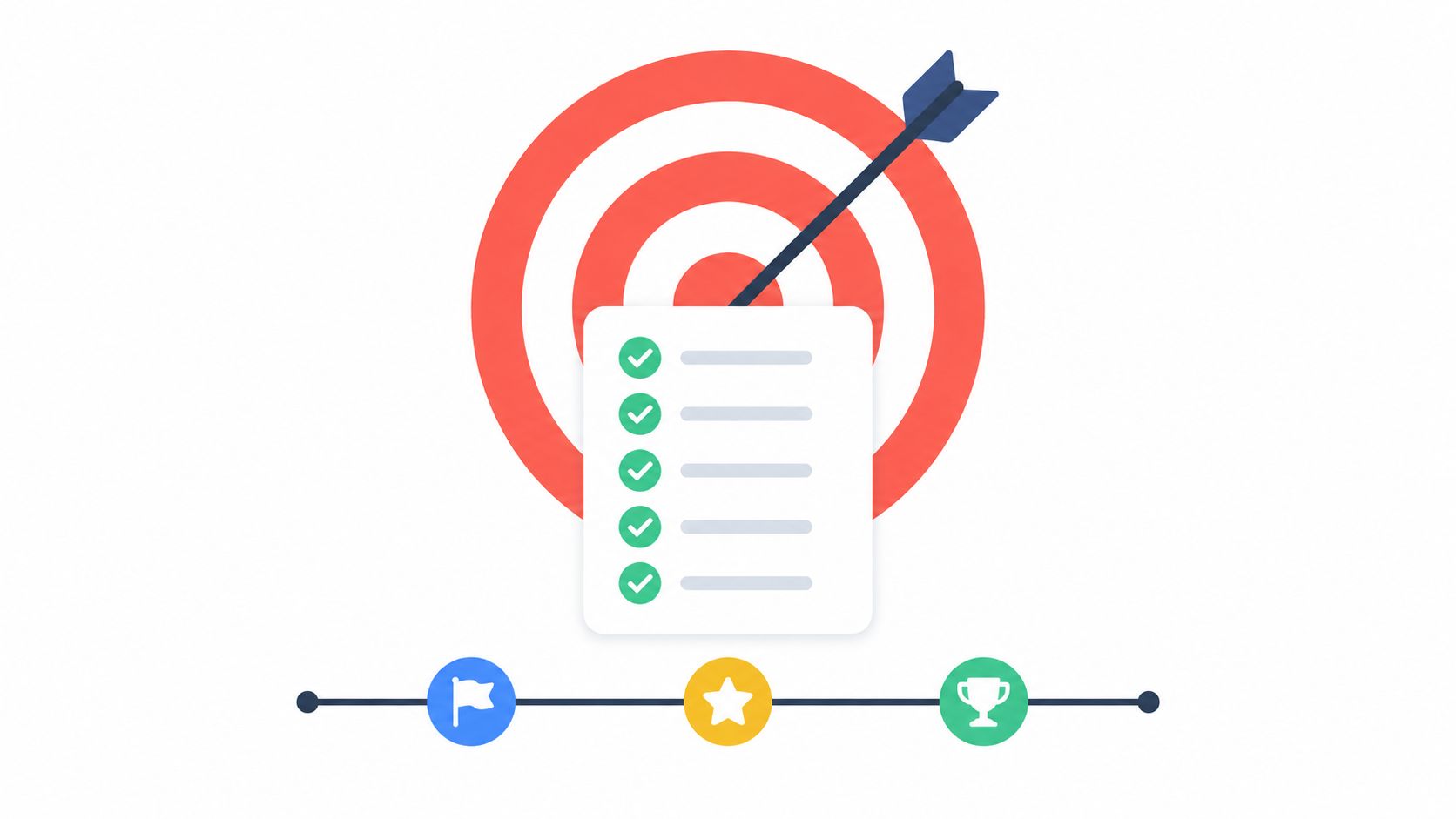
A SMART goals plan fixes that. You name one outcome, attach a deadline, and define what the employee will do each week to get there. For frontline teams, that clarity matters even more because managers often aren't sitting next to employees all day.
What it looks like in practice
A retail supervisor might set a goal to improve customer service performance over the next quarter, with weekly coaching on difficult interactions and a review of service scores. A warehouse team member might aim to complete forklift certification in a defined period, with study tasks, supervised practice, and a sign-off milestone. A healthcare worker might focus on faster response handling for patient concerns, with manager observation and short weekly reviews.
The point isn't the acronym. The point is visibility.
A frontline-focused framework from Axonify gives examples like “complete safety certification in 30 days” and “improve customer service CSAT score by 10% in 3 months”. That's the standard worth copying. Specific enough to act on, simple enough to track.
Practical rule: If a manager can't tell by Friday whether the employee moved forward, the goal is still too vague.
How to run it in Pebb
In Pebb, I'd break the plan into a few concrete pieces:
Main goal: Put the end result in a task or pinned post so it stays visible.
Weekly actions: Add small recurring tasks like shadowing, practice sessions, or reading one short guide.
Check-in rhythm: Use calendar reminders so the conversation happens on time, not “when things calm down.”
Shared resources: Store examples, playbooks, and coaching notes in the Knowledge Library.
If you care about consistency, this kind of structure works well with goal setting and tracking for performance. It turns development into a series of small completed actions instead of a hopeful sentence in a review form.
2. Competency-Based Development Plan
A competency plan starts from the role, not the aspiration. That's why it works so well in restaurants, hospitals, warehouses, and multi-site teams. The employee doesn't need to guess what “good” looks like. You define the core skills, then build the plan around the gaps.
That sounds obvious, but plenty of employee development plan examples skip this step. They jump straight to courses before agreeing on the actual capabilities the role requires.
Where this model earns its keep
Take a restaurant shift lead. The role might require food safety habits, calm customer handling, team coordination, and confident use of the POS system. If someone is strong with customers but weak on operational accuracy, the plan should reflect that. Not a generic leadership webinar. Targeted practice.
The same logic works in healthcare and logistics. A healthcare employee may need stronger communication under pressure. A warehouse supervisor may need better inventory control and clearer delegation. The plan gets sharper when you can say, “These are the competencies this role depends on, and here's where we're building.”
A good setup usually includes:
Defined competencies: Keep the list short and role-specific.
Observed behaviors: Describe what the skill looks like during real work.
Learning method: Match the skill to coaching, shadowing, job aids, or practice.
Review point: Set a date to assess whether the behavior is showing up consistently.
What works and what doesn't
What works is plain. Pick a handful of skills that matter now, not every possible future strength. What doesn't work is creating a giant matrix nobody reads.
I've seen managers overbuild these. They create twenty competency categories, score everything, then never use the document again. Better to define three to five role-critical competencies and revisit them often.
There's also a real frontline wrinkle here. Many development guides assume desktop access and long quiet blocks for self-assessment. That's not how shift work runs. As iSpring notes in its discussion of employee development plan examples for scheduling realities, many templates still don't address how learning fits into limited shift windows, mobile access, or on-the-clock coaching. A competency plan is one of the best ways around that because it lets you attach learning directly to the job.
In Pebb, I'd organize competencies by role inside Spaces, keep short training resources in the Knowledge Library, and use tasks to mark observed milestones. That makes the plan usable across shifts instead of trapped in HR paperwork.
3. Mentorship and Coaching Development Plan
Documentation helps. Relationships teach.
That's the core idea behind a mentorship and coaching plan. You pair someone who's done the work with someone who's growing into it, then give the relationship enough structure that it doesn't turn into “grab me if you have questions.”

Why this works better than training alone
A technical onboarding case study described a setup with self-paced documentation, weekly cohort sessions, and assigned mentors during the first three months. The result was significantly lower time-to-productivity, fewer interruptions for senior engineers, and better new-hire satisfaction. The lesson is bigger than tech. Documentation matters, but guided support is what helps people use it.
That pattern adapts well to frontline work. A senior nurse can mentor a newer nurse on patient handoffs. An experienced store manager can coach a new supervisor through staffing calls and customer escalations. A logistics coordinator can help a newer teammate learn compliance routines without learning them the hard way.
Don't confuse access to a mentor with active mentoring. If there's no cadence, it usually fades.
The plan I'd use
A simple mentoring plan usually has four parts:
One clear focus: Pick one or two skills, not an entire career path.
Recurring touchpoints: Weekly or biweekly conversations are easier to sustain than vague open-door promises.
Real work review: Discuss actual situations from the last week.
Short written recap: Capture the next action so both people know what happens before the next meeting.
Inside Pebb, that can live in a private Space with recurring meetings, notes, and shared resources. Private chat works for quick follow-up. Video calls help when mentor and mentee aren't in the same location.
For coaching style, I also prefer forward-looking conversations over autopsies. It is in this context that feedforward versus feedback becomes useful. Instead of circling the same old mistakes, you talk about what the employee should try next time. That keeps the plan from feeling corrective when it's supposed to be developmental.
4. 360-Degree Feedback Development Plan
Some employees have a blind spot their manager can't see. Others look polished upward and leave a mess sideways. That's why a 360 plan can be useful. It gives you a fuller picture before you start prescribing development.
This one is especially helpful for managers, team leads, department heads, and project coordinators. Anyone whose effectiveness depends on how other people experience them.
When to use it, and when not to
Use a 360 plan when the role involves coordination, influence, leadership, or cross-team work. A hospital department head might need input on communication and calm under pressure. A store manager may need perspective on motivation, follow-through, and fairness. A project coordinator may need honest feedback on responsiveness and problem solving.
Don't use it as a trap. If employees think multi-source feedback is just a polite way to stack evidence against them, they'll game it or shut down.
A strong 360 development plan usually includes:
A small set of themes: Communication, coaching, decision-making, collaboration.
More than one viewpoint: Manager, peers, direct reports, and self-reflection when relevant.
A review conversation: Someone needs to help interpret the feedback.
Two or three actions: Any more, and the employee will lose focus.
The trade-off most teams miss
A 360 creates nuance, but it also creates noise. You'll often get conflicting impressions. One person says the manager is decisive. Another says they rush people. Both may be true.
That's why the plan should focus on patterns, not one-off comments. I'd never build a development plan around the harshest response in the pile. I'd look for repeated themes and ask, “What behavior would improve working relationships for the majority here?”
In Pebb, the practical side is straightforward. Keep reports private, use secure file sharing for summaries, and hold the review conversation in a restricted Space or one-to-one meeting. Then document only the agreed actions, not every raw comment. The plan should clarify the path forward, not preserve every bruise.
5. Learning Path and Certification Development Plan
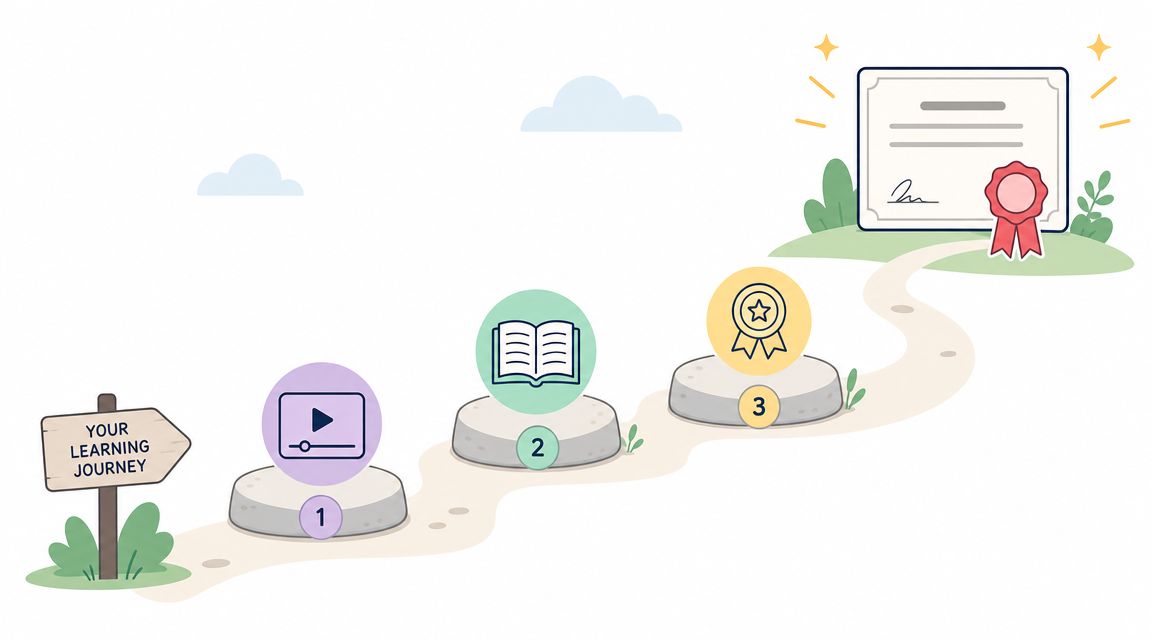
Some roles need a sequence. Not just “learn more,” but learn this, then this, then prove you can do it. That's where a learning path plan shines.
This is common in healthcare, logistics, retail operations, and any role where certifications, compliance, or formal skill progression matter. It also helps newer employees see a path that isn't purely abstract. Finish the next module. Practice the next task. Earn the next credential.
Why sequencing matters
A learning path prevents random acts of training. Instead of sending people whichever course looks useful that week, you build a progression tied to the role.
For example, a warehouse employee might move from safety basics to equipment operation to supervisor prep. A retail employee might start with product knowledge, then customer service standards, then keyholder or manager training. A healthcare worker may need a path that combines mandatory certifications with role-specific protocols and refreshers.
The historical shift here matters. Chronus notes that 91% of millennials were reported to expect to stay in a job for fewer than three years, which pushed employers toward more formal development planning with clearer milestones and review cadences. That's one reason learning paths matter so much now. People don't stick around because you vaguely promise growth. They stay engaged when the next step is visible.
A learning path should answer one simple question for the employee: what do I do next?
How to make it usable
What works:
Short modules: Easier to complete during real workweeks.
Clear prerequisites: Don't hide the order.
Visible deadlines: Especially for renewals and compliance items.
Manager checkpoints: Courses alone don't tell you whether the learning stuck.
What doesn't work is piling every training asset into one library and calling it a path.
In Pebb, I'd keep the modules in the Knowledge Library, create tasks for completions and renewals, and use role-based Spaces for peer questions. That setup is useful for distributed teams because people can access the same path on mobile without waiting for a classroom slot.
6. Performance Improvement Plan with Development Focus
A PIP has a bad reputation, and sometimes it earns it. Too many are written like paperwork for a decision that's already been made. The employee can feel that immediately.
But a development-focused PIP is different. It's still formal. It still names the problem. It still requires improvement. What changes is the posture. You're not documenting failure in advance. You're giving the employee a fair, specific path back to solid performance.
What this looks like when it's done well
Say a nurse is struggling with attendance and handoff consistency. Or a retail associate knows the floor but keeps missing product details that affect sales conversations. Or a warehouse supervisor has trouble delegating, so work piles up around them. Those are performance problems, but they can also be coaching problems.
A useful PIP includes the expectation, the current gap, the support offered, the timeline, and the review rhythm. The best ones remove ambiguity. The worst ones bury the underlying issue under soft language, then surprise the employee later.
Keep it human, keep it exact
I'd build this kind of plan around a few hard rules:
Name the behavior clearly: Don't write around the issue.
Attach support to each expectation: Training, shadowing, job aids, or coaching.
Set frequent check-ins: Weekly is usually better than waiting too long.
Record progress factually: Stick to observed behavior, completed actions, and agreed next steps.
This is one place where tone matters a lot. A development-focused PIP can still be serious without becoming cold. Private communication matters too. Sensitive discussions should stay in restricted spaces, with one place for documents, notes, and deadlines.
What doesn't work is pretending a PIP is the same as a growth plan for a strong performer. It isn't. The employee knows that, and so does the manager. But if the process is fair, concrete, and supported, it can still help someone recover without losing dignity.
In Pebb, I'd handle the entire process through private Spaces, task reminders, shared resources, and a documented check-in cadence so the plan stays consistent and professional.
7. Individual Development Plan with Career Mapping
Some plans should look beyond the next quarter. Not every employee is trying to fix a current gap. Some are trying to figure out where they could go next, and whether your company is a place where that future makes sense.
That's where an IDP with career mapping helps. It connects current role, future direction, and the steps in between.
Why this matters for retention
People rarely leave because they hate every part of the job. Often they leave because the future feels blurry. If there's no visible path, ambition turns outward.
That's why ongoing development matters so much. As noted earlier, organizations that invest in continuous training are more likely to keep employees engaged. The strongest individual plans make growth visible over time. Not with vague encouragement, but with milestones, skill targets, and review dates.
A good IDP might map a hospital technician toward a nursing path, a retail associate toward store management, or a warehouse worker toward operations supervision. In each case, the plan links aspiration to actual requirements. Education, certifications, leadership practice, stretch assignments, and manager support all have a place.
A career map should feel grounded
I like career mapping when it includes both ambition and reality. You can want the next role, but you also need to know what that role asks of you.
A useful IDP often includes:
Target role or direction: Specific enough to guide decisions.
Current strengths: What the employee already brings.
Gap areas: The capabilities still needed.
Near-term actions: What happens this month or this quarter.
Review rhythm: So the plan can change as the employee grows.
One caution. Don't turn every IDP into a promise of promotion. It's a development conversation, not a guarantee. The value comes from honesty. Show the path, name the standards, and keep the conversation active.
In Pebb, I'd use a standard IDP template in the Knowledge Library, keep personal plans in private employee spaces, and break long-term moves into annual or quarterly tasks. That gives both manager and employee something they can revisit without rebuilding the plan from scratch each time.
8. Team-Based Development Plan with Collaborative Learning
Not every development problem belongs to one person. Sometimes the gap sits at the team level. A unit needs to adopt a new protocol. A store team needs stronger product knowledge. A warehouse crew needs safer habits and better coordination across shifts.
That's when team-based development makes more sense than eight separate plans.
Shared learning can fix shared problems faster
A team plan works best when people need a common language, common habits, or common standards. In practice, that could mean a hospital unit learning a new care process together, a retail team running weekly product sessions, or a logistics crew improving how they hand work off between shifts.
The mistake is making team learning too passive. If everyone just sits through the same presentation, you haven't built a team skill. You've scheduled a meeting.
What helps is shared practice:
One clear team objective: Tie learning to a real operational need.
Short recurring sessions: Easier to sustain than one big event.
Peer teaching: People remember more when they explain it to someone else.
Visible follow-through: New habits should show up in daily work.
The frontline advantage
This model is especially good for distributed and shift-based teams because it doesn't depend on every person doing deep solo reflection on their own time. It can happen in short, repeatable moments during work.
I'd set up dedicated learning Spaces in Pebb, post quick resources in the Knowledge Library, use group chat for questions between sessions, and assign collaborative tasks tied to the new skill or process. That kind of setup supports better team collaboration in daily work, not just isolated training events.
There's also a cultural benefit here. Team-based development tells people growth isn't remedial. It's part of how the group works.
And if the learning effort sparks interest in bigger career moves, some employees will naturally start to explore job openings inside or outside their current track with a better sense of what they're ready for. That's not a threat. It's often a sign that development is doing its job and helping people see the next step clearly.
8-Point Employee Development Plan Comparison
Approach | 🔄 Implementation Complexity | ⚡ Resource Requirements | 📊 Expected Outcomes | Ideal Use Cases | ⭐ Key Advantages | 💡 Quick Tip |
|---|---|---|---|---|---|---|
SMART Goals Development Plan Template | Moderate, structured setup and regular manager engagement | Low–Medium, templates, manager time, task integration | High measurable progress & accountability | Frontline/distributed teams needing clear, short-term targets | Clear metrics, aligns with org objectives, easy task integration | Break goals into daily tasks and schedule regular check-ins |
Competency-Based Development Plan | High, build competency models and assessment processes | High, SMEs, assessment tools, ongoing framework updates | Strong role-specific skill improvement and succession readiness | Organizations needing role-specific skills across industries | Targets skill gaps; multi-level proficiency tracking | Standardize frameworks in knowledge library and enable peer learning |
Mentorship and Coaching Development Plan | Medium, matching, scheduling, and relationship management | Low–Medium, mentor time, scheduling, communication tools | Improved engagement, retention, and tacit knowledge transfer | Personalized development; leadership grooming in hybrid teams | Builds relationships, low-cost succession, increases retention | Use video calls and dedicated mentorship Spaces; celebrate milestones |
360-Degree Feedback Development Plan | High, multi-source design, anonymity handling, and analysis | Medium–High, survey tools, analytics, facilitation time | Comprehensive behavioral insights; identifies blind spots | Leadership assessment and development across locations | Reduces bias, reveals hidden strengths, supports leadership growth | Manage feedback sensitively and review in private Spaces |
Learning Path and Certification Development Plan | Medium–High, content creation, prerequisite and gating logic | High, course development, certification alignment, LMS features | Clear progression, compliance tracking, scalable upskilling | Regulated industries and roles requiring certifications | Transparent career paths, gamification, scalable delivery | Organize modules in Knowledge Library and track renewals via tasks |
Performance Improvement Plan (PIP) with Development Focus | Medium, formal documentation, monitoring, and support plans | Medium, manager coaching time, confidential channels, resources | Targeted performance recovery and documented HR records | Underperforming employees needing structured, time‑bound support | Structured expectations, legal documentation, fair management | Keep tone supportive; document terms and schedule frequent check-ins |
Individual Development Plan (IDP) with Career Mapping | High, personalized long-term planning and regular reviews | Medium–High, manager involvement, learning investments, career resources | Increased retention, aligned career paths, internal talent identification | High-potential employees and long-term career planning | Aligns individual/organizational goals; fosters engagement | Break long-term goals into yearly tasks and store in private profiles |
Team-Based Development Plan with Collaborative Learning | Medium, coordination, facilitation, and collective activities | Medium, facilitator time, shared materials, collaboration tools | Improved team cohesion, shared practices, and cross-team skills | Teams needing collaboration, continuous improvement, shift continuity | Leverages collective intelligence; builds culture and scalability | Create dedicated team Spaces and assign learning buddies for accountability |
Your Plan Is a Conversation
A development plan isn't the work. It's the container for the work.
That distinction matters because a lot of teams still treat the document as the finish line. Fill in the boxes, get the signature, save the file, move on. Then a few months later, everyone wonders why nothing changed. Nothing changed because the plan never entered the flow of actual work. It stayed theoretical.
The better approach is simpler. Pick a format that fits the problem. Keep the goals narrow enough to act on. Build in follow-up. Then revisit the plan often enough that it can still shape behavior while there's time to adjust. Monthly, quarterly, midpoint, whatever fits the role. The exact cadence matters less than the habit of returning to it.
That habit matters for a reason. Development planning moved from an informal manager chat into a more operational tool because organizations needed clearer timelines, coaching, and internal mobility paths. Good plans now tend to include milestones, check-ins, and measurable progress because vague encouragement doesn't hold up in fast-moving teams. It's especially important in frontline environments, where learning has to fit real schedules, real pressure, and mobile access instead of ideal conditions.
I'm also convinced that the best employee development plan examples are rarely the most elaborate ones. They're the ones people can remember. A supervisor knows the next check-in date. An employee knows the next skill to practice. A mentor knows what they're watching for. A team knows what success should look like on the floor, on the shift, or in the handoff.
That's why tools matter, but only if they support the conversation instead of replacing it. In a work app like Pebb, the plan can sit next to the things that make it real: tasks, messages, coaching notes, learning resources, meeting reminders, and team updates. That's useful because people don't develop inside a PDF. They develop in the middle of work, with repetition, support, and honest feedback.
If you take anything from these templates, let it be this. Start smaller than you think. Make the plan visible. Talk about it more often. A useful development plan doesn't need to feel impressive. It needs to keep moving.
If you want one place to run development plans alongside team communication, tasks, coaching, resources, and follow-up, take a look at Pebb. It's built for frontline and office teams, which makes it practical for managers who need growth plans to survive real schedules, not perfect ones.
