
10 CEO Interview Questions That Reveal Everything
Hiring or interviewing a CEO? Our 10 expert-vetted CEO interview questions cut through the noise to reveal strategic depth, cultural fit, and real leadership.
Dan Robin
Hiring a CEO feels rational right up until the wrong person gets the job.
I learned that the expensive way. I sat through final interviews with three polished candidates, all of them sharp, all of them credible, all of them practiced. We chose the one who could command a room. Within months, it was obvious we had hired a performer, not an operator.
The failure started with our questions. We invited speeches instead of judgment. We asked for leadership stories, then rewarded polish, confidence, and tidy narratives. We never forced the candidate to show how they think under pressure, how they make trade-offs, or how they deal with the messy reality of running a company.
That is what good ceo interview questions are supposed to expose.
A serious CEO interview should test operating judgment before charisma. It should reveal whether the candidate can connect strategy to execution, culture to systems, and vision to the daily work people do. If your company spans headquarters, field teams, shift workers, managers, and distributed offices, the bar is even higher. You are not hiring someone to preside over an org chart. You are hiring someone to align people who live in different tools, different schedules, and different versions of the same company.
Generic questions miss that.
The questions in this guide are built to probe something harder. Can this person lead a modern business where frontline and office workers need to stay connected, where communication and operations cannot live in separate silos, and where culture is shaped by product decisions as much as slogans? Those are the real tests.
Ask these questions slowly. Push past the first polished answer. Listen for specifics, trade-offs, and whether the candidate understands work as it is lived by both desk-based and frontline teams.
The genuine answer is rarely the sentence they prepared first.
1. Tell us about your vision for unifying workplace communication and operations
A regional manager gets a staffing update in one app, a task change in another, and an urgent message by email. By noon, the store is running on guesswork. That is not a communication problem. It is a leadership problem.
Ask this question early because it exposes how a CEO sees the company. A serious candidate should describe one connected system for how people communicate, coordinate, and execute work across headquarters, field teams, shift workers, and managers. If they still talk about chat, scheduling, tasks, files, and updates as separate categories, they are describing software shelves, not a business.
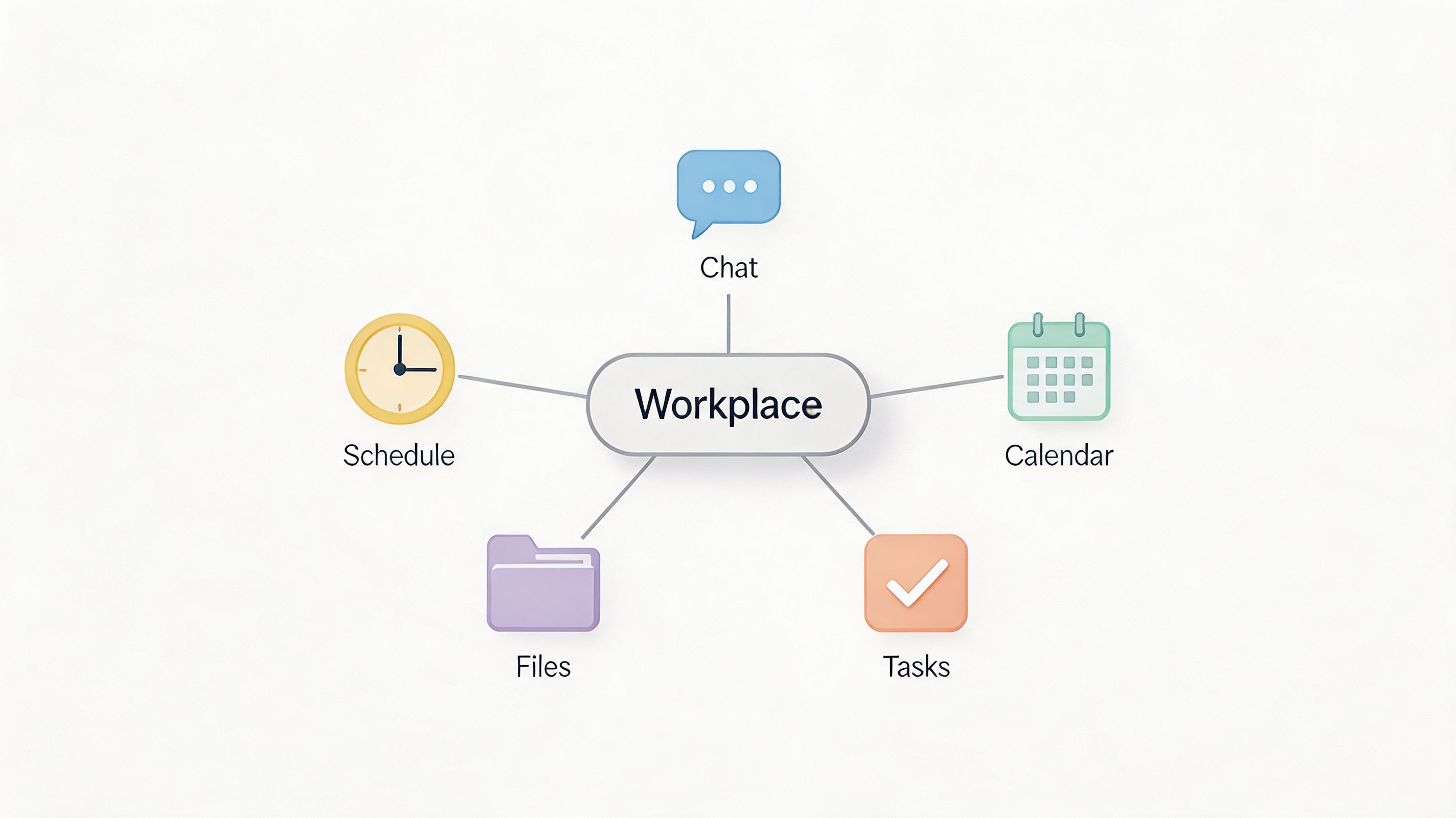
The best answers sound operational. They show the candidate understands where work breaks in real settings. A nurse misses a policy update because it sat in email. A warehouse lead checks one app for schedules, another for chat, and a third for tasks. A store manager spends the day patching systems together instead of coaching the team. The right CEO wants to remove that drag because fragmented work kills speed, clarity, and accountability.
What you want to hear
You want a clear point of view. The goal is one place where people can receive information and act on it, whether they sit at a desk or start every shift on the floor. Good candidates explain how communication should trigger work, how work should feed back into visibility, and how leaders should see what is actually happening without forcing employees to jump between tools.
As noted earlier, strong CEO frameworks start with vision. That matters here because this is not a generic HR prompt. It is a strategic probe. You are testing whether the candidate can lead a modern, distributed company where frontline and office workers have to operate from the same source of truth.
A weak answer names features. A strong answer explains how decisions, updates, tasks, and follow-through work in one system.
Push for specifics. Ask how their vision changes in a hospital, a retailer, or a logistics network. Ask what happens on shared devices, on weak connections, and during shift handoffs. Ask what they would cut. Good CEOs know that unification is not adding more. It is removing friction so people can do the job in front of them.
If you want a practical benchmark, look at what strong frontline workforce communication tools enterprises need in 2025 are expected to handle. Then listen for whether the candidate is building toward that reality or still talking like the whole company works from laptops.
2. How do you approach building products specifically designed for frontline and distributed workforces?
This question separates people who’ve directly watched work happen from people who’ve only managed slide decks.
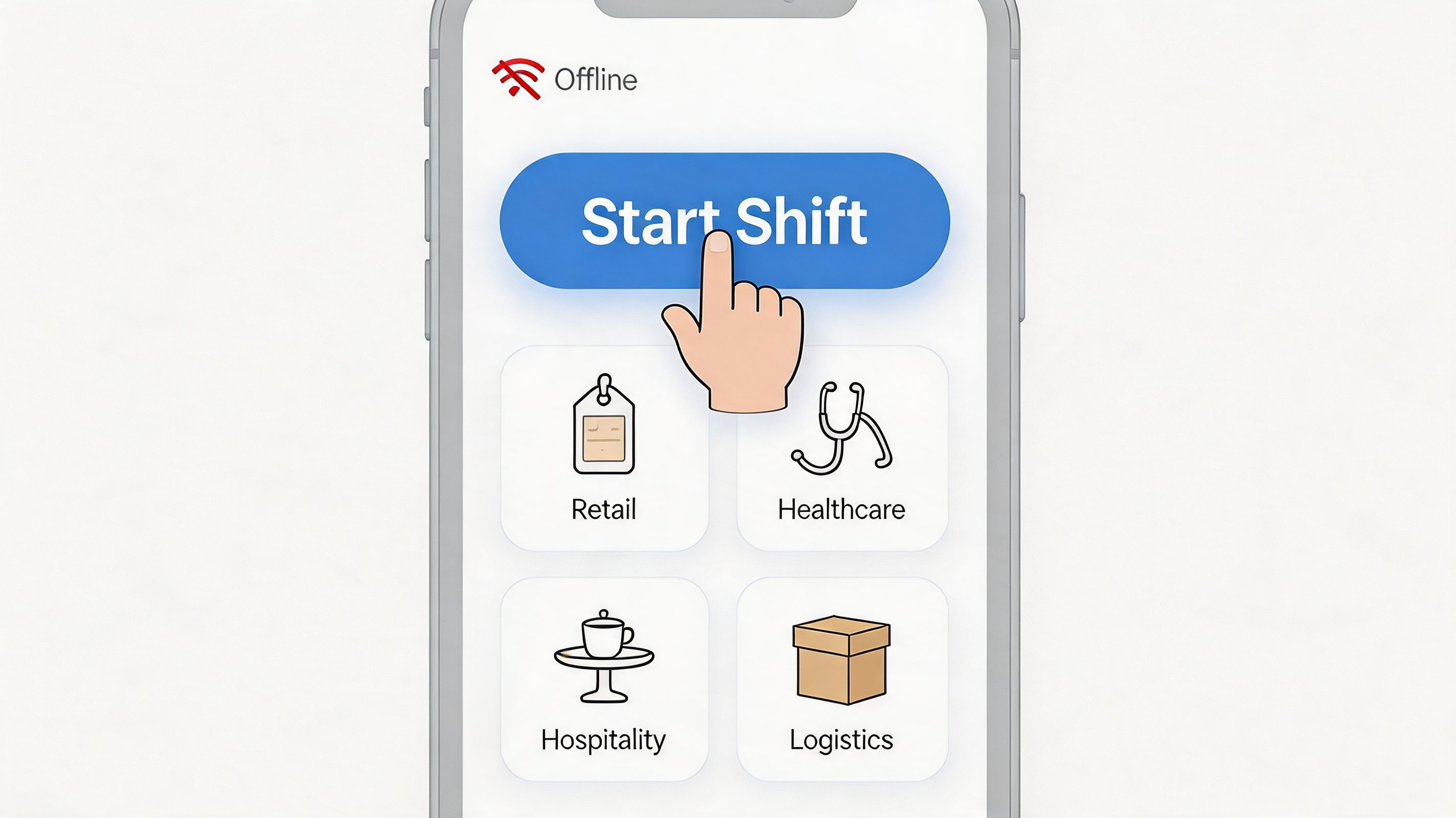
Frontline teams don’t work like office teams. They move. They swap shifts. They use shared devices. They operate in noisy environments, on weak connections, under time pressure. A CEO who doesn’t understand that will build for headquarters and call it inclusion.
The neglected part of most ceo interview questions is industry context. That’s a mistake. Frontline-heavy sectors need a different kind of leadership. A Jennings Executive summary on this gap notes that frontline workers make up 70% of the global workforce, yet most CEO interview content still assumes a generic office environment.
Where most candidates fail
They talk about “the user” as if there’s one type. There isn’t. A restaurant shift lead, a warehouse supervisor, and a regional HR manager don’t need the same thing. Good leaders know that. Better ones design around it.
Ask how they’d build for someone who has seconds, not minutes. Ask why offline access matters. Ask how they’d handle shift-based communication when people aren’t online at the same time. Their answer should sound grounded in reality, not software fashion.
A candidate worth taking seriously will talk about mobile-first design, simple onboarding, plain language, and fewer moving parts. They’ll understand that adoption isn’t a training problem if the product itself is confusing.
If you want a sharper lens on what enterprise buyers now expect from these tools, read this guide to frontline workforce communication tools. It reflects the practical constraints candidates should already understand.
Practical rule: If a CEO candidate can’t explain how a product works for a shift worker with a phone in one hand and a line of customers in front of them, they’re not ready to lead a frontline product company.
3. What metrics do you use to measure employee engagement and culture impact?
If a candidate says culture can’t really be measured, move on.
Culture isn’t magic. It leaves fingerprints. Participation, communication quality, response patterns, manager follow-through, adoption of rituals, and the health of cross-team interaction all tell you something. None of that gives a perfect picture, but serious leaders still measure it because the alternative is wishful thinking.
The best candidates won’t hide behind vanity metrics. They won’t point to sign-ins and call it engagement. They’ll connect measurement to business outcomes and human outcomes at the same time.
The metrics that matter
A useful answer usually starts with a few basics and then gets sharper from there:
Behavioral signals: Are people using the system for updates, tasks, feedback, and recognition, or are they logging in and disappearing?
Manager signals: Are team leads posting clearly, closing loops, and responding in ways people can trust?
Operational signals: Are missed handoffs, repeated questions, and communication gaps going down?
Cultural signals: Are people participating across shifts, locations, and roles, or are the same few voices dominating everything?
There’s also a financial discipline here. A data-focused CEO should know how to frame ROI in business terms. One strong framework is to sort value into revenue generation, cost reduction, risk mitigation, and decision speed, as laid out in this piece on measuring the ROI of data investments. That same thinking applies to culture and engagement tools. If the candidate only talks about dashboards, they’re dodging the hard part.
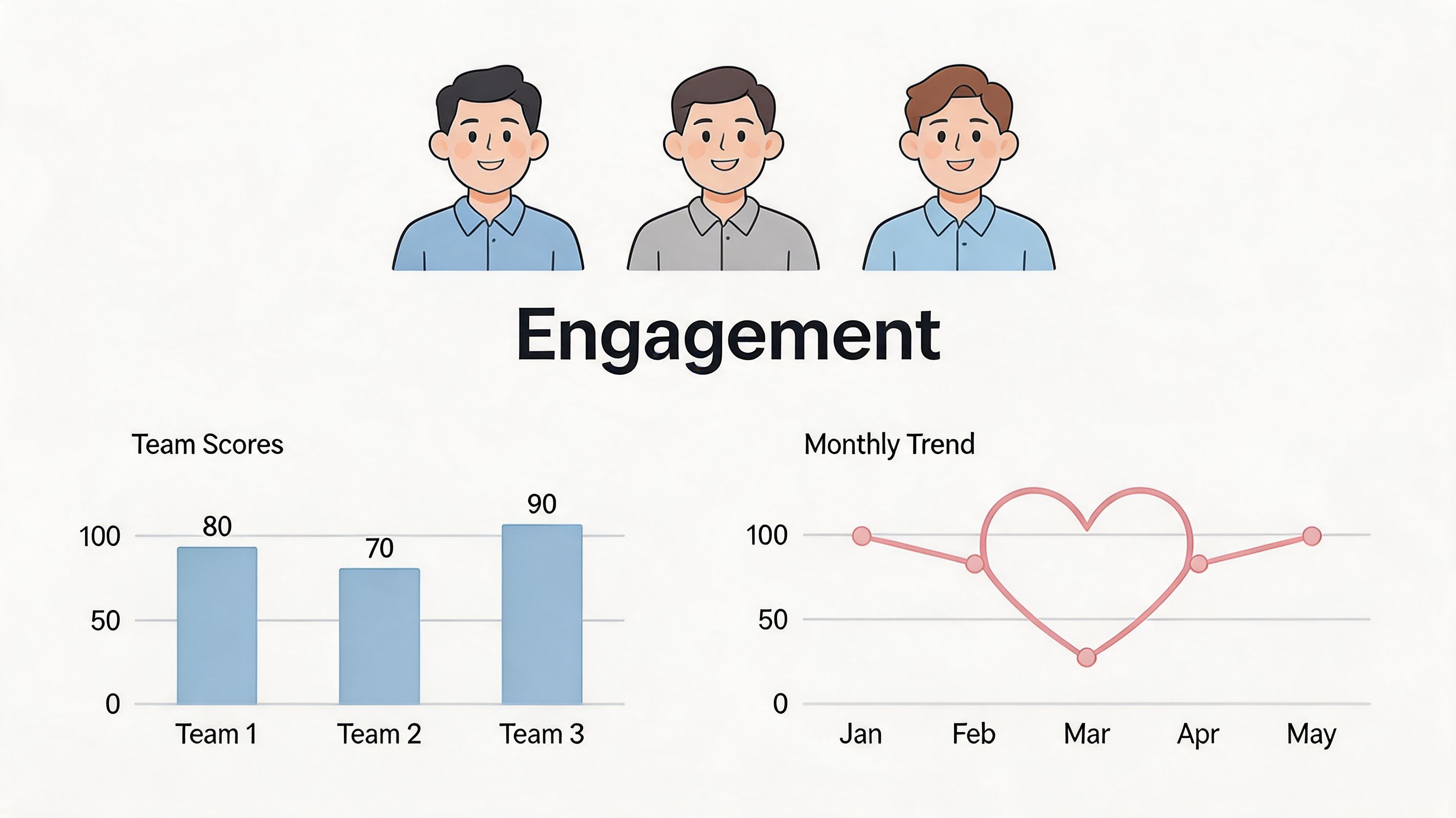
For a practical view, this breakdown of employee engagement measurement is worth comparing against the candidate’s answer. A good CEO should be able to talk about metrics without sounding clinical, and about people without sounding vague.
4. How do you balance governance and security with ease of adoption and user experience?
Shallow operators' limitations become apparent.
Every CEO says security matters. Every CEO says adoption matters too. The important question is whether they understand the tension between the two. Lock things down too hard and nobody uses the system properly. Make everything frictionless and you create risk, confusion, and cleanup work later.

A mature candidate won’t answer this like a compliance officer or a growth marketer. They’ll talk about sensible defaults, role-based permissions, admin clarity, and onboarding that doesn’t feel like punishment. They’ll know that people don’t adopt tools because a policy says so. They adopt them because the tool is faster than the workaround.
Listen for trade-offs, not slogans
Ask what they’d do in a regulated environment like healthcare. Ask how they’d handle guest access, shared devices, sensitive files, and manager permissions across locations. Ask what they’d simplify and what they’d never compromise.
Good answers often include a few grounded principles:
Start with roles: People should only see what they need, but getting that access shouldn’t require five approvals.
Build trust through clarity: Users need to know what’s tracked, what’s private, and who can see what.
Keep onboarding simple: Single sign-on, invite links, and clean setup matter because friction kills adoption before value appears.
Security that blocks real work doesn’t create compliance. It creates side channels.
The point of this question isn’t to hear a polished security posture. It’s to learn whether the candidate respects both the admin and the end user. That balance is the whole game in modern workplace software.
5. How do you approach the challenge of replacing multiple fragmented tools with a single platform?
Most leaders underestimate how emotional software replacement is.
People say they want one platform. What they really mean is they want less chaos without losing the odd little workflow they rely on every day. A CEO who’s done this before will know that consolidation is never just a tech migration. It’s habit change, trust-building, and political navigation.
This question works because it forces candidates to deal with messy reality. It’s easy to talk about a unified platform in principle. It’s harder to explain how you replace Slack for chat, Google Drive for documents, Asana for tasks, and a scheduling tool for shifts without causing revolt.
A serious migration strategy
The right answer isn’t “rip and replace.” That’s fantasy.
A strong CEO will talk about sequencing. Start with the workflows that are most broken. Preserve the systems that still need to stay for a while. Give people a reason to move, not just an instruction. Explain what gets easier on day one, not only what gets better six months later.
I also want to hear how they think about rules and ownership during migration. This article on data governance best practices is a useful frame here because tool consolidation falls apart when nobody knows what data lives where, who controls it, and what gets carried over.
One hard-earned lesson: If a CEO talks only about feature parity, they’ve never led a successful migration. People switch when the new way is simpler, clearer, and safer.
Push them on exceptions. What if a hospital unit needs one workflow and a retail chain needs another? What if finance wants strict controls and field teams want speed? Their answer should show patience and firmness at the same time. Good consolidation leaders don’t promise zero disruption. They promise an orderly path through it.
6. Tell us about your approach to product localization and supporting diverse global workforces
A global product isn’t one English interface with a language menu bolted on.
Ask this question and listen for respect. Not market expansion talk. Respect. A CEO who understands global work knows that language, labor norms, shift patterns, device realities, and local expectations shape how people use software every day. If they treat localization as copy translation, they’re not building for the world. They’re exporting assumptions.
This matters even more in distributed companies with frontline teams. A shift handoff in one country may work differently in another. Manager communication styles vary. Compliance expectations vary. Even what counts as a clear notification varies.
What real localization sounds like
A credible answer includes product design, support, and operations. Not just translation.
I want to hear about timezone handling, local permissions, mobile constraints, onboarding in multiple languages, and how customer support adapts to different regions. I also want to hear where they intentionally won’t fake depth. A smart CEO knows the difference between broad availability and real local strength.
Pebb’s own publisher brief notes use across 42+ countries. That’s the right kind of context for this question. You’re not asking whether a company can sell globally. You’re asking whether it can serve globally.
For a useful outside perspective on adapting messaging and product thinking across markets, this piece on marketing strategies for developer tools is relevant because it treats global expansion as a practical discipline, not a branding exercise.
A candidate who has done this work will usually bring up examples without prompting. They’ll talk about what broke, what surprised them, and what they changed. That’s what you want. Real scars. Real learning.
7. How do you maintain product velocity and innovation while supporting diverse customer segments and use cases?
This question sounds simple until someone tries to answer it honestly.
Every company says it serves many kinds of customers. Then the roadmap turns into a junk drawer. A feature for one segment annoys another. Edge cases pile up. The product gets heavier, slower, and harder to understand. The CEO keeps calling it flexibility while users perceive it as clutter.
A strong candidate knows that speed doesn’t come from saying yes faster. It comes from deciding what stays core and what belongs at the edges.
Look for discipline
Ask how they decide what makes the roadmap. Ask what they’ve killed. Ask about the last feature request they turned down even though a big customer wanted it. That’s usually more revealing than any success story.
The best leaders will describe a small set of principles. Keep the core simple. Make configuration do more work than customization. Use patterns that transfer across industries instead of building bespoke flows for every account. If they can’t say no cleanly, they can’t keep product velocity.
A modern distributed workplace company needs this discipline badly. Hospitals, warehouses, restaurants, retailers, and office teams don’t all need the same interface, but they do need a product that doesn’t collapse under its own ambition.
If every customer gets a special version, you don’t have a platform. You have a services business pretending to be software.
You’re also testing honesty here. A thoughtful CEO will admit the tension. They won’t pretend there’s no trade-off between breadth and clarity. They’ll show you how they make that trade-off on purpose.
8. What is your strategy for competing against larger technology companies entering your market space?
At this point, fantasy dies, which is useful.
Ask any CEO candidate how they compete with Microsoft Teams, Slack, or other giants and you’ll hear one of two bad answers. The first is bravado. “We just execute better.” The second is surrender dressed up as realism. “We can’t outspend them.” Neither helps.
What you want is sharp positioning. A serious CEO knows exactly where a larger rival is stronger, and exactly where that strength becomes a weakness.
Don’t accept generic differentiation
Ask what the company does better for a frontline supervisor than an office-first platform. Ask why a buyer would choose a focused product instead of a bundle from a giant vendor. Ask where the big players are unlikely to care enough to go deep.
The strongest answers often come from leaders who understand neglected users. Office-first products tend to carry office-first assumptions. That leaves room for a company built around shifts, mobile use, field operations, and simpler workflows across mixed workforces.
This is also where challenge-based ceo interview questions can outperform polished behavioral prompts. A contrarian take in Indeed’s CEO interview advice argues for provocative questions like asking a candidate to challenge the current product direction instead of offering a tidy past-tense story. I agree. Ask them what they’d change in your positioning tomorrow and why.
A good CEO won’t claim they can beat giants at everything. They’ll tell you where they refuse to fight, where they can win, and how they’ll stay useful even when larger companies copy surface features.
9. How do you build and maintain company culture and engagement when your product is about culture and engagement?
A CEO once told me his company had a strong culture. Ten minutes later, he admitted frontline teams heard major updates days after headquarters, managers all communicated differently, and nobody could explain how decisions got made. That answer told me more than any values statement ever could.
This question matters because the product and the company are on trial at the same time. If you sell culture and engagement software, your own people should feel the standard every day. That includes the warehouse lead, the store manager, the field technician, and the finance team at home. In a distributed company, culture is not a slogan. It is the operating system for how information moves, how trust holds up under stress, and whether frontline and office staff feel like they work for the same business.
Weak candidates hide in abstractions. They talk about transparency, inclusion, and collaboration. Ignore the words and ask for the mechanics.
Ask for proof in the operating model
Ask how leadership communicates decisions. Ask how a shift worker gets a policy change without hunting for it. Ask what happens when local managers go off script. Ask how questions move upward from the frontline instead of getting trapped in the middle.
You are not testing whether they can sound thoughtful. You are testing whether they can build a culture system that works across distance, time zones, job types, and power gaps.
A strong CEO usually answers with specifics like these:
Product use inside the company: The company uses its own platform for daily communication, recognition, updates, and feedback. Not just demos.
Message discipline: Important decisions have a clear owner, a clear channel, and a clear audience, including frontline teams who are easy to miss.
Manager habits: Managers are trained on how to communicate, not left to invent culture team by team.
Feedback loops: Employees can raise questions, challenge decisions, and see what happens next.
Cultural repair: The CEO can point to a moment when trust slipped and explain exactly how they fixed it.
The best answers have some scar tissue. I trust the candidate who can say, “We over-communicated to headquarters and under-communicated to the field. We changed the cadence, tightened manager expectations, and started measuring whether updates reached frontline teams.” That is a leader who understands the job.
For this category of ceo interview questions, polished language is a distraction. Look for evidence that the candidate can create one company across two realities. Desk workers and frontline workers do not experience culture the same way. A capable CEO knows that, designs for it, and refuses to let one group become an afterthought.
10. What is your vision for the future of workplace communication, operations, and culture over the next 5-10 years?
A board asks this question after a bad quarter. The candidate gives the usual answer about AI, hybrid work, and the future of collaboration. Everyone nods. Nobody learns anything.
Ask this question late, but ask it hard. This is not a prompt for trend watching. It is a strategic probe. You are testing whether the CEO can see where work is headed for companies that depend on both frontline execution and office coordination, then turn that view into product, operating choices, and market focus.
The best answers draw a clear line between communication, operations, and culture. They do not treat them as separate categories owned by different departments. In a modern distributed company, they rise or fail together. If the frontline cannot get updates in time, operations break. If systems for scheduling, tasks, recognition, and feedback live in different places, culture turns into a headquarters story instead of a company reality.
Push for convictions.
Ask what will change, what will stay stubbornly human, and where they would commit resources now. Ask which workflows should disappear into automation, and which moments still need a manager, a team lead, or a local voice. Ask how they would build intelligence into the product without turning it into a monitoring tool people resent. Ask what the workplace will look like for a nurse, a store associate, a driver, and a regional manager, not just for people sitting at laptops.
A strong CEO usually has a view like this:
Communication and operations will merge further. Updates, tasks, approvals, knowledge, and feedback will live in one working system.
Frontline design will stop being a feature add-on. Mobile-first, shift-aware, multilingual experiences will define the category.
AI will reduce admin work, summarize noise, and improve decision speed. It should not replace trust, judgment, or manager accountability.
Culture will become more measurable through participation, responsiveness, follow-through, and manager behavior, not slogans.
The winners will serve both hourly and salaried workers well, instead of building for headquarters and forcing everyone else to adapt.
Then push one level deeper. Ask what they believe the market still gets wrong. Ask what tradeoffs they would make if they had to choose between broad product sprawl and doing a few workflows extremely well. Ask where they expect customer behavior to change first. You want a CEO with a thesis, not a collection of headlines.
Scenario thinking matters more than bold predictions. A serious operator will talk about signals they watch, assumptions they are testing, and decisions they would revisit as the market changes. That answer shows judgment. It also shows they know the job is not to predict the next decade perfectly. The job is to prepare the company to adapt faster than competitors.
The future answer matters less than the shape of the mind behind it.
Listen for ambition with discipline. If a candidate cannot explain how a distributed workforce will stay aligned, informed, and connected without drowning in tools, they do not have a vision. They have talking points.
10-Point CEO Interview Comparison
Item | Implementation Complexity 🔄 | Resource Requirements ⚡ | Expected Outcomes 📊 | Ideal Use Cases | Key Advantages ⭐ | Quick Tip 💡 |
|---|---|---|---|---|---|---|
Tell us about your vision for unifying workplace communication and operations | High 🔄, cross-product integration & strategy work | High ⚡, engineering, partnerships, leadership alignment | 📊 Clear strategic direction; potential differentiation if executed | Enterprise digital transformation, investor/partner evaluations | ⭐⭐⭐ Aligns strategy & market positioning | 💡 Probe for concrete execution plans and industry examples |
How do you approach building products for frontline & distributed workforces? | Medium‑High 🔄, mobile/offline design + field testing | Medium ⚡, mobile UX, offline engineering, user research | 📊 Improved adoption and retention among frontline teams | Retail, healthcare, hospitality, logistics | ⭐⭐ Purpose‑built differentiation for underserved users | 💡 Ask about offline behavior, shift workflows, and adoption metrics |
What metrics do you use to measure employee engagement and culture impact? | Medium 🔄, analytics design and privacy considerations | Medium ⚡, data engineering, analytics, privacy controls | 📊 Measurable engagement, ROI signals, early risk detection | HR, internal comms, executive reporting | ⭐⭐⭐ Enables data‑driven culture decisions and buyer justification | 💡 Request segment‑specific metrics and privacy safeguards |
How do you balance governance & security with ease of adoption? | High 🔄, enforcement + UX tradeoffs | High ⚡, security, compliance, identity integrations | 📊 Enterprise trust and compliance; adoption risk if heavy | Regulated industries (healthcare, finance), IT-led rollouts | ⭐⭐ Critical for enterprise adoption and scalability | 💡 Ask for specific RBAC, SSO, audit trail, and onboarding examples |
How do you replace multiple fragmented tools with a single platform? | High 🔄, migration, integrations, change management | High ⚡, migrations, customer success, integration engineering | 📊 Reduced TCO and simplified workflows; migration risk exists | Organizations consolidating collaboration, scheduling, docs | ⭐⭐ Simplifies operations and reduces tool sprawl | 💡 Probe migration timelines, hybrid strategies, and case studies |
Tell us about product localization & supporting global workforces | Medium‑High 🔄, languages, cultural UX, compliance | Medium ⚡, localization engineering, legal, partnerships | 📊 Broader international adoption and compliance coverage | Multinational HR, global retail/logistics operations | ⭐⭐ Increases reach and inclusivity across markets | 💡 Ask which languages/regions have full support and local partners |
How do you maintain product velocity while supporting diverse segments? | Medium 🔄, prioritization vs. customization governance | Medium ⚡, product management, platform architecture | 📊 Sustainable roadmap, reduced feature bloat if disciplined | Platforms serving hospitals, stores, warehouses, and offices | ⭐⭐ Balances innovation with stability via governance | 💡 Request prioritization frameworks and deprecation policies |
Strategy for competing against larger technology companies? | Medium 🔄, market positioning and defensive tactics | Medium ⚡, niche product investments, partnerships | 📊 Defensible niche position or ecosystem partnerships | Startups/scaleups competing with Microsoft/Slack/etc. | ⭐⭐ Agility and vertical focus vs. wide‑scale competitors | 💡 Ask what they do better than incumbents and partnership plans |
How do you build/maintain company culture when product is about culture? | Medium 🔄, internal practices mirroring product | Low‑Medium ⚡, HR programs, internal adoption | 📊 Credibility and authentic proof of product value | Customers, hires, investors evaluating authenticity | ⭐⭐⭐ Demonstrates true product conviction and use‑case proof | 💡 Request internal usage examples and engagement metrics |
Vision for workplace communication, ops, and culture in 5–10 years? | Medium 🔄, long‑term R&D and strategic planning | Medium ⚡, R&D, AI/automation investments, partnerships | 📊 Signals direction, investment priorities, and future features | Strategic partners, long‑term buyers, investors | ⭐⭐ Indicates innovation intent and future roadmap | 💡 Probe AI/automation plans, timelines, and practical use cases |
The Real Answer Isn’t a Sentence
A board asks a CEO candidate about culture. The candidate gives a polished answer about values, transparency, and trust. Everyone nods. Then someone asks how they would handle a missed shift in a warehouse, a policy update for store managers, and a security rollout for headquarters, all in the same week. The room changes. Now you are hearing how they think, not how well they rehearse.
That is the point.
A strong CEO interview should expose judgment under pressure. It should show how a candidate handles trade-offs, incomplete information, and competing needs across office teams and frontline teams. In a modern distributed company, that matters more than polish. Anyone can memorize leadership language. Far fewer people can explain how communication, operations, governance, adoption, and culture fit together in one operating model.
The best candidates slow the conversation down. They ask what kind of business they are walking into. They clarify the constraint before offering a solution. They tell you what they would optimize for first, what they would postpone, and what risks they would accept. That is what a serious operator sounds like.
Generic CEO interview questions rarely get you there. “What’s your leadership style?” invites performance. “What are your strengths and weaknesses?” gets you a script. Better questions force a candidate to deal with reality, especially the messy reality of companies trying to serve deskless workers and office staff inside the same system.
Your hiring team has work to do too. If the board, founders, and executives have not agreed on what this company needs from its next CEO, the interview will drift toward charisma, familiarity, and résumé branding. That is how companies hire someone impressive on paper and misaligned in practice.
A framework helps, but frameworks do not make the decision for you. As noted earlier, the useful part is not the checklist itself. The useful part is what happens when a candidate has to apply clear thinking to your actual constraints, your product, your workforce mix, and your market.
The strongest interviews start to feel like a working session. Put a live problem on the table. Ask how they would unify communications for frontline and office employees without creating more tool sprawl. Ask how they would protect governance and security without making the product painful to adopt. Ask how they would measure whether culture is improving for people on shifts, in the field, and at desks. Their answers will tell you whether they understand the job you are hiring for.
This is not just a test of intelligence. It is a test of range.
A modern CEO has to bridge two worlds that many leaders still treat separately. One world sits in meetings and dashboards. The other world runs stores, hospitals, warehouses, job sites, and service routes. If a candidate cannot connect those realities, they are not ready to lead a company built around both. The questions in this article are strategic probes for that exact issue.
Use this list as a tool, not a script. Follow the answer that gets uncomfortable. Ask the second question. Ask for an example where they made the wrong call and corrected it. Press on the trade-off. Find out whether they care only about executive visibility or also about the employee trying to get useful information during a shift.
You are not hiring someone to recite the right sentence. You are hiring someone to make sound decisions, explain them clearly, and align very different groups behind them. That kind of leadership is harder to fake, and much more valuable.
If you’re hiring leaders while also trying to simplify how your company communicates and operates, Pebb is worth a close look. It brings chat, tasks, files, scheduling, clock-in, PTO, updates, analytics, and culture tools into one place, so frontline and office teams can finally work from the same system instead of a pile of disconnected apps.
