
A Human Guide to Calling Out of Work Without the Guilt
Calling out of work is part of life. Here's how to do it with confidence and clarity, whether you're an employee or a manager. No stress, no drama.
Dan Robin
We’ve all been there. The alarm goes off, but you know you’re not getting out of bed. A scratchy throat, a call from the school nurse, or just a wave of exhaustion that says not today. And then comes that sinking feeling in your stomach—not because you’re sick, but because you have to make the call.
Calling out of work feels intensely personal, but its impact ripples across the entire team. We’ve learned that how you handle it is just as important as why you’re out. It’s a moment that tests trust, communication, and the systems we build around our teams.
The Hidden Costs of Calling Out Wrong
It's easy to see an absence as one person’s problem. But that’s not the whole story. For the employee, there’s guilt over leaving the team short-handed. For the manager, a frantic scramble to find cover. For everyone else, it’s a heavier workload, which can quietly build resentment.
This isn’t about blame. It’s a fundamental challenge every business has to solve, especially those with people on the front lines. The real work is building a better, more human system for when life inevitably happens.
The Staggering Financial Reality
Most of us think the cost of an absence is just a day’s lost pay. If only it were that simple. The truth is, it’s a web of direct and indirect costs that add up far quicker than you’d think.
The numbers are genuinely eye-opening. Unplanned employee absenteeism costs U.S. businesses a staggering $225.8 billion annually. That breaks down to roughly $1,685 per employee, every single year.
This isn't just about lost wages. It accounts for the ripple effects, like team productivity dropping by nearly 40% when one person is unexpectedly out. With the U.S. absence rate hitting 3.2%, it means on any given day, about one in every 31 employees isn't at work.
This infographic breaks down some of the core financial impacts of unplanned absences.
The data makes one thing clear: the cost of calling out of work isn't trivial. It's a significant, measurable drain on a company's resources and productivity.
Beyond the Bottom Line
But that’s only half the story. As stark as those numbers are, the cultural cost can be just as damaging.
When calling out is a messy, stressful event, it chips away at trust. Employees feel anxious and guilty. Managers get frustrated. This creates a vicious cycle where people drag themselves into work sick—a disaster called “presenteeism”—just to avoid the hassle. That not only tanks their own productivity but risks getting the whole team sick.
And it gets even more complicated when an absence is due to a work-related injury. Handling the communication poorly can have serious consequences. It's crucial to understand what not to do while on workers' comp to avoid putting your claim at risk.
The real challenge isn’t stopping people from getting sick. It’s building a system where an absence is a simple, predictable event, not a five-alarm fire.
A culture of fear around taking a day off is a sure sign of a broken process. When the system for reporting an absence is clear, fair, and easy, it turns a potential crisis into a simple logistical task. The goal isn't to eliminate absences—that's impossible. Life happens. The goal is to handle them with grace and clarity, replacing chaos and guilt with a calm, repeatable process that respects everyone.
How to Call Out of Work with Confidence
Let’s be honest—the worst part of being sick is often the dread of having to tell someone. You already feel awful, and now you have to craft the "perfect" message, steeped in a little guilt. It doesn't have to be that way.
Calling out is a normal part of having a job. The key is to handle it with clarity, which makes life easier for everyone. It’s time to drop the guilt and just do it right.
Keep Your Message Simple and to the Point
Your goal is to inform, not to give a TED Talk on your symptoms. Your manager really only needs to know three things: you won’t be in, when you'll provide an update, and if anything urgent needs covering. That’s it.
A classic mistake is over-explaining. This usually comes from feeling like you need to justify the absence. In reality, it just makes things awkward. A simple, direct message shows you respect their time—and your own privacy.
You are never obligated to share private health details. A simple "I'm unwell and can't work today" is a complete sentence and a perfectly valid reason.
Sticking to the facts is the most professional route. It keeps the conversation focused on work logistics, which is all your boss needs to sort out the day.
Scripts for Any Situation (That Don’t Sound Robotic)
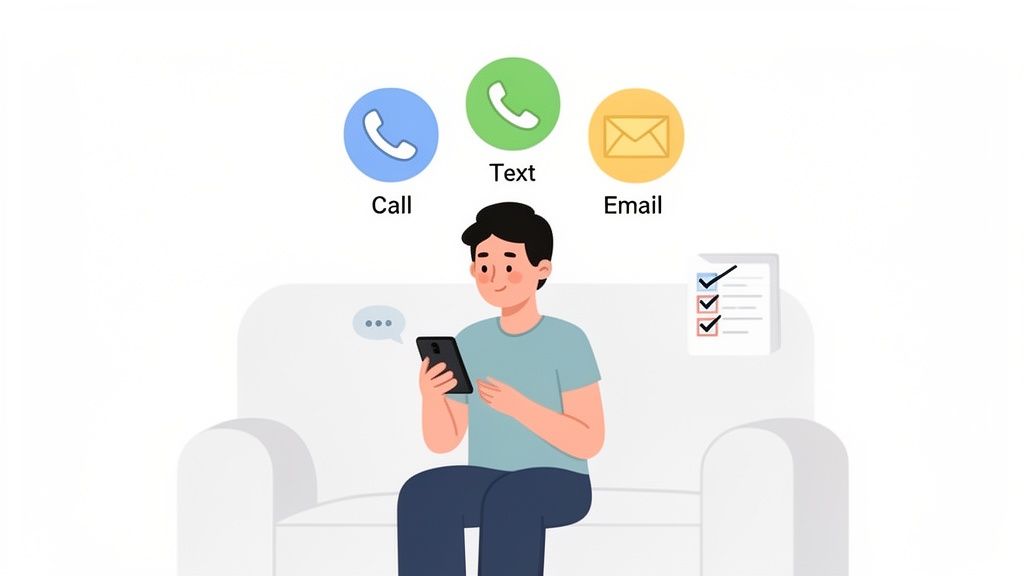
Having a few phrases in your back pocket can take the anxiety out of the moment. Whether your workplace prefers a call, text, or email, the core message is the same. I've sent and received enough of these to know what works.
For a Sudden Illness (Text/Slack): "Morning [Manager's Name]. I woke up feeling unwell and won't be able to make it in today. I'll keep an eye on email for anything urgent and will let you know my status for tomorrow by the end of the day."
For a Family Emergency (Phone Call): "Hi [Manager's Name], I'm calling to let you know I'm dealing with a family emergency and won't be in today. I've already messaged [Teammate's Name] about the [Project Name] report. I'll be in touch with updates when I can."
For a Mental Health Day (Email):
"Subject: Absence Today - [Your Name]
Hi team, I'm taking a sick day today, June 10th, and will be offline. I plan to be back tomorrow. For urgent matters, please reach out to [Teammate's Name]."
See the common thread? Brief, direct, and they set clear expectations. No begging for forgiveness, no long-winded tales—just professional communication. These same principles work whether you're sending a quick text or submitting a more formal employee time off request.
Know Who to Tell and When
Timing is everything. As soon as you know you can't work, send the message. Most companies appreciate at least a couple of hours' notice so your manager has time to adjust schedules.
Your direct supervisor should always be your first point of contact. They manage the daily workflow, so they absolutely need to be in the loop. Simply telling a coworker or posting in a group channel isn't enough and just creates confusion.
After you've looped in your manager, give your immediate teammates a heads-up if your absence directly affects their day. A quick message lets them pivot without missing a beat.
A Quick Word on Honesty and Trust
It can feel tempting to invent a "good" reason for calling out, but honesty is the only real policy here. Trust is the glue of any healthy team. Being straightforward about needing a day off—whether for a fever or for burnout—strengthens that trust.
Remember that legitimate reasons are broad. Your physical and mental health, family needs, and emergencies are all valid. The Americans with Disabilities Act (ADA) even protects employees who need time off for mental health conditions.
Calling out with confidence isn't about finding the perfect excuse. It's about respecting your own well-being while respecting your team's time. Clear, prompt, and honest communication turns a stressful chore into a simple, professional act.
The Manager's Playbook for Handling Call-Outs
The text arrives at 6:15 AM. One of your key people is out, and the schedule you so carefully built just fell apart. What you do next sets the tone for your entire team. It can be a moment of managed chaos or a quiet display of trust.
This isn’t just about filling a slot. The way you handle a call-out is a true test of leadership. It tells your team whether you see them as people with complicated lives or just names on a spreadsheet. We’ve all been the one sending that text, feeling a pang of guilt. Your job is to make that process less stressful for them while keeping things running.
The First Five Minutes Matter
When an employee says they can't come in, your immediate response should be empathy, not an interrogation. A simple, “Thanks for letting me know. Hope you feel better soon!” goes a long way. It communicates trust and shows you care about their well-being.
Fight the urge to ask for a play-by-play of their symptoms. Frankly, it’s not your business, and it puts them in a deeply uncomfortable spot. It can also land you in legal trouble, as laws like the Americans with Disabilities Act (ADA) protect employee privacy. Your job is to focus on logistics, not diagnostics.
This calm, initial response turns a disruption into a chance to build psychological safety. It tells your team, "We've got this, and we've got your back."
Find Coverage Without Causing a Fire Drill
Okay, you’ve sent the "feel better" text. Now what? The next step is managing the workload, and this is where many managers create panic. Frantic group texts and stressed-out calls only make a tough situation worse. A calm system is always a better system.
This is where a simple, organized tool can be a game-changer. Instead of descending into a chaotic group chat, a dedicated tool for shift management lets the team become part of the solution.
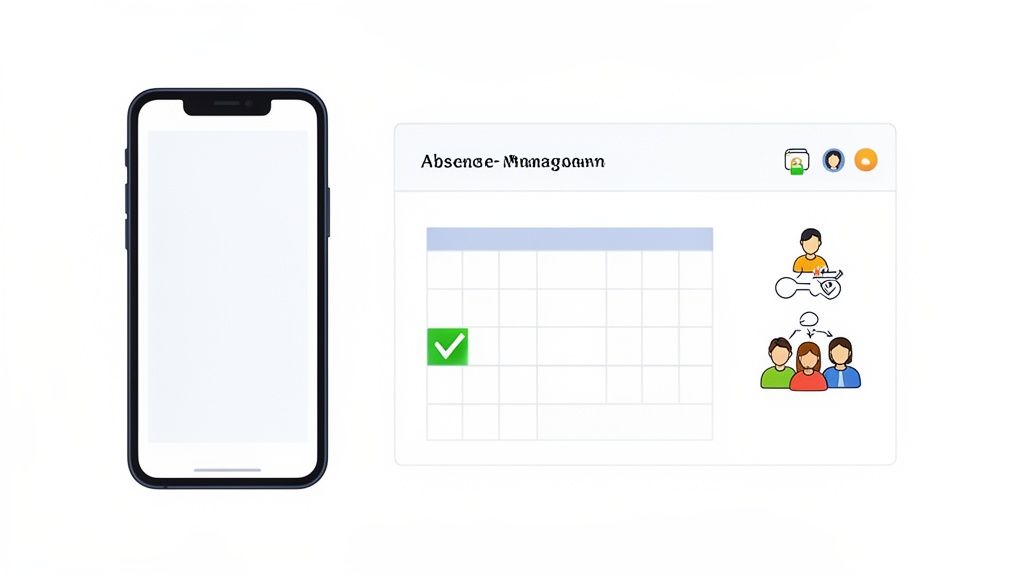
Take a look at how a clear dashboard in a tool like Pebb can instantly simplify how you see your team's schedule and availability.
A visual layout like this gives you a bird's-eye view of who’s working and where the gaps are, so you can find coverage without the scramble. Even better, it helps your team see open shifts and volunteer, which feels a lot better than getting a pressured call from their boss.
The goal here is to create a predictable process. When someone calls out, everyone knows the drill. It might look something like this: The open shift is posted. Team members can see it and claim it if they’re available. You, the manager, just approve the switch. This approach respects everyone's time and gives your team a sense of ownership.
Document and Communicate Consistently
Every absence, no matter how brief, needs to be documented. This isn't about building a case against an employee; it's about being fair and keeping accurate records for things like payroll. Using a central system to log absences is infinitely better than trying to remember who texted you three weeks ago.
Good documentation also helps you spot patterns. Is one person calling out on Mondays a lot? It might not be a performance issue, but a sign of burnout. In fact, a 2024 McKinsey study found a direct line between employee burnout and absenteeism. Clear data allows you to open a supportive conversation instead of a disciplinary one.
A consistent process for handling call-outs isn't about being rigid; it's about being fair. When everyone knows the rules, there's less room for confusion or feelings of favoritism.
Once you have coverage sorted, let the rest of the team know. A quick update—"Heads up, Alex is covering for Sarah today"—keeps everyone on the same page. It's a small action that reinforces the team's shared sense of responsibility. In the end, your playbook for handling call-outs says a lot about your leadership. Do you react with suspicion and spark panic? Or do you respond with empathy and follow a calm, clear process? Choosing the latter is how you build a resilient team.
Building an Absence Policy People Actually Respect
If your company's attendance policy reads like a legal document from 1995, you’re not alone. So many are rigid, built on a foundation of suspicion that frankly doesn't work.
Let’s be real—these old-school rules don’t stop people from getting sick or dealing with a flooded basement. They just create a culture of fear and "presenteeism." You know the scene: someone dragging themselves into the office, sniffling and coughing, just to avoid getting a point against their record. They’re not productive, and now everyone else is getting sick. It’s a broken model.
A modern absence policy isn't about tracking every minute. It’s about creating a simple, supportive framework that acknowledges life happens.
Start with Trust, Not Suspicion
The single biggest shift you can make is moving from a "prove you're sick" mentality to one of mutual trust. A policy rooted in trust assumes your employees are responsible adults. It doesn't demand a doctor's note for a 24-hour stomach bug.
This isn't about being soft; it's about being smart. When people feel trusted, they're far more likely to be upfront when they need to call out. A culture of fear just encourages people to make up elaborate stories.
A policy that respects people treats them like adults. It focuses on communication and mutual understanding, not on policing every minute of their time.
Building this trust starts with making things crystal clear. Everyone on your team should know exactly what to do when they need a day off—who to notify, how to do it, and what the process looks like. No guesswork.
Untangling the Time-Off Tangle: PTO, Sick Days, and Personal Time
One of the biggest headaches for employees is the alphabet soup of time-off categories. A good policy makes this dead simple.
Sick Days are for your health, full stop. That includes physical illness, mental health days, and caring for a sick family member. The CDC has clear guidelines on staying home with a fever for a reason—it stops one person’s flu from becoming a department-wide problem.
Personal Days are the catch-all for the rest of life. Think of it as the "life admin" bucket: the plumber who can only come between 10 and 2, a kid's parent-teacher conference, or just a needed day to recharge.
Paid Time Off (PTO) is often the simplest and most empowering model. It rolls all leave—vacation, sick, and personal days—into a single bank of hours. This gives employees the autonomy to manage their own time without needing to justify why they need a day off.
Here’s the thing: the simpler the system, the less administrative pain for everyone. For some fantastic, real-world examples, our guide on creating a fair attendance policy is a great resource.
The Guardrails That Actually Matter
Now, a trust-based policy doesn't mean a total free-for-all. It just means having the right guardrails—ones that ensure fairness and legal compliance without drowning everyone in legalese.
For example, you need to be aware of federal laws like the Family and Medical Leave Act (FMLA), which gives eligible employees job-protected, unpaid leave for specific reasons. It’s a baseline, but a policy people truly respect often goes beyond the legal minimum.
In fact, a key part of a policy that employees respect is feeling valued; this often includes good employee benefits packages for small businesses, which contribute to a supportive work environment.
Ultimately, a great absence policy reflects your company's culture. It sends a clear signal that you see your employees as whole people, not just cogs in a machine. When you swap suspicion for trust and complexity for clarity, you get more than a better call-out system—you get a more engaged and resilient team.
How Technology Can Simplify Absence Management
Let's be honest. If you're still managing team absences with a frantic group text, a spreadsheet from 2011, and a desk full of sticky notes, you're making your life harder than it needs to be. That chaotic morning scramble isn't a mandatory part of being a manager. It’s a symptom of a broken system.
The right technology isn't about adding another complicated program. It's about getting rid of the chaos. It’s the key to turning the daily fire drill of absence management into a calm, orderly process.
From Chaos to Clarity in One Step
Think about the old way. An employee calls out, and you immediately start a chain reaction of texts and phone calls. It’s disruptive for you and stressful for the team. An all-in-one tool like Pebb flips that script.
For an employee, calling out becomes a simple, 30-second task on their phone. They log their absence in the app, and the system handles the rest. No guilt, no frustrating game of phone tag.
For a manager, it’s even better. You get one clean notification. Instead of that familiar panic, you get a clear view of who's out, who's available to cover, and what your day's schedule now looks like. Chaos is replaced by calm control.
Putting the Team in Control with Self-Service Tools
Here’s a secret I’ve learned: your team wants to help. Nobody likes seeing a shift go uncovered. The problem is they usually don't have the tools to do anything about it. This is where a self-service shift swap market changes the game.
When an unexpected opening pops up, the shift is automatically posted for the team to see. A qualified and available team member who wants the extra hours can claim it from their phone. All the manager has to do is approve it.
This simple shift does more than fill a schedule. It gives your team autonomy and turns a top-down problem into a shared, collaborative solution.
This approach doesn't just find coverage faster; it builds a real sense of ownership. Employees feel trusted, and managers are freed from being the frantic go-between. It’s a win-win that also helps with the tricky parts of tracking employee time off, making sure every adjustment is logged automatically.
Spotting Problems Before They Start
A truly great system does more than just react to today’s absence—it helps you see tomorrow’s problems coming. When all your absence data is in one place, you start to see patterns you would have missed otherwise.
Is one employee consistently calling out on Fridays? This might not be a performance issue, but a sign of burnout. It’s an opportunity for a supportive conversation, not a disciplinary one. Is an entire department showing higher absence rates? This could be a red flag for a bigger issue with workload or team dynamics.
Smart analytics turn raw data into human insight. This isn’t about playing "Big Brother." It's about being a more proactive leader. A 2024 McKinsey study directly linked employee burnout to increased absenteeism. Using technology to spot these trends early lets you step in with support and solve small problems before they grow. It’s time to leave the manual chaos behind for a calmer, smarter, and more human way to handle the reality of life.
Common Questions About Calling Out of Work
That pit in your stomach when you have to call out? We’ve all been there. Your head is pounding, but your mind is racing: Is a text okay? How much do I need to say? Could I get in trouble?
It's a surprisingly stressful situation. So, let's walk through some of the most common questions we see. This isn't corporate jargon—it's straight talk from people who have been on both sides of that call.
Can I Get Fired for Calling Out Sick?
This is the number one worry, and it’s a valid one. The short answer is, generally, no. You won't get fired for a single, legitimate sick day, especially if you follow your company’s process.
But here's the thing: context matters. In most U.S. states, employment is "at-will," meaning a company can fire someone for nearly any reason that isn’t illegal (like discrimination). This is where patterns become a problem. A history of frequent, last-minute absences can put your job at risk. Your best defense is knowing your company’s policy and making sure your communication is always clear and timely. And remember, laws like FMLA (the Family and Medical Leave Act) offer legal protections for serious health conditions.
Do I Have to Say Exactly Why I Am Sick?
Nope. You are under no obligation to share your medical history with your manager.
Simply stating, "I'm not feeling well and won't be able to make it in today" is perfectly sufficient. Your health is private. In fact, over-sharing can feel like you're trying too hard to justify being out, which just makes things awkward.
The goal is to inform, not to confess. Keep it professional and focused on the logistics of your absence, not the specifics of your ailment.
Focus on what your team needs to know to keep things moving: that you'll be out, who can cover urgent tasks, and when you expect to be back in touch.
Is Texting an Acceptable Way to Call Out?
It really depends on your workplace. For many modern teams, especially in fast-paced or shift-based roles, a quick text to a direct manager is the norm. It’s fast, creates a timestamp, and gets the message across without a long phone call.
But if you’re ever in doubt, play it safe. The first time you call out at a new job, stick to a more traditional method like a phone call or a detailed email. You can even use it as an opportunity to clarify for the future. Just ask, "For next time, what's the best way to let you know if I can't come in?" It shows you're proactive and respect their process.
What Is the Bigger Picture Here?
The anxiety around calling out sick isn't just in our heads—it's part of a huge global trend. Sickness absence rates are hitting record highs. In Germany, employees now take an average of 19 days off for illness each year, and the UK has seen its numbers almost double since 2018.
A massive driver behind this is mental health. Untreated mental health conditions contribute to an estimated 12 billion lost workdays across the globe annually. In Canada alone, 500,000 workers are absent each week due to mental health challenges. As detailed in this eye-opening report on absence trends, this isn't just a personal problem; it's a major operational hurdle for businesses everywhere.
This global shift shows why having a clear, supportive absence policy is no longer a "nice-to-have." It's about facing reality and building teams that are resilient enough to handle it. The old-school, guilt-tripping approach to sick days just doesn’t cut it anymore.
Ready to replace the chaos of call-outs with a calm, streamlined system? Pebb unifies team communication, scheduling, and absence management into one simple app. Give your team the clarity they deserve and get back to running your business. See how Pebb can help.
