
Unlock Success: Best Practices for Change Management 2026
Discover 10 best practices for change management. Actionable advice for HR, ops, and supervisors on communication, training, and measuring success.
Dan Robin

Change doesn't usually fail in the strategy deck. It fails on the night shift, in the back office, on the warehouse floor, and in the five-minute gap before someone clocks in. A new process gets announced, a few emails go out, and people who don't sit at desks are expected to somehow “get aligned.”
That's the part most change plans miss. The human part. Not the abstract human part. The actual one, where a nurse, shift lead, or field tech needs to know what changed, why it matters, and what they're supposed to do differently today.
The good news is that chaos isn't inevitable. The best practices for change management are usually simple, but they aren't casual. They require structure, repetition, and respect for the people doing the work. That's why organizations with excellent change management are 6x more likely to meet or exceed project objectives than organizations with poor change management. That gap exists because strong change leaders don't treat rollout like a one-time announcement. They plan, listen, coach, and reinforce.
If you're leading change across shifts, sites, or mixed frontline and office teams, the old playbook breaks down fast. You need communication that reaches phones, not just inboxes. You need managers who can coach in the moment. You need one place where updates, questions, training, and feedback live together. A lot of the hard lessons in this piece come from exactly that reality, and they line up with the practical advice in REDCHIP IT's change management insights.
1. Establish Clear Communication Strategy and Change Vision
Most change communication is too vague. Leaders say what's changing, but skip why it matters to the person stocking shelves, moving freight, or covering a patient handoff. If people can't connect the change to their own day, they'll treat it like noise.
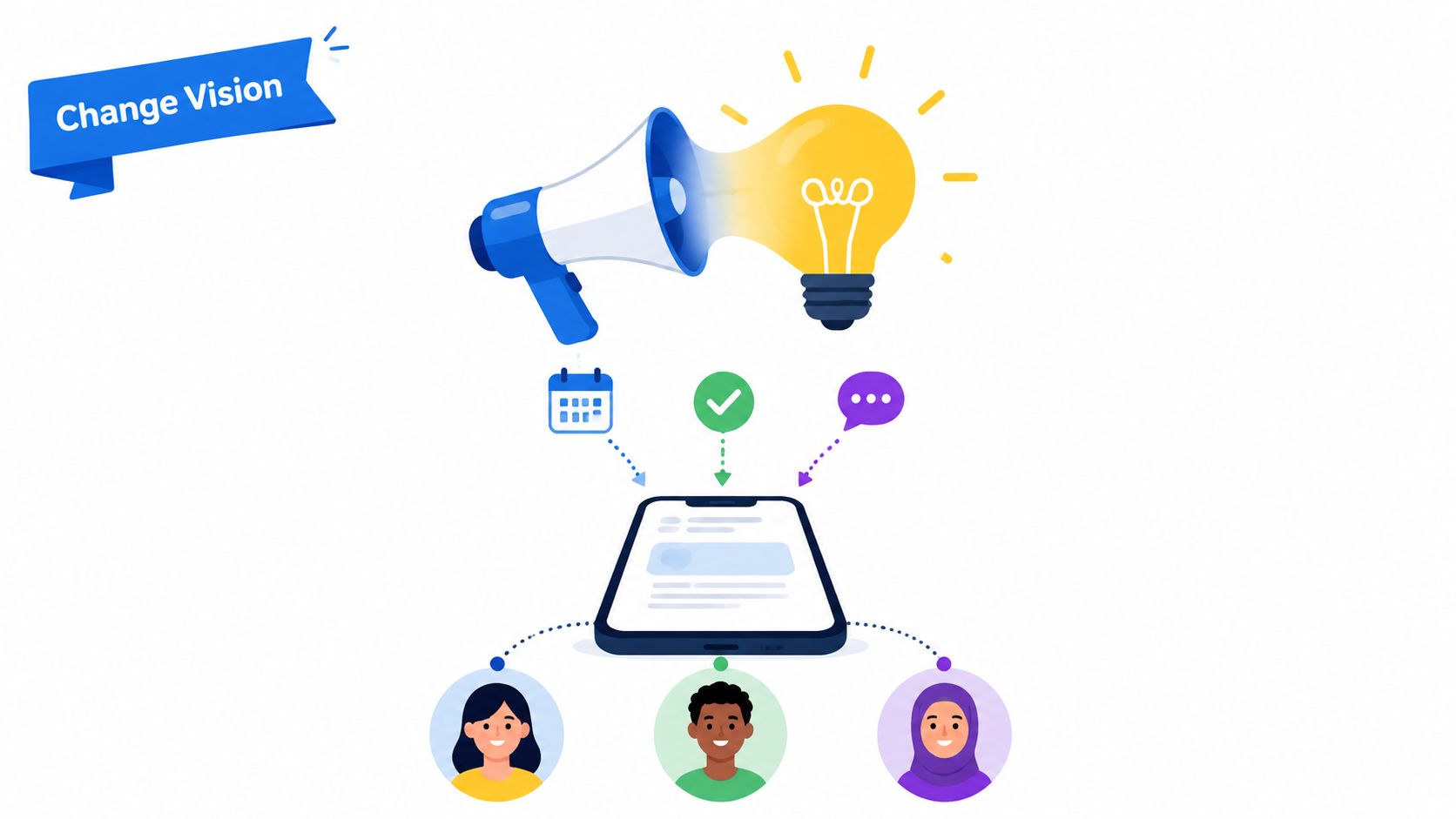
Start with a plain-language story. What problem are we fixing? What will feel different next week? What gets easier if this works? If you're consolidating scattered tools into one app like Pebb, say that directly. Less switching. Fewer missed updates. One place for messages, tasks, files, and shift information.
Make the message usable
A communication strategy isn't a launch email. It's a sequence. Leaders need to repeat the same core message in different formats and in places people use.
For frontline teams, that usually means:
Mobile-first updates: Put the key message in a news feed or employee app, not only in email.
Short manager talking points: Give supervisors a simple script for shift huddles.
Asynchronous access: Record a brief video so people on later shifts hear the same explanation.
One place for questions: Create a dedicated space for Q&A so answers don't disappear in chats.
Pebb fits this well because the news feed, Spaces, and mobile access let teams keep the message consistent without forcing everyone into a live meeting. If you're refining your approach, this guide on building an effective communications strategy is a practical place to start.
Practical rule: If your change vision can't be explained in under two minutes by a frontline manager, it isn't clear enough yet.
A healthcare team rolling out a new communication workflow might frame it around patient safety and fewer missed handoffs. A retail operator might focus on faster updates and less confusion between store and head office. Different settings, same principle. Explain the benefit in the language of the work.
2. Identify and Empower Change Champions and Advocates
Formal authority helps. Peer trust helps more.
When change starts to wobble, people rarely turn to the executive memo. They ask the experienced nurse on their unit, the shift lead who knows the actual workflow, or the store supervisor who always figures things out first. Those are your champions, whether you name them or not.
Pick champions people already trust
A weak champion network is made of volunteers who look good on an org chart. A strong one includes respected operators from each shift, location, and role. In a logistics business, that might mean one lead per warehouse shift. In a hospital, it might mean charge nurses and department coordinators. In retail, store-level advocates often make or break a tool rollout.
Prosci's 2023 research found that projects with excellent change management were about 7 times more likely to meet objectives than those with poor change management, and the most common enablers were active sponsor engagement, manager coaching, and employee communication. That tracks with what works in practice. Champions aren't decoration. They translate the change into everyday behavior.
Use Pebb's Profiles and People Directory to identify who connects across teams, then give those people a private Space where they can test workflows, raise issues, and swap notes before the broader rollout.
A good champion setup usually includes:
Early access: Let champions use the new setup first so they can spot friction.
Simple resources: Give them quick-reference guides, not thick training packs.
Public recognition: Thank them in updates so others know who to ask.
Clear boundaries: They're not unpaid support desks. They escalate issues, they don't carry the whole rollout.
The best champion is rarely the loudest person in the room. It's the one coworkers already believe.
One mistake shows up over and over. Leaders appoint champions from day shifts and office teams, then act surprised when night teams lag behind. If your organization runs around the clock, your champion network has to run that way too.
3. Conduct Comprehensive Stakeholder Analysis and Engagement
Not everyone experiences the same change, even when the system is the same. An office manager, a delivery driver, and a floor supervisor can all get the same announcement and hear three different things. One hears efficiency. One hears extra admin. One hears disruption.
That's why stakeholder analysis matters. You need to know who is affected, how they work, what they're worried about, and what they need from you before rollout starts.
Segment by reality, not by org chart
The usual stakeholder map is too neat. It lists departments and seniority levels. That's useful, but incomplete. For distributed teams, shift pattern, device access, language needs, and location often matter just as much.
Gallup reported in 2024 that just 23% of employees were engaged globally. That's a warning sign for change leaders, especially when frontline workers may only have brief, device-based access during the workday. If your engagement plan assumes everyone reads long messages at a desk, you're not planning for the workforce you have.
A better map asks practical questions:
Who uses a shared device versus a personal phone?
Which groups can join live sessions, and which can't?
Where will resistance show up first?
Which managers are strong communicators, and which need help?
Pebb can support this kind of segmented approach because role-based Spaces, messaging, and analytics make it easier to tailor communication by team, location, or shift instead of blasting one generic message to everyone.
A hospital rolling out a new internal app shouldn't engage nurses, IT staff, and administrators the same way. A manufacturer shouldn't talk to plant supervisors and production operators as if they have the same concerns. Good stakeholder work respects those differences early, before they turn into resistance later.
4. Implement Phased Rollout with Pilot Programs
Big-bang rollouts look efficient on paper. In real organizations, they usually create confusion at scale.
A pilot gives you room to learn before the stakes get higher. It lets you see where instructions are unclear, where training falls short, and which assumptions only made sense in the conference room. That matters even more when you're rolling out change across multiple locations or mixed frontline and office teams.
Start small enough to learn, broad enough to matter
A good pilot group isn't just the easiest team. Pick a mix that reflects the actual environment. Include at least one group with high operational pressure, one manager who's skeptical, and one location that doesn't work standard office hours.
The point isn't to prove the change is good. The point is to expose what's still rough.
Atlassian's guidance for ITSM change programs is useful here. It recommends using data-driven risk assessment to identify common standard changes, selecting 3–5 candidates for automation and self-service, and reserving real-time review for only the riskiest changes. The wider lesson applies beyond IT. Standardize what's low risk. Focus human attention where judgment matters.
With Pebb, pilot teams can use a dedicated Space to log issues, test announcements, and track open tasks in one place. That makes the learning visible instead of burying it in email threads.
A phased rollout also creates better stories. When a pilot site solves a real problem, later teams pay attention. “This saved us from missing shift updates” lands better than “the transformation initiative is progressing well.” Use the pilot to earn credibility, not just to check a governance box.
5. Provide Comprehensive Training and Continuous Support
Training fails when it's treated like an event. People attend a session, click through slides, then go back to work and hit the first real snag two days later. That's when adoption starts slipping.
The better approach is layered. Give people enough training to start, then enough support to keep going. For frontline teams, that usually means short, mobile-friendly help they can access in the flow of work.
Train for the real job
A lot of training material is built around features. People don't care about features. They care about tasks. Show a store manager how to post an update to a team Space before opening. Show a nurse where handoff notes live. Show a warehouse supervisor how to find a policy on a phone during a shift.
Pebb's Knowledge Library, file sharing, tasks, voice and video calls, and role-based Spaces make this kind of practical support easier because training, reference material, and follow-up don't have to live in separate systems.
A solid support pattern looks like this:
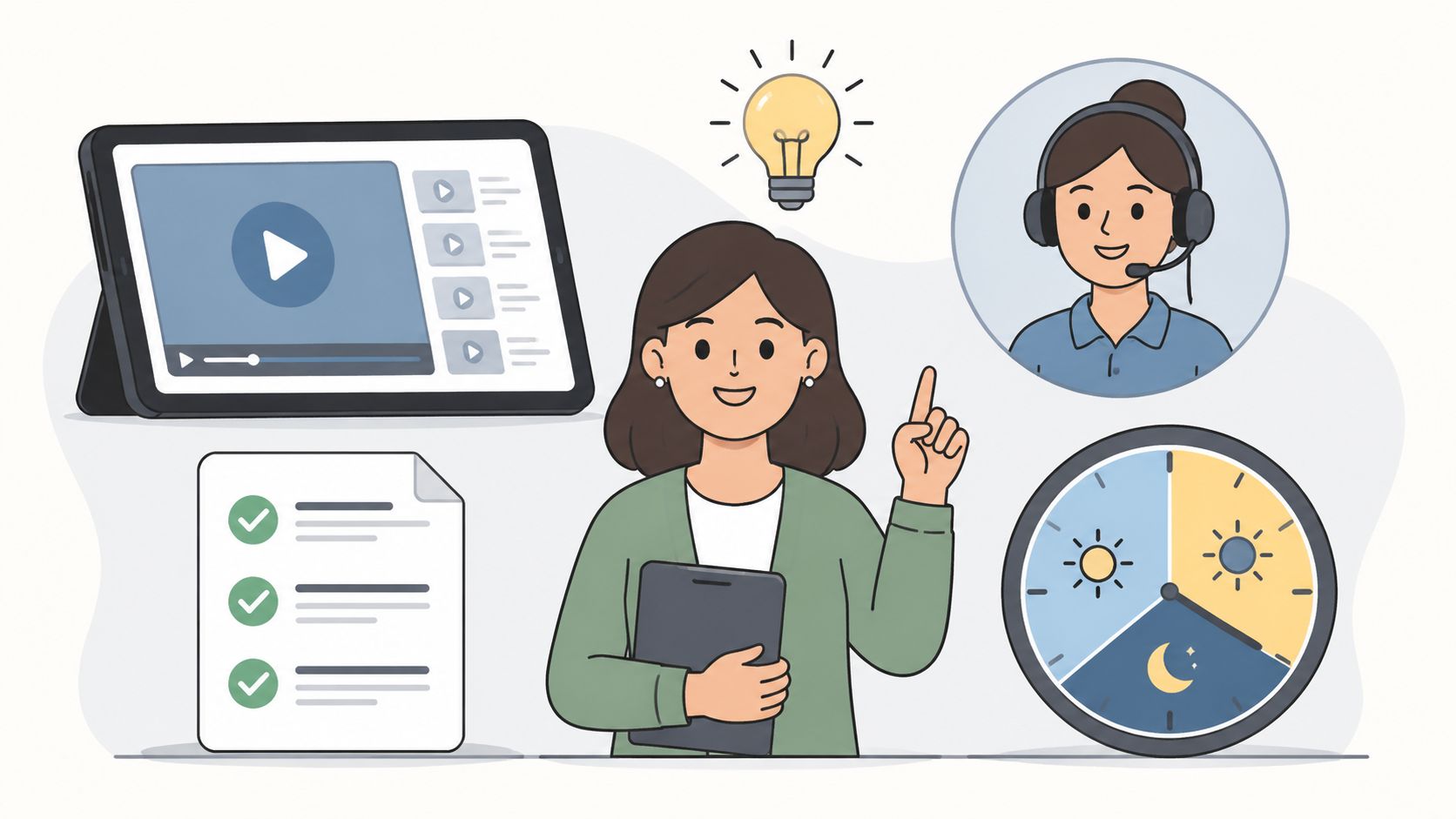
Short videos: Keep refreshers brief enough to watch between tasks.
Role-specific content: Train cashiers differently from supervisors.
Live help at different hours: Don't schedule all support during office time.
Manager reinforcement: Supervisors should coach the first few uses, not just point to instructions.
Good training answers one question fast: “What do I do when I'm on shift and need this right now?”
Microsoft Learn and Salesforce Trailhead are good examples of ongoing enablement because they treat learning as continuous, not one-and-done. That mindset matters more than the platform. If you want the best practices for change management to stick, support has to outlast launch week.
6. Address Resistance with Empathy and Problem-Solving Approach
A district manager once told me a rollout was failing because her store teams were “negative.” The underlying problem showed up five minutes later. The new process added extra taps on a shared device during the morning rush, and nobody had fixed the handoff between shifts. The team was not resisting change. They were protecting throughput.
That distinction matters, especially with frontline and distributed teams. People in stores, warehouses, clinics, and field roles feel bad process design faster than headquarters does. If a new workflow slows service, creates rework, or forces them to hunt for answers mid-shift, pushback is a useful warning.
Treat resistance as operational feedback first.
In practice, objections usually come from a few predictable places. The reason for the change is still fuzzy. The new process adds friction in the workday. Local conditions were missed, such as weak mobile access, shared devices, staffing gaps, or timing between shifts. Sometimes trust is the issue too. Teams have seen past rollouts create extra work and then get labeled a success anyway.
The job here is not to win an argument. It is to find the source of the friction and remove what you can.
Pebb helps by giving teams one place to raise questions, report blockers, and see answers without waiting for a chain of emails to catch up. For distributed teams, that matters. A supervisor on nights and a field technician three sites away should not have to rely on rumor to learn whether a workflow changed. Public answers in the right Space also reduce duplicate confusion. If one site flags a mobile issue, other sites can see the fix.
A few habits make this work:
Name the concern clearly: “This adds time at shift change” is more useful than “people are resistant.”
Check where the pattern shows up: One location may have a manager problem. Five locations may have a process problem.
Coach frontline managers to listen well: They hear the first honest reaction, and they can tell the difference between discomfort and a real blocker.
Respond visibly: If feedback led to a change, say what changed and why.
Accept trade-offs: Some changes do add effort at first. Be honest about that, and be specific about what gets better later.
A cashier who pushes back on a new POS flow may be worried about checkout speed under pressure. A nurse may object because the workflow disrupts handoff timing. A driver may ignore a new update process because mobile signal drops in the yard. Those are implementation issues. Fixing them earns more adoption than another leadership memo ever will.
7. Define and Monitor Clear Success Metrics and KPIs
A rollout isn't successful because people logged in. That's a start, not a verdict.
Many change efforts get sloppy. Leaders track adoption because it's easy to count, then assume usage equals progress. Sometimes it does. Sometimes it only means people complied long enough to avoid reminders.
Measure behavior and outcomes, not just activity
The gap is real. The Microsoft Work Trend Index 2024 found that 83% of leaders believe their organization is productive, but only 50% of employees agree. That kind of perception split tells you why surface metrics can mislead. Activity data might look fine while trust, workload, or actual performance tells a different story.
For a tool rollout, I'd track three kinds of signals:
Operational signals: Are shift updates getting seen? Are tasks being completed on time? Are fewer issues bouncing between teams?
Behavioral signals: Are managers using the new process consistently? Are teams defaulting to the new Space instead of old side channels?
Sentiment signals: Do employees say the change helps them do the job, or are they just tolerating it?
Pebb's analytics can help with the first two. The third still requires pulse feedback, manager conversations, and listening sessions. No dashboard will save you from talking to people.
A healthcare team might care about smoother handoffs and fewer missed updates. A restaurant group might watch manager responsiveness and policy visibility across locations. The exact KPIs vary. The important part is setting them before launch and reviewing them often enough to adjust while the rollout is still fixable.
8. Align Change Management with Organizational Culture and Values
If the rollout contradicts the culture you claim to value, people notice immediately.
A company that says it values transparency but hides decisions behind closed doors will lose trust fast. A company that says it respects frontline input but only listens to head office will get polite compliance at best. Culture isn't what's written on the wall. It's how the change feels.
Make the method match the message
This matters even more when the change touches communication itself. If you're introducing a unified employee app like Pebb to improve connection across shifts and sites, the rollout should feel inclusive, visible, and practical. Leaders should use the same channels they're asking everyone else to use. Managers should model open discussion, not side conversations in old tools.
Many teams benefit from stepping back and being honest about what company culture really looks like in practice, not just how it's described in onboarding slides.
A few examples are easy to spot:
A service-driven culture should make support quick and human during rollout.
A high-autonomy culture should leave room for local adaptation.
A safety-focused culture should emphasize clarity, consistency, and low ambiguity.

When the process matches the values, change feels believable. When it doesn't, every communication starts sounding like spin.
9. Ensure Executive Sponsorship and Visible Leadership Support
Executive sponsorship is easy to fake for a week. People can tell the difference.
A real sponsor doesn't just approve the budget and appear at launch. They keep showing up. They remove blockers, repeat the message, ask hard questions, and use the change themselves in visible ways.
Leaders need to be seen using the change
Prosci's research also points to the practical side of this. The common enablers behind stronger outcomes include active sponsor engagement, manager coaching, and employee communication, as noted earlier. That's not a ceremonial role. It's operating discipline.
If leadership wants people to use a new employee app, leaders should post updates there, host Q&A there, and show that the channel matters. In Pebb, that could mean executives maintaining complete profiles, sharing regular updates in the news feed, joining shift-facing Spaces, or holding video town halls that frontline workers can watch live or later.
A sponsor who never appears inside the new system is telling the organization the old habits are still acceptable.
Visible support also means support at more than one level. Senior executives set priority, but frontline managers shape daily behavior. If the CEO is enthusiastic and local managers are checked out, adoption stalls where the core work happens.
Retail chains, healthcare systems, and field operations all have the same problem here. Office-based leadership often underestimates how much legitimacy is built through local manager behavior. Train those managers. Give them scripts, examples, and escalation paths. Don't leave them to improvise.
10. Create Feedback Loops and Continuous Improvement Mechanisms
A warehouse supervisor once told me, “The survey wasn't the problem. The silence after it was.” That is how change efforts lose credibility with frontline teams. Not because every idea gets rejected, but because people take the time to respond and never hear what happened next.
Distributed teams feel this faster than office staff do. If someone works a late shift, drives routes, or moves between sites, they do not have spare time to chase updates or guess whether anyone read their input. The loop has to be short, visible, and tied to work people already do.
The point is not to collect more comments. The point is to make better decisions, faster.
Pebb helps here because surveys, comments, tasks, updates, and team discussions can live in one place instead of getting split across email, paper forms, chat threads, and manager memory. For frontline teams with small windows to check messages, that matters. Fewer tools means more usable input and fewer delays between issue, decision, and update.
A feedback loop that works usually looks like this:
Ask narrow questions about a real friction point.
Review responses on a set cadence.
Decide what changes now, what waits, and what will not change.
Tell employees what you decided and why.
Assign follow-up tasks so the fix happens.
That last step gets missed all the time. Teams gather input, hold a meeting, agree on a fix, and then nothing changes in the field.
Visible cause and effect changes behavior. A logistics team reports confusion in handoff notes. The rollout lead rewrites the template. Managers explain the update in the next shift huddle and post the new version in the app. People can see that speaking up leads to action, which makes the next round of feedback better.
Good loops also separate complaints from patterns. One loud objection does not always mean the rollout is broken. Ten similar comments from different locations usually mean it is. That is why distributed organizations need feedback by role, site, and shift, not one company-wide average that hides the underlying problem.
If your team needs to improve the quality of these conversations, this guide to feedforward vs feedback is a useful place to start. It pushes managers to focus on what to improve next, which is often more productive during change than rehashing what already went wrong.
Ask. decide. respond. repeat. That rhythm is what turns change from a launch event into an operating habit.
Comparison of 10 Change Management Best Practices
No single practice carries a rollout on its own. For frontline and distributed teams, the question is simpler: where does this change usually break, and what support do people need at that point? A good comparison table should help leaders make that call fast.
Approach | 🔄 Implementation Complexity | ⚡ Resource Requirements | 📊 Expected Outcomes | Ideal Use Cases | ⭐ Key Advantages / 💡 Tips |
|---|---|---|---|---|---|
Establish Clear Communication Strategy and Change Vision | Medium. Ongoing coordination across channels, managers, and locations | Medium to High. Comms support, leader time, clear message ownership | Better alignment, less confusion, stronger day-one understanding | Company-wide rollouts, tool changes, mobile-first frontline communication | Cuts rumor cycles early. 💡 Keep messages short enough for a shift worker to read between tasks. Pebb helps by putting updates, FAQs, and manager notes in one place. |
Identify and Equip Change Champions and Advocates | Medium. Requires careful selection, coaching, and follow-through | Medium. Training time, recognition, and room in the schedule | Faster local adoption, stronger peer support, quicker issue spotting | Distributed, shift-based teams where manager reach is limited | Peer credibility matters more than corporate language. 💡 Choose respected operators, not just enthusiastic volunteers. |
Conduct Detailed Stakeholder Analysis and Engagement | High. Mapping roles, concerns, and influence takes work | High. Workshops, field input, manager coordination, planning time | Fewer surprises, sharper messaging by audience, better trust | Multi-role organizations such as healthcare, retail, logistics, and manufacturing | Exposes friction before launch. 💡 Segment feedback by role, site, and shift. Pebb can support this with targeted groups and role-based communication. |
Implement Phased Rollout with Pilot Programs | Medium. Requires staging, review points, and iteration | Medium. Pilot support, monitoring, fallback plans | Lower risk, better rollout decisions, practical proof from the field | Multi-site changes, operational process updates, higher-risk tech rollouts | Pilots show what the plan missed. 💡 Pick sites with different conditions, not just your strongest location. |
Provide Detailed Training and Continuous Support | High. Content creation, scheduling, reinforcement, and support all matter | High. Trainers, manager time, help resources, repeated refreshers | Faster proficiency, fewer repeated errors, steadier adoption after launch | Workflow changes, process updates, and tools that alter daily habits | Training has to fit the workday. 💡 Use short mobile lessons, quick reference guides, and searchable answers inside Pebb so people can find help during a shift. |
Address Resistance with Empathy and Problem-Solving Approach | Medium. Requires listening, diagnosis, and practical adjustment | Medium. Feedback channels, manager coaching, investigation time | Better trust, cleaner root-cause analysis, fewer hidden workarounds | Changes likely to disrupt routines, incentives, or team norms | Resistance often points to a design flaw, a skills gap, or a trust issue. 💡 Treat objections as operating data first. |
Define and Monitor Clear Success Metrics and KPIs | Medium to High. Good metric design takes discipline | Medium. Analytics setup, reporting cadence, owner accountability | Better decisions, clearer progress, earlier intervention where adoption slips | Rollouts where leaders need proof of usage, behavior change, or business impact | Track behavior, not just activity counts. 💡 Review metrics by location and role so weak spots do not disappear inside an average. |
Align Change Management with Organizational Culture and Values | High. Requires honest assessment of how work really gets done | Medium. Leadership participation, manager reinforcement, message discipline | More believable adoption, better consistency, stronger long-term fit | Culture-led organizations and changes that affect identity or service standards | If the change clashes with daily reality, employees will spot it immediately. 💡 Use plain language and connect the change to real team standards, not slogan-heavy messaging. |
Ensure Executive Sponsorship and Visible Leadership Support | Low to Medium. Easier to start than to sustain | Medium. Executive time, site presence, repeated communication | Clear priority signal, faster barrier removal, stronger manager confidence | Strategic initiatives that need cross-functional cooperation | Visible leadership matters more for dispersed teams because many employees never sit in a room with executives. 💡 Ask leaders to show up in field channels, record short updates, and answer questions directly. |
Create Feedback Loops and Continuous Improvement Mechanisms | Medium. Requires cadence, ownership, and action tracking | Medium. Surveys, review time, response planning, follow-up | Better refinement, stronger trust, earlier problem detection | Longer rollouts, process changes, and adoption efforts that need adjustment over time | The win is not collecting feedback. The win is acting on it. 💡 Use one system, such as Pebb, to gather input, post decisions, and assign fixes so the loop stays visible. |
It's a Practice, Not a Project
The hardest truth about change management is also the most useful one. You're never really done.
You can complete a rollout plan, finish training, and hit your launch date. None of that guarantees the new way of working will stick. Habits are stubborn. Local workarounds reappear. Managers get busy. New hires arrive with no context. If you treat change like a project with a clean finish line, the organization usually drifts back toward the old pattern.
That's why the best practices for change management matter so much. They aren't just a sequence for launch. They're a discipline for staying close to the work. Clear communication. Trusted champions. Real stakeholder mapping. Pilots that teach you something. Training that continues after go-live. Metrics that measure more than activity. Leadership that shows up. Feedback that changes the plan. None of this is glamorous, but it's what holds under pressure.
For frontline and distributed teams, the stakes are even higher. Office teams can usually compensate for messy change with meetings, inbox access, and informal context. Shift-based teams often can't. If the update is missed, it's missed. If the training is buried, it may as well not exist. If the manager isn't equipped to explain the change in a huddle, the rollout loses momentum before the day really starts.
That's why one lesson keeps coming up for me. The medium matters. Not because software solves change by itself, but because the right setup makes good behavior easier. When communication, training, tasks, feedback, and leadership updates live across too many disconnected tools, friction wins. When they live in one place people can access during work, leaders have a much better shot at making change feel coherent. Pebb is one example of that kind of unified employee app for organizations trying to connect frontline and office teams without splitting the experience.
The deeper point is simpler. Respect the reality of people's work. Don't ask them to decode vague announcements, hunt for instructions, or trust a change they had no chance to question. Give them clarity. Give them support. Give them a way to respond and be heard.
Most failed change efforts aren't rejected because people hate improvement. They fail because the implementation asks too much guesswork from the people closest to the work.
So the next move doesn't need to be dramatic. It can be small. Rewrite the announcement in plain English. Add one night-shift champion. Turn one pilot group into a listening post. Move one scattered process into one shared place. Small moves compound when they reduce confusion.
That's usually how lasting change starts. Not with a grand launch. With a team that finally feels like this change was built with them, not dropped on them.
If you're trying to make change easier across shifts, sites, and mixed frontline and office teams, Pebb gives you one place for updates, chat, voice and video calls, Spaces, tasks, file sharing, knowledge, scheduling, and analytics. It's worth a look if your current rollout lives across too many tools and too many missed messages.
