
What Does It Mean to Work Per Diem? Your 2026 Guide
Discover what does it mean to work per diem. Explore the reality of per diem jobs, including pay, benefits, pros, cons, and how to manage them effectively.
Dan Robin

A café manager gets two sick texts before the morning rush. One barista is out, another never replied, and there's a line forming at the door. That's the world where per diem starts to matter, not as a dictionary term, but as a way to keep the day from unraveling.
The phrase itself is simple. Per diem is Latin for “per day” or “for each day,” and in business it usually points to a daily allowance for travel costs, or to a worker hired as needed with no fixed schedule Cornell Law School. Those are different uses of the same phrase, and a lot of people mix them up.
What matters on the ground is less tidy. Per diem work can keep shifts covered, but it also creates real questions about income, predictability, and how a team holds together when the same names aren't on the roster every week. A lot of explainers stop at the label and skip the parts managers and workers feel.
The Hidden Meaning Behind Per Diem

A café floor can turn into a staffing problem in minutes. One call-out, one no-show, and the manager is no longer thinking about scheduling theory. She is trying to keep the register moving, calm the line, and avoid sending the whole shift off balance. Per diem exists for that kind of pressure, where the work has to get done even if the roster changes at the last second.
Two meanings, one phrase
In travel policy, per diem means a daily reimbursement for meals, lodging, and incidentals. In employment, it means a worker is scheduled as needed, with pay tied to the days or shifts worked rather than a fixed salary or recurring weekly pattern Everhour. The same phrase covers two different business problems.
That mix-up causes real confusion. A manager hears “per diem” and thinks about payroll setup. A worker hears it and may assume travel expenses are involved. Both interpretations can be correct, but only one applies in a given conversation, and nobody wants to discover the mismatch after the schedule is already built.
Practical rule: ask whether the discussion is about expense reimbursement or staffing. Confusing those two usually leads to bad expectations on both sides.
The staffing version is the common understanding of per diem work. It is coverage for gaps, call-outs, and uneven demand. It does not promise a steady weekly routine, and that is the part workers feel first.
A lot of basic explanations stop at the label and leave out the operational reality. They say a worker is as-needed, but they do not spell out what that means for income stability, hours, or benefits. That missing context matters. Managers have to plan around it, and workers have to live with it. For a closer comparison with independent work, see comparing contracting and employment and this guide to understanding 1099 employees and how they differ from staff roles.
Per Diem Versus Other Ways of Working
Per diem sounds close to part-time at first. It isn't. Part-time usually means a recurring schedule, while per diem means no guaranteed hours and day-to-day scheduling instead of a stable weekly pattern Indeed.
Work Arrangements at a Glance
Attribute | Per Diem | Part-Time | Contractor (1099) |
|---|---|---|---|
Schedule | No guaranteed hours, called in as needed | Recurring weekly schedule | Project or agreement based, not a shift roster |
Pay shape | Often daily or shift-based | Hourly or scheduled wage | Usually invoice or project based |
Benefits | Usually limited or none | May be eligible depending on employer policy | Typically no employee benefits |
Employer control | High over when coverage is needed | Moderate, with a set schedule | Lower, since the person usually controls how the work is done |
Best fit | Coverage gaps, variable demand | Consistent but reduced staffing needs | Independent services or specialized outside work |
The key difference between per diem and contractor work is control. A per diem worker is still filling a role inside the employer's schedule. A contractor usually isn't. If you want a cleaner side-by-side on comparing contracting and employment, that's a useful place to slow down and check your assumptions.
For managers, that distinction matters because the rules around scheduling, supervision, and payroll don't blur just because the work is flexible. A per diem nurse is not the same thing as a 1099 consultant, and a part-time cashier is not the same thing as a call-in worker. If you want to go deeper on the contractor side, the 1099 comparison guide helps separate the labels without turning it into legal fog.
A simple way to think about it, per diem is about filling a shift inside your operation. Contracting is about buying a result from outside it.
The cleaner your classification, the fewer ugly surprises show up later. That's not theory. It's what keeps scheduling, taxes, and expectations from colliding on a Friday afternoon.
The Trade-Offs for Workers and Businesses
A per diem arrangement can solve two opposite problems at once. Workers can accept or decline shifts based on what they can handle, and businesses can cover gaps without carrying a full-time headcount they do not need every day. The trade-off is real on both sides, and it shows up in scheduling, payroll, and day-to-day communication.
What workers gain and what they give up
For workers, the main draw is flexibility. They get more control over their calendar, which can make per diem work a practical fit for someone balancing school, caregiving, or another job. In real life, that flexibility is often the difference between being able to work at all and having to turn work down.
The trade-off is stability. Per diem employees generally do not receive benefits such as healthcare, retirement plans, or paid time off because the role is classified as as-needed work, not a standard ongoing schedule Indeed. That means the freedom to pick up or decline shifts usually comes with a weaker safety net and less predictable income than a standard role.
Practical rule: if rent, groceries, or childcare depends on a steady paycheck, per diem can get uncomfortable fast.
It also changes how people plan their lives. No guaranteed hours means no guarantee that next week will look like this week. Some workers value that kind of control. Others feel the stress every time the schedule comes out.
What businesses gain and what they inherit
For businesses, per diem turns labor into a variable cost. That helps when demand moves around and same-day coverage is part of normal operations, which is why this model shows up so often in healthcare and other shift-heavy settings. Open shifts can be covered without paying for empty hours on a slow day, but the business still has to manage the people side of the arrangement.
The hidden cost is coordination. Open shifts still need to be filled, people still need to be reached, and the same message may need to go out more than once before someone accepts it. A schedule may look lean on paper, but the work of keeping it staffed is still there.
In healthcare, that pressure shows up fast. A unit cannot sit short-handed because someone called out before the shift started, and the ability to move coverage quickly is one reason nurse scheduling software matters so much. When the floor can't wait, managers need a clear view of who is available and who can step in.
There is also a longer-term cost that does not show up in wage lines. Inconsistent training, uneven handoffs, and a team that keeps changing shape can all create friction. If you are weighing the insurance side of staffing choices, a guide to contractor insurance can help frame the risk conversation, even though the worker classification is different.
Where Per Diem Work Is Most Common
Per diem shows up where coverage gaps hit right away and the schedule can change by the hour. Healthcare is the clearest example, since a hospital or clinic cannot leave a shift empty when someone calls out close to start time. In those settings, same-day coverage requests are part of the job, not an exception.
Healthcare keeps it moving
In a hospital or clinic, per diem staff are the people managers call when the day breaks open. A nurse picks up an open shift, gets the quick unit rundown, and steps into a workflow that depends on readiness and clear handoffs. The work asks for flexibility from the worker and fast judgment from the manager.
The staffing pressure is even sharper on the floor, which is why nurse scheduling software matters so much in this setting. Open shifts move quickly, and if a manager waits too long, the gap gets harder to fill and the team feels it immediately. Visibility into who can step in makes a real difference when the unit cannot pause.
Hospitality and logistics use the same logic
Hospitality relies on the same kind of coverage during banquets, conferences, weddings, and weekend rushes. A server or bartender who works only when demand spikes helps keep service steady without forcing the business to carry extra labor through slower stretches. It is practical staffing, even if it is rarely glamorous.
Warehouses and logistics teams use the same approach when volume jumps. Extra hands on a busy day can keep receiving, packing, or loading from spilling into the next shift. The title matters less than matching the right number of people to the amount of work in front of them.
The pattern is straightforward. Variable demand creates a need for flexible coverage, and per diem fills that gap. What changes by industry is how much warning managers get, how fast workers have to adapt, and how much room the team has when someone is unavailable.
Managing a Per Diem Team Without the Headaches
The hardest part of per diem management is not understanding the idea. It is coordination. Open shifts, missed messages, scattered timekeeping, and people who are not on-site when plans change can turn a simple schedule into a daily scramble. Good systems stop being a nice extra and become part of the job.
Keep one place for shifts, messages, and hours
Per diem work runs on short notice and constant handoffs, so the tools have to match that pace. Modern scheduling and communication systems help managers keep shifts, messages, and time records in one place instead of chasing them across texts, calls, and memory. If you have ever tried to fill a shift from three different apps, the value of that setup is obvious.
A tool like Pebb can sit in the middle of that mess by letting managers post shifts, keep people informed, and track hours in one place. That keeps fewer details slipping through the cracks. For a per diem team, that alone can make the operation feel far more stable.
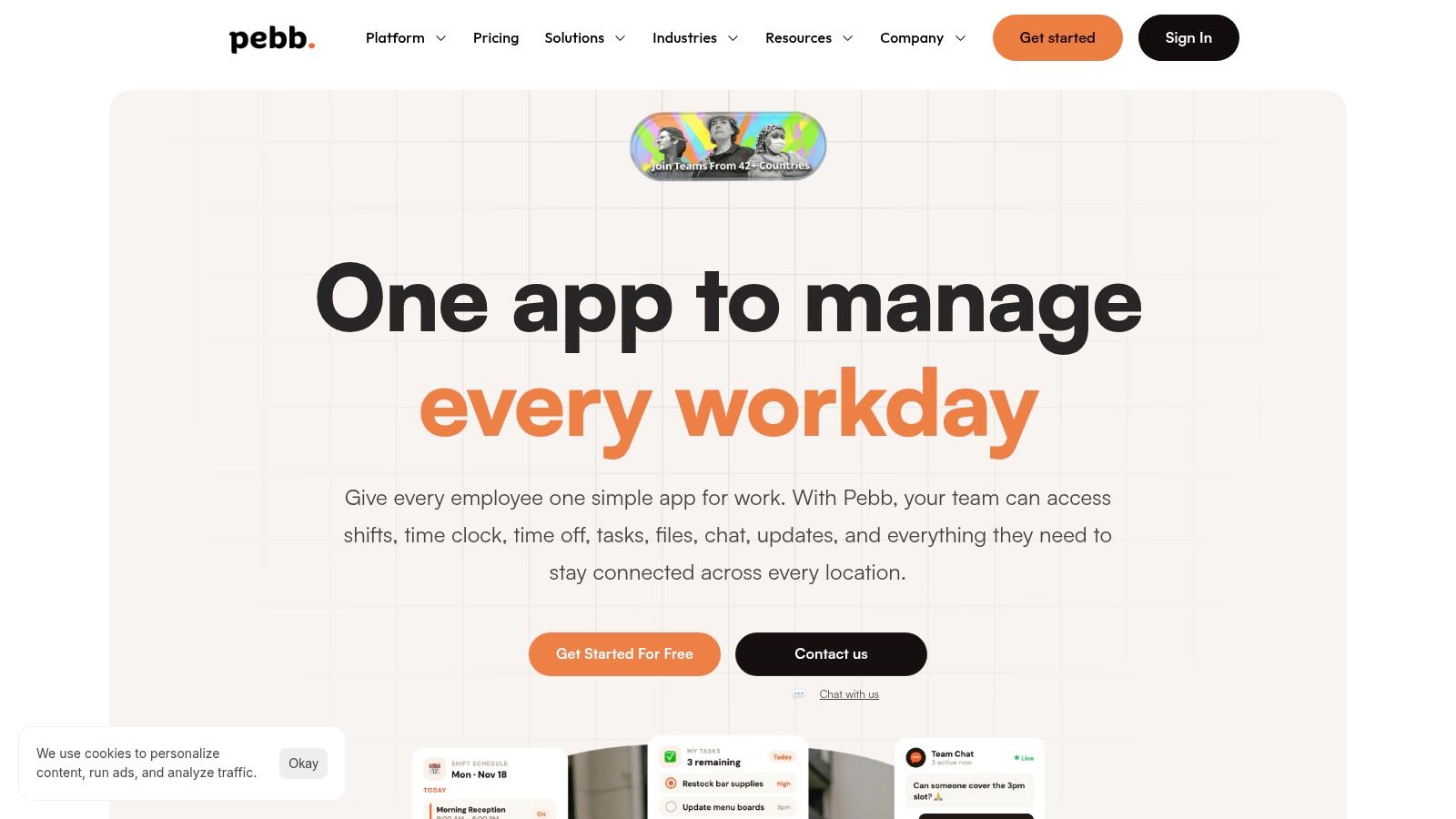
The goal is not to make on-call work feel like a full-time office job. The goal is to stop asking managers to act like human switchboards. One post, one time record, one message thread. That is easier for everyone to follow.
What to fix first
Before adding new tools, I would look at the same three failures. Shifts go out late, updates do not reach everyone, and hours get tracked in too many places. If those three things are messy, the rest of the operation usually is too.
A practical guide to tracking employee hours helps because per diem work depends on clean records. When people move in and out of shifts, sloppy timekeeping quickly turns into payroll disputes and manager headaches.
The strongest per diem teams I have seen do not rely on memory. They rely on a shared rhythm that makes the next shift easy to see.
The manager's job is to make the day legible. Who is in. Who is out. Who got the update. Who claimed the shift. When that is clear, per diem stops feeling like chaos and starts working like a system.
So Is It the Right Fit for You
Per diem isn't good or bad on its own. It's a tool. Used well, it gives a business room to breathe and gives a worker more control over when they work.
Used poorly, it creates instability, confusion, and a team that always feels one callout away from trouble. That's why the question isn't whether per diem sounds flexible. It's whether you can live with the trade-off that comes with that flexibility.
For a worker, the choice comes down to what matters more, freedom or predictability. For a manager, it's whether the organization needs variable coverage badly enough to justify the extra coordination. Those are honest questions, and they deserve honest answers.
If you're trying to build a team that can absorb fluctuation without falling apart, Pebb is worth a look. Start with the shifts, the messages, and the hours, because that's where per diem work either becomes manageable or turns into noise.
A CTA for Pebb.
