
How We Fixed Our Broken Shifts Schedule
Discover a practical shifts schedule approach that respects your team, reduces burnout, and keeps operations smooth.
Dan Robin
A shifts schedule isn’t just a grid of names and times. It’s the invisible architecture of your team’s entire life at work. It dictates their stress levels, their ability to plan a doctor’s appointment, and whether they feel like a person or a cog in a machine. Get it wrong, and you’re running a chaos factory. Get it right, and you’re building a foundation of trust.
For years, we did it the old way. And it was broken.
Let’s be honest, the old way is a mess
We’ve all been there. The top-down schedule, handed down like a mandate. The puzzle that one manager tries to solve alone in a back office, creating a rigid grid that clashes with real life the moment it’s printed.
This way of working creates a constant churn of last-minute calls, confusing text threads about swaps, and the quiet resentment that comes from having no say in your own time. It’s an outdated approach that treats people like interchangeable parts.
But the world has moved on. Our tools and thinking need to catch up.
A quiet demand for control
Flexibility isn’t a perk anymore. It’s the baseline. A recent 2023 State of the Hourly Worker report found that a staggering 78% of shift workers would rather pick their own shifts than have a manager assign them. That’s not a small preference; it’s a fundamental shift in expectations.
This isn’t just about making people happier. It’s about building a team that’s resilient and reliable. When people have a sense of ownership over their schedule, they show up differently. They’re more present, more committed, and far more likely to pitch in when you’re in a jam.
Here’s what a modern, transparent schedule can look like. Everyone sees what they need to, right from their phone.
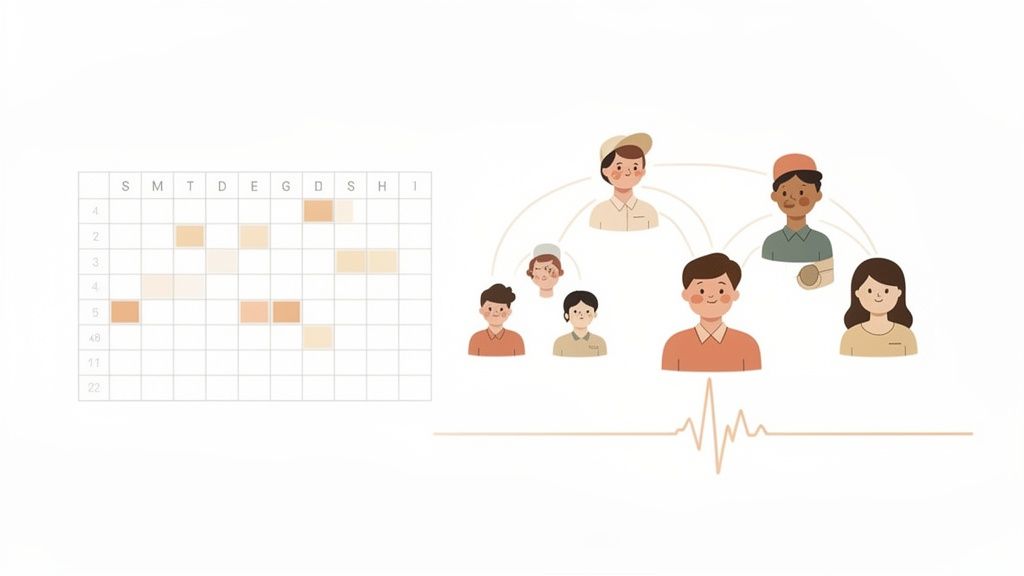
What you’re seeing isn’t just a calendar. It’s a shift toward transparency. It’s putting control back in the hands of the people doing the work.
Laying the groundwork for a fair schedule
Before you touch a calendar, you need to talk about principles. A great shifts schedule isn’t about software; it’s built on clear, agreed-upon rules of the game. This is where you set the foundation so everyone—from your newest hire to your most seasoned pro—understands why things are the way they are.
Most scheduling headaches don’t come from the schedule itself. They come from ambiguity. From unwritten rules, guesswork, and the nagging feeling that things aren’t quite fair. We can fix that. It starts with a conversation, not a spreadsheet.
Know your actual needs
First, stop guessing. Look at the data. When are your actual peak hours? When does demand truly slow down? I once ran a shop where we were convinced Monday mornings were the big rush. The sales data told a different story: our real slam was Tuesday afternoons.
That one insight changed everything. We moved from gut feelings to facts. This isn’t about micromanaging; it’s about putting the right people in the right place when it matters most. It prevents burnout and stops those moments of panic when you’re swamped and short-staffed.
A schedule built on assumptions is built to fail. A schedule built on data gives your team the support they actually need.
This is also the time to write down your policies. How do people request time off? What’s the process for a shift swap? Getting these rules on paper removes the guesswork and makes the entire system feel fair.
Defining what "fair" actually means
"Fairness" is a slippery word. In scheduling, it often comes down to how you distribute the undesirable shifts. Who gets stuck closing on a holiday weekend? How do you balance seniority with giving new folks a shot at the better hours?
I know a manager who came up with a simple points system. Working an unpopular shift earned you points, which you could “spend” to get priority on future time-off requests. It wasn’t perfect, but it was transparent. Complaints dropped almost overnight because the process was clear and applied to everyone equally.
A huge part of this is remembering your team has a life. A fair schedule respects that people need time to rest and recharge. Understanding how hobbies can transform your work-life balance isn’t just a nice thought; it’s essential for building a healthier, more engaged team.
This groundwork is the blueprint. It’s the single most important step in creating a shifts schedule that not only works but also earns the trust of your team. If you’re looking for tools to help put these principles into practice, it's worth exploring the best shift planning tools.
Build the schedule with people, not puzzle pieces
Okay, time to put names to times. But we’re going to do it differently. Forget the old drag-and-drop game where managers sink hours trying to force square pegs into round holes. That approach treats your team like objects, not people.
We start with a flexible template that covers your core needs—the absolute must-have shifts. That’s the foundation. The real work happens when you open the rest up. Instead of assigning every slot, you post the open shifts and let your team claim them.
From top-down mandates to team motivation
I know what you might be thinking. Letting go of that much control sounds scary. What if nobody picks up that dreaded Tuesday closing shift? It’s a fair question. But in practice, you’re giving people the one thing they crave most: autonomy.
I saw this transform a retail client who was drowning in scheduling admin. They started posting open shifts in a simple app, letting staff build their weeks around their lives.
The result? The time they spent on scheduling dropped by 75%. But more importantly, the team felt trusted. They could see all the available shifts, claim what worked for them, and actually plan their lives. The dynamic changed completely.
Of course, you’ll always have a few critical shifts that need a specific person. For those, you have a direct conversation. But you’re no longer dictating an entire schedule from on high. You’re collaboratively filling in a few key gaps. Scheduling becomes a conversation about shared responsibility, not another top-down order.
When you stop treating scheduling as a control mechanism and start treating it as a collaborative tool, everything changes. People feel respected. Respected people are reliable people.
The new way of working
This shift isn't just a preference—it’s a response to how the world is changing. The days of rigid, 9-to-5 thinking are fading, even for in-person roles. It’s predicted that by 2025, 35% of the global workforce will be working remotely in some way, a huge jump from 17% in 2019. That trend is reshaping expectations everywhere. People want more control over their time.
Here’s a simple way to think about creating a fair schedule.
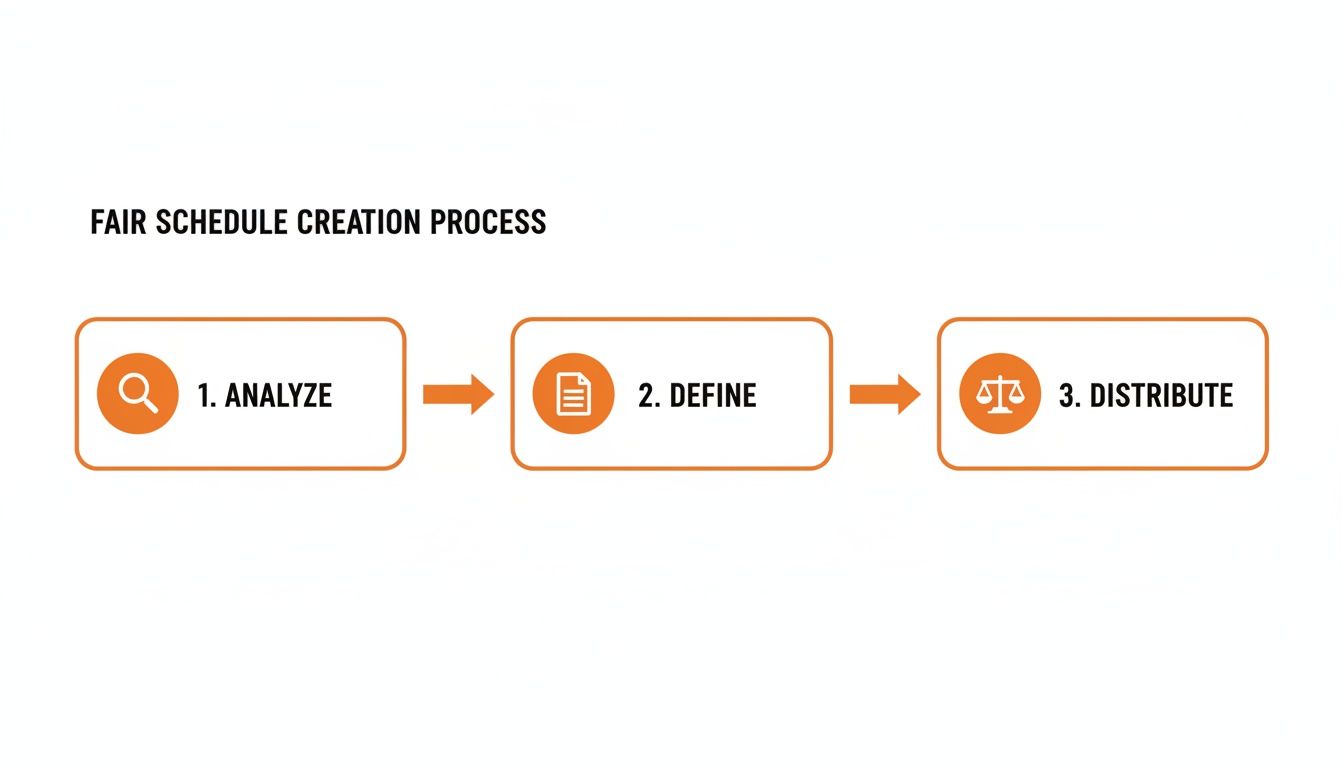
This isn’t a one-and-done task. It’s a continuous cycle: analyze what the business needs, define fair rules, and distribute the work with your team.
Thinking this way is a game-changer, especially for roles that depend on team rotas. It's a core part of many Production Manager responsibilities for a reason. Building a schedule together isn’t just about filling slots; it’s about building a stronger team that wants to be there.
If you need a head start, you can grab a ready-to-use shifts schedule template to get going.
How things change
The difference between the old way and this new, collaborative approach is night and day. Let's break it down.
Aspect | The Old Way (Spreadsheets & Texts) | The New Way (A simple app) |
|---|---|---|
Process | Top-down assignments. Manager dictates the schedule. | Collaborative. Manager sets core needs, team claims open slots. |
Flexibility | Rigid. Swaps are a manual, painful process. | High. Employees see open shifts and manage their availability in real-time. |
Manager's Time | Hours spent on a weekly puzzle, followed by endless texts and calls. | Minutes to set up templates and approve final schedules. The system does the heavy lifting. |
Employee Feeling | Controlled and inflexible. Like a cog in a machine. | Empowered and trusted. In control of their work-life balance. |
Communication | Messy. A mix of printed sheets, texts, and emails that get lost. | Centralized and clear. Everyone gets updates in one place. |
Fairness | Prone to bias. Hard to track who got the "good" shifts. | Transparent. Fairness rules can be built-in, and everyone sees the same opportunities. |
Moving to a modern system isn’t just about efficiency. It’s about creating a better place to work, where your team feels valued.
Manage change like a human
Let’s be real. No schedule is set in stone. Life happens. A flat tire, a sick kid, a sudden emergency. These are the moments that turn a neat spreadsheet into a mess of group texts and last-minute panic.
The test of a great schedule isn’t its perfection on Monday morning. It’s how well it holds up when life gets in the way on Wednesday afternoon.
From bottleneck to moderator
The old way puts you, the manager, in the middle of every single change. Someone needs a shift covered? They call you. Someone is running late? They text you. You become a human switchboard, a bottleneck that adds stress and slows everything down.
There’s a better way. Help your team solve their own problems, within clear guidelines you’ve set.
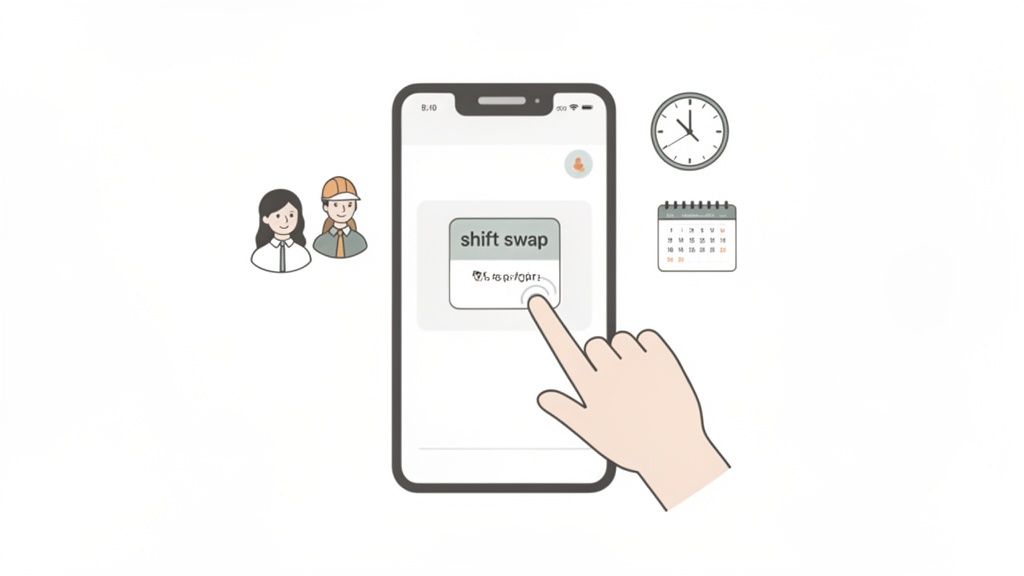
I worked with a clinic where the manager was drowning in phone tag trying to find coverage for call-outs. We helped them set up a simple ‘Shift Swap’ feature in their team app. Now, a nurse who needs coverage posts the shift. A notification goes out instantly to every qualified person.
Usually, someone claims it within minutes. The manager just gets a final ping to approve it. That one small change took a massive headache off her plate and built a sense of team accountability. You can find more practical ideas in articles about the smartest way to share shift schedules with restaurant staff—the principles apply to any industry.
The real cost of last-minute changes
This isn't just about convenience; it's about respecting people's time. "Predictive scheduling" laws are becoming more common. New rules, like one set to take effect in Los Angeles County in 2025, will require employers to provide 14 days' advance notice for schedules.
If you make a last-minute change, you could be on the hook for "predictability pay"—often an extra hour’s wage to compensate the employee for the disruption. The trend highlights a basic truth: your employees' time has value. Last-minute changes have a real cost, not just to morale but to your bottom line.
Your job isn’t to control every change. It’s to create a system where changes are handled smoothly and fairly, without your constant intervention.
The goal is to move from a state of reactive panic to a proactive system of clear communication. When everyone can see the live schedule on their phone and handle swaps themselves, you eliminate the chaos. No more no-shows because someone missed a text. Just a calm, clear process that respects everyone's time—including your own.
The schedule is a conversation, not a command
You’ve published the schedule. The week is underway. But your job isn't done. A great shifts schedule is a living thing. It needs tending.
This is where you stop filling slots and start listening. That grid of names and times has a real impact on people’s lives. The best way to know if it’s working is to ask them. You don't need a formal survey. A quick poll in your team chat or a casual conversation can tell you more than enough.
Look for the patterns
Your schedule is a goldmine of data. It’s a health check for your whole operation. Are Wednesdays always a mad scramble to find coverage? Is one person constantly picking up extra shifts and heading for burnout?
Spotting these patterns helps you get ahead of problems before they blow up. This isn’t micromanagement; it’s about understanding the rhythm of your business so you can support your team better. When you see a trend, you can step in, have a conversation, and make a change. It’s about being proactive instead of constantly putting out fires.
Your schedule is more than a record of who worked when. It’s a story about your team's workload, their flexibility, and their breaking points. Pay attention to the story it's telling.
The world keeps changing
The old 9-to-5 is on its way out. The global conversation around ideas like the four-day workweek is changing how we think. After Iceland's hugely successful trial from 2015-2019, where a shorter week led to better work-life balance without a drop in productivity, the idea has gained serious ground.
Research from ADP in 2023 found that 28% of workers now expect a four-day week to become standard. For shift-based businesses, this often looks like a compressed schedule of four 10-hour days—a model that’s becoming a powerful way to attract good people. You can read more about these global work trends in BIPO's comprehensive report.
This doesn’t mean you need to switch to a four-day week tomorrow. But it does mean the best schedules are the ones that stay flexible. They adapt. They evolve.
The schedule that worked last week might not be right for next month. Your team will change, business needs will shift, and the world will keep turning. Treating your schedule as a living document is how you build a more resilient and human-focused workplace, one shift at a time.
A few questions I always get
We’ve covered the philosophy, but I know that plans run into reality. It's in those "what if" moments that a good system proves its worth. So, let’s tackle the questions that always come up.
How do you handle last-minute call-outs fairly?
This is the big one. A last-minute absence can throw the whole day into chaos. The key isn't a magic formula—it's a clear, consistent process everyone knows ahead of time.
First, establish the one right way to call out. No more texts to your personal phone at 5 AM. It should be a formal message in your team app.
Next, instead of you scrambling to call people one by one, broadcast the open shift to everyone qualified to work it. This changes the game. It’s no longer you pressuring someone to come in; it’s a voluntary opportunity for someone to snag extra hours. First to claim it gets it.
And track it. If the same person is always calling out, it’s not just a scheduling headache. It’s a sign that you need to sit down with them and find out what’s really going on.
What's the best way to introduce a new scheduling tool?
People resist change, especially when it feels like another management tool. You have to sell it as a win for the team.
Start by being honest about the problems with the old way. Acknowledge the messy group chats and the constant confusion. Show them you get their frustration.
Then, explain how the new tool solves those problems for them:
More control. See your schedule, request swaps, and pick up shifts from your phone.
No more guesswork. The app is the single source of truth.
Real flexibility. It’s finally easier to balance work with the rest of your life.
My advice? Start with a small pilot group of your most enthusiastic people. Let them become your champions. When their coworkers see how much easier their lives are, everyone else will want in.
You’re not just rolling out software. You’re showing your team you respect their time. That’s a powerful message.
Can flexible scheduling work in a highly regulated industry?
Absolutely, but you can’t just wing it. In fields like healthcare, you can’t have an untrained person picking up a specialized shift. That’s a huge compliance risk.
This is where a modern scheduling tool is non-negotiable. You need a system that understands roles and certifications. You can create a 'Certified Forklift Operators' group. When a shift requiring that skill opens up, only the people in that group are even notified.
This way, you maintain strict safety and compliance standards while still giving your qualified team the flexibility they want.
How do I balance what my employees want with what the business needs?
This is the heart of scheduling—finding the sweet spot between business needs and employee wants. The secret is transparency.
Be upfront about your non-negotiables. For example: "Folks, we must have two cashiers and one stocker on Saturday from 10 am to 6 pm. These are our 'golden shifts' and they have to be filled." Post those critical shifts first and get them covered.
Once the essentials are locked in, open up the remaining shifts for people to claim. You can even use this to reward your top performers. Maybe employees with perfect attendance get first dibs on the next month's schedule. It's not about giving everyone exactly what they want all the time. It’s about creating a fair system where people have a choice.
Ready to build a shifts schedule that your team doesn’t hate? Pebb brings communication, scheduling, and operations into one simple app, helping you create a calmer, more collaborative workplace. Learn more about Pebb.
