
8 Paid Time Off Policy Examples for Any Business in 2026
Need paid time off policy examples? We break down 8 models, from unlimited to accrual, with tips on how to implement and manage them without the headache.
Dan Robin

The first PTO policy I inherited fit on one page. The actual policy lived in a spreadsheet, in Slack threads, and in whatever mood a manager was in that day. One employee got a quick yes for a Friday off. Another got told to wait because the team was "too busy," even though the workload looked the same. That kind of inconsistency drains trust fast, and it creates extra work every time someone asks a basic question.
A paid time off policy should remove judgment calls from routine requests. It should tell employees what they can take, tell managers how to approve it, and keep payroll out of avoidable disputes. Companies have a lot of freedom in how they set this up, which is useful. It also means plenty of businesses end up with a policy that sounds generous in the handbook and feels messy in daily use.
The hard part is running the policy well. I've seen PTO systems save hours of manager time each month, and I've seen them create a constant drip of exceptions, balance disputes, and resentment. The difference usually comes down to clarity, coverage planning, and whether the rules match how the business operates.
Good PTO design has real trade-offs.
A policy can make time off easy to request, or make every absence feel like a favor. It can give managers a clear standard, or force them to negotiate case by case. It can keep records clean, or leave HR cleaning up rollover mistakes and payout arguments after someone quits. Teams using a time off management app often reduce that friction, but software only helps if the policy itself makes sense.
These paid time off policy examples show more than different templates. They show different operating models, with different costs in admin time, coverage risk, and employee trust. The right choice depends less on what sounds modern and more on what your managers can apply consistently on a normal Tuesday.
1. Unlimited PTO Policy
Unlimited PTO sounds modern, generous, and simple. Sometimes it is. Sometimes it's just a policy that moved the hard part from payroll to managers.
Netflix made this model famous, and plenty of salaried teams copied it for the same reason. It signals trust. It removes accrual math. It avoids the awkward conversation about “earned” days when someone wants a long break after a brutal quarter.

But the policy only works when leaders mean it. If employees still feel they need to prove they're committed, they often take less time off, not more. That's the dirty secret of unlimited PTO. The written policy says “take what you need.” The culture says “don't be the one who disappears.”
What works in practice
You need guardrails, even if the policy is flexible. I've found that unlimited PTO works best when the team has clear coverage rules, blackout periods for particularly busy windows, and regular conversations about rest that happen before burnout shows up.
Practical rule: If managers can't explain what “reasonable time off” means, employees will assume the safest answer is “less.”
A few habits make this model less slippery:
Set a floor: Tell people the minimum amount of time away you expect them to take each year.
Train managers: Approval standards should be consistent across teams, or favoritism creeps in fast.
Talk about time off in one-on-ones: If no one raises it, people keep postponing it.
Track patterns: A time-off management app helps you spot who never takes leave and which teams deny more requests than others.
Unlimited PTO is best for mature teams, especially salaried knowledge work where output matters more than hours. It tends to fail in places where workloads are constantly understaffed or where manager discretion is the whole system. If every request feels personal, trust erodes.
2. Traditional Accrual-Based PTO Policy
I've seen accrual PTO save a lot of arguments.
An employee asks how much time they have left. A manager checks the balance, approves the request, and everyone moves on. That kind of clarity matters more than companies admit. Accrual works because it turns time off into something earned in steady increments, not a vague promise that gets reinterpreted every quarter.
This structure fits teams with uneven schedules, hourly pay, overtime, seasonal staffing, or a mix of full-time and part-time employees. It gives employers a cleaner record of what has been earned and used, which helps when payroll, compliance, and final payouts all need to line up. New hires also tend to understand it quickly. Work hours go in. PTO builds over time.
Where it earns trust and where it creates work
The biggest advantage is fairness you can explain. Employees do not have to guess whether someone else got a better deal. Managers do not have to make up exceptions on the fly. If the formula is clear, the policy feels consistent.
The trade-off is administration.
Accrual policies create a steady stream of small tasks. Balances need to update on time. Carryover caps need to be applied correctly. Payroll and HR systems need to agree. If any of that slips, employees stop trusting the ledger, and then every PTO request turns into a side investigation for someone who already has a full plate.
People rarely complain about accrual itself. They complain when the numbers look wrong.
That is why the policy language matters as much as the formula. Do not just say PTO accrues per pay period. Say when it starts, when employees can use it, whether there is a waiting period, what happens at year-end, and how separation payouts are handled where required. If your team needs a plain-English reference, this guide on how to calculate accrued vacation covers the mechanics clearly.
A few rules make this model easier to run:
Write the accrual formula in plain language: Employees should be able to check a pay stub and understand the balance.
Set usage rules early: If PTO can be earned immediately but used only after a set period, say that up front.
Audit balances before problems surface: Corrections made after a resignation or disputed request cost more in time and trust.
Train managers on exceptions: The policy feels stable only if supervisors apply the same rules across teams.
Accrual-based PTO is rarely anyone's favorite policy. It is often the easiest one to defend. For businesses that need precision more than flexibility, that is usually the right trade.
3. Bucket or Allotment PTO Policy
I've seen this policy calm a messy leave process in a week. I've also seen it create a miserable January because nobody thought through what happens when one PTO bank has to cover both beach trips and bad flu seasons.
A bucket or allotment policy gives employees a fixed amount of paid time off in one bank, usually at the start of the year or on a set anniversary date. Vacation, sick time, and personal days all pull from the same balance. For small and midsize teams, that simplicity has real value. Employees can check one number. Managers approve against one standard. HR spends less time explaining categories and more time handling actual exceptions.
The appeal is not hard to understand. A single bank cuts down on debates over what “counts” as sick time versus personal time. It also feels more adult to employees because they can decide how to use the time.
The trouble starts after the policy leaves the handbook.
An employee uses most of their PTO on planned travel. A child gets sick in November. Now the manager has two bad options: deny time off that the employee needs, or approve unpaid time and deal with the frustration that follows. That tension is why this model works best in offices that can absorb occasional unscheduled absences without safety, staffing, or service problems.
Used well, this is one of the easier paid time off policy examples to run. Used lazily, it shifts admin work into manager judgment calls, which is where trust usually starts to fray.
A few operating rules make the policy hold up:
State exactly what draws from the bank: Spell out whether illness, family care, school closures, appointments, and partial days all count.
Set rollover rules in plain English: Employees should know whether unused time carries over, caps out, or disappears at year-end.
Address payout at separation clearly: In some states, unused PTO may need to be paid out because it is treated like earned vacation or wages. Write the rule with counsel or HR input before you need it.
Use one approval process across teams: If one manager informally allows negative balances and another never does, the policy stops feeling fair.
Decide how much manager discretion you want: Flexibility sounds good until every exception becomes a one-off negotiation.
My practical advice is simple. If you adopt a single PTO bank, pair it with either a small protected sick leave floor where required, or a clear unpaid leave process for real illness. That keeps the policy simple without forcing employees to spend every sick day decision against their vacation plans.
This model earns its keep when you want fewer rules and can tolerate some ambiguity. If your operation depends on strict attendance or separate sick leave tracking, the simplicity starts costing more than it saves.
4. Separate Vacation, Sick Leave, and Personal Days Policy
Some policies create freedom. This one creates clarity.
Separate leave categories can feel old-school, but there's a reason many large employers still use them. When vacation, sick leave, and personal days each have their own rules, employees know what each bucket is for, managers have cleaner approval paths, and compliance is easier to document.
This model is especially useful when the law cares about the difference between a planned trip and a health-related absence. It also helps in workplaces where attendance tracking is strict or where abuse of vague “personal time” becomes a recurring management problem.
Why some teams still need separate buckets
A single PTO bank is elegant until it starts blurring real distinctions. If you need to audit sick leave separately, or if frontline supervisors need a clear script for what they can ask and document, separate categories reduce guesswork. Manufacturing, logistics, healthcare, and larger corporate environments often prefer this for exactly that reason.
The trade-off is friction. Employees now have more rules to remember. Managers need to know the difference between approval standards. HR has to maintain better documentation, and every policy update can ripple through several leave types at once.
Separate buckets are useful when the company needs better records, not when leaders just like more control.
The model works best when the handbook uses plain examples. “Vacation requires advance notice.” “Sick leave covers illness and medical appointments.” “Personal days cover urgent personal matters.” That level of specificity prevents half the arguments before they start.
It also gives employees a small but important benefit. They don't have to burn a vacation day to stay home sick if the policy protects sick time separately. That can feel more humane than a broad bank, even if the total number of days isn't larger.
5. Frontline Worker Hybrid PTO Model
If you run stores, restaurants, warehouses, clinics, or field teams, generic PTO advice usually falls apart the minute a shift needs coverage.
Frontline work runs on schedules, not just policies. Time off isn't a form in a portal. It's a staffing problem someone has to solve before the doors open. That's why a hybrid setup often works better here. Planned time off can follow one set of rules, while sick leave or emergency absences follow another.
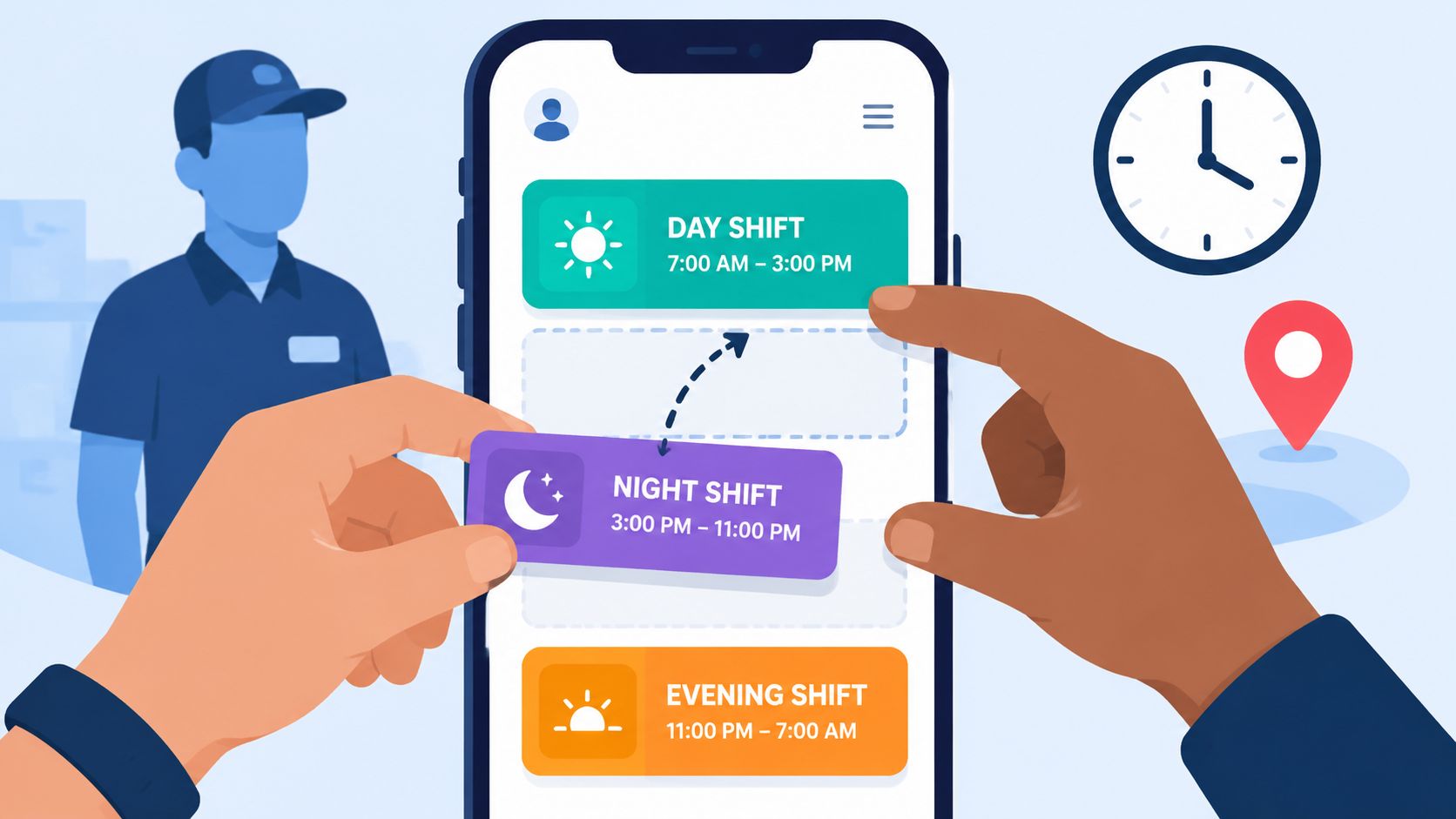
This isn't about making workers jump through hoops. It's about acknowledging operational reality without punishing people for having lives.
How to keep it fair on the floor
The biggest failure I see is putting all the burden on the employee. “Find your own coverage” sounds efficient until newer staff have less social capital than veteran staff. Then access to time off depends on who can persuade a coworker to trade shifts.
A better version uses clear notice windows for planned leave, quick escalation when coverage falls through, and a no-retaliation rule around requests. If shift swaps are part of the system, they need structure, not back-channel texts and favors.
Use mobile workflows: Frontline teams need simple requests and approvals from a phone.
Separate planned PTO from same-day illness: Those are different events and should be managed differently.
Create backup paths: If a worker can't find coverage, a supervisor still owns the final staffing plan.
Keep scheduling visible: Teams comparing apps for shift workers usually care less about bells and whistles and more about whether swaps, approvals, and attendance live in one place.
This model respects the fact that frontline employees need flexibility too. It just builds that flexibility around real schedules instead of pretending every job can absorb absence the same way.
6. Tiered or Service-Based PTO Policy
I've seen this policy win loyalty and create resentment in the same quarter.
A tenured employee hits another anniversary and gets a bigger PTO allotment. They feel seen. A new hire, still settling into the job and trying to handle real life outside work, notices they have the smallest bank on the team. That gap is easy to explain on paper. It is harder to manage in practice, especially when the new person is already deciding whether this company feels rigid or reasonable.
That tension defines tiered PTO. The basic structure is simple: employees get more paid time off as their years of service increase. Companies like it because the policy is predictable, payroll liability is easier to model, and retention gets a visible reward without rewriting the whole leave system.
The problem is where many employers set the first tier.
If year one is too thin, managers end up doing quiet exception handling to keep good people from burning out or quitting. Once that starts, the policy still exists, but trust in it does not. Employees notice fast when the written rule says one thing and their manager has to patch around it.
Where this model works best
Tiered PTO fits organizations with lower turnover, clear career paths, and a culture that places real value on tenure. It also works better when promotion cycles are slower and employees expect benefits to improve over time, not all at once.
It works less well in companies that hire aggressively and need new people productive fast. New hires often need flexibility early. They may be relocating, covering school breaks, dealing with healthcare appointments, or just recovering from the last job. A stingy entry tier can make a stable company look ungenerous.
My view is simple. Reward loyalty, yes. Do not make the first year feel punitive.
A good tenure ladder feels like recognition. A bad one feels like the company is rationing basic time off until someone proves they are worth it.
The version I trust has a few clear rules:
Start with a credible base amount: The first tier should be workable for an adult with a real life, not just someone who never needs time away.
Make tier changes automatic: HR systems should update balances on the service date without employees asking for manual corrections.
Keep the ladder easy to explain: Too many tiers create confusion and payroll questions that waste time.
Train managers to apply the policy consistently: If one department grants side deals and another follows the handbook, the policy becomes a morale problem.
Audit the actual experience: If first-year employees keep requesting unpaid time off or manager exceptions, the opening tier is probably too low.
The trade-off is straightforward. Tiered PTO can strengthen retention for long-term employees, but it can also front-load frustration for the people you are still trying to keep. The fix is not complicated. Keep the service increases, but make the starting tier respectable enough that managers do not spend all year apologizing for it.
7. Flexible Work From Home With PTO Integration Model
Remote and hybrid teams forced a useful question. Does every personal need require formal PTO?
Sometimes the answer is yes. Sometimes it doesn't. If someone needs two hours for a medical appointment, a school event, or a quiet afternoon after a rough night, docking a full day can feel absurd. That's why some companies pair PTO with flexible scheduling instead of treating every absence like a full stop.
This model isn't the same as unlimited PTO. It's more precise. People can shift hours, take half-days, work asynchronously, and still use formal PTO for their time off.
The hidden risk is that people never fully unplug
Flexible work can reduce stress, but it can also blur the line between being available and being off. Someone steps out for half a day, then answers messages all evening. Technically they had flexibility. In practice they never got a break.
That's why team norms matter more than software here. Core hours, response expectations, and handoff habits need to be explicit. If they aren't, the flexible people absorb more ambiguity than the rigid ones.
The U.S. leave picture also explains why many employees value these arrangements. Peer-reviewed research citing 2018 Bureau of Labor Statistics figures noted that 26% of Americans had no access to paid leave, and the U.S. average was only 8 vacation days at that time. When formal leave is limited or uneven, schedule flexibility starts doing work that PTO alone can't do.
A few practical rules keep this model honest:
Use half-days and partial-day requests deliberately: Don't make them a loophole for always-on work.
Define offline time: “Flexible” shouldn't mean “reachable at all hours.”
Apply it across roles where possible: If only one department gets autonomy, resentment builds fast.
This approach suits knowledge work, distributed teams, and companies comfortable managing outcomes instead of chair time.
8. PTO as Paid Leave Bank Shared Resource Model
This one is less common, but in the right culture it can be one of the most humane policies on the list.
A shared leave bank gives employees a place to draw from for serious need, often beyond their own accrued or allotted balance. Some organizations also let employees donate unused time to coworkers facing hardship. It's not a replacement for your core PTO policy. It's a relief valve for moments when life gets expensive, messy, and bigger than a normal absence rule.
Generous idea, fragile execution
The promise is community. The risk is favoritism.
If the rules are vague, employees quickly wonder who qualifies, who decides, and why one request was approved while another wasn't. A shared model only works when eligibility, approvals, and privacy boundaries are documented with care. Sensitive leave should never turn into office gossip or a popularity contest.
Recent policy templates increasingly reflect this broader split between one large PTO bank and more customized leave structures, including hybrid approaches with flexible vacation and fixed sick days, along with closer attention to payout and forfeiture rules for unused time. That same logic applies here. Companies need to be clear about why this shared resource exists and when it should be used.
A solid version usually includes:
A written hardship standard: Medical events, family emergencies, or natural disasters are easier to administer than vague “special circumstances.”
A small review group: Not one manager deciding alone.
Confidential handling: People should ask for help without performing their crisis publicly.
Audit trails: Every donated or granted day needs to be documented.
This model won't fit every workplace. But when a team has trust and the policy has discipline, it can turn PTO from a private perk into a shared form of support.
Side-by-Side Comparison of 8 PTO Policies
Policy | 🔄 Implementation Complexity | ⚡ Resource Requirements | 📊 Expected Outcomes | 💡 Ideal Use Cases | ⭐ Key Advantages |
|---|---|---|---|---|---|
Unlimited PTO Policy | Low–Moderate; simple admin but requires manager training | Low tracking; high cultural and managerial commitment | Attracts talent; usage varies; potential equity gaps | Tech startups and trust-based cultures | Flexibility, reduced payout liability ⭐⭐ |
Traditional Accrual-Based PTO Policy | Moderate–High; requires precise accrual rules and audits | Moderate HR systems and payroll integration | Predictable budgeting; accrual liabilities possible | Mid-to-large enterprises, healthcare, government | Clear, compliant, auditable ⭐⭐⭐ |
Bucket / Allotment PTO Policy | Low; single annual allotment easy to define | Low tooling; basic tracking and carryover rules | Transparent use; risk of depleting sick reserves | Small-to-mid businesses, startups | Simple to communicate and administer ⭐⭐ |
Separate Vacation, Sick, and Personal Days Policy | High; multiple pools and documentation processes | High HR/admin effort and payroll complexity | Strong compliance and coverage; higher admin burden | Large enterprises, regulated industries | Legal compliance and predictable coverage ⭐⭐⭐ |
Frontline Worker Hybrid PTO Model | High; needs scheduling integration and fast approvals | High tech (mobile + scheduling) and operational coordination | Improved shift coverage and retention; logistical complexity | Retail, hospitality, healthcare, logistics | Operationally practical for shift work ⭐⭐ |
Tiered / Service-Based PTO Policy | Moderate; requires tenure tracking and tier transitions | Moderate HR tracking and clear communication | Rewards tenure; supports retention but may demotivate new hires | Large corporations, stable long-term workforces | Encourages loyalty and transparent progression ⭐⭐ |
Flexible WFH with PTO Integration Model | Moderate; policy design plus manager norms | Moderate tech for collaboration and partial-day tracking | Fewer full-day absences; risk of blurred work-life boundaries | Remote-first and hybrid teams | Increases autonomy and reduces full-day PTO use ⭐⭐ |
PTO as Paid Leave Bank (Shared Resource) | High; needs governance, donation rules, and audits | High tracking, legal review, and sensitive case handling | Strong hardship support; potential for abuse or inequity | Mission-driven orgs, non-profits, cooperative cultures | Fosters community support and flexible aid ⭐⭐ |
From Policy to Practice
In the end, a policy is just a document. The actual test is what happens on a tired Tuesday when someone asks for time off and their manager has to answer quickly, fairly, and without drama. That moment tells you whether your PTO policy is helping the company run or subtly making everything harder.
The best policy isn't the most generous-sounding one. It's the one your team understands and uses. If people can't tell how much time they have, when they can take it, whether unused time rolls over, or what happens when they leave, the policy is too complicated. If managers keep making exceptions because the written rules don't fit real life, the policy is also broken. Different failure mode, same outcome.
I've come to prefer simple systems with very few judgment calls. That doesn't mean every business should use the same approach. A salaried product team can tolerate more flexibility than a busy clinic. A warehouse with rotating shifts needs more structure than a remote design agency. A compliance-heavy environment may need separate categories even if a single PTO bank sounds cleaner on paper.
The smart move is to choose the model that matches your operating reality, then write it in plain language. Say who's eligible. Say how time is earned or granted. Say how requests are approved. Say what happens at year-end and at separation. Don't hide the hard parts in fine print. Employees always find those parts later, usually when they're already frustrated.
It's also worth thinking about admin load. PTO isn't just a benefit. It's a workflow. Approval chains, coverage planning, balance visibility, handbook access, scheduling, and recordkeeping all affect whether the policy feels easy or irritating. Tools that keep those pieces together can help, especially for businesses trying to reduce benefits administration costs without pushing more manual work onto managers. If you're already centralizing communication and operations, a system like Pebb can also keep PTO requests, policy access, scheduling, and team coordination in one place.
A rested team usually doesn't talk much about the PTO policy. That's a good sign. It means the rules are clear, the process works, and people trust the system enough to step away when they need to. That's the target. Not a clever policy. A usable one.
If you're reworking your PTO process, Pebb is worth a look. It brings time-off requests, approvals, policy access, scheduling, chat, and team coordination into one app, which makes it easier to run a policy without creating more admin work for HR or managers.
