
8 Management Feedback Examples for 2026
Find the best management feedback examples for praise, coaching, and reviews. Real scripts and tips for modern managers to deliver feedback that works.
Dan Robin
Feedback is broken because it is still treated like an appointment instead of a habit.
You know the version I mean. A manager drops a calendar invite called “check-in,” everyone pretends it’s casual, and then the conversation lands like a small performance trial. Or the opposite happens. Someone fires off a vague note after a rough shift, and the employee is left replaying it for days, trying to decode what went wrong.
Neither version helps much.
The problem usually isn’t that managers don’t care. It’s that the feedback system is clumsy. It lives outside the work. It shows up late. It’s too general. Or it only appears when something is already off track. That makes even good advice feel heavy.
Good feedback should feel lighter than that. Faster too. It should happen close to the work, in the same places people already talk, ask questions, share updates, and solve problems. When feedback is part of the daily rhythm, it stops feeling like judgment and starts feeling like support.
That shift matters. Research cited by Betterworks on real-time employee performance feedback puts it plainly: “Feedback is only valuable when it happens in the moment and in real time.” That matches what most managers learn the hard way. Late feedback usually turns into history. Timely feedback changes the next shift, the next meeting, the next customer interaction.
There’s also a business case for getting this right. Companies that provide consistent management feedback see a 14.9% lower employee turnover rate, according to performance review research summarized by SelectSoftware Reviews. But the bigger point isn’t the statistic. It’s what the number represents. People stay where expectations are clear and effort gets noticed.
So let’s skip the corporate scripts and get practical. These management feedback examples are built for real teams, including office teams, shift workers, frontline managers, and distributed crews who don’t sit in the same room all day.
1. Real-Time Feedback in Unified Communication Spaces
If feedback needs a separate meeting every time, it won’t happen enough.
That’s why I like giving feedback inside the same shared space where the work already lives. In Pebb, that usually means Spaces. A hospital unit can have a shift Space. A retail store can have a closing-team Space. A warehouse can run operations in one Space and safety updates in another. The point is simple. Put feedback where context already exists.
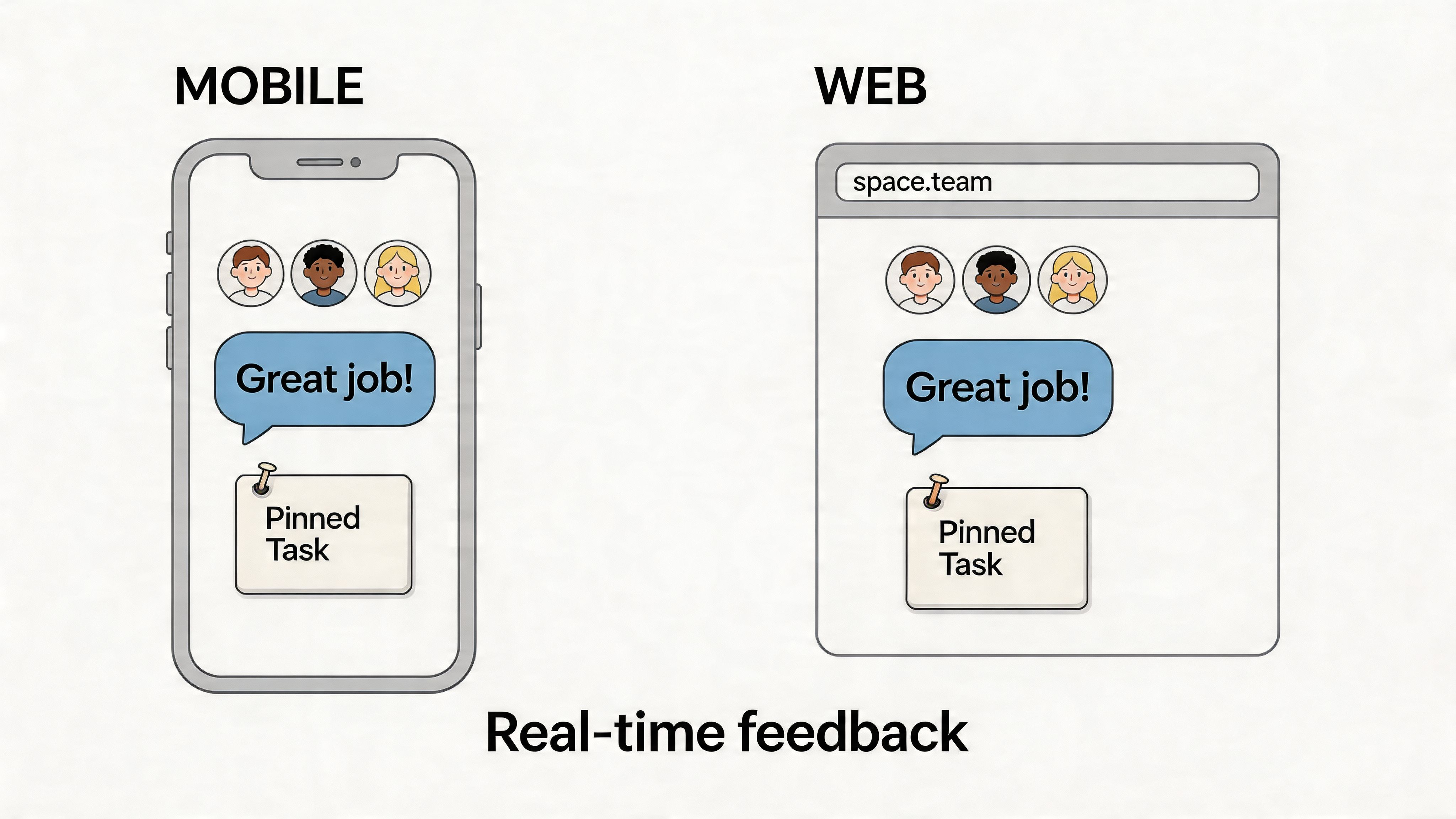
What good real-time feedback sounds like
A nurse finishes a chaotic handoff and keeps a family calm during the process. A manager posts in the shift Space: “@Maya, the way you explained the delay to the family during handoff kept the situation steady. Clear, calm, and kind. That helped the whole unit.”
That works because it names the behavior and the impact.
A retail supervisor can do the same after store close: “@Jordan, you stayed with that frustrated customer instead of handing it off. You listened, fixed the return, and kept the line moving. That was strong service under pressure.”
A warehouse lead might post: “@Luis, you caught the pallet issue before loading and flagged it right away. That protected the team and saved us a bigger problem later.”
Those examples are short. They’re also complete.
Public praise, private correction
Some managers get clumsy. They hear “feedback in the flow of work” and start correcting people in front of everyone. Don’t do that.
Use the team Space for recognition, reinforcement, and shared learning. Use direct messages or a quick one-on-one for sensitive issues, especially when you’re dealing with tone, reliability, conflict, or repeated mistakes.
Practical rule: Praise in public when it helps the team learn what good looks like. Correct in private when dignity matters more than visibility.
That’s especially true on frontline teams where people already feel exposed. If a restaurant shift leader needs to address food timing or prep discipline, a direct note works better than a public callout in the kitchen thread.
Why unified spaces beat separate feedback channels
A lot of teams still bolt feedback onto work with yet another tool. That creates lag. Managers mean well, but if they have to leave the app where tasks, updates, and questions are already happening, feedback gets postponed.
A unified setup fixes that. If your team already uses group chat, posts, and calls in one place, giving quick input becomes normal. That’s one reason tools built for everyday communication matter. Pebb’s approach is easy to see in its write-up on a voice call app for work without phone numbers. The same system people use to talk and coordinate can also carry fast, contextual feedback.
That’s the win. No ceremony. No delay. Just useful input while the work is still fresh.
2. Performance Analytics-Driven Feedback
A manager walks into a check-in with a vague complaint like, “Something feels off.” That conversation usually goes badly. If you want feedback to help, start with evidence people can discuss.
Performance analytics help managers spot patterns early, while there is still time to coach instead of clean up a bigger problem later. In a unified platform like Pebb, that matters because the same system that holds conversations, tasks, updates, and onboarding activity also gives you the context around them. Feedback stops being a separate event and becomes part of how the team works week to week.
Start with patterns that hold up under scrutiny
Single data points are weak evidence.
A warehouse supervisor might see light task activity from one employee in one week. That could mean poor follow-through. It could also mean the employee spent the week training a new starter, covering physical work that never hit the dashboard, or filling gaps during a staffing shortage. Good managers look across several weeks, compare the data to the actual job, and then ask questions.
That changes the tone of the conversation.
Instead of saying, “You haven’t been engaged,” say, “I noticed your check-ins and task completion dropped over the past three weeks. What changed?” That wording is better because it names the pattern, gives a timeframe, and leaves room for an explanation you may not know yet.
Use analytics to coach the work, not police the person
The practical value of analytics is speed and specificity. You do not have to wait for a quarterly review to notice that a new retail hire stops progressing after day three of onboarding. You can catch it in the normal flow of work, pull up the activity together, and fix the handoff, instructions, or schedule problem that caused the stall.
The same approach works for strong performance. If one support team consistently posts clear end-of-shift handoffs, use that data in a coaching conversation. Ask the shift lead what prompts they use, how they set expectations, and what the rest of the team can copy. Good feedback is not only about correcting misses. It should also identify repeatable behaviors worth spreading.
That is one reason unified tools are useful here. The metric and the surrounding work live in the same place, so managers can move from signal to conversation without chasing screenshots across three systems.
Metrics have limits, and experienced managers respect them
Dashboards create clarity. They also create temptation.
A manager who relies too heavily on numbers can become lazy fast. Low participation might point to disengagement, but it can also point to burnout, unclear priorities, a bad process, or invisible support work that the system does not capture well. Frontline teams run into this problem all the time because some of their best work happens in motion, not in apps.
Use a few simple rules:
Look for trends, not isolated dips.
Show employees the same data you are using.
Tie the metric to a real behavior that matters on the job.
Treat analytics as a starting point for a discussion, not proof of guilt.
As noted earlier, people-first performance systems tend to outperform review processes built on opinion and paperwork alone. The lesson is straightforward. Structured feedback works better when employees can see what you are reacting to and when the conversation stays grounded in the work.
Use the dashboard to spot patterns. Use your judgment to interpret them. Then give feedback while the issue is still small enough to fix.
3. Peer Feedback and 360-Degree Input Integration
A supervisor finishes a review with good intentions, then gets blindsided later by what the team already knew. The employee misses handoffs, shuts people down in group chats, or creates extra cleanup for the next shift. None of that showed up in the manager's one-on-one because the actual work happened across peers, not upward.
That is why peer input matters. Managers see part of the picture. Coworkers, shift partners, and cross-functional teammates usually see the repeated behaviors that shape daily work.
A charge nurse may present well in a formal check-in while peers know her handoffs are rushed. A retail lead may hit targets while associates avoid asking for help during busy periods. A project lead may look organized to leadership and create confusion for partner teams.
You do not need a heavyweight 360 program to catch this. You need a clear method for collecting useful input inside the same tool people already use to work. In Pebb, that can happen in a Space, a team thread, or a short check-in tied to a real project, shift cycle, or handoff point. That makes feedback part of the workflow instead of another survey people ignore.
Ask for observed behavior, not opinions
Managers get bad peer feedback when they ask lazy questions.
“Any feedback on Sam?” produces noise. People either stay polite or start venting. Neither helps.
Ask for specifics people can answer:
For collaboration: “What does this person do that makes handoffs easier or harder?”
For communication: “Where have their updates been clear, and where have they created confusion?”
For leadership: “What have they done in the last two weeks that helped the team stay focused?”
For improvement: “What one behavior would make working with them easier next month?”
Those prompts do two jobs at once. They narrow the scope, and they pull the conversation toward patterns people have seen.
A warehouse manager might ask shift leads about handoff quality after a week of missed inventory notes. A hospital department head might gather short peer input after schedule changes exposed communication gaps. A field operations manager might ask partner crews which updates are useful in the app and which ones arrive too late to matter.
Summarize patterns. Do not forward raw comments.
Peer input needs editing.
If a manager drops a stack of quotes into someone's lap, the employee will fixate on tone, guess who said what, and miss the point. The manager's job is to sort comments, test them for consistency, and turn them into something the employee can act on.
A better summary sounds like this: “Three peers mentioned that your shift notes are accurate but late, which forces the next team to recreate the status. Keep the detail. Post it before clock-out.”
That is direct, fair, and usable.
Use named and anonymous feedback on purpose
There is a real trade-off here. Named feedback can build trust and make follow-up easier. It also goes soft when people worry about politics, retaliation, or being labeled difficult. Anonymous feedback can surface issues earlier, especially with leadership behavior, but it can also attract cheap shots and vague complaints.
Use the format that fits the risk.
Named feedback works well for routine collaboration, handoffs, and project habits. Anonymous input fits better when you are testing for blind spots, team safety issues, or patterns involving someone with positional power. In either case, set rules first. Require examples. Keep the focus on work behavior. Cut comments that read like gossip.
The manager feedback examples from Learnit article gets one thing right. Frontline teams need feedback tools that work across shifts, mobile devices, and uneven schedules. That applies here. If peers have to wait for a formal desktop survey, you will hear from the office staff and miss the people who shared the shift.
Good 360 input is specific, timely, and close to the work. In a unified system like Pebb, managers can collect it where the work already happens, spot patterns faster, and turn peer feedback into a normal operating habit instead of a special event once or twice a year.
4. Developmental Feedback Through Knowledge Library and Mentoring
A manager gives clear feedback at 9:00 a.m. By lunch, the employee is still wondering what to do with it.
That gap is where development usually fails.
Useful feedback needs a next step tied to the work itself. In Pebb, that can be a Knowledge Library article, a short SOP, a training note, or a mentoring assignment attached to the same workflow people already use. The point is simple. Don’t leave improvement sitting in someone’s memory and hope they act on it later.
Turn feedback into practice
Developmental feedback works best when it answers three questions on the spot. What happened. What good looks like. What the employee should do next.
A healthcare manager might say, “Your discharge instructions were accurate, but you rushed the close and the patient looked confused. Review the patient communication guide in the Knowledge Library today. On tomorrow’s shift, I want you to pause after each step and ask the patient to repeat the plan back.”
That is coaching someone can use.
A warehouse manager can do the same with safety. “You moved the load quickly, which helped the team, but you skipped the verbal check before the lift. Read the updated lift procedure in the library before break. We’ll run the sequence together before your next pallet.”
A restaurant manager might connect feedback on plate quality to prep specs, plating photos, and service standards already stored in the app. The correction stays close to the job, not buried in a separate training system nobody opens.
Mentoring closes the gap between knowing and doing
Documents help. Practice with another person usually matters more.
That is where mentoring earns its keep. After feedback on customer interactions, a retail supervisor can pair a newer cashier with a stronger one for two shifts and ask the mentor to model greetings, upsells, and problem handling. After feedback on handoffs, a nurse manager can ask an experienced nurse to let a colleague shadow one clean, calm handoff at shift change. In logistics, a shift lead can coach a newer employee through end-of-shift reporting until the standard becomes routine.
There is a trade-off here. Mentoring takes time from strong performers, and bad mentors can pass along shortcuts or bad habits. Managers need to choose mentors carefully, give them a narrow coaching brief, and check whether the employee is improving.
Keep the plan tight
Big development plans sound serious. They also die fast.
Use a small plan that can survive a busy week:
One behavior: choose the single habit that needs work first
One resource: attach the exact guide, example, or training note that supports it
One practice step: define what the employee will do on the next shift, call, handoff, or task
One follow-up: set a near-term check-in while the feedback is still fresh
As noted earlier, people improve faster when feedback is clear and actionable. The same rule applies here. If someone can see the gap, review the standard, and practice it with support, feedback becomes part of how the team learns.
Developmental feedback should send people back to work with a clear assignment, a useful reference, and someone who can help them get it right.
5. Scheduled One-on-One Feedback Conversations
Real-time feedback matters. It still doesn’t replace a proper one-on-one.
Some things are too layered for a quick note in a Space. Motivation. friction with a coworker. readiness for promotion. repeated misses that need pattern-level discussion. Those need protected time.
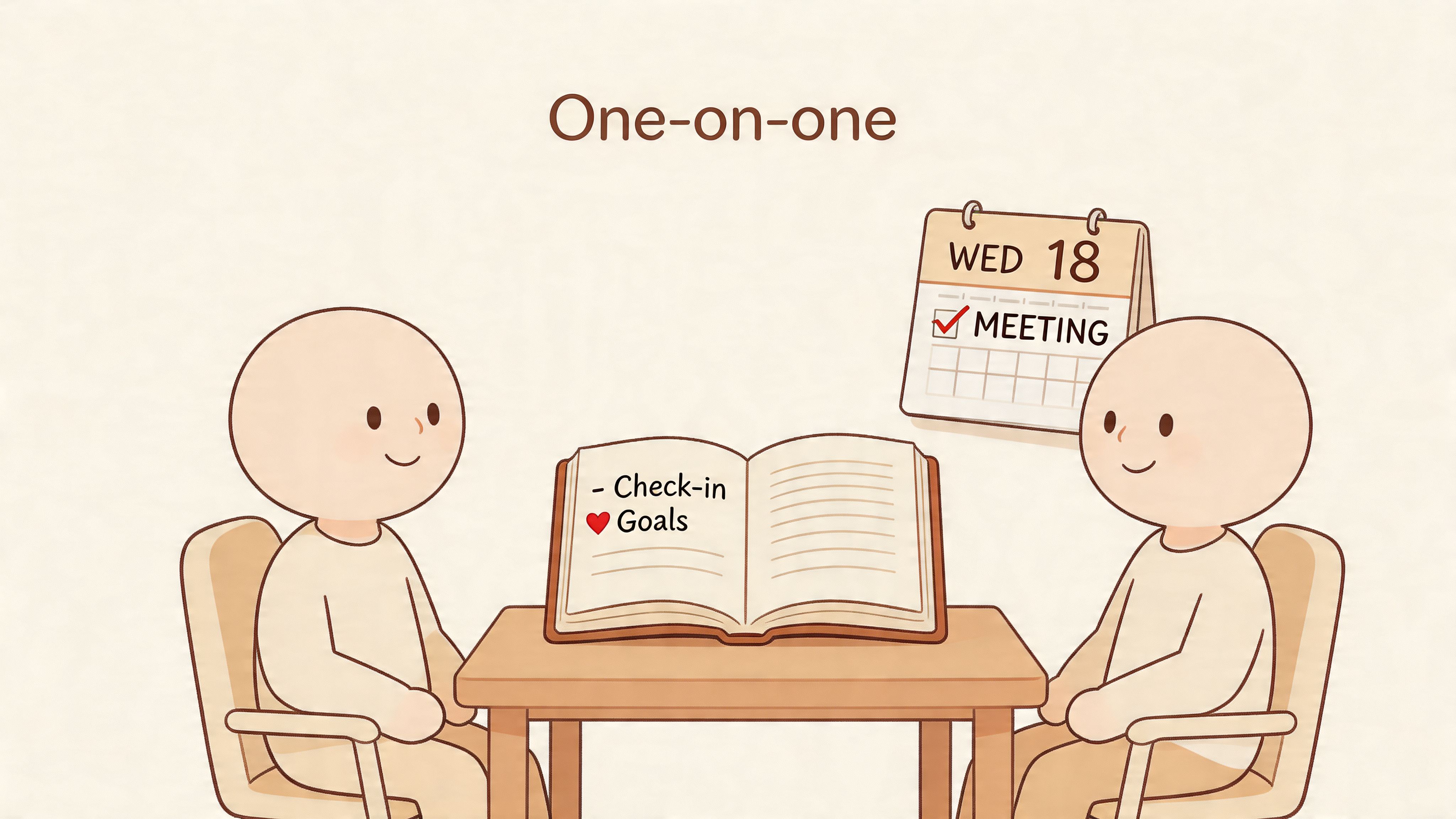
Recurring beats random
I’ve seen managers treat one-on-ones like weather. If the week gets busy, they vanish. Then six weeks later everyone wonders why feedback feels awkward.
A recurring meeting fixes that. Weekly for frontline staff can work well when roles are fast-moving. Bi-weekly often fits office teams. Monthly can work for stable senior roles if there’s already plenty of day-to-day contact. The exact rhythm matters less than the consistency.
Pebb helps because the conversation can sit next to tasks, follow-ups, and notes from prior check-ins. That removes one common excuse, which is, “I forgot what we talked about last time.”
What to talk about in the room
One-on-ones should not be a monologue from the manager.
A decent structure is simple:
Start with follow-through: What happened after the last conversation?
Talk about current work: What’s going well, what’s stuck, what needs support?
Give one clear piece of feedback: Not five. One.
Leave space for upward feedback: Ask what the employee needs from you.
That last part matters more than many managers admit. Good employees often know exactly what would help them perform better, but no one asks.
A shift supervisor might hear, “I need earlier updates when coverage changes.” A remote designer might say, “I need clearer priorities before you ask for speed.” A nurse manager might hear, “I need private correction, not public frustration at shift change.”
That’s gold if you’re willing to hear it.
Separate reflection from reaction
The one-on-one is where you can slow feedback down enough to make sense of it.
A quick post after a busy restaurant service might recognize strong teamwork. The one-on-one a few days later can talk about where communication broke down during the rush and how to improve station handoffs next weekend. Both matter. They do different jobs.
The Betterworks guidance on timely performance feedback, cited earlier, also recommends debrief sessions within two weeks of feedback receipt and quarterly progress checks. That’s sensible. If you wait too long, context fades. If you never revisit the issue, the original feedback turns into theater.
A one-on-one should answer two questions: what happened, and what are we doing differently now?
That’s enough. Keep it honest. Keep it regular.
6. Strengths-Based Feedback and Recognition
A lot of employees can predict the moment their manager speaks up. Something went wrong.
That pattern trains people to associate feedback with correction, not growth. It also makes managers miss one of the simplest ways to improve performance. Tell people which of their behaviors the team needs more of, then make that visible in the same place work already happens.
Name the strength so it can be repeated
Useful recognition is specific. It points to a behavior, explains why it matters, and makes the standard clear to everyone else.
A hospital manager might say, “You stay calm with anxious families, and that steadies the rest of the unit.”
A hospitality supervisor might say, “You remember returning guests and make them feel expected, not processed.”
A warehouse lead might say, “You follow the safety process in a way new staff copy without being told.”
A retail manager might say, “You de-escalate tense customer situations without sounding scripted. Keep doing that.”
That kind of feedback does real work. The employee knows what to repeat. The team gets a clearer picture of what good looks like.
Put recognition where the team will actually see it
If recognition lives only inside annual reviews or private notes, it loses half its value. Teams learn faster when strong work is acknowledged in the flow of the day.
That is one reason a unified tool matters. In Pebb, a manager can post a short recognition note in a team Space after a shift, attach praise to a completed task, or leave a visible comment tied to the work itself. Office staff see it. Frontline staff see it. The message does not disappear into a manager's memory until review season.
If you want examples that stay grounded in real work, these peer-to-peer recognition examples are a useful starting point.
Public recognition still needs judgment. If every small task gets applause, people stop trusting the signal. Recognize work that shows consistency, initiative, care, good judgment, or reliability under pressure.
Use strengths to sharpen the hard feedback
Recognition should make correction easier, not replace it.
A restaurant employee might be excellent with guests and sloppy with side work. Say both. “Customers feel looked after when you’re on the floor. I need that same consistency in your close-out routine.”
A project manager might be organized and trusted, but too slow to decide. Say that plainly. “Your planning is strong, and people trust your judgment. Next, make the call faster when the information is already good enough.”
That approach works because it is honest. People are more likely to hear the gap when they believe you can also see their value.
Recognition is not fluff. It is direction, and in a tool like Pebb, it becomes part of the team’s daily rhythm instead of a once-a-quarter speech.
7. Feedback for Distributed and Remote Teams
Distributed teams don’t struggle because distance exists. They struggle because managers keep using feedback habits built for hallway visibility.
If you can’t casually catch someone after a meeting, after a shift, or after their workday, you need to be more deliberate. Not more formal. More deliberate.
Write more clearly than you think you need to
Remote and multi-shift feedback often lands in writing first. That changes the job.
In person, tone can soften a rough message. In writing, vague feedback gets sharper and stranger. “Need better communication” can sit on a screen for hours and become five different meanings in the employee’s head. So write the full thought.
A regional retail manager might send: “Your weekend update came in late, and the team in the next time zone started without inventory context. Next week, send the handoff before you log off, even if the numbers aren’t perfect yet. We can correct details later.”
A hospital manager overseeing night-shift nurses might leave asynchronous feedback for the next shift start: “Your charting was complete and easy for the day team to follow. Keep using that same summary format in the patient notes.”
A remote product lead can post after a launch: “You solved the issue fast, but your status updates were too sparse while the incident was active. Next time, post short updates at a steady cadence so support and ops don’t have to guess.”
That’s clear. There’s context, behavior, and next step.
Use async first, then talk if needed
A common mistake is forcing every feedback conversation into a live call. That’s not practical across shifts and time zones, and it’s often not necessary.
Use async feedback for reinforcement, small corrections, project debriefs, and observational notes. Move to voice or video when the issue is sensitive, emotionally loaded, or likely to need back-and-forth. Pebb’s mix of chat, posts, calls, and voice notes is useful here because managers can match the medium to the moment instead of treating every issue the same.
Written feedback should be specific enough to stand alone, and warm enough that the person doesn’t have to guess your intent.
Don’t punish people for invisible constraints
Distributed work introduces friction you may not see. Shift timing, language differences, poor handoffs, device access, and schedule gaps all shape performance.
That matters most on frontline teams. The Learnit article referenced earlier highlights an underserved angle: managers in retail, hospitality, and healthcare often need mobile-first feedback examples because office-style advice doesn’t fit teams working across changing schedules and remote supervision. That’s exactly right. A warehouse worker checking updates on a phone between tasks needs feedback that’s short, timely, and easy to act on. So does a nurse starting a night shift.
The best management feedback examples for distributed teams respect the environment people are working in. Clear words. Good timing. Enough context. No guesswork.
8. Feedback Integration with Performance Management and Career Pathing
An employee walks out of a review thinking, “I thought that was a small coaching note. Why is it now part of my promotion case?” That confusion is usually a management failure, not an employee problem.
Feedback needs context. People should know what is coaching, what is performance assessment, and how both connect to career growth. If they cannot tell the difference, they either get defensive or tune out.
Separate coaching from evaluation, then connect both to growth
Daily feedback should help someone improve while they still have room to adjust. Performance management serves a different purpose. It informs decisions about scope, pay, promotion readiness, and long-term fit.
Both belong in the same system, but they should not sound the same.
Say it plainly. “This is a coaching note for this week’s handoff issue.” Or, “I’m raising this as a pattern that will affect readiness for the next role if it continues.” Managers who label the conversation clearly save their team a lot of second-guessing.
That matters even more when feedback lives inside the same place people already work. In a unified setup, quick coaching notes, one-on-one records, goals, and review inputs can sit together without turning every message into a formal warning. That is one reason a performance management system that connects reviews with daily work is more useful than a disconnected HR form people only see twice a year.
Career pathing makes feedback easier to accept
People are more open to hard feedback when they can see what it helps them get.
A shift lead candidate needs different feedback than a specialist who wants deeper technical ownership. For the first person, the conversation may focus on handoffs, judgment under pressure, and how they support newer teammates. For the second, it may focus on planning, documentation, or cross-team communication. Good managers tie the feedback to the next step, not just the current mistake.
I have found that vague encouragement creates false hope. Clear standards create movement.
“You’re dependable” is nice to hear, but it does not tell someone how to grow. “To be considered for lead responsibility, I need to see steadier delegation and cleaner escalation notes for the next two months” gives the employee something they can act on.
If your review process is still loose, an annual performance review template can help managers document patterns, expectations, and next-role signals without building a process from scratch.
Keep a visible trail all year
Review season should confirm what has already been discussed. It should not introduce surprises from six months ago.
Workflow matters. If feedback is scattered across memory, private notes, and old messages, managers fill gaps with whatever they remember most vividly. That is how recency bias creeps in. A better approach is simple. Capture coaching notes as they happen, tie them to goals or role expectations, and revisit them during one-on-ones so the employee can see progress over time.
That approach works for office teams and frontline teams alike. A store supervisor can log short observations tied to readiness for keyholder duties. A nursing manager can track growth against a clinical ladder. A warehouse lead can connect attendance, safety habits, and communication to broader role scope. The point is consistency.
When feedback, performance records, and career paths live in the same workflow, people stop wondering why a comment matters. They can see where it fits, what it affects, and what to do next.
8-Point Management Feedback Comparison
No single feedback method works equally well for every team. A retail floor with rotating shifts needs speed and visibility. A corporate team handling long projects needs more reflection and documentation. The useful question is simpler: which method fits the work, and can your team keep doing it every week without extra process fatigue?
That is why I look at feedback systems through a workflow lens. If feedback lives inside the same place people message, check updates, review performance, and ask for help, it gets used. A unified tool like Pebb makes that easier for office teams and frontline teams because the feedback does not sit off to the side in a form no one opens.
Feedback approach | Implementation complexity 🔄 | Resource requirements ⚡ | Expected outcomes ⭐📊 | Ideal use cases 💡 | Key advantages ⭐ |
|---|---|---|---|---|---|
Real-Time Feedback in Unified Communication Spaces | Low to Medium. Set up Spaces, define manager norms, and keep comments close to the work | Low. Mobile or web access, plus manager time for short messages | Faster course correction, visible recognition, and a usable record of coaching over time | Shift-based teams in healthcare, retail, hospitality, and logistics | Fast feedback, better visibility, strong fit for mobile-first teams |
Performance Analytics-Driven Feedback | Medium to High. Connect dashboards, clean up metrics, and train managers to read them well | Moderate to High. Analytics tools, data setup, and privacy controls | More grounded feedback, earlier pattern spotting, and better support for difficult conversations | Mid-size and large organizations that want more consistency and less bias | Adds evidence, surfaces trends, and improves judgment when used well |
Peer Feedback & 360-Degree Input Integration | Medium. Build the process, set anonymity rules, and review inputs carefully | Moderate. Coordination time and manager effort to synthesize comments | Broader perspective, better awareness of blind spots, and more shared ownership | Cross-functional teams and roles where influence matters as much as output | Captures viewpoints a direct manager will miss |
Developmental Feedback via Knowledge Library & Mentoring | High. Build learning content, assign mentors, and track follow-through | High. Content creation, coaching time, and admin support | Stronger skill growth, clearer development paths, and better retention | Teams investing in internal mobility and skill-building in hospitality, retail, and healthcare | Turns feedback into practice instead of leaving it as advice |
Scheduled One-on-One Feedback Conversations | Low to Medium. Set a cadence and protect the time | Moderate. Manager attention and calendar discipline | Better discussion quality, more trust, and room for sensitive topics | Any team, especially for performance concerns, growth planning, and high-potential employees | Gives feedback the privacy and depth some topics need |
Strengths-Based Feedback & Recognition | Low to Medium. Define what good looks like and make recognition easy to give | Low to Moderate. Recognition tools and manager guidance | Higher morale, clearer confidence in strengths, and stronger engagement | Teams trying to improve culture, motivation, and retention | Reinforces what the team wants repeated |
Feedback for Distributed & Remote Teams | Medium. Set standards for async feedback, video check-ins, and timezone coverage | Moderate. Mobile, chat, and video tools, plus clear team norms | More consistent support across locations and fewer gaps caused by distance | Remote, hybrid, distributed, and global teams | Keeps feedback accessible even when schedules do not overlap |
Integration with Performance Management & Career Pathing | High. Align systems, expectations, promotion criteria, and manager practice | High. HR platforms, training, and steady calibration across managers | Clearer links between feedback, advancement, and pay decisions | Larger organizations and teams with formal progression frameworks | Reduces confusion around promotions and creates a reliable decision trail |
A few trade-offs matter.
Real-time feedback is the easiest habit to build, but it can drift into random comments if managers do not tie it to standards. Analytics improve fairness, but weak metrics create false confidence. Peer input adds range, but unmanaged 360s produce noise. Scheduled one-on-ones create space for nuance, but they are too slow on their own for fast-moving teams.
The strongest setups combine methods instead of treating them as separate programs. A supervisor might give quick coaching in a shared Space, bring patterns into a one-on-one, pull in peer input for a broader view, and connect the whole discussion to role readiness inside the same system. That is a far better model than waiting for review season and trying to reconstruct six months of performance from memory.
If you need a starting point, start with the methods your managers will sustain. For many teams, that means real-time feedback in communication spaces, a reliable one-on-one cadence, and a visible link to growth. Then add analytics, peer input, and career-path structure once the basic habit is working.
Feedback Is a Habit, Not a Meeting
These management feedback examples aren’t meant to be copied word for word. That’s not the point. Good feedback is always a little local. It sounds like your team, your pace of work, your standards, your way of talking to each other.
What does transfer is the pattern.
Useful feedback happens close to the work. It names behavior, not personality. It includes context. It points to what should happen next. And it lives inside the same system people already use to communicate, coordinate, and get things done. That last part matters more than many teams realize. If feedback lives off to the side, hidden in HR forms or delayed until a meeting, people experience it as an event. When it lives in the workflow, people experience it as support.
That’s the shift worth making.
You can see the practical payoff in the research. Companies with consistent management feedback have lower turnover, according to the SelectSoftware Reviews summary cited earlier. McKinsey’s people-first performance management findings, referenced through HiBob, point in the same direction. Better systems for feedback don’t just make employees feel better. They help companies perform better too. But even that can sound too abstract if you’re in the middle of running a store, a unit, a warehouse, or a distributed team.
So bring it back to the ground.
A quick note in a Space after a strong customer interaction matters. A private message right after a preventable mistake matters. A one-on-one that revisits a pattern instead of pretending it never happened matters. A linked training guide, a voice note, a peer comment, a clean handoff summary, a clear conversation about promotion readiness. All of that is feedback. None of it requires ceremony.
The hard part isn’t finding better phrases. The hard part is becoming the kind of manager who doesn’t wait.
A lot of leaders still wait for the “right time.” They wait until they’ve collected enough examples. They wait until review season. They wait until they feel less awkward. Meanwhile, the employee keeps repeating the same habit, or worse, keeps doing great work that no one names. Silence creates its own culture. Usually not a good one.
The better approach is smaller and steadier.
Say the thing while it’s still useful. Keep it specific. Put it where the work already happens. Don’t turn every note into a formal event. Don’t hide behind metrics. Don’t confuse honesty with harshness. And don’t assume people know what you appreciate just because you noticed it in your head.
Tools can help. A unified app like Pebb makes it easier because chat, Spaces, tasks, knowledge, analytics, and recognition all sit together. That reduces the friction that kills consistency. But the tool isn’t the standard. You are.
If you want a stronger team, don’t start by drafting a perfect review form. Start with one better conversation this week. Thank someone clearly. Correct something early. Ask for upward feedback. Link a problem to a useful resource. Follow up on something you said you’d revisit.
That’s how feedback gets fixed. Not all at once. In the rhythm of the work.
If you want feedback to feel natural instead of forced, Pebb is built for that. It gives teams one place for chat, Spaces, calls, tasks, knowledge, analytics, and recognition, so managers can give timely, useful feedback without switching tools or waiting for review season. For frontline and office teams alike, it turns feedback into part of the workday instead of a separate event.
