
10 Real-World Examples of Employee Engagement That Actually Work
Tired of the usual pizza parties? Discover 10 powerful examples of employee engagement that build real culture and retention. Actionable insights inside.
Dan Robin
We’ve all seen the corporate song and dance. The forced fun, the sad pizza parties, the annual survey that vanishes into a black hole. It’s a checklist approach to a human problem, and it feels hollow because it is.
For a long time, we thought engagement was a number to be managed, a metric to improve on a dashboard. But we’ve learned it’s both simpler and harder than that. Engagement isn’t about grand gestures. It's the result of small, consistent, thoughtful actions that create an environment where people feel seen, heard, and connected to their work and each other.
This isn't theory. This is what we've discovered actually works, based on our experience helping thousands of companies build better workplaces.
What follows is a list of grounded examples of employee engagement we’ve seen make a real difference. We’ll break down why they work and how to try them, paying special attention to the frontline and distributed teams who are so often left out of the conversation. Forget the fluff. Let’s get to what matters.
1. A single, unified place for communication
Let’s be honest. Nothing kills engagement faster than feeling out of the loop. When your team doesn't know what’s happening, why it’s happening, or how it affects them, they disconnect. A unified communication platform isn’t about new tech; it’s about creating a single source of truth for everyone, from the front desk to the C-suite. It's a central hub for all the chatter, announcements, and updates usually scattered across emails, bulletin boards, and text message threads.
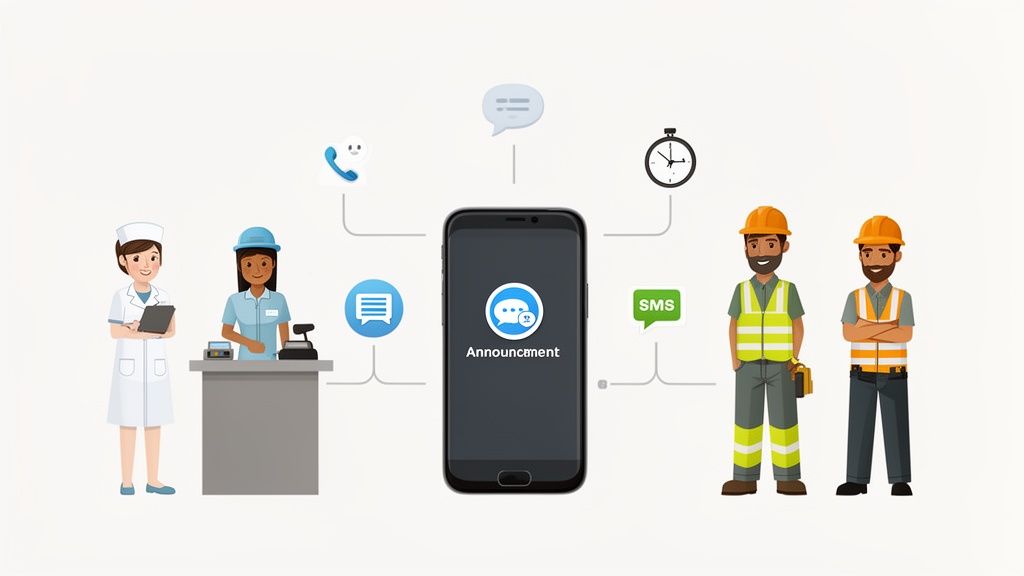
This is one of the most powerful examples of employee engagement because it directly tackles communication silos, especially for distributed and frontline teams who are often the last to know. Think of a hospital using a tool like Pebb to instantly share new health protocols with nurses across all shifts, or a retail chain pushing urgent store updates directly to every manager’s phone. It ensures everyone gets the same information at the same time.
Why this works
It builds a foundation of trust and inclusion. When leadership actively uses the platform to share updates and join conversations, it makes the entire organization feel more connected and transparent. It shows you respect everyone’s time by putting critical information where they can easily find it.
A few tips
Have a playbook: Define which channel is for what. Use an "Announcements" space for urgent news and dedicated team channels for daily project chatter. This prevents information overload.
Get leaders involved: Encourage managers and executives to post updates and respond to comments. Their presence signals that this is a core part of your culture.
Set expectations: Let people know typical response times. This small step helps build psychological safety, as employees know when to expect a reply without feeling ignored.
For more on choosing the right tool, explore our guide on the best internal communication platforms for your team.
2. Recognition that isn't just a yearly bonus
Feeling invisible at work is a guaranteed way to check out. When an employee goes the extra mile and it goes unnoticed, their motivation plummets. A structured recognition program is about making appreciation a daily habit, not an annual event. It’s a system for catching people doing great things and celebrating them publicly and instantly.

This is one of the most effective examples of employee engagement because it creates a positive feedback loop that reinforces good work. Think of a restaurant group where servers can instantly award a “kudos” to a line cook for nailing a difficult order during the dinner rush, all visible in a company-wide feed. It turns small wins into shared victories and makes employees, especially those on the front lines, feel seen for their specific contributions.
Why this works
It directly links individual effort to company values. When recognition is specific and timely, it shows employees that their work matters and is noticed by both peers and leaders. It’s a powerful motivator that fosters a sense of belonging and inspires others to step up.
A few tips
Be specific: Tie recognition to specific actions. Instead of "Good job this month," try "Amazing job handling that complex customer issue with such patience."
Enable peer-to-peer: Don't limit recognition to top-down. Letting colleagues celebrate each other builds stronger team bonds and uncovers contributions managers might miss.
Amplify wins: Publicize recognition in a company-wide feed. This multiplies the positive impact and reinforces the behaviors you want to see.
For a deeper dive, learn how to build a recognition program that actually works and drives results.
3. Team building that respects people's time
Culture doesn't just happen; it's built through shared experiences. But for distributed and shift-based teams, those opportunities can feel rare. Team building events are about intentionally carving out time for connection that goes beyond daily tasks. It’s about creating moments that remind everyone they’re part of the same team, regardless of their location or work hours.
This is one of the most vital examples of employee engagement because it directly combats isolation and builds genuine relationships. Imagine a hospital system hosting virtual coffee hours so night-shift nurses can connect with the day-shift team, or a retail chain running a 'store appreciation' contest to spark friendly competition across its locations. These aren't just fun activities; they are strategic investments in the social fabric of your organization.
Why this works
This shows your company values its people as more than just workers. It fosters a sense of belonging and psychological safety, which are critical for collaboration. When employees feel connected to their peers, they're more likely to support each other, share knowledge, and stay with the company.
A few tips
Offer multiple time slots: Schedule events at different times to ensure every shift has a chance to participate. Host a morning and an evening session for the same event.
Embrace asynchronous fun: Create activities that don’t require live attendance, like a company-wide photo challenge or a shared digital "kudos board" that people can contribute to anytime.
Build anticipation: Use your communication platform to promote events ahead of time with teasers and sign-up sheets to get people excited.
Share the highlights: Record virtual events and share photos or key takeaways afterward so those who couldn't make it still feel included.
Find more inspiration with our list of virtual team-building activities perfect for any team.
4. Learning that leads somewhere
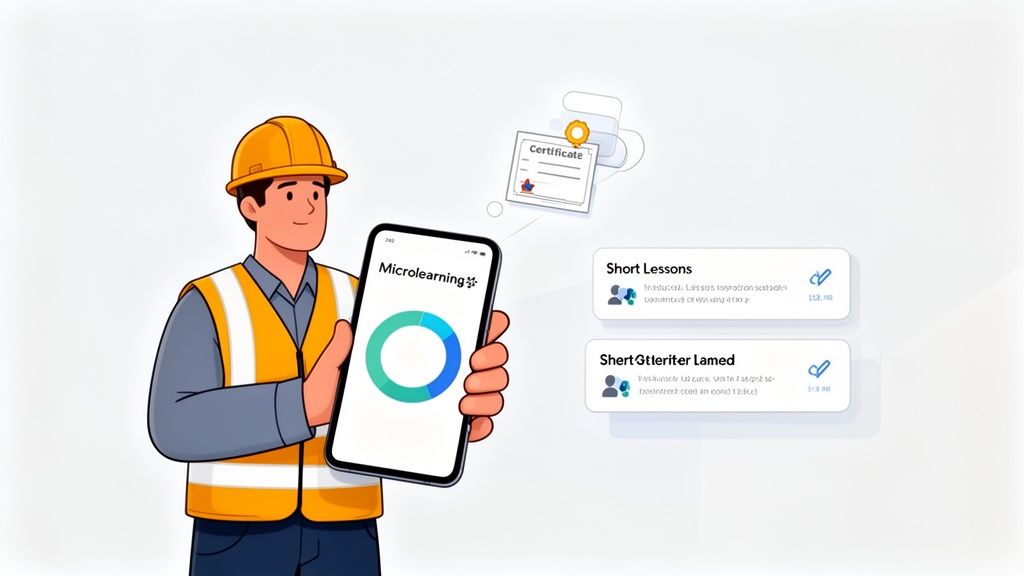
People who feel stagnant start looking elsewhere. Investing in your team's growth isn't just a perk; it’s a direct signal that you value their future with the company. A good learning and development program builds tangible skills and creates clear pathways for advancement, turning a job into a career. It’s about giving people the tools to master their current role and prepare for the next one.
These programs are standout examples of employee engagement because they align personal ambition with organizational goals. For a healthcare system, it’s providing certifications that let technicians advance. For a retail chain, it’s offering leadership training that turns cashiers into future store managers. When an employee sees a clear, attainable future, their commitment deepens.
Why this works
It demonstrates a mutual investment. You invest in their skills, and they invest their talent and loyalty back into the business. It addresses the common feeling of being "stuck" by providing a roadmap for growth. For frontline teams, mobile-first learning makes upskilling accessible, letting them learn at their own pace without disrupting their shifts.
A few tips
Make learning mobile-first: Ensure all training materials are easy to access on a smartphone to accommodate field-based and shift-based work.
Connect training to advancement: Clearly link the completion of specific modules or certifications to promotions, pay raises, or new responsibilities.
Track completion: Use data to see who is engaging with the content and identify any barriers that might be holding people back.
For more on implementing effective learning, consider these 10 Employee Training Best Practices.
5. Asking for feedback and then acting on it
It’s easy to assume everything is fine when you don't hear complaints, but silence is rarely a sign of deep engagement. To truly understand what your team is feeling, you have to ask. Feedback and pulse survey programs are lightweight, regular check-ins that move beyond the dreaded annual survey. They are quick, frequent, and designed to capture a real-time snapshot of what people think.
This is one of the most crucial examples of employee engagement because it creates a direct line of communication between leadership and everyone else. Think of a retail chain using monthly mobile surveys to gauge store morale and flag struggling locations, or a logistics company tracking sentiment around schedule fairness. The goal is to collect actionable data before small issues become big problems.
Why this works
This shows that you value your employees' opinions and are committed to improving their experience. When you consistently ask for feedback and, more importantly, act on it, you build a culture of psychological safety. People feel heard and respected, which is a massive driver of loyalty. It transforms feedback from a yearly chore into an ongoing conversation.
A few tips
Keep it short: Aim for 5-10 questions to maximize completion rates, especially for busy frontline workers. Respect their time.
Close the loop: Share a summary of the findings and announce one or two concrete actions you’ll take in response. This is non-negotiable for building trust.
Segment your data: Analyze results by department, location, or shift to uncover specific insights instead of just relying on broad company averages.
6. A buddy for every new hire
Starting a new job is tough. You don't know the unwritten rules, who to ask for help, or even how the coffee machine works. A buddy program pairs a new hire with a seasoned employee, giving them a friendly, go-to person from day one. It’s less about formal training and more about creating an immediate sense of belonging. This system transforms the nerve-racking first few weeks into a supported, welcoming experience.
This is one of the most effective examples of employee engagement because it forges personal connections that formal onboarding often misses. Think of a healthcare system pairing a new graduate nurse with an experienced RN who can offer practical shift advice, or a tech company connecting a junior developer with a senior mentor to help navigate career growth. It’s about building confidence through a trusted relationship.
Why this works
It humanizes the onboarding process and builds a supportive culture from the ground up. When a new team member feels seen and supported by a peer, they integrate faster, feel more confident asking questions, and are more likely to stay long-term. For the mentor, it’s a chance to develop leadership skills and give back.
A few tips
Make thoughtful matches: Pair people based on shared interests or department. A little common ground goes a long way.
Train your mentors: Equip mentors with basic coaching skills like active listening and giving constructive feedback.
Set clear expectations: Define the time commitment, such as a 30-minute check-in each week for the first month. This prevents confusion.
Recognize participation: Give public shout-outs to mentors in a company-wide channel. Acknowledging their effort encourages others to volunteer.
7. A fair and predictable schedule
For hourly and frontline workers, nothing creates more stress than an unpredictable schedule. Last-minute changes, unfair shift distribution, and a lack of control over their hours lead to burnout. Schedule fairness isn’t just an operational task; it’s a powerful statement that you respect your team's lives outside of work. It’s about giving them the visibility and agency they need to plan their lives.
This is one of the most underrated examples of employee engagement because it directly addresses a core source of anxiety for a huge part of the workforce. Think of a restaurant that uses an app for shift swaps, giving servers flexibility without creating headaches for managers. Or a retail chain that publishes schedules four weeks in advance, allowing employees to reliably plan appointments. It replaces uncertainty with stability.
Why this works
It builds a culture of mutual respect. When employees feel their time is valued and that shift allocation is fair, they're more likely to be reliable, motivated, and committed. It shows you see them as people, not just names on a rota. This simple act of consideration reduces absenteeism and turnover.
A few tips
Publish schedules early: Aim to release schedules as far in advance as possible, ideally 3-4 weeks. Consistency is key.
Enable easy shift swapping: Use a digital tool that lets employees manage their own shift swaps with manager approval. This empowers them and reduces your administrative load.
Explain changes: If a schedule change is unavoidable, explain the "why" behind it. Transparency prevents frustration.
Establish fair criteria: Create and share objective rules for how shifts are assigned, especially for holidays, to ensure equity.
8. Real support for mental health
Let’s face it, you can't be engaged if you're burned out. When employees are struggling with their mental, physical, or financial health, work becomes just another stressor. A genuine wellness program is more than just a gym discount; it’s a clear signal that the company cares about its people as whole human beings. It creates a safety net that supports them through life’s challenges.
This is one of the most impactful examples of employee engagement because it addresses the root causes of disengagement: stress and anxiety. For example, a healthcare system can use a secure platform to host peer support groups for nurses, or a retail chain can promote stress management resources during its hectic holiday season. To foster a truly engaged workforce, consider implementing comprehensive initiatives such as the best corporate wellness programs.
Why this works
This approach builds profound psychological safety. When you invest in your team’s wellbeing, you’re telling them their health is a priority. This trust translates directly into higher retention, reduced absenteeism, and a culture where people feel safe enough to ask for help when they need it.
A few tips
Normalize the conversation: Use internal communication channels to regularly share wellness tips and resources. Leadership vulnerability on this topic can be incredibly powerful.
Make resources visible: Ensure your Employee Assistance Program (EAP) and counseling services are easy to find and access. Don't bury them in a hard-to-find HR portal.
Train your managers: Equip leaders with the skills to recognize signs of burnout and to support their team members with empathy.
9. Spaces to share what you know
Here's the thing: some of the best ideas get trapped inside a single department or even a single shift. An employee on your afternoon shift might solve a problem that the morning crew has been struggling with for weeks, but they have no way to connect. Digital knowledge-sharing spaces are designed to break down those silos. They create a central place where teams can share best practices, ask for help, and learn from colleagues they might never meet in person.
This is one of the most practical examples of employee engagement because it helps people contribute beyond their immediate job description. Think of a restaurant chain where cooks from different locations collaborate on menu innovations, or retail stores sharing merchandising ideas that boosted local sales. It turns individual insights into collective wisdom.
Why this works
It fosters a culture of mutual support. When an employee shares a tip that helps someone at another location, it builds a sense of community and shared purpose. It shows that you trust your frontline staff to be experts and gives them a platform to prove it. This turns passive employees into active problem-solvers.
A few tips
Appoint space owners: Assign moderators to guide discussions and ensure content stays relevant. This keeps the space organized.
Prompt engagement: Kickstart conversations with weekly prompts, like "What's the best customer compliment you received this week and why?"
Celebrate great ideas: When an innovative solution comes from a collaborative space, publicly recognize the contributors. This encourages others to participate.
10. Regular one-on-ones with the boss
The single biggest factor in an employee’s engagement is their relationship with their direct manager. Yet, so many organizations leave these critical interactions to chance. Structured one-on-ones and skip-level meetings move these conversations from "nice-to-have" to a non-negotiable part of your culture. It’s about creating dedicated time for feedback, growth, and genuine human connection.
These conversations are powerful examples of employee engagement because they build psychological safety. For a hospital manager, a scheduled monthly check-in is a chance to understand a nurse's burnout risk. For a retail district manager, a skip-level chat can uncover operational issues that store managers might not see. It’s about creating a direct, personal line of communication that isn't just about project updates.
Why this works
It signals that you care about your people as individuals. When employees know they have a recurring, protected time to speak with their leader (and their leader’s leader), they feel seen, heard, and valued. It’s the ultimate antidote to feeling like a cog in the machine.
A few tips
Provide a simple framework: Equip managers with a few talking points. Focus on questions like, "What’s one thing we could do better?" or "What are your career goals for the next year?"
Train managers to listen: The goal isn’t for the manager to talk the whole time. Train them in active listening and how to receive feedback gracefully, even when it's tough to hear.
Track frequency, not content: Your goal is consistency. Use a simple system to ensure meetings are happening, but don’t micromanage the conversation itself. Trust your managers.
10-Point Employee Engagement Comparison
Initiative | 🔄 Implementation Complexity | ⚡ Resource Requirements | 📊 Expected Outcomes | 💡 Ideal Use Cases | ⭐ Key Advantages |
|---|---|---|---|---|---|
Internal Communication and Unified Messaging Platforms | Medium–High — platform integration, governance and adoption work | Moderate — mobile apps, integrations, admin/training time | Faster, consistent information flow; reduced email overload; quicker emergency alerts | Distributed/frontline teams, multi‑shift operations, hospitals, retail | Real‑time updates; centralized hub; improved responsiveness |
Recognition and Rewards Programs | Low–Medium — program design and moderation needed | Low — platform + rewards budget and ongoing curation | Higher morale and engagement; improved retention for hourly staff | Retail, hospitality, healthcare, frontline teams | Boosts motivation; peer visibility; low-cost engagement driver |
Team Building and Culture Events | Medium — scheduling, hybrid event logistics and facilitation | Moderate — planning, platform tools, modest budget | Stronger social bonds; improved collaboration and wellbeing | Distributed teams, shift workers, onboarding cohorts | Builds psychological safety; shared culture and memories |
Learning and Development Programs | High — content creation, LMS integration, certification tracking | High — course development, platform licenses, manager involvement | Improved skills, compliance, internal mobility and productivity | Roles requiring certifications; all industries seeking upskilling | Career pathways; measurable competency; retention via development |
Feedback and Pulse Survey Programs | Low–Medium — survey design and action‑planning discipline | Low — survey tools and analytics; time to act on insights | Near real‑time sentiment visibility; targeted improvements | Large distributed workforces, continuous improvement efforts | Fast, data‑driven insights; identifies issues early |
Peer Mentorship and Buddy Programs | Medium — matching, program structure and oversight | Low–Moderate — mentor time, platform support, training | Faster onboarding; knowledge transfer; improved belonging | New hires, development programs, frontline onboarding | Scales tacit knowledge; develops leadership skills |
Shift Transparency and Schedule Fairness Initiatives | Medium–High — policy change, fairness rules and tech enforcement | Moderate — scheduling tools, policy work, monitoring | Reduced unpredictability and burnout; better retention and trust | Hourly workforces: retail, hospitality, healthcare, logistics | Predictability; worker autonomy; equitable shift distribution |
Employee Wellness and Mental Health Support Programs | Medium — privacy design, service integrations and training | Moderate–High — EAPs, counseling access, manager training | Reduced absenteeism/presenteeism; improved wellbeing and productivity | All industries, high‑stress and frontline roles | Demonstrates care; reduces long‑term costs; normalizes help‑seeking |
Cross-Functional Collaboration and Knowledge Sharing Spaces | Medium — governance, curation and searchability setup | Moderate — content owners, moderation, content storage | Faster problem‑solving; less duplication; institutional knowledge preserved | Multi‑site ops, distributed teams, continuous improvement | Centralized knowledge; accelerates innovation and solutions |
Manager‑Led One‑on‑One and Skip‑Level Conversations | Low–Medium — scheduling discipline and manager training | Low — manager time, templates, tracking tools | Stronger manager‑employee trust; early risk detection; better development | All industries, retention and engagement focus | Personalized feedback; accountability for development |
Engagement isn’t a program. It’s a practice.
We’ve walked through a lot of ideas here. Transparent shift scheduling. Recognition programs that feel meaningful. But if there’s one thing to take away from all these examples of employee engagement, it’s this: engagement isn’t a box you check. It’s the daily, often unglamorous, work of building a company people genuinely want to be a part of.
It’s about creating systems that give people clarity, a voice, and a sense of belonging. The examples we covered aren’t a menu to pick from. Think of them as ingredients. The right recipe depends entirely on your people, your culture, and the real-world problems you face every day, especially if you manage a frontline or distributed team. You can’t just copy what another company did and expect it to work.
Your first step: Listen, then act
The most powerful engagement tool isn't a new platform. It's listening. The examples that will truly move the needle for your team are the ones that solve their specific problems.
Are your shift workers frustrated by last-minute schedule changes? Start there.
Do your remote employees feel disconnected from the company's mission? Focus on communication.
Is burnout a quiet but growing concern? Make wellness resources easy to find and use.
The goal isn't to do everything we’ve listed. It’s to do a few things consistently and with genuine care. Start small. Listen more than you talk. And before you roll out any new initiative, ask yourself: does this feel like something a real person would appreciate, or something a consultant would put on a slide?
The answer will tell you everything you need to know.
True engagement is rooted in respect and authenticity. It’s the small, consistent actions that show your team you see them, you hear them, and you value their contribution. That’s the work that matters.
The best way to turn these ideas into practice is with a tool that brings everything together. Pebb is the unified employee platform designed to connect your entire workforce, from frontline to front office, making communication, recognition, and scheduling feel simple and human. See how it works at Pebb.
