
Your Final Message is Your Lasting Impression
Learn how to craft a genuine send off message to employee with 8 thoughtful examples that build goodwill and strengthen your team's culture.
Dan Robin

We’ve all seen it. The bland, templated email when someone leaves. It checks a box, but it says almost nothing. The last message you send an employee isn't just an administrative task; it’s the final chapter of their story with your company. It's your last chance to show you saw their work, valued their time, and genuinely wish them well. A good send off message to employee feels less like a corporate memo and more like a handwritten note. It respects the person, not just the role they filled.
Let’s be honest, most of us get this wrong. We rush it. We make it generic. We forget that the people who stay are watching and learning what it means to leave our company. The way you handle a departure reinforces your culture, for better or worse. It’s not about grand gestures. It’s about being thoughtful, specific, and human.
This guide moves beyond the basics. We'll break down different types of messages, from gratitude-focused farewells to announcements that keep things running smoothly. We won’t just give you words to copy; we’ll show you the thinking behind them so you can craft something that feels real and leaves a lasting positive impression. For those looking for more structured starting points, you can also find a variety of professional farewell email templates to adapt. Let's get into it.
1. The Gratitude-Focused Farewell Message
When an employee moves on, it's easy to send a generic "good luck" message. But the most impactful send-offs start with genuine gratitude. This isn't just about being polite; it’s about reinforcing your company culture and honoring the real, human contributions someone made. A gratitude-focused farewell message puts appreciation front and center, making the departing team member feel valued right up to their last day.

This method frames the departure as a celebration of their time with you, not a loss. It acknowledges specific wins, personal growth, and the positive mark they left on the team. By focusing on appreciation, you leave the door open for future collaboration and turn a former employee into a lifelong brand advocate. It's a small gesture with a massive return.
Why It Matters
A gratitude-first send off message to employee reinforces the idea that people are the heart of the business. It shows current team members that their hard work is seen and will be remembered, which is a powerful motivator. This type of message is especially effective in organizations like healthcare or retail, where team bonds are crucial for daily success.
Our Take: Publicly sharing a gratitude-focused message on a platform like Pebb’s News Feed turns a personal farewell into a cultural statement. It tells everyone on the team, “We value people here.”
How to Do It
Be Specific: Mention 2-3 concrete achievements. Instead of "You did great work," say, "Your leadership on the Q3 project completely streamlined our workflow."
Connect to Values: Tie their contributions back to a core company value. For example, "Your commitment to helping new hires truly embodied our 'Succeed Together' value."
Use Their Name: Start the message by addressing them directly. It’s simple but crucial. If you're stuck, our guide to employee appreciation quotes can help.
2. The Collaborative Team Message
While a message from a manager is great, a farewell from the entire team hits differently. The collaborative team message turns a simple goodbye into a shared event. This approach gathers notes, inside jokes, and well-wishes from everyone who worked alongside the departing employee. It’s a powerful way to show that their presence will be missed by the whole unit, not just by leadership.
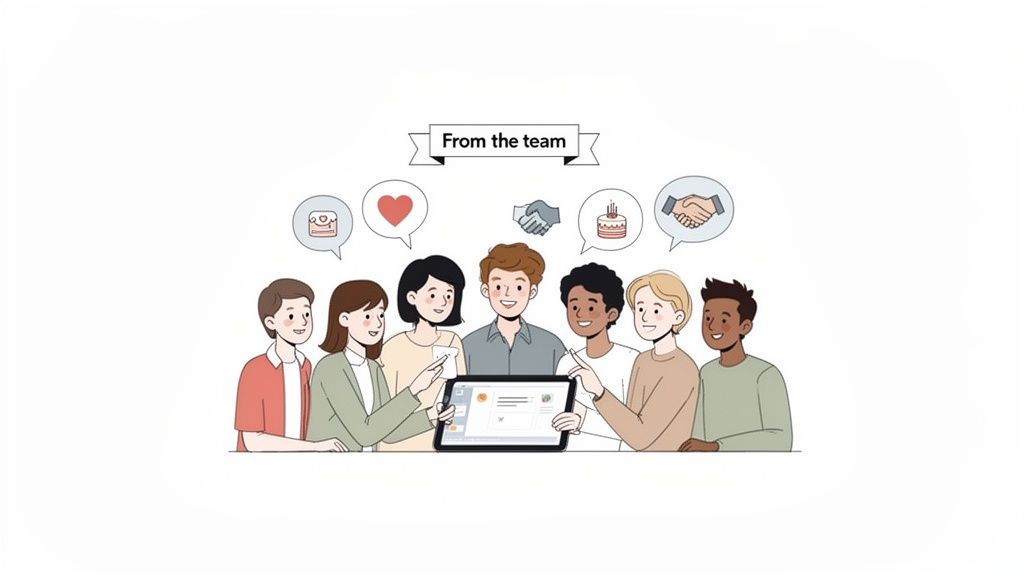
This method shifts the focus from a top-down acknowledgment to a peer-driven celebration. It captures the small, everyday interactions that build a strong team culture: the person who always helped with a tricky task, the one with the best music recommendations, or the go-to expert for a specific problem. By crowdsourcing the farewell, you create a genuine and deeply personal send-off that feels authentic and heartfelt.
Why It Matters
A group send off message to employee demonstrates a connected and supportive team culture. It validates the departing employee's relationships with their peers, which are often the most meaningful connections they form at work. This is incredibly effective in environments like tech startups, hospital units, or retail teams, where collaborative success and camaraderie are everything. Seeing colleagues rally together to say goodbye reinforces that every team member’s contribution is valued.
Our Take: Using a dedicated channel like Pebb’s Spaces for the farewell allows team members, including remote or part-time staff, to contribute on their own time. This creates an inclusive digital "farewell card" that everyone can see and be part of.
How to Do It
Designate a Point Person: Have one person collect and compile all the messages to ensure a cohesive final product.
Set a Deadline: Give everyone a clear deadline, ideally 5-7 days before the employee's last day, to avoid a last-minute scramble.
Share Fond Memories: Encourage people to share a specific positive memory or an inside joke. Instead of "We'll miss you," try, "I'll never forget our team lunch where we..."
Combine and Present: Merge the notes into a single document, a shared digital space, or even a physical card to present on their last day.
3. The Professional Growth & Future Wishes Message
When an employee leaves for a bigger role or a new challenge, the best farewells are forward-looking. This approach celebrates their journey with your company as a stepping stone to their next great achievement. A professional growth message focuses on the skills they built, the experience they gained, and your genuine excitement for their future. It's less about the loss and more about their evolution.
This message reframes their departure as a success story for both them and your organization. It shows you're proud to have been part of their career path. This not only makes the departing employee feel valued but also turns them into a strong advocate for your company as a great place to grow. It’s a powerful way to build a positive alumni network.
Why It Matters
A forward-looking send off message to employee demonstrates a culture of development, not just retention. It signals to your current team that management supports individual career ambitions, which can boost loyalty and engagement. This is particularly effective in fast-growing industries like tech or consulting, where career progression is a key motivator.
Our Take: A message focused on growth reinforces your company’s role as a launchpad for talent. When current employees see you celebrating a colleague's advancement, it validates their own decision to build their career with you.
How to Do It
Highlight Their Journey: Reference specific skills they developed with you. "It's been incredible to watch you grow from a junior analyst into a data visualization expert."
Connect to Their New Role: Show you understand their next step. "The leadership skills you honed managing the Alpha project will be a huge asset in your new director role."
Offer Genuine Support: Make a concrete offer. Instead of a vague "let me know if you need anything," try, "I’d be happy to provide a LinkedIn recommendation or make an introduction for you anytime."
Keep it Real: Avoid clichés. Personal, heartfelt wishes for their success will resonate far more than generic platitudes.
4. The Culture & Values Alignment Message
A farewell message can be more than just a goodbye; it can be a powerful story about your company's culture. This approach frames an employee's departure through the lens of your core values, showing how they lived those principles. It's about connecting their individual contributions to the bigger mission, turning their send-off into a teachable moment for the entire team.
When you highlight how a departing employee embodied your values, you do two things at once. First, you give them a deeply meaningful farewell that recognizes their character, not just their output. Second, you reinforce what your culture looks like in action for everyone who remains. It makes abstract values like "customer obsession" or "radical integrity" tangible and real.
Why It Matters
This type of send off message to employee is a masterclass in cultural reinforcement. It shows your team that living the company values is noticed, celebrated, and remembered. This is especially potent in mission-driven organizations, like a healthcare company honoring a departing nurse's commitment to compassionate care or a B Corp celebrating an employee's passion for sustainability.
Our Take: Use this message to make your values sticky. By publicly sharing a story of a value in action on a company-wide platform like Pebb’s News Feed, you transform a departure into a defining cultural artifact that inspires current and future team members.
How to Do It
Tell a Specific Story: Don't just say, "You embodied our value of teamwork." Instead, share a brief story: "I'll never forget how you stayed late to help the new hires during the Q4 rush. That was our 'Lift Others Up' value in its purest form."
Connect to the Mission: Explain how their value-driven actions contributed to the company's larger purpose. "Your meticulous attention to detail truly reflected our 'Trust & Safety' value, which is the bedrock of our relationship with our customers."
Share It Broadly: Post this message in a public channel. A farewell that reinforces culture is a message for everyone, not just the person leaving. It solidifies your cultural narrative.
5. The Operational Continuity & Knowledge Transfer Message
In fast-paced, operations-heavy environments, a departure can feel like pulling a critical gear out of a running machine. The Operational Continuity message is designed to address this head-on. It’s a practical, reassuring send-off that acknowledges an employee’s contributions while clearly outlining the plan for a smooth transition. This isn't just about saying goodbye; it’s about maintaining stability.
This approach reassures the remaining team that leadership has a plan, preventing the uncertainty that can disrupt workflow. It highlights the handoff process, names who will be covering responsibilities, and points to documented procedures. For roles like a senior nurse, a warehouse supervisor, or a restaurant manager, this type of send off message to employee is essential for keeping the wheels turning.
Why It Matters
This message builds confidence and reduces anxiety for the entire team. In frontline settings where every role is interdependent, clarity is kindness. It shows respect for the departing employee by formalizing their knowledge transfer and demonstrates respect for the current team by ensuring they are supported. This transparency is crucial for maintaining morale and operational integrity during a period of change.
Our Take: A continuity-focused message posted in a channel like Pebb’s News Feed ensures every team member, across all shifts, sees the same plan. It transforms a potentially disruptive event into a structured, well-managed transition.
How to Do It
Name the Successor: Clearly state who will be taking over the responsibilities, even if it's temporary. Say, "Jasmine will be stepping in as the interim shift lead."
Reference Documentation: Point the team toward resources. "All of Maria's closing procedures have been updated in the Pebb Knowledge Library under 'Manager SOPs'."
Outline the Timeline: Provide key dates for the transition. "David's last day is Friday, and he will be training Alex on Tuesday and Wednesday."
Balance with Gratitude: Always pair the operational details with genuine thanks. For more on this, check out our guide on how to effectively transfer knowledge before an employee leaves.
6. The Inclusive Multi-Channel Send-Off Message
For distributed, hybrid, and multi-location teams, a single farewell email just doesn't cut it. Frontline workers on different shifts or in different regions often miss out, feeling disconnected. The inclusive multi-channel send-off ensures everyone, regardless of location or work schedule, gets a chance to say goodbye. It's about meeting people where they are.
This method uses a mix of communication tools to create a unified farewell experience. A main announcement might go on a company-wide feed, while a dedicated chat space allows for more personal messages. This ensures the send off message to employee reaches its entire audience, making the departing individual feel truly celebrated by the whole organization, not just their immediate desk-mates. It shows that your culture of appreciation extends beyond the main office walls.
Why It Matters
This is essential for companies with a significant non-desk workforce, like in healthcare, retail, or logistics. It acknowledges the reality of varied work schedules and locations, preventing frontline employees from feeling like an afterthought. By deliberately planning a multi-channel farewell, you demonstrate a commitment to inclusivity and prove that every team member’s contribution is valued, fostering a stronger, more connected company culture.
Our Take: A multi-channel farewell isn't just about repetition; it's about adaptation. A video message adds a personal touch that a static post can't, while a printable notice in a break room includes even those with limited screen time.
How to Do It
Centralize and Distribute: Post the main message in a Pebb News Feed for maximum visibility, then share it in relevant team Spaces or group chats to spark conversation.
Time it Right: Schedule posts and notifications to align with different shift start times. A message sent at 9 AM might be missed by the entire night crew.
Embrace Multimedia: Include a short, heartfelt video or voice message from the manager or team. The personal touch goes a long way in a distributed environment.
Make it Accessible: For multilingual teams, use Pebb’s translation features. Consider a printable version with a QR code linking to a digital farewell card for break rooms.
7. The Personalized Individual Card & Email Combination
In a world of instant digital messages, something tangible and personal cuts through the noise. This hybrid approach pairs a formal, efficient digital farewell with a physical, handwritten card or a personal video message. It’s a powerful one-two punch that shows you’re willing to go the extra mile, creating a memorable experience, especially for remote or long-tenured employees.
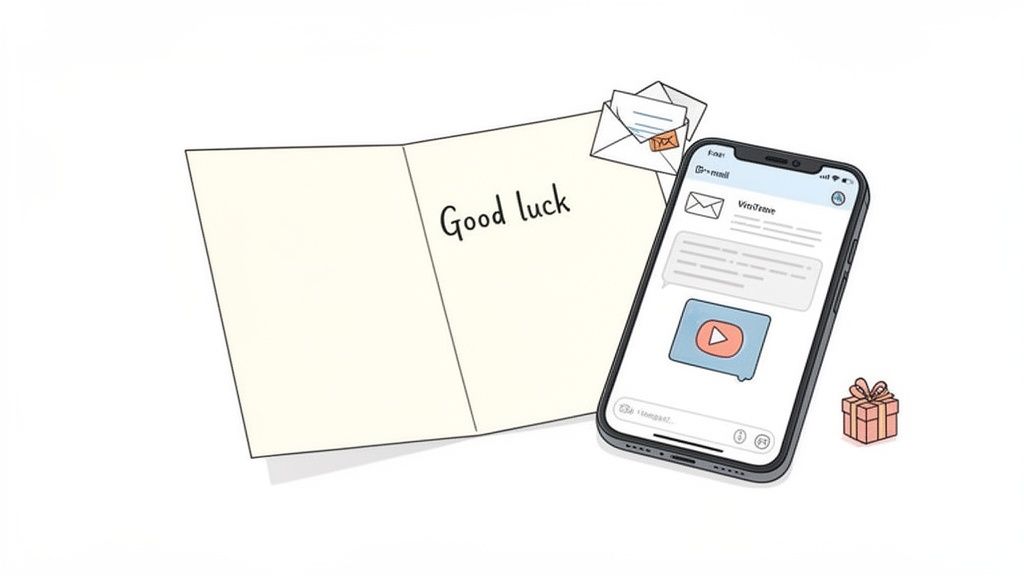
This method combines the best of both worlds: the speed and reach of a digital send off message to employee with the warmth and sincerity of a personal touch. It acknowledges the employee's contribution in a formal setting while also providing a private, heartfelt token of appreciation. This blend is especially effective for leadership to connect with departing team members, reinforcing that their impact was felt beyond just their daily tasks.
Why It Matters
This combination makes your farewell an event, not just an email. A physical card or a personal video creates a lasting memento that an employee can keep, turning a standard offboarding process into a genuinely positive final memory. It demonstrates a level of care that digital-only communication often struggles to convey, leaving the departing team member feeling truly seen and valued.
Our Take: Use your employee app to handle the official announcement and collect well-wishes. Follow up with a tangible gesture, like a card or small gift, sent to their home. This creates an experience that feels both publicly celebratory and privately personal.
How to Do It
Lead with Digital: Send the official farewell email or Pebb post first to ensure timely communication to the wider team.
Follow with Physical: Mail a handwritten card or small gift to arrive within a few days of their last day. The timing makes it feel like a thoughtful final touchpoint.
Record a Short Video: A simple 30-60 second video message from a direct manager or a leader adds a huge personal impact. It doesn't need to be high-production; authenticity is key.
Create a Digital Memory Book: Use a shared document or a dedicated platform to compile messages, photos, and memories from colleagues, then share the link in the final farewell.
8. The Transition-Focused Announcement Message
When a key employee departs, their absence can create uncertainty. A transition-focused announcement message tackles this head-on. It’s a formal, forward-looking message that both honors the departing team member and clearly outlines the plan for continuity. This approach masterfully balances celebrating the past with providing confidence for the future.
This message is less of a personal farewell and more of a strategic communication. It serves two crucial roles: it publicly acknowledges the contributions of the outgoing employee while reassuring the team that operations will continue smoothly. This is essential in roles with high visibility or critical responsibilities, like a department head in a hospital or a store manager in retail, where clarity prevents disruption.
Why It Matters
A transition-focused send off message to employee provides stability during change. It preemptively answers the team's biggest questions: "Who's taking over?" and "What does this mean for my work?" By clearly introducing a successor or a coverage plan, you maintain momentum and reduce anxiety. To inform your announcement, understanding the resignation process from the employee’s side can be helpful.
Our Take: This message is a powerful tool for change management. Announcing the plan in a Pebb News Feed ensures every team member, from frontline to leadership, receives the same clear, consistent information at the same time, minimizing rumors.
How to Do It
Lead with Gratitude: Always start by thanking the departing employee for their specific contributions before discussing the transition.
Introduce the Successor Clearly: Announce the new lead or interim contact by name, briefly highlighting their qualifications to build immediate confidence.
Outline the Plan: Clearly state the transition timeline, including the departing employee’s last day and when the new person officially starts. You can learn more about structuring these in our guide to professionally announcing an employee's departure.
Set Expectations: Briefly explain how the team’s workflow might be supported during the handover period to manage expectations.
8-Point Comparison of Employee Send-Off Messages
Approach | Implementation Complexity (🔄) | Resource Requirements (⚡) | Expected Outcomes (📊 ⭐) | Ideal Use Cases | Key Advantages & Tips (💡) |
|---|---|---|---|---|---|
The Gratitude-Focused Farewell Message | Low — simple draft and light personalization | Low — manager time, minimal editing | ⭐⭐⭐⭐ — strengthens goodwill and employer brand | Positive departures; long‑tenured staff; internal promotions | Highlights contributions; tip: mention 2–3 specifics and keep ~150–200 words |
The Collaborative Team Message | Moderate — requires coordination and moderation | Moderate — multiple contributors, compilation effort | ⭐⭐⭐⭐⭐ — highly personalized, boosts team cohesion | Close‑knit teams, cross‑shift groups, internal moves | Memorable and inclusive; tip: designate a compiler and use Spaces thread |
The Professional Growth & Future Wishes Message | Low–Moderate — needs thoughtful, concrete examples | Low — manager drafting, possible network offers | ⭐⭐⭐⭐ — preserves alumni relations and talent pipeline | Promotions, career advancement, further education | Emphasizes development; tip: reference specific skills and offer support (refs/intro) |
The Culture & Values Alignment Message | Moderate — requires deep knowledge of employee fit | Low–Moderate — time to gather concrete stories | ⭐⭐⭐⭐ — reinforces culture and inspires remaining staff | Culture‑driven orgs, leadership roles, long‑tenured employees | Strengthens culture narrative; tip: cite 2–3 values with concrete examples |
The Operational Continuity & Knowledge Transfer Message | Moderate–High — coordinate handoffs and documentation | Moderate — training, documentation, named successors | ⭐⭐⭐⭐ — reduces anxiety, ensures operational continuity | Frontline, shift‑based, technical and supervisory roles | Practical and reassuring; tip: name successors, link to Knowledge Library and timelines |
The Inclusive Multi‑Channel Send‑Off Message | High — planning for channels, timing, translations | High — multiple formats, scheduling, analytics, translations | ⭐⭐⭐⭐ — broad reach and higher engagement across dispersed teams | Distributed/hybrid orgs, multi‑shift operations, international teams | Maximizes inclusion; tip: post in newsfeeds, schedule for shift changes, provide translations |
The Personalized Individual Card & Email Combination | High — coordinate physical mail/video and timing | High — time, budget, mailing logistics, video production | ⭐⭐⭐⭐⭐ — highly memorable and emotionally resonant | Long‑tenured employees, leadership departures, key contributors | Very personal impact; tip: send formal email then handwritten card/video within days |
The Transition‑Focused Announcement Message | Moderate–High — needs careful timing and successor coordination | Moderate — communication planning and introductions | ⭐⭐⭐⭐ — clarifies roles and builds confidence in leadership | Management, critical operational roles, visible positions | Manages change clearly; tip: lead with gratitude, introduce successor and timeline |
The Conversation Doesn't End Here
So what’s the real takeaway? A send off message to employee is never just a routine task. It’s a powerful reflection of your culture. It’s the final, lasting proof of how you value people, even as they leave. It tells everyone who remains, "This is how we treat our team, right up to the very end."
The goal isn't to find a perfect template to copy and paste. It’s about finding the right tone for the right person and the right situation. We’ve covered a lot of ground, from the gratitude-focused farewell to the operational continuity message. Each serves a different purpose, but they all share a common thread: authenticity.
Your Final Impression is a Lasting One
Let's be honest. For years, the standard procedure was a quick, sterile email. But that misses the entire point. The best companies we’ve seen, the ones with magnetic cultures, treat departures with the same care they put into hiring and onboarding. They understand that a good goodbye strengthens the relationships with everyone who stays behind.
Here’s the thing: your departing employee is walking out the door with a story about your company. What do you want that story to be? A positive, respectful farewell can turn a former employee into a future advocate, a boomerang hire, or a valuable part of your professional network. It leaves the door open.
Putting It All Into Action
The next time a team member prepares to move on, don’t just reach for the old template. Pause.
Think about their impact: What specific contributions did they make? Was it a single project that changed everything, or their consistent daily support that held the team together?
Consider the channel: Is a quick, heartfelt note in a group chat the right vibe? Or does this person's tenure warrant a more formal announcement on the company news feed combined with a personal email?
Write something real: Ditch the corporate jargon. Speak from the heart. A simple, genuine message that acknowledges their specific value will always mean more than a perfectly polished but impersonal paragraph.
Ultimately, crafting a thoughtful send off message to employee isn't just a kind gesture. It's a strategic investment in your culture, your reputation, and the people who are still with you. The real question isn't what to write, but what your final message will say about who you are as a leader and a company.
Ready to make every employee interaction, from onboarding to offboarding, more meaningful? Pebb brings all your internal communications into one place, helping you deliver the right message to the right people at the right time. See how our platform can help you build a stronger, more connected culture today at Pebb.
