
7 Examples of Company Newsletters That Actually Work
Tired of boring updates? See real examples of company newsletters from Intercom, Slack, and more. We break down why they work and how to apply their strategy.
Dan Robin

Most company newsletters are a waste of time. The weekly company update that lands in your inbox is usually the first thing you archive, because it reads like a filing cabinet dumped into an email. We've written those newsletters too, and we've learned the hard way that people don't ignore them because they hate news. They ignore them because the message doesn't respect their time.
A good newsletter feels more like a useful conversation than a memo. It tells people what matters, why it matters, and what to do next. That matters even more in companies where office staff, shift workers, and frontline teams rarely see the same reality in the same hour.
So I skipped the usual gallery approach. These examples of company newsletters are worth studying because each one solves a real communication problem. Some segment audiences well. Some keep a clean editorial rhythm. Some make updates feel human instead of bureaucratic. And one, in my view, gets closest to what most modern teams need.
1. Pebb

I've seen this pattern too many times. Leadership sends a polished company newsletter on Friday, then spends Monday asking why nobody followed the new process, saw the schedule change, or read the policy update. The problem is rarely the writing. The problem is that the update lives in email, while the work happens somewhere else.
That's why Pebb is useful to study. It pushes the company newsletter out of the “weekly email” box and treats it as one layer of the operating system for daily communication. That shift matters. If your announcement sits next to chat, tasks, files, schedules, forms, and people search, employees can act on it immediately instead of hunting for the next step in three other tools.
Why this example works
Pebb solves a structural problem, not a design problem. Teams can publish updates inside configurable Spaces, which means communication can match the audience's actual context. A warehouse crew can see shift details, safety notices, and task updates. An office team can focus on announcements, documents, and cross-functional context. Same platform. Different communication logic.
That is what strong internal communications systems do. They respect the fact that different teams need different information, in different formats, at different moments.
Practical rule: If employees have to leave your newsletter to figure out what to do next, your system is working against you.
Pebb also gets the governance piece right. Admin controls, roles, and permissions help comms and ops teams keep updates organized instead of letting every channel turn into a free-for-all. Analytics add another layer of discipline. You can see whether people engaged, where activity is happening, and which teams are paying attention. That is far more useful than sending an email and calling the job done.
What to steal from it
The core idea is simple. Put the update where the work already happens.
That does not mean email is irrelevant. It means email should stop carrying the entire burden. Pebb's model closes the gap between “we announced it” and “people did something with it.” An employee can read the update, open the file, complete the form, message a manager, or check a shift in the same place. Fewer clicks. Less confusion. Better follow-through.
This approach is strongest in companies with a split workforce. Retail, hospitality, logistics, healthcare, warehousing, and hybrid businesses usually struggle because office staff and frontline staff do not consume information the same way. A newsletter platform that assumes everyone sits at a laptop will fail them. Pebb's mobile-first setup is a better fit.
Where it falls short
The tradeoff is obvious. If you want a simple editorial email product and nothing else, this model may feel bigger than you need. Pebb is best for companies trying to replace scattered tools, not just publish prettier updates.
Pricing transparency is also limited. You can start without much friction, but teams that want full cost clarity before a sales conversation will find that frustrating. And if your business depends on old, highly specific systems, integration work may still be part of the job.
Even so, the strategic lesson is solid. A company newsletter gets stronger when it stops acting like a standalone artifact and starts behaving like part of the workflow. If you want a closer look at that shift, Pebb's own piece on whether a news feed works better than a traditional internal company newsletter is worth reading.
2. Atlassian Inside Atlassian
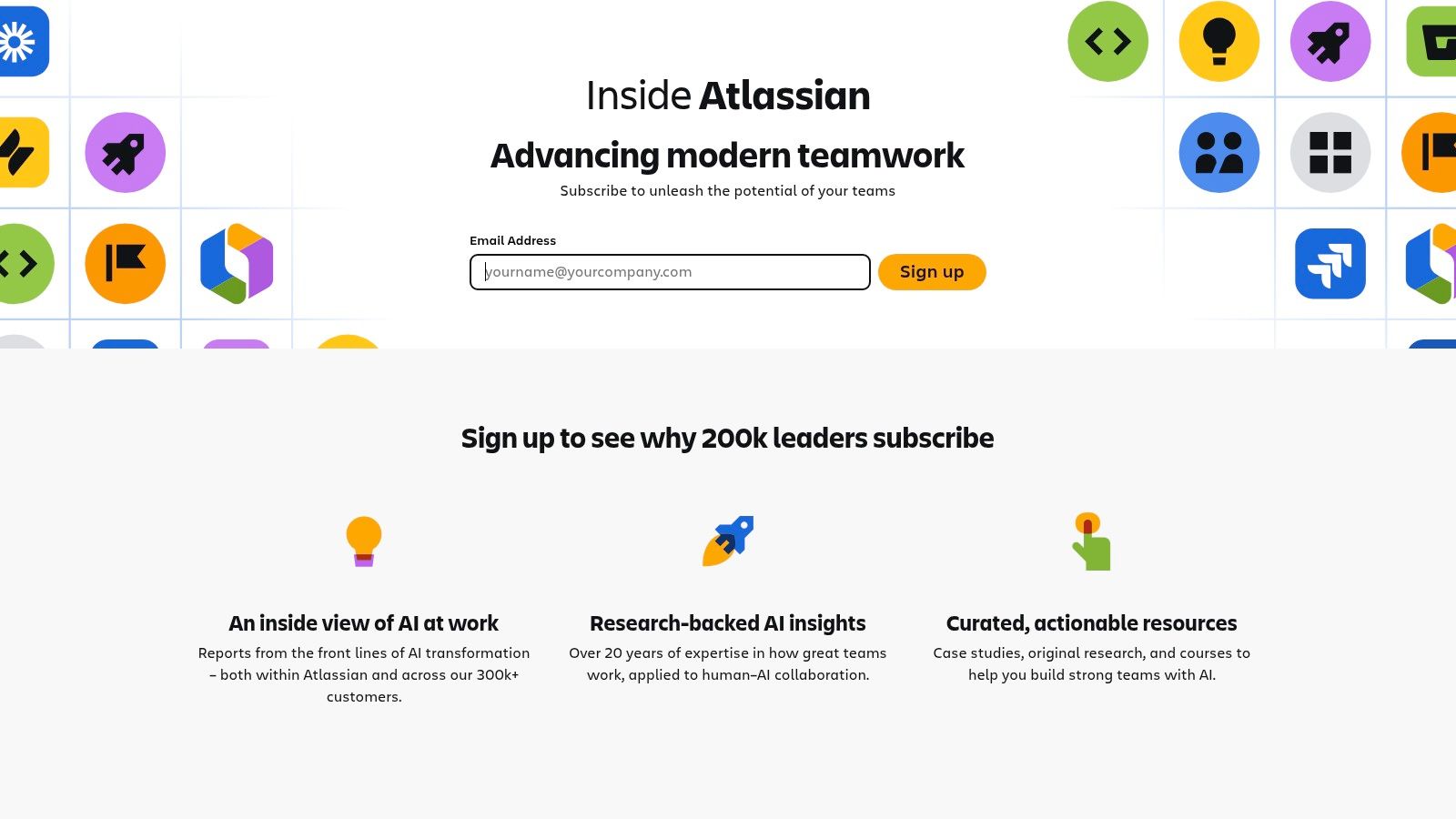
A lot of newsletters fail in the first five seconds. You open them and immediately have to ask, "Who is this for?" Atlassian avoids that mistake.
Inside Atlassian is built for managers, team leads, and cross-functional operators trying to improve how work gets done. That focus gives the whole thing backbone. The topics, tone, and article selection all serve the same job: help knowledge workers make better decisions about collaboration, leadership, and AI.
That is why it works.
What to steal from it
The smart move here is editorial discipline. Atlassian does not treat the newsletter like a dumping ground for company updates, product promotion, and random thought leadership. It curates around a narrow promise. If you subscribe, you know what kind of help you are going to get.
That consistency builds trust faster than flashy design ever will.
The content mix matters too. Research gives the issue authority. Case studies make the advice believable. Practical resources make it useful. Put together, that creates a newsletter readers can skim quickly or save for later without feeling tricked into opening marketing dressed up as insight.
A strong newsletter edits for the reader. It does not ask the reader to do the editing.
The structure supports that promise. Clear hierarchy, obvious calls to action, and clean scanning paths make the issue easy to process. That sounds basic, but it is where a lot of company newsletters fall apart. They have decent content buried inside messy packaging.
Where it falls short
I would not copy this model for a broad internal audience that includes frontline or shift-based teams. Atlassian writes for people whose daily work already happens inside documents, meetings, and digital systems. That makes the newsletter strong for knowledge work and weaker for operational environments where people need direct, fast, task-level communication.
So the lesson is not "be like Atlassian." The lesson is "match the format to the audience." If your readers need policy changes, schedule updates, safety reminders, or manager actions, this editorial style needs a sharper translation layer.
Still, the strategic takeaway is strong. A newsletter gets better the moment it stops trying to please everyone and starts serving one clear reader with one clear job to do. Teams that want to sharpen that thinking should start with a better grasp of what internal communications actually needs to accomplish inside a company.
3. Intercom The Ticket and Intercom on Product

Intercom's split into The Ticket and Intercom on Product is one of the smartest structural moves on this list. Instead of pretending one newsletter can serve every reader equally well, Intercom created two tracks for two different jobs.
That sounds obvious. It isn't. Teams often keep forcing unlike audiences into the same content stream long after relevance has died.
The strategy behind the split
The Ticket speaks to customer service leaders. Intercom on Product speaks to product and design people working through the realities of AI-era software. Different reader, different tension, different use case.
Newsletter fatigue usually comes from mismatch, not volume alone. Readers unsubscribe in their head long before they click anything. They stop trusting that the next issue will help them.
Intercom avoids that by making intent clear. If I sign up, I know what kind of thinking I'm going to get. I also know what won't be cluttering the issue.
Why the format holds up
Intercom does something else well. It doesn't trap the reader in a single format. Articles, podcasts, event tie-ins, and operational lessons all support the same editorial lane. That gives people options without making the newsletter feel scattered.
For B2B companies with multiple buyer or user personas, this is a good model to borrow. Segment by role, not by your org chart. Readers care about their own problems, not your content team's publishing structure.
A downside is that the subscription path feels less centralized than a single newsletter hub. And outside software circles, the topics can feel narrow. But that's a fair trade. Relevance beats breadth every time.
4. Zapier The Zapier Blog Newsletter
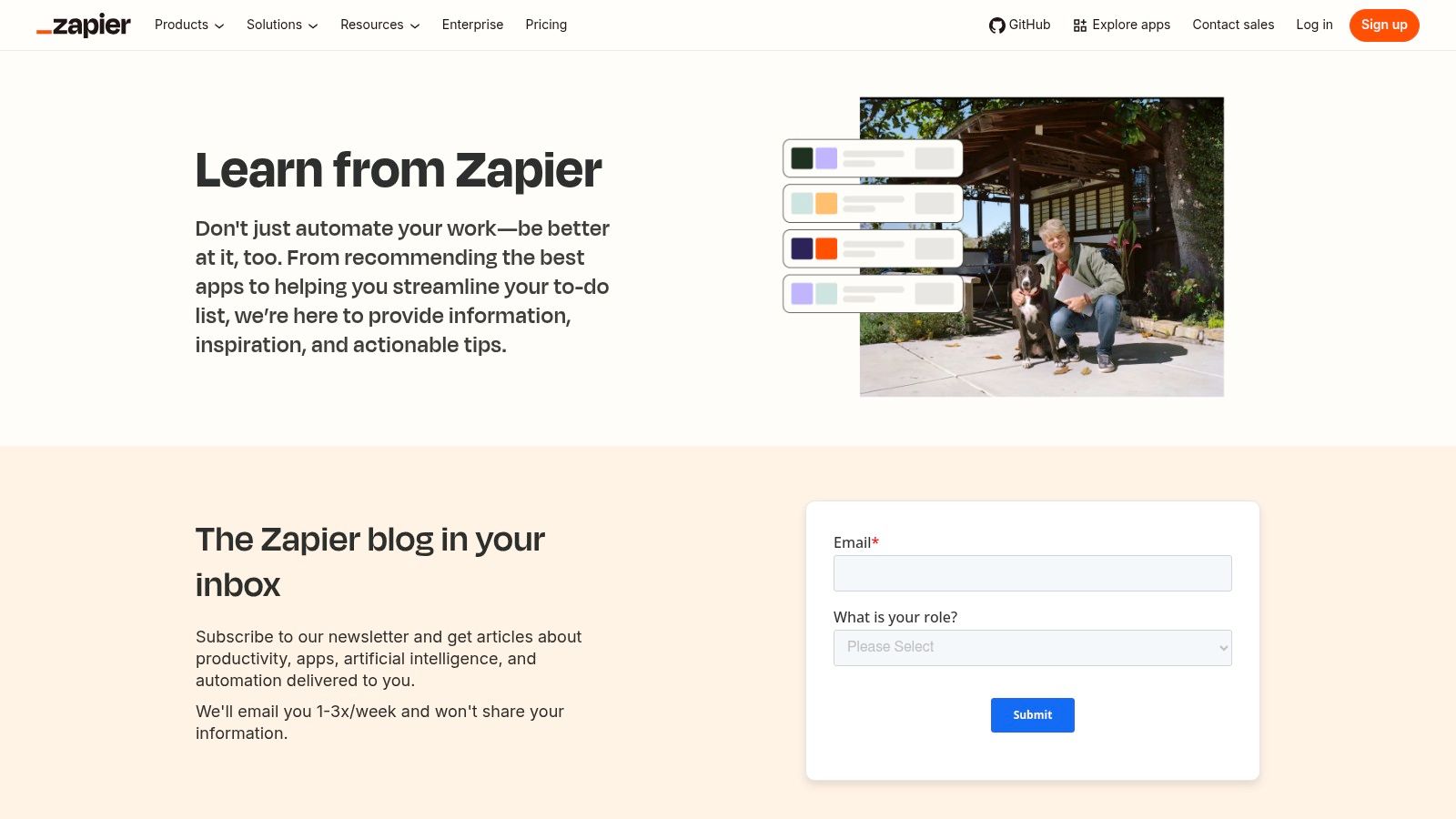
The Zapier Blog Newsletter is utility-first. That's why it works. It doesn't ask for attention on brand charisma alone. It earns attention by being useful right away.
A lot of newsletters promise value later, after the reader clicks through, books a demo, or sits through some broad industry thesis. Zapier usually starts with something practical.
Why readers keep opening it
The send frequency is clear, typically one to three times a week. That's a small thing, but it matters. Predictability lowers resistance.
The content also follows a strong how-to rhythm. App tips, automation guides, comparisons, and workflow recipes all reduce the gap between reading and doing. That's a smart editorial habit. Don't make the reader translate your insight into action if you can do that work for them.
Worth copying: Give people one move they can make today, not five ideas they might revisit later.
Zapier also pairs stories with templates and playbooks. That shortens time-to-value. In practical terms, it means the newsletter isn't just saying “automation matters.” It's showing how to start.
Where I'd use this model
This is a good example for companies that want a newsletter people rely on, not just tolerate. If your product or service naturally lends itself to tutorials, repeatable workflows, or best-practice recipes, this pattern is strong.
The tradeoff is that it stays mostly tactical. You won't get much executive framing or deeper cultural storytelling. And if someone prefers a monthly digest, the higher send volume can feel heavy.
Still, I'd rather dial back frequency than publish vague updates no one can use. Zapier gets the core rule right. Help first.
5. HubSpot Blog and Network Newsletters
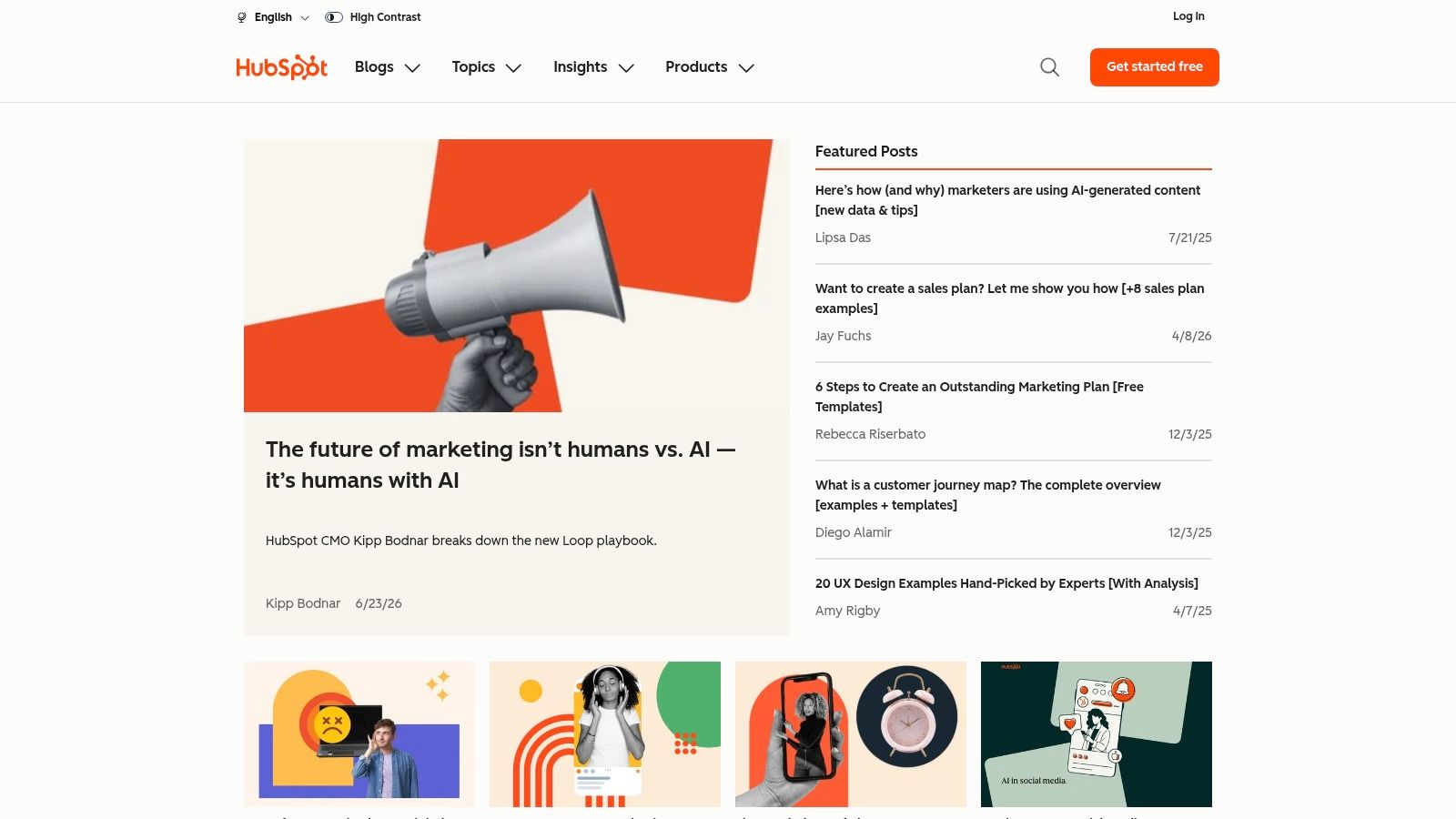
HubSpot's blog and network newsletters show what a mature newsletter ecosystem looks like. Not one stream. A portfolio.
That's a big difference. One broad newsletter often becomes a compromise machine. HubSpot avoids that with a centralized subscribe experience that lets readers choose topic streams that match their interests.
The real lesson here
Choice works when the choices are clear. Marketing, sales, service, product. People understand the lanes fast. They don't have to decode clever naming or wonder what they're signing up for.
This also helps with trust. The subscribe flow sets expectations and gives people control. That sounds basic, but it's one reason bigger content operations keep performing. They don't make the audience guess.
HubSpot mixes weekly roundups, guides, templates, and reports well. The result feels substantial. Readers sense that there's an editorial machine behind it, not a last-minute content scramble.
The caution
Breadth can become its own problem. If you offer too many streams, some readers freeze and choose nothing. Others subscribe too widely and then feel overwhelmed.
That doesn't make the model bad. It means you need discipline. If you copy HubSpot, don't copy the scale first. Copy the logic first. Build separate streams only when the audience needs disparate things.
6. Slack Developer Newsletter
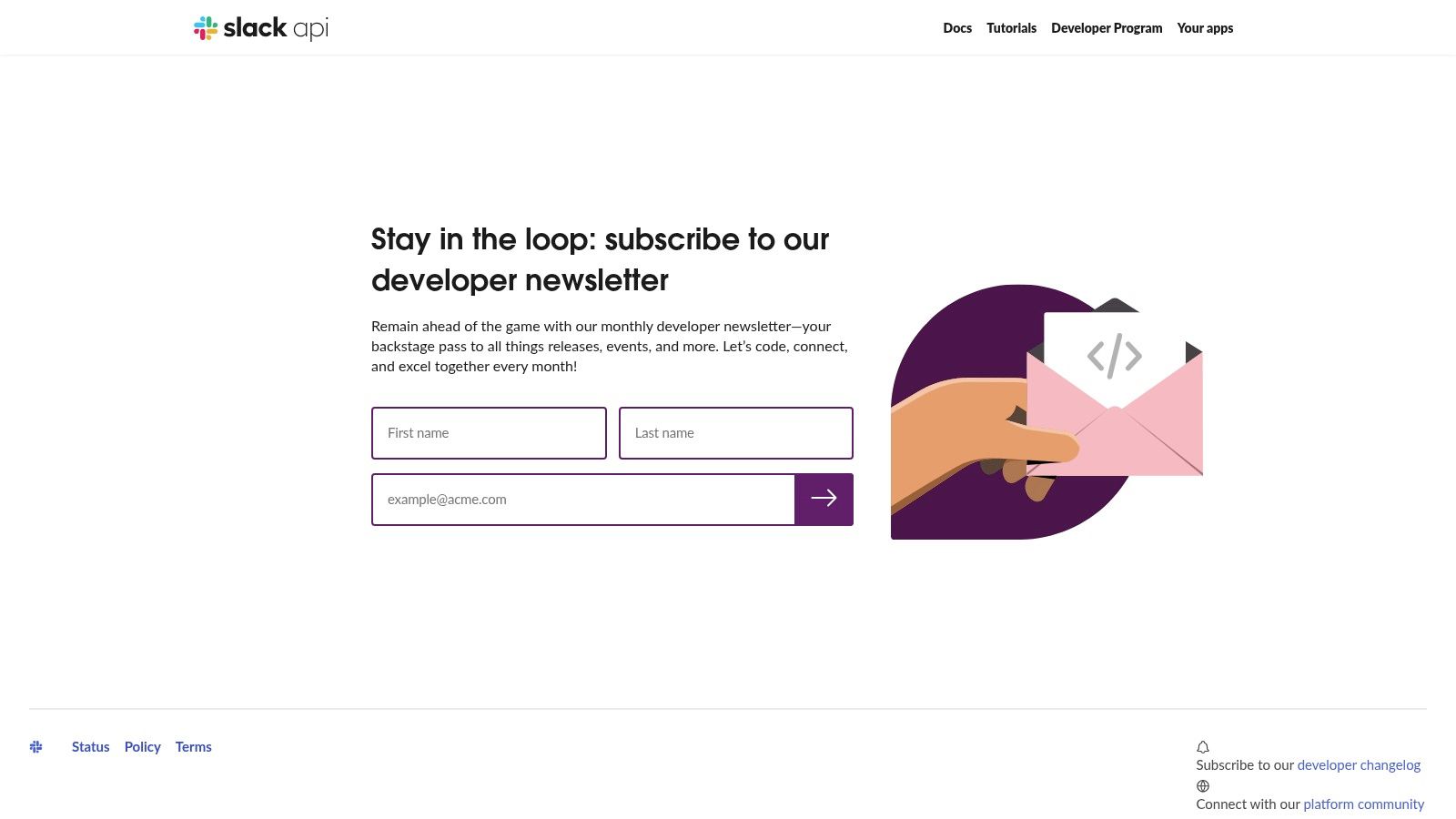
The Slack Developer Newsletter is narrow by design, and that's exactly why it's good. It doesn't try to entertain a broad audience. It helps a very specific one keep up with platform changes, APIs, tooling, and docs.
I respect newsletters like this because they don't waste time pretending every issue needs a sweeping narrative arc. Sometimes people just need to know what changed and what to do about it.
Why the narrow scope wins
Slack keeps the format crisp. Release news, platform updates, documentation, and event-related information all point to clear developer actions. That “what changed, what to do next” structure is worth borrowing in any role-specific newsletter.
It's also a good reminder that strong newsletters often work as part of a larger system. Preference controls, help content, docs, and linked resources support the email instead of forcing it to carry everything alone. That's a healthier way to communicate.
For technical audiences, this is close to ideal. Relevance stays high because the scope stays tight.
The bigger takeaway
Even if you're not writing for developers, there's a lesson here for internal teams. Not every employee needs the same newsletter. A finance update, a store-ops briefing, and a product release digest shouldn't always live in one giant send.
If you're thinking more broadly about that infrastructure, it helps to look at what an internal communication platform should do beyond email. Slack's example shows the power of pairing targeted updates with a place people can go deeper.
Its limitation is obvious. Nontechnical readers won't care. But that's fine. A newsletter doesn't need universal appeal. It needs precision.
7. Basecamp Newsletter
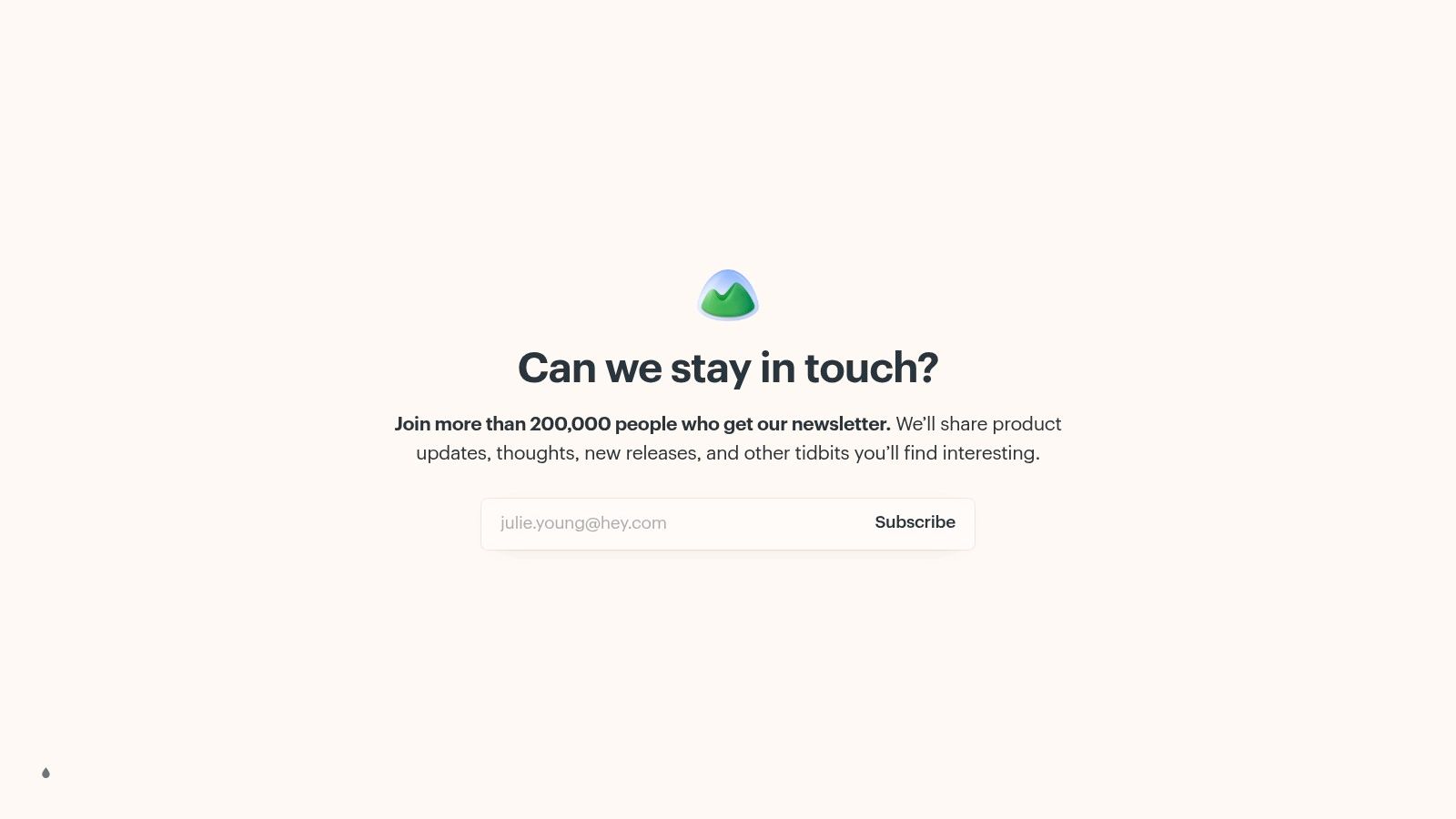
The Basecamp Newsletter has something most companies can't fake. A real voice. You can feel there are humans behind it with opinions, preferences, and a distinct way of seeing work.
That alone makes it worth studying. Plenty of newsletters are polished. Very few are memorable.
Why this one sticks
Basecamp balances product updates with essays on work, teams, and operating philosophy. That blend keeps the newsletter from becoming a promo feed, but it also avoids drifting into empty thought leadership. There's usually a practical point underneath the opinion.
The archive on the subscribe page is a smart touch too. People can scan past issues and decide quickly whether the tone and substance fit them. More newsletter programs should do this. Don't hide the goods.
People will forgive strong opinions faster than they'll forgive dull writing.
The editorial style won't fit every company. It's opinionated, and some audiences want straightforward utility over essays. That's fair. But if your brand has a point of view, don't sand it down until it sounds like every other software firm in a blazer.
What to borrow without imitating it badly
Borrow the honesty, not the posture. A distinct voice works when it comes from real operating choices and lived experience. It fails when a company tries to sound bold without saying anything specific.
Basecamp also proves that examples of company newsletters don't need endless sections to work. A clear idea, a human tone, and consistency can carry more weight than overdesigned complexity.
7-Company Newsletter Comparison
Item | Implementation Complexity 🔄 | Resource Requirements ⚡ | Expected Outcomes 📊⭐ | Ideal Use Cases 💡 | Key Advantages ⭐ |
|---|---|---|---|---|---|
Pebb | Low–Medium, quick onboarding, configurable Spaces 🔄 | Moderate, mobile/web admins, integrations ⚡ | Reduce tool sprawl; higher engagement & measurable adoption 📊⭐ | Frontline + office teams (retail, restaurants, healthcare, logistics) 💡 | All‑in‑one workspace; fast rollout; 50+ integrations ⭐ |
Atlassian, Inside Atlassian | Medium, research-driven editorial process 🔄 | Moderate, research, editorial, design teams ⚡ | Thought leadership; executive engagement and credibility 📊⭐ | Leadership and cross‑functional managers; knowledge workers 💡 | Research-backed insights; skimmable, actionable issues ⭐ |
Intercom, The Ticket / Intercom on Product | Medium, dual-track segmentation & coordination 🔄 | Moderate, multi-format editorial production ⚡ | High relevance per persona; reduced content fatigue 📊⭐ | Organizations serving distinct personas (support vs product) 💡 | Clear audience segmentation; multi-format depth ⭐ |
Zapier, The Zapier Blog Newsletter | Low, repeatable how‑to content workflows 🔄 | Low–Moderate, content creators, templates, screenshots ⚡ | Quick time‑to‑value; improved reader productivity 📊⭐ | Broad audience needing automation tips and playbooks 💡 | Practical templates/playbooks; frequent, actionable sends ⭐ |
HubSpot, HubSpot Blog / Network Newsletters | High, multi‑stream ops & centralized subscribe flow 🔄 | High, large editorial teams, content ops, analytics ⚡ | Wide reach; targeted subscriptions; steady lead generation 📊⭐ | Enterprises and mature marketing ops with diverse audiences 💡 | Portfolio of focused streams; mature editorial standards ⭐ |
Slack, Slack Developer Newsletter | Low, narrow, role‑specific cadence 🔄 | Low, docs teams, platform comms, dev liaisons ⚡ | Faster developer adoption; clear actionable updates 📊⭐ | Platform builders and API consumers; developer communities 💡 | Tight scope with direct CTAs to SDKs/changelogs ⭐ |
Basecamp, Basecamp Newsletter | Low, consistent founder/editorial voice 🔄 | Low, small editorial effort, curated essays ⚡ | Strong brand affinity and thought leadership impact 📊⭐ | Audiences valuing culture, long‑form essays, product philosophy 💡 | Memorable human voice; archives for transparency ⭐ |
The Only Rule That Matters
A leadership team can spend a month polishing a newsletter and still miss the mark. Better colors. Cleaner modules. Sharper headers. None of that fixes a newsletter built around what executives want to announce instead of what readers need to know, do, or understand.
Usefulness wins.
That is the throughline across every example in this article. Pebb centers day-to-day alignment. Atlassian gives company news context so employees can place it inside the bigger strategy. Intercom separates newsletters by audience because support teams and product teams do not need the same editorial product. Zapier earns attention with fast, practical instruction. HubSpot runs distinct streams because one giant catch-all newsletter serves no one well. Slack keeps its developer newsletter tightly focused on product utility. Basecamp proves that strong editorial voice can carry a newsletter when the point of the email is perspective, not volume.
Steal the strategy, not the layout.
Start with one question. What job does this newsletter do for a specific audience? Once that is clear, the rest gets easier. Cadence, sections, subject lines, CTA placement, and tone all follow from that decision. Skip it, and you get a polished email people skim once and forget.
Structure matters because repetition trains readers. If the update, action item, resource, and human moment appear in a familiar order every time, people spend less energy decoding the format and more energy absorbing the message. That is how newsletters become useful habits instead of inbox wallpaper.
The same rule applies to measurement. Judge the newsletter by the behavior it is supposed to change. A culture roundup should not be measured like a compliance bulletin. A product adoption email should not chase the same goal as an executive update. Opens and clicks are directionally helpful. The ultimate question is whether people acted, understood, adopted, attended, or changed course.
Mechanics still carry weight. A vague subject line loses attention before the email opens. A soft intro wastes the highest-visibility space in the issue. A buried CTA creates drift. Staffbase's guidance on internal newsletter best practices gets this right. Specific subject lines and one clear next step reduce friction for the reader.
Design deserves restraint. Visual hierarchy helps. Decoration does not. Use screenshots, charts, maps, or images only when they speed up comprehension. If an element does not help a reader grasp the point faster, cut it.
Tone is strategy too. Stiff corporate copy pushes people away. Clear, human language pulls them in. Alyssa's guidance on writing internal newsletters makes the right case for people-centered writing. Write like a smart colleague with news worth sharing, not a committee clearing its throat.
One more rule separates the good newsletters from the forgettable ones. Keep the core structure stable, then leave room for one fresh element. Readers return for consistency. They keep paying attention because each issue still feels current.
The best company newsletters do one job well. They direct attention, explain what matters, and make the next action obvious. Build around that standard, and every editorial choice gets simpler.
