
Your Employee Vacation Tracker Is a Symptom
Is your employee vacation tracker just a spreadsheet? It's a sign of a bigger problem. Learn why a modern tool builds a culture where people actually rest.
Dan Robin
Let’s be honest. That shared vacation spreadsheet you’re clinging to feels like a win, but it’s a band-aid on a much bigger problem. It tells you who's out and when, but it tells you nothing about the story behind the scenes.
It’s blind to the real issues. It can’t tell you which teams are nearing burnout, why one manager’s approval process takes twice as long as another's, or the massive financial liability of all that untaken PTO piling up on your books.
We’ve all been there. The mad scramble at the end of the year, the surprise staff shortages, the frantic "who's covering for whom?" messages. This isn’t just an admin headache; it’s a symptom of a deeper cultural issue.
The True Cost of "Good Enough"
That spreadsheet might seem free, but its hidden costs are staggering. Think about every minute someone spends manually updating rows, checking calendars, and fixing broken formulas. That's time and money down the drain—stolen from work that actually matters.
Worse, it creates a culture of confusion. When taking time off is a clunky, unclear process, people just… don’t.
This isn’t a gut feeling; the data backs it up. Surveys show nearly half of U.S. workers end the year with unused vacation days. A Harris Poll found that a whopping 3 in 4 workers didn't take all their PTO, pointing to heavy workloads and the pressure to always be on. When your tracking system is a black box, you’re often the last to know who is quietly burning out. You can read the full research about these workplace trends to see the bigger picture.
A proper employee vacation tracker is the first real step toward fixing these underlying problems. It’s about building a system that delivers clarity, fairness, and a culture that genuinely values rest.
It's About More Than Logging Days
Moving to a real system isn't just about recording time off. It’s about seeing the patterns that matter and having a single source of truth for your team's availability. It helps you answer the real questions:
Does our process actually encourage people to recharge, or is it a barrier?
Do we have enough coverage for the holidays without everything grinding to a halt?
Are we handling everyone's requests with the same fairness and speed?
When you ditch the spreadsheet, you stop managing a document and start looking after your team’s well-being. It’s a fundamental shift from reactive fire-fighting to proactive culture-building. The goal isn't just to track time; it's to protect it.
Build a System That Reflects Your Values
Moving away from a spreadsheet can feel like a huge project. It’s tempting to jump straight into feature lists and demos, but that’s starting in the wrong place.
The real first step? Pause. Ask a simple, foundational question: What does our time-off policy actually stand for?
Is your company about radical flexibility? Or is strict compliance the name of the game? Maybe you use time off to reward loyalty. The answers are the true north for your entire system. Before you even look at a single employee vacation tracker, you have to define your principles.
This means getting clear on the basics. I always tell leaders to map out every leave type you offer—vacation, sick days, personal time, bereavement. Then, establish accrual rules that make sense for your business, not what some generic template suggests.
Finally, design an approval path that’s fast, transparent, and respects everyone’s time.
Define Your Core Principles
Let’s be honest: a policy is just words on a page until it’s built into the tools your team uses every day. The system you choose should be a direct reflection of your company's culture.
Here’s what that looks like in practice:
If you value flexibility: Can someone request a half-day with one tap from their phone?
If you value transparency: Can a manager see the team calendar before approving a request to avoid conflicts?
If you value loyalty: Does the system automatically adjust PTO accrual on an employee’s work anniversary without anyone lifting a finger?
This isn't about finding a tool with the longest feature list. It’s about configuring a tool that embodies your values. The goal is to build a system that feels less like corporate oversight and more like a simple, helpful utility.
The best systems don’t just track days; they eliminate the friction that makes people hate corporate tools. When PTO lives right alongside schedules and team chat, it becomes a natural part of the workflow, not another chore.
The data shows a troubling trend of people not taking the time off they've earned, often because of workload pressure or unclear processes.
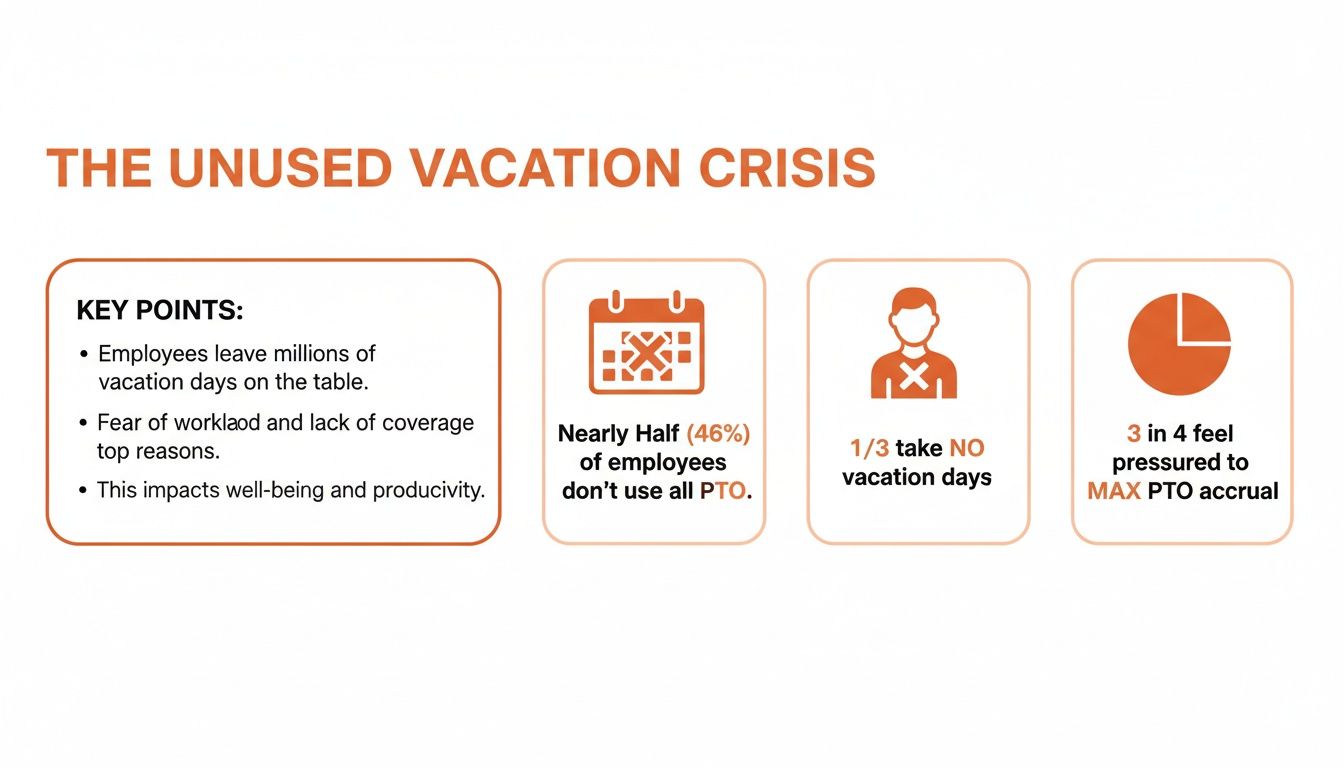
This paints a clear picture. A huge part of the workforce is either unable or unwilling to fully disconnect, which points to a systemic issue that a well-designed tracker can help solve.
Spreadsheet vs. Integrated Tracker: The Real Difference
The gap between a manual spreadsheet and a modern, integrated tool is wider than most people realize. It’s not just about saving an admin a few hours. It's about changing behaviors and reducing risk.
Area of Concern | The Spreadsheet Way (The Hidden Cost) | The Integrated Tracker Way (The Real Value) |
|---|---|---|
Visibility | A static grid that’s almost always out of date. Managers and employees never see the full, real-time picture. | A live, shared calendar that prevents scheduling conflicts and provides instant clarity for the whole team. |
Accuracy | Riddled with human error, broken formulas, and version control nightmares. Your PTO liability is a guess. | Automated accruals based on your policies, ensuring fairness and precise, reportable liability tracking. |
Workflow | A clunky mess of emails, calendar invites, and manual updates that discourages people from taking time off. | A simple, one-click request and approval process that lives right where your team already works (like Slack or Teams). |
Here’s the thing: an employee vacation tracker shouldn't be another website you force people to visit. It should be woven into their daily tools, making time off an easy, transparent, and guilt-free part of work. It’s a subtle shift, but it makes all the difference.
Design a Process People Will Actually Use
Let's be honest. A great tool with a terrible process is just expensive shelfware. We’ve seen it happen. A company sinks money into a shiny new system, but six months later, everyone’s still pinging their manager on Slack to ask for Friday off.
If requesting a day off feels like a scavenger hunt—finding a form, digging through a confusing portal, then waiting in the dark for an answer—people will find a workaround. Or they won't bother taking the time they’ve earned. The goal isn't to automate a clunky process; it's to redesign the experience so it feels effortless.
Forget complex approval chains and convoluted rules for a minute. Think about human behavior first.
Make It Obvious and Effortless
The entire process should be so intuitive it requires zero training. An employee should be able to glance at their balance and request time off from their phone in under 30 seconds. A manager should be able to approve it with a single tap.
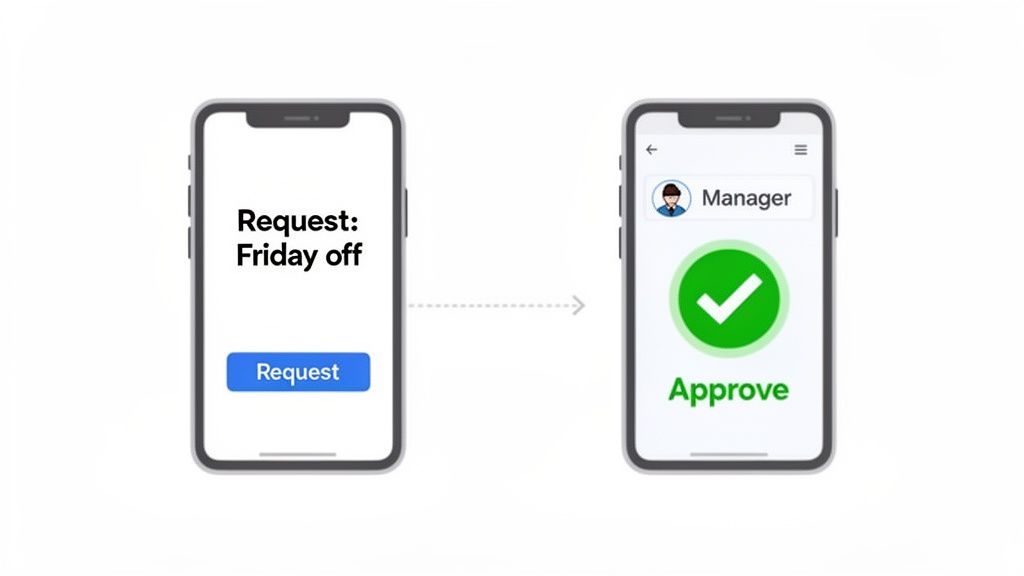
Anything more complicated introduces friction. And friction is the enemy of adoption.
The best systems aren't the ones with the most bells and whistles. They're the ones that get out of the way, making it so easy to ask for and approve time off that it becomes a natural, guilt-free part of the workday.
This also means notifications must be instant and clear. When a request is submitted, the manager knows immediately. Once it's approved, the employee gets confirmation and the team calendar updates right away. No ambiguity. No chasing people for updates.
Create Shared Visibility
One of the biggest headaches of old-school PTO tracking is the lack of shared context. An employee puts in a request, blind to the fact that two other team members have already booked the same week. The manager is stuck being the bad guy.
A modern employee vacation tracker fixes this by making team availability visible to everyone. This one small change shifts the dynamic. Instead of guessing, employees can check the shared calendar before making a request, preventing overlaps and turning the manager’s approval into a simple formality.
This is where a dedicated employee time off app really proves its worth, moving the entire workflow into a space the team already lives. For companies looking to dial in their processes, bringing in a Human Resources Virtual Assistant can be a smart move to help design and manage a system people genuinely want to use.
Ultimately, you're aiming for a system so frictionless it actually encourages people to disconnect. It stops being about policing a policy and starts being about facilitating well-deserved rest—a shift that pays dividends in morale and retention.
Navigating the Global Maze of Paid Time Off
If your team is spread across more than one city, you’ve probably learned that "paid time off" means something different everywhere. The moment you hire someone in another country, your simple PTO policy can turn into a tangled mess.
It's one thing to manage a policy for a team under one roof. It’s another beast entirely to stay fair, consistent, and compliant across different legal landscapes.
This isn't just about being a good employer. It’s about following the law.
One Policy Does Not Fit All
Here's the hard truth: a generous vacation package in the United States is often the bare legal minimum somewhere else. Many European countries, for instance, legally mandate 25–30 days of paid annual leave. An employee in France gets about five weeks, while Poland requires at least 26 days.
Now, compare that to the U.S., where the average is somewhere between 10 and 20 days. You can see the stark contrast in this breakdown of global vacation days from OysterHR.
Then you layer on things like tenure. In the U.S., it's common for an employee with five years of service to get 15 days off, while a 20-year veteran might get 20. Trying to track this patchwork of rules in a spreadsheet isn't just a headache—it's a compliance nightmare waiting to happen.
A miscalculation doesn't just annoy someone; it can lead to legal challenges and penalties. And when an employee leaves, you absolutely have to get their final payout right. If you’re struggling with that, our guide on how to calculate PTO payout can bring some much-needed clarity.
The Only Sane Way Forward Is Automation
This is why a configurable employee vacation tracker becomes non-negotiable. You don't need to become an expert in international labor law. You just need a system that lets you build these different rules directly into your process.
A modern system doesn't just record time off. It becomes your single source of truth for compliance, automatically handling accruals based on location, seniority, and local laws.
Think about it. You can set up a "Berlin" policy that automatically grants 28 days of leave and a "Denver" policy that starts new hires at 15 days and adds another day each year. The system does the rest. Your employee in Germany sees their correct balance, and so does their colleague in Colorado. No more manual math. No more clunky spreadsheets. No more frantic legal searches.
This isn't about fancy bells and whistles. It's about building a solid foundation of fairness and consistency for a team that doesn't share a zip code. It's about getting the basics so right that you never have to think about them again.
Using Vacation Data to Build a Healthier Company
A great employee vacation tracker does more than approve requests. It gives you a real-time pulse on the health of your company. The data it generates is one of the most powerful diagnostic tools you’ll ever have.
Think about it. When you look at the reports, you’re not just seeing numbers—you’re seeing stories. Are certain teams never taking time off? That’s not a badge of honor. It’s a massive red flag pointing to a potential management issue or an unsustainable workload.
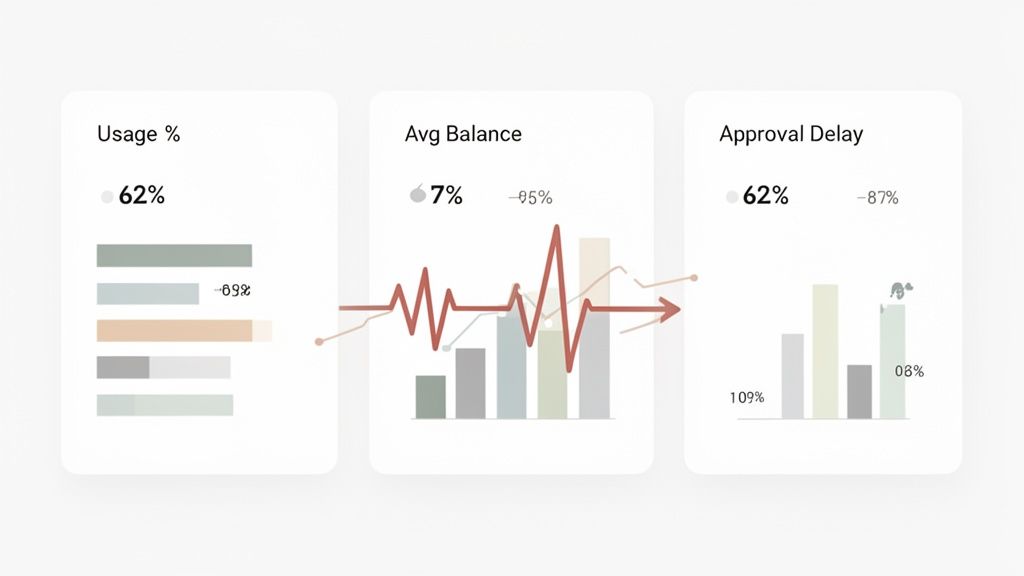
Or what if everyone hoards their days until the last two weeks of December? You’re staring down a huge burnout risk and a significant financial liability. This isn’t just an admin headache; it’s a strategic problem.
From Raw Data to Real Insights
The trick is to read these reports as strategic insights, not just summaries. This isn’t about surveillance. It’s about being curious and showing you care. When you spot a pattern, you can start asking better questions.
Globally, the way people use their vacation is a data problem as much as it is a cultural one. Analyses show that U.S. workers take only about 48% of their paid time off, while European employees use closer to 90% of their entitlement. That staggering gap represents an estimated $52.4 billion in lost benefits for American workers alone. You can dig into more of these global time-off statistics from TMetric.
Data helps you spot quiet problems before they become loud crises. A low vacation usage rate isn’t a metric to track; it's a conversation you need to have.
When you have a reliable employee vacation tracker, you can look past the company-wide average and get to the details that matter.
Usage Rates by Department: If the engineering team’s usage is languishing at 25% while marketing is at a healthy 85%, what does that tell you about their team cultures or project pressures?
Average PTO Balances: High balances across the board suggest a systemic issue. It’s a sign people feel they simply can't take time off.
Approval Delays: Are requests in one department sitting in a manager's queue for weeks? That friction discourages people from even asking.
It’s About Building a Better Workplace
At the end of the day, these metrics aren't for judging people; they're for helping them. They give you the hard data you need to build a workplace where rest isn't just allowed—it's actively encouraged. This data is the perfect starting point to turn engagement data into action and make real improvements.
The goal is to cultivate an environment that genuinely supports well-being. This includes being proactive about managing work stress and fostering a healthier work-life balance. The numbers in your tracker are just the beginning of that story.
Your Top Questions, Answered
I’ve spent a lot of time thinking about vacation tracking, but even more time talking to people stuck in the messy middle—ready to ditch the spreadsheet but not sure what comes next. Over the years, the same honest, practical questions come up again and again.
So, let's just get to them.
How do we move from our spreadsheet to a new system?
Make a clean break. Seriously. The biggest mistake is trying to run a new tool and the old spreadsheet in parallel. It just creates confusion, doubles the work, and guarantees the project will fail.
Announce the change, explain the why behind it, and set a firm cut-off date. Any decent employee vacation tracker will make a one-time import of current balances simple. Focus your energy on a single, short session showing everyone how much easier the new way is.
When people see they can request a day off from their phone in 30 seconds, they’ll switch. You won't have to force it.
It’s not about a fancy feature; it’s about the absence of friction. The single most important thing is a tool that lives where your team already works. A separate portal people visit once a quarter is destined to be ignored.
What’s the single most important feature to look for?
It’s not a feature at all; it's integration. The best tracker weaves itself into the daily flow of work. A separate HR portal people have to remember to log into is a failure before it starts.
When PTO requests, balances, and team calendars are right there inside your main communication hub—like Slack or Microsoft Teams—it becomes second nature. It stops feeling like a chore and just becomes part of the conversation.
How can we get our team to actually take their vacation?
This is a culture question, not a tool question. And culture is always set from the top. When managers take real, unplugged vacations, it sends a powerful signal to everyone else that it's not just allowed, but encouraged.
Next, make PTO balances obvious and easy to find. When time off feels like a tangible benefit people have earned, they’re more likely to value and use it.
Finally, use your data. If a team’s vacation usage is dangerously low, it’s not a numbers problem—it’s a leadership problem. Talk to the manager. It’s almost always a symptom of an unsustainable workload or a manager who inadvertently signals that time off is a career risk.
Can a tracker handle our complex rules?
Yes, and that’s precisely why you need one. A good system is built to handle complexity so you don't have to. You can create distinct policies for different groups—full-time, part-time, international—and automate everything.
You can build rules for accruals based on pay periods or anniversaries. You can create tenure-based tiers that automatically upgrade an employee’s accrual rate when they hit a milestone. This is all about removing human error and ensuring everyone is treated fairly, no matter where they are.
Ready to ditch the spreadsheet for good? Pebb unifies your team's communication, operations, and engagement—including a simple, integrated PTO tracker that people will actually use. See how Pebb works and why it's a breath of fresh air.
