
10 Employee Engagement Survey Topics That Actually Matter
Stop guessing. Here are 10 essential employee engagement survey topics with questions to help you understand what your team is really thinking and feeling.
Dan Robin
The pattern is always the same. An engagement survey goes out, reminders pile up, dashboards light up, leaders review the charts, and three weeks later nothing in the employee experience has changed.
That is not a survey problem. It is a design problem.
Weak employee engagement survey topics produce polite, blurry feedback. Teams ask broad questions, collect safe answers, and call it listening. Then they wonder why the results do not point to clear action, especially from frontline employees who already have limited time, limited device access, and little patience for vague corporate exercises.
Good surveys work differently. Each topic should open a conversation, not just generate a score. That means pairing a simple 5-point Likert question with an open-ended follow-up that tells you what the number means in daily work. It also means deciding in advance how managers will respond, what changes are possible, and how you will report back to employees after the survey closes.
I have seen teams get far more value from ten sharp questions than from fifty generic ones. The difference is focus. Ask about the parts of work people feel every day. Communication. Manager support. belonging. workload. growth. trust. recognition. tools. If a topic cannot lead to a specific follow-up, it does not belong in the survey.
This matters even more for distributed and frontline teams. Office employees can often fill in the gaps through meetings, chat, or hallway conversations. Store associates, nurses, warehouse crews, and field staff cannot. If you want useful input from them, write questions in plain language, keep the survey tight, and tie results to actions managers can take. A stronger internal communications strategy for your organization also makes that follow-up easier to deliver consistently across locations. The same principle shows up in practical advice on improving communication in the workplace.
Use this list as a set of conversation starters. Each topic below includes the kind of questions that get honest answers and the kind of follow-up that keeps your survey from turning into corporate theater again.
1. Internal Communication & Information Flow
When communication breaks, people start guessing. That’s when rumors fill the gap, supervisors give different answers, and frontline staff miss the update that office teams saw three hours ago.
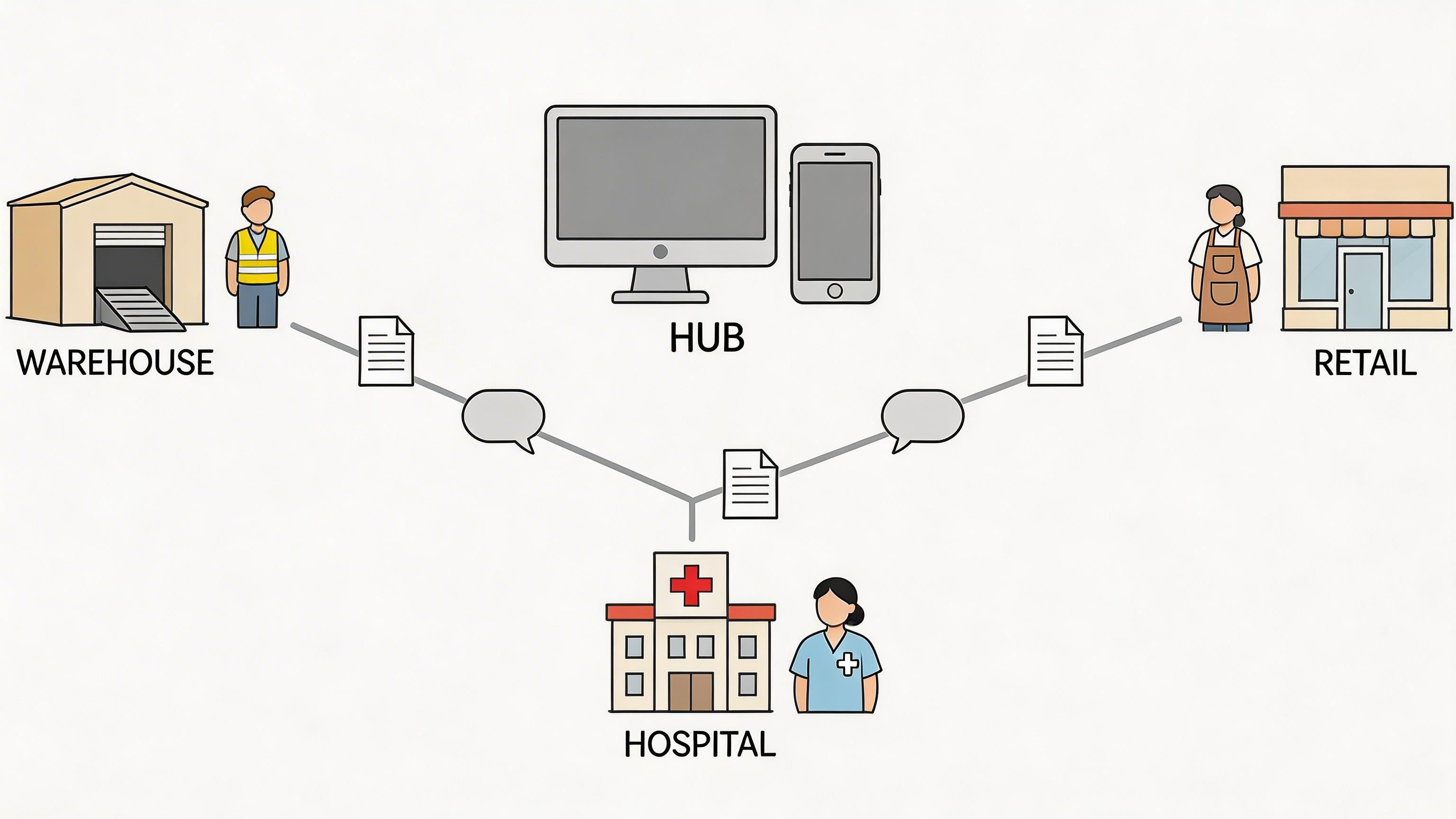
A hospital network quickly experiences this. A clinical protocol changes. One unit gets the memo. Another hears about it in a hallway. A third finds an outdated PDF in a shared drive. Same organization, three differing accounts.
That’s why this belongs near the top of your employee engagement survey topics list.
Ask questions people can answer plainly
Use a few direct statements on a 5-point scale:
Information is easy to find: “I can quickly find the information I need to do my job.”
Updates are clear: “Important company updates are communicated in a way I understand.”
Channels make sense: “I know where to look for urgent updates versus routine news.”
Then add one open-ended prompt:
“What company information do you spend too much time chasing down?”
You’ll get better answers from that than from vague prompts about “communication effectiveness.”
A retail chain, for example, may find store teams aren’t missing announcements because they don’t care. They’re missing them because updates live in too many places. Policies sit in email, promotions live in chat, and scheduling changes happen somewhere else.
If employees need a scavenger hunt to find basic information, your communication system is broken.
What to do when scores come back low
Do not launch a campaign. Clean up the mess.
Create one place for policies, one place for urgent updates, and one place for team discussion. In a tool like Pebb, that often means department Spaces, a searchable Knowledge Library, and a news feed for broad announcements. The practical work matters more than the slogan.
If you need a framework, this guide on crafting an effective internal communications strategy for your organization is a useful starting point.
And if your team needs broader habits, this piece on improving communication in the workplace is worth a read.
2. Manager-Employee Relationships & Support
A team lead at a busy warehouse once said, “I talk to my people every day.” His survey said the opposite. Employees heard instructions, shift changes, and corrections. They did not feel coached, supported, or safe raising problems.
That gap is common, especially on frontline teams where managers spend the day firefighting instead of leading.
Manager support is not a popularity contest. It is a daily operating system. If you want useful survey data, ask about repeatable behaviors employees can judge.
Ask about manager behaviors employees experience
Skip broad questions like “My manager is effective.” Employees answer that based on mood, not evidence.
Use statements like these:
Obstacle removal is real: “My manager helps remove problems that make my work harder.”
Support is available: “I can get help from my manager when I need it.”
Recognition is specific: “My manager acknowledges good work in a meaningful way.”
Concerns feel safe to raise: “I feel comfortable bringing problems or concerns to my manager.”
Then add an open-ended prompt that starts a real conversation:
“What is one thing your manager does that makes your job easier, or harder?”
That question gets past vague approval scores. It also works well for hard-to-reach frontline groups, because people can answer from a shift, break room, or phone in plain language. A hotel housekeeping team may say their supervisor is kind but never follows up on supply shortages. A clinic team may say their manager is available only after a problem has already escalated. Those are fixable issues. Generic manager ratings are not.
Turn low scores into manager habits
Do not stop at “Manager X scored low.”
Look for the routines behind the score. Are one-on-ones happening often enough to matter? Do managers check in after a rough shift or only after mistakes? Are they giving specific feedback tied to the work, or empty praise that employees ignore? Are they reachable in the channels employees use?
Feedback cadence matters here. If a manager has no rhythm for feedback, the relationship will drift.
Your follow-up should be practical. Set a minimum standard for manager check-ins. Train managers to ask better questions. Require follow-through on issues employees raise. For dispersed teams, give managers simple ways to stay visible across shifts and locations. This guide on how to create a culture of belonging for distributed and frontline teams is useful if manager support breaks down because people rarely overlap in person.
3. Sense of Belonging & Team Connection
Some teams look connected from the outside and feel lonely from the inside.
That’s common in distributed companies, but it’s just as common in hospitals, hotels, warehouses, and retail chains where people work different shifts, rarely overlap, and barely know who’s on the other side of the schedule.

Belonging is not fluff. It affects whether people speak up, ask for help, and stay.
Ask if people feel part of something
Use statements like these:
Connection is visible: “I feel connected to the people I work with.”
Respect is normal: “People on my team treat each other with respect.”
Inclusion crosses shifts and locations: “I feel included in the team regardless of my schedule or location.”
Open-ended prompt:
“When do you feel most disconnected from your team?”
That question quickly identifies issues. Night-shift logistics teams may say they never hear what happened on day shift unless something went wrong. Nurses across hospital locations may say recognition only happens where leadership is physically present. Retail staff may say headquarters celebrates campaigns they had no part in shaping.
Build shared ground, not forced fun
You do not need more awkward contests. You need more visible connection points.
Feature employee spotlights. Share cross-location wins. Create community Spaces not buried under operations chatter. Make it easy for people to find coworkers in a People Directory and recognize each other publicly.
If your team is spread out, how to create a culture of belonging even when your team is spread out gives a practical path.
One warning. Don’t confuse activity with connection. A busy chat channel can still feel cold if only a few people speak and no one from the floor or field ever sees themselves in the conversation.
4. Work-Life Balance & Flexibility
Most companies talk about balance when they really mean endurance. Employees hear the difference.
This topic matters because people don’t just judge your workplace by workload. They judge it by whether the job leaves room for a life outside work, whether schedules feel fair, and whether taking time off comes with guilt attached.
Ask about what people live, not what policy says
Use questions like:
Workload is manageable: “My workload is manageable most of the time.”
Time off feels safe: “I can take time off without feeling penalized.”
Schedules are fair: “My work schedule gives me enough visibility to plan my life.”
Then ask:
“What part of your work schedule creates the most unnecessary stress?”
That question works especially well for frontline teams. In healthcare, one manager may assume the issue is staffing. Staff may say their primary concern is not knowing their schedule early enough. In logistics, drivers may not complain about long hours first. They may complain about unpredictable changes.
Effectory noted that well-being has become central to modern survey design, not an extra module for later. That shift happened for a reason. People now expect employers to take the lived experience of work seriously, including mental load and recovery time.
Fix fairness before you promise flexibility
If scheduling is chaotic, don’t paper over it with wellness language. Tighten schedule visibility. Make PTO requests simple. Stop making people ask three different people for one day off.
A transparent schedule inside a shared work app helps because it removes mystery. It also shows employees that you respect their time enough to make work legible.
One more point. Balance is not just for office staff. Frontline workers frequently need it more, because the cost of schedule chaos lands directly on family, sleep, transport, and childcare.
5. Career Development & Growth Opportunities
A warehouse supervisor once told me she was tired of seeing “growth” on employee surveys because nobody could explain what it meant on the floor. Her team did not want vague encouragement. They wanted forklift certification, cross-training, and a real shot at the next role.
That is the standard to use here. Career development is not a branding line. It is a practical conversation about skills, access, readiness, and whether people can picture a future inside your company.
Ask about progress people can name
Use Likert prompts like:
A path is visible: “I can see realistic opportunities to grow here.”
Training fits the job: “I have access to training or development that helps me perform better.”
My manager supports growth: “My manager talks with me about my development and next steps.”
Then ask:
“What skill, experience, or opportunity would help you grow here that you are not getting today?”
That question gets better answers than a generic “Do you feel supported?” because it forces specificity. A nurse may point to certification support. A retail associate may ask for cross-training before applying for a lead role. A field technician may want ride-alongs with senior staff. An office employee may want stretch projects, not another webinar.
Treat this topic as a promotion map, not a morale score
If scores are weak, your employees are usually telling you one of four things. They do not know what advancement looks like. They cannot access training. Their manager is not having development conversations. Internal openings feel closed unless someone already has inside access.
Fix those problems directly.
Publish advancement criteria in plain language. Show what skills matter for the next role. Make internal job posts easy to find. Train managers to hold useful career conversations, not once a year, but often enough that employees know where they stand.
Frontline teams need extra attention here. Development often gets designed for desk-based staff because they are easier to reach. That is a mistake. If your survey reaches hourly, mobile, or distributed workers, follow up in formats they can use quickly, short team huddles, mobile-friendly training, peer mentors, and visible internal pathways that do not depend on knowing the right person.
People stay when growth feels possible and fair. If they cannot see that path, they stop investing long before they resign.
6. Company Culture & Values Alignment
Values are easy to print on a wall. They’re harder to spot in a workday.
That’s why this topic matters. Employees know the difference between values that guide decisions and values that only appear during onboarding. If your survey never asks that question, you’re missing a big part of why people trust the place or detach from it.
Ask where values show up in daily decisions
Use Likert prompts like:
Values feel real: “The company’s values are reflected in everyday decisions.”
Leadership lives them: “Leaders act in ways that match the values they talk about.”
Culture is consistent: “The culture I experience matches what the company says it stands for.”
Then ask:
“Where do you see our values clearly in action, and where do you not?”
That last part matters. Do not solely ask for the positive. If you do, people will give you safe examples and leave underlying frustrations unsaid.
A hospitality company may say customer care is a core value, but staff may feel rushed into decisions that punish thoughtful service. A nonprofit may talk about mission alignment, while employees feel internal practices don’t match the public story. A healthcare organization may center patient care, yet teams may struggle to see that value reflected in staffing or cross-unit support.
Use the answers to clean up contradictions
This is not a branding exercise. It’s a contradiction hunt.
If employees say your values show up in recognition but not in promotion decisions, believe them. If one location lives the culture and another turns it into slogans, fix the gap. Survey data helps you spot where the breakdown is. Follow-up conversations tell you why.
Employees don’t need perfection. They need consistency and honesty. If the company falls short, say so plainly and show what changes next.
7. Compensation & Benefits Satisfaction
A survey can survive a bad question about snacks. It will not survive evasive questions about pay.
Employees treat compensation as a fairness test. If pay decisions feel arbitrary, if benefits are confusing, or if policies differ by manager or location, people stop trusting the process. That frustration spills into the rest of the survey fast.
Turn compensation into a conversation about fairness, clarity, and tradeoffs
Start with questions that separate emotion from confusion. You need to know whether employees feel underpaid, whether they do not understand the system, or both.
Use Likert prompts like:
Pay feels fair: “My compensation is fair for the work I do.”
Benefits are easy to understand: “I understand the benefits available to me and how to use them.”
Pay decisions are explained: “I understand how compensation decisions are made here.”
Then ask:
“What part of compensation or benefits feels most unclear, inconsistent, or frustrating?”
That open-ended question gets better answers than a flat satisfaction score. People will tell you whether the problem is base pay, overtime rules, bonus criteria, schedule premiums, healthcare costs, retirement matching, or poor communication. That matters, especially for frontline teams who often deal with the messiest mix of shift pay, eligibility rules, and hard-to-find information.
A warehouse employee may care less about lofty total rewards language and more about whether weekend differentials are applied correctly. A clinic team may want clear answers on overtime, call pay, and benefit eligibility. An office team may fixate on salary bands and promotion timing. Ask one vague question and you blur those issues together.
Follow up with explanation first, policy changes second
You may not be able to raise pay this quarter. You can still fix sloppy communication.
Explain salary bands in plain language. Publish benefit eligibility rules where employees can find them. Spell out how raises, bonuses, and differentials are decided. If managers are expected to answer pay questions, train them to do it clearly and consistently.
Do not hide this in a slide deck from last year’s town hall.
Low scores here do not always mean your compensation package is weak. They often mean employees do not understand how it works, do not trust how decisions get made, or see inconsistencies across teams. That gives you a clear next move. Clean up the rules, explain the tradeoffs, and answer the questions people keep asking in break rooms instead of pretending the issue is purely budget.
8. Leadership Trust & Transparency
If employees don’t trust leadership, they will read every update like a press release.
That mistrust shows up everywhere. Strategy announcements feel hollow. Culture language sounds staged. Even good decisions land badly because people assume there’s a hidden agenda.
Ask whether leaders say what they mean
Use direct prompts:
Leadership is honest: “I trust senior leaders to make decisions in the best interest of the organization and its people.”
Communication is open: “Leaders keep employees informed about important changes.”
Words match actions: “What leaders say is consistent with what they do.”
Open-ended prompt:
“What’s one thing leadership could be more transparent about?”
That question is hard to hide behind. Employees will tell you if the issue is strategy, staffing, finances, priorities, or silence.
This topic also becomes sharper during change. A CEO may believe one town hall solved the problem. Employees may want regular, plain-language updates that explain what changed, why it changed, and what it means for their team.
Trust grows when leaders show their work
The fastest way to lose trust is to announce decisions without context. The second-fastest way is to ask for feedback and never mention it again.
Effectory noted that psychological safety ranked highly among the most important survey themes because dynamic workplaces need people to speak up, question, and contribute. None of that happens if leadership behaves like a closed door.
A practical example helps. In a logistics company, a route change will create less friction if leaders explain the reason, acknowledge the tradeoffs, and let supervisors answer questions in the same channel where updates live. Employees don’t need every detail. They need enough truth to stop filling in the blanks.
9. Tools, Resources & Role Clarity
Nothing kills engagement faster than making people work around broken systems every day.
People can handle a hard job. What wears them down is preventable friction. The missing password. The outdated SOP. The app that only works on office desktops. The process that changed last month but was never documented.
Ask if the work is doable
Use a short set of statements:
Tools support the job: “I have the tools and systems I need to do my job well.”
Role expectations are clear: “I know what is expected of me in my role.”
Information is available: “The documentation and guidance I need are easy to access.”
Then ask:
“What slows you down the most during a normal week?”
That’s where the truth lives.
In frontline sectors, this topic matters even more. Culture Amp notes that enablement scores below 70% predict higher disengagement in areas like retail and hospitality, which tracks with common sense. When the work itself is more difficult than it should be, people stop blaming themselves and start blaming the company.
Simplify before you train harder
If teams are juggling chat, email, paper notices, separate schedule tools, and outdated file folders, stop adding training on top of that mess. Consolidate first.
A healthcare team might use one mobile-first app for shift visibility, policy access, and urgent updates. A warehouse might centralize job instructions and task templates in one place instead of burying them within old systems. A distributed office team might keep role documentation in a shared knowledge library so expectations stop changing by rumor.
People don’t need more motivational language here. They need fewer blockers.
10. Feedback, Recognition & Appreciation
A supervisor at a busy restaurant ends a brutal Friday night with, “Great job, everyone.” Then two servers quit within a month.
That happens because generic praise does not answer the questions employees have. Did I handle that rush well? Did anyone notice the extra effort? What should I keep doing next shift? Feedback, recognition, and appreciation are not soft extras. They tell people whether their effort counts and whether improvement is possible.
Treat this topic as a conversation starter, not a scorecard.
Start with a few direct statements:
Recognition is timely: “I receive recognition soon after I do good work.”
Feedback is useful: “The feedback I receive helps me improve my performance.”
Appreciation feels genuine: “I feel appreciated for the contribution I make.”
Recognition fits the person: “The way I am recognized feels meaningful to me.”
Then ask one open question that forces specificity:
“What kind of recognition or feedback helps you do better work?”
That question gives you something you can use. Frontline teams will tell you whether they want private praise, peer shout-outs, quick coaching after a shift, or simple thanks from a manager who noticed the extra lift.
The follow-up matters more than the survey item. If warehouse staff say recognition only shows up after mistakes, fix manager habits. If nurses say appreciation from peers means more than corporate awards, build peer recognition into shift handoffs. If retail associates say praise is too vague to be useful, train supervisors to name the action and the result.
Good recognition is specific, close to the work, and connected to impact.
You do not need a bigger program. You need a repeatable cadence. Managers should recognize strong work in the moment, give short course corrections before frustration builds, and make appreciation personal instead of performative. For managers who blur praise, coaching, and future guidance into one awkward conversation, this breakdown of feedforward vs feedback helps clean up the distinction.
If scores are weak here, act fast. Start with team leads. Give them a simple rule: name the behavior, explain why it mattered, and say it while the work is still fresh. That is how this survey topic turns into better daily management, especially for hard-to-reach frontline teams who rarely get thoughtful feedback unless something goes wrong.
Employee Engagement: 10-Topic Comparison
Topic | Implementation Complexity 🔄 | Resource Requirements ⚡ | Expected Outcomes 📊 | Ideal Use Cases 💡 | Key Advantages ⭐ |
|---|---|---|---|---|---|
Internal Communication & Information Flow | Medium, platform setup + content governance 🔄 | Moderate, content owners, mobile access ⚡ | High alignment; fewer errors; faster updates 📊 | Distributed teams, frontline shifts, multi-location ops 💡 | Centralized info; improved compliance; faster onboarding ⭐ |
Manager-Employee Relationships & Support | Medium, manager training and cadence setup 🔄 | Moderate, coaching, analytics, manager time ⚡ | Higher retention; improved motivation; early issue detection 📊 | Teams with direct supervisors; high-turnover roles 💡 | Boosts retention; strengthens team cohesion; succession visibility ⭐ |
Sense of Belonging & Team Connection | Medium–High, culture programs + events 🔄 | Moderate, community managers, events, content ⚡ | Increased retention; better collaboration; improved morale 📊 | Distributed, shift-based, remote teams 💡 | Stronger culture; peer mentoring; improved well‑being ⭐ |
Work-Life Balance & Flexibility | Medium, scheduling systems + policies 🔄 | Moderate, scheduling tools, policy design ⚡ | Reduced burnout; better attendance; higher focus 📊 | Shift-based, 24/7 operations; flexible roles 💡 | Lower absenteeism; improved employer brand; higher productivity ⭐ |
Career Development & Growth Opportunities | High, learning paths and mentorship programs 🔄 | High, training content, mentors, tracking systems ⚡ | Better retention of high-potential; internal mobility 📊 | Organizations focusing on succession and skills growth 💡 | Builds talent pipeline; reduces recruitment costs; motivates staff ⭐ |
Company Culture & Values Alignment | High, leadership modeling + consistent storytelling 🔄 | Moderate, content, leadership time, campaigns ⚡ | Stronger decision-making; increased discretionary effort 📊 | Scaling organizations; multi-location cultural alignment 💡 | Cohesive identity; recruitment appeal; aligned behaviors ⭐ |
Compensation & Benefits Satisfaction | Medium, assessment + communication; hard to change comp 🔄 | Variable, data analysis, benefits admin, communication ⚡ | Identifies pay gaps; reduces unexpected turnover risk 📊 | Compensation reviews; benefits redesign; market benchmarking 💡 | Reveals perception gaps; guides total rewards strategy ⭐ |
Leadership Trust & Transparency | High, sustained leader communication and openness 🔄 | Moderate, leader time, channels for Q&A ⚡ | Faster change adoption; reduced cynicism; higher resilience 📊 | Periods of change, crisis, strategic realignment 💡 | Improves alignment; eases organizational change; builds credibility ⭐ |
Tools, Resources & Role Clarity | Medium, tool consolidation and documentation 🔄 | High, tech investment, documentation, training ⚡ | Higher productivity; fewer support tickets; faster onboarding 📊 | Fragmented-tool environments; high onboarding needs 💡 | Reduced friction; clearer responsibilities; improved output ⭐ |
Feedback, Recognition & Appreciation | Low–Medium, program + culture adoption 🔄 | Low–Moderate, recognition tools, manager training ⚡ | Higher morale; increased motivation; improved retention 📊 | Teams needing morale boosts; performance-driven groups 💡 | Low-cost, high-impact; reinforces desired behaviors; builds trust ⭐ |
The Survey Is the Starting Line, Not the Finish
A leadership team spends weeks building an engagement survey, sends three reminders, celebrates a solid response rate, and presents the results in a polished deck. Six months later, nothing has changed on the floor, in the schedule, or in the manager conversations people deal with every day. The next survey gets fewer responses, sharper comments, and a lot more indifference.
That pattern is common because companies treat the survey like an event. It is a management process.
Work starts after the responses come in. Read the comments without getting defensive. Share the findings in plain language. Pick one or two problems you will fix now, assign owners, and tell employees when they will see progress. If people cannot connect their feedback to a visible change, the survey taught them to stay quiet.
Employees do not expect perfection. They expect evidence that speaking up leads to action.
That evidence is usually simple. Clean up one policy that causes daily friction. Fix one broken handoff between shifts. Change one manager behavior that keeps showing up in comments. Remove one communication bottleneck that leaves frontline teams guessing. Small wins build credibility faster than a long list of promises.
Engagement is still fragile, as noted earlier. That is not a reason to chase benchmarks. It is a reason to stop running stale surveys that produce vague themes and no follow-up. A good survey should start targeted conversations about what work feels like, what gets in the way, and what leaders will change first.
Cadence matters too. An annual survey by itself is too slow for fast-changing teams, especially frontline, hybrid, and multi-location workforces. Short pulse surveys give you a better read on what changed this month, not what frustrated people nine months ago. Effectory makes that case clearly in its research on boosting workplace productivity through proactive employee engagement strategies. The lesson is straightforward. Ask while the issue is still fresh, then respond while people still remember raising it.
Your survey topics should also connect to operations, not sit in an HR report. Quantum Workplace has pointed out that many companies still rely on standard engagement questions while missing issues tied to technology, real-time visibility, and manager insight (Quantum Workplace on employee engagement survey questions). That gap shows up fast in frontline environments. If employees work across shifts, locations, and devices, you need more than a yearly score. You need a way to spot friction early and act on it.
That is why each topic in this article works better as a conversation starter than a box to check. Use the Likert question to measure the pattern. Use the open-ended question to explain the pattern. Then decide what happens next. If scores on communication drop, simplify channels. If manager support scores slide, train managers and inspect their follow-through. If role clarity is weak, fix documentation and handoffs. Survey data matters only when it changes decisions.
Tools can help if they reduce the gap between feedback and action. If you use a platform like Pebb, where communication, scheduling, knowledge, tasks, and analytics sit in one place, you can connect survey feedback to daily workflows instead of leaving it buried in a slide deck. The software does not solve the problem for you. It makes disciplined follow-up easier, especially for frontline and office teams that rarely share the same channels.
This is the central purpose. A strong engagement survey does not give you a score to admire. It gives you a conversation to start, evidence to prioritize, and a reason to act.
Share the good, the bad, and the awkward parts. Tell employees what you heard. Tell them what you will change. Then make the change visible.
Do that consistently, and your employee engagement survey topics stop being categories on a spreadsheet. They become an operating rhythm for improving how work feels.
