
10 Construction Manager Interview Questions to Ask in 2026
Beyond the basics. Our top construction manager interview questions reveal who can really handle schedules, safety, and teams. Find your next great hire.
Dan Robin
I once hired a construction manager who interviewed like a sure thing. Clean resume. Big projects. Strong references. Ninety days later, the job was drifting, the superintendent was frustrated, and nobody trusted the updates coming out of the trailer.
That miss changed how I hire.
A construction manager interview should pressure-test judgment, communication, and control. Plenty of candidates know how a project is supposed to run. Fewer can keep crews aligned when schedules slip, subs miss dates, material lead times change, and the owner wants answers before lunch. That is what you need to hear in the interview.
The industry has paid dearly for weak management. The U.S. Bureau of Labor Statistics has documented how hard construction employment was hit after the 2008 downturn, and that shakeout forced contractors to get more disciplined about hiring. McKinsey has also reported that large construction projects regularly run late and over budget. The reason for this shift is clear: if jobs are already hard, hiring a manager who hides problems or runs on guesswork makes them worse.
That is why this article is not just a list of questions. It is a hiring framework. I will show you why each question matters, what a strong answer sounds like, what should put you on alert, and how your standard should change if you are hiring a site manager versus a senior leader overseeing multiple teams. If you want broader context on Project Management, start there. Then come back and listen for the field-tested habits that separate a builder from a manager.
Good interviews do one thing well. They tell you how the candidate thinks under pressure before the project forces you to find out the expensive way.
1. Tell me about your experience managing multiple projects simultaneously with distributed teams
A candidate who has only run one clean, contained job can still interview well. That does not mean they can run a real operation.
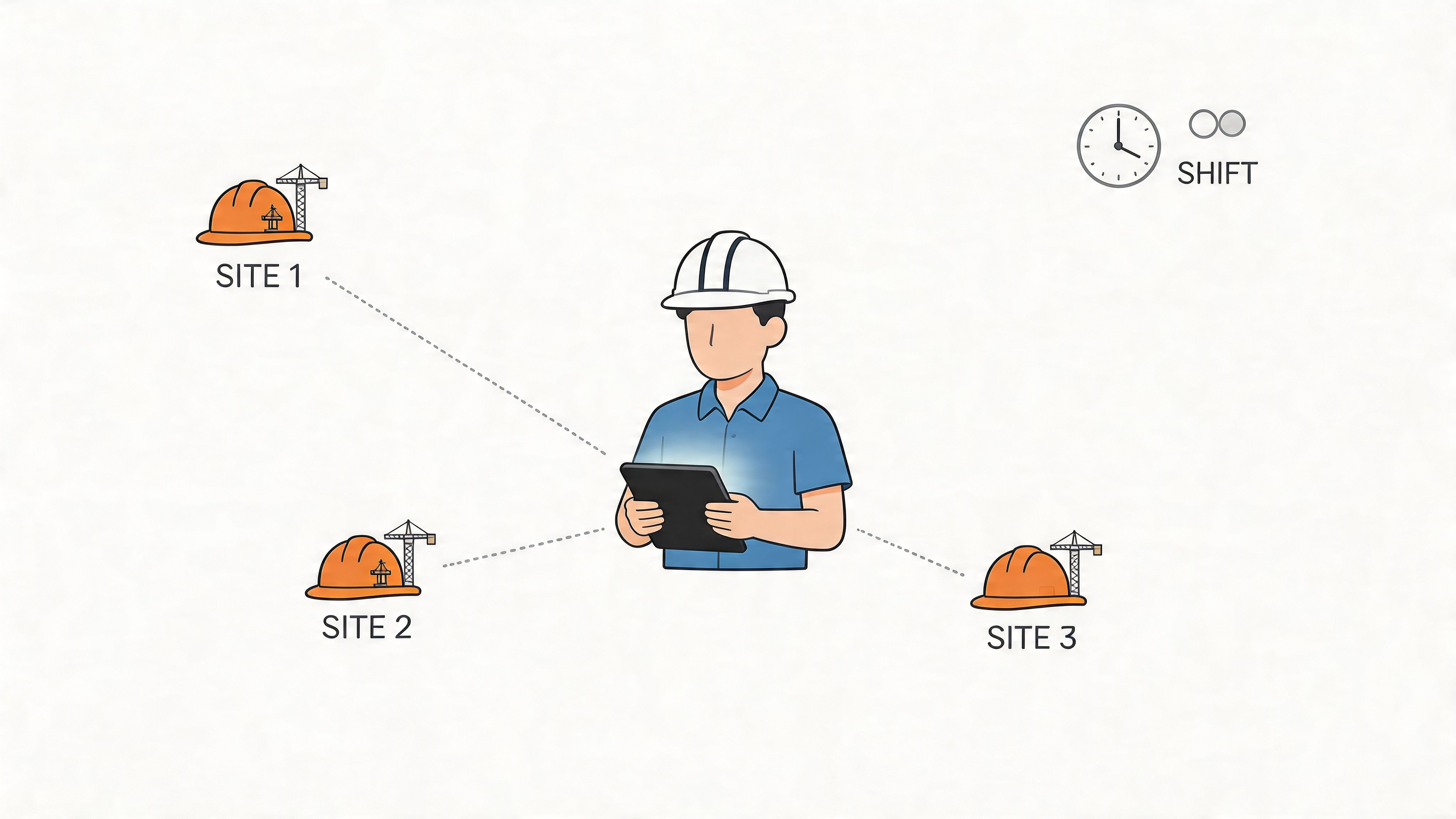
Real work is messy. One crew is waiting on steel. Another site needs an RFI answered before lunch. A superintendent is calling from the field, while the office is asking for cost updates and the client wants a revised date. This question shows you whether the candidate can hold that kind of pressure without losing control of the work.
Ask for a specific example with job count, team structure, and geography. If they stay vague, push. You need to hear how they prioritized between sites, who owned field decisions, how often they checked in, and what they watched daily so small problems did not turn into expensive ones.
Why this question matters
Managing multiple projects is not about multitasking. It is about building a repeatable operating system. Good managers set a cadence, assign clear ownership, and know where they need direct involvement versus where they need updates. That is the standard behind good Project Management.
The tool matters less than the discipline. A candidate might mention Procore, Microsoft Project, Autodesk Construction Cloud, or one of the best communication apps for construction crews. Fine. What you are really testing is whether they use those tools to keep one version of the truth across sites.
What a strong answer sounds like
Strong candidates answer with structure. They explain their weekly rhythm, who reports what, how they review schedule risk, and how they decide which issue gets immediate attention. You should hear calm control, not chest-thumping about being everywhere at once.
Listen for details like these:
Clear prioritization: They can explain why one project got attention first, based on schedule risk, safety exposure, client impact, or cost.
Defined field ownership: Superintendents, foremen, or field leads had decision rights, and everyone knew the limits.
Consistent reporting: They used short daily updates, photos, look-ahead reviews, and standing check-ins to keep dispersed teams aligned.
Escalation discipline: Urgent issues moved fast. Routine noise stayed out of the way.
Cross-project judgment: Labor, equipment, and management attention were shifted intentionally, not by whoever yelled first.
Practical rule: If a candidate cannot explain their cadence across multiple jobs in plain language, they probably do not have one.
Red flags to watch for
Busy answers fool weak interviewers. Do not reward them.
A weak candidate talks about “wearing a lot of hats” and “staying on top of everything” without telling you how. They describe constant firefighting as if it were leadership. They jump straight to software features. They make themselves the hub for every decision. That is not control. That is a bottleneck waiting to fail.
Watch for these warning signs:
They cannot name the exact projects, team setup, or reporting structure.
They solved every problem personally.
They talk about communication in general terms but give no meeting cadence or reporting method.
They never mention delegation, escalation paths, or risk review.
They sound reactive the whole time.
How to score the answer by role
For a site manager, listen for daily execution. Can they keep one site running well while coordinating shared labor, deliveries, and decisions coming from elsewhere?
For a senior leader, raise the bar. They should talk about portfolio judgment, staffing tradeoffs, client management across jobs, and how they keep one troubled project from draining the rest of the business.
The right answer sounds organized, specific, and steady. That is what good construction managers look like under pressure.
2. How do you ensure effective communication between office staff, field supervisors, and construction crews
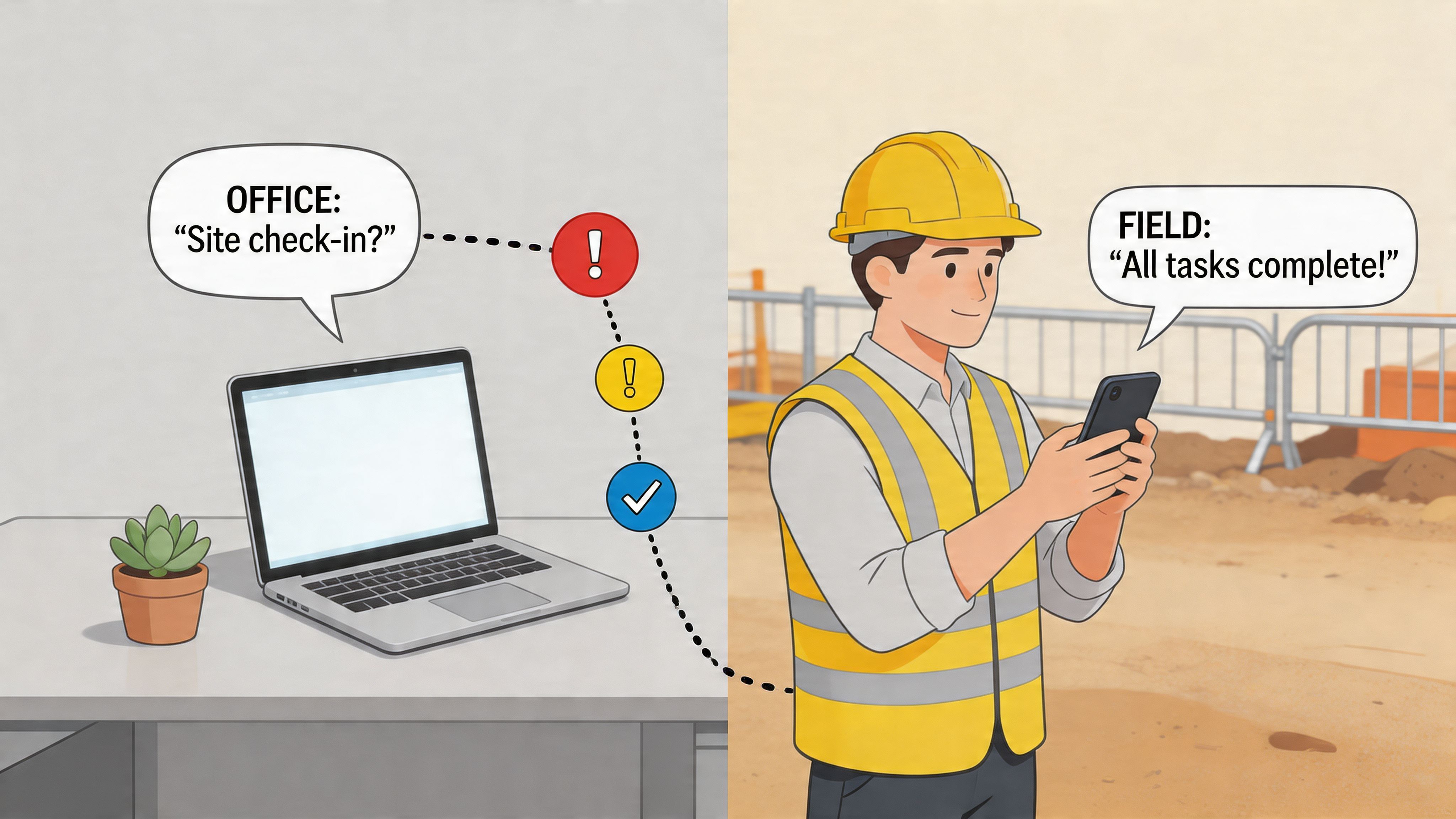
I’ve seen profitable jobs get chewed up by one bad handoff. The office approved a change. The superintendent heard about it late. The crew kept building off the old plan for half a day. Nobody was lazy. The system was weak.
That is why this question matters. You are not asking whether the candidate is friendly or organized. You are testing whether they can build a communication system that keeps the right people informed at the right time, in the right format.
Why this question works
A strong construction manager knows office staff, field supervisors, and crews do not absorb information the same way. Payroll, procurement, RFIs, delivery changes, safety issues, and scope revisions all move differently. A good answer shows the candidate understands that difference and has a repeatable method for handling it.
Listen for a communication rhythm, not a speech about teamwork.
The best candidates describe how information moves every day. They explain who gets the morning plan, who receives end-of-day updates, how urgent issues get escalated, and how field changes are confirmed before work continues. They should also tell you how they prevent confusion when the office and the field are working from different assumptions.
If you want to judge the tools behind that system, review the communication apps construction crews actually use in the field. The tool matters less than the discipline, but bad tools create avoidable mistakes.
What a strong answer sounds like
Good candidates get specific fast. They talk about daily huddles, superintendent check-ins, written field reports, photo documentation, and a clear chain for approvals and urgent updates. They explain how they confirm that a message was received and understood, especially when plans change midday.
They also know that crews do not live in email.
That point separates people who have run jobs from people who have mostly sat in meetings. Field communication has to be quick, plain, and easy to act on. If a candidate relies on long email chains as their main example, they are telling you they communicate upward better than they communicate on site.
A strong answer usually includes a real example. Maybe a delivery slipped, a detail changed, or an owner decision came in late. The candidate should walk you through exactly how they notified the office, briefed the field lead, updated the crew, and documented the change so nobody was guessing later.
Good communication in construction is clear, fast, and repeatable.
Red flags to watch for
Weak candidates hide behind broad language. Do not let them.
Watch for these warning signs:
They say, “I keep everybody in the loop,” but never explain how.
They treat every message the same, whether it is a safety issue, drawing revision, or routine update.
They rely too heavily on email or assume the field will check a platform on its own.
They describe themselves as the single point of contact for everything.
They never mention confirmation, documentation, or escalation.
One more red flag matters here. If they talk about communication as personality, not process, they will struggle once the job gets busy. Charisma helps. Structure carries the project.
How to score the answer by role
For a site manager, listen for control at ground level. They should know how to run pre-shift communication, keep foremen aligned, push urgent changes quickly, and make sure the office gets accurate field information back the same day.
For a senior leader, raise the bar. They should explain how they set standards across teams, how they keep communication consistent across multiple jobs, and how they stop important updates from getting trapped between project engineers, supers, and field crews.
The right answer sounds disciplined. That is what you are hiring. Not someone who talks well, but someone who keeps office decisions, field reality, and crew execution tied together.
3. Describe a time when a project fell behind schedule. How did you address it and communicate this to stakeholders
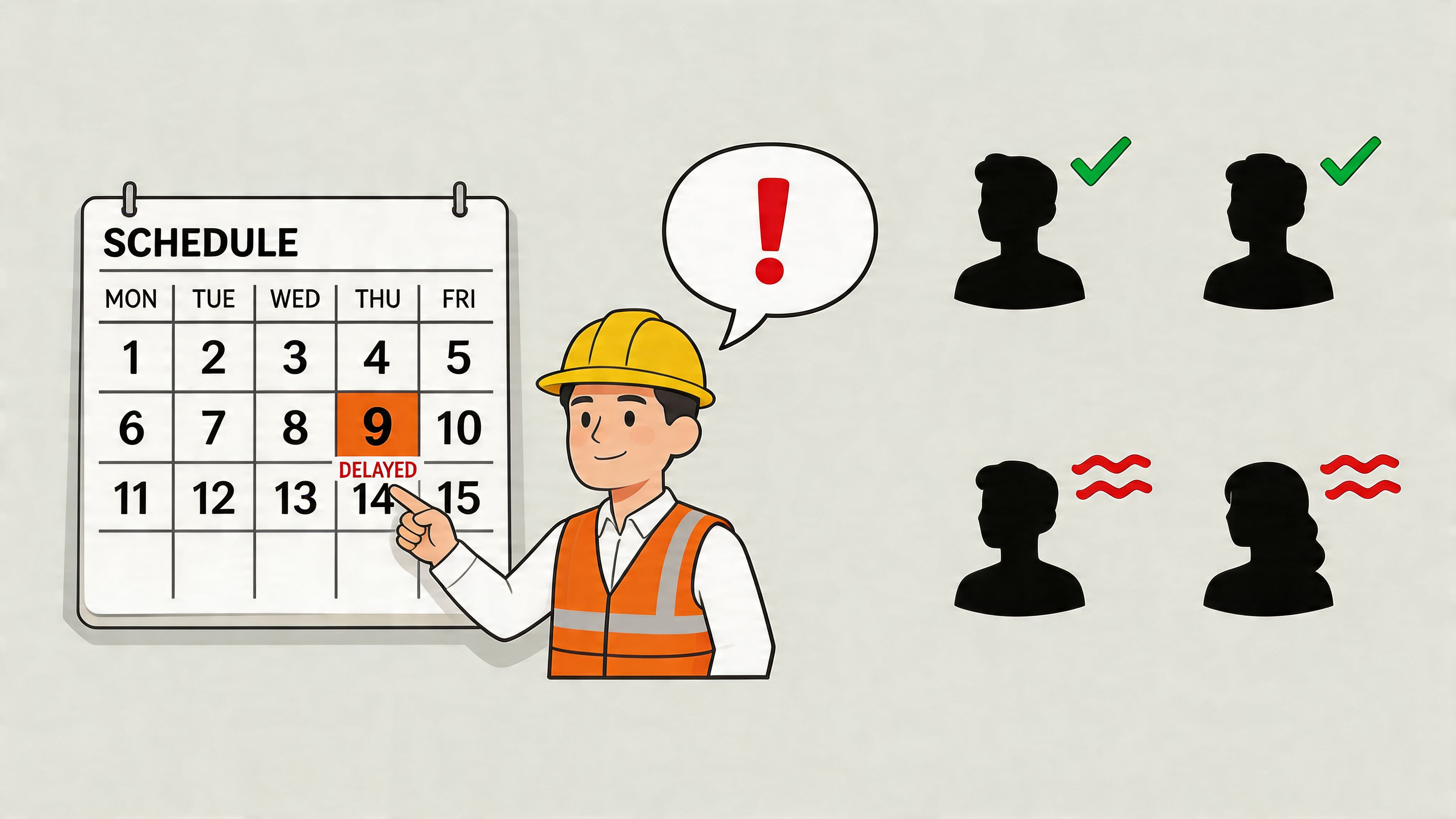
A real construction manager has a delay story. Usually several. If a candidate says every job stayed on schedule, stop wasting time. They either had no authority, or they are selling you a fantasy.
Ask this question to hear how they behave under pressure. Delays expose everything. Planning. Priorities. Tradeoff judgment. Client handling. Team control. You are not listening for a dramatic comeback story. You are listening for whether they recognized the slip early, took ownership fast, and kept bad news from turning into a trust problem.
The first 24 hours matter most. Strong candidates answer with a timeline, not vague intentions. They should tell you how they confirmed the cause, what part of the critical path was hit, which recovery options were realistic, and who they contacted first. If they jump straight to “we worked harder” or “we pushed the team,” keep digging. That answer usually hides weak planning.
A strong response usually includes four things:
Clear diagnosis: They explain what caused the delay and how they verified it.
Recovery plan: They resequenced work, adjusted manpower, changed deliveries, or negotiated scope based on actual constraints.
Stakeholder communication: They updated the owner, design team, trades, and internal leadership before rumors filled the gap.
Permanent fix: They changed a procurement, reporting, or coordination process so the same issue was less likely to happen again.
Listen closely to how they talk about communication. Good managers do not dump the same message on everyone. The owner needs impact, options, and decision points. The superintendent needs a field recovery plan. Trades need revised dates and dependencies. Office leadership needs cost exposure. If the candidate treats “communication” like one update email, they are not managing a delay. They are documenting one.
The best answers also show discipline around records. Delay recovery falls apart fast when nobody can track approved changes, revised dates, or site constraints. That is why smart teams use construction compliance and documentation systems to keep schedule changes, field reports, and approvals tied together. Delays create confusion. Clean records cut it down.
Red flags are easy to spot once you know what to hear for. Watch for candidates who blame one subcontractor for everything, rely on overtime as the default fix, or talk as if stakeholder communication only started after the missed milestone. Be cautious if they never mention cost, crew fatigue, rework risk, or knock-on effects to safety and site control. Delay recovery without site discipline creates a second problem. A candidate who understands that will often mention access control, material protection, or changing site conditions. If they do, that usually pairs well with the practical advice in this comprehensive guide to construction site security.
How to score the answer by role
For a site manager, look for command of the ground game. They should know how to reset daily work plans, coordinate trades, protect crew productivity, and report the truth up the chain without sugarcoating it.
For a senior leader, expect more. They should explain how they decided between recovery options, handled owner expectations, weighed margin against acceleration, and kept one delayed project from pulling resources off healthier jobs.
The right answer sounds calm, specific, and accountable. That is what you hire. Someone who can take a bad week, call it early, and keep the job under control.
4. How do you handle safety compliance and ensure all team members understand safety protocols
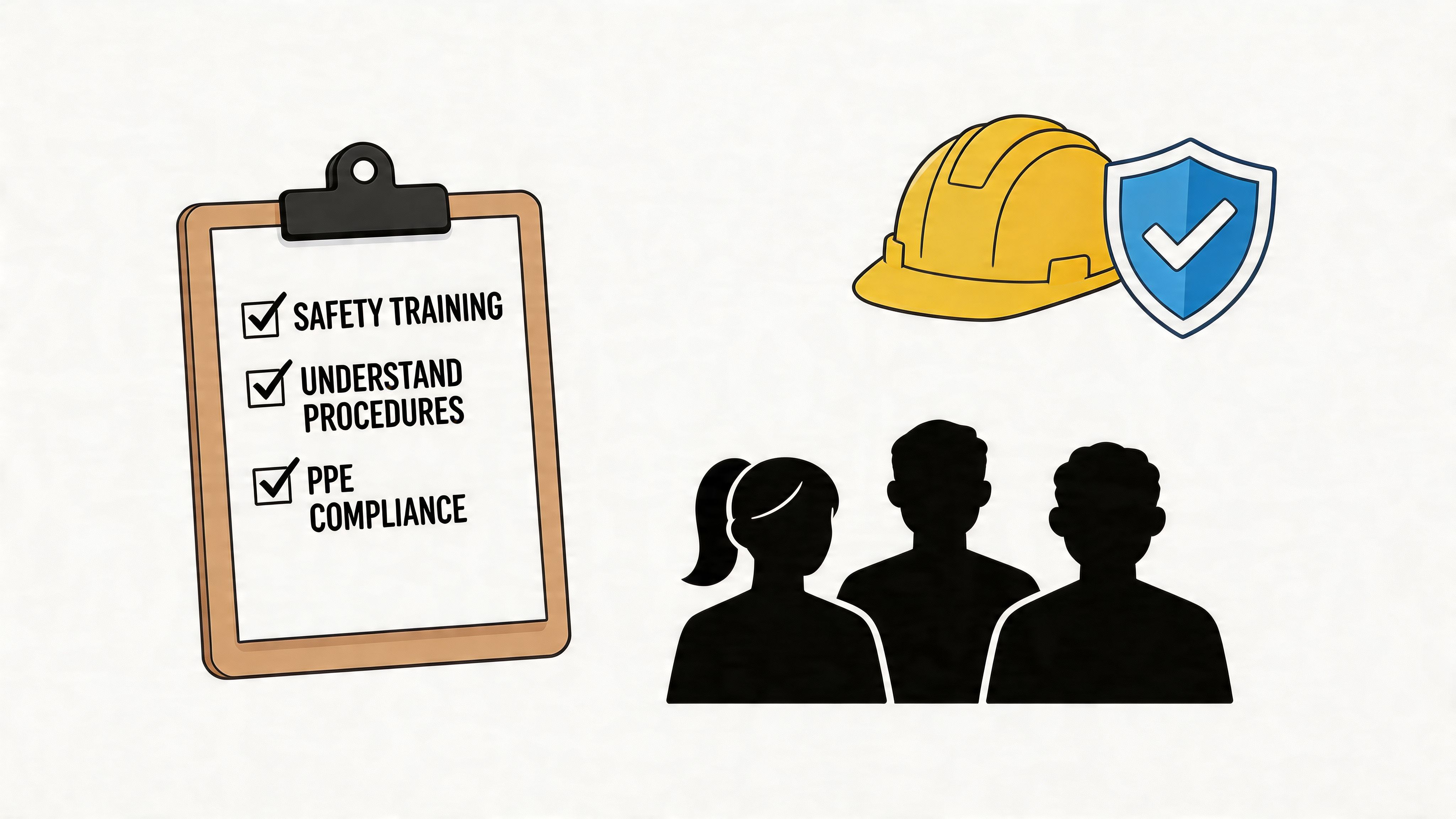
I’ve heard candidates give polished safety answers that sounded perfect for about 30 seconds. Then one follow-up question exposed the truth. Ask what they do before first tools hit the deck, how they verify understanding, and what happens when a worker ignores the plan. That is where real safety leadership shows up.
A strong answer stays close to the work. You want to hear about pre-task planning, daily huddles, site-specific hazard reviews, toolbox talks tied to the day’s scope, incident reporting, near-miss follow-up, and documented corrective action. Good managers also explain how they check comprehension. Verbal instructions alone are weak. Crew members repeat the plan back, supervisors observe the task, and unsafe work stops fast.
Listen for systems, not slogans.
If a candidate talks about safety as a binder on a shelf, pass. Safety has to show up in orientation, subcontractor onboarding, permits, inspections, and daily supervision. It also has to be documented in one place people can use. A clear compliance management system for training records, policy updates, and acknowledgments usually separates disciplined operators from companies that are guessing.
Here’s the question I like after the main one: how do you make sure a mixed-language crew understands a new hazard introduced midweek? Strong candidates get specific. They mention bilingual leads, visual briefings, translated signage, demonstrations in the work area, and direct confirmation from each affected trade. Weak candidates say, “We go over it in the morning meeting,” and leave it there.
That answer is not enough.
Safety also overlaps with site control. Access points, visitor logs, lighting, fencing, material laydown, and after-hours protection affect both injury risk and jobsite discipline. If the candidate understands that connection, they usually have a more mature view of prevention. This comprehensive guide to construction site security covers that overlap well.
Red flags to watch for:
They only talk about OSHA compliance. You need more than rule recitation. You need planning, coaching, enforcement, and follow-up.
They never explain how understanding is verified. “I told the crew” is not control.
They skip documentation. Training, incidents, corrective actions, and acknowledgments need a record.
They blame workers first. Good managers own unclear instructions, weak supervision, and sloppy enforcement before they start pointing fingers.
How to score the answer by role
For a site manager, look for command of daily execution. They should know how to run morning safety meetings, adjust controls as site conditions change, coach foremen, stop unsafe work, and document what happened without turning it into paperwork theater.
For a senior leader, raise the bar. They should explain how they set expectations across projects, hold supervisors accountable, review trends, deal with repeat offenders, and build a culture that survives turnover and subcontractor churn.
The best answer sounds practical, consistent, and a little hard-nosed. That is what the job requires.
5. Tell me about your experience with budget management and cost control on projects. How do you track expenses
A project can look busy, clean, and on schedule while the margin bleeds out. I have seen jobs where the superintendent swore everything was under control, then month-end hit and half the profit was gone in labor creep, unpriced change work, and bad material buys. This question exposes whether the candidate runs the money or gets surprised by it.
Ask it early. Then listen for habits, not slogans.
What this question is really testing
You are not checking whether they know accounting terms. You are checking whether they can connect field activity to financial results while there is still time to fix the problem.
A strong construction manager knows where cost trouble starts. Crew productivity slips. Equipment sits. Rework eats hours. A subcontractor gets ahead of paperwork. Materials arrive damaged or get overordered. Good managers catch those issues in real time because they track the work at the cost-code level and compare plan against actual conditions in the field.
That is also why scheduling discipline matters here. A manager who cannot tie labor burn to production usually builds the same kind of paper plan described in this explanation of why a Gantt chart can look right and still fail in the field.
What a strong answer sounds like
The best candidates walk you through a cadence. They review labor hours every week. They track committed costs before invoices hit. They know which change orders are approved, which are pending, and which are being performed at risk. They can explain forecasted final cost, not just current spend.
They also talk like operators. You should hear plain language about production, waste, buyout gaps, billing timing, and cash exposure. If they hide behind vague finance talk, press harder.
Listen for specifics like these:
Labor tracking by cost code: They measure hours by phase, area, or activity so they can see where productivity is slipping.
Committed cost visibility: They track purchase orders, subcontracts, and pending commitments before those costs become unpleasant surprises.
Change order discipline: They separate approved, pending, and disputed changes and know who is carrying the risk.
Forecasting: They can tell you where the job is likely to finish and what could move that number.
Regular review rhythm: They do not wait for month-end reports to find out the job has a problem.
Red flags to watch for
Weak candidates give you a rearview-mirror answer. They talk about reviewing reports after accounting closes the month. That is too late.
Watch for these misses:
They only mention software. Procore, Sage, and spreadsheets are tools. The question is how they use them to make decisions.
They cannot explain variance. If labor is over, they should know why. Slow crew, bad sequencing, rework, poor estimate, missed scope. Pick one and explain it.
They treat change orders like admin work. Unpriced change work wrecks margins fast.
They never mention forecasting. Tracking cost without forecasting final outcome is bookkeeping, not management.
They separate field and finance too sharply. Good managers know cost control starts with production planning, crew oversight, and scope discipline.
How to score the answer by role
For a site manager, look for control of field-driven costs. They should know how labor gets coded, how waste gets spotted, how extra work gets flagged quickly, and how daily production reporting feeds the budget conversation. Accuracy matters here. If the field report is sloppy, every financial report built on it is sloppy too.
For a senior leader, raise the bar. They should explain how they review forecasts across jobs, challenge optimistic projections, coach project teams on margin protection, and decide when to escalate a cost issue before it turns into a claim, a write-down, or a bad quarter.
The best answer sounds disciplined, predictive, and a little unforgiving. That is the right tone. Budget control is not paperwork. It is job control.
6. How do you approach scheduling and resource allocation to maximize productivity and minimize downtime
I have seen plenty of managers walk into an interview with a polished schedule and a confident voice, then fall apart the moment someone asks what happens when the steel is late, the electrician is buried on another job, and two rain days wipe out the week. That is why this question matters. It shows whether the candidate can run production under practical conditions.
A strong manager treats the schedule like a field tool. Crews need it. Foremen need it. Subs need to know where they fit and what is blocking them. If the candidate talks like scheduling lives inside software, keep digging.
The best answers start with sequencing, constraints, and labor reality. Who is needed, when, for how long, and what has to be in place before that crew can do useful work? Good managers build short-range plans that connect to the master schedule, then adjust fast when conditions change. They also know idle time usually has a cause. Missing material. Stacked trades. Equipment in the wrong place. Bad handoffs. Scope released too late.
I like candidates who explain how they keep the plan honest. Daily huddles. Two-week or three-week look-aheads. Clear handoffs between trades. Material checks before the crew needs the material, not after. Equipment scheduled with the same discipline as labor. If they cannot explain that rhythm, they are probably reacting all day instead of leading.
One good line of follow-up is simple: what do you do when the plan slips at 10 a.m.? Strong answers sound calm and specific. They re-sequence work, move labor to productive tasks, confirm what constraint caused the delay, and update the people who need to adjust. Weak answers sound vague and software-heavy.
A lot of schedules fail for a simple reason. They look clean in a meeting and ignore how jobsites behave. This piece on why your Gantt chart is a beautiful lie makes that point well. The schedule has to survive field conditions, trade coordination, and human behavior.
A schedule the foreman cannot use will not protect production.
Listen for these points in the answer:
Planning horizon: They should use a master schedule, but they also need a short-range plan tied to active constraints.
Resource logic: Labor, equipment, materials, and subcontractors should be assigned based on sequence and readiness, not wishful thinking.
Downtime prevention: Good managers do not just react to delays. They remove blockers before the crew hits them.
Reallocation under pressure: If one area stalls, they should know where to shift people without creating a second problem.
Communication path: Field changes have to reach supervisors, crews, and vendors fast enough to matter.
How you score this answer should change by role.
For a site manager, listen for daily control. They should talk about crew loading, look-ahead planning, material readiness, equipment coordination, and how they keep one trade from tripping over another. Specific examples matter. Which crew got moved. What work got pulled forward. How they kept people productive that day.
For a senior leader, raise the bar. They should explain how they allocate shared labor and equipment across jobs, how they decide which project gets priority when resources are tight, and how they challenge schedules that look fine on paper but are built on bad assumptions. Senior leaders should also talk about capacity, not just activity.
The best answer sounds practical, disciplined, and a little skeptical of perfect schedules. Good. Construction rewards managers who can see around corners and keep labor productive when the plan takes a hit.
7. Describe your approach to managing subcontractors and maintaining vendor relationships
A construction manager who can’t manage subcontractors will spend half the project in reactive mode. You’re not just hiring someone to coordinate your own team. You’re hiring someone to lead a temporary ecosystem of trades, suppliers, and outside partners who all have their own pressures, assumptions, and excuses.
This question tells you whether the candidate creates accountability before problems start.
Strong managers set the tone early
The best answers begin before mobilization. Preconstruction alignment. Scope review. Scheduling expectations. Site rules. Communication path. Documentation. Payment cadence. Closeout standards. If someone only talks about “holding subs accountable” after things go wrong, they’re late.
I like hearing about pre-job meetings, written expectations, scorecards, and follow-up habits. I also want to know how they handle the subcontractor who does solid work but chronically misses updates, or the one who communicates well but falls apart on quality. Mature managers know those are different problems and they handle them differently.
A good answer often includes some version of this:
Set expectations early: Nobody should be guessing about schedule, quality, or reporting.
Document performance: Memory is a terrible management system.
Protect the relationship without going soft: Respect works better than chest-thumping, but consequences have to be real.
This is also where negotiation skill shows up. Ask how they’ve handled scope disputes, back charges, or vendor delivery issues. The right manager doesn’t escalate every disagreement into a fight. They solve what can be solved, document what can’t, and keep the project moving.
For a site manager, I’m looking for field-level control and consistency. For a senior leader, I want signs they build a reliable subcontractor bench over time. Good vendor relationships aren’t about being liked. They’re about being clear, fair, and hard to surprise.
8. Tell me about a time when you had to adapt your management approach due to unforeseen circumstances. What did you learn
Construction punishes rigidity. Soil conditions change. Deliveries slip. A key foreman quits. The owner decides halfway through that they want something different. The manager who only works when the original plan holds is not a manager. They’re a scheduler.
That’s why this is one of my favorite construction manager interview questions. It gets past the script fast.
Adaptability should come with self-awareness
A weak candidate tells you the world changed and they worked harder. A strong candidate tells you the world changed and they changed how they led. Maybe they shifted from top-down direction to tighter team huddles. Maybe they increased site walks. Maybe they shortened communication loops. Maybe they handed more authority to a trusted superintendent because central control was slowing things down.
The key is whether they learned something durable.
I’m listening for a real event, not a motivational speech. Unexpected soil conditions that forced redesign. Material delays that changed sequencing. A fast-moving issue that exposed weak communication habits. Then I want to hear what they changed in themselves, not just in the schedule.
The best managers don’t just survive surprises. They come out with a better operating system.
Good follow-up angles:
What would you do differently now?
How did the team respond to the change?
What process did you keep after the crisis was over?
This question matters more for senior roles, because scale creates more variables. But it’s valuable for site managers too. You want someone who can adjust without becoming erratic. Calm flexibility is one of the clearest signs of field maturity.
If they tell a story where every failure belonged to someone else, move on. Adaptable leaders own their part.
9. How do you develop and mentor team members. Can you share an example of someone you’ve helped advance
Most companies say they want leaders. Then they hire managers who can only produce output when they’re in the middle of everything. That’s not leadership. That’s dependency with a hard hat.
Ask this question if you want to know whether the candidate leaves teams stronger than they found them.
Real leadership shows up in other people’s growth
I’m not looking for formal HR language here. I want to hear about a junior superintendent they trusted with more responsibility. A project engineer they coached through planning meetings. A foreman they helped become more reliable with documentation or crew communication. The example should feel lived in.
Strong answers usually mention observation, coaching, and timing. They noticed potential. They gave someone stretch work. They stayed close enough to help without taking the task back. Then they can explain what changed in that person’s performance.
In this context, humility matters too. Good managers don’t act like they personally “made” someone successful. They helped. They created room. They gave honest feedback. They backed the person when it counted.
A few signs you’re hearing genuine answers:
They name a real person and a real shift in responsibility.
They talk about feedback as an ongoing habit, not a yearly event.
They connect development to project needs, not just personal generosity.
For a site manager, I want proof they can bring up foremen and field leads. For a senior leader, I want evidence of succession thinking. Can they build the next layer of managers, or are they just the smartest person in every meeting?
The wrong hire drains the team around them. The right one multiplies it.
10. What metrics or KPIs do you track to measure project success and team performance
A manager can fake confidence in an interview for an hour. Their scorecard tells you what they respect.
Ask this question to find out whether they run projects by feel, by habit, or by disciplined review. Good construction managers know their numbers cold. Great ones can explain why each metric matters, who sees it, how often they review it, and what action follows when something slips.
The strongest answers cover four areas: safety, schedule, cost, and quality. But the key test is whether they track only results, or whether they also watch the early warning signs that predict trouble.
A candidate worth hiring usually talks about metrics like these:
Safety: near misses, toolbox talk attendance, corrective action closeout, repeat violations
Schedule: percent plan complete, milestone hit rate, look-ahead constraint log, trade readiness
Cost: labor productivity, earned versus spent, change order aging, forecast at completion
Quality: rework hours, punch list volume, inspection failure trends, turnover deficiencies
That mix matters. Anybody can report an accident after it happens or explain a blown budget after the money is gone. I want managers who catch the pattern early. If they only mention lagging indicators, they are reporting history, not managing work.
Listen for operating rhythm. A serious manager will say what gets reviewed daily in the field, what gets reviewed weekly with project controls, and what gets escalated monthly to leadership. They should also explain how the team sees the same priorities. If KPIs stay trapped in a PM report, they do not change field behavior.
This question also helps you separate site leadership from senior leadership.
For a site manager, the answer should stay close to production. Labor hours. Rework. Two-week look-ahead reliability. Open safety actions. Inspection pass rate. They need to know what affects tomorrow morning’s work.
For a senior leader, the dashboard should get wider. Forecast accuracy. Margin fade. Portfolio schedule exposure. Subcontractor performance trends. Claims risk. Staffing load across projects. If they are interviewing for a bigger seat, they need to show they can see beyond one job trailer.
A strong answer sounds specific. “I track labor productivity by cost code every week, compare it to the estimate, and review misses with the superintendent before it turns into a margin problem.” That tells you how they think. A weak answer sounds generic. “I watch budget, schedule, and quality.” That tells you nothing.
Red flags are easy to spot here:
They list metrics but cannot explain the action tied to each one
They talk only about reports for executives, not tools for the field
They confuse software dashboards with actual management
They use too many vanity metrics and skip production, forecasting, or rework
They cannot adjust the KPI set based on project phase or role
One more thing. Ask which metric they trust least on a troubled project, and how they verify it. That follow-up exposes judgment fast. Experienced managers know numbers can be late, padded, or incomplete. The best ones check the report against the site, the crew, and the sequence of work before they make a call.
That is what you are hiring for. Not someone who can name KPIs. Someone who can use them to keep a job under control.
Top 10 Construction Manager Interview Questions Comparison
Interview Prompt | Implementation complexity 🔄 | Resource requirements ⚡ | Expected outcomes ⭐ | Ideal use cases 📊 | Key advantages / Tips 💡 |
|---|---|---|---|---|---|
Tell me about your experience managing multiple projects simultaneously with distributed teams | High, coordination across sites, shifts and tools | High, PM platforms, centralized comms, dedicated coordinators | ⭐⭐⭐⭐, reveals scalability and coordination skills | Large, multi-site construction programs or multiple concurrent builds | Ask specific tools, examples of alignment across sites, and frequency of updates |
How do you ensure effective communication between office staff, field supervisors, and construction crews? | Medium, designing layered info flows and channels | Medium, messaging apps, mobile access, role-specific templates | ⭐⭐⭐⭐, shows communication strategy and accessibility awareness | Daily operations where office-field gaps cause delays or safety risks | Probe urgent-comms handling, platform use, and mobile accessibility |
Describe a time when a project fell behind schedule. How did you address it and communicate this to stakeholders? | Medium, requires situational detail and stakeholder engagement | Low–Medium, timeline documents, stakeholder updates, mitigation plans | ⭐⭐⭐⭐, tests crisis management, transparency, and recovery tactics | Risk-prone projects with tight deadlines or high visibility | Listen for specific delay metrics, communication cadence, and root-cause analysis |
How do you handle safety compliance and ensure all team members understand safety protocols? | Medium, consistent processes and cultural reinforcement | High, training programs, documentation, multilingual materials | ⭐⭐⭐⭐⭐, directly impacts legal compliance and worker safety | Safety-critical sites, diverse crews, and regulatory environments | Request incident examples, training frequency, and verification methods for non-English speakers |
Tell me about your experience with budget management and cost control on projects. How do you track expenses? | Medium, integrates financial controls with project processes | Medium–High, accounting tools, labor tracking, variance reporting | ⭐⭐⭐⭐, indicates financial acumen and cost-awareness | Projects with tight margins or complex change orders | Ask about overruns managed, forecasting methods, and cost-saving initiatives |
How do you approach scheduling and resource allocation to maximize productivity and minimize downtime? | High, balancing crews, equipment, deliveries and contingencies | Medium, scheduling tools, lookahead plans, pre-staging resources | ⭐⭐⭐⭐, reveals planning sophistication and contingency use | Projects where sequencing and lead times drive productivity | Request examples of lookahead schedules, pre-staging, and disruption handling |
Describe your approach to managing subcontractors and maintaining vendor relationships. | Medium, requires contract clarity and ongoing oversight | Medium, pre-project meetings, scorecards, performance metrics | ⭐⭐⭐⭐, shows stakeholder management beyond internal teams | Projects relying heavily on external trades and vendors | Ask about vetting, scorecards, conflict resolution, and communication cadence |
Tell me about a time when you had to adapt your management approach due to unforeseen circumstances. What did you learn? | Medium, behavioral insight into adaptability and learning | Low, anecdotal evidence, possible supporting documentation | ⭐⭐⭐, assesses resilience and learning agility | Environments with frequent unexpected disruptions (weather, supply chain) | Listen for concrete lessons learned, process changes, and team impact |
How do you develop and mentor team members? Can you share an example of someone you've helped advance? | Medium, requires structured development and follow-through | Medium, training resources, mentoring time, tracking progress | ⭐⭐⭐⭐, indicates leadership maturity and retention focus | Roles needing succession planning and skill development | Ask for named examples, timelines, and measurable progression outcomes |
What metrics or KPIs do you track to measure project success and team performance? | Medium, selecting balanced leading and lagging indicators | Medium, dashboards, data collection, regular reviews | ⭐⭐⭐⭐, demonstrates data-driven decision making and transparency | Teams seeking performance improvement and informed forecasting | Inquire about tracking frequency, leading indicators used, and how data is shared with crews |
The Interview Is Over. Now What?
A bad hire hurts. A good hire dropped into a bad setup hurts too.
I’ve watched solid construction managers walk in ready to run work, then spend their first month chasing documents, guessing who owns what, and trying to pull updates out of six different channels. That is not an onboarding problem. That is an operating problem. If your systems are messy, your new manager starts behind before they touch the schedule.
Treat the interview and the first 30 days as one decision. You did not spend all that time listening for judgment, communication habits, safety discipline, and ownership just to hand the person a pile of confusion. The whole point of a strong interview process is to learn how this manager works under pressure. The next step is giving them a setup that lets those strengths show up on the job.
This is the part hiring teams miss. The same answers that helped you choose the candidate should shape how you bring them in.
If a candidate gave strong answers about cross-site communication, give them one clear channel for office staff, supers, and crews. If they talked about safety with real discipline, make sure policies, incident reporting, training records, and updates are easy to find and easy to use in the field. If they spoke like someone who protects schedule and margin, put tasks, files, decisions, and status updates in one system instead of scattering them across inboxes, texts, and trailer whiteboards.
Listen for fit after the interview, not just during it.
A site manager needs fast access to daily information. Who is on site, what changed this morning, what inspection is pending, what delivery slipped, what crew needs direction. A senior leader needs visibility across projects, reporting consistency, cost signals, and fewer blind spots. Onboarding should reflect that difference. Stop giving every manager the same generic handoff packet and calling it good.
Keep the first weeks practical:
Set one reporting line for day-to-day decisions
Put safety documents, SOPs, and contact lists in one accessible place
Standardize how updates, RFIs, delays, and handoffs get logged
Make field participation easy from a phone, not just a desktop
Show what gets reported daily, weekly, and monthly
Decide early which metrics matter and who owns them
Do this right and you learn something important very fast. A strong manager will use structure well, tighten communication, and create accountability without drama. A weak one will still blame the tools, dodge ownership, or let issues sit too long. Onboarding does not hide performance. It exposes it.
Pebb brings communication, operations, and engagement into one place. Chat, posts, tasks, file sharing, shifts, clock-in, PTO tracking, knowledge access, and analytics sit in the same app on web and mobile. That matters on distributed jobs where office staff and field crews cannot afford to hunt for the latest answer.
The interview tells you how the person thinks. The first month tells you whether your company is serious.
If you want a manager who keeps work moving, communicates clearly, and holds crews together across sites and shifts, give them a setup that supports that standard on day one. If you hand them confusion, expect confusion back.
If you want your next construction manager to walk into clarity instead of confusion, take a look at Pebb. It gives office teams and frontline crews one place to communicate, coordinate work, share documents, manage shifts, and keep everyone aligned from day one. That’s a better start for your new hire, and a better operating system for the company around them.
