
Call Center Scheduling Software Ends the Chaos
Discover how call center scheduling software can replace spreadsheet chaos, reduce burnout, and create a calmer, more productive team environment.
Dan Robin
Let’s be honest. If you manage a call center schedule with spreadsheets, you’re playing a high-stakes game of Tetris where the pieces are people's lives. We’ve all been there. The late-night texts about shift swaps. The frantic calls to cover no-shows. The maddening puzzle of balancing agent requests with call volume forecasts.
It’s a system held together by a prayer and a few creaky Excel formulas. I still remember the Sunday scaries, staring at a grid of names and times that felt impossible to solve. Every change—a sick call, a last-minute appointment—sent a ripple effect through the entire schedule. It felt like the whole thing could crash down at any moment.

A System Built on Burnout
This manual way of working isn't just inefficient; it's a direct path to burnout. For managers, you spend more time juggling logistics than you do coaching and leading. For your agents, they feel like interchangeable cogs in a machine, their personal lives an afterthought to the never-ending needs of the queue.
The personal toll is real.
Constant stress: That gut-wrenching feeling that you’re always one sick call away from disaster.
Lost time: Hours swallowed by administrative busywork that could have been used for meaningful leadership.
Agent frustration: A rigid system with no flexibility or control over their schedules is a fast track to high turnover.
Here’s the thing. We’ve accepted this broken process as "the cost of doing business" for so long that we’ve stopped questioning it. We almost wear the scheduling chaos as a badge of honor. But that’s starting to change.
The global on-call scheduling software market is projected to surge from USD 1,945.3 million in 2022 to over USD 21,801.1 million by 2030. This growth is driven by one simple truth: the old way is unsustainable.
This isn’t just about new technology. It’s a fundamental shift in how we think about work. We're now seeing AI that can predict peak call times with over 90% accuracy, helping cut overstaffing costs by up to 25%. It's not about replacing managers. It's about giving them the right tools to build a better, more humane workplace. You can see more on this from Grandview Research.
Asking a Better Question
We’ve all become experts at tweaking our spreadsheet formats, refining them to within an inch of their lives. But what if the format isn't the problem? The problem is the tool. We've spent years becoming experts at patching a leaky boat when what we really need is a new one.
What if scheduling wasn't the most dreaded part of your week? What if it was calm, predictable, and fair? It’s time to stop accepting the chaos as normal.
There is a better way.
What Is Call Center Scheduling Software Really For?
Let's get one thing straight. Call center scheduling software isn't just for filling empty boxes on a calendar. For years, we’ve wrestled with spreadsheets, thinking of scheduling as a logistical puzzle. That misses the point entirely.
At its heart, this kind of software is about three things: fairness, predictability, and breathing room. Think of it less like a digital roster and more like an intelligent air traffic controller for your workforce. It's the central nervous system that keeps the operation calm.
The real purpose isn’t top-down control. It’s clarity for everyone. It’s making sure the right person, with the right skills, is on the right channel at the right time. This simple act prevents two huge problems: customer frustration from long waits and agent burnout from relentless calls.
Beyond Basic Rostering
Modern tools have moved light-years beyond just plotting shifts. They are the single source of truth that untangles the complexity of running a busy call center. This is where the magic happens, freeing you from soul-crushing manual calculations.
Here’s what that looks like in the real world:
Automated Compliance: The software automatically factors in complex labor laws, union rules, and even simple things like mandatory breaks. No more worrying about accidental violations.
Skill-Based Assignments: It knows which agents are certified for which queues—like Tier 2 tech support or a specific language—and assigns them accordingly.
Fairness by Default: It can track overtime, distribute undesirable weekend shifts evenly, and manage time-off requests without bias. The result is a system that feels genuinely fair.
This is especially critical in specialized fields. For example, the right healthcare call center software must handle sensitive, high-stakes environments where every second counts. It's all about building a system that handles nuance automatically, so your people don't have to.
The goal is to build an environment where the schedule serves the team, not the other way around. It’s about creating a foundation of stability so your people can focus on doing their best work, not worrying if their shift request got lost in an email chain.
From Manual Chaos to Automated Calm
The difference is night and day. Moving from a spreadsheet to a dedicated tool isn't a small upgrade; it fundamentally changes your day. You stop putting out fires and start leading your team.
Here’s a look at how daily tasks transform.
Manual Scheduling With Spreadsheets | Automated Scheduling With Modern Software |
|---|---|
Hours spent manually building schedules each week. | Schedules are generated in minutes based on forecasts and rules. |
Frantic calls and texts to cover a no-show. | Agents can swap shifts or pick up open ones via a mobile app. |
Complex time-off requests managed via email. | PTO requests are submitted and approved in one place, with balances updated automatically. |
Risk of human error in payroll and compliance. | Accurate time tracking and rule enforcement are built-in, ensuring error-free data. |
But that’s only half the story. The real change isn't just saving time; it's reducing mental load. It’s the quiet confidence of knowing your operations are running smoothly, your team is covered, and fairness is built into the workflow. You're not just organizing shifts; you're replacing chaos with calm.
What Features Actually Solve Problems?
The market for call center scheduling software is a crowded, noisy place. Every vendor promises an "AI-powered" miracle. But when you’re staring down a staffing crisis, you don't need a miracle. You need a tool that works.
So, let's cut through the marketing fluff. What features truly make a difference when the phone lines are lighting up and three agents have called in sick? It’s not about flashy dashboards. It’s about practical tools for tangible problems.
This simple map gets to the heart of what good software should do: create a foundation of fairness, predictability, and calm.
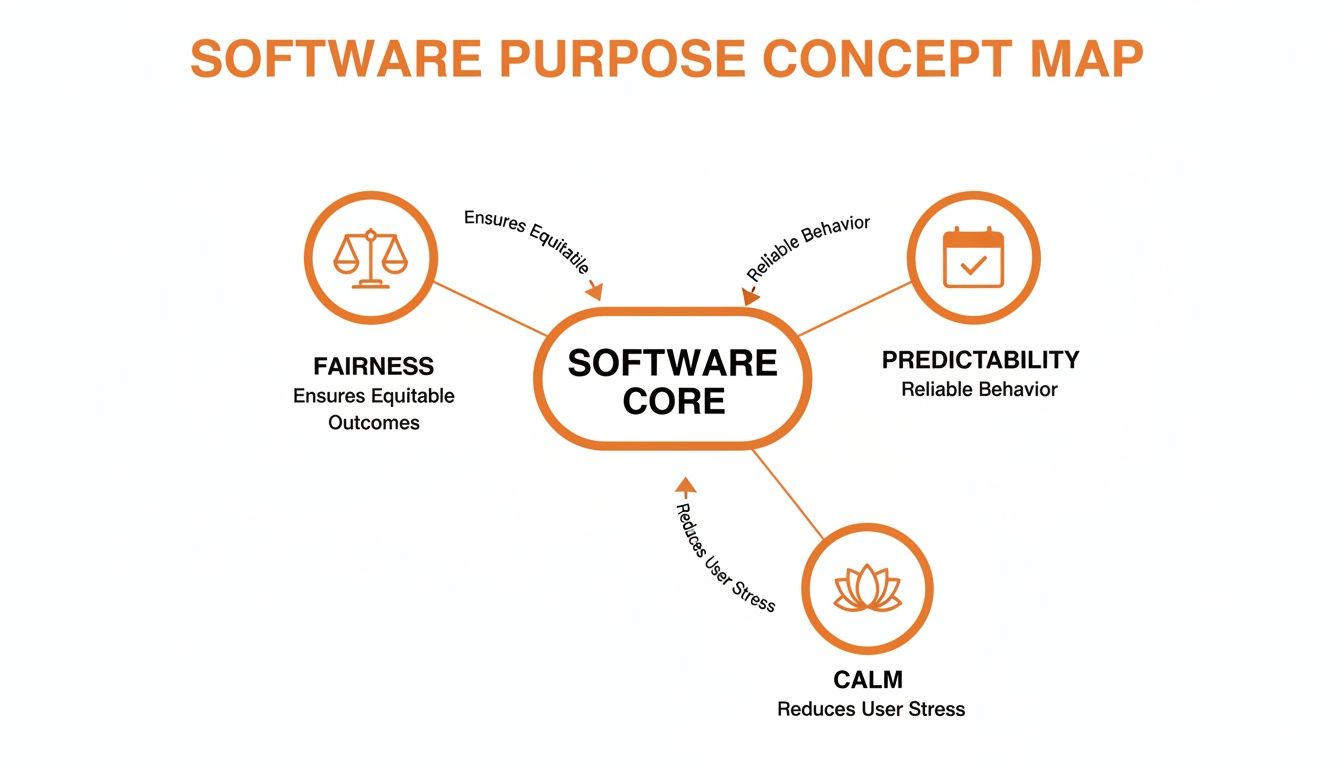
As you can see, the real value isn't in complexity. It's in how these elements work together to reduce stress for everyone, from frontline agents to the managers holding it all together. It’s about building a system people trust.
Scheduling That Works for People, Not Just the Business
The single most important feature is automated scheduling that respects your team. This goes beyond just plugging names into time slots. It's about creating schedules that are both fair and effective, balancing business needs with the real lives of your agents.
A good system handles this gracefully. Agents can input their availability, and the software uses that data to build an intelligent draft schedule. It automatically ensures fair rotation for weekends, tracks overtime to prevent burnout, and distributes hours equitably. This isn't about giving up control; it's about automating the most tedious, bias-prone parts of a manager's job.
The best systems turn scheduling from a monthly battle into a collaborative process. When agents feel their needs are considered, they’re more engaged and more likely to stick around.
Real-Time Flexibility and Agent Autonomy
Let's be honest: no schedule survives first contact with reality. A sudden surge in calls used to mean frantic phone calls and a domino effect of problems. This is where real-time adjustments become critical.
Modern tools give agents autonomy without creating chaos. Here’s how:
Mobile Shift Swapping: An agent needs a day off? They can post their shift in an app like Pebb for a qualified colleague to pick up. A manager simply approves it. No more playing middleman.
Open Shift Bidding: Need extra coverage for a product launch? Post the open shifts and let eligible agents claim them.
Instant Notifications: When a schedule changes, everyone gets a notification on their phone. The days of someone missing a shift because they "didn't see the email" are over.
This autonomy is powerful. It treats agents like responsible adults and gives managers their time back to focus on coaching.
Forecasting That's Actually Intelligent
Forecasting call volume is one thing. Understanding how it impacts staffing is another. A spreadsheet can't tell you that while call volume drops 15% on Tuesday afternoons, the calls you do get are twice as complex and require your most experienced agents.
Good call center scheduling software connects forecasting to reality. It analyzes historical data not just for volume but for patterns—like call duration, issue type, and channel. This helps you schedule the right people with the right skills, not just the right number of people.
Finally, compliance shouldn't be a bolt-on. It needs to be woven into the tool. Built-in rules for meal breaks, overtime laws, and minimum time between shifts prevent costly mistakes before they happen. It’s one less thing to worry about.
Why a Perfect Schedule Isn't Enough
We pour so much energy into crafting the perfect schedule. We tweak it, balance it, and wrestle with it, thinking a flawless grid of names is the silver bullet for a smooth-running call center. But let’s be real. That "perfect" schedule is worthless if your team isn't engaged.
A schedule doesn't operate in a bubble. It's tied to everything else: how your team communicates, the training they receive, and the overall vibe of your workplace. Handing an agent a schedule is easy. Giving them the context and tools to succeed during that shift? That’s the real work.
The hard truth: you can create the most mathematically precise schedule known to man, but if an agent misses a last-minute policy update or can’t find the right support doc, that perfect plan unravels.
From a Lone Wolf Tool to a Unified Hub
This is why we need to stop thinking about call center scheduling software as just a standalone tool. The real magic happens when you graduate from a simple scheduling app to a unified platform where the work gets done. It’s time to break down the silos—scheduling here, chat there, documents somewhere else—and build a single, seamless experience.
Just picture this: an agent opens one app on their phone.
They see their shift for the day.
They clock in with a tap.
They get a pre-shift briefing with important updates.
They can access the latest troubleshooting guide.
All in the same place. No more fumbling between four different apps. No more "I never saw that email." This isn't a dream; it's what happens when you bring operations and communication under one roof.
The problem we’re trying to solve isn’t a scheduling puzzle. It's the friction and confusion that comes from forcing our teams to navigate a maze of clunky, separate tools.
The True Cost of Juggling Apps
When your scheduling, communication, and resources are scattered, you pay a hidden tax. It shows up as wasted time, the same questions asked over and over, and a low-key hum of chaos. Agents burn minutes hunting for information, and managers get dragged into putting out fires a better system would have prevented.
This isn't a minor inconvenience. The entire contact center software market is shifting away from this fragmented mess. Projections show the market rocketing from USD 49.64 billion in 2025 to USD 400.19 billion by 2035. A massive driver behind this growth is the move toward unified platforms. Companies are ditching multiple apps to boost team engagement by up to 30% and slash PTO disputes by 40%. You can dig into these contact center software market trends and see the numbers for yourself.
Managing paid time off is a perfect example. If an agent has to check their schedule in one app, then log into a separate HR portal to see their PTO balance, then email a manager for approval… you’ve created unnecessary work. Our guide on how to calculate PTO accrual breaks down the complexities, and disconnected systems only make it worse.
At Pebb, we believe that when you put everything in one place, you're building a more connected, resilient, and informed team. The schedule becomes the backbone of a workday that’s simply clearer, smoother, and more human.
How To Choose The Right Scheduling Tool
Let's be real—choosing new software can feel like you're lost in a hall of mirrors. After a few demos, everything starts to look the same. Every salesperson promises their tool will solve all your problems. The pressure is immense, and the process often feels designed to be confusing.
Most of us have been burned by a bad software purchase. You invest in a "game-changer," only to find it collecting digital dust six months later. Why? It was too complicated, or it didn't mesh with how your team actually works. It’s time to take a step back and approach this with a calmer, more practical mindset.
Forget the endless feature comparisons. This is about finding a true partner for your operation, not just buying a product.
Start With Your People
Before you book a demo, talk to your team. Seriously. Don't assume you know their pain points—ask them. Sit down with your agents and supervisors for a frank conversation.
What’s the most frustrating part of how schedules are made now?
Where is the most time wasted?
What would make their lives easier when swapping shifts or booking time off?
Their answers are your real checklist. If a tool doesn’t solve their biggest headaches, it’s not the right fit, no matter how slick the dashboard looks. Getting their buy-in from the start is non-negotiable.
Test For Simplicity Above All Else
Here’s a rule I swear by: if you can’t figure out the basics of a tool in 15 minutes, it’s too complicated. Your team is busy. Life is too short for software that needs a week of training. When you get a free trial, give yourself a few real-world tests: schedule your team for a week, approve a PTO request, and handle a sick call.
If you find yourself digging through menus or watching tutorial videos just to get by, that's a red flag. The right tool should feel intuitive. Great design isn’t about cramming in features; it’s about removing friction. You can find some fantastic insights in our guide on choosing an app for scheduling employees that your team will actually use.
A scheduling tool should bring a sense of calm and order. If the evaluation process itself feels frantic and overwhelming, that’s a clear sign of what’s to come.
Look For Flexibility and Connection
Your call center isn't static, so why choose software that is? The right tool needs to adapt with you. Can it handle new shift patterns? Can it adapt to different labor rules? Can it scale if you expand your team? Rigidity is the enemy.
Just as important is how well the tool plays with others. A scheduling platform that doesn't talk to your payroll and HR systems just creates more manual work. Also think about how it fits with other tech, like modern customer service automation software, which can help balance workloads.
This connected approach is why so many are moving to the cloud. The call center software as a service (SaaS) market is projected to hit USD 41.7 billion by 2025, growing at a blistering 21.9% CAGR. This shift is happening because businesses are fed up with siloed apps. They want unified tools that can reduce overstaffing by up to 30% and slash onboarding time to minutes.
In the end, choosing the right call center scheduling software is a deeply human decision. It's about how you introduce it and whether it makes daily work genuinely better. Find a tool that feels helpful, not forced, and you’ll know you’ve found a winner.
The Quiet End of Scheduling Chaos
So, what does life actually look like after you’ve ditched the spreadsheets? It’s not some magical utopia where every problem vanishes. It's something much better.
It’s quiet competence.

It’s a manager going home on time, their mind free from the nagging worry of who’s covering the morning shift. It’s the calm that settles over the floor because agents feel heard, respected, and in control of their work-life balance. It’s the absence of those frantic, last-minute texts that used to define every Sunday night.
The real return on investment from good call center scheduling software isn’t a number on a report. It’s calm.
From Problem to Peace of Mind
We’ve walked this journey together. We started by admitting the scheduling nightmare we’ve all pretended is normal—the stress, the burnout, the feeling you’re one sick call away from disaster. From there, we dug into what these tools are really for: creating fairness and predictability.
Then, we cut through the noise to focus on features that genuinely solve problems, like mobile shift swapping and smart forecasting. We also made the case for why a perfect schedule, on its own, isn't enough. It has to be part of a unified hub where communication and operations live side-by-side.
The goal was never just to be more efficient. The goal was to build a better, more human place to work. It’s about creating an environment where technology serves people, not the other way around.
Choosing the right tool isn’t about finding a magic wand. It’s a thoughtful search for a partner that understands your team’s real-world struggles. It's about finding a tool so simple it just fades into the background, quietly doing its job so your team can do theirs.
The Easiest Part of Your Day
This isn't a sales pitch. We built Pebb because we lived this story, and we believe there’s a better way to work. We believe that when you give people the right tools, you don’t just fix a process—you show them they’re valued.
So, let’s end with a simple question.
What could your team accomplish if scheduling was the easiest, most reliable part of their day? Imagine the energy and focus that could be unlocked if all that time spent fighting fires was redirected toward what truly matters: supporting each other and taking care of your customers.
That’s the quiet competence we’re all chasing. And it’s closer than you think.
Frequently Asked Questions
We get it. Moving away from a system you know—even a broken one—feels like a big leap. Here are a few honest answers to common questions we hear from teams who are tired of the spreadsheet chaos.
How difficult is it to switch from spreadsheets to scheduling software?
Honestly, it’s easier than you think. The fear of a painful transition is real, but modern tools are designed for a quick setup, not month-long training. You’re not trying to land a rover on Mars; you’re trying to schedule your team.
The trick is to choose a tool with a simple interface and a smart rollout plan. Start with one team, get their feedback, and let them become your champions. Once other teams see them easily swapping shifts from their phones, the switch becomes a pull, not a push. The initial effort pays for itself almost immediately.
Will our agents actually use a new scheduling app?
Yes, but only if it solves their problems, not just yours. Agents will happily use a new tool if it gives them more control, transparency, and respect for their time. Everyone wants something that makes their work-life balance a little easier.
When you’re looking at options, focus on the features they’ll love:
Mobile access to their schedule anytime.
Easy shift-swapping without playing middleman with a manager.
Clear visibility into their PTO balance and requests.
When the software is designed for them, adoption isn't something you have to force. It just happens.
It’s about giving them a tool that says, “We trust you, and your time is valuable.” That’s a message that resonates far more than any mandatory training.
Can scheduling software handle our complex rules?
Absolutely. This is where good software leaves spreadsheets in the dust. Manually trying to track who is certified for which queue, who can't work overtime on a Tuesday, and who needs a specific break schedule is a recipe for disaster.
A proper scheduling tool is built to handle this complexity automatically. You define your rules for things like skill-based routing, labor law compliance, and agent needs one time. From then on, the software enforces them without you having to think about it. It turns that tangled web of constraints into an automated, error-free process, giving you confidence that every schedule is fair and compliant.
Ready to trade chaos for calm? Pebb is the all-in-one work app that brings your scheduling, communication, and operations into one simple, modern home. See how we can help your team work better together by visiting us at pebb.io.
