
7 Books on Effective Communication We Actually Recommend
Tired of theory? We share our essential books about effective communication that offer real-world tools for better conversations at work. Read our take.
Dan Robin
I’ve seen more projects fail from bad communication than bad code. We’ve all been in that meeting where everyone nods, but no one agrees. Or the Slack thread that spins out of control because of a misunderstood sentence. It’s draining. And most advice on the topic is corporate fluff that doesn't work when things get tense.
After years of building teams and seeing what sticks, I’ve landed on a handful of books that are less theory and more toolkit. This isn’t just another list of books about effective communication. It’s the small, curated shelf of what we’ve seen work—for leaders, for new hires, and for anyone tired of talking past each other.
We read them so you don't have to. For each book, you’ll get the core idea, a few things you can use tomorrow, and our honest take on who it’s really for. Think of it as a field guide to fix the specific communication breakdown you’re facing right now. Let’s get to it.
1. Crucial Conversations: Tools for Talking When Stakes Are High
When emotions are high and opinions differ, this is our playbook. Crucial Conversations is the first book we recommend to leaders who need to navigate tough topics without things getting personal. The idea is simple: when stakes are high, you need a shared process to keep the conversation productive.
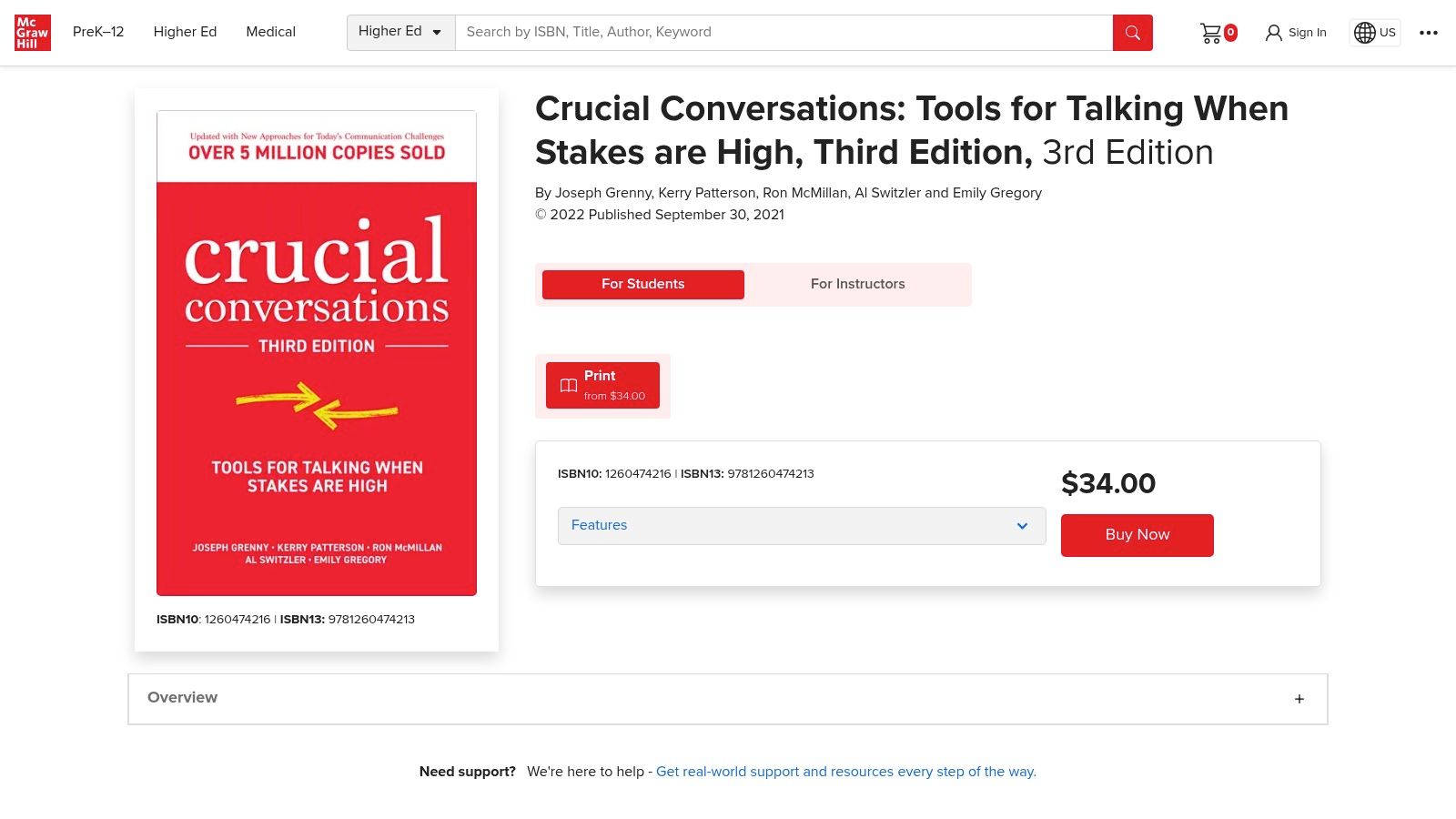
I’ve seen this book turn conflict-avoidant managers into confident guides. It’s not about winning an argument; it’s about creating a "pool of shared meaning" where everyone can contribute safely. It's one of the few books about effective communication that gives you a script when your mind goes blank.
Actionable Takeaways
Start with Heart: Before you speak, know what you want for yourself, the other person, and the relationship. This keeps ego and defensiveness out of the driver's seat.
State My Path: This is the game-changer. Share facts first, then your interpretation (your story), then ask for their view. It's a structure for being persuasive, not abrasive.
Make it Safe: When someone gets defensive, step out of the content and rebuild safety. Use contrasting: clarify what you don't mean before stating what you do mean. "I'm not questioning your commitment. I do want to talk about how we can hit this deadline."
How to Use It with Pebb
The "State My Path" framework is perfect for prepping for a difficult one-on-one. You can draft your talking points in a private Pebb Note. For a team-wide announcement, use the framework to structure a post in a team Space, making sure you lead with facts and invite discussion. It helps you remember the steps when the pressure is on. For more ideas, our guide on how to improve communication skills in the workplace offers complementary strategies.
Where to Get It
Website: McGraw Hill
Pricing: The hardcover is around $32.00.
Best For: Leaders and managers who need a reliable method for navigating conflict. It’s a must-read for anyone who dreads difficult conversations.
2. Difficult Conversations: How to Discuss What Matters Most
If Crucial Conversations is the "how," Difficult Conversations is the "why." This book, from folks at the Harvard Negotiation Project, helps you understand the psychology behind the conflict. It’s less of a script and more of a diagnostic tool for the messy, human side of disagreements. It’s one of the most insightful books about effective communication I’ve come across.
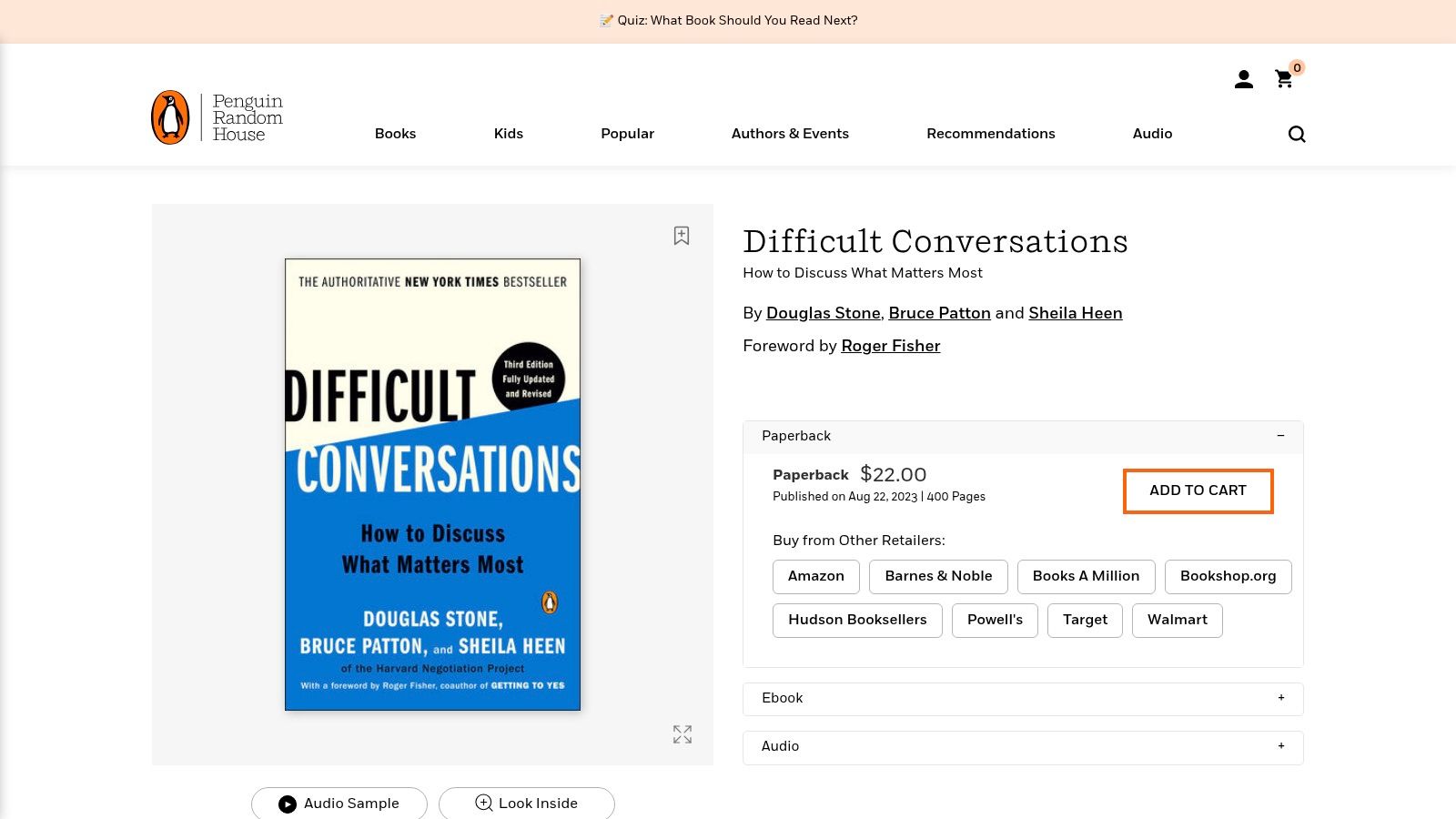
We give this to managers struggling with performance reviews. It teaches you to see every tough talk as three conversations in one: what happened, the feelings involved, and what it says about your identity. Once you see these layers, you can stop arguing about who’s right and start exploring why you disagree.
Actionable Takeaways
Separate Intent from Impact: Stop assuming you know their intentions. Acknowledge the impact their actions had on you, and then ask what they intended. This one shift defuses almost any argument.
Switch from Blame to Contribution: Instead of asking, "Whose fault is it?" ask, "How did we each contribute to this?" It turns a fight into a joint problem-solving session. Much more useful.
Listen from the Inside Out: Listen for the underlying feelings and identity issues. Are they feeling incompetent? Unappreciated? Answering that question is the key to resolving the conflict.
How to Use It with Pebb
Before a tricky one-on-one, use a private Pebb Note to map out the contribution system: "My contributions were X and Y. I think theirs might have been Z. How can I open a conversation about this?" This prep helps you walk in with curiosity instead of accusations. For more practical advice on these moments, our guide on how to handle difficult conversations provides a good starting point.
Where to Get It
Website: Penguin Random House
Pricing: The paperback is about $20.00.
Best For: Anyone who has to deliver tough feedback. It’s especially helpful for people who tend to avoid confrontation and need a framework to lean in with confidence.
3. Thanks for the Feedback: The Science and Art of Receiving Feedback Well
Most communication books focus on how to give feedback. That’s only half the story. The real breakdowns often happen on the receiving end. Thanks for the Feedback argues that getting good at receiving feedback is the single most important skill for growth. It reframes feedback from a threat to a gift.
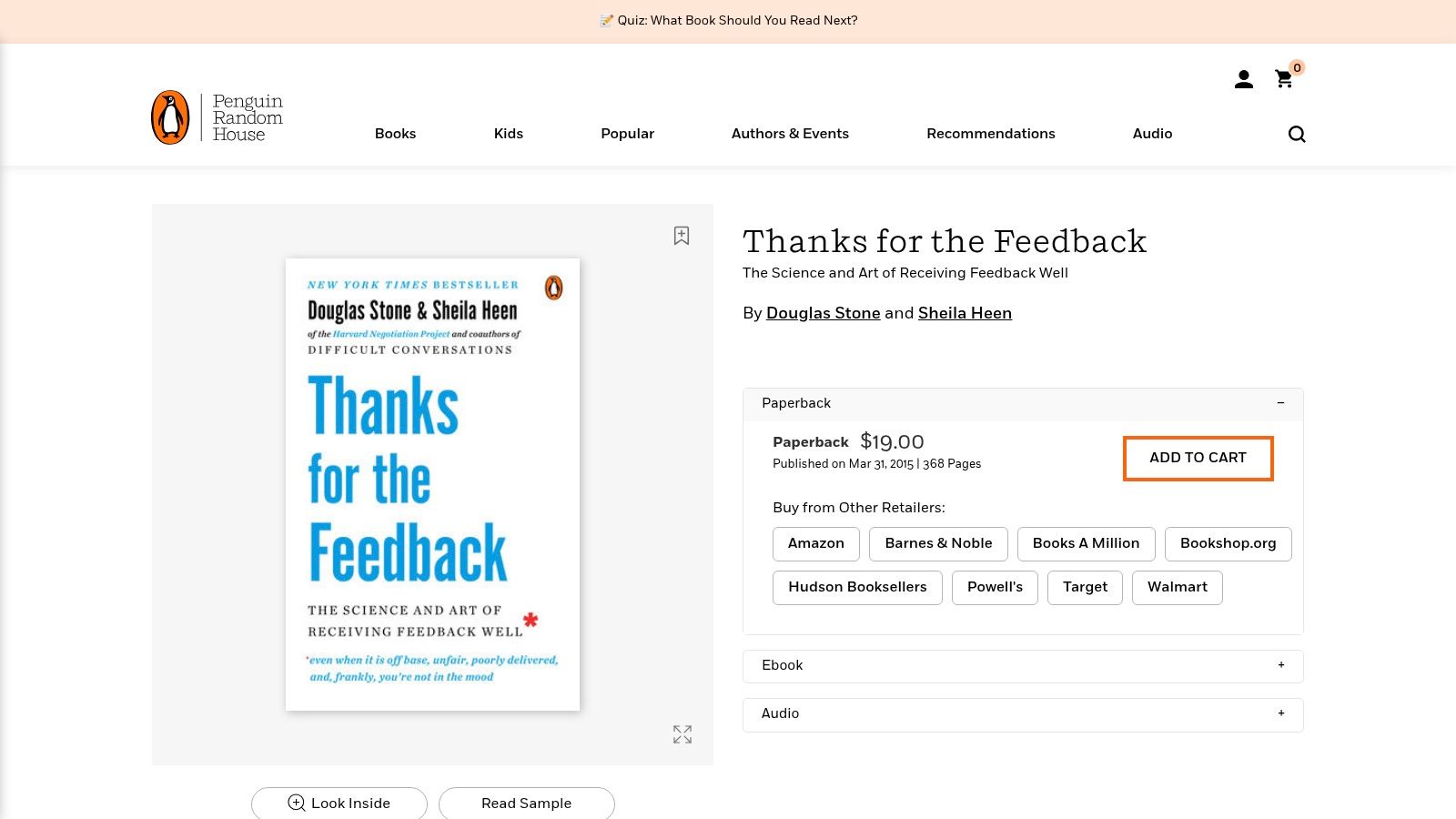
The authors show that even poorly delivered feedback has value if you know how to find it. This book gives you a vocabulary to talk about the emotional triggers that make us defensive. As one of the most practical books about effective communication, it arms you with the tools to stay curious instead of getting crushed.
Actionable Takeaways
Separate the 'What' from the 'Who': Your reaction is often tied to your relationship with the giver. Practice assessing the feedback on its own merits. "Is this helpful, regardless of who said it?"
Identify Your Triggers: The book names three: Truth Triggers (the feedback seems wrong), Relationship Triggers (you're focused on the person), and Identity Triggers (it threatens your sense of self). Naming your trigger is the first step to managing it.
Disentangle Feedback Types: Is it appreciation ("Thanks!"), coaching ("Try this..."), or evaluation ("You're a 3 out of 5")? Knowing which you’re getting clears up a massive amount of confusion.
How to Use It with Pebb
This book’s ideas are perfect for improving how your team gives feedback. Create a dedicated Space in Pebb called "Feedback on Feedback" where the team can discuss their triggers in a safe place. Before a performance review cycle, share the "Three Types of Feedback" framework as a post to set expectations. It’s also a great way to talk about the value of future-focused coaching. To dive deeper, our guide on the difference between feedforward and feedback offers actionable scripts.
Where to Get It
Website: Penguin Random House
Pricing: The paperback is around $20.00.
Best For: Everyone. Seriously. It’s especially powerful for junior employees and anyone looking to grow faster by learning to handle criticism with grace.
4. Radical Candor (Fully Revised & Updated Edition)
If you've ever struggled to give direct feedback without sounding like a jerk, Radical Candor is your book. We see it as the foundation for building a culture of trust. Kim Scott’s framework isn't about "brutal honesty." It's a simple model for caring personally while challenging directly.
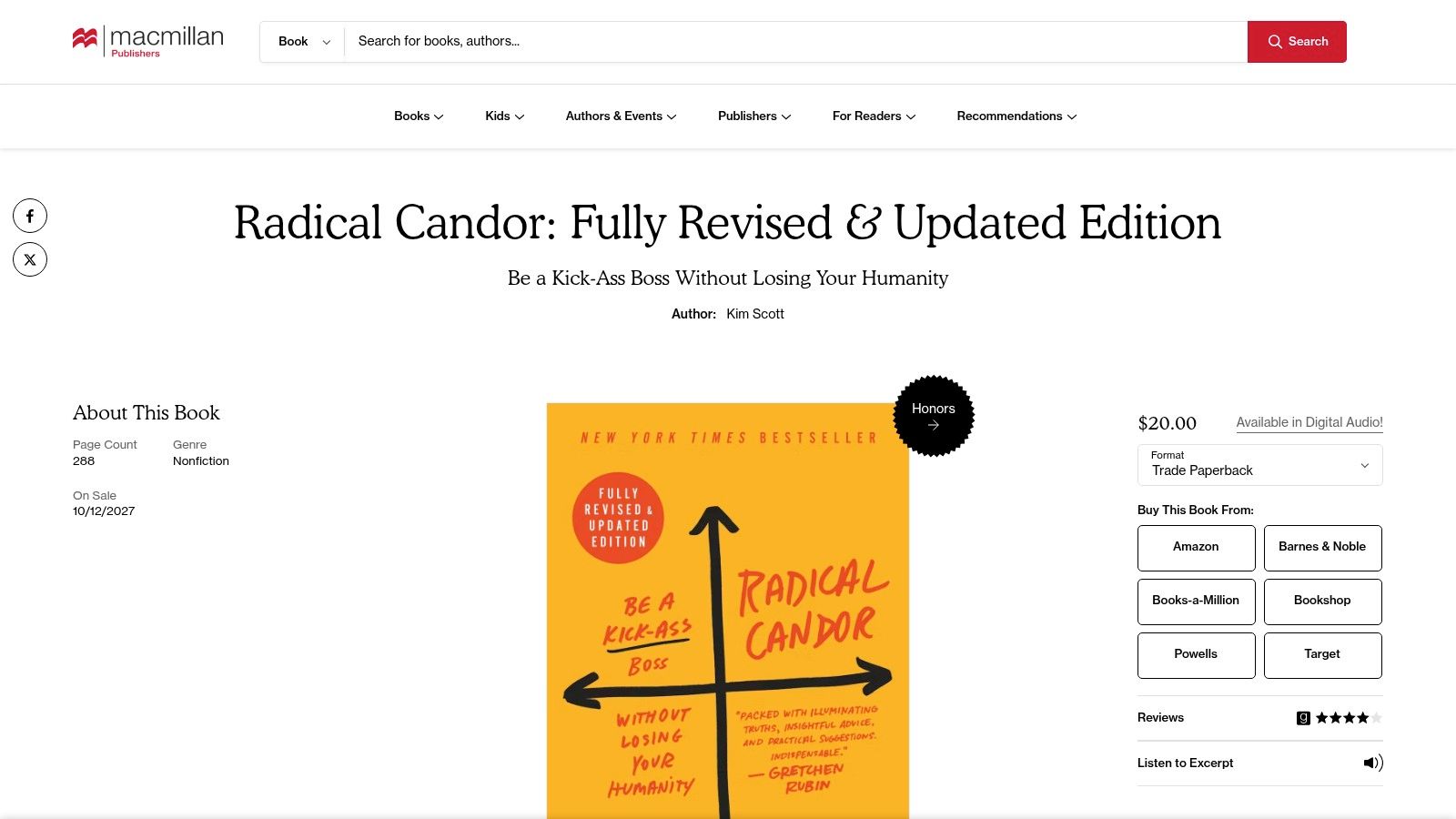
This book has been a lifesaver for managers who are afraid their feedback will be taken the wrong way. It provides a simple, memorable mental model—a 2x2 grid—that makes it easy to spot the difference between helpful candor and destructive behavior. Of all the books about effective communication, this one gives managers the clearest language for making direct feedback a normal part of work.
Actionable Takeaways
Care Personally & Challenge Directly: This is the core of it. Good feedback lives in the "Radical Candor" quadrant. The goal is to avoid the others: "Ruinous Empathy" (caring but not challenging), "Manipulative Insincerity" (neither), and "Obnoxious Aggression" (challenging without caring).
Give Feedback Immediately: Don't save it for a formal review. Offer praise and criticism in the moment. The "two-minute impromptu" feedback model makes it less formal and more frequent.
Get Feedback Before You Give It: To build a feedback culture, leaders have to ask for it first. Scott suggests asking, "What could I do or stop doing that would make it easier to work with me?" It models humility and opens the door for others to be honest.
How to Use It with Pebb
Radical Candor is perfect for shaping one-on-ones. Create a recurring one-on-one event in a Pebb Space with a shared Note for the agenda. Start each meeting by asking for feedback on your own performance. Use Pebb’s post-reaction feature to give quick, specific praise on team contributions, reinforcing the "praise in public" part of the model.
Where to Get It
Website: Macmillan Publishers
Pricing: The hardcover is about $29.00.
Best For: New and experienced managers who want to build trust and deliver clear feedback. It's especially useful for scaling a feedback culture across an organization.
5. Nonviolent Communication: A Language of Life (3rd Edition)
When conversations are tangled in blame, Nonviolent Communication (NVC) helps untie the knots. This framework has reframed how our teams handle everything from customer complaints to internal disagreements. It’s less about winning and more about understanding the unmet needs behind the conflict, making it one of the most compassionate books about effective communication out there.
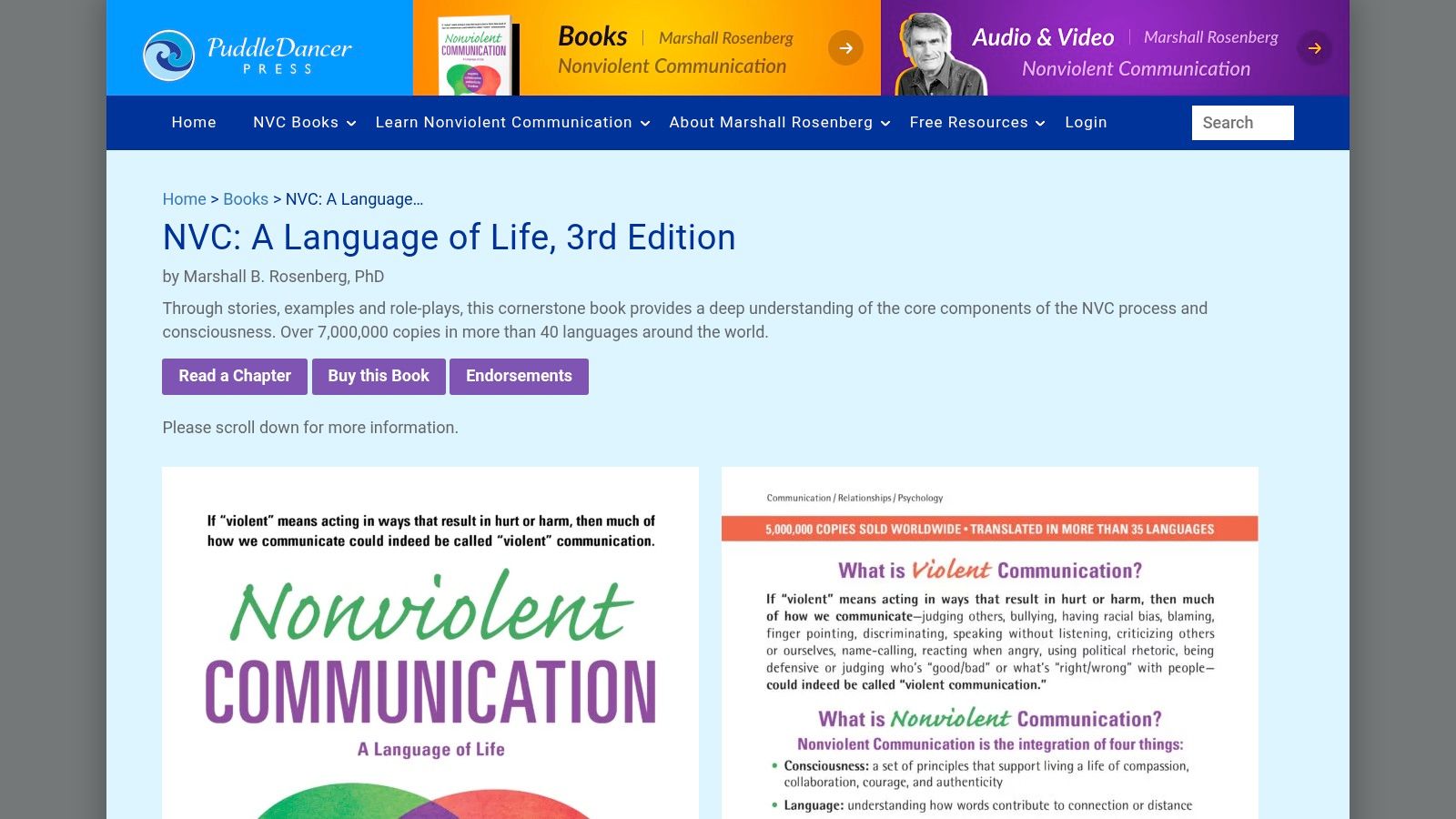
The book teaches a four-step process that replaces judgmental language with clear, empathetic expression. It can feel a bit formal at first, but with practice, it becomes a powerful tool for de-escalation. It’s especially effective for anyone who needs to build rapport under pressure.
Actionable Takeaways
Observe Without Evaluation: State what you see, free of judgment. Instead of, "You were late again," say, "I saw you arrived at 9:15 for our 9:00 meeting." Stick to objective reality.
Express Feelings: State the emotion the observation triggered in you. "When the report was missing data, I felt worried."
State Your Needs: Articulate the underlying need. "I felt worried because I need to feel confident we're on track." This reveals the universal human need behind the emotion.
Make a Clear Request: Finally, make a specific, positive, doable request. "Would you be willing to add the missing data by 3 PM?"
How to Use It with Pebb
The four-step NVC process is a great template for difficult feedback. You can draft your talking points in a private Pebb Note to make sure you separate observation from evaluation. For customer-facing teams, you can create a shared Pebb resource with NVC scripts for common problems, helping them stay grounded and empathetic.
Where to Get It
Website: NonviolentCommunication.com
Pricing: The paperback is about $22.00.
Best For: Customer service teams, HR, and anyone who needs to de-escalate conflict and build genuine empathy. It’s a foundational skill for a more collaborative workplace.
6. Never Split the Difference: Negotiating As If Your Life Depended On It
Negotiation isn’t just for big deals. It’s part of everyday communication. Chris Voss, a former FBI hostage negotiator, wrote a surprisingly effective guide for just about anyone. It's about getting what you need while making the other person feel heard—whether you're discussing a project deadline or a pay raise.
The core lesson is to stop arguing and start listening. Voss’s techniques, honed in life-or-death situations, are simple, practical, and work remarkably well in the office. It’s one of those books about effective communication that fundamentally changes how you approach conversations. It teaches you to uncover the hidden needs driving the other person's position.
Actionable Takeaways
Mirroring: Repeat the last few words your counterpart said. It sounds weird, but it encourages them to elaborate and shows you're listening intently.
Labeling: Verbally acknowledge their feelings. Start with "It seems like..." or "It sounds like..." For example, "It sounds like you're worried about the new process." This validates their emotion and disarms negativity.
Calibrated Questions: Ask open-ended "How" or "What" questions. Instead of, "You can't take Friday off," ask, "How can we make sure your tasks are covered if you're out on Friday?" It shifts the dynamic from confrontation to collaboration.
How to Use It with Pebb
Tactical empathy is a superpower in remote work, where tone is easily lost. When a team member posts a frustrated comment in a Pebb Space, use labeling in your reply: "It sounds like this new policy is causing some friction. What parts are most concerning?" This de-escalates tension and invites a productive discussion.
Where to Get It
Website: HarperCollins Publishers
Pricing: The hardcover is around $30.00. The audiobook, read by the author, is fantastic.
Best For: Anyone who needs to influence outcomes. The micro-skills are useful in almost any professional conversation.
7. The Culture Code: The Secrets of Highly Successful Groups
If individual communication skills are the bricks, culture is the mortar. Daniel Coyle’s The Culture Code isn’t a direct how-to guide for conversations, but it’s our go-to for understanding how to build an environment where good communication happens on its own. It shifts the focus from "what do I say?" to "what kind of team are we building?"
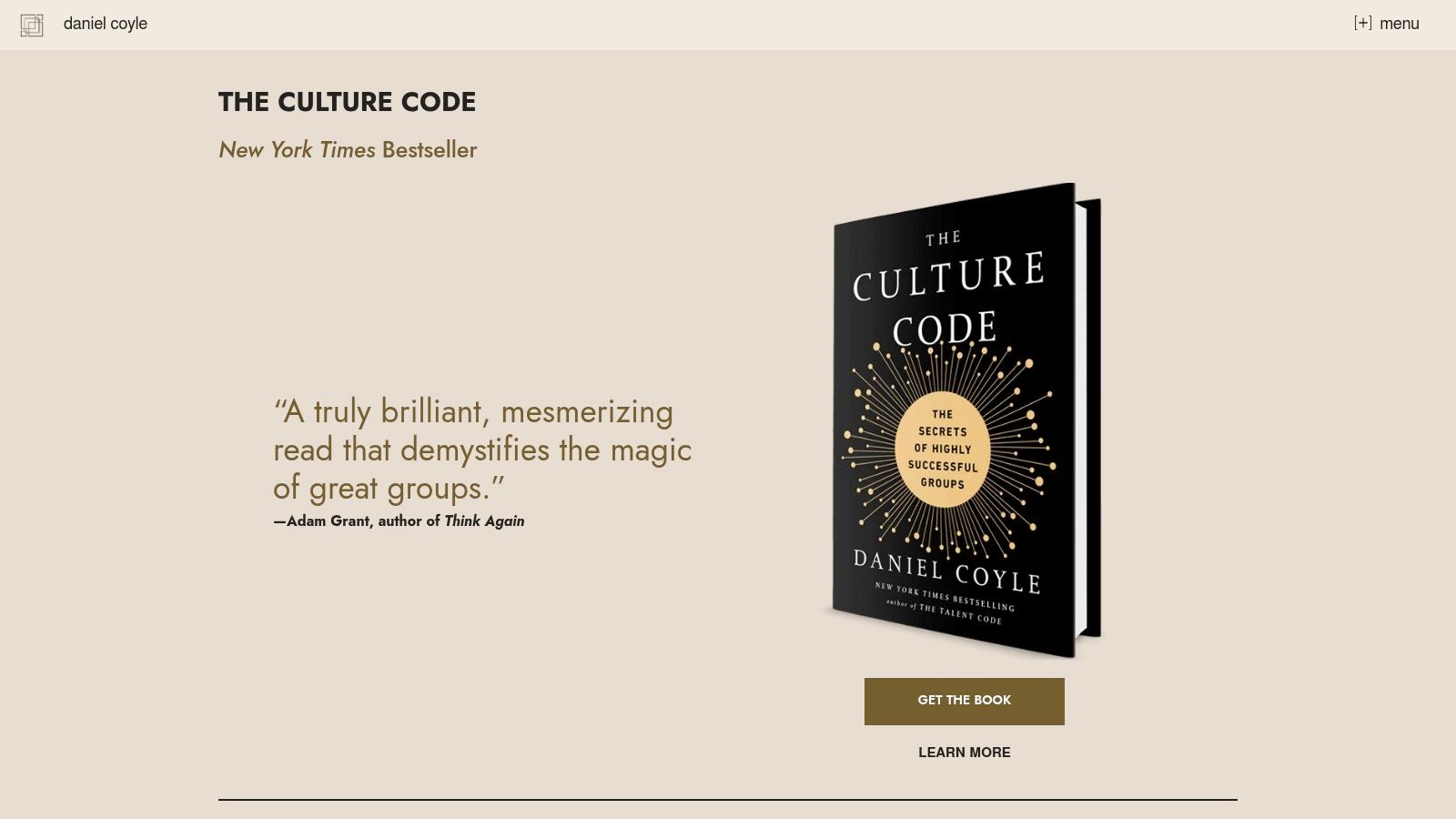
This book makes it clear that great culture isn’t magic; it’s a set of specific, learnable skills that create belonging and trust. It’s one of the most important books about effective communication because it shows how to scale good habits from one person to an entire organization.
Actionable Takeaways
Build Safety: Coyle talks about "belonging cues"—small, consistent signals that make people feel secure. Simple things like remembering someone's name, asking questions, and listening without interrupting are powerful signals that say, "You're safe here."
Share Vulnerability: This isn’t oversharing. It’s about creating loops of mutual risk. A leader saying, "I'm not sure, what do you all think?" opens the door for others to be honest. It builds trust faster than anything else.
Establish Purpose: Great teams constantly connect their daily work to a larger mission. They use simple, repeated stories to remind everyone why their work matters. It creates a shared compass that guides decisions.
How to Use It with Pebb
The Culture Code is about turning behaviors into rituals. Use a company-wide Space in Pebb to "Establish Purpose" by regularly sharing stories of your team's impact. To "Share Vulnerability," create a ritual where leaders post a weekly update that includes not just wins, but also challenges and lessons learned. This makes vulnerability a visible, normal part of your culture. For a deeper dive, our guide on creating an internal communication strategy offers a framework for building these habits.
Where to Get It
Website: Daniel Coyle's Official Site
Pricing: The hardcover is around $28.00.
Best For: Leaders and anyone responsible for team health. It's for those who want to move beyond individual coaching and build a self-sustaining culture of open communication.
Top 7 Books on Effective Communication — Comparison
Title | Implementation Complexity 🔄 | Resource Requirements ⚡ | Expected Outcomes ⭐ | Ideal Use Cases 💡 | Key Advantages 📊 |
|---|---|---|---|---|---|
Crucial Conversations: Tools for Talking When Stakes Are High (Third Edition) | Moderate 🔄 — stepwise framework; benefits from role-play | Low–Moderate ⚡ — checklists and short trainings; scalable | High ⭐ — fewer escalations; clearer 1:1 and small-group dialogue | Managers, frontline leaders, hybrid/remote team conflicts | Actionable checklists; teachable at scale |
Difficult Conversations: How to Discuss What Matters Most (Updated Edition) | Moderate–High 🔄 — multi-layer diagnostic approach; guided practice helps | Moderate ⚡ — workshops or coaching to internalize depth | High ⭐ — reduces defensiveness; improves message delivery | Coaching managers on performance, disciplinary, cross-functional conflicts | Research-grounded; diagnostic language for tough messages |
Thanks for the Feedback: The Science and Art of Receiving Feedback Well | Low–Moderate 🔄 — individual skill-building; straightforward techniques | Low ⚡ — individual learning, short sessions | Medium–High ⭐ — better reception of feedback; clearer review outcomes | Performance reviews, peer feedback, frontline coaching loops | Shared vocabulary; immediately applicable techniques |
Radical Candor (Fully Revised & Updated Edition) | Low–Moderate 🔄 — simple two-axis model; needs cultural reinforcement | Low ⚡ — onboarding, leader modeling, brief workshops | High ⭐ — clearer, kinder direct feedback; scalable across teams | Fast-moving orgs, 1:1s, team rituals, onboarding | Memorable model; practical for codifying norms |
Nonviolent Communication: A Language of Life (3rd Edition) | High 🔄 — structured four-step process; needs practice and role-play | Moderate–High ⚡ — trainers, practice sessions, longer adoption | High ⭐ — reduces conflict; boosts listening and empathy | De-escalation, customer-facing teams, cross-shift empathy | Deep empathy framework; strong trainer ecosystem |
Never Split the Difference: Negotiating As If Your Life Depended On It | Moderate 🔄 — tactical micro-skills; practice-focused | Low–Moderate ⚡ — practice exercises and coaching | High ⭐ — better negotiation outcomes without positional haggling | Vendor talks, scheduling trades, interpersonal asks (PTO/shift swaps) | Teachable micro-skills (mirroring, labeling, calibrated questions) |
The Culture Code: The Secrets of Highly Successful Groups | High 🔄 — organization-level habits; sustained leadership follow-through required | High ⚡ — leadership time, rituals, ongoing assessment | High ⭐ — stronger belonging, vulnerability, and shared purpose | Designing company-wide communication norms and team rituals | Bridges individual skills to organizational rituals; practical case studies |
From Page to Practice
We just walked through a library of smart ideas. It’s a lot. You might be wondering, "Where do I start?"
My advice is simple: don’t try to do it all. The goal isn’t to memorize seven books. It's to find one idea that clicks with you right now and try it.
Your Next Step
Think about the most immediate communication problem you have.
Is your team stuck in unproductive arguments? Start with Crucial Conversations. Try the "State My Path" technique in your next tough meeting.
Are performance reviews feeling like attacks? Read Thanks for the Feedback. The next time you get feedback, try to find the coaching inside the evaluation.
Want to build a more trusting team? Pick up The Culture Code. Start by focusing on one small signal of belonging, like listening without interrupting.
Is there one person you can’t seem to reach? Try a calibrated question from Never Split the Difference (“How am I supposed to do that?”).
The key is to treat this as an experiment. You’re not aiming for perfection; you're aiming for practice. Close the book, open a conversation, and see what happens.
Beyond the Conversation
These communication principles aren’t just for live talks. They’re fundamental to how we present our ideas. For anyone who needs to distill a complex message into something compelling, these skills are vital. Knowing how to articulate your point concisely is what gets people to listen, read, or buy in. You can learn more about this by exploring guides on how to write a book blurb that actually sells books. It’s the same muscle, different exercise.
Ultimately, these books about effective communication are invitations to be more aware, more intentional, and more human. They remind us that communication isn't a "soft skill." It's the foundation of all the work we do. It’s how trust is built and how problems are solved. So pick a book, find a tool, and get to work.
The right tools can make all the difference in turning these principles into daily habits. At Pebb, we built our platform to help teams put effective communication into practice. If you’re ready to move from reading about great communication to actually doing it, see how Pebb can help your team connect and collaborate.
