
Author: Ron Daniel
How to manage seasonal staff hiring and onboarding efficiently
Plan, hire, onboard, engage, and offboard seasonal workers using digital tools to save time and reduce turnover.
Here’s the thing: hiring seasonal staff can feel like trying to build a plane while it’s already in the air. I remember one summer when we were onboarding a batch of temporary hires for a busy retail season. We started late, rushed through training, and, honestly, ended up with more chaos than coverage. The result? Missed sales, stressed-out managers, and a lot of lessons learned the hard way.
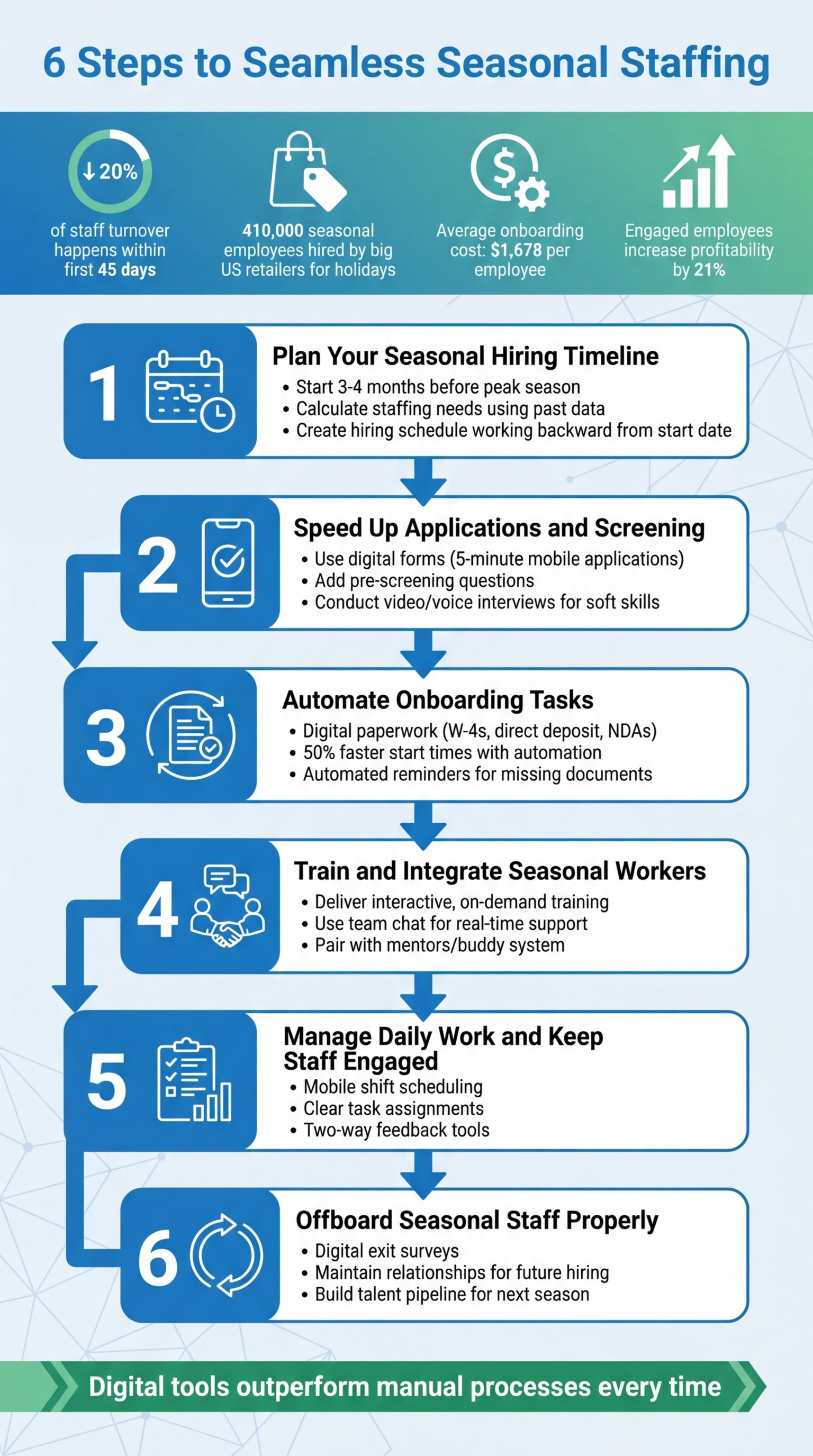
Fast forward to today, and we’ve completely overhauled how we handle seasonal hiring at Pebb. We learned that 20% of staff turnover happens within the first 45 days, and the cost of losing even one poorly trained hire can ripple through your business in ways you wouldn’t believe. But here’s the good news: with a solid plan and the right tools, you can avoid these pitfalls and turn seasonal staffing into a smooth, efficient process that actually boosts your bottom line.
In this guide, I’ll show you exactly how we went from scrambling to seamless (yes, we’ve been there too). From planning your hiring timeline to keeping seasonal workers engaged, I’ll break down the six steps we use at Pebb to hire, onboard, and manage temporary staff without losing our sanity - or our budgets. Let’s dive in!
6-Step Seasonal Staff Hiring and Onboarding Process
Step 1: Plan Your Seasonal Hiring Timeline
Let me tell you - waiting until the last minute to hire seasonal staff is like showing up to a holiday party without a gift. It’s not going to end well. If you’re only starting your hiring process a few weeks before your busiest time of year, you’re already playing catch-up. Here’s a reality check: big retailers in the U.S. hire around 410,000 seasonal employees for the holidays alone. That’s some serious competition, and if you’re running a smaller operation, you’ve got to act fast and early to grab the talent you need.
The sweet spot for seasonal hiring? Three to four months before your peak season. For example, if December is crunch time for you, start recruiting in early September. This gives you enough breathing room to hire, train, and onboard staff without the chaos of scrambling at the last minute. Trust me, a rushed onboarding process doesn’t just stress out your new hires - it can leave your current team feeling drained too.
Calculate Your Staffing Needs
Here’s the thing: guessing how many people you’ll need is a recipe for disaster. Instead, lean on your data. Look back at last year’s sales figures, foot traffic, and any notes from your team about whether they felt swamped or underworked. Did you have lines out the door or missed deadlines? That’s a sign you were short-staffed. On the flip side, if your team had too much downtime, you probably overhired.
Once you’ve got the numbers, write clear job descriptions that outline exactly what each seasonal role entails. This isn’t just about being organized - it’s about making sure you’re hiring the right mix of people. For instance, do you need five cashiers, or would three stockers and a delivery driver be a better fit? When everyone’s role is clearly defined, you’ll avoid the chaos of having too many hands - or not enough - on deck.
Create a Hiring Schedule
Now that you know how many people you need, it’s time to map out your timeline. Work backward from your busy season’s start date. Let’s say your peak kicks off on November 15th, and training takes two weeks. That means you’ll need your team hired by November 1st. To hit that target, interviews should wrap up by mid-October, and job postings should go live in early September.
Make life easier for yourself by creating a master checklist and reusable templates for job postings, interview questions, and training schedules. You’ll thank yourself next year when you don’t have to start from scratch. And don’t forget to build in a little buffer time - things always take longer than expected, especially when you’re juggling interviews with your day-to-day operations.
Here’s a pro tip: use Pebb’s scheduling tools and group chat features to streamline the coordination of interviews and training sessions. Once you’ve nailed down a solid timeline, you’ll be ready to dive into the next step - speeding up your application and screening process.
Step 2: Speed Up Applications and Screening
So, you've nailed down your hiring timeline - great! But here's where the real challenge begins: getting applications in fast and sorting through them even faster. If you're still buried in paper forms or juggling a flood of emails and text messages, you're not just wasting time - you’re creating unnecessary headaches. The goal? Make it effortless for candidates to apply and just as easy for you to figure out who’s worth interviewing.
Collect Applications with Digital Forms
Let’s be honest: paper applications are a nightmare. They get lost, they’re hard to read, and keeping track of them is a logistical mess. At Pebb, we’ve swapped all that chaos for our Digital Forms feature. It keeps everything - IDs, tax forms, policy acknowledgments - in one searchable spot. No more digging through file cabinets or scrolling endlessly through email chains.
Here’s how we keep it simple: we use a mobile-friendly intake form that captures the basics - name, role, start date. Candidates can knock it out on their phones in under five minutes. Once they’re in the system, we can send follow-up forms for anything else we need. The system even color-codes their status as "Ready", "Pending", or "Blocked", so at a glance, we know who’s good to go and who might need a reminder.
Speaking of reminders, automated notifications are a lifesaver. If someone forgets to submit a tax form or ID, the system pings them automatically. And because every role has its quirks, we customize the forms - what’s required for a warehouse worker might not apply to a retail cashier. This way, candidates only see what’s relevant to them. Once everything’s organized, it’s easy to dive into screening.
Screen Candidates Quickly
When those applications start rolling in, speed is your best friend - but not at the expense of quality. One trick we swear by is adding pre-screening questions directly to the digital forms. Simple, targeted questions like "Can you work weekends?" or "Do you have forklift experience?" help weed out candidates who don’t meet the basics before you even review their application.
Now, let’s talk about evaluating soft skills. A resume might tell you about experience, but it won’t show you if someone’s respectful, enthusiastic, or confident. That’s where video or voice interviews come in. Using Pebb’s built-in tools, we can conduct quick remote interviews to gauge a candidate’s communication style and attitude without needing to schedule in-person meetings for everyone. It’s a huge time-saver and gives us a clearer picture of who they are.
To keep things moving, we assign specific tasks to the right people. For example, HR can handle verifying IDs and tax forms, while managers focus on assessing whether the candidate is a good fit for the role. Once everything checks out - documents submitted, training completed, approvals in place - we mark the candidate as "Ready" in the system. This streamlined process not only speeds things up but also sets the tone for a smooth onboarding experience.
Step 3: Automate Onboarding Tasks
So, you’ve screened your candidates and they’re ready to join the team. Now comes the crucial part - onboarding. Here’s the thing: if you’re still buried in paperwork or chasing signatures manually, you’re turning what should be a quick process into a time-consuming headache. Let automation do the heavy lifting so your team can focus on the big picture while your seasonal hires hit the ground running.
Simplify Paperwork with Digital Forms
At Pebb, we’ve waved goodbye to the old-school paper shuffle. Our Digital Forms feature takes care of everything - W-4s, direct deposit forms, NDAs, training acknowledgments - you name it. New hires can complete all their paperwork on their phones, whether they’re at home or on the go. No need for in-person visits or clipboards.
Here’s how it works: once a form is completed, it’s automatically routed for approval, tracked in real time, and securely stored with e-signatures for instant compliance. It’s fast, efficient, and mobile-friendly. What used to take 45 minutes now takes just a few. And because the forms use US-specific formats - like MM/DD/YYYY for dates and the $ symbol - everything syncs perfectly with payroll and tax reporting.
We’ve also built in automated reminders. If someone forgets to submit their W-4 or direct deposit info, the system sends a gentle nudge. This simple tweak has been a game-changer, especially during busy seasons. Retailers have reported up to 50% faster start times thanks to this streamlined process.
On-Demand Training at Their Fingertips
Once the paperwork is squared away, it’s time to get your team trained. But instead of scheduling endless training sessions or handing out dusty binders, we’ve taken a self-service approach. Our Knowledge Base and News Feed make training materials accessible anytime, anywhere.
The Knowledge Base is like a digital library stocked with safety protocols, role-specific guides, and company policies. Need to learn how to operate warehouse equipment? Curious about the dress code? It’s all just a quick search away - right from their phones.
Meanwhile, the News Feed delivers bite-sized updates and reminders. Think shift policies, holiday procedures, training quizzes, and even short videos about company culture. We also include interactive checklists to help new hires get up to speed before their first shift. This setup lets them learn at their own pace, 24/7 - a huge win for seasonal workers with unpredictable schedules.
"The first few weeks aren't a prelude. They're the foundation for everything that follows - an employee's productivity, their connection to the team, and whether they decide to stick around." - Dan Robin, Pebb
Step 4: Train and Integrate Seasonal Workers
Once you've got the paperwork sorted and the standard training streamlined, it's time to focus on something equally important: building confidence and creating a sense of connection for your seasonal staff. Here's the thing - training isn't just about ticking boxes. It's about ensuring your team feels equipped, valued, and ready to make an impact from day one. The quicker they feel like part of the team, the better they'll perform. And here's a stat to chew on: engaged employees can actually increase profitability by 21%.
Deliver Fast, Interactive Training
Automated onboarding? Great for compliance. But when it comes to getting your seasonal hires truly ready, interactive training is where the magic happens. Forget those marathon training sessions of the past. Instead, we use our News Feed to make training quick, engaging, and accessible. Think of it as a lively bulletin board where you can post short, mobile-friendly training videos, safety tips, how-to guides, and even quizzes.
For example, a new hire could catch a quick POS tutorial during their lunch break or review safety protocols while waiting for their shift to start. The key here is on-demand content - delivering the right information at the right time. You might post a short video on handling customer returns on Monday, follow it up with a reminder about holiday return policies midweek, and end with a fun team poll on Friday. It keeps things fresh, relevant, and - most importantly - engaging. This approach doesn't just train; it sets the tone for open, effective communication across the team.
Enable Team Communication
Speaking of communication, it's a game-changer for seasonal workers. Let’s face it - being a temporary hire can feel isolating. They’re new, they don’t know anyone, and they might hesitate to ask questions. That’s why we rely on Work Group Chat to bridge the gap. Dedicated channels like #store-101 or #warehouse-questions give seasonal and full-time employees a space to connect and collaborate in real time.
Picture this: it’s a busy Saturday, and a new hire is unsure how to process a return. Instead of panicking, they drop a quick question in the chat and get an answer in minutes. Or maybe they’re confused about the dress code - someone’s got their back. It’s not just about efficiency; it’s about helping them feel like they’re part of the team. Pairing new hires with senior mentors through a buddy system adds another layer of support. And with features like @mentions and emojis, the conversations stay personal and approachable, not stiff and corporate. That sense of belonging? It shows in their confidence and performance.
Step 5: Manage Daily Work and Keep Staff Engaged
So, your seasonal team is all set up and ready to go. Now comes the challenge: keeping them motivated and productive. Let’s be honest - seasonal workers can sometimes feel like outsiders, which can lead to disengagement. But here’s the good news: with clear communication, purposeful tasks, and a little extra effort, you can keep them connected and thriving throughout their time with your company.
Handle Scheduling and Task Assignment
Let me tell you, nothing derails morale faster than a messy schedule. That’s where Pebb's Shift Scheduling comes in handy. With just a few clicks, you can create and share schedules directly to your team’s phones. Got a last-minute sick call? No problem - reassigning shifts takes seconds. Need to approve a swap? Easy.
But scheduling is only half the battle. Your team also needs to know exactly what’s expected of them each day. That’s why we rely on Pebb's Tasks feature. It’s perfect for assigning specific responsibilities like, “Restock aisle 3 by 2:00 PM” or “Process online orders before the lunch rush.” Not only does this eliminate confusion, but it also helps track progress in real time. When everyone knows their role, things just click.
Track Engagement and Performance
Here’s the thing: seasonal staff can check out mentally if you’re not paying attention. That’s why tracking engagement is so important. With Pebb, you can use two-way feedback tools to keep a pulse on how things are going. Post quick polls in the News Feed to gauge training effectiveness or use Digital Forms for anonymous suggestions. You’d be surprised how often fresh eyes catch inefficiencies others overlook.
Another trick we’ve found works wonders? Pairing seasonal hires with seasoned team members. This creates natural mentorship moments and helps new staff feel included. Tools like Work Group Chat make it easy for mentors to stay connected and for managers to monitor participation. When you see who’s actively engaged and who might need extra support, you can respond before small issues become big problems.
At the end of the day, the goal is simple: make every team member feel valued. When people feel like they matter, they’re far more likely to give their best effort. And trust me, it shows.
Step 6: Offboard Seasonal Staff Properly
Wrapping up the season isn’t just about shutting down operations - it’s about setting the stage for next year. I’ve seen too many businesses miss the mark here, treating offboarding as an afterthought. Big mistake. How you say goodbye to your seasonal staff can make or break your ability to rehire them in the future. A well-thought-out exit process not only leaves a lasting positive impression but also builds a talent pipeline that saves time and money on recruiting and training next year.
Complete Exit Processes Digitally
Exit interviews are a treasure trove of insights - when done right. But let’s be real, coordinating in-person meetings or chasing people down with paper forms is a headache. That’s where Pebb’s Digital Forms come in clutch. You can send a digital exit survey straight to their phones, making the process seamless for everyone involved.
Ask questions like:
What worked well during their time with you?
What didn’t?
Would they consider returning next season?
"Be sure to have an offboarding process in place when the season is over so you know what went well and can make improvements for next year." – When I Work
Here’s the magic of digital forms: people tend to be more open and honest when they can respond on their own time. Plus, you can automate the entire process. Set it up so forms are automatically sent when a contract ends, and voilà - 100% participation without lifting a finger.
Maintain Relationships for Future Hiring
Once you’ve wrapped up the exit process, don’t let the connection fade. Staying in touch with former seasonal employees gives you a major advantage when the next hiring season rolls around. Think about it - these folks already know your systems, understand how your team operates, and have proven they can handle the job. Rehiring them means less time spent on training and more time getting things done.
We’ve seen companies use Pebb’s News Feed to keep past seasonal staff in the loop. Share updates about future opportunities, celebrate company milestones, or just check in with a friendly note. When it’s time to ramp up hiring again, you’ll have a pool of warm candidates ready to go.
The bottom line? Offboarding isn’t just about closing the book on this season. It’s about building a bridge to the next one. Treat your seasonal staff like the valuable team members they are - right up to their last day and beyond. It’s an investment that pays off every time.
Conclusion
Seasonal staffing doesn’t have to feel like a juggling act. By using streamlined digital processes, you can make the whole experience - from planning to offboarding - far more efficient. Here’s the thing: digital tools outperform manual processes every single time. When you're managing temporary workers on tight deadlines, there’s no room for clunky spreadsheets, endless paper forms, or scattered internal communication channels.
Let’s be honest - traditional methods are a drain. They eat up time, money, and energy. That’s why every step, from hiring to wrapping up, benefits from Pebb’s all-in-one platform. With features like digital forms, scheduling, work chat, and clock-ins all accessible in one app, you can ditch the chaos and stay organized.
And the numbers back it up. With onboarding costs averaging $1,678 per employee, investing in the right tools isn’t just smart - it’s essential. Pebb helps you save hours of admin work while keeping your seasonal staff informed and engaged from day one.
Whether you’re gearing up for the holiday retail rush or prepping for the summer hospitality boom, Pebb has your back. Our free plan supports up to 15 employees, offering full access to scheduling, work chat, digital forms, and more. Need extra features like analytics or voice calls? The premium plan is just $4 per user per month, making it the most affordable all-in-one solution out there.
And don’t underestimate the power of proper offboarding. It’s your chance to wrap up the season on a high note and build a reliable talent pool for the future. Why juggle multiple tools when Pebb lets you manage everything seamlessly? With Pebb, seasonal staffing becomes a smooth, cost-effective process. Try it out and see how much easier hiring can be.
FAQs
What should I automate first in seasonal onboarding?
When it comes to seasonal onboarding, the best place to start with automation is preboarding and the initial setup. Think about it - sending out welcome emails, sharing login credentials, and providing training materials can all be handled before the employee even steps in on day one. Tools like Pebb make this seamless by automating communication, assigning tasks, and distributing resources. This way, seasonal employees hit the ground running, while you save time and cut down on repetitive manual work. It's a win-win for preparation and engagement.
How do I keep seasonal workers engaged after week one?
To keep seasonal workers motivated beyond the initial week, it’s all about creating a sense of connection and keeping the momentum alive. Start with simple strategies like virtual meet-and-greets or casual chats to break the ice. Incorporate tools like news feeds or clubs to make communication feel more dynamic and inclusive. Regular check-ins go a long way too - just a quick touchpoint to show they’re valued and on the right track.
Ongoing training is another game-changer. It reinforces their importance to the team and gives them the confidence to excel. At Pebb, we’ve designed an all-in-one solution that makes this process effortless. With features like work chat and group messaging, we make communication smooth and help seasonal employees feel like they truly belong.
How can I build a rehire pipeline after the season ends?
When it comes to building a rehire pipeline, the key is offboarding done right. By collecting feedback during the offboarding process, you can identify employees who might be a great fit for future roles. From there, tools like Pebb’s work chat, news feed, and groups make it easy to stay in touch with seasonal employees.
Here’s what we do: we send out periodic updates, share job opportunities, and even drop personalized messages to keep the connection alive. Not only does this keep former employees engaged, but it also creates a ready-to-go talent pool, saving us time and effort when hiring ramps up again.
