
Author: Ron Daniel
10 Essential Questions to Include in Your Next Employee Self-Evaluation Form
Ten self-evaluation questions to make reviews reflective, measurable, and aligned with employees' growth and company goals.
Have you ever walked into a performance review feeling like you’re stepping into a courtroom? I’ve been there. For years, reviews felt like one-sided critiques - managers rattling off feedback while I nodded along, barely getting a word in. But then something shifted. At Pebb, we started using self-evaluation forms that flipped the script. Suddenly, reviews became conversations, not interrogations.
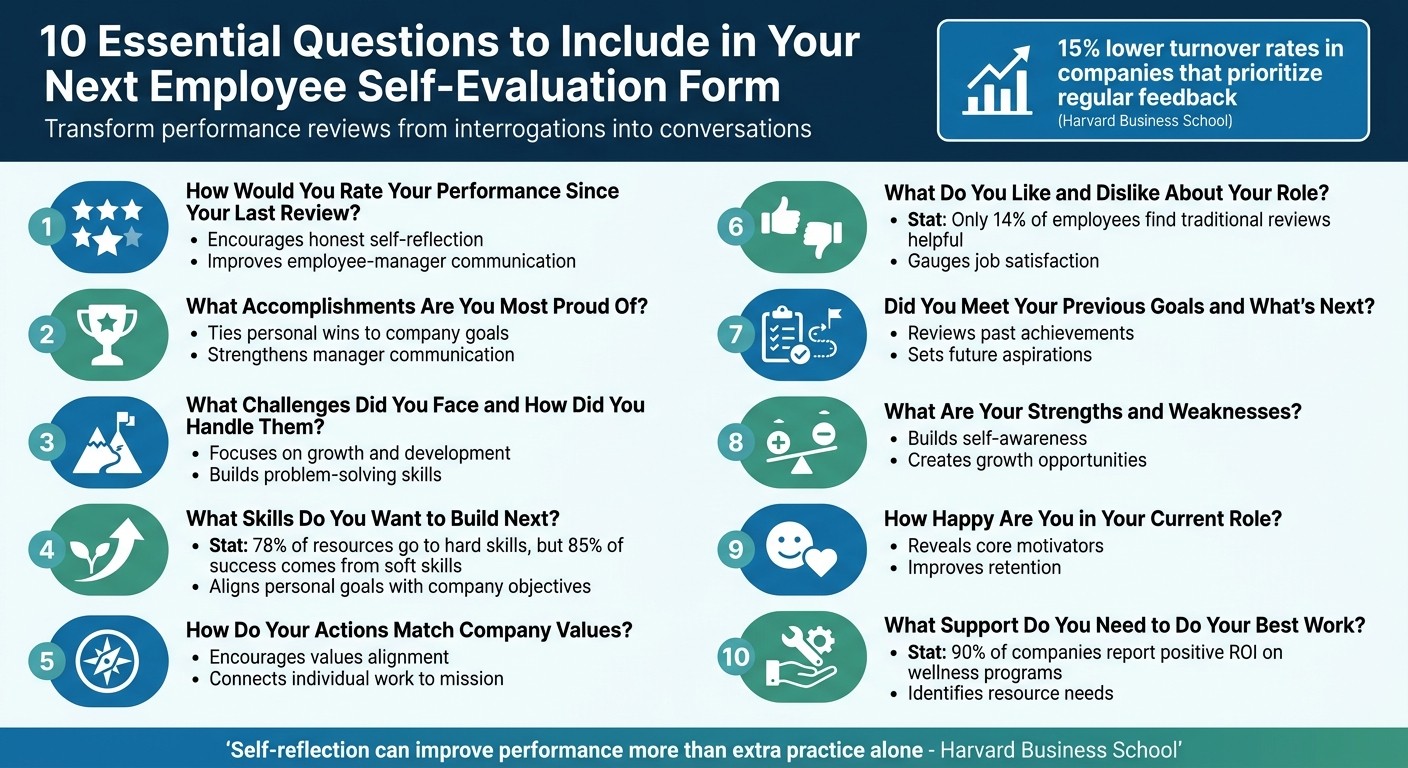
Here’s the kicker: research from Harvard Business School shows that self-reflection can actually improve performance more than just grinding away at tasks. And companies that prioritize regular feedback see 15% lower turnover rates. That’s not just theory - it’s real-world proof that the right questions can make all the difference.
So, what are these questions? In this article, I’ll walk you through 10 self-evaluation prompts that have transformed how we approach growth at Pebb. These aren’t vague, generic questions - they’re designed to spark honest reflection, highlight wins, and align personal goals with company objectives. Let’s dive in.
10 Essential Employee Self-Evaluation Questions for Performance Reviews
1. How Would You Rate Your Performance Since Your Last Review?
This question is like hitting the pause button and rewinding the tape on your work since the last review. It’s a chance to take a step back, reflect, and assess yourself honestly. Think of it this way: if you were your own manager, how would you rate your performance? By stepping into that mindset, it becomes easier to focus on the facts rather than emotions, which leads to a balanced perspective.
Encourages Honest Self-Reflection
Taking a moment to evaluate your efforts can be surprisingly eye-opening. This question isn’t just about patting yourself on the back for wins; it's also about identifying areas where you could have done more. That kind of honest reflection builds self-awareness, which is a cornerstone for professional growth. Plus, when you know your strengths and areas for improvement, you’re better equipped to set realistic goals and feel confident about achieving them.
Improves Communication Between Employees and Managers
Here’s the thing: self-evaluations aren’t just for you - they’re also a bridge to better conversations with your manager. They give you a voice, making sure your perspective is part of the discussion. For managers, it’s a window into how you see your own performance. This can uncover overlooked accomplishments or areas where you might need more support. Instead of feeling like a one-way critique, the review becomes a two-way conversation that sets the stage for actionable feedback and growth.
"In performance reviews, managers need to help employees recognize their commitment to growth and development, even if they haven't achieved all of their goals yet." - Aristida Markauskaite, HR Manager, RatePunk
When answering this question, it’s important to go beyond vague statements. Saying something like, “I improved efficiency” doesn’t pack nearly the same punch as, “I implemented a new workflow that increased department efficiency by 15%.” Specific examples backed by measurable results make your evaluation stand out. A great tip? Keep a “brag sheet” throughout the year. Jotting down your wins as they happen ensures you won’t forget them and helps you align your personal achievements with the company’s bigger picture.
2. What Accomplishments Are You Most Proud Of?
This question gives you the chance to showcase your achievements while shedding light on the skills and habits that contribute to your success.
Tying Personal Wins to Company Goals
When you connect your accomplishments to the company’s larger mission, you’re not just highlighting your work - you’re showing how it aligns with the organization’s success. For instance, maybe you streamlined a workflow that saved your team 10 hours a week or closed a deal that brought in $50,000 in revenue. Framing these wins in terms like "efficiency improvement" or "customer-focused results" helps leadership see the broader impact. These measurable successes make it easier to have meaningful discussions about your contributions.
Strengthening Communication with Managers
Managers can’t always see the finer details of your daily work, so self-evaluations are a great way to surface achievements that might otherwise go unnoticed. Maybe you mentored a new hire who’s now thriving or resolved a recurring customer complaint that had been dragging on for months. Sharing these stories not only builds trust but also fosters more open communication between you and your manager.
"Any good self-appraisal has metrics, but it's also a great way to let the results speak for themselves. Rather than writing 'Had great team success in 2017!' try something like 'Outperformed 2017 sales goals by over 135 percent.'" - Jane Scudder, Leadership and Personal Development Coach
The key here is to avoid vague claims. Instead of saying something like "improved customer satisfaction", back it up with specifics - "increased customer satisfaction scores by 20% through a new follow-up process implemented in Q2 2025." Numbers and examples tell a stronger story.
3. What Challenges Did You Face and How Did You Handle Them?
This question is a real eye-opener. It turns setbacks into stepping stones, giving managers a peek into how you handle pressure and problem-solving.
Encourages Honest Self-Reflection
Talking about your challenges isn't just about admitting mistakes - it's about owning them and learning from them. Stephanie Gibson, an HR Manager at J. Knipper and Co., puts it perfectly:
"You have to take control of your own destiny and request feedback. You should always know where you stand."
When you reflect on how you handled missed deadlines or budget hiccups, it forces you to assess your performance with a clear, objective lens. That kind of self-awareness is a game-changer for personal growth.
Focuses on Growth and Development
What’s key here is showing how you tackled those challenges. Say you missed a quarterly target - did you outsource part of the work during a supply chain crunch to keep things moving? Sharing examples like this highlights your ability to adapt and find solutions.
Harvard Business School research backs this up: self-reflection can sometimes improve performance more than extra practice. When you document the obstacles you faced - whether it was learning new software, reorganizing your workflow, or seeking guidance - you’re essentially building a playbook for future success. And trust me, having that clarity makes conversations with managers so much smoother.
Improves Communication Between Employees and Managers
Here’s the thing: this question isn’t just about you. It’s also a chance to tell your manager what support you needed but didn’t get. If unclear roles or outdated tools slowed you down, bring it up. Be specific, though. For example, saying, "I spent 12 hours a week on manual data entry that could be automated", is far more effective than just saying, "I felt overwhelmed".
At Pebb, we’ve seen firsthand how good communication tools can make these discussions easier. When teams use our work chat, news feed, and groups to stay aligned throughout the year, performance reviews become less about surprises and more about solutions. And at just $4 per user, it’s a small price to pay for keeping everyone on the same page before review season even begins.
4. What Skills Do You Want to Build Next?
This question shifts the focus from reflecting on the past to planning for the future, giving employees a chance to take charge of their career growth.
Encouraging Growth and Development
When employees answer this question, it transforms self-evaluation into a forward-thinking strategy. Picture this: someone sets a goal to master Excel's VLOOKUP in five weeks or earn a project management certification by the end of Q3. These kinds of goals fit perfectly into the SMART framework - Specific, Measurable, Achievable, Relevant, and Time-bound. With that kind of clarity, it’s easier to provide support, whether through learning budgets, certification programs, or dedicated training sessions.
Here’s a fascinating stat: organizations dedicate 78% of their resources to building hard skills like coding, but soft skills - think leadership - contribute a whopping 85% to overall success. Encouraging employees to develop both technical and interpersonal skills leads to well-rounded growth that benefits not just the individual but the entire company.
Linking Personal Goals to Organizational Success
When employees identify the skills they want to develop, it creates a chance to align their personal goals with the company’s bigger picture. Take public speaking, for example. If someone wants to improve in this area, it could lead to opportunities like leading client presentations or onboarding new team members. Connecting skill-building to real business impact helps individuals grow while strengthening their role within the team.
Opening the Door for Better Communication
This question also fosters open conversations about what support employees need. Whether it’s mentorship, specialized training, or even a certification course, these discussions give managers insight into how they can help. At Pebb, we’ve noticed that when teams use our work chat and group features to share resources year-round, these conversations happen naturally - not just during review periods. And with our premium plan at just $4 per user, it’s an affordable way to keep those valuable discussions alive all year long.
5. How Do Your Actions Match Company Values?
This question taps into something deeper than just job performance - it's about whether employees truly embody the company’s core values in their day-to-day work. At Pebb, we’re all about effective communication and growth, and this question helps tie those principles directly to individual actions. Let me walk you through why this matters.
Encourages Honest Self-Reflection
When employees take a moment to think about how their actions align with company values, something interesting happens - they start seeing their work in a broader context. It's not just about meeting deadlines or checking off tasks; it's about asking, Am I contributing in a way that reflects what we stand for?
Here's the thing: research shows that self-reflection can significantly improve performance. That’s why we’ve baked reflective tools right into Pebb’s performance journal features. This process doesn’t just help employees evaluate themselves; it naturally nudges them to align their personal goals with the company’s mission.
Aligns Individual Goals with Organizational Values
Self-reflection is just the starting point. Once employees identify how their actions stack up against company values, they can set specific goals to close any gaps. For example, maybe someone noticed they could do more to promote inclusivity - like addressing bias in hiring or improving the onboarding experience for new hires. These are the kinds of tangible steps that bring company values to life.
Aristida Markauskaite, HR Manager at RatePunk, sums it up well:
"In performance reviews, managers need to help employees recognize their commitment to growth and development, even if they haven't achieved all of their goals yet".
At Pebb, we encourage employees to set alignment goals for the next review period using the SMART framework. It’s a simple but effective way to ensure that their efforts stay connected to the company’s bigger picture.
Improves Communication Between Employees and Managers
This question also lays the groundwork for better conversations. When employees share their self-evaluations, it creates an opportunity for honest, transparent dialogue. Managers gain insight into how employees perceive their own performance, and that opens the door to meaningful feedback.
At Pebb, we make it easy to keep these conversations going. Our work chat and group features are designed to support year-round communication, so teams can track how values are being put into practice. And with our platform costing just $4 per user, maintaining this level of connection is affordable for teams of any size. It’s all about keeping the lines of communication open - without the hassle or extra expense.
6. What Do You Like and Dislike About Your Role?
This question is like a window into what makes employees tick - what gets them excited and what drags them down. It’s a simple yet powerful way to gauge job satisfaction and uncover opportunities for growth.
Encourages Honest Self-Reflection
When you ask someone what they like and dislike about their role, it’s more than just a casual question. It encourages them to pause and think about their day-to-day work. What gives them energy? What feels like a chore? This kind of reflection isn’t just helpful for the employee - it’s a game-changer for managers too. Employees who can pinpoint what fulfills them tend to take more control over their career paths, making them more engaged and proactive.
Focuses on Growth and Development
Here’s a surprising stat: only 14% of employees find traditional performance reviews helpful for improvement. That’s shockingly low, right? But when you ask employees about their likes and dislikes, you open up a much deeper conversation about their growth. For example, if someone loves working on creative projects but dreads administrative tasks, that’s a clue. Maybe they need tools, training, or even a shift in responsibilities to thrive.
At Pebb, we’ve baked this idea into our platform. Our performance journal features let employees track what’s working (and what’s not) all year long - not just during those dreaded annual reviews. And at just $4 per user, it’s an affordable way for teams to keep these insights flowing without breaking the bank.
Improves Communication Between Employees and Managers
The best part about this question? It gets people talking. Employees can share their real experiences, and managers get a clearer picture of what’s happening behind the scenes. This kind of open dialogue helps close the gap between how things seem and how they actually are. Stephanie Gibson, HR Manager at J. Knipper and Co., puts it perfectly:
"You have to take control of your own destiny and request feedback. You should always know where you stand".
With Pebb’s work chat and group features, these conversations can happen anytime, not just during scheduled check-ins. That means employees and managers stay on the same page, and those little moments of alignment can lead to big wins. Whether it’s celebrating what’s going well or tackling what’s not, this kind of communication paves the way for better performance and growth.
7. Did You Meet Your Previous Goals and What's Next?
This question ties past achievements to future aspirations, creating a roadmap for growth that builds on experience and insights.
Encourages Honest Self-Reflection
Here's something fascinating: research from Harvard Business School shows that self-reflection can do more for professional growth than extra practice alone. When employees take a moment to review their monthly, quarterly, or annual goals, it’s not just about checking boxes. It’s about digging into what worked, what didn’t, and - most importantly - why. This kind of honest evaluation helps separate emotions from performance and gives a clearer picture of what’s really happening.
But don’t just focus on the numbers. Sure, sales figures and revenue are important, but the real magic lies in the effort, progress, and lessons learned along the way. That’s where true growth happens.
Focuses on Growth and Development
Missed goals? They’re not failures - they’re stepping stones. When someone falls short of a target, it’s an opportunity to uncover what’s missing. Maybe it’s better training, more support, or clearer communication. The key is to figure it out and use that insight to set new, realistic goals. The SMART framework - Specific, Measurable, Achievable, Relevant, and Time-bound - is a great way to keep things on track.
Jane Scudder, a Leadership and Personal Development Coach, has a great perspective on this:
"Any good self-appraisal has metrics, but it's also a great way to let the results speak for themselves. Rather than writing 'Had great team success!' try something like 'Outperformed sales goals by over 135 percent'".
At Pebb, we’ve made this process easier with our performance journal feature. It lets employees log their wins, challenges, and lessons learned throughout the year - not just during performance reviews. And at $4 per user, it’s a no-brainer for teams that want to keep growth conversations alive all year long. This approach doesn’t just help individuals improve - it aligns their progress with the company’s bigger mission.
Aligns Individual Goals with Organizational Values
When employees see how their achievements connect to the company’s broader goals, something amazing happens - they realize their work has a ripple effect. It’s not just about their own to-do list; it’s about contributing to something larger. This kind of alignment is a powerful motivator, and it also helps managers place people where they can shine and make the most impact.
Reflection builds confidence, and confidence drives performance. At Pebb, we’ve seen how our groups and news feed features make it easy for teams to celebrate wins together. It’s a constant reminder of how individual efforts contribute to company-wide success. With tools like these, tracking progress becomes second nature, and employees stay connected to both their personal growth and the organization’s objectives.
8. What Are Your Strengths and Weaknesses?
This question is like holding up a mirror - it’s not about fishing for compliments or dwelling on flaws. Instead, it’s about understanding what you bring to the table and where you can grow. It’s a chance to showcase self-awareness and foster a productive conversation with your manager.
Encourages Honest Self-Reflection
When you think about your strengths, the goal is to highlight what sets you apart. Instead of saying something generic like, "I'm a good communicator", back it up with real examples. Maybe you led a successful team project or resolved a tricky conflict - specifics make all the difference.
On the flip side, when talking about weaknesses, avoid framing it as a dead end. Instead, share how you’ve identified an area for improvement and what you’re doing to work on it. For example, if time management is a challenge, you could mention how you’ve started using project management tools or setting stricter deadlines for yourself. As Aristida Markauskaite, HR Manager at RatePunk, wisely notes:
"In performance reviews, managers need to help employees recognize their commitment to growth and development, even if they haven't achieved all of their goals yet."
This approach not only shows that you’re proactive but also builds trust with your manager.
Focuses on Growth and Development
Talking about weaknesses isn’t about beating yourself up - it’s about spotting gaps and finding ways to fill them. Pair each challenge with a plan of action. For instance, if you struggle with public speaking, you might take a workshop or practice presenting in smaller settings. A framework like Stop/Start/Continue can help you identify what’s not working, what new skills to develop, and what to keep doing.
At Pebb, we’ve made this process easier with our performance journal. For just $4 per user, it lets employees track wins, feedback, and areas for growth all year long - not just during review season. It’s like a running "brag sheet" that keeps your accomplishments fresh and makes self-reflection a breeze.
Improves Communication Between Employees and Managers
Self-assessments aren’t just about you - they’re a tool to help your manager understand how you see your performance. When you clearly outline your strengths and areas for growth, it bridges the gap between perception and reality. This kind of transparency can clarify expectations, reduce miscommunication, and make one-on-one reviews far more productive.
9. How Happy Are You in Your Current Role?
Let me tell you, this question is more than just a feel-good check-in - it’s a window into what makes employees tick. Over the years, I’ve seen how asking about workplace happiness can unlock insights that go way beyond the surface, helping teams grow stronger and stay engaged. It’s not just about gauging smiles in the office (or on Zoom); it’s about understanding what drives people to show up and give their best every day.
Encourages Honest Self-Reflection
When we ask employees to reflect on their happiness, we’re really inviting them to dig into what makes their work meaningful. Is it leading a big project? Mentoring a teammate? Or maybe solving a tough problem that no one else could crack? These moments of reflection often reveal core motivators - and areas where things might not be clicking.
Here’s the kicker: research from Harvard Business School found that self-reflection can actually boost performance more than extra practice. That’s huge! By encouraging this kind of introspection, we’re not just sparking personal growth; we’re opening the door for deeper, more honest conversations between employees and managers.
Improves Communication Between Employees and Managers
When employees share what brings them joy (or frustration), managers get a front-row seat to their goals, values, and aspirations. This kind of transparency is pure gold. It gives managers the tools they need to help employees thrive - whether that means tweaking responsibilities or carving out new growth paths.
At Pebb, we’ve made this process even smoother with our performance journal feature. Employees can jot down what’s been working (and what hasn’t) throughout the year, so when it’s time for those one-on-one chats, the conversation flows naturally. And here’s a stat that always sticks with me: companies that prioritize consistent feedback see a 15% lower turnover rate. That’s proof that these conversations aren’t just nice to have - they’re essential.
Aligns Individual Goals with Organizational Values
This question also helps us check if an employee’s role still lines up with both their personal strengths and the company’s bigger picture. When someone identifies what they genuinely enjoy doing, managers can align their tasks more closely with those strengths. It’s a win-win: employees get to do more of what they love, and the company benefits from their best work.
At the end of the day, workplace happiness isn’t just about keeping people content - it’s about creating an environment where everyone can thrive. And when employees thrive, so does the organization. That’s the kind of alignment we’re always aiming for.
10. What Support Do You Need to Do Your Best Work?
This question is a game-changer. It zeroes in on what employees need to thrive, giving them the chance to voice what will help them succeed. When employees clearly outline their needs, it opens the door for meaningful improvements that benefit both them and the organization.
Focuses on Growth and Development
Support needs typically fall into three areas: professional development, technology, and organizational resources. When someone says, "I need a certification course", or "We need better scheduling software", they’re not just asking for help - they’re taking responsibility for their own growth. And here’s the kicker: 90% of companies that measure the return on wellness programs report a positive ROI. Investing in these needs doesn’t just boost employee performance; it’s a smart move for the business too.
Improves Communication Between Employees and Managers
This question flips the script on traditional reviews. Instead of being a one-sided critique, it becomes a two-way conversation. Katie Douthwaite Wolf, Editor at The Muse, explains it perfectly:
"These types of questions make an employee self-evaluation and an annual review just as much about how managers can improve as they are about how employees can excel in their role".
When managers ask, “What can I do to make your job easier?” they often uncover obstacles that might otherwise stay hidden. At Pebb, we’ve built tools that keep this conversation going all year long. Employees can log challenges and needs in real-time, so when review season rolls around, the discussions are based on actual experiences - not last-minute scrambling.
This kind of open communication helps align personal needs with company goals. When employees share what they need, managers can work to bridge those gaps in a way that benefits everyone.
Aligns Individual Goals with Organizational Values
Here’s where it all comes together. When employees identify specific tools or training they need, their growth starts to sync with the company’s larger objectives. For instance, an employee might request presentation software to sharpen communication or a goal setting and tracking app to monitor progress. And there’s a financial upside too - companies that adopt wellness platforms can cut healthcare costs by up to 35%.
The key is to be specific. Instead of saying, “I need more training,” try something like, “I’ll enroll in a data analysis certification course within the next three months.” This kind of clarity shows commitment and makes progress measurable. Plus, when employees improve their skills, the company reaps the rewards. It’s a win-win all around.
Wrapping It All Up
Let me tell you, these 10 questions can completely change the way performance reviews feel. Instead of a dreaded, one-sided lecture, they spark real conversations - ones where employees take the lead and managers actually listen. And here’s a stat that speaks volumes: companies that provide consistent feedback see a 15% lower turnover rate. That’s huge.
When employees take the time to reflect on their wins and challenges, those nerve-wracking reviews suddenly become structured and productive discussions. At Pebb, we’ve seen this firsthand. When our team members use the platform to track their accomplishments throughout the year, they walk into reviews with confidence, not anxiety. It’s a game-changer.
But the real magic? Alignment. When employees pinpoint the skills they want to master or the support they need, their personal growth starts lining up with the company’s goals. Harvard Business School research even backs this up, showing that self-reflection can deliver more benefits than additional practice. These questions aren’t just a nice touch - they’re absolutely necessary for progress.
At Pebb, this philosophy is baked into everything we do. Our platform is designed to keep the conversation alive all year long. Employees can log their achievements, set goals, and flag challenges as they come up. This ongoing dialogue builds trust and transforms reviews into true partnerships.
Ultimately, these questions shift the focus from rehashing the past to building the future. They give employees a voice, help managers understand their teams better, and map out a growth plan that works for everyone. That’s exactly the kind of performance review we believe in at Pebb - one that empowers and drives real progress.
FAQs
How often should employees complete a self-evaluation?
Employees should take the time to complete self-evaluations on a regular basis. Many organizations find that doing this semi-annually or annually works best. These intervals give team members a chance to reflect on their progress, identify areas for improvement, and set goals that align with both their personal aspirations and the company’s objectives.
How can I make self-evaluations measurable?
To make self-evaluations more effective, it’s important to focus on specifics. Include quantifiable questions that highlight concrete achievements, skill growth, and progress toward goals. For instance, ask employees to rate their progress on objectives, list completed projects, or detail milestones they've hit in developing new skills. Templates with predefined performance metrics or scoring systems can be a game-changer here. They not only standardize responses but also make it much easier to assess and track growth over time.
How should managers use self-evaluations in reviews?
Managers have a powerful tool at their disposal: self-evaluations. These assessments encourage employees to take ownership of their performance by reflecting on their achievements, challenges, and areas where they’d like to grow. It’s like handing them the mic to share their perspective.
Here’s where it gets even better - combining these self-evaluations with manager feedback creates a well-rounded review process. Tools like Pebb make this seamless by promoting open, transparent discussions that align individual goals with the company’s bigger picture. It’s not just about pointing out strengths or fixing weaknesses; it’s about building a culture where growth and honest communication thrive.
