
What Does Remote Work Mean, Really?
Curious about what does remote work mean beyond the hype? This guide explains the culture, mindset, and tools defining modern remote and hybrid teams.
Dan Robin
We used to think “work” was a place you went to. A building with a sign out front, a desk with your name on it, and a commute to bookend your day. For decades, that was the deal.
Let's be honest, that deal is over.
Remote work isn’t just about working from home in your pajamas. It’s a quiet revolution. It’s a shift from valuing physical presence to trusting in performance. It means your job isn't tied to a specific piece of real estate. The focus is on what you create, not where you create it.
So, What Does Remote Work Actually Mean?
At its core, remote work is about decoupling productivity from location. It’s the simple, radical idea that great work can happen anywhere.
This isn't a new concept. We and others have been doing this for years. But for most of the world, it was a niche perk. Then, a global pandemic forced everyone’s hand, and the myth that "real work" only happens in an office crumbled.
It’s not a trend or a temporary compromise. It’s a better way to work. Looking at the data, it's clear this isn't slowing down. Well over 34 million Americans now telework in some capacity. Globally, the hybrid model has become the default for companies that want to attract and keep great people.
The Different Flavors of Remote Work
“Remote work” isn’t a single thing. It’s a spectrum. Understanding the flavors is the first step to figuring out what makes sense for you.
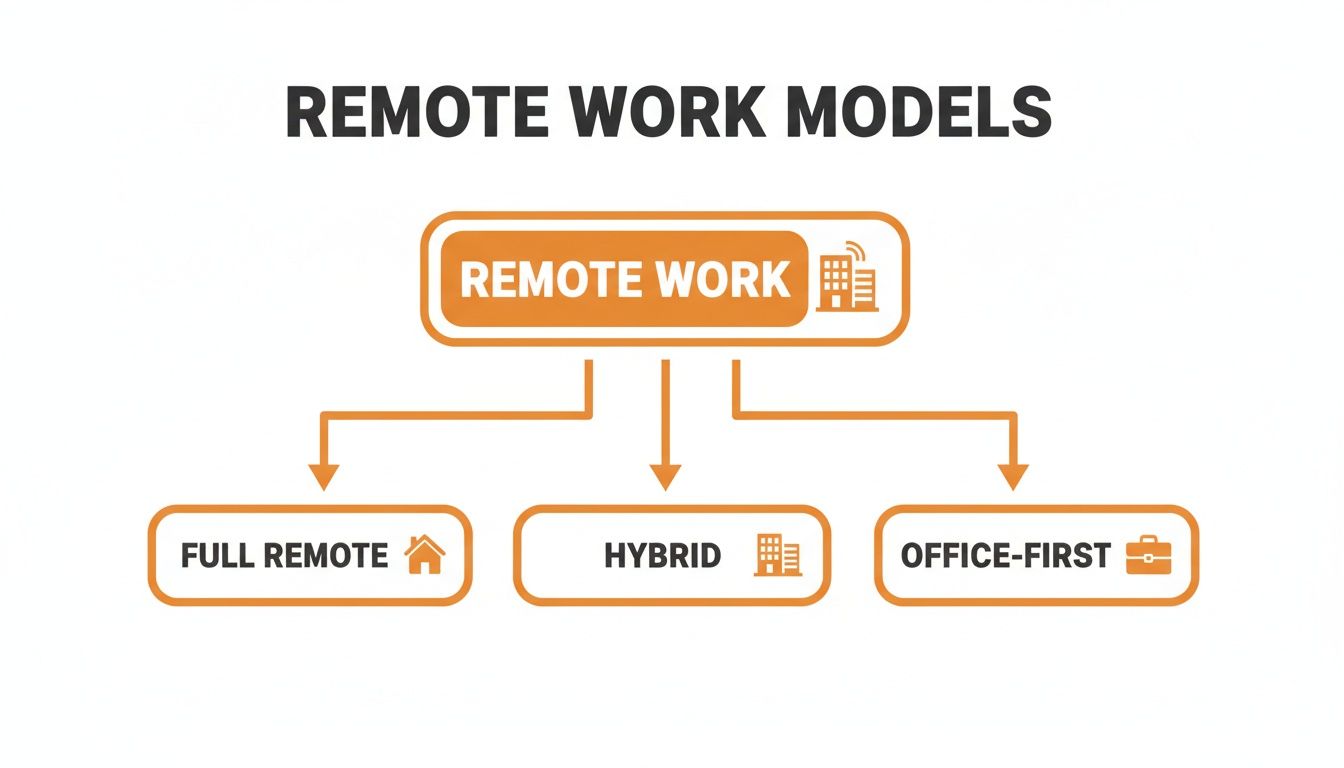
You can think of it in three main ways, each with its own philosophy.
Model | Where You Work | The Core Idea |
|---|---|---|
Fully Remote | Anywhere. 100% of the time. | The company has no central office. Everyone is hired to work remotely from day one. This is our model. |
Hybrid | A mix of office and remote. | You get the flexibility of remote work with some in-person time. The schedule can be fixed (e.g., in-office Tues-Thurs) or flexible. |
Office-First | Mostly in the office, with remote as a perk. | The office is home base. You can work from home sometimes, but the expectation is to be on-site. |
Each model has its trade-offs. None is inherently superior, but they all point toward a more flexible future.
There isn’t a single “right” way to do this. The best approach depends on a company's culture, its goals, and the work itself.
Here’s the thing. This isn’t just about changing where people sit. It's about building an entire digital workplace to support the work. It’s your virtual headquarters—the place where your team communicates, collaborates, and builds a culture, no matter where they are.
The real question isn't if your company will support remote work, but how. It’s less about policy and more about a philosophy built on trust, clarity, and intentional communication.
This flexibility has unlocked entirely new ways to live. To really get what remote work means in 2026, you have to look at ideas like the sustainable digital nomad, where people blend their careers with a life of travel.
It’s a complete re-evaluation of what it means to be a team.
The Real Reasons Remote Work Is Here to Stay
Let’s be honest. For a while, the corporate world treated remote work like an emergency measure. It was the break-glass-in-case-of-pandemic option. The assumption was we’d all snap back to our desks eventually.
But we didn’t.
The reason it stuck has nothing to do with office leases. It’s about something far more fundamental: for millions of people, it’s simply a better way to live and work.
This isn’t just about skipping the commute, though that’s a nice perk. It’s about taking back control of your time and your focus. When you strip away the "office theater"—the performative busyness, the drive-by desk interruptions, the pressure to look busy—you're left with the actual work. People finally got the uninterrupted headspace to think deeply and produce work they were proud of.
The Human and Business Case
For individuals, the change has been profound. It’s being there for a sick kid. It’s running an errand without burning a vacation day. It’s having the mental energy for a hobby after logging off. It’s the freedom to build your day around your life, not the other way around. This isn't about slacking off; it's a more sustainable way of living that makes people happier and more engaged.
Smart businesses quickly saw the other side of the coin. This wasn't just a perk. It was a massive competitive advantage. Suddenly, their talent pool wasn't just the people within a 30-mile radius of a pricey downtown office. They could hire the absolute best person for the job, no matter where they lived.
The numbers tell the story. Stanford economist Nicholas Bloom, a leading voice on this topic, found that remote work can drive a 13% increase in performance. Even better, companies that embraced it saw quit rates plummet by 50%, adding roughly $2,000 in profit per remote employee each year. You can dive into more of his remote work findings if you like the data.
Remote work survived the "return to office" push because it created a new, better normal. One built on trust over visibility, and results over hours clocked.
A Focus on What Truly Matters
At the end of the day, the debate has shifted. We're no longer asking if remote work is effective. We know it is.
The real question for 2026 and beyond is how we do it well. The challenge now is to build a culture where people feel connected and valued, regardless of their physical location.
The companies getting this right aren't just adapting—they're leading. They will consistently attract and keep the best people, because they understand a simple truth: work is something you do, not a place you go.
The Hard Parts Nobody Likes to Talk About
It’s easy to romanticize remote work. We talk about freedom, focus, and reclaimed commute hours. But that’s only half the story. Let’s be honest about the other side of the coin, because ignoring the hard parts is a fast track to burnout.
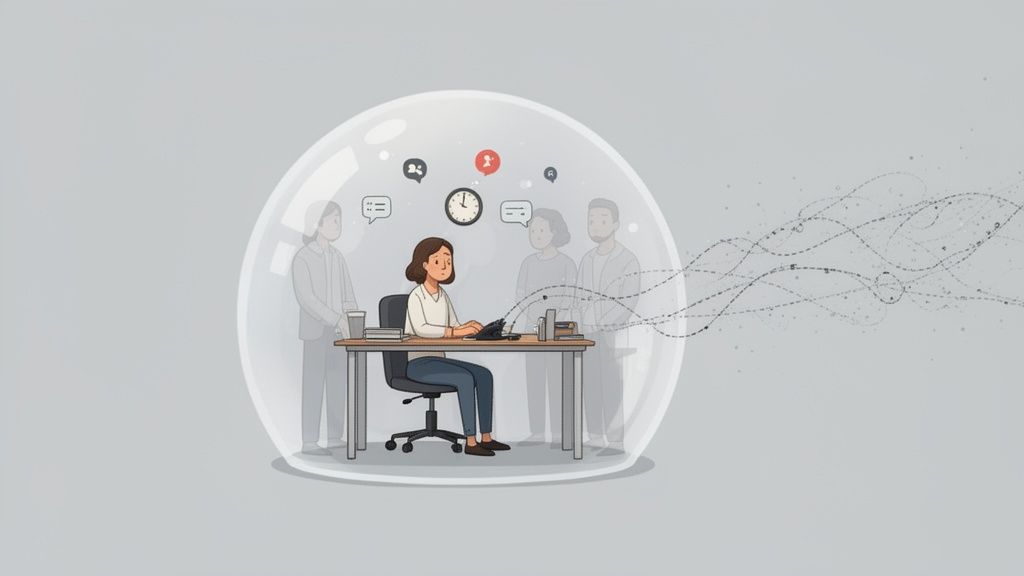
We’ve lived this. We’ve watched teams drift apart when they lose the casual, unplanned chats that happen in a shared space. A quiet loneliness can creep in, even when your calendar is packed with video calls. The energy just isn't the same.
Here’s the thing: you can’t just remove the office and expect everything to work. Without a physical space to ground them, new hires often feel lost, struggling to pick up on the team’s rhythm and unwritten rules. This is the reality of remote work—the good, the bad, and the complicated.
The Great Disconnect
One of the biggest hurdles is the quiet tension between leadership and their teams. Many CEOs are still pushing for a full return to the office, while their employees have built new lives around flexibility.
Job postings tell this story. The market is settling, with many roles now on-site. And yet, a KPMG survey revealed that 83% of CEOs expect a full office return within three years. This clashes with what employees want—research from Pew and Zoom shows 46% would think about quitting if that flexibility was taken away. You can dive deeper into this growing divide in this detailed remote work analysis.
This push-and-pull isn’t just a difference of opinion. It's creating genuine anxiety for everyone.
The Two-Tiered Culture Risk
In hybrid setups, another problem pops up: the risk of creating a two-tiered system. It's the classic "out of sight, out of mind" issue. People in the office get more visibility, stumble into more opportunities, and build stronger connections with leadership.
When access and opportunity are tied to physical presence, you're no longer running one company. You’re running two, with unequal experiences.
This is rarely intentional, but it happens. Remote employees can feel like second-class citizens, dialing into meetings where the real conversation is clearly happening for those in the room.
Admitting these difficulties isn't a sign that remote work has failed. It’s the opposite. It's the first step toward building something better—a way of working that is intentionally designed for connection, fairness, and well-being, no matter where your desk is.
How to Build Culture Without a Conference Room
When people think about company culture, they usually picture perks. The free snacks, the ping-pong table, the fancy espresso machine. But that’s not culture. That’s just office furniture.
So, when you send everyone home, what's left?
In a remote setting, culture isn't something you buy. It has to be built, intentionally, piece by piece. It’s woven into the clarity of your communication, the trust you place in your team, and the simple ways you connect as people.
Let’s be real: this is hard. You can't just copy the spontaneous chemistry of a shared lunch. But that doesn’t mean remote culture is doomed. It just means you need a different playbook.
Create a Digital Hearth
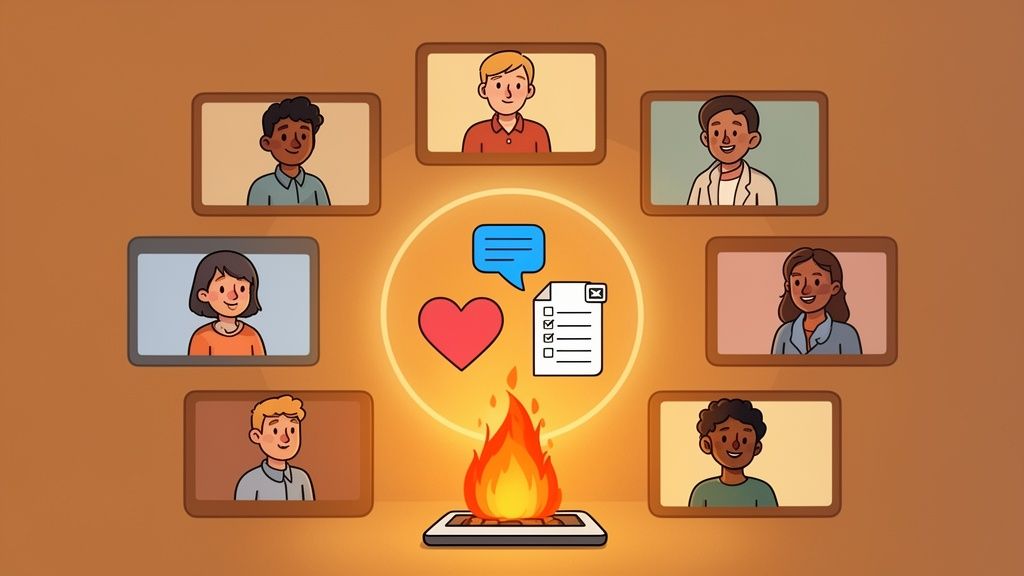
Every strong community has a place where people gather—a town square, a pub, a campfire. For a remote team, you need to create a digital version of this. A space where people can connect without a meeting agenda.
Think of it as your team’s virtual watercooler. This is where you post pictures of pets, celebrate small weekend wins, and ask for Netflix recommendations. In these unplanned, purely social moments, real connections are made. Without this, your team is just a list of individuals working in silos.
This is why we built dedicated 'Spaces' for non-work chatter directly into Pebb. It’s not a feature; it's a core part of creating a place where people feel they belong. When you get the social fabric right, the work gets a whole lot smoother.
Redefine Communication and Connection
When your team is spread out, you have to be deliberate about how you share information and celebrate wins. The old office habits just don't work.
Asynchronous is a superpower. Instead of seeing different time zones as a headache, treat asynchronous communication as your secret weapon. It forces people to write more thoughtfully and encourages deep, focused work instead of knee-jerk reactions.
Write everything down. A well-organized, searchable knowledge base is worth more than a dozen status meetings. When a new hire joins, they shouldn’t have to play detective to find basic information. A strong written culture means your processes and decisions are documented and available to everyone.
Recognize work publicly. In an office, a quick "great job" might be overheard. Remotely, you have to be much more intentional. Use a company-wide feed to give shout-outs. This not only rewards good work but also shows everyone else what success looks like.
Remote culture isn't magic. It's the sum of a thousand small, intentional acts. It’s about creating a system where people feel seen, heard, and valued, no matter where they are.
By designing your digital workspace with care, you can do more than just get work done. You can build a true sense of community. To learn more, check out our guide on how to create a culture of belonging for distributed teams.
It’s not about recreating the office online; it's about building something new—and often, something better.
Choosing Tools That Simplify, Not Complicate
When you start working remotely, the conversation always turns to tools. But here’s a secret most people learn the hard way: the answer isn’t more tools. It’s fewer, better ones.
The real enemy of a great remote team isn't distance; it's fragmentation. It’s the project update buried in an email while the official announcement lives in a separate app. It’s the task manager that doesn’t talk to your team chat. This digital chaos creates noise and wastes time.
Your goal shouldn't be to replicate your old office online. It’s to create clarity. You need a central hub where work and communication happen together—a single source of truth. A simpler tech stack is a better tech stack. Every single time.
From Fragmentation to Flow
We’ve seen it countless times: teams juggling a dozen different apps. That constant switching between tabs isn't just annoying; it's mentally draining. Moving to an all-in-one platform isn't just about convenience—it's about giving your team their focus back.
When your chats, tasks, and announcements all live under one roof, the friction melts away. Onboarding a new hire becomes easier. Projects move forward with less confusion. And everyone feels more connected. For many teams, a reliable VPN remote desktop setup is another key piece of the puzzle, letting people securely tap into their main workstations from anywhere.
Of course, the market for these tools is huge. But the philosophy behind them matters more than trends. For frontline teams in hospitals or warehouses, a mobile-first app that handles everything is essential. This is why we built Pebb: to replace that messy patchwork of tools with something simple and secure for distributed teams.
Choose Tools for Connection, Not Just Productivity
As you look at your current tools, ask one question: does this bring my people together, or does it just add to the noise?
The best remote work tools don't just help you manage tasks; they help you build and sustain your culture. They create a digital home where your team can collaborate and connect.
A tool's real value is in the clarity and connection it fosters. It should feel less like software and more like a welcoming space.
For instance, bringing communication and operations together in a single app like Pebb directly combats the digital exhaustion plaguing so many teams. It’s about choosing tools that promote flow, not just another notification. If you want to dive deeper, check out our guide on the top 10 tools every remote team needs in 2026.
Ultimately, the right tools should feel invisible. They get out of the way so your team can focus on their work, and each other.
The Future Is a Workplace Built for People
When you boil it all down, the real conversation isn't about office versus home. It’s about being more intentional in how we work. It’s about building a better, more supportive environment for everyone, whether they're on a factory floor or logging in from another continent.
This way of thinking has blown the doors off the old talent pool. We’re no longer limited to hiring people who live within a 30-mile commute. The best person for the job can be anywhere in the world.
A More Inclusive Workplace
This shift is sparking incredible growth in new places. Look at Latin America, where remote work is on track to skyrocket from 3% pre-pandemic to an estimated 30% by 2026. That’s a 10x leap. It's happening because smart companies are finding amazing talent in countries like Brazil and Mexico. For teams spread this far, a unified platform for chat, tasks, and scheduling is a non-negotiable. You can read more about this global talent boom here.
And that brings us back to why we built Pebb. We're passionate about connecting every employee—from the frontline to the C-suite—in one digital home. It’s about creating clarity and community, no matter where your people are.
The companies that figure this out aren't just going to get by; they're going to dominate. They’re building a culture on trust, clear communication, and the right digital tools to hold it all together.
The debate is settled. Remote and hybrid work aren't a trend; they're simply how work gets done now. The path forward is about calmly and thoughtfully designing a better way to work—for everyone.
Frequently Asked Questions About Remote Work
We’ve covered a lot, but it’s natural if questions are still rattling around. Shifting to a remote or hybrid model is a big move.
Let's dig into some of the most common questions we get.
Is Remote Work Bad for My Career?
Let’s be real: it can be. The saying “out of sight, out of mind” is a real risk. It’s not unheard of for opportunities to go to the folks in the office simply because they’re more visible.
But it doesn’t have to be this way. The best companies actively fight this bias. They build clear pathways for remote career growth and judge people on their results, not their zip code. Your career path comes down to the company’s real commitment to making remote work a success for everyone.
Do Remote Employees Work Fewer Hours?
This is one of the biggest myths. While remote work offers more flexibility, it rarely means less work.
In fact, it's often the opposite. Many remote workers put in more time, either to stay connected across time zones or to prove they’re being productive. We know an engineer in Australia who, working for a US company, attended 77 meetings between 1 AM and 6 AM over three years just to keep pace. The game changes from "time in a chair" to the quality of the work produced.
How Do I Stay Motivated Without a Team Around Me?
Finding your own rhythm is key. What works for one person might not work for another. But there's a simple habit we’ve seen work wonders: keep a personal, daily log of what you've accomplished.
This isn’t for your boss—it’s for you. It's a small practice that helps you see your progress, stay focused, and, just as importantly, know when you’ve done enough and it’s time to log off.
Ready to build a culture of clarity and connection for your own team? At Pebb, we built the all-in-one app that unites your entire workforce, from the frontline to the main office, in one simple digital home. Learn more at https://pebb.io.
