
Why the Tele Town Hall Is Your Secret Weapon for Connection
Ditch the broken all-hands meeting. Learn how to host a tele town hall that genuinely connects your distributed team and builds real culture, without the fluff.
Dan Robin
Think of a tele town hall as a big, live conversation without a room. It happens over the phone or web, connecting leaders with a workforce scattered all over the map. The big difference from a webinar? It’s a real dialogue. We’re talking about hundreds or even thousands of people listening in and asking questions, live.
Why the Tele Town Hall Is Your Secret Weapon for Connection
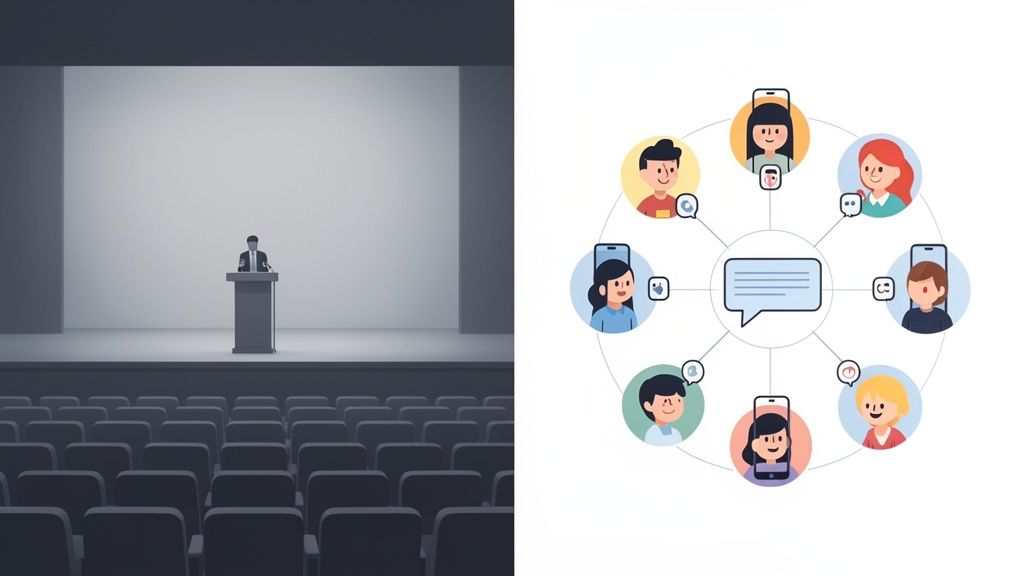
Let’s be honest. The traditional all-hands meeting is broken. Too often, it’s a top-down broadcast that feels more like a performance than a conversation. We’ve all been there, feeling talked at, not with.
This disconnect only gets worse when your team is distributed. Different cities, time zones, or even just the split between a corporate office and the frontline. How do you build a shared sense of purpose when you can’t get everyone under one roof?
This is where the tele town hall shines. It’s a simple format that cuts through the noise. It drops the slick presentations and corporate-speak to create a genuine forum for connection.
A Forum for Real Conversation
The magic of this format is its simplicity. It started in politics as a way for lawmakers to reach huge numbers of constituents without needing fancy tech or even reliable internet. A Congressional Institute study found this direct, consistent contact seriously boosted constituent satisfaction.
That same idea is incredibly powerful at work. A tele town hall meets people where they are—on a laptop at home or on their phone during a break. It flattens the typical corporate hierarchy.
For one hour, everyone from the CEO to the newest hire is in the same virtual room. It sends a powerful message: your voice matters.
This isn't just another meeting. It’s a tool for building trust. When leaders open the floor to unfiltered questions and answer them honestly, it shows they aren't hiding. For more on improving your company's dialogue, check out these internal communication best practices.
By using this format, you're doing more than just sharing updates. You're building a culture of transparency. It seems like a small shift, but it can fundamentally change how people feel about their connection to the company.
Laying the Groundwork for a Meaningful Town Hall
A great tele town hall doesn't just happen. It's designed with intention. We've learned the best ones are built on a simple foundation, long before anyone dials in. It’s not about complex plans; it’s about having a clear purpose and respecting your team's time.
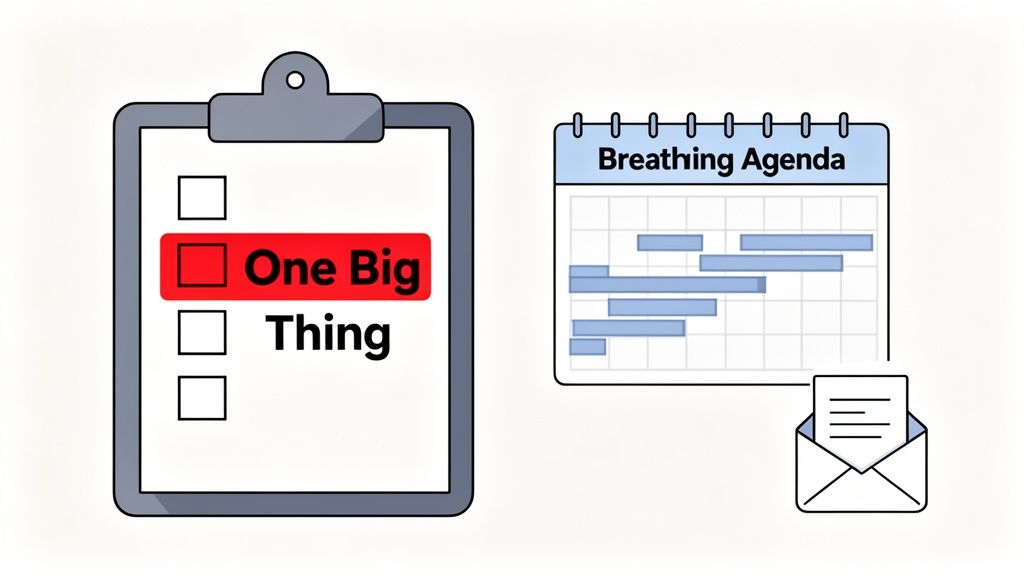
The whole thing boils down to one question: What is the one big thing we need everyone to walk away with?
Just one. If you try to communicate five priorities, you'll communicate zero. Your "one big thing" becomes the north star for every decision—the agenda, the speakers, the Q&A. Maybe you're announcing a product shift, navigating an org change, or rallying everyone around a core value. Whatever it is, define it first.
Designing an Agenda That Breathes
Once you have your core message, you can build an agenda around it. The biggest mistake I see is agendas packed way too tight. No room for spontaneity. No room for human moments. I’ve learned the hard way to build ours with space to breathe.
A rigid, minute-by-minute schedule is a recipe for a sterile, robotic presentation. Instead, think in flexible blocks: a short welcome, the core update, and a generous block for Q&A. The Q&A isn't an afterthought; it’s the main event. It’s where the real work of alignment happens.
The goal isn’t to get through a slide deck. The goal is to create understanding. If a conversation is productive, let it run. The slides can wait.
Think of your agenda less as a script and more as a framework. This gives your moderator the freedom to follow interesting threads and dig deeper into questions that clearly matter to the team. It’s a sign of confidence. You trust the conversation to go where it needs to.
Build Anticipation, Not Dread
How you announce the town hall sets the tone. A dry calendar invite from a "no-reply" address just screams "another mandatory meeting." I’ve found a personal approach works far better.
About a week out, send a note from a leader. Not a formal memo. A short, human message that introduces the "one big thing" and, crucially, invites people to submit questions in advance.
Here’s why that small step is so powerful:
It primes the conversation. People mull over the topic, which leads to more thoughtful questions.
It surfaces hidden concerns. The questions that come in early give you a pulse on what’s on people’s minds.
It shows respect. You’re not just demanding their time; you’re asking for their input.
This simple act can change the dynamic from a passive broadcast to a collaborative discussion. This process is a core part of a strong communication strategy. If you want to formalize your approach, our guide on crafting an internal communication plan template can provide a solid structure.
Ultimately, all this prep work is about proving one simple thing: this gathering is worth their attention.
Nail the Tech and Moderation
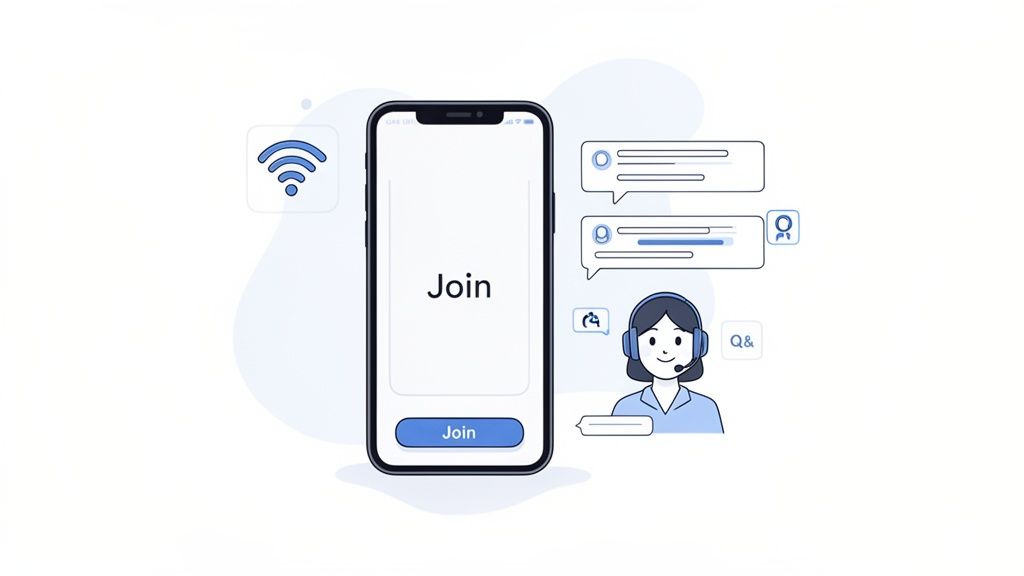
The best tech is invisible. It just works. And great moderation? It feels less like a performance and more like a guided conversation.
That's the vibe you want for a tele town hall. The experience should be so seamless that everyone forgets about the tool and gets lost in the discussion.
We've all been in those virtual meetings where the first ten minutes are a mess of "can you hear me?" That chaos kills the energy. For a town hall to succeed with a distributed team, the barrier to entry has to be zero.
The real test of a platform isn't its features. It’s simplicity. Can your warehouse manager join with one tap from their phone? Can a field tech listen in with a spotty connection? These are the practical questions that make or break the experience.
Choosing the Right Tool
Before you compare feature lists, focus on what actually matters: access and reliability.
Here's a practical checklist for a distributed workforce, from frontline staff to office employees.
Essential Tele Town Hall Tech Checklist
Feature | Why It Matters | Pebb Equivalent |
|---|---|---|
Mobile-First Design | Your frontline teams live on their phones. The experience must be built for mobile, not a shrunken website. | Pebb's interface is designed for quick, on-the-go voice communication. |
No App Download Required | Friction kills participation. Making people install an app they don't use daily is a barrier. A web link or existing company app is best. | Users can join channels and calls directly within the existing Pebb app. |
High-Quality, Low-Bandwidth Audio | Video is a bonus, but clear audio is the main event. People need to hear, even with poor cell service. | Pebb prioritizes clear, stable voice channels that work reliably on cellular data. |
One-Tap Join | Complicated logins are a turn-off. It should be as easy as clicking a link. | Joining a channel in Pebb is as simple as tapping a notification. |
Live Q&A and Polling | Passive listening isn't engaging. You need built-in tools to capture real-time questions and feedback. | Pebb's text-based channels are perfect for running a live Q&A alongside the audio. |
Ultimately, you need a tool that feels like a natural part of your team's workflow. We've seen teams succeed using an integrated voice call app for work without phone numbers because it eliminates the need for another login or a separate tool.
When the tech is right, it disappears. Your team shouldn't think about the tool; they should think about the conversation.
The Quiet Art of Moderation
Here’s a secret: a great moderator isn't a host for the speakers—they're an advocate for the audience. Their main job is to pull the conversation out of the team.
They set the energy. A skilled moderator keeps the pace moving, politely jumps in when a speaker rambles, and creates a space where quieter voices feel comfortable contributing.
This isn't about controlling the dialogue; it's about nurturing it. They ensure the town hall delivers on its promise of being a two-way street. It’s a human skill that no tech can ever replace.
How to Spark Real Engagement, Not Just Passive Listening
Let's get one thing straight. Engagement isn't a checkbox. You can’t just launch a poll, pat yourself on the back, and call it a day. Real engagement means making every person feel seen and heard. That requires more than a gimmick.
A tele town hall is your chance to shift from a culture of passive listening to one of active participation. But you have to build interaction into the DNA of the event, not just sprinkle it on top.
Think about it. The Q&A is often where the most valuable, unscripted moments happen. So why do we save it for the last five minutes when everyone is already checking out?
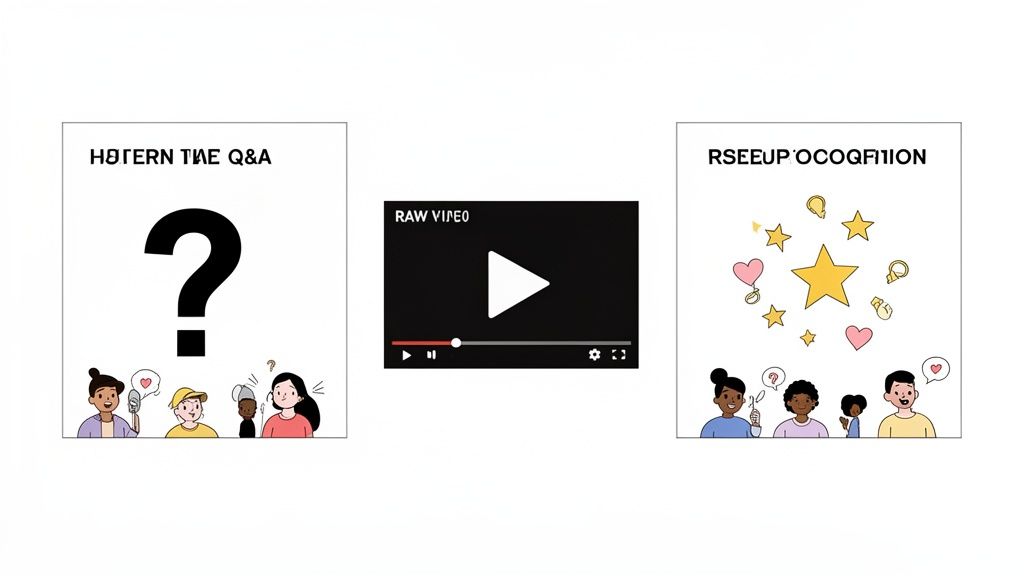
Flip the script. Put the live Q&A front and center, right after the main update. And here's the pro move: tackle the tough, uncomfortable, most-voted-on questions first. It sends a powerful signal that you’re not afraid of the real conversation. That builds massive trust.
Going Beyond the Standard Q&A
Interaction shouldn't be a one-trick pony. A long, slide-heavy presentation from one person can suck the energy out of any room. The goal is to create texture and rhythm.
One tactic we’ve found effective is breaking things up with short, raw video updates from different teams. Forget high-production value. A 60-second clip filmed on a phone from someone on the factory floor or in a satellite office feels far more authentic than a polished corporate video ever could. These small moments are windows into other parts of the company, building a sense of shared reality.
The point isn't to create a perfect broadcast. It's to create human connection. A little raw, unscripted reality goes a long way.
The rise of the tele-town hall is all about its power to connect people at scale. Some companies report seeing 50% higher engagement just by adding simple quizzes or prizes. When you design for accessibility—like making your tool mobile-first—you can see 2.5x the participation over desktop-only events. This is a lesson we took to heart when building Pebb’s app. You can discover more insights about these town hall statistics on dreamcast.in.
The Simple Power of Recognition
Never underestimate the impact of genuine recognition. We make it a point to end every town hall with a dedicated "kudos" segment. This isn't about corporate awards; it’s about peer-to-peer shoutouts.
We gather them in the days before the call and have leaders read them aloud. It’s an incredibly simple gesture, yet it can completely transform the mood. Hearing a colleague's hard work celebrated in front of the whole company is a powerful motivator.
It costs nothing, takes minutes, and ensures everyone leaves on a high note. These small, deliberate acts—from tackling tough questions to celebrating individuals—are what turn a routine meeting into a meaningful cultural ritual. Simple tools can help. You can easily gather shoutouts or run a quick pulse check with tools designed for easy employee polls.
Keeping the Conversation Going After the Call
One of the biggest mistakes people make is thinking the tele town hall is done when everyone hangs up. The truth is, the real work is just beginning. A great town hall generates positive energy and gets everyone on the same page. What you do next is what keeps that momentum from fizzling out.
So, how do you keep the ball rolling?
It’s simpler than you think. First, get the recording out to the team. Fast. Package it with a quick, scannable summary and, crucially, a list of any questions you didn't have time to answer.
This simple act of closing the loop does more than share information. It shows you were paying attention and that you value everyone's input, especially for those who couldn't be there. It’s a foundational step in building trust.
Learning from the Data
Once the follow-up is handled, dig into the analytics. I don't mean vanity metrics. I mean the story the data is telling you. Where did engagement spike? Did a certain topic light up the chat? At what point did people start to drop off?
This isn't about grading your performance. It's about getting honest feedback on what actually matters to your team. These insights are gold for planning your next town hall.
The most valuable feedback isn't what people tell you in a survey; it's what their attention showed you during the event.
Turning Momentum into Action
Now for the most critical part: making it stick. Take the energy from the town hall and weave it into your team's everyday conversations on platforms like Slack or Teams. The call itself is a single moment. The real impact happens in the days that follow.
Take the big themes and break them down. If a question about a new benefits policy got a lot of heat, spin up a dedicated thread to hash out the details. This is how you keep the dialogue moving and turn alignment into action.
This format has proven itself even in the most challenging times. During the COVID-19 pandemic, AARP’s tele-town hall series became a lifeline, delivering critical health information to millions. It’s a powerful reminder of how effective direct, large-scale communication can be when it matters.
To squeeze every drop of value from your event, give the content a longer life. Following a content repurposing guide can be a game-changer. Slice up the recording into short audio clips, write a blog post on the key takeaways, or create a simple FAQ document. This is how you make sure the conversation continues long after the call ends.
Answering Your Top Tele Town Hall Questions
Over the years, we've helped countless teams launch their first tele town hall. After walking so many people through the process, we've started to see the same questions pop up every time. So, let's get straight to it with some honest answers.
Think of these as the foundational principles. Getting them right puts you on solid ground from the start.
How Often Should We Be Doing This?
There’s no magic number, but for most companies, a quarterly rhythm is the sweet spot. It’s frequent enough to keep everyone pulling in the same direction, but not so often that it becomes just another meeting. What matters is consistency.
If you're a fast-growing startup or navigating a big transition, you might want to bump that up to monthly. The key is to get these on the calendar far in advance and treat them like the important rituals they are. When your team knows they can count on it, they start to look forward to it.
What's the Ideal Length?
Respect people's time. Our strongest advice is to keep it to 45-60 minutes, maximum. A tight, focused meeting will always land better than a long one where you can feel people start to multitask.
A structure that works really well is dedicating about 15-20 minutes to key updates, leaving a solid 20-25 minutes for a live, unfiltered Q&A, and then wrapping up in 5 minutes.
If your agenda is overflowing, it's a good time to ask: "Does this really need to be in the town hall?" Some updates are better off as a written post or a quick video that folks can check out on their own time.
A packed agenda isn't a sign of importance; it's a sign of poor focus. A tight, meaningful agenda shows you respect everyone's attention.
How Do We Handle the Really Difficult Questions?
You don't just handle them—you embrace them. A town hall where only softball, pre-screened questions get answered is a massive red flag for a low-trust environment. Honestly, answering the tough stuff head-on is one of the fastest ways to build genuine trust.
Whatever you do, don't filter questions to weed out the hard ones. That's a rookie mistake, and your team will see right through it.
A good moderator can help frame a tricky question in a constructive way, but leaders have to step up and answer directly. Even if the answer is, “We don’t have a final decision on that yet, but here’s how we’re thinking about it,” that kind of transparency is worth a thousand polished non-answers.
How Can We Make This Work for Our Global Team?
When your team is spread across continents, accessibility isn't just a nice-to-have. It’s a must for building an inclusive culture. Here are the essentials:
Always record the session. This is the bare minimum for people who couldn't be there live.
Provide a transcript. This is huge for overcoming language barriers and makes the conversation searchable.
Use real-time captioning. Many tools offer this now, and it’s a game-changer for accessibility.
Remember, the work isn't done when the call ends. The follow-up is just as crucial. Post summaries, key slides, and any important documents in your main internal comms channels. This ensures the core message lands with everyone, no matter their native language or where they're logging in from.
A tele town hall in Pebb is more than just another meeting; it's a core part of your company's operating rhythm. Our all-in-one platform makes it incredibly simple to host engaging voice sessions, manage a live Q&A in a dedicated channel, and keep the conversation going long after the event is over. See how you can unify your entire workforce.
