
8 Sample Thank You Emails for Your Team in 2026
Find your perfect sample thank you email. 8 clear, human templates for team recognition, onboarding, feedback, and more. Ready to copy, paste, and personalize.
Dan Robin
I once saw a manager change the mood of a tired team with one short note. It didn’t mention targets or perks. It said, “I see the hard work you’re putting in, and thank you.”
That stuck with me because most workplace thank-yous fail in the opposite direction. They’re late, vague, and written like nobody knows the people who did the work. A real thank you isn’t a formality. It’s one of the simplest ways to make people feel seen, and people who feel seen usually stay more engaged.
There’s also a practical reason to care. Gratitude in email changes behavior. A Boomerang study reported by MediaPost found that “thanks in advance” reached a 65.7% response rate, “thanks” reached 63%, and “thank you” reached 57.9%, compared with a 47.5% baseline for emails without those closings in the study’s sample, according to MediaPost’s summary of the Boomerang findings. That’s not fluff. That’s a reminder that tone affects whether people write back.
If you want practical sample thank you email templates that sound human, you’re in the right place. These aren’t stiff corporate scripts. They’re working drafts you can adapt for real teams, especially busy frontline teams who rarely get enough acknowledgment. If you also pair the note with something tangible, this guide to ROCKS barware for corporate gifting has thoughtful ideas that don’t feel phoned in.
1. Thank You for Joining Our Team
A new hire thank-you email should do two things well. It should make the person feel welcome, and it should remove friction from day one. If it tries to do ten things, it usually does none of them.
Send this before the first shift or on the first morning. Keep the path simple. One invite link. One point of contact. One clear next step.

Sample email
Subject: Welcome to the team, [First Name]
Hi [First Name],
Thank you for choosing to join us. We’re glad you’re here, and we’re excited to have you joining the [Department] team in [Location].
Your manager, [Manager Name], will help you get settled, and we’ve set up your access so you can get started smoothly. You can join our workspace here: [Invite Link]. That’s where you’ll find key updates, team conversations, and the basics you’ll need for your first week.
Your first stop is [first task, event, or channel name]. If you hit any issues, reply to this email and we’ll help right away.
Welcome aboard, [Your Name]
Why this works
This kind of sample thank you email works because it doesn’t overperform. It sounds like a person wrote it, not an HR system. It also respects the fact that new hires are usually overwhelmed, especially in hospitals, warehouses, stores, and distributed teams where the first day can already feel like a firehose.
A remote developer joining a product team needs a clean invite into the right Space. A clinical hire needs shift information and policy access fast. A retail associate needs the right location-specific channel, not a giant company-wide maze. That’s where simple onboarding structure matters more than warm adjectives.
Practical rule: A welcome note should answer one question before it says anything inspirational: “What do I do next?”
If you’re building a better first-day flow, employee onboarding best practices is a useful reference point. And if your hiring team also wants candidates to show up better prepared before day one, an AI interview assistant can help them practice clearer, more specific responses.
2. Thank You for Your Hard Work During Peak Season
Peak-season thank-yous are easy to get wrong. Leaders wait too long, write something broad, and miss the moment when the effort is still fresh in people’s bodies.
The best version lands fast. It names what people just got through. It doesn’t pretend the work was easy.
Sample email
Subject: Thank you for getting us through peak season
Team,
Thank you for the work you put in over the past few weeks. Peak season asks a lot from people, and you showed up for each other, for our customers, and for the business when it mattered most.
I saw teams covering extra shifts, solving problems quickly, and keeping things moving under pressure. That kind of effort doesn’t happen by accident. It comes from people who care about the work and the people beside them.
We’re proud of what you pulled off. Thank you for carrying the load together.
[Leader Name]
What to say, and what not to say
Good recognition after a rush period sounds grounded. If you’re thanking a hospital unit after surge coverage, mention the teamwork and steadiness. If you’re thanking a warehouse after end-of-quarter inventory, mention accuracy and endurance. If you’re thanking restaurant staff after holiday service, mention pace, patience, and how they handled the room.
Don’t write, “We couldn’t have done it without you,” and leave it there. Everyone’s seen that line. It barely registers now.
A better pattern looks like this:
Name the moment: Black Friday weekend, quarter-end close, holiday service stretch, surge staffing week.
Name the behavior: covered shifts, trained newer staff, handled customer pressure, stayed organized.
Name the meaning: the team trusted each other, customers felt supported, operations stayed steady.
For leaders who want language that goes beyond “great job,” this roundup of congratulations job well done messages is a strong place to borrow sharper phrasing.
Thank people for the strain they carried, not just the outcome they produced.
3. Thank You for Your Feedback
Survey follow-up is where trust usually breaks. Teams take time to answer thoughtfully, then hear nothing, or worse, get a polished message that says a lot without saying anything.
A thank-you email after a pulse survey should be short, clear, and honest about what happens next. If you can’t act on everything, say that plainly.
Sample email
Subject: Thank you for your feedback
Hi team,
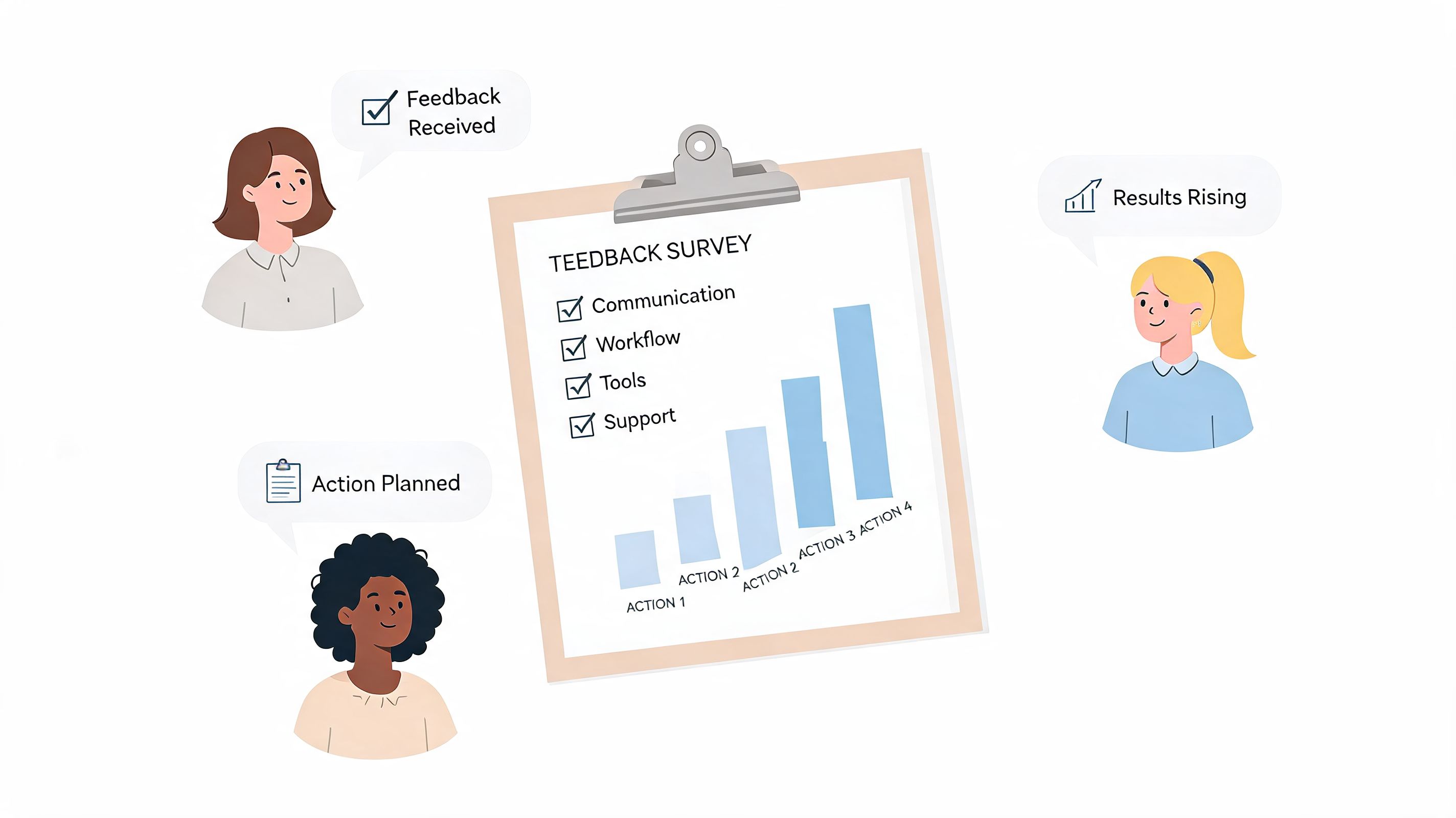
Thank you to everyone who took the time to share feedback. We asked because we wanted the truth, and you gave it to us.
A few themes came through clearly. People want better communication across shifts, more clarity on scheduling changes, and faster access to updates that affect day-to-day work. We’re reviewing those themes now and will share what we’re changing, what will take longer, and what we can’t responsibly promise.
Your feedback matters because it helps us fix the things that slow people down or make work harder than it needs to be. Thank you for speaking up.
[Name]
Keep it tight
Designmodo’s guidance on thank-you emails emphasizes that timing matters and that strong thank-you messages are usually best kept to three or four sentences, especially for transactional or acknowledgment-style messages, as noted in its article on thank you email newsletters. That advice holds up in internal comms too. If your follow-up drags on for three screens, people won’t trust that you value their time.
A healthcare network might use this after feedback on shift flexibility. A retail group might use it after comments on schedule visibility. A hospitality team might use it after hearing that staff miss important updates when they’re off-site.
The trade-off
There’s a tension here. If you summarize too little, it feels hollow. If you summarize too much before you’ve made decisions, it can read like a promise. The middle path is usually right.
Be specific about themes: say what people raised.
Be careful with commitments: only promise what owners can deliver.
Close the loop later: a second message matters more than the first.
If you need sharper prompts for future surveys, employee engagement survey topics can help you ask better questions in the first place.
4. Thank You for Mentoring a New Team Member
Mentoring often disappears into the background because it looks like “just helping out.” It isn’t. It takes time, attention, patience, and the willingness to slow down your own work so someone else can get up to speed.
That deserves a direct thank you.
Sample email
Subject: Thank you for mentoring [New Hire Name]
Hi [Mentor Name],
I want to thank you for the time and care you’ve put into helping [New Hire Name] get started. You’ve done more than answer questions. You’ve helped them feel grounded, supported, and part of the team.
That kind of leadership matters. The way you’ve shared knowledge, checked in consistently, and made space for learning reflects the standard we want across this team.
Thank you for setting that example.
[Manager Name]
Make the hidden work visible
This sample thank you email works best when it references something concrete. Maybe a veteran nurse walked a new hire through unit routines. Maybe a shift lead trained a new assistant manager without making them feel small. Maybe a warehouse employee showed someone how to work safely without cutting corners.
If you can point to a visible result, do it. “You helped them feel comfortable asking questions” is stronger than “Thanks for your support.” Specificity is what turns appreciation into recognition.
Mentoring is productive work. If you don’t say that out loud, people will treat it like extra work that doesn’t count.
I also think mentors should be thanked privately first, then recognized more broadly if appropriate. Public praise can be nice, but the private note is where sincerity shows up. It tells the person you weren’t performing gratitude for the room. You meant it.
5. Thank You for Your Customer Service Excellence
Most customer service praise is too generic to matter. “Great job with the customer” doesn’t tell the employee what to repeat, and it doesn’t teach anyone else what good looks like.
A useful thank-you email points to the behavior, not just the applause.
Sample email
Subject: Thank you for the way you handled that customer issue
Hi [Name],
Thank you for the care and professionalism you showed in resolving that customer issue today. You stayed calm, listened closely, and handled the situation in a way that reflected well on the team.
What stood out most was how clearly you communicated the next steps and kept the customer informed. That kind of service builds trust, especially when someone is already frustrated.
I appreciate the example you set. Thank you for the way you showed up.
[Manager Name]
What strong recognition sounds like
This is useful for a store associate who de-escalated a tense return, a restaurant server who recovered a rough service moment, a patient-facing staff member who handled a family concern with empathy, or a support rep who stayed steady through a messy case.
If you have a real customer comment, include it. If not, describe the behavior you observed. Clear communication, calm under pressure, and follow-through are worth naming because they’re repeatable.
Messageflow gives examples of acknowledgment emails in operations settings, including one case where templated client acknowledgment messages reduced support ticket volume by 42% after implementation, according to its article on thank you email examples. The lesson for internal teams is simple. Clarity lowers confusion. When employees communicate clearly with customers, everyone feels the difference.
A better standard
Recognition should also explain why the action mattered. Did it protect trust? Did it prevent escalation? Did it reflect your values under pressure? Those are stronger lessons than “nice work.”
Call out the action: listened carefully, stayed calm, explained the next step.
Connect it to the result: reduced confusion, protected the relationship, kept things moving.
Make it teachable: others should be able to copy the behavior.
6. Thank You for Completing Training or Certification
Training-completion emails are usually the most robotic notes people receive at work. That’s a missed opportunity. If someone finished a required course or earned a certification, the message should sound like a person noticed.
Even compliance training can be acknowledged with respect.
Sample email
Subject: Congratulations, and thank you for completing your training
Hi [Name],
Thank you for completing your [training or certification name]. Finishing this kind of work takes focus, especially when you’re balancing day-to-day responsibilities at the same time.
What you completed matters because it strengthens the team and helps us do the job well. We appreciate the time you put into it, and we’re glad to see you keep building your skills.
Thank you again, [Name]
Why this note matters
This sample thank you email works well for healthcare certifications, safety training in warehouses, management programs in retail, and product or service training in customer-facing teams. It’s not just a receipt. It tells people their effort counts.
If the training changes what they can now do, mention that. Maybe they can handle a new piece of equipment, take on added responsibilities, or support other team members. That connection turns a checkbox into progress.
A short note also fits the medium. People don’t need a ceremony every time they complete a module. They do need acknowledgment that the company sees development as part of real work, not homework.
If you want learning to stick, don’t only remind people before a deadline. Thank them when they finish.
7. Thank You for Attending a Company Event or All-Hands
An event follow-up email has one job. Reinforce the value of showing up, then point people to what matters next.
Too many all-hands thank-yous become mini-transcripts. Nobody wants that. People want the key takeaway, the recording if they missed part of it, and a sense that attendance mattered.
Sample email
Subject: Thank you for joining today’s all-hands
Hi team,
Thank you for making time to join today’s all-hands. Bringing people together across locations, shifts, and time zones isn’t always easy, and your participation helped make the conversation better.
We covered important updates, and the questions raised were thoughtful and useful. If you want to revisit anything or share follow-up questions, we’ve posted the recording and notes in [location/channel].
Thanks again for being part of it, [Leader Name]
For distributed teams, timing and tone matter more
This is especially important in remote and shift-based organizations where not everyone joins live. The old advice around thank-you notes assumes everyone was in the room at the same time. That’s no longer how many teams work.
The gap is real. Indeed’s career guidance was cited in the verified brief alongside a note that remote hiring practices in the last year show 67% of companies now use async video interviews, while guidance on thank-you messages still mostly assumes synchronous settings, according to the referenced Indeed-based gap summary. The same issue shows up in internal events. Leaders need language that works when attendance is staggered and follow-up is asynchronous.
A simple adjustment
For live attendees, thank them for joining and contributing. For those who watched later, thank them for taking the time to catch up. Those are different behaviors. Treat them that way.
For live sessions: mention energy, questions, and participation.
For async viewers: mention flexibility, recording access, and follow-up channels.
For everyone: point to one place for notes, next steps, and unanswered questions.
8. Thank You for Going Above and Beyond
This is the email people remember. Not because it’s long, but because it catches someone doing something that wasn’t required and says, “That mattered.”
The risk here is overpraising routine effort or sounding manipulative. If every small favor gets called “above and beyond,” the phrase loses all meaning.
Sample email
Subject: Thank you for stepping up
Hi [Name],
I want to thank you for the way you stepped up this week. Taking on [specific contribution] helped the team at a time when we needed extra support, and I don’t want that effort to go unnoticed.
What you did wasn’t flashy, but it made a real difference. You helped the team stay steady, and you showed the kind of judgment and generosity that strengthens a workplace over time.
Thank you. I appreciate it.
[Manager Name]
The best use of this note
Use this when someone volunteers for a messy project, helps another department during a crunch, mentors without being asked, spots a process issue and improves it, or carries extra weight during an unexpected gap.
The detail matters more than the praise. “Thank you for reorganizing the handoff notes so the evening shift could pick up faster” feels real. “Thanks for all you do” usually fades on contact.
Talaera’s interview guidance in the verified brief included a finding that personalized thank-you emails referencing specific discussion points were linked with a 27% higher callback rate than no thank-you message in that analysis, cited in the Talaera reference from the brief. Different context, same principle. Specificity signals sincerity.
One last judgment call
I’d send this one from the direct manager when possible. Recognition from senior leaders can be nice, but people usually care most when the person closest to the work notices.
Public recognition builds culture. Private recognition builds trust. You usually need both, in that order or the reverse, depending on the person.
Comparison of 8 Sample Thank-You Emails
Template | Implementation Complexity 🔄 | Resource Requirements ⚡ | Expected Outcomes 📊⭐ | Ideal Use Cases 💡 | Key Advantages ⭐ |
|---|---|---|---|---|---|
Thank You for Joining Our Team - New Hire Onboarding | 🔄🔄 Medium | ⚡⚡ Medium (automation + personalization) | 📊 Faster onboarding, higher tool adoption · ⭐⭐⭐⭐ | New hires, remote/hybrid onboarding | Sets positive tone; reduces friction; centralizes access |
Thank You for Your Hard Work During Peak Season - Team Recognition | 🔄🔄 Medium | ⚡⚡ Medium (analytics + rewards) | 📊 Boosted morale & retention · ⭐⭐⭐⭐ | Retail/hospitality/logistics post-peak | Reinforces teamwork; visible recognition across locations |
Thank You for Your Feedback - Employee Pulse Survey Response | 🔄🔄🔄 Medium-High | ⚡⚡⚡ Medium-High (analytics + follow-up) | 📊 Increased trust & survey participation · ⭐⭐⭐⭐ | Organization-wide engagement cycles | Closes feedback loop; drives measurable action |
Thank You for Mentoring a New Team Member - Recognition for Internal Leadership | 🔄🔄 Medium | ⚡ Low-Medium (tracking & small incentives) | 📊 Stronger knowledge transfer & retention · ⭐⭐⭐⭐ | Mentorship programs, internal training | Encourages peer learning; builds leadership pipeline |
Thank You for Your Customer Service Excellence - Performance Recognition | 🔄🔄 Medium | ⚡⚡ Medium (metrics + public sharing) | 📊 Improved service behaviors & satisfaction · ⭐⭐⭐⭐ | Customer-facing roles (retail, hospitality) | Reinforces desired behaviors; motivates peers |
Thank You for Completing Training or Certification - Professional Development Acknowledgment | 🔄 Low | ⚡⚡ Medium (LMS integration) | 📊 Compliance and skill growth documented · ⭐⭐⭐⭐ | Regulated industries, certification programs | Validates development; supports career progression |
Thank You for Attending Company Event or All-Hands Meeting - Community Building | 🔄 Low | ⚡⚡ Low-Medium (recording & survey) | 📊 Extended engagement; reinforced messaging · ⭐⭐⭐⭐ | Town halls, webinars, distributed teams | Keeps community connected; provides record of communications |
Thank You for Your Voluntary Contribution - Going Above and Beyond | 🔄🔄 Medium | ⚡ Low (personalized recognition) | 📊 Increased discretionary effort & culture · ⭐⭐⭐⭐ | Cross-functional initiatives, volunteer efforts | Cost-effective motivation; highlights exemplary behaviors |
Gratitude Is a System, Not a Gesture
The eight examples above matter less than the pattern underneath them. Good thank-yous are timely, specific, and plainspoken. They don’t try to sound impressive. They try to make sure the right person feels seen for the right reason.
That’s why a useful sample thank you email isn’t really about wording alone. It’s about attention. Did you notice the actual effort? Did you send the note close enough to the moment that it still feels connected to the work? Did you say something concrete enough that the person knows you meant them, not just anyone?
In practice, a lot of teams fall short here. They treat recognition like a nice extra for special occasions. Then they wonder why people feel invisible. A better approach is to treat appreciation as part of operations. When someone joins, finishes training, mentors a coworker, handles a hard customer, or pulls a team through a busy stretch, the thank-you should follow naturally.
That doesn’t mean every note needs to be long. In fact, shorter is often better. A few honest lines beat a paragraph of inflated praise every time. People can tell the difference immediately. They know when a manager is writing because they had to, and they know when a leader paused because something genuinely mattered.
Tools can help with consistency. A shared platform can make it easier to spot contributions, follow up across shifts, and keep recognition from getting trapped in one manager’s inbox. But the tool isn’t the reason the message lands. Intention is. The software can remind you to send the note. It can’t make you notice the human being in front of you.
So if you’ve been waiting for the right words, use the simple ones. Thank you for stepping up. Thank you for helping them get started. Thank you for staying calm. Thank you for finishing the work. That’s enough, if it’s true.
It's not a grand speech that's required. It's evidence that their effort registered somewhere. Once you start doing that consistently, gratitude stops being a gesture. It becomes part of how your team works.
If you want one place to handle team communication, recognition, onboarding, events, tasks, files, and frontline operations without stitching together five different tools, take a look at Pebb. It gives HR leaders, internal comms teams, and frontline managers a practical home for the kind of timely, visible appreciation that shapes culture.
