
Your Guide to PA Break Laws
Confused about PA break laws? Our 2026 guide for employers explains everything you need to know about meal periods, minor employees, and staying compliant.
Dan Robin
Let's get one thing straight. When you look up Pennsylvania's break laws, you might expect a legal maze. The truth is simpler than you think.
For adult employees, Pennsylvania law doesn't require meal or rest breaks. That’s it. That’s the big secret. But it’s not the end of the story.
The Surprisingly Simple Truth About PA Break Laws
I remember my first time managing a small cafe in Philadelphia. I was sure I was missing some obscure state rule about lunch breaks for my baristas. I spent hours digging through legal sites. The answer, when I finally found it, felt like an anticlimax: for adults, the state just doesn’t mandate them.
But that’s only half the story. The real challenge starts the moment you decide to offer breaks. That's when federal law—specifically the Fair Labor Standards Act (FLSA)—takes over and dictates how you pay for that time. This is the exact spot where many well-meaning employers trip up.
Let's be honest, the complexity isn't in giving the break. It’s in how you manage and pay for it.
Pennsylvania Break Law at a Glance
This table gives you the lay of the land.
Employee Group | Required Meal Break | Required Rest Break | Governing Law |
|---|---|---|---|
Adult Employees (18+) | Not required | Not required | State law sets no requirement; Federal FLSA governs pay if breaks are offered. |
Minor Employees (14-17) | 30-minute unpaid meal break required on or before the 5th consecutive hour of work. | Not required | Pennsylvania Child Labor Act |
As you can see, the rules are split. Adults and minors are treated differently. The nuance is all in the execution.
What “No Required Breaks” Really Means
Pennsylvania's hands-off approach for adults gives you flexibility. It also puts the ball in your court to create a fair and compliant break policy. To do that, you have to understand the federal rules that kick in.
Here’s what matters:
Pay for Short Breaks: If you offer short rests, usually 20 minutes or less, the FLSA considers them part of the workday. You must pay employees for this time. It’s not optional.
Unpaid "Bona Fide" Meal Breaks: For a longer meal period (typically 30 minutes or more) to be unpaid, the employee must be completely relieved of all duties. This is a bright-line rule. No gray area.
The "Working Lunch" Trap: An employee eating a sandwich at their desk while answering emails is working. That "unpaid" 30-minute lunch just became paid time. Failing to pay for it can lead to expensive back-wage claims.
Even Pennsylvania's Department of Labor & Industry page is clear: no breaks are mandated for employees over 18. This is why a solid grasp of federal pay rules and modern corporate compliance strategies is more important than memorizing state statutes.
The biggest risk isn’t failing to give a break you weren’t required to give. It’s failing to properly pay for a break that federal law says is work.
Ultimately, navigating break laws in PA is less about state regulations and more about mastering federal pay rules. For a deeper look at this, you can read about the impact of employee rights on your work in our other guides.
The One Break Rule You Cannot Ignore
Alright, let's get serious for a moment. While Pennsylvania is relaxed about breaks for adults, there's one area where the rules are iron-clad and non-negotiable.
We’re talking about your team members who are under 18.
This isn't a suggestion. It's a direct mandate from the Pennsylvania Child Labor Act. For any minor you employ who works five or more consecutive hours, you are legally required to give them a 30-minute, uninterrupted break. It’s a bright-line rule. The responsibility is all yours.
The Meaning of Uninterrupted
I'll never forget a restaurant manager I once advised. He was convinced he was doing everything right. He'd send his teenage hosts on their 30-minute lunch, but if the phone rang, he’d wave them over to "just grab that real quick." He didn't see the harm.
Here’s the problem: "uninterrupted" means exactly what it says. Completely free from all work duties. The second you ask a minor to answer a phone or tidy a table, their break is legally over. That "quick task" just reset the clock and put the business at risk.
A break isn't a break if the employee isn't free. The moment a minor performs any work-related task, their legally protected meal period is violated.
This is a huge deal for businesses that are the backbone of our communities—retail shops, restaurants, and cafes. In the flow of a busy day, it's easy for these lines to blur. A sudden rush hits, and your instinct is to call for all hands on deck. But when that call goes to a minor on their break, your good intentions can lead to serious trouble.
The Real-World Consequences
So, what happens if you get this wrong? This isn't just a slap on the wrist. Violations of the PA Child Labor Act can bring fines from the Department of Labor & Industry.
But the financial pain often doesn't stop there. These slip-ups are a common trigger for wage and hour claims. If a minor worked during what was supposed to be an unpaid break, that time is now compensable. A pattern of these "quick tasks" can add up to a demand for back wages, legal fees, and damage to your reputation.
The stories are everywhere. A pizzeria owner asks a 17-year-old to fold boxes during lunch. A store manager has a young employee watch the front for "just a minute." These are the small, seemingly harmless moments where compliance falls apart.
The only way to stay safe is to build a culture where these protected breaks are sacred. This means clear communication, smart scheduling, and an unwavering commitment from every manager to put the law ahead of a busy shift.
When Federal Law Governs Your Breaks
You might think you're in the clear on break laws in Pennsylvania, since the state doesn't require them for adults. But it's not that simple. The moment you decide to offer a break—even out of goodwill—a different set of rules comes into play.
This is where the federal Fair Labor Standards Act (FLSA) steps in. The FLSA doesn't care about Pennsylvania's hands-off approach; its focus is sharp: how you pay your people.
Think of it this way: Pennsylvania law doesn't force you to offer a break. But the second you do, federal law dictates whether that break is on the clock or off. It’s a critical distinction.
Short Breaks vs. Bona Fide Meal Periods
The FLSA draws a very bright line between two kinds of breaks. It all comes down to short rests versus longer meals.
Short breaks, typically 20 minutes or less, are considered paid time. The U.S. Department of Labor views these brief respites as a benefit to the employer—they boost efficiency—so they must be counted as hours worked. This is non-negotiable.
Longer breaks, usually 30 minutes or more, can be unpaid. But here’s the all-important catch: for that break to be legally unpaid, it must be a "bona fide" meal period.
A "bona fide" meal period means the employee is completely and entirely relieved of all duties. If they are asked to do anything work-related, their unpaid break instantly becomes paid work time.
The Working Lunch Trap
This is the tripwire. Imagine your front-desk employee is eating a sandwich during their 30-minute "unpaid" lunch. If the phone rings and they answer it, that break has just been interrupted. Legally, that entire 30-minute period now has to be paid.
This “working lunch” is one of the most common ways businesses accidentally violate wage laws. A few minutes of work here and there across your team can quickly spiral into thousands of dollars in back wages and penalties. It’s a headache you don't need.
The flowchart below illustrates the one time Pennsylvania does have a specific, mandatory break rule—for employees who are minors.
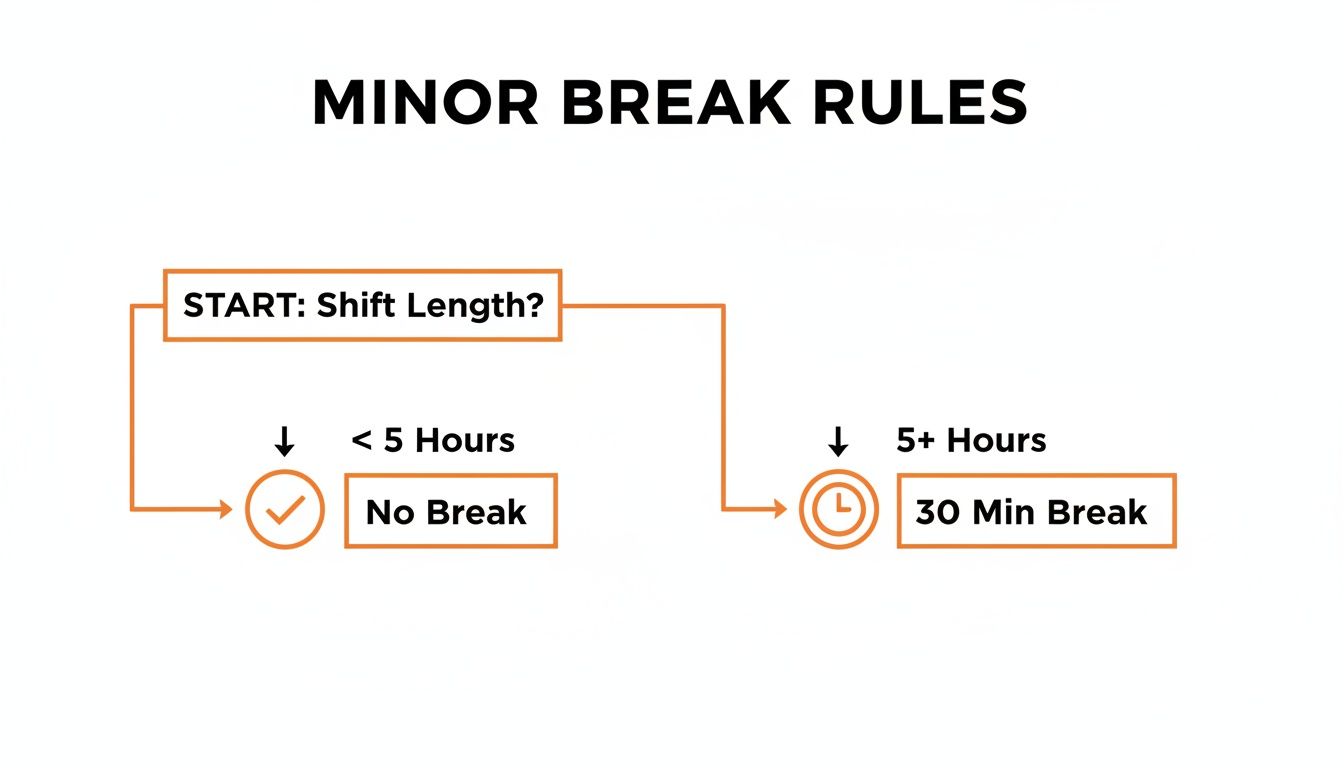
As you can see, the rule is straightforward: a shift of five or more consecutive hours triggers a mandatory 30-minute break for any employee under 18. While federal law governs the pay for adult breaks you choose to offer, Pennsylvania's Child Labor Act governs the requirement for minor breaks. Both are critical to get right.
Why a Break Policy Is Just Smart Business
Sure, Pennsylvania law doesn't force you to give adult employees a break. But let's talk about what actually works. Relying on the bare minimum isn't a strategy for success. It's a recipe for a chaotic, less productive business.
I’ve seen it play out. When there’s no formal break policy, you get inconsistency. One manager might be flexible, while another runs a tighter ship. This creates a workplace full of unwritten rules and quiet frustration. A clear, written policy isn't about checking a box—it's about setting a single, fair standard for your entire team.
More Than Just the Bottom Line
This goes beyond sidestepping arguments. It’s about acknowledging that your employees are human beings. In a culture that constantly demands more, scheduled breaks are one of the most effective tools you have to fight burnout.
When people get overworked, their focus slips. Mistakes happen. In some jobs, a simple mistake can snowball into a safety incident. That 20-minute breather isn't lost time; it’s an investment in keeping your team alert and safe.
Treating your team well isn't just good karma—it's good for business. People who feel respected are more engaged, more loyal, and do better work. It's that simple.
A smart business owner knows that solid practices, from break policies to setting up payroll for small business, are the bedrock of a smooth-running company.
Your Policy Is a Statement of Your Values
Think about it: your internal policies speak volumes about what you stand for. Employer-provided paid leave, for instance, dropped to just 35% of organizations in 2022 from 53% in 2020, even though 80% of workers say it’s a top priority after healthcare.
A formal break policy sends a message. It tells your team you value their well-being and trust them to manage their energy. You don't need a lawyer to draft something complicated. A simple, clear policy can work wonders.
Here's a basic framework:
Rest Breaks: "We offer one paid 15-minute rest break for every four hours worked. We encourage you to take this time away from your workspace to recharge."
Meal Periods: "If you're scheduled for six hours or more, you'll get one 30-minute unpaid meal period. This is your time—you are relieved of all duties and must clock out."
Minor Employees: "In line with the PA Child Labor Act, any employee under 18 working five or more consecutive hours will receive a 30-minute, uninterrupted meal break."
In the end, this is about clarity and respect. In business, those two things always deliver a great return.
Putting Your Break Policy into Practice
You’ve crafted a clear break policy. Now comes the hard part: making it stick during a chaotic lunch rush. It’s one thing to have rules written down; it's another to make them work in the real world.
The good news? You don't need a complex system to stay compliant with PA break laws. You just need a simple, consistent way to turn your policy into a daily habit.
From Policy to Automatic Practice
Let’s zero in on the most crucial piece: mandatory breaks for minors. The Pennsylvania Child Labor Act isn't flexible, so your system has to be rock-solid. The easiest way to nail this is by building breaks directly into your schedule. When you schedule a minor for a shift of five hours or more, that schedule should automatically block out their required 30-minute break.
Suddenly, it’s not an extra task for your managers to remember. It’s just part of the day’s plan.
Next, you need a clear record of when those breaks happen. This is where a mobile clock-in system shines. When an employee starts their break, they clock out on their phone. When they come back, they clock back in. This creates an indisputable digital timestamp for every break. Think of it as your compliance safety net.
This is what it can look like when your schedule and breaks are all in one clean place.
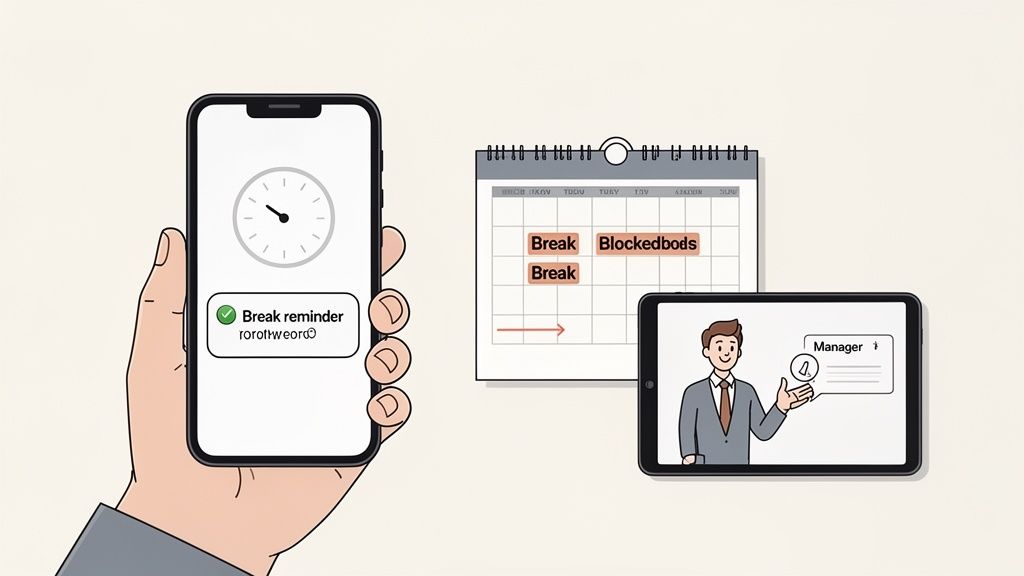
A simple interface like this helps managers see at a glance who’s working, who’s scheduled, and who’s on break, all in real-time.
Catching Problems Before They Start
Even with a perfect schedule, people forget. Automated reminders are your secret weapon. A simple push notification—"Hey, your 30-minute break starts in 5 minutes!"—is incredibly effective at nudging employees to take their time.
But what happens if someone still misses a break? A manager shouldn't wait until payroll to discover a compliance slip-up.
The goal is to spot compliance gaps before they become legal problems. The right tools let managers run a quick report at the end of the day to see any missed breaks. This allows for an immediate conversation, not a confusing one weeks later.
This kind of proactive management is crucial. It's an interesting fact that in 2026, the United States is still one of just seven countries without any federally mandated paid parental leave. The 1993 FMLA only offers 12 weeks of unpaid leave to about 60% of workers. This policy gap means having solid internal tools isn't a luxury—it's the only reliable way to track time and ensure fairness. You can explore how paid leave policies differ globally to see just how unique the U.S. situation is.
By using a simple clock-in and clock-out app, you shift from hoping for compliance to actually ensuring it. This isn't about micromanaging; it’s about building a foundation of trust that makes everyone’s job easier.
Answering Your Top Questions About PA Break Laws
If you’re a manager in Pennsylvania, you've probably wrestled with break laws. It’s a common headache. Let's clear up the most frequent questions we hear.
Do I Have to Pay for Coffee Breaks in Pennsylvania?
Yes, almost always. This is a federal rule, not a state one. Under the FLSA, any short rest period of 20 minutes or less is considered productive time and must be paid.
So that 15-minute coffee run? It's a great way to keep your team fresh, but you have to count it as paid work time. The law sees it as an investment in efficiency.
What Happens If I Don't Give a Minor Their Required Break?
This can get costly, fast. Forgetting to provide a minor their mandatory 30-minute break can lead to fines from the Pennsylvania Department of Labor & Industry.
But the bigger financial risk often comes from wage claims. If that employee did any work during what should have been their unpaid break, you could be on the hook for back pay. Beyond the money, consistent violations will tarnish your reputation. It’s simply smarter—and cheaper—to have a reliable system in place.
Can an Employee Waive Their Right to a Break?
This is a great question. The answer depends on the employee's age. For adults, "waiving" a break isn't really the right term, because Pennsylvania law doesn't require one. You and an adult employee are free to agree on a schedule without an unpaid lunch.
For minors, however, the answer is an absolute no.
The 30-minute break for a minor working five or more consecutive hours is non-negotiable. It's a hard-and-fast rule under the Pennsylvania Child Labor Act. It cannot be waived by the employee, their parents, or you. You are legally responsible for ensuring they take it.
An Employee Wants to Work Through Lunch to Leave Early. Is That OK?
Ah, the classic request. For an adult employee, you might be able to allow this, but tread carefully. The agreement must be completely voluntary, and you must pay them for every minute they work. If working through lunch puts them over 40 hours for the week, you’ll owe them overtime.
For a minor employee, this is never okay. The law is unambiguous: they must take their break. Allowing them to skip it, even if they ask, puts your business directly at risk.
This is why having a straightforward tool for scheduling and time tracking is so critical. It helps you document these one-off agreements, prevent violations with minors, and turn a risky gray area into a clear, compliant decision.
Managing compliance, schedules, and team communication shouldn’t be a source of stress. Pebb brings all your frontline operations—from smart scheduling and time clocks to team chat and task management—into one simple app. See how you can build a calmer, more compliant workplace by learning more about Pebb.
