
The Only Employee Engagement Samples You Actually Need
Stop guessing. Here’s a practical employee engagement sample for surveys, recognition, and more to build a culture people won't want to leave. Read now.
Dan Robin
We’ve all seen the reports. Engagement is down. People feel disconnected. But the advice is always the same vague stuff: ‘listen more,’ ‘be transparent,’ ‘build culture.’ It’s true, but it’s not helpful. It’s like a doctor telling you to ‘be healthier’ without a recipe or a workout plan.
For years, we've wrestled with this, especially with teams split across different shifts, locations, and roles. The secret, we found, isn't some grand, expensive strategy. It's a series of small, consistent actions that show people you’re paying attention.
Here’s the thing: you don’t need another theory. You need a starting point. An employee engagement sample you can steal and use today. That’s what this is. We’re sharing our most effective, no-fluff templates for everything from pulse surveys to team recognition. Just real tools for real teams.
The goal is to move from abstract ideas to concrete actions. While a good leadership guide on how to improve employee engagement provides the framework, this article gives you the building blocks. Let’s get to it.
1. The Pulse Survey
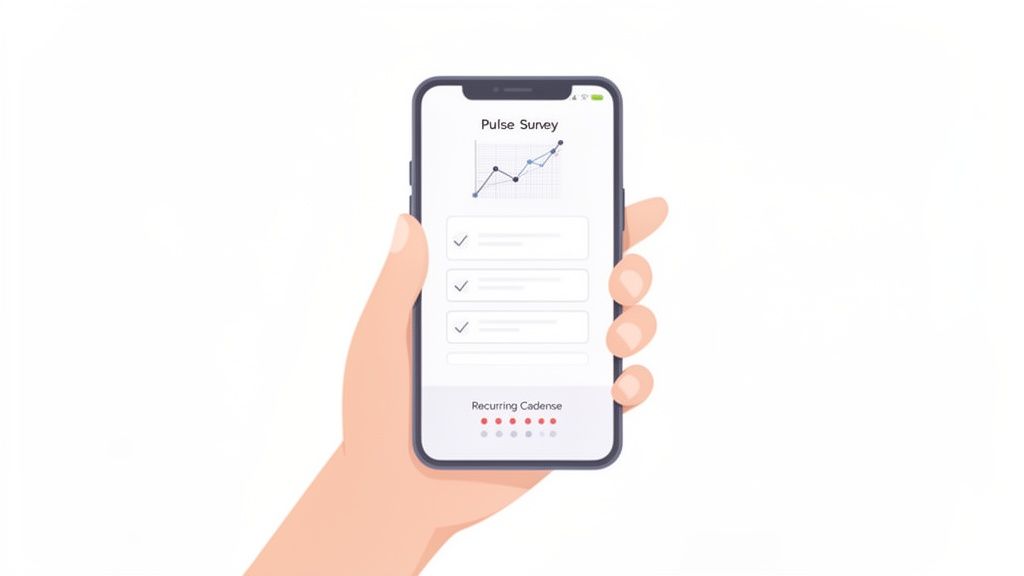
The annual employee survey is like a yearly physical. It’s important, but by the time you get the results, the patient has moved on. A pulse survey is more like a daily check-in. It’s a short, recurring questionnaire that gives you a real-time read on the health of your team. This employee engagement sample is designed to be quick—just a few questions, sent weekly or bi-weekly. It lets you spot problems before they fester.
This isn’t about bugging your team. It’s about opening a consistent, low-effort channel to listen. You move from guessing how people feel to knowing.
Why it works
A pulse survey’s power is its frequency and focus. Instead of a 60-question marathon, you’re asking a few sharp questions about what matters right now. GitLab, a fully remote company, uses this to stay connected across time zones. Hospitals use them during shift changes to gauge staff burnout. It’s about asking the right questions at the right time.
But the real magic happens when you close the loop. Sharing the anonymized results and saying, “You told us X, so we are doing Y,” turns this from data collection into a conversation. It shows you’re not just listening; you’re acting.
How to use it
To make this work for your team, whether they're at a desk or on their feet:
Keep It Consistent: Use the same core questions each time to track trends. Small shifts in scores can reveal big insights.
Segment Your Data: Don't just look at the company average. Filter results by department, location, or shift. A problem on the night shift might be invisible in the overall numbers.
Act and Communicate: This is everything. Share what you learned and what you're doing about it. Nothing builds trust faster.
Using a good employee engagement survey builder can automate the scheduling and analysis, making the whole thing feel effortless.
2. The Recognition Program
If a survey is a check-up, recognition is the daily high-five. A recognition program is just a structured way to make appreciation part of your company’s DNA, not just a once-a-year ceremony. This employee engagement sample creates regular, visible moments for people to celebrate wins, big and small.
This isn't about forced fun. It’s about building a system where good work is seen and valued. The goal is to make appreciation an everyday, peer-to-peer habit instead of an occasional, top-down event.
Why it works
Recognition reinforces what you value in real-time. When someone is recognized for "customer obsession," it shows everyone what that value looks like in practice. Southwest Airlines built its culture on this, with everything from public shout-outs to peer-nominated awards. Retail chains use "employee of the month" not just to reward one person, but to signal to the whole team what great service looks like.
The real impact comes from consistency. When recognition is frequent and comes from all directions—peers, managers, leaders—it creates a powerful feedback loop. It motivates others and deepens connections, which is crucial for distributed teams.
How to use it
Here's how to build a program that feels authentic:
Create Multiple Avenues: Don't just use one channel. Use team huddles, digital feeds, and peer-to-peer platforms. A healthcare team might use a quick shout-out during a shift change; a tech company might use a dedicated Slack channel.
Tie Recognition to Values: Set up specific categories tied to your core values, like "Teamwork" or "Innovation." This turns every piece of recognition into a mini-lesson on your culture.
Leaders Go First: Recognition must start at the top. When leaders actively and publicly praise their teams, it gives everyone else permission to do the same.
By embedding these practices, you can learn how to build a recognition program for success and create a culture where people feel seen.
3. The Internal Comms Template
Your internal announcements are the company's nervous system. If the messages are confusing, inconsistent, or buried in an email no one reads, people feel disconnected. A simple template is your blueprint for clarity. It’s a structured format for sharing news, ensuring every employee gets the same clear information, whether they're at a desk or on the factory floor.
This isn’t about creating soulless corporate memos. It’s about building a predictable and trustworthy channel for news. The goal is to make crucial information easy to find, understand, and act on.
Why it works
A template's power is its consistency. When people see a familiar format, they know where to look for the important stuff. The NHS uses structured templates for patient safety updates so frontline staff can absorb critical changes in seconds. This employee engagement sample makes communication an efficient, reliable process.
But the real win is accessibility. When a message is clear, organized, and mobile-friendly, it bridges the gap between HQ and frontline teams who rely on their phones. It shows you respect everyone's time.
How to use it
Here's how to create a template that works for everyone:
Lead with the 'Why': Put the most important information first. Tell people what's changing and why it matters to them before diving into details.
Use Clear Formats: Create different, clearly labeled templates for different types of news. An "URGENT: Action Required" message should look different from a "Weekly Update." This helps people prioritize at a glance.
Make It Actionable: Use simple language. If there's a deadline, bold it. Always include a "Who to contact" section to prevent confusion.
By learning how to make internal updates that people actually read, you can track who has seen your announcements and ensure your message truly lands.
4. The Onboarding Program
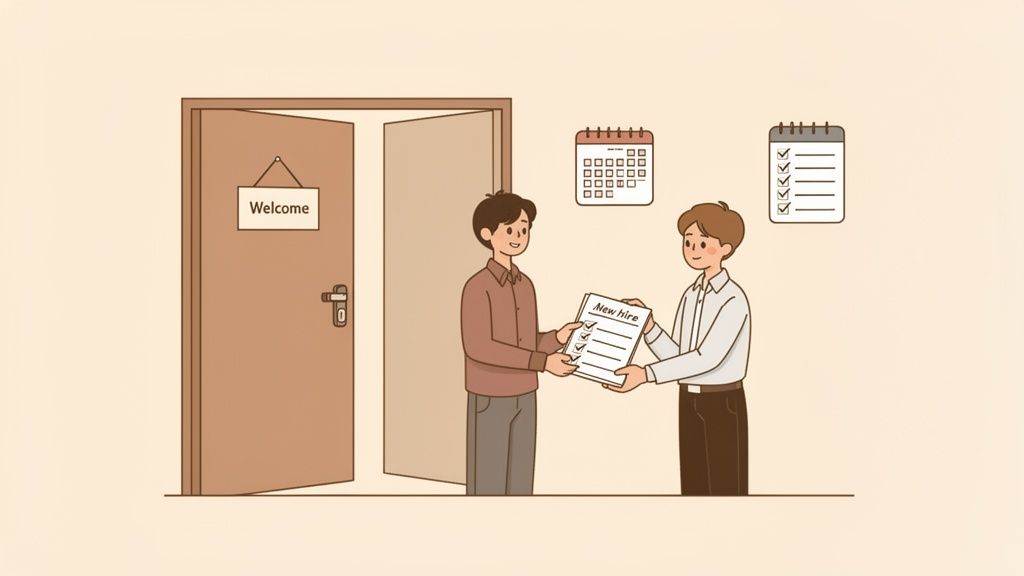
The first 90 days at a new job set the tone for everything that follows. A structured onboarding program is more than a welcome email and a laptop. It's a guided journey that turns a new hire into a connected and confident team member. This employee engagement sample is designed to intentionally integrate newcomers from day one.
This isn’t a one-day info dump. It’s a thoughtful process that builds momentum and creates personal connections. The goal is to make a new hire feel like they belong, not like they've been dropped in the deep end.
Why it works
Great onboarding is a retention tool. Gallup research consistently shows that a strong onboarding experience significantly boosts retention. Zappos is famous for its culture-first onboarding, where new hires spend weeks learning the company's values. For frontline teams, structured onboarding ensures consistent standards and helps new people navigate complex systems from the start.
This program’s power comes from its blend of information and human connection. A buddy system gives a new hire an informal guide for all the "silly" questions they might hesitate to ask a manager. Scheduled check-ins at 30, 60, and 90 days create formal touchpoints to address challenges and prove their development is a priority.
How to use it
Here’s how to build an onboarding experience that makes people want to stay:
Assign a Buddy: Pair new hires with a peer who lives your company values. This isn't a mentor for their career, but a friend for navigating day-to-day work life.
Create Role-Specific Roadmaps: A retail employee needs a different 30-day plan than a software developer. Tailor checklists to include job-specific training and goals.
Centralize Everything: House all onboarding documents and checklists in one accessible place. This removes the stress of hunting for information.
Gather Feedback: Your onboarding program is never finished. Use a quick survey at the 90-day mark to ask what worked and what didn't, then use that feedback to refine the process.
5. The Wellness Check-in
If an engagement survey is a check-up on your company's health, a wellness check-in is a check-up on your people's health. It goes beyond job satisfaction to ask, "How are you, really?" This employee engagement sample is a short, confidential survey focused on well-being. It’s designed to identify stress and burnout before they escalate.
This isn’t about prying. It's about showing you care and creating a safe way for people to signal they need support. Acknowledging the human behind the job title is no longer optional.
Why it works
A wellness survey's strength is its empathy. Instead of just measuring output, you’re measuring your team's capacity to thrive. During the pandemic, companies used these check-ins to gauge employee strain and offer targeted resources, from mental health support to flexible schedules. The NHS uses similar surveys to monitor staff well-being in high-stress hospital environments.
The real impact comes from anonymity and clear follow-through. When people see their feedback leads to tangible support—like a new mental health resource or a workshop on stress—it builds profound psychological safety. It proves the company is invested in them as people, not just as workers.
How to use it
Here's how to implement a wellness check-in that feels supportive, not intrusive:
Guarantee Anonymity: This is non-negotiable. Use a tool that ensures responses are completely anonymous and say so upfront.
Balance Scale and Story: Use a mix of rating-scale questions ("Rate your stress level from 1-5") and open-ended questions ("What support would be most helpful right now?"). This gives you both trends and context.
Share Insights and Act: Report back on the high-level themes. For example, "40% of us are feeling stretched, so we are reviewing project timelines." This closes the loop and shows you’re taking action.
By acting on the data, you can explore 10 effective employee wellness program ideas and tailor them to the needs your survey uncovers.
6. The Team Huddle Agenda
The daily or weekly team huddle is the heartbeat of a connected team, especially when people are spread across shifts or locations. Think of it as a quick campfire gathering. It’s not a long meeting; it's a 15-minute sync-up to align on priorities, share wins, and tackle roadblocks. This employee engagement sample provides a structure to make these huddles consistent and valuable.
This isn’t about adding another meeting. It’s about replacing scattered updates with a moment of clarity and connection. The goal is to ensure everyone starts their shift on the same page.
Why it works
A structured huddle’s power is its predictability and brevity. The Ritz-Carlton has used a daily "Lineup" for decades to reinforce its service standards. Amazon's warehouse huddles start each shift with critical safety information. The routine is the magic. A consistent agenda that mixes operational needs with human connection turns the huddle from a status update into a cultural ritual.
How to use it
Here's how to run a huddle that energizes, not drains:
Keep It Short: Stick to 15 minutes, maximum. Respecting everyone’s time is a form of engagement. Use a timer.
Rotate Leaders: Let different team members lead the huddle. This builds confidence and a sense of shared ownership.
Start and End on a High Note: Kick off with a quick win. End by setting a positive intention for the day.
Act on What You Hear: If a roadblock is raised, assign an owner to fix it right there. This shows the huddle is a place for action, not just talk.
7. The DEI Program
Think of your company culture as a garden. A Diversity, Equity, and Inclusion (DEI) program is the work that ensures it thrives. It’s more than a mission statement. A true DEI program fosters belonging, creates fair opportunities, and celebrates different perspectives. This isn't about feeling good; it's about building a stronger, more innovative company.
This sample of an employee engagement program moves beyond compliance to create genuine connection. It’s about building a workplace where everyone feels seen, heard, and valued.
Why it works
A DEI program’s power comes from its authenticity. It’s not a side project; it’s a core business strategy. Salesforce invested millions to correct pay gaps, sending a powerful message that equity is a priority. Microsoft’s inclusive hiring initiatives don't just broaden their talent pool; they also drive innovation. It’s about action, not just words.
The real impact is felt when employees see this commitment in their daily lives. When leadership pay is tied to DEI metrics and Employee Resource Groups (ERGs) have executive sponsors, the program becomes a lived reality. This proves the company is invested in systemic change.
How to use it
Here’s how to build a DEI program that works:
Start with Leadership: Change begins at the top. Secure a real commitment and a budget from leadership before you roll anything out.
Empower ERGs: Don't let Employee Resource Groups be volunteer efforts. Give them an executive sponsor, a budget, and a real voice in company decisions.
Measure and Be Transparent: Conduct regular pay equity audits and share the results. Use surveys to measure feelings of inclusion across different demographics. Public accountability builds trust.
A good DEI program is a powerful employee engagement sample because it addresses a fundamental human need: to belong. When people feel safe to be themselves, their engagement and creativity soar.
8. The Performance Feedback Conversation
Annual reviews feel like a final exam. They are high-stakes, backward-looking, and rarely capture the full picture. A continuous feedback template shifts this from a yearly judgment to an ongoing, developmental conversation. This employee engagement sample provides a framework for regular check-ins that focus on growth, not grades.
It’s about making feedback a normal part of the work week. The goal is to create a culture where coaching happens in the moment, helping people improve today instead of waiting for a review months from now.
Why it works
This approach is timely and forward-looking. Adobe ditched annual reviews for its "Check-In" system of frequent conversations, and saw a significant drop in voluntary turnover. Microsoft moved to a continuous feedback model to foster a growth mindset, tying conversations to impact and future learning.
The real power is psychological safety. When feedback is frequent and balanced, it removes the fear of the annual review. A simple framework like Situation-Behavior-Impact (SBI) helps managers deliver clear, objective feedback. It turns a manager into a coach.
How to use it
Here’s how to make continuous feedback a core part of your rhythm:
Schedule It: Don't leave it to chance. Book recurring 1:1s (bi-weekly is a good start) dedicated to feedback and development.
Balance the Conversation: Aim for a healthy mix of positive and constructive feedback. A 4:1 ratio of praise to developmental points is a good rule of thumb.
Focus on the Future: Use feedback to build a development plan. Ask, "What skills do you want to build this quarter?" and "How can I support your career goals?"
Great managers transform performance reviews from a dreaded task into one of their most powerful employee engagement strategies.
8-Point Employee Engagement Comparison
Item | 🔄 Implementation Complexity | ⚡ Resource Requirements | 📊 Expected Outcomes | 💡 Ideal Use Cases | ⭐ Key Advantages |
|---|---|---|---|---|---|
Pulse Survey Template | Low — days to launch; ongoing weekly admin | Low — minimal staff, analytics dashboard, mobile support | Real-time engagement trends; quick actionable insights | Frontline and shift-based teams; frequent sentiment checks | High response rates; fast actionability; cost-effective |
Team Recognition and Celebration Program | Moderate — 2–4 weeks to launch; ongoing program management | Moderate — platform features, leader participation, small incentives | Improved morale and retention over time; stronger cohesion | Distributed, multi-shift teams; culture-building initiatives | Boosts morale; high ROI; peer-driven recognition |
Internal Communication & Company Updates Template | Low–Moderate — 1–2 weeks to develop templates; disciplined use | Low — content creators, multi-channel distribution, translations | Consistent messaging; reduced misinformation; traceable engagement | Enterprises and distributed workforces; policy or CEO updates | Clarity and consistency; accountable, trackable communications |
Onboarding Welcome & Integration Program | High — 4–8 weeks to develop; multi-step execution | High — mentors/buddies, learning resources, manager time | Faster time-to-productivity; improved first-year retention | High-turnover or rapidly scaling companies; critical hires | Structured integration; reduces new-hire anxiety; improves retention |
Employee Wellness Check-in & Support Survey | Moderate — 2–3 weeks to develop; requires privacy protocols | Moderate–High — EAP integration, trained responders, confidentiality controls | Early identification of at-risk employees; reduced absenteeism | Post-pandemic workplaces; healthcare; dispersed teams | Demonstrates care; enables early intervention; informs wellness ROI |
Team Huddle Meeting Activity & Agenda Template | Low–Moderate — 1–2 weeks to prepare; ongoing facilitation | Low — facilitator time, brief prep materials, note tracking | Regular alignment; faster issue resolution; safety improvements | Retail, hospitality, healthcare, logistics; shift-based teams | Builds cohesion; improves operational safety and communication |
Diversity, Equity, and Inclusion (DEI) Engagement Program | High — 3–6 months to launch; sustained effort | High — dedicated staff, budget, training, audits, leadership time | Improved inclusion, innovation, and employer brand (long-term) | Organizations committed to inclusive culture and diverse talent | Enhances belonging and reputation; drives long-term innovation |
Performance Feedback & Development Conversation Template | Moderate — 2–3 weeks templates; 4–6 weeks training for managers | Moderate — manager training time, documentation tools, coaching | Better performance and development outcomes; stronger manager relationships | High-growth and retention-focused organizations | Enables continuous feedback; reduces surprises; supports career growth |
The Samples Aren't the Point
We just walked through a whole toolkit of employee engagement samples. You could copy and paste every template, run them perfectly, and still end up with a disengaged team.
Why? Because the samples aren't the point. They never were.
It's What Happens Next
Let’s be honest. A template is just a container. The real work—the part that builds trust—begins after you hit send.
It’s the quiet, consistent effort that follows:
Reading every single pulse survey response, even the harsh ones.
Pulling three managers aside to discuss why their teams report communication breakdowns, and then actually doing something about it.
Noticing that the same employee gets a shout-out every week and making sure their manager knows you see their impact.
Following up with a new hire a month in, not with a form, but with a simple message: “How are you really doing?”
These actions are the connective tissue. The samples are just the skeleton. Without the follow-through, they are empty rituals.
Build a Sane Workplace
The goal isn’t to "do engagement." The phrase itself feels hollow. The real aim is to build a calm, productive, and sane place to work. A place where people feel seen, heard, and respected, whether they’re in the C-suite or on the weekend shift.
Think of it this way: The feedback template isn’t about filling out a form. It's about creating space for an honest conversation that helps someone grow. The team huddle agenda isn’t about a checklist. It's about making sure everyone starts their shift on the same page.
Every employee engagement sample here is a tool to help you pay better attention. They are prompts to listen more carefully, recognize more thoughtfully, and communicate more clearly. That’s it. They aren’t magic.
Your Next Step
So, what now? Don't try to implement all eight at once. That's a recipe for burnout.
Pick one.
Maybe you start with the pulse survey because you genuinely don’t know how your team is feeling. Or maybe you start with recognition because you know great work goes unnoticed.
Commit to that one thing. Use the sample as your starting point, but then make it your own. Tweak the language so it sounds like you. Adapt the process to how your team actually works. And most importantly, commit to the follow-through. When you get feedback, act on it. When you see great work, celebrate it.
That’s how real engagement is built. Not through a flurry of initiatives, but through small, consistent, authentic actions, repeated over time. The rest is just noise.
If you’re tired of juggling spreadsheets and email chains to keep your team in sync, take a look at Pebb. We built it to bring all these conversations, recognitions, and surveys into one simple place, especially for busy teams on the front lines. You can try out many of the samples we discussed today and see how much easier it is when your tools work together at Pebb.
