
Construction Crew Late Call-Out Coverage Playbook
Construction crew late call-out coverage playbook for supervisors and HR. Triage, reassign, roster and stay compliant when crews call out late.
Dan Robin

At 5:30am, the phone lights up and you already know the day just changed. One operator is sick. One finisher is stuck two counties over. One laborer says he can't make it. The crew's due to roll in less than an hour, concrete is booked, a crane slot is set, and now everyone looks at the superintendent like he can bend time.
That's the moment when most sites learn whether they have a coverage plan or just a habit of scrambling.
I've never seen construction crew late call-out coverage work well when it depends on heroics. It works when the rules are boring, the backups are known, and the pay implications are understood before anyone starts dialing names at dawn. Construction has lived with higher absence pressure for a long time. Statistics Canada reported construction absenteeism at 8.6% in 2006, 9.3% in 2007, and 8.5% in 2008, and a later cross-country review cited in academic research estimated construction worker absence at 8.4% in Canada, 5.9% in Lebanon, 2.1% in the United Kingdom, and 2.4% in the United States. That same research found 45% of absent workers could give advance notice, which means more than half may not (construction absenteeism research).
That's the whole game. Coverage has to be built for short notice, not ideal notice.
When the 5am Call Comes In and Coverage Has to Work
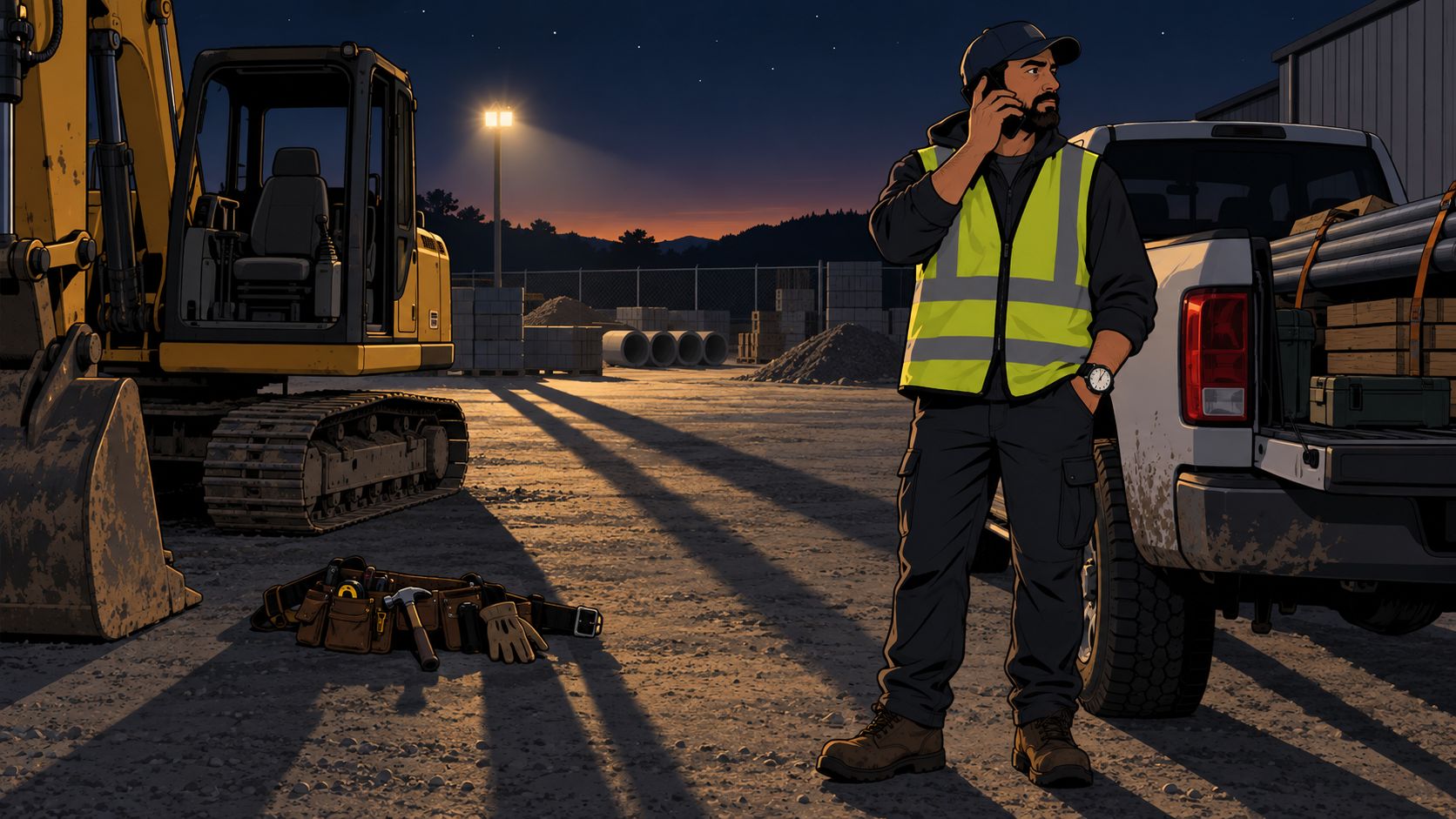
The failure point usually isn't the absence itself. It's the chain reaction after it. Someone starts texting half the roster. Nobody logs the call time. The foreman tries to reshuffle bodies on the fly. A critical task starts late because the one person with the right cert or machine familiarity isn't there. Then overtime gets baked into the back half of the day.
That feels like a discipline problem when you're in the middle of it. It usually isn't. It's a systems problem.
What good coverage feels like
Good coverage is calm. The worker calls one place, not three. The report gets timestamped. The supervisor gets one clean alert. Someone decides fast whether the missing role is critical, deferrable, or replaceable through task reshuffling. The crew doesn't get stretched into unsafe work just to protect the schedule.
That kind of morning is possible because the work was done earlier. The standby names were already sorted. The cross-trained people were already known. The pay rules were already understood.
Coverage isn't something you invent at 5:30am. It's something you prove at 5:30am.
Why this problem keeps showing up
Construction crews don't operate with much slack, and the labor market hasn't made that any easier. The Home Builders Institute's 2024 labor market report found the share of builders reporting shortages across nine trades averaged 52% for directly employed labor, down from 58% in 2023 but still well above normal historical levels and below only the record-high 77% seen in 2021. In the same report, shortages ranged from 33% for landscape workers to 65% for finished carpentry, while the construction layoff rate was 1.8% in March 2024 versus 3.6% a year earlier, and the hiring rate fell to 4.1% from 5.2% (Home Builders Institute labor market report).
Those numbers matter because they explain why a missing person at dawn is no longer a simple replacement exercise. The bench is thinner. The trades are tighter. The cost of a bad decision shows up faster.
The promise that actually matters
You don't need a fancy theory. You need a playbook that holds up under pressure. One that deals with prevention, triage, rostering, pay rules, and communication in the same flow.
If you build that, late call-outs stop feeling random. They still hurt. They just stop running the whole site.
Preventing Late Call-Outs Before They Happen
Most attendance advice is too neat for construction. It assumes people miss work because they're careless, disengaged, or trying to game the system. Sometimes that happens. But on real sites, the root causes are usually more practical than moral.
Classic construction absenteeism literature found absence rises with longer travel distance, and a construction roundtable report says workers more often point to poor supervision, unsafe working conditions, excessive rework, and poor planning than personal illness as reasons for missing work (construction roundtable report). That should change how you respond. If the job keeps creating miserable mornings, the job will keep producing call-outs.
Fix the job before you police the worker
Start with travel. If you move people between distant sites with little notice, or you stack start times in a way that punishes the longest commute, don't act surprised when the no-shows cluster around those assignments.
Then look at rework. Rework is poison for attendance. It tells good workers their time doesn't matter. It turns a hard job into a wasteful one. When crews spend days tearing out and redoing bad handoffs, morale drops before anyone says a word.
Unsafe conditions are even simpler. If the site feels loose, people remember. They may still show up for a while, but they start looking for reasons not to.

The prevention levers that are actually in your control
Peer-reviewed construction research argues that absenteeism should be treated as a schedule risk and recommends factoring it into probabilistic scheduling and BIM-based planning because it threatens on-time completion. The same body of research points to practical levers that reduce absence pressure: training to raise worker skill, incentives to increase tenure onsite, and schedules designed to reduce overtime (construction absenteeism planning research).
In plain terms, three things help:
Cross-train your critical roles. If only one person can run a process, inspect a setup, or handle a key handoff, you don't have a staffing plan. You have a single point of failure.
Stop stacking fatigue. Overtime isn't just a payroll line. It changes next morning attendance. The crews carrying the heaviest extra hours need more buffer and more realistic planning.
Cut last-minute chaos. Better material readiness, cleaner handoffs, and firmer scope planning lower the odds that workers burn out on avoidable nonsense.
A weekly planning habit that pays off
I like a simple weekly reset. Nothing fancy. Just a short review with field leaders.
Name the critical roles for each day's work and mark where only one qualified person exists.
Flag fatigue risk where crews have been carrying long hours or repeated schedule compression.
Check site friction like commute burden, repeated rework, access issues, or supervisors who keep drawing complaints.
Decide what can move if a role goes missing, so the decision isn't made in a panic.
Practical rule: If the same crew keeps calling out late, stop talking only about attendance. Look at the work they're being asked to show up to.
Prevention won't eliminate the 5am call. It does something better. It makes the call rarer, and it keeps your relief buffer from growing larger than it needs to be.
Triage the Call-Out and Reassign Work Without Chaos
The first half hour matters more than the next five. If the early response is sloppy, the whole day gets expensive.
A useful industry guidance source treats coverage as a prebuilt relief-capacity problem rather than an improvised foreman task. Its sizing example is simple: if a shift needs 100 workers and the absence rate is 10%, then 10 relief workers should be available that day. The same guidance recommends building coverage into the schedule itself, with a centralized reporting channel, automatic timestamping and confirmation, and one notification path to the supervisor so replacement action starts immediately (relief coverage management guidance).
That's the model I trust. Not a phone tree. Not “let's see who answers.” A system.
One channel in, one alert out
Every late call-out should come through one reporting path. One number, one app, one place. The reason isn't bureaucracy. It's speed and clarity.
If workers can text the foreman, call payroll, message a coworker, or leave voicemail for whoever they think is awake, you lose clean timing and clean accountability. You also waste the one thing you don't have at dawn, which is attention.
The report should answer a few things right away:
Who is out
Which site or crew they were assigned to
When the call came in
Whether they expect to miss part of the day or all of it
Whether the role is skilled, certified, or safety critical
Triage by task, not emotion
The mistake I see most is treating every absence like an emergency. Some are. Some aren't.
Use a short sequence. First ask whether the missing worker is tied to a task that is safety critical, permit dependent, inspection dependent, or on the project's hard path. If yes, you're looking for a qualified replacement or a direct replanning move. If no, ask what work the crew can still do safely and productively without creating rework later.
That usually leaves you with three options.
Reassignment choice | When to use it | What to watch |
|---|---|---|
Shift work within the crew | Useful when skills overlap and the task mix is flexible | Don't strip another critical activity bare |
Pull from relief or standby | Best when the missing role is key and the replacement is already identified | Check response-time rules and competency before dispatch |
Re-plan the day | Right call when the task can't be done safely or correctly short-handed | Protect schedule integrity instead of pretending |
Informal backfilling always looks cheaper than it is
When coverage is informal, supervisors tend to borrow whoever is available. That feels efficient because no one wants dead time. But informal borrowing creates delayed starts, overtime stacking, and patchy coverage across crews and days. One crew gets saved by draining another. Then tomorrow you pay twice.
What works better is knowing your own absence pattern and carrying planned relief where the risk is highest. Not everywhere equally. Where it matters.
If filling the gap means putting tired people into unfamiliar work, moving unqualified workers into critical tasks, or gutting another crew's priority work, stop. Re-plan the day.
That's not softness. That's control.
Rostering Shift Swaps and On-Call Protocols That Actually Hold
Once you stop treating every call-out like a one-off event, the next question is simple. Which coverage lever fits this crew?
I'd break it into three buckets. Roster buffer, peer shift swap, and formal on-call pool. None of them wins every time. The right choice depends on trade specialization, site spread, response expectations, and how tight the labor market already is.
Choosing the lever for the crew you actually have
Coverage Lever | Best For | Response Speed | Cost and Risk |
|---|---|---|---|
Roster buffer | Core crews with recurring absence pressure and specialized daily work | Fast, because coverage is already scheduled | Higher planned labor cost, lower morning chaos |
Peer shift swap | Larger crews with interchangeable skills and predictable approval rules | Moderate | Lower direct cost, risk of poor skill matching if rules are loose |
Formal on-call pool | Dispersed sites, urgent repair work, or roles where response time matters | Fast when expectations are clear | Can trigger premium pay, response disputes, and burnout if overused |
Roster buffer is the least exciting and often the most reliable
A roster buffer doesn't feel clever. That's why it works. You decide ahead of time that some portion of labor exists to absorb predictable absence. Not because people are unreliable, but because the work is.
This is especially useful where one missing worker knocks out a whole sequence. Mechanical startup work, finishing work, tight shutdown windows, specialized equipment support. In those cases, under-planning relief is usually a false economy.
Shift swaps need tighter rules than most sites use
Shift swaps sound easy until they aren't. If you let workers swap informally, you can end up with the wrong skill mix, overtime you didn't expect, or a person showing up to a site they were never briefed on.
Set a few hard rules. Approval window. Skill match. Site eligibility. Supervisor signoff. If the trade is specialized, keep swaps inside a qualified pool instead of opening them to anyone who wants hours.
If you're building schedules for crews that move between jobs, it helps to keep the schedule visible in one place. A crew-based scheduling setup like this guide to construction crew shift scheduling makes it easier to see which workers are interchangeable and which ones only look interchangeable on paper.
On-call works only when response expectations are real
A formal on-call pool earns its keep when the work is time-sensitive and site conditions change fast. But it only works if people know the rules before the phone rings. How quickly do they have to respond? Which sites are they covering? What skills are required? What pay applies if they answer and get canceled or report late into the shift?
This matters even more when supervisors are trying to cover multiple locations. In those cases, good field visibility helps you make better calls about whether to send a replacement or resequence work. Tools like smart dashcam solutions can be useful for dispersed fleets because they help ops teams understand travel realities, dispatch timing, and what crews are walking into before they move people around.
The bigger point is simple. Hope is not a coverage method. Pick your lever by crew type, write the rules down, and make sure everyone knows what “available” means.
Safety Checks Pay Rules and Timecard Handling for Coverage
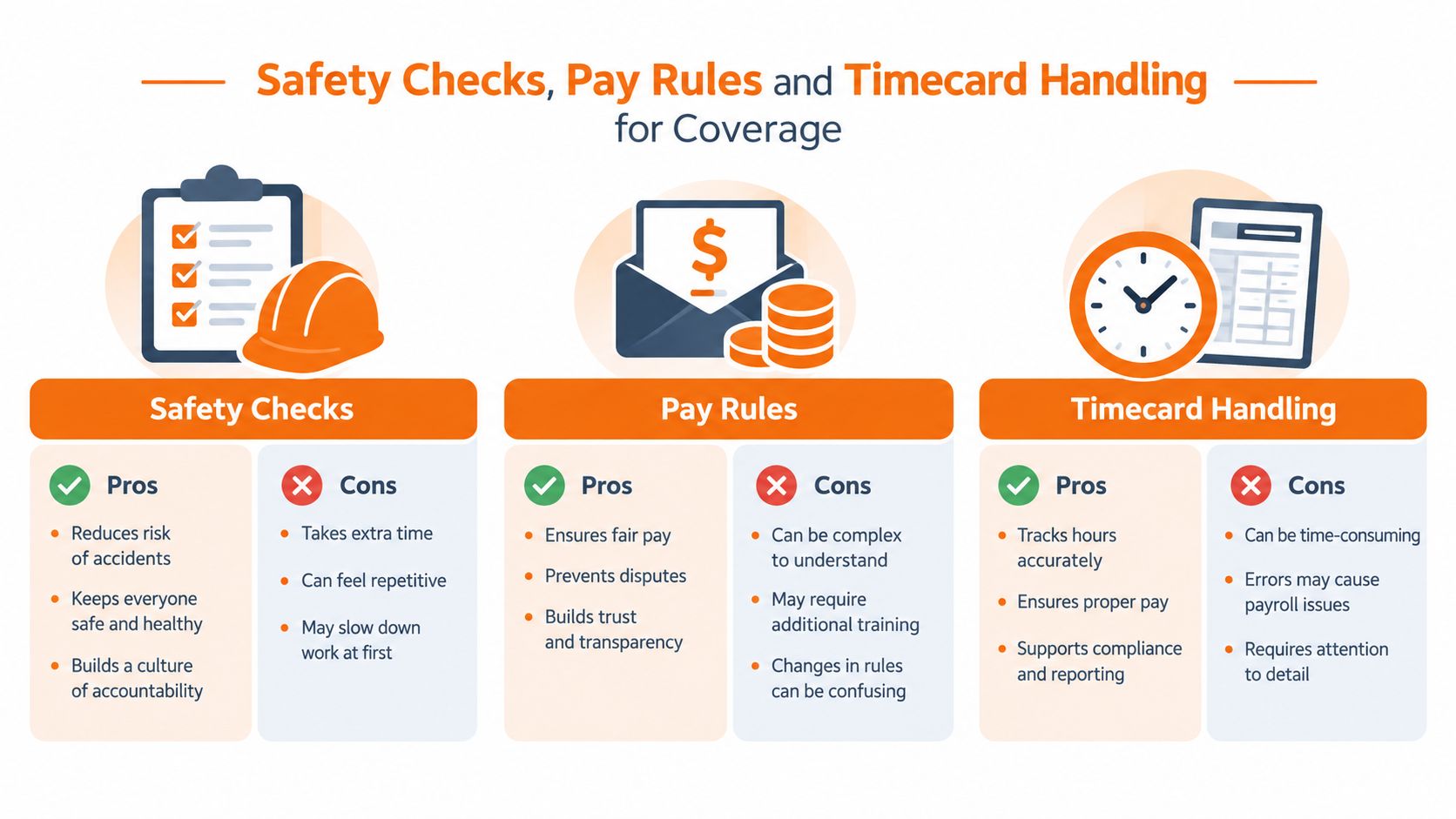
A lot of late call-out advice ends right where the costly part begins. It tells you how to find a body. It doesn't tell you what that body costs, whether they can legally do the work, or how payroll is supposed to code the morning.
That's where supervisors get burned.
The pay trap behind a quick fix
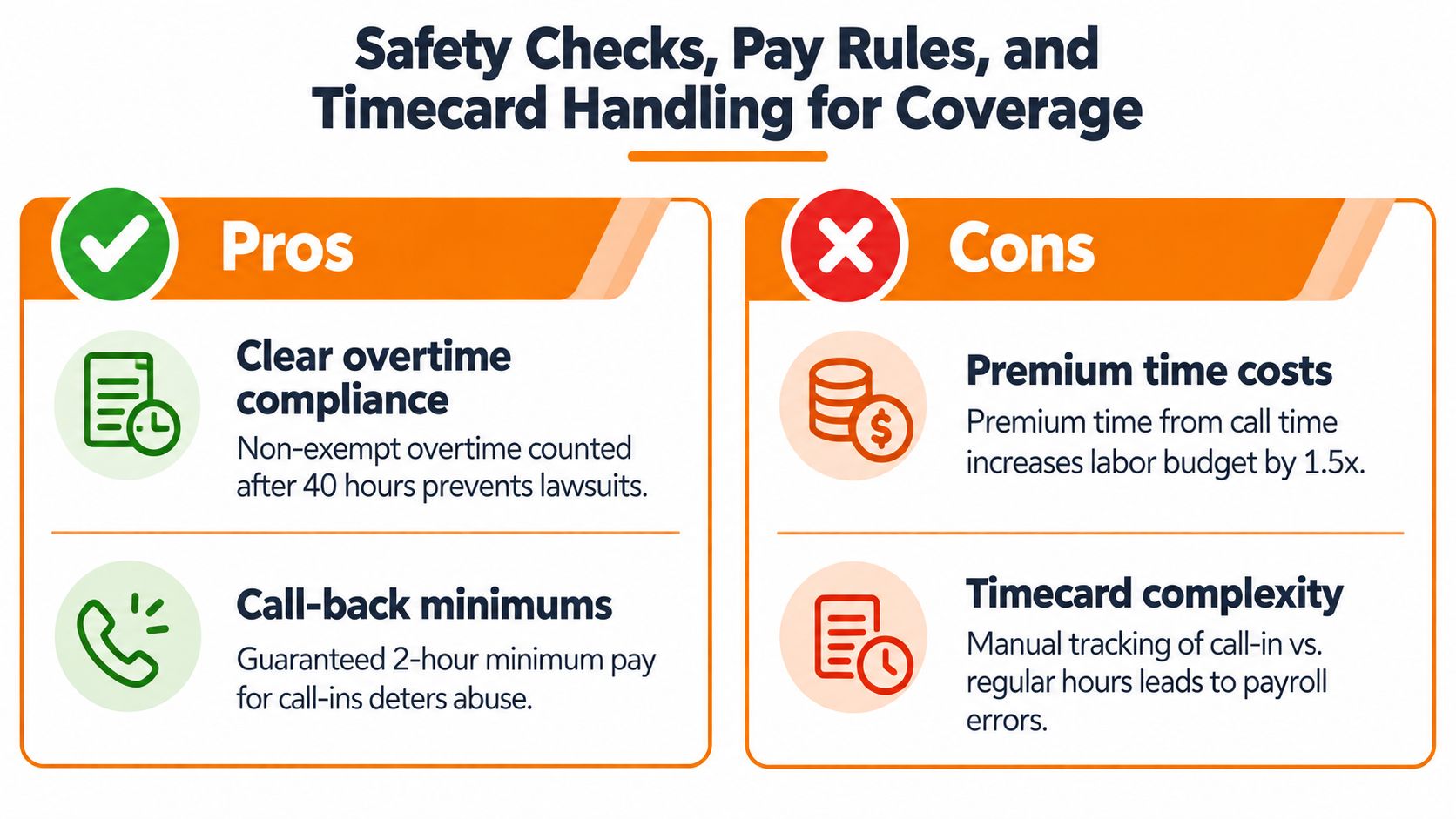
Construction workers who are non-exempt are covered by the Fair Labor Standards Act overtime rule. They must receive at least 1.5 times their regular rate after 40 hours in a workweek, and Department of Labor guidance specifically names construction occupations as non-exempt (FLSA overtime note). So the “easy” move of extending a reliable worker's day can stop being easy very quickly.
Project rules and labor agreements can add another layer. One construction payroll guide states a minimum of 4 hours at the overtime rate when a worker is called back after a regular shift, and another project labor agreement requires employees to be available on short notice and respond in as little as 2 hours for time-sensitive repairs (construction payroll call-back guide). A separate agreement example shows how costly replacement language can get, including minimum call-out pay, premium time from the call time, and cases where a replacement who reports within 2 hours of start time is guaranteed a full shift (agreement call-out provisions).
Outside the U.S., it's no looser. Under Australia's Building and Construction General On-site Award, overtime beyond ordinary Monday to Friday hours is paid at 150% for the first 2 hours and 200% after that, and recalls to work after leaving site also trigger overtime. One Canadian collective agreement requires 3 hours at double time for certain immediate weekend or statutory holiday call-ins, and 2 hours pay when a worker reports as instructed but no work is provided (Australia and Canada call-out rules).
Safety still comes first
A replacement doesn't become usable just because they answered the phone. Before they start, someone has to confirm competency, site orientation needs, task-specific hazards, and equipment sign-off. If the role touches permits, confined space, energized work, lifts, or anything else with a hard qualification line, there is no “close enough.”
That's why mature teams treat coverage as both a staffing and safety workflow. If you want a useful example of how safety culture gets formalized and recognized across field operations, the story behind Pacific Mobile Structures' 2020 Platinum Safety Award is worth a look. Not because awards solve anything, but because disciplined safety systems reduce the temptation to improvise when the pressure is on.
The fastest replacement is the one who can start safely, be paid correctly, and be explained cleanly on a timecard.
Timecards need their own workflow
Late call-out coverage creates messy records when teams treat all hours the same. They aren't the same.
Use separate coding for the original absence, the replacement assignment, any callback period, and overtime triggered by the change. If you're trying to estimate the labor impact before you approve coverage, a simple employee overtime calculator can help supervisors and payroll teams think through whether the “quick fix” is still the smart fix.
The point isn't red tape. The point is avoiding three avoidable problems: payroll disputes, contract violations, and managers who stop trusting the numbers after a chaotic week.
Communicate Clearly and Learn From Every Call-Out
The sites that handle call-outs best don't just recover fast. They learn fast.
Most teams talk plenty during the scramble, then capture nothing once the dust settles. That's a miss. Every late call-out gives you a little operational truth if you bother to log it. What role went missing. How much notice came in. What coverage choice you made. What it cost in hours, delay, or lost sequence. Whether the root cause was fatigue, travel, supervision, rework, or something else.
Keep the messages short and useful
Crew communication during coverage should be brief and directional.
To the crew: tell them who is out, what's changing, and what is not changing.
To the client or project lead: say whether the day's critical work is still on track or being resequenced.
To payroll or admin: send the coverage decision in plain language before memory gets fuzzy.
To the next supervisor in line: record any knock-on effect for tomorrow's staffing.
If you run communication inside a dedicated team channel instead of text chains, these updates stop disappearing. A crew-based tool like employee team chat app gives supervisors one place to post the call-out, confirm reassignment, and hand off the record without hunting through personal messages. That matters when mornings get noisy.
The ten-minute review most teams skip
You don't need a committee. You need ten minutes.
Ask four things:
What caused the absence
How did we cover it
What did that choice create downstream
What should change before the same role goes missing again
Then store that somewhere your team can find later. In practice, that means putting the pattern where scheduling, tasks, and site notes already live. If one crew keeps getting hit after long overtime runs, adjust the buffer. If one site keeps producing same-day absences because access is a mess, fix the access. If one supervisor's jobs have the highest rework and call-out friction, deal with the supervision issue directly.
Quiet systems beat loud heroics
The best coverage system is the one nobody brags about. Calls come in. Decisions get made. Safety holds. Payroll stays clean. The crew knows what changed and gets to work.
That kind of morning feels ordinary. Good. Ordinary is the goal.
Start with one template tomorrow. One reporting channel. One triage rule. One short debrief. That's enough to turn the next 5:30am call from a fire drill into routine work.
Pebb gives crews one place to handle the messy parts of coverage that usually spill across calls, texts, and paper notes. You can use it to keep site-based chats, shifts, tasks, updates, and handoffs together so a late call-out gets logged, reassigned, and communicated without the usual confusion. If that sounds like the kind of calm your mornings need, take a look at Pebb.
