
Author: Ron Daniel
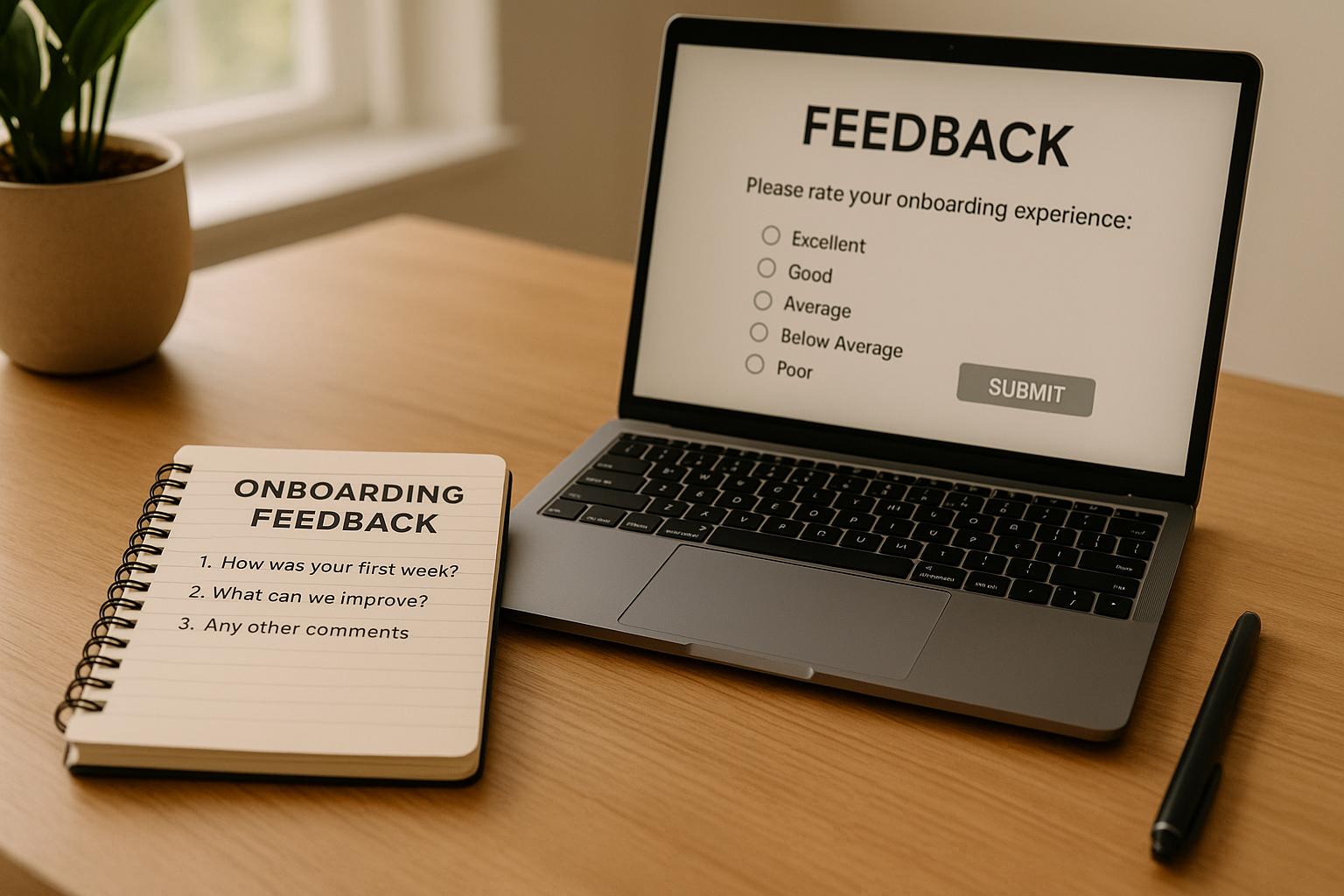
How to Collect Onboarding Feedback
Learn effective methods to collect onboarding feedback that enhances new hire experience and drives long-term engagement.
It’s wild how much you can miss when you don’t ask the right questions. I learned this the hard way when we onboarded a new team member at Pebb a few years ago. We thought we had a solid process - documents ready, training scheduled, checklists checked. But a month later, we discovered they’d spent their first week confused about who to reach out to and unsure about their role. The kicker? They didn’t feel comfortable saying anything at the time. That was our wake-up call.
Here’s the thing: new hires bring fresh eyes and spot issues the rest of us might overlook. If you’re not actively collecting feedback during onboarding, you’re leaving valuable insights on the table. And it’s not just about fixing problems - it’s about showing new employees that their voice matters from day one. At Pebb, we’ve seen how this approach transforms not just onboarding but long-term engagement too.
In this article, I’ll share the methods we’ve tried, what’s worked, and how we’ve made feedback a core part of our onboarding process. From one-on-one check-ins to anonymous surveys, you’ll walk away with actionable steps to improve your process and, more importantly, build trust with your team. Let’s dive in.
Ways to Collect Onboarding Feedback
At Pebb, we've spent a lot of time figuring out how to gather onboarding feedback effectively. Why? Because the way we collect feedback can make or break a new hire's experience. Over the years, we’ve tested different methods to suit companies of all shapes and sizes. The trick is offering multiple options so new hires can share their thoughts in a way that feels natural to them.
One-on-One Meetings
There’s something special about a good one-on-one meeting. It’s not just about feedback - it’s about connection. These conversations give new hires a chance to share what they might not feel comfortable saying in a group or putting in a survey. And honestly, they’re a great way to build trust right from the start.
Here’s how we do it: we schedule a 30-minute one-on-one after the first week to hear their initial impressions, and then another at the three-week mark to dig a little deeper. It’s amazing how much you can learn when you simply ask, “What’s working for you so far?” or “What’s been the most confusing part of your first few days?”
We also use Pebb’s private chat feature to keep the conversation going after the meetings. It’s a low-pressure way for new hires to share follow-up thoughts or ask questions that come up later. Plus, it keeps everything organized - no more searching through endless email threads.
Anonymous Surveys
Let’s be real: not everyone feels comfortable giving honest feedback face-to-face, especially when they’re still trying to make a good impression. That’s where anonymous surveys come in handy. People are much more likely to share constructive criticism when they know their name isn’t attached.
But here’s the thing - keep it short and sweet. Nobody wants to tackle a massive survey during their first week. I usually stick to 8-10 questions, mixing rating scales with open-ended prompts. For example, “On a scale of 1-10, how clear was your onboarding process?” followed by, “What could have made it clearer?”
We’ve also started using AI tools to create polished survey templates quickly. It’s been a game-changer for response rates. But the real magic happens when we act on the feedback. I always share the aggregated results with the team and explain what changes we’re making. When new hires see their suggestions lead to real improvements, it builds trust - and keeps the feedback loop alive.
Focus Groups for Team Insights
Sometimes, the best ideas come from group conversations. Focus groups are perfect for surfacing shared experiences and sparking new ideas. One person mentions a challenge, and suddenly everyone’s nodding and chiming in. It’s like a lightbulb moment for the whole group.
I usually keep these groups small - 4-6 new hires who started around the same time. That way, everyone gets a chance to speak while still getting a mix of perspectives. The key is creating a judgment-free zone. I always kick things off by saying, “We’re here to improve the process, not to point fingers.” Then I’ll ask open-ended questions like, “What was the most surprising part of your first two weeks?” or “If you could change one thing about onboarding, what would it be?”
After the session, we use Pebb’s group communication tools to keep the conversation going. It’s not uncommon for someone to think of a great idea later, and having a dedicated space for follow-ups makes it easy to capture those afterthoughts.
Suggestion Boxes for Ongoing Feedback
Structured feedback sessions are great, but what about those random ideas that pop up after a new hire has been in their role for a while? That’s where digital suggestion boxes shine. They’re perfect for capturing those “aha!” moments that don’t fit into a formal meeting or survey.
At Pebb, we’ve built digital forms right into our platform. Employees can drop in their ideas anytime, choosing to include their name or stay anonymous. This approach ensures we’re gathering feedback long after the initial onboarding phase.
The key is to actually do something with those suggestions. I review them weekly and always follow up, even if it’s just to say, “Thanks for the idea - we’re looking into it.” When people see their input is taken seriously, they’re more likely to keep sharing. And that’s how we keep improving, one suggestion at a time.
Tools for Collecting Feedback
When it comes to gathering feedback, the tools you choose can make or break your process. I’ve seen companies get bogged down by feedback scattered across too many platforms - making it nearly impossible to identify trends or take meaningful action. The goal is to find a tool that keeps everything organized and makes it easy for new hires to share their thoughts. Trust me, the right system can transform feedback from a frustrating chore into a powerful driver of improvement.
Why Pebb Stands Out for Feedback Collection
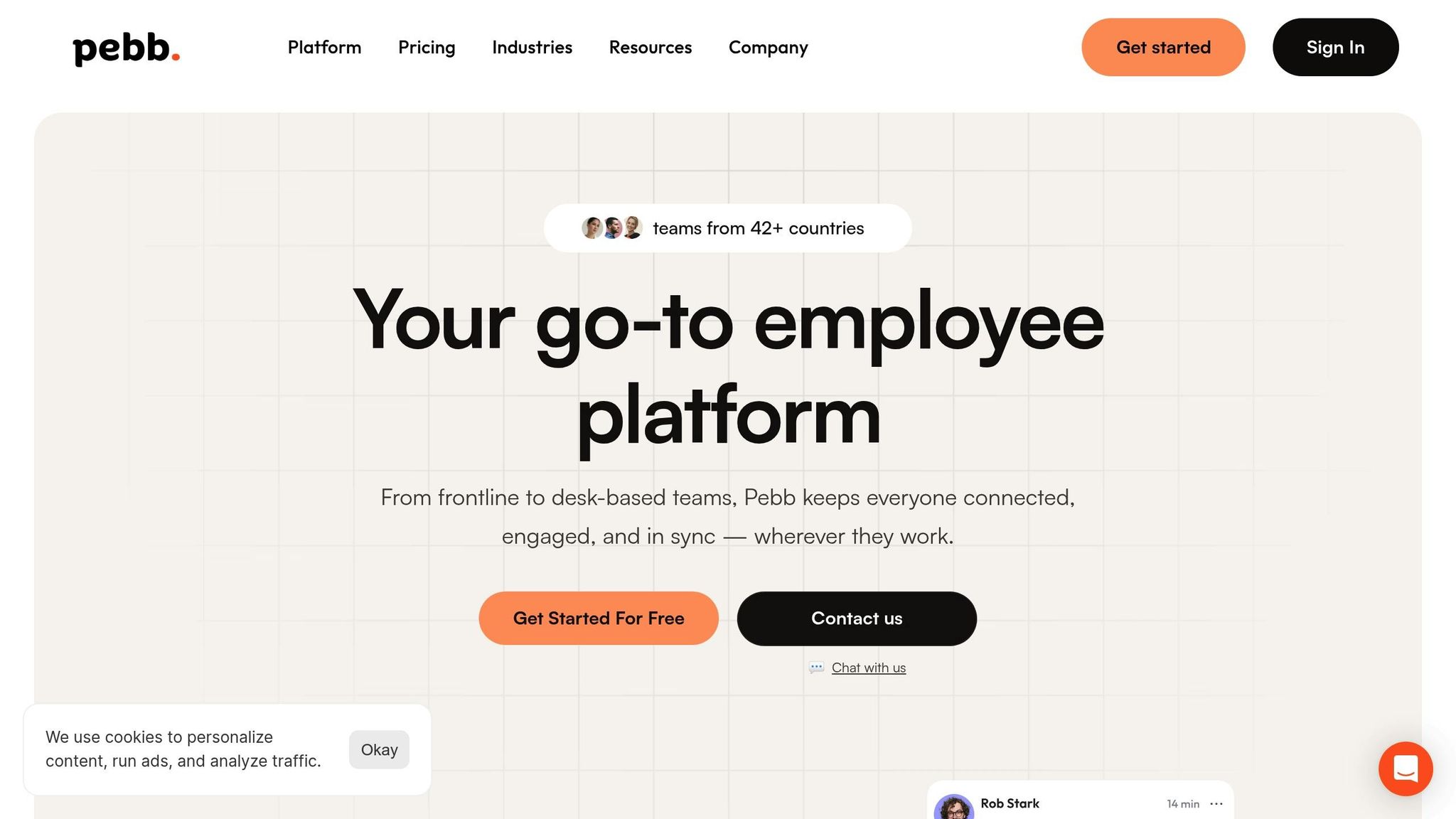
At Pebb, we built our platform to tackle the exact challenges that HR teams face with fragmented tools. Instead of juggling surveys, chat apps, document sharing, and analytics across multiple systems, Pebb combines everything into one seamless experience.
Here’s how it works: when a new hire joins, they gain access to our all-in-one platform. They can participate in group discussions, send private messages, access training materials, and - most importantly - provide feedback through various channels. Whether it’s a quick note in the digital suggestion box, a group conversation about their onboarding experience, or a private message to their manager, every piece of feedback is captured in one place.
What really sets Pebb apart is how effortlessly this feedback flows into actionable insights. Our analytics highlight engagement levels and feedback patterns that might otherwise get lost in the noise. It’s like having a radar that’s always tuned in, helping you spot trends and act on them quickly. For example, if several new hires mention confusion about a specific training module, you can address it before it becomes a bigger issue.
And let’s not ignore the cost factor. Our Standard plan is completely free for up to 15 employees, which is perfect for small and medium-sized businesses. For larger organizations, our Premium plan - at just $4 per user per month - offers advanced analytics and enterprise features. Compared to piecing together multiple tools, the savings are significant.
The best part? Setup is a breeze. With one platform for chat, news, knowledge, tasks, digital forms, calendar events, clock in, and shift scheduling, you can onboard entire teams in just minutes. No complicated integrations, no juggling different systems - just one platform that does it all.
Other Options: Slack, Teams, and Workvivo
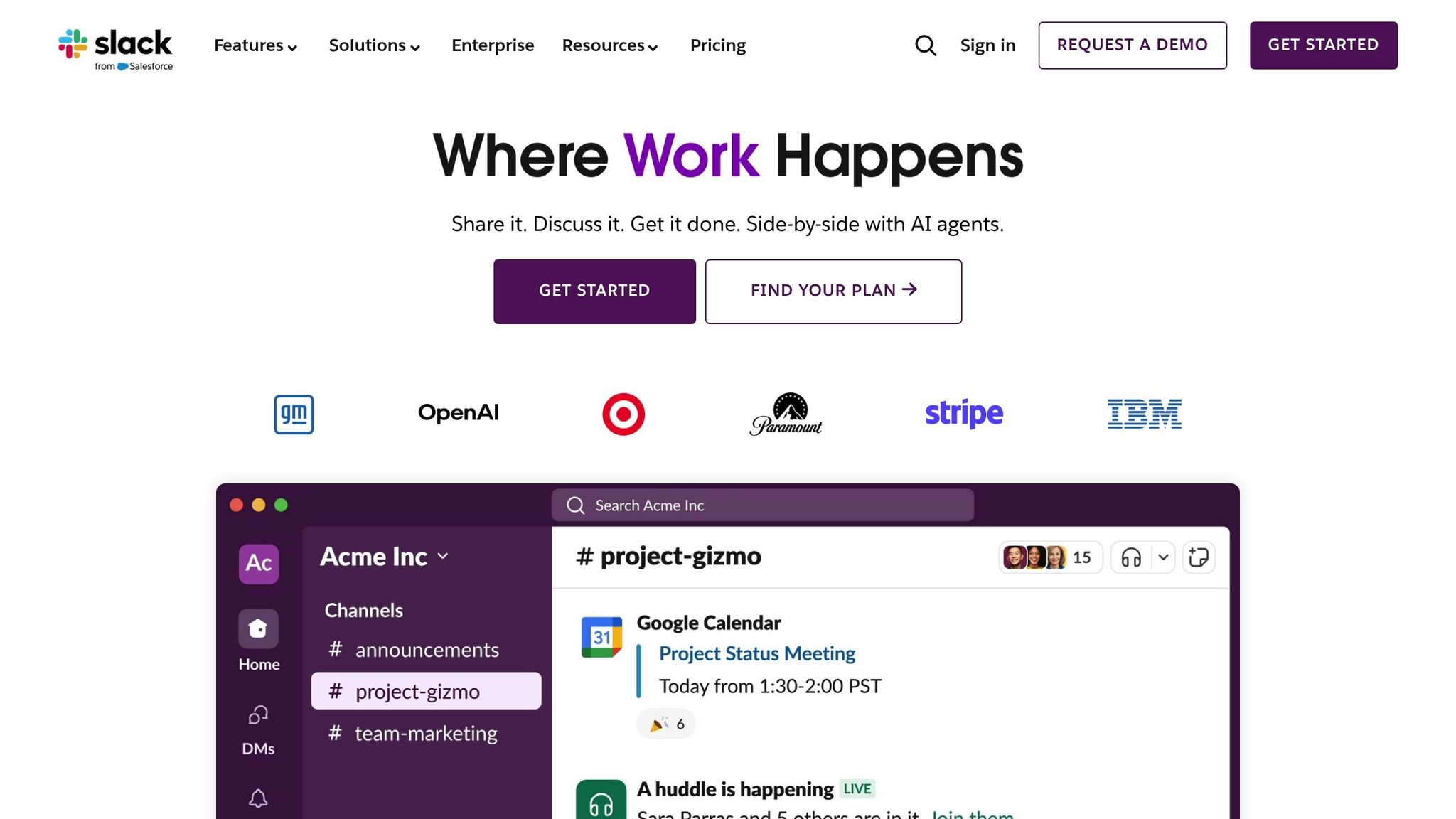
Of course, there are other tools out there, but each comes with its own limitations. Slack, for instance, is fantastic for quick team communication, but collecting structured feedback often requires third-party integrations. That means you’re managing separate tools for surveys, analytics, and document sharing - leading to fragmented insights and extra costs.
Microsoft Teams has similar drawbacks. While it’s great for video calls and file sharing, gathering and analyzing feedback usually involves external tools like Microsoft Forms or Power BI. This adds complexity and, let’s face it, more headaches.
Then there’s Workvivo, which focuses heavily on employee engagement and communication. While it’s a solid platform, it often requires custom implementation, which can get pricey - especially for smaller companies just starting to formalize their feedback processes.
Built-In vs External Tools
So, what’s the better choice: built-in tools or external ones? For most organizations, built-in tools are the way to go. They’re quick to deploy, cost-effective, and offer integrated reporting. At Pebb, our built-in features cover nearly everything you need - whether it’s digital forms, group discussions, or one-on-one conversations. All this feedback feeds into a single analytics dashboard, making it easy to track trends and measure progress.
External tools might be necessary for companies with very specific needs, like advanced survey customization or complex statistical analysis. But let’s be honest - most organizations don’t need that level of complexity, especially when it comes to onboarding. Starting simple often leads to better results. When new hires can share their thoughts through familiar, easy-to-use channels, you’ll get more useful feedback than any overly complicated system could provide.
An all-in-one solution like Pebb simplifies feedback collection and eliminates the need for scattered tools. It’s designed to make the process straightforward, so you can focus on what really matters - acting on the feedback you receive. With the right tool in place, you’ll be ready to dive into best practices for gathering and using that feedback effectively.
Best Practices for Collecting and Using Feedback
Over the years, I’ve learned that collecting feedback isn’t just about gathering opinions - it’s about turning those insights into meaningful changes. At Pebb, we’ve fine-tuned our process to make sure feedback doesn’t just sit in a folder somewhere, forgotten. The secret? It all comes down to timing, technique, and trust. Let me walk you through what works.
When to Collect Feedback: Key Timing Points
Timing is everything. If you ask too early, you might miss the bigger picture. Too late, and you lose the raw, unfiltered impressions. Here’s when we’ve found it most effective to ask:
First week: This is the moment to catch those initial impressions. What’s working? What’s confusing? These insights are gold.
First month: By now, new hires have had a chance to go through training and meet the team. It’s the perfect time to ask about their integration experience.
90 days: This is when you’ll get a clearer sense of whether the onboarding process is setting them up for success in their role.
Six months: At this point, you can dig into long-term engagement and retention factors. Are they still feeling supported and aligned with the company?
Once you’ve nailed the timing, the next step is crafting questions that actually get you useful answers.
How to Write Good Feedback Questions
Here’s the thing: generic, robotic questions won’t cut it. If you want honest, actionable feedback, you’ve got to make your questions specific and approachable. Here’s how we do it:
Start with measurable questions: For example, "On a scale of 1-10, how clear were your first-week expectations?" gives you quantifiable data to track.
Follow up with open-ended questions: After the scaled question, ask something like, "What could have made your first week clearer?" This gives them space to elaborate.
Make it conversational: Instead of asking, "How was your onboarding experience?" try something more engaging, like, "What’s one thing that pleasantly surprised you - or didn’t - during your first week?"
Focus on feelings and outcomes: Sure, you need to know if they finished their training modules, but it’s just as important to ask, "How confident do you feel about handling your daily responsibilities?" That’s where you uncover whether your processes are actually working.
Keep it short: I’ve found that 8-12 questions is the sweet spot. Anything longer, and people lose interest. Save deeper dives for one-on-one conversations.
Once you’ve got your questions ready, the next hurdle is ensuring employees feel safe enough to be honest.
Keeping Feedback Anonymous and Clear
Let’s be real - new hires can be hesitant to share negative feedback, especially when they’re still trying to find their footing. That’s why anonymity is non-negotiable.
At Pebb, we’ve built feedback collection into our system from day one. When employees submit feedback, their responses are aggregated and stripped of any identifying details. This way, they can speak freely without worrying about repercussions.
We also make a point to explain exactly how anonymity works. Transparency is key. We let employees know that their feedback will be reviewed by HR and management to improve processes, but individual responses won’t be tied back to them. This clarity builds trust and encourages participation.
Finally, we make the process easy and seamless. If giving feedback feels like a chore, people just won’t do it. That’s where Pebb’s integrated platform shines - it makes the entire process feel natural, like a conversation rather than a task.
The goal is to create a culture where feedback isn’t just collected - it’s valued. When employees see that their input leads to real changes, they’re far more likely to share honest, meaningful insights. And that’s when the magic happens - when feedback becomes the catalyst for real improvement.
How to Act on Feedback
So, you've gathered feedback - great start! But let me tell you, collecting it is just the first step. What really matters is what you do next. At Pebb, we've learned that acting on feedback isn't just about fixing problems. It's about proving to your team that their voices matter and showing you're serious about making things better.
Breaking Down and Prioritizing Feedback
Once you've collected feedback, the next step is to make sense of it all. Trust me, this can feel overwhelming, but here's what works for us.
We start by organizing the feedback into categories. Look for patterns - are multiple people flagging the same issue? For example, if several employees mention unclear job roles or a clunky software setup, that's your cue to act. Then, rank these issues by their impact and how much effort it will take to fix them. A simple 1–5 scale works well, with 5 being "this needs fixing ASAP."
Some fixes are what we like to call "quick wins." These are the small changes that pack a punch - like tweaking a confusing welcome email or fixing a broken link. On the other hand, some feedback points to bigger projects, like revamping your entire onboarding program. The key is to start with the high-impact, low-effort changes to build momentum and show you're serious about improvement.
At Pebb, we've taken it a step further by using our analytics tools. They help us pinpoint exactly where things are working and where they’re not - without spending hours manually sorting through data. Once you've prioritized the issues, it's time to let your team know what's happening.
Keeping Employees in the Loop
Here’s a common mistake: companies collect feedback, make changes in the background, and then... crickets. No updates, no acknowledgment. That’s a huge missed opportunity to build trust.
Instead, acknowledge feedback quickly. Even if you can’t implement a solution right away, let people know you’ve heard them. A simple message like, “Thanks for flagging the confusion with our project management tool. We’re working on a clearer tutorial, and it’ll be ready next month,” can make all the difference.
When you do make changes, share them openly. Use company-wide channels to announce updates and explain what’s been done. At Pebb, we even use our news feed to ensure new hires see these updates - it’s a small touch, but it makes a big impact.
And don’t forget to document everything. Keep a record of the feedback you’ve received, the actions you’ve taken, and how you’ve communicated those changes. We use our knowledge library for this - it’s a lifesaver when you need to refer back to something later.
Tracking Progress and Staying on Course
Here’s where the magic happens: measuring the impact of your changes. Once you’ve implemented feedback, you need to monitor how it’s affecting your team.
Track key metrics over time. For instance, if new hires mentioned feeling disconnected, measure team engagement scores before and after you make changes. Or, if job clarity was an issue, check how confident new hires feel about their roles at the 30-day and 90-day marks. At Pebb, our analytics make this process seamless, and it’s incredibly rewarding to see those numbers improve.
But don’t just rely on numbers. Pay attention to qualitative feedback too. Numbers tell you what’s happening, but comments reveal why. Watch for shifts in tone - are people using more positive language or offering constructive ideas instead of complaints? That’s a sign your feedback culture is evolving.
Finally, set aside time every quarter to review the big picture. Look at feedback trends, assess what’s working, and pinpoint areas that still need attention. It’s not just about celebrating wins (though you should definitely do that!); it’s about staying proactive and ready to adapt.
Conclusion: Better Onboarding Through Feedback
Feedback during onboarding isn’t just a nice-to-have - it’s the glue that holds the process together. It’s what separates new hires who hit the ground running from those who feel lost in the shuffle. At Pebb, we’ve tested everything from one-on-one check-ins to anonymous surveys, and one thing is clear: a structured feedback system makes all the difference.
Here’s what we’ve learned. When you create regular opportunities for feedback and pair them with tools that simplify communication, magic happens. New hires feel valued and understood, managers get actionable insights, and the entire onboarding process becomes a constant cycle of learning and improvement.
We’ve also found that centralizing feedback tools is a game-changer. Imagine one platform where new hires can easily share their thoughts and managers can quickly identify trends. That’s exactly why we built Pebb - to bring chat, news feeds, knowledge libraries, tasks, digital forms, calendar events, clock in, shift scheduling, and analytics into one seamless system. The results speak for themselves: our customers have reported stronger communication and engagement.
Making feedback part of your company’s DNA doesn’t just improve onboarding - it lays the foundation for long-term growth. When new employees know their voices matter and managers act on their input, onboarding stops being a one-time event and becomes an ongoing, evolving process. It’s a win-win for everyone involved.
FAQs
Why is it helpful to use different methods to gather onboarding feedback?
Using a variety of methods to gather onboarding feedback isn’t just smart - it’s essential. Think of it as having a toolkit that caters to everyone’s preferences. Some folks are more comfortable sharing their thoughts through a quick, anonymous survey, while others open up better during a relaxed one-on-one conversation. By mixing these approaches, you get a more complete picture of how new hires are settling in and can spot potential issues before they snowball.
What’s more, reaching out in different ways sends a clear message: your new team members’ opinions matter. At Pebb, we’re all about making communication easy and natural, so whether someone’s at their desk or out in the field, they feel heard and connected.
How does Pebb make it easier to gather onboarding feedback compared to other tools?
At Pebb, we’ve built our platform to simplify the process of gathering onboarding feedback. Everything you need is right at your fingertips - work chat, news feeds, groups, a people directory, and even voice & video calls. This means new hires can easily share their thoughts without the hassle of juggling multiple tools.
What sets Pebb apart is how seamlessly it brings everything together. It’s straightforward, easy to navigate, and budget-friendly at just $4/user/month for our Premium plan. Whether it’s a quick survey, a group discussion, or a one-on-one chat, Pebb keeps your team connected and ensures every voice is heard from day one.
What mistakes should companies avoid when collecting onboarding feedback?
Great point! One of the biggest pitfalls I’ve seen is gathering feedback from new hires and then... doing nothing with it. When someone takes the time to share their thoughts, they’re trusting you to listen and make improvements. Ignoring that feedback? It’s like saying their voice doesn’t matter - and that’s a trust-breaker you don’t want to deal with right out of the gate.
Another misstep? Asking questions that are too broad or don’t really hit the mark. The best feedback comes from specific questions about their early days - like whether they felt supported, if the training actually prepared them, or whether they had the right tools to hit the ground running.
Here’s where it gets easier: Pebb can help you nail this process. With our all-in-one employee app for communication and operations, you can effortlessly gather feedback, keep communication flowing, and boost engagement - all for just $4/user/month. Why settle for clunky systems when Pebb makes it simple to connect and improve?
