
Author: Ron Daniel
The 7 Best WhatsApp Alternatives for Work in 2026
Compare seven secure WhatsApp alternatives for work—features, security, pricing, and which platforms best fit teams from SMBs to enterprises.
Most businesses don’t realize it, but relying on WhatsApp for work is like trying to run a marathon in flip-flops. It’s just not built for the job. Sure, it’s fine for sharing memes or coordinating weekend plans, but when you’re managing sensitive company data, juggling teams, or trying to stay compliant with regulations, it falls short - big time.
Here’s the kicker: data breaches are now costing companies an average of $4.88 million per incident, and a staggering 82% to 91% of those breaches are caused by human error. Add to that the fact that cyber incidents have more than doubled in just four years, and it’s clear that businesses need internal communication tools designed for today’s challenges - not yesterday’s.
I’ve seen firsthand how companies struggle to find the right internal comms platforms - one that balances security, compliance, and ease of use. That’s why we created Pebb. But we’re not the only option out there, so I’m breaking down the top seven WhatsApp alternatives for work in 2026. Whether you’re a small team or a global enterprise, this guide will help you find the right fit. Let’s dive in.
1. Pebb
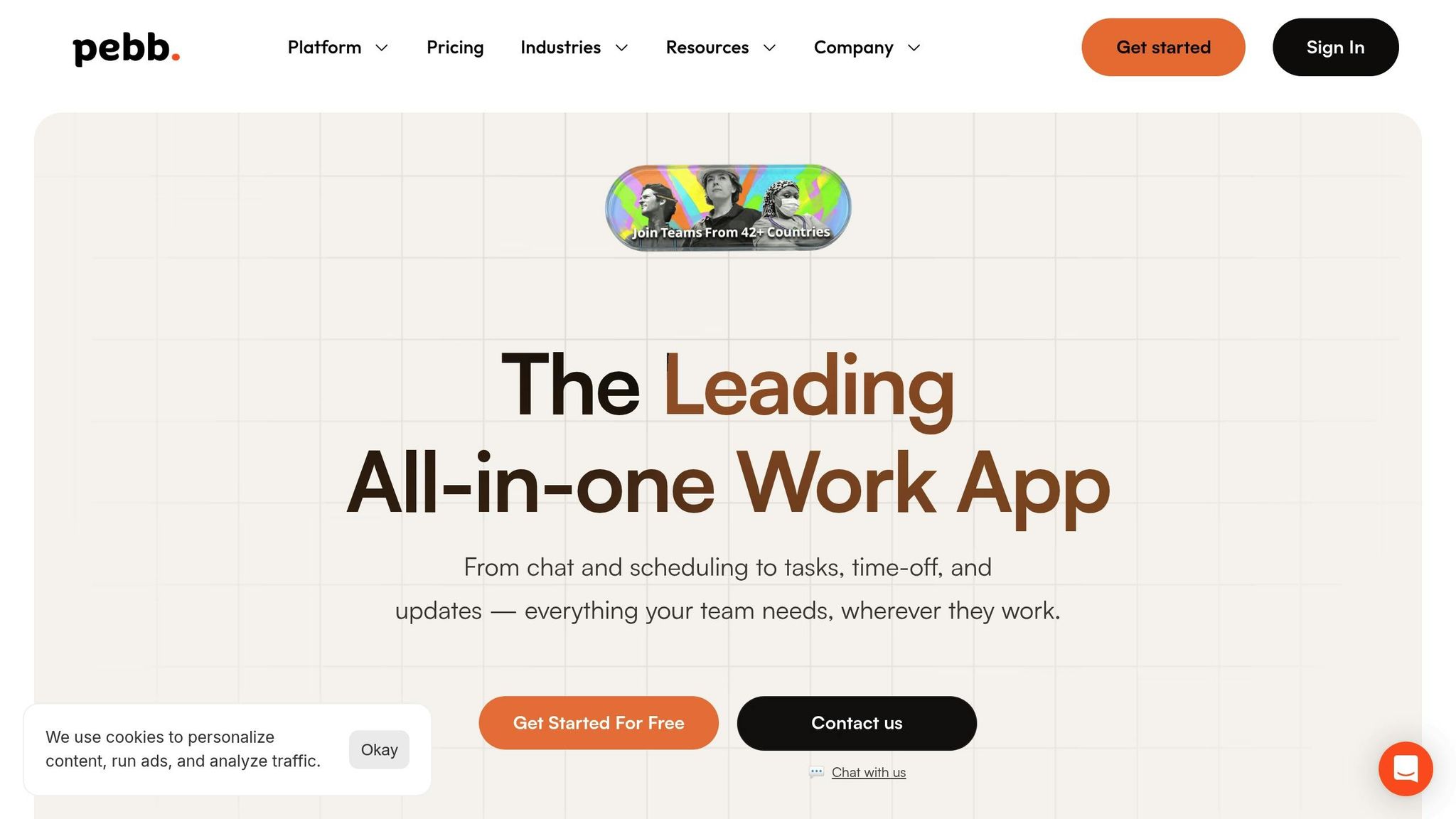
We built Pebb to solve a problem many businesses face: communication tools that are either too expensive or too scattered, requiring multiple platforms just to handle the basics. Pebb changes the game by offering everything you need in one place - without breaking the bank.
Features
With Pebb, you get a free, all-in-one employee app for communication and operations that covers more than just chatting. Here's what it includes:
Unlimited message history for work chats
A news feed to keep everyone updated
Shift scheduling and PTO management tools
Task lists, digital forms, a knowledge library, and a shared calendar
An employee directory, calendar events, photos, and much more
For those who need a bit more, our Premium plan is a steal at just $4 per user per month. It unlocks advanced features like analytics, integrations, and more:
Detailed analytics
Unlimited admins and enhanced permissions
Voice and video calls
Enterprise SSO and premium support
When you stack Pebb against competitors like Slack or Microsoft Teams Essentials, it’s clear you’re getting incredible value. Plus, you can ditch the hassle of juggling multiple tools - Pebb consolidates them all into one.
Security
We know security is non-negotiable, and Pebb is built with that in mind. Using AES-256 encryption, Pebb ensures your data stays safe. It’s fully compliant with SOC 2 and GDPR standards, and we’ve included enterprise-grade features like role-based access controls and instant access revocation. Unlike WhatsApp, which has limited admin controls, Pebb gives you the tools to protect your business at every level.
Best For
Pebb is perfect for frontline and office teams that need to stay connected, no matter where they are. Whether you’re in retail, hospitality, healthcare, or tech, Pebb fits seamlessly into your workflow. With both mobile and desktop apps, your team can stay in sync - whether they’re on the sales floor, working from a hospital, or handling tasks from home.
2. Microsoft Teams
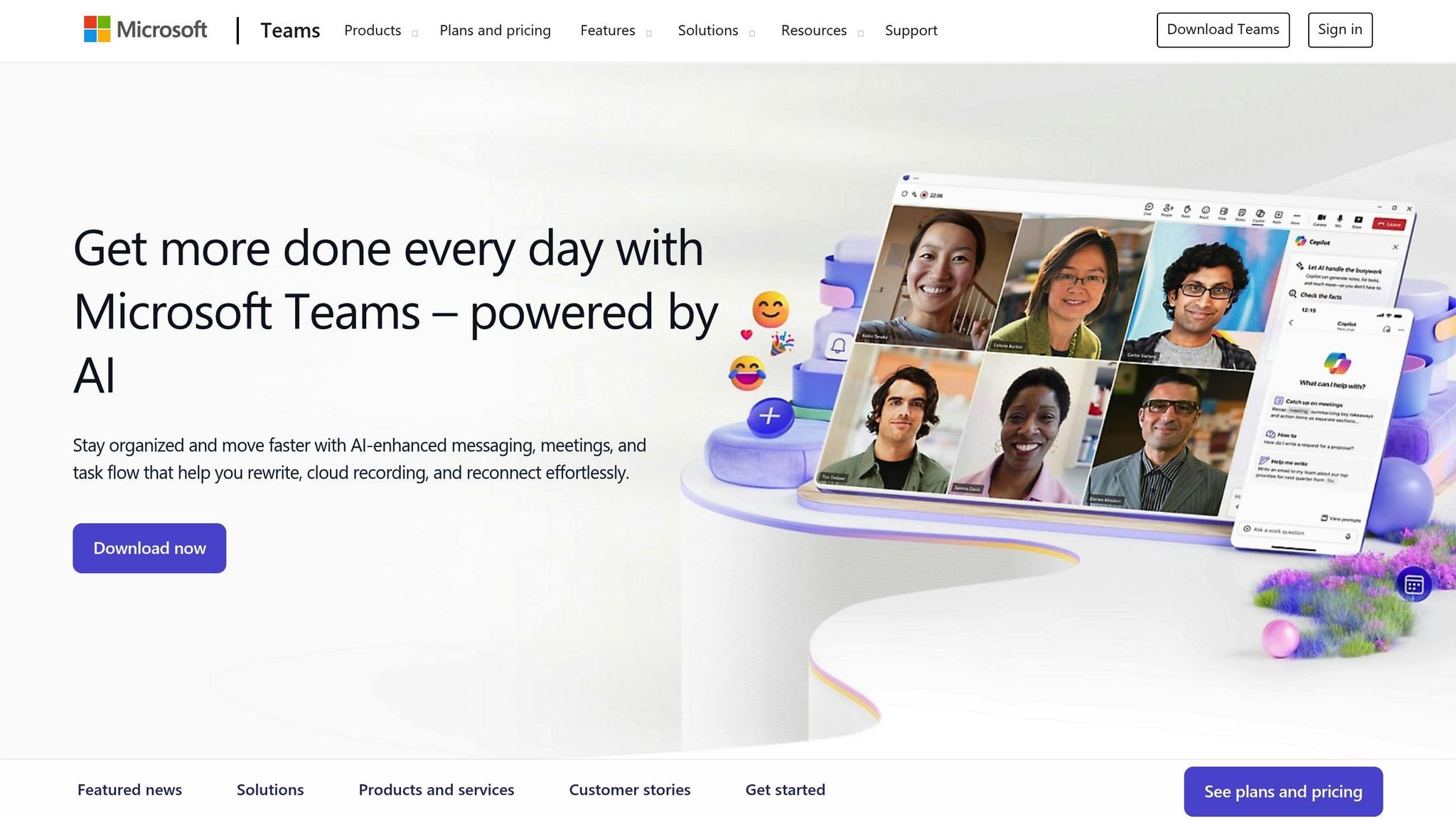
Microsoft Teams has become a go-to platform for businesses that rely on Microsoft products. As of November 1, 2025, Microsoft made a big move by separating Teams from Office 365 and Microsoft 365. Now, you can buy it as a standalone tool or mix and match it with other Microsoft suites to suit your business needs. Let me walk you through what makes Teams stand out.
Features
Teams packs a punch when it comes to messaging and collaboration. Imagine hosting group meetings that last up to 30 hours or webinars with up to 10,000 participants - Teams can handle that. It even uses AI through Microsoft 365 Copilot to provide meeting summaries and recaps, saving you from endless note-taking. For frontline teams, the Shifts feature simplifies scheduling, making it easier to manage shifts without the usual headaches.
What’s more, Teams integrates workflow automation with Power Automate. This means you can set up low-code or no-code workflows to take care of repetitive tasks. Businesses using Teams have reported spending 33% less time in meetings, which is a huge win for productivity.
Security
When it comes to security, Teams is built for businesses that can’t afford to take chances. It includes enterprise-grade security features like Data Loss Prevention (DLP) and sensitivity label policies to safeguard sensitive data. Compliance tools are another strong point, covering everything from eDiscovery and legal holds to audit logs and content searches. These tools help companies meet industry regulations without breaking a sweat. Plus, meeting organizers have full control - they can boot out disruptive attendees, block anonymous guests, and set attendee permissions.
Pricing
Now, let’s talk dollars and cents. While Pebb offers a free, all-in-one solution, Teams provides several pricing options to match different business needs:
Microsoft Teams Essentials: $4.00 per user per month (billed annually), includes 10 GB of storage per user and supports up to 300 participants.
Teams Enterprise: $8.55 per user per month for advanced features.
Microsoft 365 Business Standard: $12.50 per user per month, which adds desktop Office apps, 1 TB of cloud storage, and webinar functionality.
If you want even more, add-ons like Microsoft 365 Copilot are available for an extra $21.00–$30.00 per user per month. These tiers give businesses the flexibility to choose what works best for them.
Best For
Teams is a perfect fit for organizations already invested in Microsoft 365. It seamlessly integrates with tools like Outlook, SharePoint, Word, and Excel, making it a natural choice for teams that rely on these apps daily. Whether you need advanced meeting tools, AI-driven productivity features, or strong compliance capabilities, Teams has you covered. With a 4.5 out of 5-star rating on Capterra from over 10,000 reviews, users love how it "reduces friction by embedding chat into the Microsoft tools many teams already use". It’s a solid option for businesses looking to streamline their workflows.
3. Slack
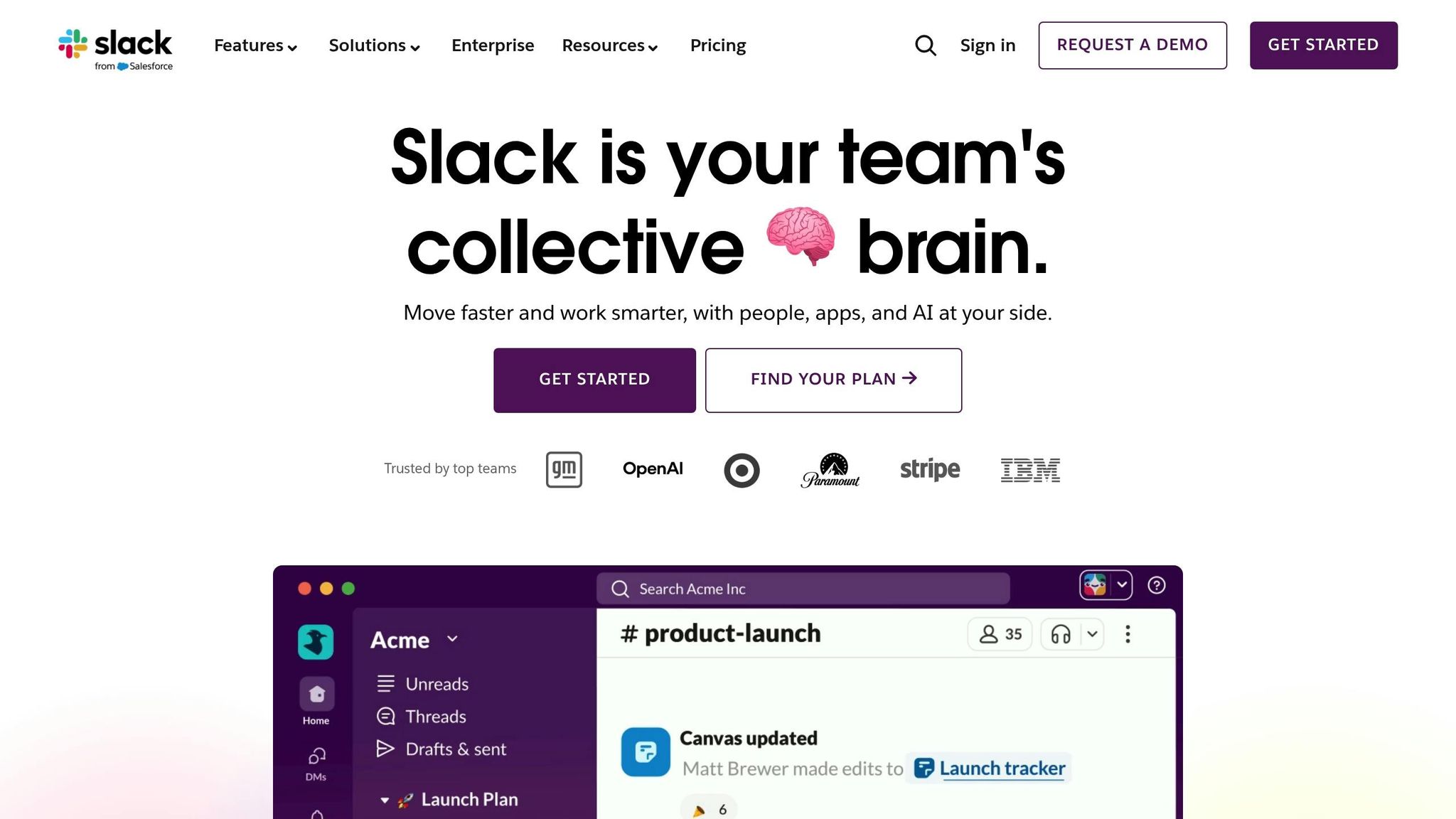
Slack has become the go-to collaboration hub for teams that need more than just basic messaging. Unlike WhatsApp's single-stream chat, Slack organizes conversations into channels tailored to projects, teams, or specific topics. This setup keeps discussions focused, reduces silos, and makes it easier to find the information you need.
Features
One of Slack's standout aspects is its ability to integrate with over 2,600 third-party tools. On top of that, it uses AI to deliver channel summaries, automate workflows, and provide smart search capabilities across conversations and connected apps. When it comes to file sharing, Slack supports uploads up to 1GB - far surpassing WhatsApp’s 16MB limit.
The no-code Workflow Builder is a game-changer for automating repetitive tasks. Whether it’s collecting approvals or sending out reminders, this tool streamlines processes effortlessly. Brad Lightcap, COO at OpenAI, summed it up perfectly:
"Slack is central to how our company collaborates, for increasing velocity, and is integral to building with our customers. We use Slack every day".
Slack Connect takes things a step further by enabling secure collaboration with external partners and clients. And here’s a stat worth noting: 86% of users say Slack has significantly improved their remote work experience.
Beyond its impressive features, Slack places a strong emphasis on security.
Security
When it comes to protecting data, Slack doesn’t cut corners. It encrypts data in transit using TLS 1.2 and at rest with FIPS 140-2 compliant standards. The platform also supports SAML-based Single Sign-On (SSO), two-factor authentication (2FA), and SCIM user provisioning, ensuring that only the right people have access.
For larger organizations, the Enterprise+ plan offers advanced options like Enterprise Key Management (EKM) and built-in Data Loss Prevention (DLP) tools to safeguard sensitive information. Slack also complies with SOC 2, SOC 3, and ISO/IEC 27001 standards, is GDPR-compliant, and can be configured for HIPAA and FINRA compliance. Another crucial point? Slack is highly resistant to spam and phishing attacks - issues responsible for 90% of data breaches.
Pricing
Slack offers four pricing tiers to suit different needs:
Free: $0 per month; includes 90 days of message history and up to 10 app integrations.
Pro: $7.25 per user per month (billed annually) or $8.75 per user per month (billed monthly); unlocks unlimited message history and app integrations.
Business+: $15.00 per user per month (billed annually) or $18.00 per user per month (billed monthly); adds SAML-based SSO and 24/7 priority support.
Enterprise+: Custom pricing; designed for large organizations needing advanced security and unlimited workspaces.
One thing I appreciate about Slack is its fair billing policy. You’re only charged for active users - those who take action within a 28-day window.
Best For
Slack is a perfect fit for organizations that rely on extensive third-party integrations and need advanced compliance features like HIPAA and FINRA. With a stellar 4.7 out of 5-star rating on Capterra from 23,825 user reviews, it’s a favorite among teams that prioritize powerful search tools and an ecosystem of integrations. That said, while Slack’s features are undeniably robust, platforms like Pebb offer similar capabilities while bundling essential business tools at a much lower cost.
4. Workvivo
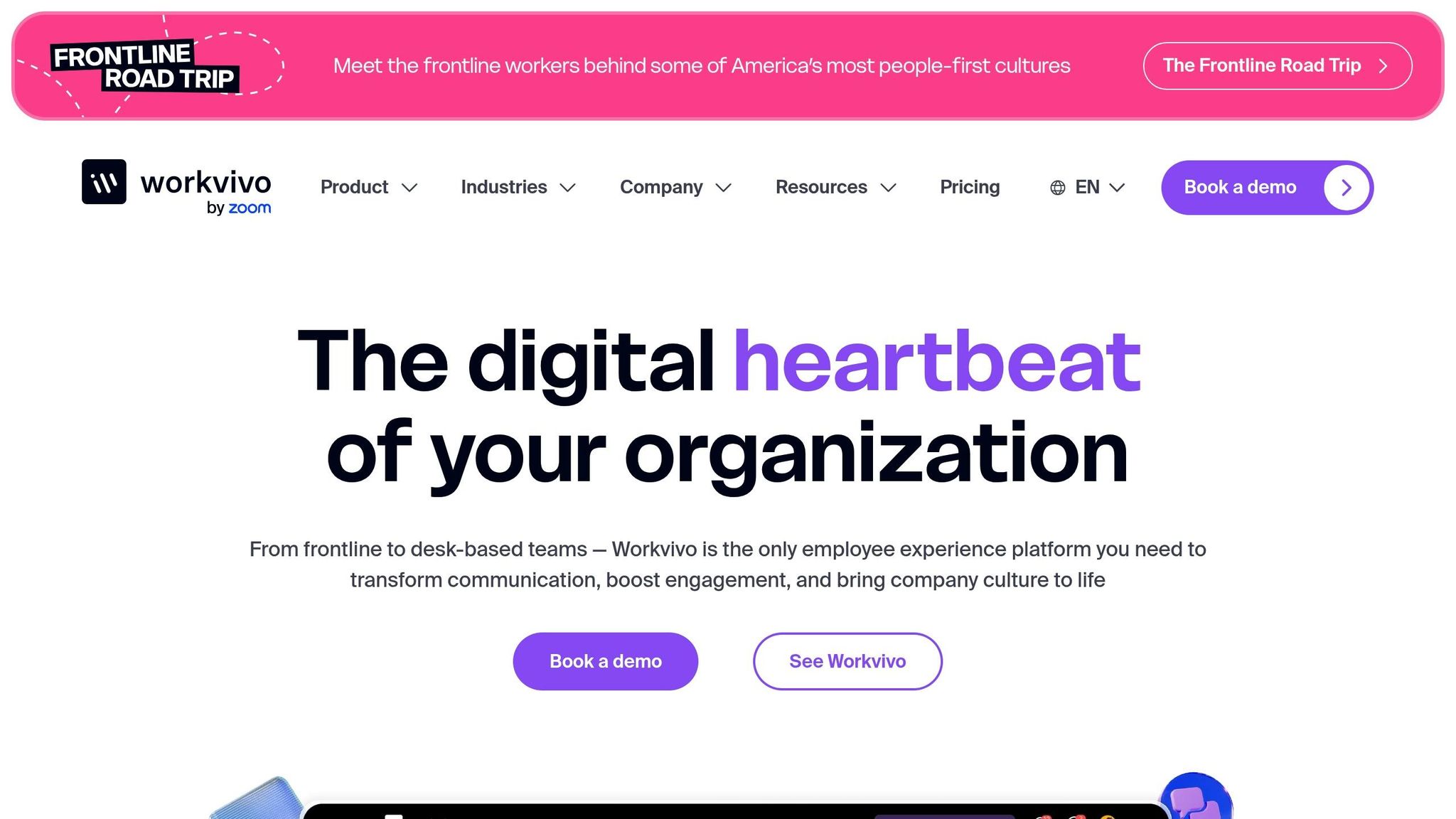
Workvivo is a social intranet platform that blends workplace communication with tools for boosting employee engagement. It’s designed to strengthen company culture and keep teams connected, no matter where they are.
Features
Workvivo’s activity feed functions like a company-wide social network. Employees can share updates, celebrate milestones, and stay in the loop through livestreams and podcasts. Their employee recognition tools make it simple to highlight achievements and foster a positive workplace vibe. Beyond secure messaging, Workvivo focuses heavily on creating a sense of community, which makes it a strong choice for distributed teams. While it shares similarities with Pebb in tackling communication and engagement, Workvivo leans heavily into social interaction, making it a better fit for larger organizations with a culture-driven approach.
Security
When it comes to security, Workvivo doesn’t cut corners. It uses a zero-trust security framework paired with end-to-end encryption. Regular third-party audits ensure the system remains airtight. The platform boasts SOC-2 Type 2 certification, complies with GDPR, and is HIPAA-ready for healthcare providers. Features like Single Sign-On (SSO), Two-Factor Authentication (2FA), and detailed role-based permissions add extra layers of protection, ensuring sensitive data stays in the right hands.
Best For
Workvivo is ideal for larger organizations with distributed or frontline teams that want to focus on both communication and employee engagement. If building a strong workplace culture and connecting remote workers is a top priority, Workvivo delivers. That said, its social intranet features might feel excessive for smaller teams that just need straightforward communication tools. For those groups, platforms like Pebb offer all the essentials at a much lower cost.
5. Staffbase
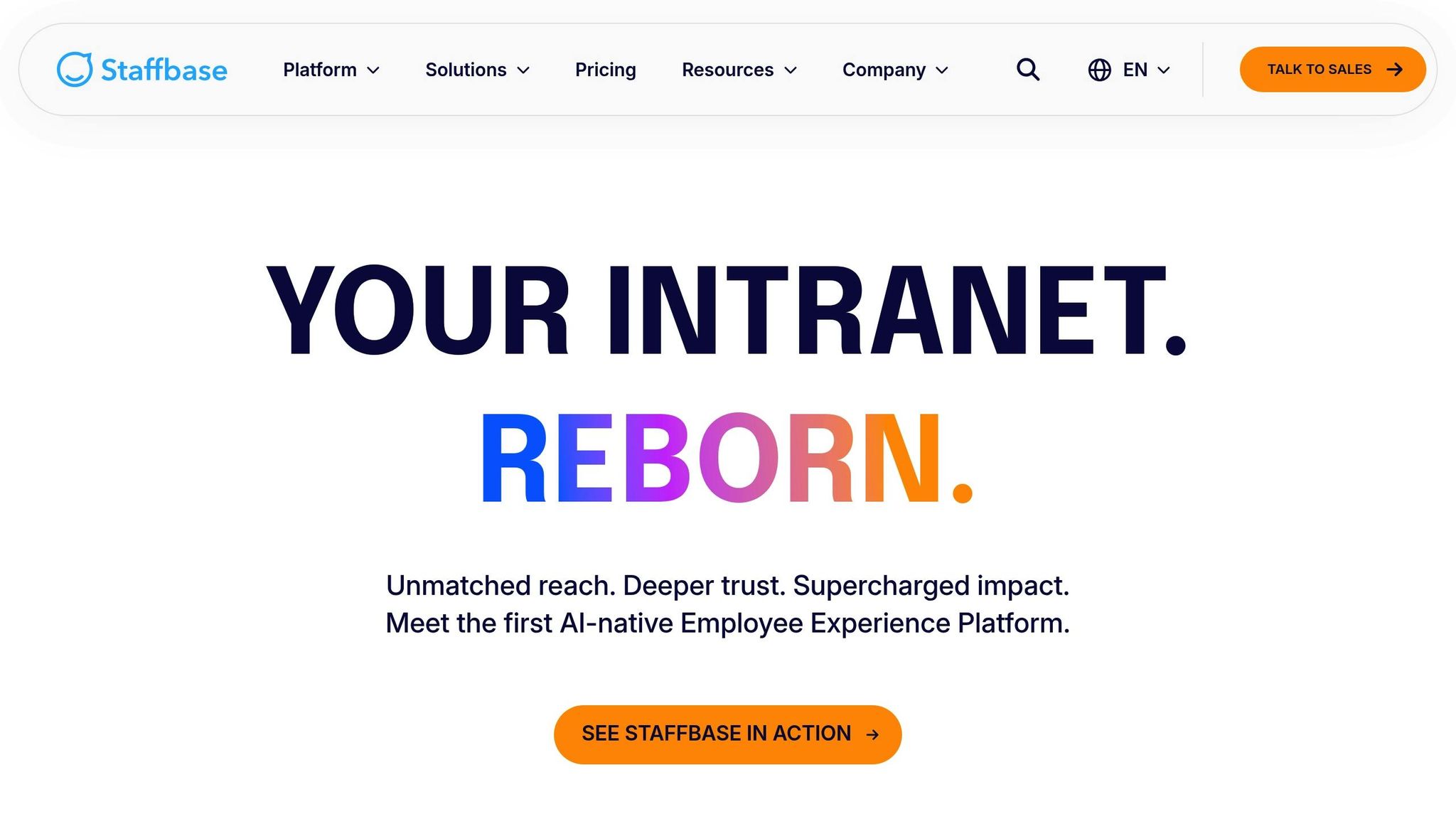
Staffbase is tailored for large enterprises with extensive frontline workforces, offering an employee communications platform designed to share company news, announcements, and content on a large scale.
Features
Staffbase shines when it comes to employee apps and intranets. It lets organizations create custom mobile apps and web portals where employees can easily access company news, policies, and updates. Leadership teams can broadcast messages effectively using features like push notifications, content scheduling, and analytics. However, compared to platforms like Pebb, Staffbase falls short in some areas. For instance, while Pebb includes tools for work chat, shift scheduling, and PTO management in one package, Staffbase lacks integrated video calling and offers a more basic chat experience. These differences highlight where Staffbase fits - and where it doesn’t - in the evolving landscape of enterprise communication tools.
Security
When it comes to security, Staffbase checks all the right boxes. It complies with key standards like ISO 27001, SOC 2, HIPAA, and GDPR, ensuring that sensitive communications are well-protected.
Pricing
Staffbase keeps its pricing under wraps. However, industry estimates suggest enterprise licenses start around $30,000 per year. That’s a steep price, especially when compared to Pebb’s offerings. Pebb provides a free plan for up to 15 users and a premium plan priced at just $4 per user, making it a far more budget-friendly option.
Best For
Staffbase is best suited for large enterprises with significant frontline teams that need a platform for one-way content distribution and a polished corporate intranet. But for those seeking a more interactive and cost-effective communication solution, Pebb delivers a broader range of features at a much lower price point.
6. Simpplr
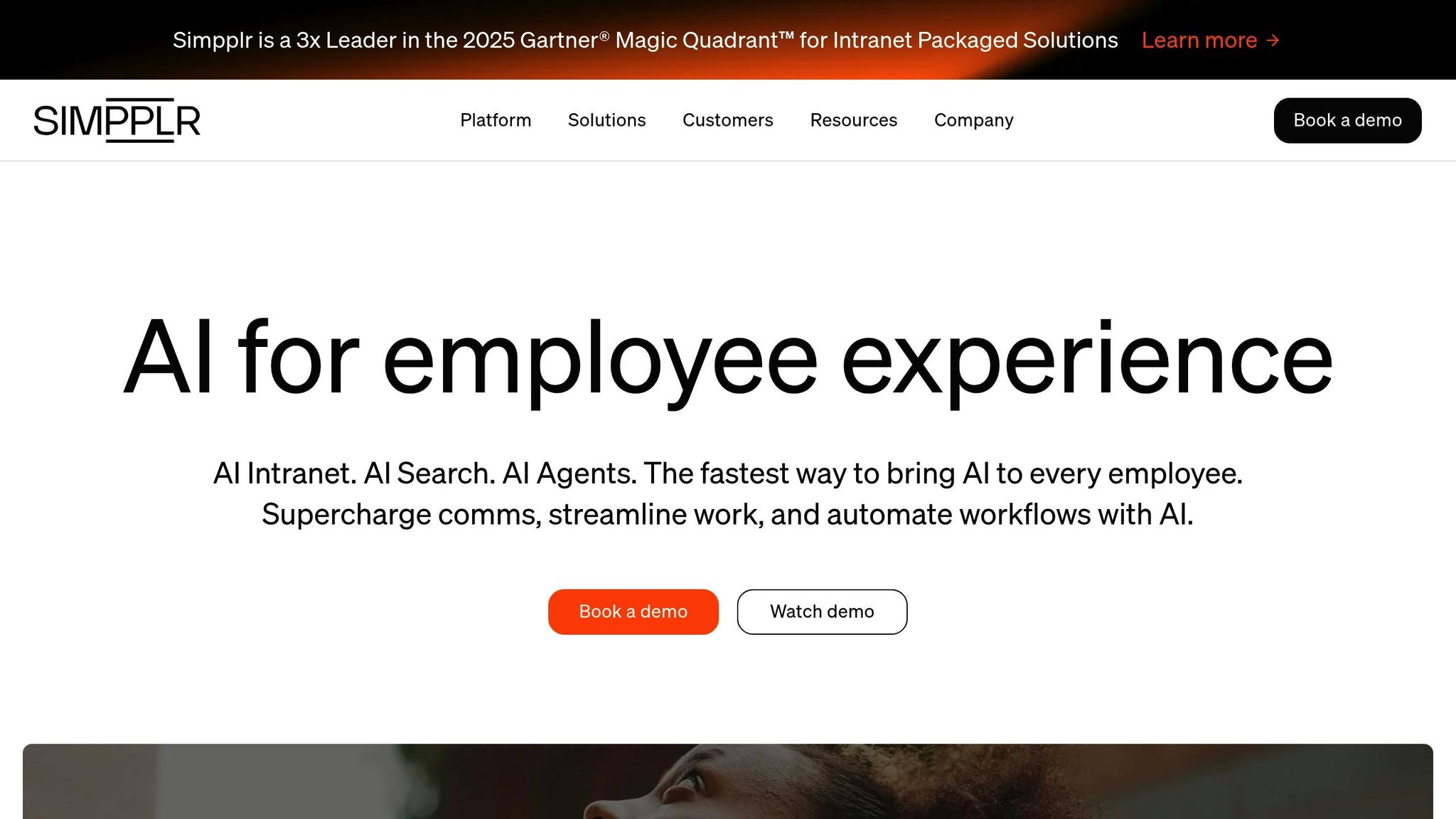
Simpplr is marketed as an AI-driven employee experience platform, functioning as a sleek, modern intranet. Its primary focus? Streamlining communication and ensuring smart content management.
Features
The standout feature here is its AI-powered auto-governance. Essentially, this means Simpplr nudges content creators to either update or remove outdated materials, keeping everything tidy and up-to-date without much manual effort. It also boasts an enterprise-wide search function, pulling content from connected systems like Google Drive and SharePoint - all accessible through a single interface. However, unlike Pebb, which integrates real-time collaboration tools like native video, voice calls, shift scheduling, and PTO management, Simpplr leans more on content distribution and personalized news feeds. For calling features, you’ll need integrations with tools like Microsoft Teams or Slack.
Security
When it comes to security, Simpplr doesn't cut corners. It meets standards like ISO 27001:2013, SOC 2 Type 2, and HIPAA compliance, encrypting data both in transit and at rest. The platform also supports SAML 2.0, OAuth 2.0, and multi-factor authentication, ensuring robust access control. Hosted on AWS and Salesforce infrastructure in both the US and EU, it’s also GDPR-ready, a must-have for organizations operating internationally or in tightly regulated industries.
Pricing
Simpplr operates on a quote-based pricing model and caters to organizations with at least 100 employees. This premium approach sets it apart from Pebb, where we pride ourselves on transparent and accessible pricing. For instance, our free plan covers up to 15 employees, and our premium plan costs just $4 per user per month. This makes Pebb a more budget-friendly option, especially for small to mid-sized teams.
Best For
Simpplr shines in large enterprises that need a polished intranet with AI-driven content management and seamless integration with existing tools. But if you're after a platform that combines chat, scheduling, and collaboration features in one place - without needing a stack of integrations - Pebb is the more complete and wallet-friendly choice.
7. Firstup
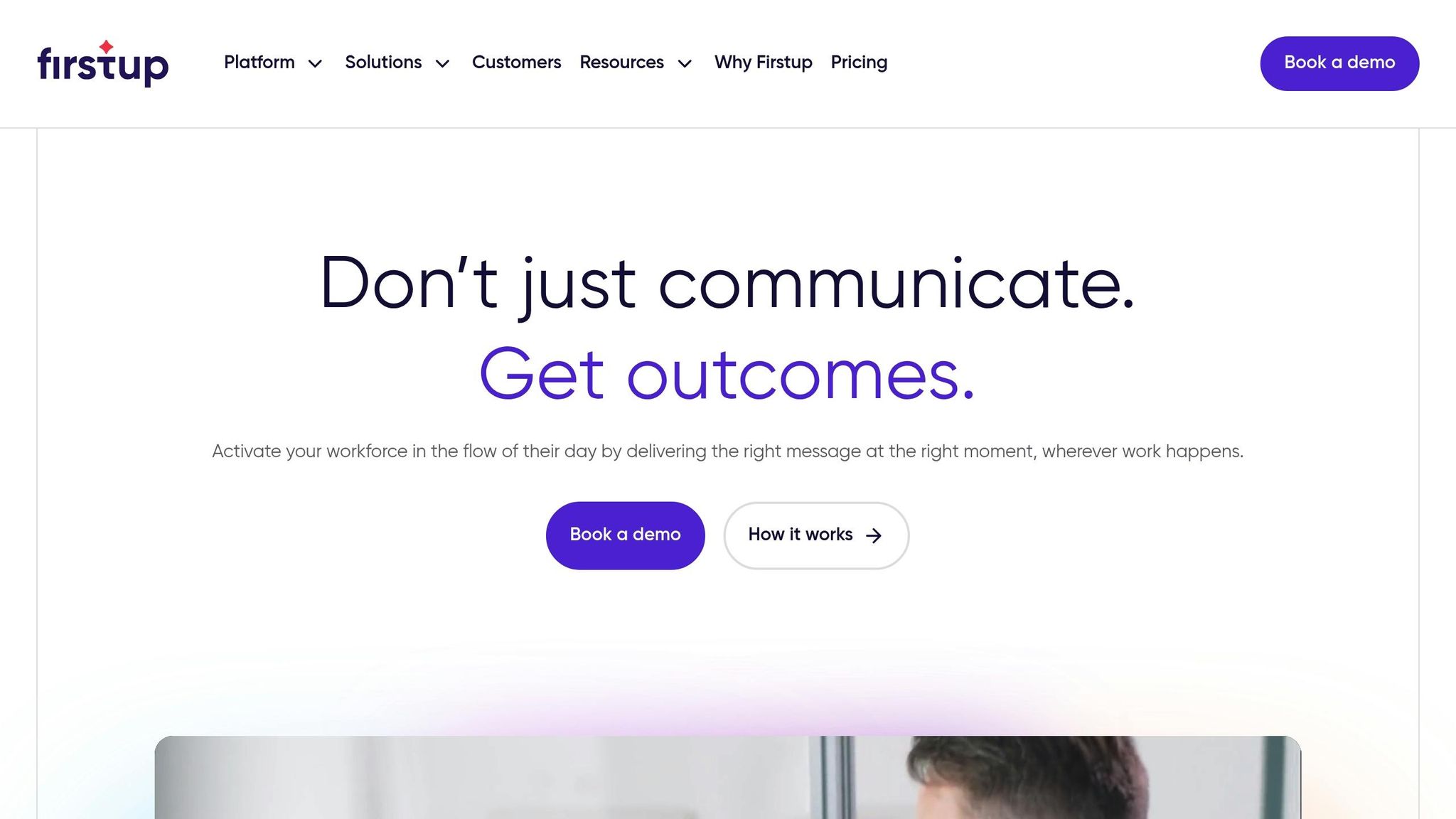
Firstup offers more than just basic chat - it aims to engage employees with AI-driven, personalized content delivery.
Features
Firstup uses AI-powered orchestration to create tailored employee journeys, ensuring each user gets the content most relevant to them. It supports multi-channel distribution, so employees receive updates through their preferred platforms. A standout feature is its branded Tab App within Microsoft Teams, paired with integrations into systems like ADP Workforce Now and Awardco for recognition. However, unlike Pebb's all-in-one solution - which includes native chat, voice calls, shift scheduling, and PTO management - Firstup depends heavily on these integrations to expand its capabilities.
Security
When it comes to security, Firstup is equipped with enterprise-grade controls tailored for internal corporate communication. This focus helps bridge the compliance gaps that consumer apps like WhatsApp often overlook, making it a solid option for organizations dealing with strict regulations or sensitive information.
Pricing
Firstup doesn’t list its pricing publicly - you’ll need to reach out for a custom quote. Typically, this signals a focus on larger enterprises with the budgets to match. On the other hand, we at Pebb like to keep things straightforward: our free plan supports up to 15 employees, and our premium plan is a flat $4 per user per month. No hidden costs, no surprises - just everything you need in one place. This transparency highlights the difference in approach, with Firstup catering to enterprises and Pebb offering an accessible solution for teams of all sizes.
Best For
Firstup is a great fit for large enterprises seeking advanced content orchestration and already equipped with tools like Microsoft 365, HR platforms, and recognition systems. But if you’re after a more budget-friendly, all-in-one solution that combines communication, scheduling, and collaboration without relying on a stack of integrations, Pebb is the better choice.
Comparison: Pros and Cons
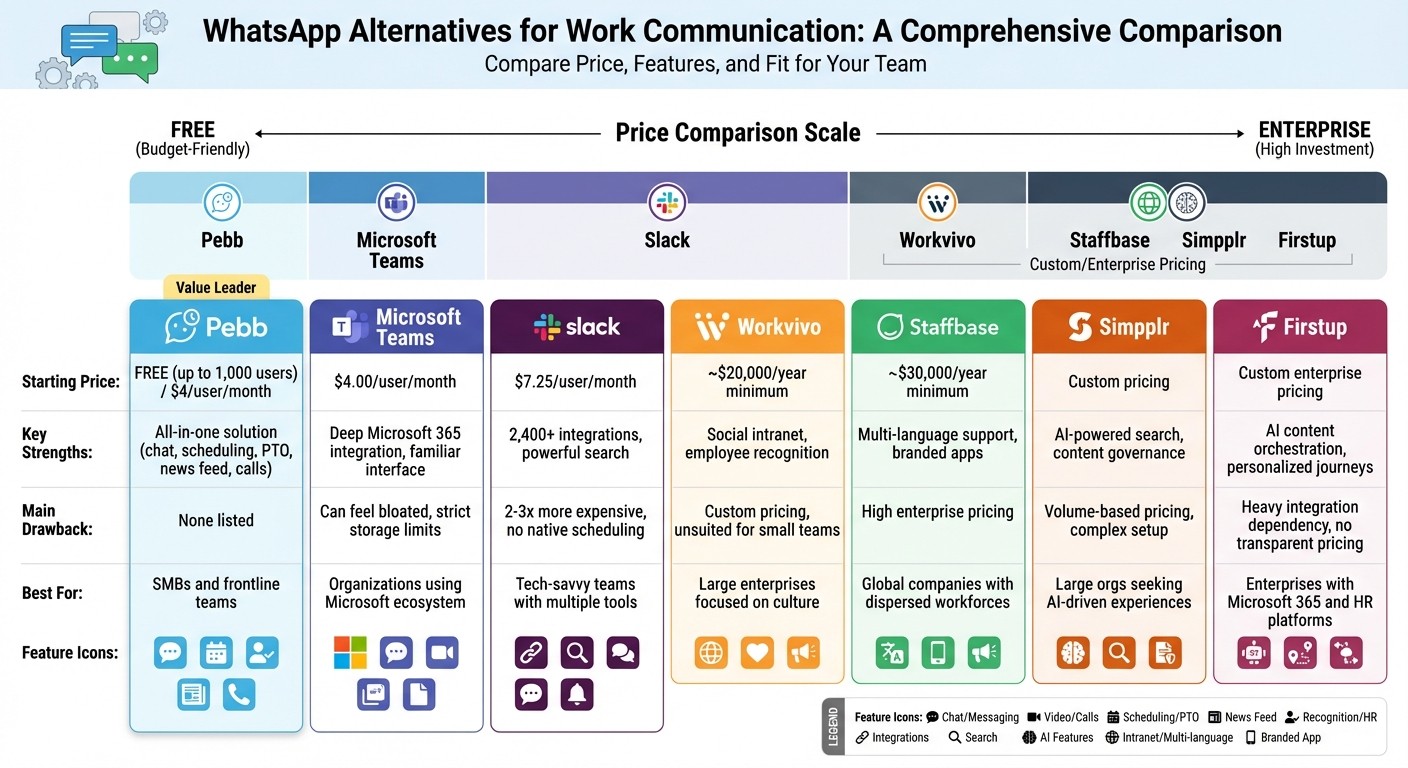
WhatsApp Alternatives for Work: Feature and Pricing Comparison 2026
Let me break down the pros and cons of each platform for you. This comparison highlights what each tool does best and where it might fall short.
Here’s the rundown:
Platform | Key Strengths | Main Drawbacks | Pricing (Starting) | Best For |
|---|---|---|---|---|
Pebb | All-in-one solution with chat, scheduling, PTO, news feed, and calls | - | Free (up to 15 employees) / $4 per user/month | SMBs and frontline teams looking for a complete, unified solution |
Microsoft Teams | Deep Microsoft 365 integration and a familiar interface for Office users | Can feel bloated; standalone plan has strict storage limits | $4.00 per user/month | Organizations already using the Microsoft ecosystem |
Slack | 2,400+ integrations, powerful search, and excellent for tech teams | Costs 2–3 times more than other options and lacks native scheduling | $7.25 per user/month | Tech-savvy teams relying on multiple third-party tools |
Workvivo | Strong social intranet features and employee recognition tools | Requires custom pricing and may be unsuited for small teams | Approximately $20,000 per year minimum | Large enterprises focused on engagement and company culture |
Staffbase | Multi-language support and branded employee apps | High enterprise pricing; less suited for small businesses | Approximately $30,000 per year minimum | Global companies with dispersed workforces |
Simpplr | AI-powered search and content governance | Volume-based pricing can get expensive and setup may be complex | Custom pricing | Large organizations seeking AI-driven employee experiences |
Firstup | AI content orchestration and personalized employee journeys | Heavily dependent on integrations with no transparent pricing | Custom enterprise pricing | Enterprises with existing Microsoft 365 and HR platforms |
Now, let’s unpack this a bit.
Pebb stands out as the go-to choice for small and medium-sized businesses (SMBs) and frontline teams. It’s a complete package - chat, scheduling, PTO tracking, tasks, digital forms, calendar events, voice calls, and even a news feed - all wrapped up in one platform. And here’s the kicker: it’s free for teams of up to 15 employees, and even after that, it’s just $4 per user per month. No need to cobble together extra tools or worry about integrations.
Compare that to platforms like Microsoft Teams and Slack. While Teams fits like a glove for companies already tied into the Microsoft ecosystem, it can feel overly complicated, especially for smaller teams. Slack, on the other hand, shines with its 2,400+ integrations and stellar search capabilities, but it comes at a premium - costing 2–3 times more than other options - and it doesn’t even offer native scheduling.
For larger enterprises, tools like Workvivo, Staffbase, Simpplr, and Firstup bring some unique strengths to the table. Workvivo focuses heavily on social intranet features and employee recognition, making it a great fit for companies prioritizing engagement. Staffbase offers multi-language support and branded apps, which is perfect for global teams but comes with a hefty price tag. Simpplr and Firstup lean into AI-driven features, but their custom pricing models and reliance on integrations might not suit everyone.
One thing to keep in mind: the need for built-in security has never been more critical. Cyber incidents per organization spiked significantly from Q2 2021 to Q2 2025, so having robust, integrated security features is a must.
At the end of the day, Pebb delivers a straightforward, cost-effective solution for teams under 15 employees. For larger enterprises or those with complex needs, platforms like Teams or Firstup might make sense - just be prepared to pay for the added complexity, both in dollars and setup time.
Conclusion
When it comes to picking the right communication platform, the decision really hinges on three things: the size of your team, your budget, and the features that matter most to you.
For small to medium-sized businesses juggling frontline and office staff, Pebb is a standout option. Here’s why: it’s free for teams with up to 15 employees, and if you need to scale, the premium plan is just $4 per user per month. With Pebb, you get everything in one place - chat, scheduling, PTO tracking, voice and video calls, and even a live news feed. It’s built to simplify, not overwhelm.
Now, for larger enterprises with more complex integration needs, other tools might fit better. For instance, if you’re already deep into the Microsoft ecosystem, Teams could be a good fit. It’s also priced at $4 per user per month but comes with a steeper learning curve. On the other hand, if integrations are your team’s bread and butter, Slack is solid - though at $7.25 per user per month, you’re paying almost double, and it doesn’t include built-in scheduling.
If global engagement is your top priority and you’ve got the budget to match, platforms like Workvivo, Staffbase, Simpplr, or Firstup might be worth exploring. Just keep in mind, they typically start at $20,000 to $30,000 per year or more.
At the end of the day, Pebb was designed to solve real team challenges by offering only the tools you actually need to stay connected and productive - without the fluff.
FAQs
What makes Pebb the best all-in-one communication tool for businesses?
Pebb is the go-to all-in-one employee app for communication and operations that combines everything a team needs into one easy-to-use and budget-friendly solution. Here’s the kicker: we offer a free plan for teams of up to 15 employees and a premium plan that’s just $4 per user per month. Compare that to Slack or Microsoft Teams, which can be pricier and sometimes tricky to navigate, and it’s clear why Pebb is a standout.
We’ve packed Pebb with all the tools businesses rely on to keep things running smoothly: work chat, voice and video calls, a real-time news feed, shift scheduling, PTO management, tasks, digital forms, calendar events, a people directory - you name it. Whether your team is in the office or out in the field, Pebb makes staying connected a breeze. And security? We’ve got that covered too, with enterprise-grade security and compliance features that make tools like WhatsApp Business look risky in comparison.
By rolling multiple tools into one platform, Pebb saves businesses time, slashes costs, and eliminates the hassle of jumping between apps. It’s the all-in-one solution to keep teams connected, efficient, and ready to tackle whatever comes their way.
How does Pebb protect company data better than other platforms?
Pebb takes data security seriously by shifting workplace communication away from personal apps like WhatsApp and into a controlled, enterprise-grade environment. Here’s the difference: while WhatsApp stores chats on personal devices with minimal administrative control, Pebb centralizes everything - messages, files, even call recordings - on secure servers managed by your organization. This setup empowers admins to audit, manage, or delete data whenever necessary, ensuring complete oversight.
We’ve built Pebb with full-stack encryption to protect data both in transit and at rest. Features like audit trails and role-based permissions make it compliance-friendly, while seamless integration with common security frameworks adds an extra layer of control. The best part? You get all this at an unbeatable price: it’s free for up to 15 employees, and the premium plan costs just $4 per user/month.
Why is Pebb’s pricing the best choice for small and medium-sized businesses?
Pebb has a free plan that’s perfect for teams of up to 15 employees. It comes packed with essential tools like unlimited chat history, shift scheduling, PTO management, tasks, digital forms, calendar events, and more - all at no cost. It’s an easy way for small teams to dive in without worrying about budgets.
For midsize businesses, the premium plan is a steal at just $4 per user per month. It’s hands-down the most affordable all-in-one solution out there. Let me break it down: Slack charges $7.25 per user per month and limits what you get with their free tier. Microsoft Teams also starts at $4 per user per month, but you’ll often need to tack on Microsoft 365 licensing, which can quickly add up. Then there are tools like Zoom, Workvivo, Staffbase, and Simpplr - most of them cost significantly more and don’t offer the same all-in-one functionality.
With Pebb, small and medium businesses can access a complete communication and collaboration suite without breaking the bank. It’s simple to budget for, and the lower total cost of ownership means you’re getting serious value without compromise.
