
Intranet vs. Extranet: Which One Do You Actually Need?
Confused about intranet vs extranet? We cut through the jargon to explain what they are, who they're for, and how to choose the right tool for your teams.
Dan Robin
Let’s be honest. The words “intranet” and “extranet” sound like they belong in a dusty 90s tech manual. They’re corporate jargon. But the ideas behind them are simpler and more important than ever. Both are about creating private digital spaces. The only question that really matters is: who gets a key?
Think of it this way. An intranet is the private office party. It’s for your team, and your team only. A place to talk shop, share news, and find the tools you need to get work done. An extranet is the VIP room with a velvet rope. It’s a space you open up for a few trusted outsiders—clients, suppliers, partners—to get a specific job done.
That’s it. The private party vs. the velvet rope. Getting that straight is the first step.
Inside the Party vs. Behind the Rope
The choice isn't about technology; it's a decision about trust and access. It’s about who you let inside the walls and who you meet at the gate.
The intranet is your company’s digital home. It’s where your culture lives, where people find out what’s going on, and where the official documents are kept. The guest list is simple: if you work here, you’re in. Security is a high wall around the entire property.
The extranet is a carefully guarded bridge. You build it to let specific people cross over for a specific reason. A supplier who needs to check your inventory. A client who needs to see the latest project mockups. A franchisee who needs the new marketing kit. It’s all about secure, controlled collaboration with the world outside your company.

Intranet vs. Extranet in Plain English
Here’s how the two stack up when you strip away the jargon.
Characteristic | Intranet (The Office Party) | Extranet (The Velvet Rope) |
|---|---|---|
Who’s it for? | Employees only. | Employees and select outsiders (partners, clients). |
What’s it for? | Internal talk, culture, and finding company stuff. | Secure work and data sharing with external teams. |
Who gets in? | Anyone on the payroll. | Specific people with specific, role-based keys. |
What’s inside? | Company news, HR policies, employee lists, internal guides. | Project files, inventory data, shared calendars, order tracking. |
The Security Mindset
The way you think about security for each is completely different. For an intranet, you build a fortress. The goal is to keep everyone else out. It’s a classic perimeter defense.
An extranet forces you to punch a small, heavily guarded hole in that wall. To do that right, more companies are using a Zero Trust security model. It’s a simple idea: trust no one by default. It means you verify everyone trying to access something, whether they’re inside your network or out.
Grasping the difference between the party and the rope is everything. It dictates who the tool serves, what it does, and how you protect your most valuable information.
Who Is It For? (This Changes Everything)
When you boil it down, the real difference between an intranet and an extranet isn’t code or features. It’s the people. Ask yourself one simple question: Who are we building this for?
An intranet is built for "us." Your team. The nurse on the floor checking a schedule, the warehouse associate finishing a safety course, the CEO sharing a company-wide update. It’s a private space designed to give your people a shared sense of identity. The whole point is to connect them, make their work easier, and make them feel like they're on the same team.
An extranet is built for "them." The trusted outsiders you work with but still need to keep at arm’s length. A supplier who needs to check your inventory levels in real-time. A creative agency that needs to upload mockups for your review. A franchisee who needs to download the latest marketing materials.
This one distinction—us vs. them—shapes every single decision.
The World Inside: An Intranet is for “Us”
When your focus is internal, the priorities become clear. You need a tool that feels less like a corporate mandate and more like a digital headquarters. A place that’s simple enough for a new hire to find their way around on day one and reliable enough for a manager to run their daily operations through it.
We’re talking about more than just sharing documents. We’re talking about building a culture. A good intranet becomes the company’s pulse. A single source of truth that cuts down on email noise and ends the scavenger hunt for information. The entire experience is tuned for the employee.
Here’s the thing: A great intranet makes an employee’s job easier, not harder. It respects their time by putting everything they need in one place.
For any company trying to bring its people together, especially with remote or frontline teams, this internal focus is non-negotiable. We’ve written more about the power of the modern intranet and what it means for businesses today.
The World Outside: An Extranet is for “Them”
When you build for "them," the purpose becomes almost purely transactional. You’re not trying to build culture with your suppliers; you’re trying to get a job done efficiently. You’re building a secure bridge, not an open-door office. You grant limited, controlled access to a tiny slice of your world to achieve a specific business goal.
This is why the whole intranet vs. extranet debate comes down to one question: are you trying to build internal alignment or streamline external collaboration?
Intranet Audience: Your entire team.
Extranet Audience: A select group of outsiders.
Because an intranet serves your own people, you measure its success with things like employee engagement and productivity. A 2023 McKinsey report found that connected employees can be up to 25% more productive—a stat directly tied to the quality of a company’s internal tools.
For an extranet, success is about operational efficiency. The access has to be surgical. You must ensure the partner from Company A never sees the project files for Company B. This demands a level of complexity most intranets simply don't need.
Let's be honest. Trying to force one tool to do both jobs is a recipe for disaster. You’ll end up with a clunky experience for your team and security holes for your partners. The needs of "us" are just too different from the needs of "them."
How These Tools Work in the Real World
Theory is fine, but it doesn’t help much until you see how these tools solve messy, real-world problems. Let's look at where the intranet vs. extranet distinction actually matters.
I’ve seen plenty of companies try to make one tool do the other’s job. It never ends well. You get friction, wasted time, and security holes that nobody wants to explain in a Monday morning meeting.
Inside the Walls: An Intranet in Action
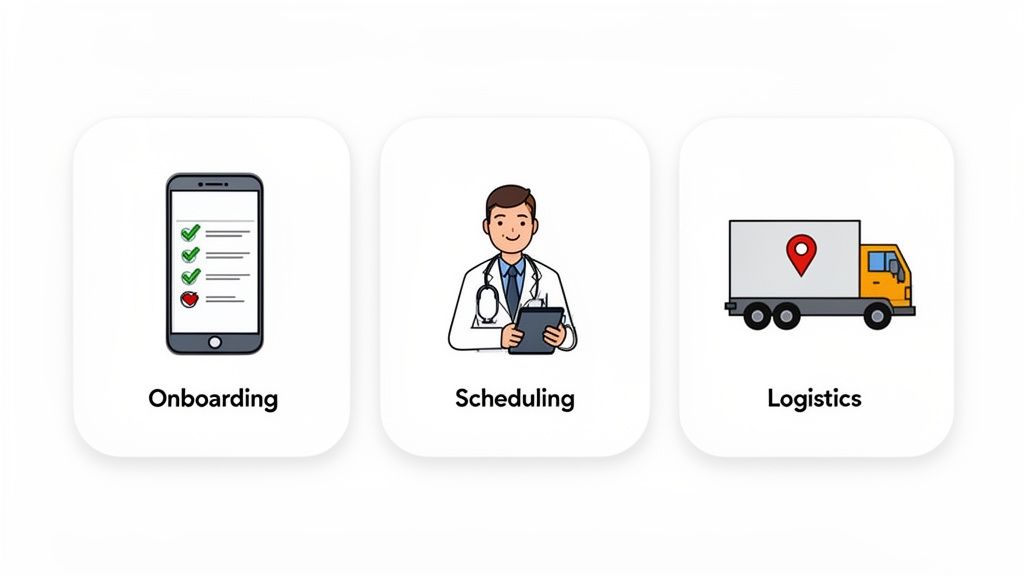
Imagine a new retail associate starting their first day. They’re nervous. They have a ton of questions. A modern intranet puts everything they need in their pocket.
Onboarding: Instead of a stack of binders, they complete training modules on their phone.
Communication: They get a welcome message from their manager and join the store’s team chat, so they can ask questions without feeling lost.
Daily Ops: They can check schedules, request time off, and get instant updates about a new promotion, all from one central hub.
This isn’t just about pushing information out. It's about making sure it actually connects with every person on the team.
Here’s the simple truth: An intranet solves internal chaos. It creates a single source of truth that helps people feel connected and ready to do their jobs.
At its core, an intranet answers the question, “What do our people need to feel like a team and succeed?”
Outside the Walls: An Extranet in Action
Now, let's flip it. An extranet solves a totally different problem: controlled work with the outside world.
Take a hospital system. They work with hundreds of independent doctors who refer patients. An extranet gives these referring doctors a secure portal where they can:
Schedule appointments directly into the hospital's system.
Access patient records—but only for the patients they referred.
Communicate securely with hospital specialists.
The key here is control. Dr. Smith can only see information for her patients. She can’t see records for patients referred by Dr. Jones. The system is built on strict, role-based permissions.
Or think of a logistics company. Their extranet is a portal where shipping partners log in to track freight, manage invoices, and update delivery statuses. This self-service approach cuts down on endless phone calls and makes the whole supply chain more efficient.
Why You Can't Swap Them
Using an intranet for an extranet’s job is a massive security risk. You’d be giving outsiders a key to your internal headquarters. It’s like inviting a contractor into your house and giving them the combination to the family safe.
On the other hand, forcing employees to use a clunky extranet for their daily work is just painful. It creates barriers where there should be none.
These tools aren’t interchangeable because the problems they solve are fundamentally different. One is for the trust-by-default world inside your company. The other is for the verify-first world of external partnerships.
From Clunky Portals to a Single Work Hub
For years, the word "intranet" brought a specific image to mind: a clunky, top-down, impossible-to-navigate website that nobody actually used. A digital ghost town. I’ve seen them myself—static portals that felt more like a chore than a tool.
That era is over. Or at least, it should be.
The old intranet was a destination you had to log into from a desktop. The modern intranet has become something else entirely. It’s an all-in-one work app, a hub for communication and operations that lives in your pocket.
From Static Pages to a Living Workspace
This wasn't just a tech upgrade; it was a shift in philosophy. The old model was about the company broadcasting information at its employees. The new model is about connecting people with each other and the tools they need.
Work became distributed. Mobile became the default. If a tool didn't work beautifully on a phone, it was useless for a huge part of the workforce—especially frontline workers. A nurse, a warehouse associate, or a retail cashier doesn't sit at a desk. They needed a tool that could reach them where they are. This shift is at the heart of modern communication hubs explained.
The Rise of the All-in-One App
As a result, smart companies began ditching their clunky, on-premise systems for flexible, cloud-based platforms that could do more than just host PDFs. They needed a tool that integrated everything:
Communication: Chat, group channels, and company-wide news feeds.
Operations: Task management, shift scheduling, and knowledge bases.
Culture: Recognition, employee directories, and team events.
This turned the intranet from a stale repository into a living, digital workspace where work actually gets done.
Here's the critical point: Modern intranets are becoming comprehensive employee platforms, while extranets remain focused on their specific, transactional purpose.
The market data tells the same story. The intranet as a service market is expected to hit USD 17.4 billion in 2025, a 27% jump from the previous year, as companies flee legacy portals. This trend is on track to push the market to USD 49.4 billion by 2035. You can discover more insights about this market shift on futuremarketinsights.com.
This isn't just a trend; it's a redefinition. The intranet is no longer just a private website. It's the central nervous system for a connected company.
Making the Right Choice
So, which one do you need? After watching countless companies wrestle with this, I've noticed it’s rarely an "either/or" question. It’s about priority. And for most businesses, the answer is clear: a strong internal foundation has to come first.
You can’t build a solid bridge to the outside world if your own house is a mess. A disconnected workforce is a much bigger risk than inefficient vendor management. That’s why I believe the priority for most companies should be a modern intranet.
Start With Your Biggest Headache
The intranet vs. extranet debate gets a lot simpler when you stop thinking about tech and start focusing on your biggest problem. What’s the one thing that, if solved today, would make the biggest difference?
Is it that your frontline staff feels disconnected? Are new hires totally lost? Is internal communication a chaotic mess of emails and group texts? These are classic internal problems.
Or is your main issue a clunky process with a key supplier? Do your clients feel like they have no visibility into project progress? Those are external workflow problems. They’re important, but they often have to take a backseat to getting your own team in sync first.
This decision tree can help you think it through.
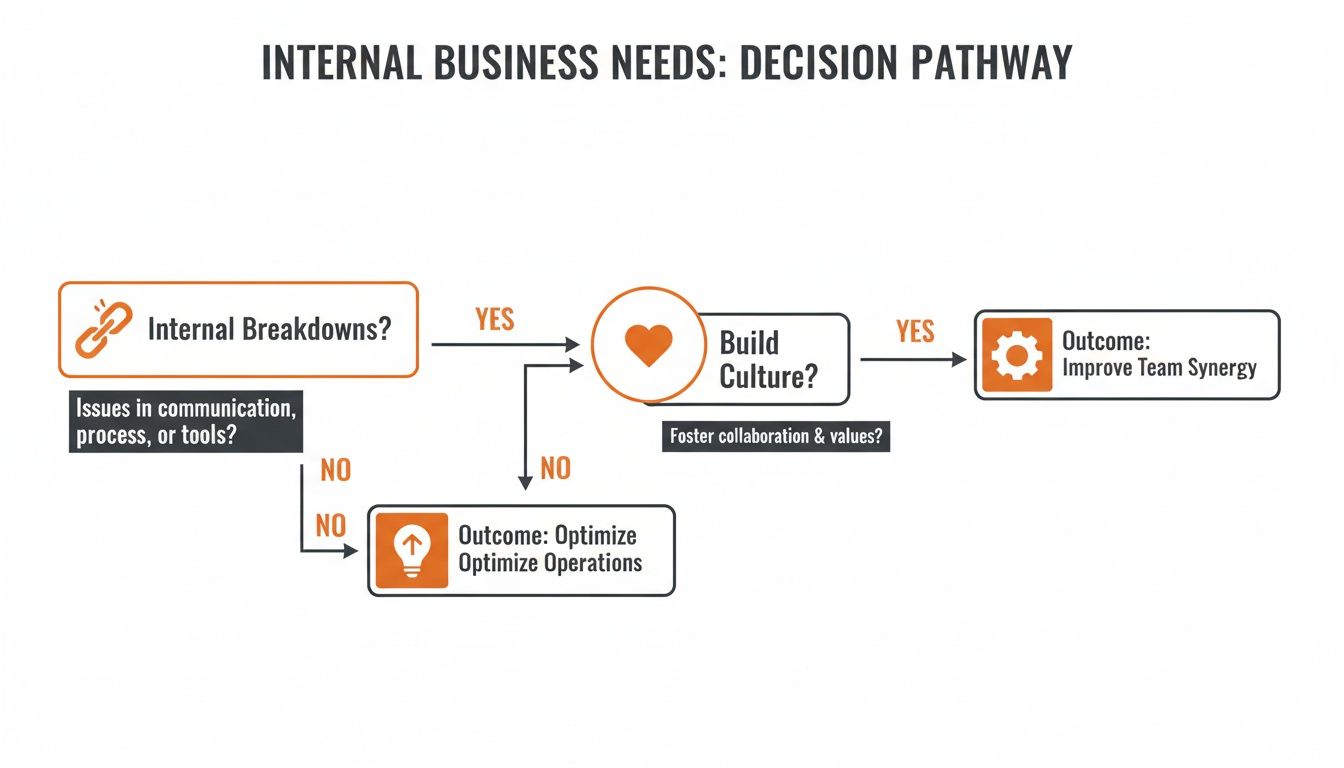
As you can see, problems with operations and culture almost always point toward strengthening your internal home first.
A Simple Decision Framework
Let’s boil it down. Here’s where to focus your energy.
Choose an intranet if your primary challenges are internal:
Building Connection: You’re trying to unite a workforce spread across locations, shifts, or roles.
Fixing Communication: Important news is getting lost, teams are in silos, and there’s no single source of truth.
Engaging Frontline Teams: Your deskless workers are out of the loop and need a mobile-friendly way to connect.
Our take: A modern intranet is the answer to internal chaos. It’s an investment in your people. For a deeper look, check out our comprehensive guide to building intranets and top solutions for 2024.
Choose an extranet if your primary challenges are external:
Improving a Specific Workflow: You have a recurring process with partners, like managing inventory or tracking project milestones.
Sharing Sensitive Data Securely: You need to give partners controlled access to specific information without opening up your entire system.
Boosting Partner Efficiency: The goal is a self-service portal that cuts down on administrative work.
Market trends back this people-first approach. While extranets have their place, the intranet software market is surging, projected to grow at 14.4% annually to hit USD 64.4 billion by 2034. Businesses are doubling down on platforms that put their employees first.
The choice comes down to a simple question: Are you looking inward or outward right now? For most companies, building a stronger, more connected team is the most urgent task on the list.
Frequently Asked Questions
We've covered a lot of ground. Still, a few questions always seem to pop up. Let's tackle them head-on.
Can one tool be both an intranet and an extranet?
You’ll see platforms that claim to do both, but honestly, it’s always a compromise. A true intranet is designed around the messy, human work of employee engagement. An extranet is built for one thing: secure, firewalled access for outsiders.
Trying to smash them together often creates a clunky experience for your team and security risks for your partners. The design principles are just too different for a "one-size-fits-all" tool to work well.
How do modern intranets help frontline workers?
Old intranets were built for people at desks. They were desktop-first and often required a corporate email, which many frontline workers in retail or healthcare don’t have.
Modern intranets are built mobile-first. They let frontline staff access schedules, get company updates, and talk with their teams right from their personal phones. It’s about including everyone, not just the people in the main office.
What are the biggest security differences?
It’s all about the access model. Intranet security is mostly about authentication: verifying that a user is a real employee. Once they're in, access is often quite broad. The goal is to keep non-employees out.
Extranet security is all about authorization: meticulously defining what a verified external user is allowed to see and do. It requires surgical permissions to ensure a partner from Company A can never see data belonging to Company B. The risk is just higher.
Is an extranet just a client portal?
A client portal is a type of extranet, but the term is much broader. A client portal is for customers to check on support tickets or pay invoices. But an extranet could also be a system for suppliers to manage inventory, or a portal for franchisees to access brand assets.
Essentially, if you're creating a secure, private online space for any group of non-employees, you're building an extranet. The distinction always comes back to who gets the key: your team or your trusted partners.
Ready to build your company’s digital home? Pebb unifies communication, operations, and engagement for your entire team—from the front lines to the back office—in one simple, modern app. See how Pebb can connect your people today.
